 Unearth The Voyage
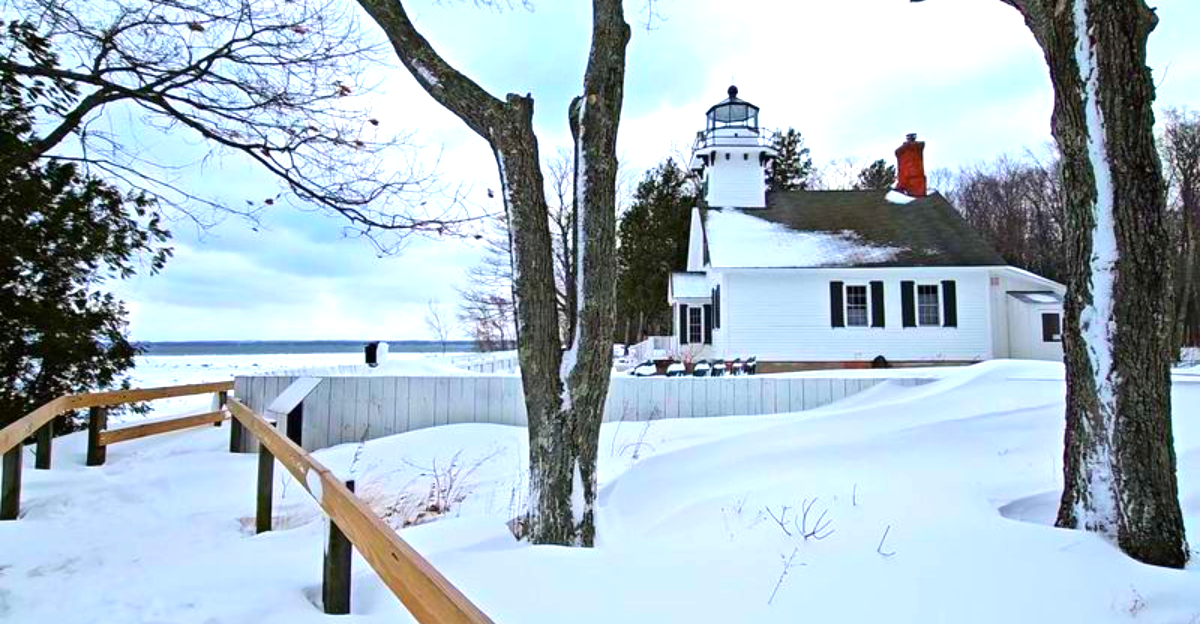
There is a place in northern Michigan where the land simply runs out and you find yourself standing at the tip of a narrow peninsula surrounded by water. A small white lighthouse keeps watch over Lake Michigan while cherry orchards and vineyards line the winding road leading there.
I made the drive on a crisp fall afternoon and quickly understood why people return season after season. It is the kind of place that quietly captures your attention the moment you arrive.
Where the Peninsula Ends and the Lake Takes Over
Mission Point Lighthouse Park sits at 20500 Center Rd, Traverse City, MI 49686, right at the northernmost tip of the Old Mission Peninsula. The park is managed by Peninsula Township and is open daily from 9 AM to 10 PM, with a phone number of (231) 645-0759 for visitor information.
What makes this location so visually striking is that you can actually see both Grand Traverse Bay arms from certain spots on the property. East Bay and West Bay curve away on either side of you, and the peninsula narrows to such a fine point that the water feels like it is pressing in from all sides.
The drive up Center Road alone is worth the trip. Cherry orchards, old farmhouses, and vineyard rows roll past your windows for miles before the park entrance comes into view.
The moment you step out of your car and feel the lake breeze hit you from two directions, you understand why this tip of land feels unlike anywhere else in Michigan.
The Story Behind the Lighthouse
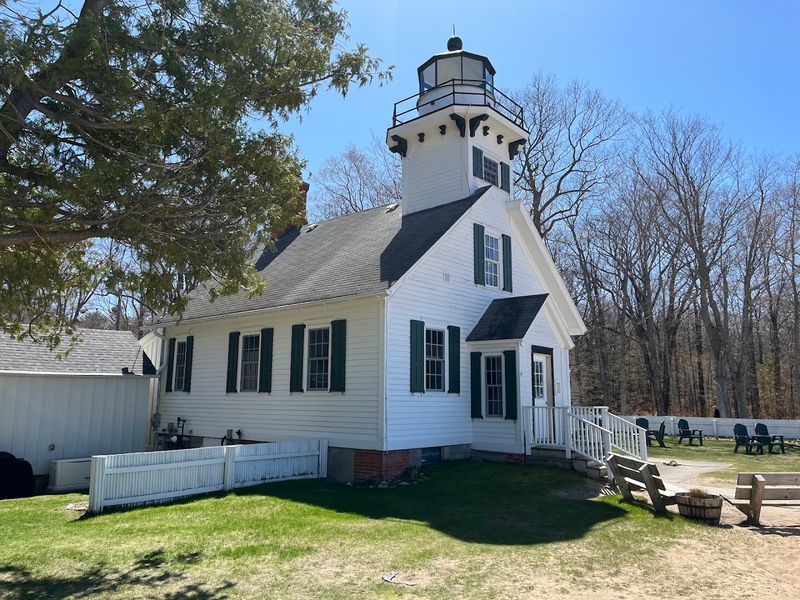
The Mission Point Lighthouse was built in 1870, making it one of the older lighthouses still standing on the Great Lakes. It replaced an earlier structure from 1839, which was one of the first lighthouses ever constructed on Lake Michigan.
The lighthouse guided schooners and steamships through the busy shipping lanes of Grand Traverse Bay during the late 1800s, when the region was a major hub for lumber and cherry transport. The keeper’s log home still stands on the property, and it is one of those details that makes the whole place feel genuinely historic rather than just decorated to look that way.
Small informational signs are placed around the grounds, so even when the museum building is closed in winter, you can still learn a surprising amount just by walking the property. The lighthouse was decommissioned in 1933 when a modern light buoy took over its duties, but its structure has been carefully preserved ever since, and the craftsmanship holds up beautifully.
The Sandbar That Stretches Into the Lake
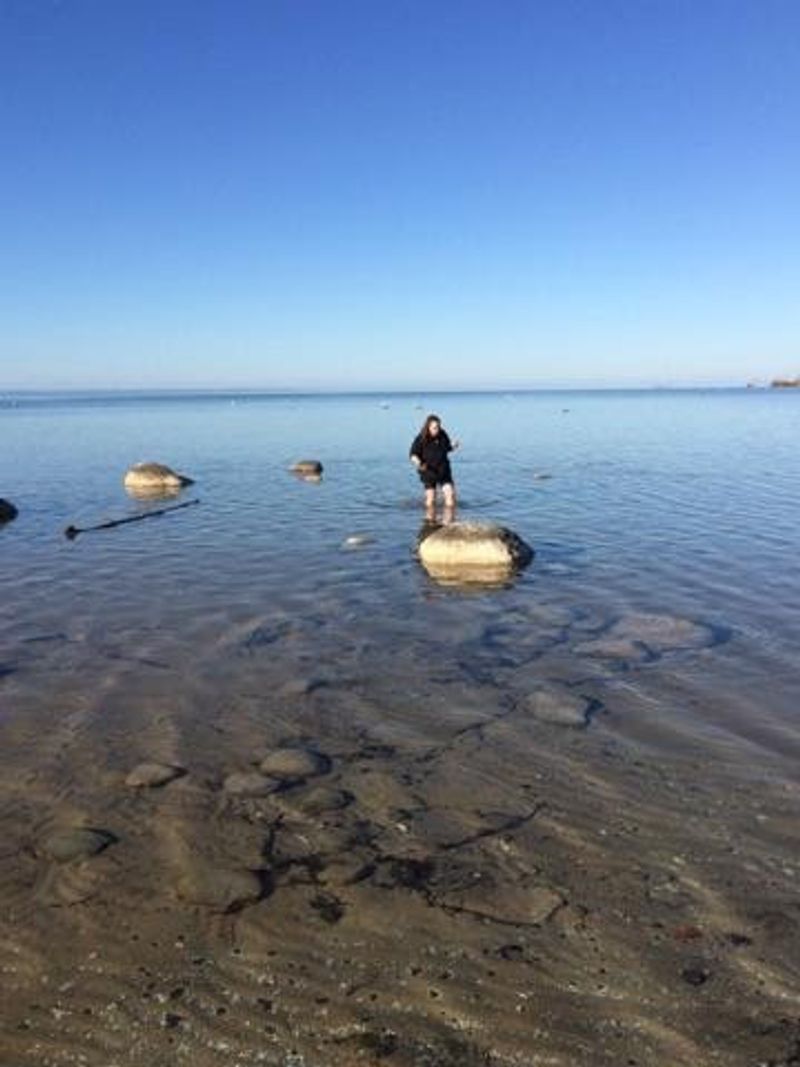
One of the most talked-about features of this park is the sandbar that extends far out into Lake Michigan from the beach. The water stays remarkably shallow for a long stretch, sometimes for what feels like a quarter mile, before the lakebed drops away sharply into much deeper water.
Wading out along the sandbar on a warm day is a genuinely surreal experience. The water is crystal clear, the color shifts from pale green near shore to a deep, almost tropical blue farther out, and you can see the bottom the entire time you are walking.
Children love it because the water stays calm and manageable, and adults love it because the views from out there are simply unreal.
The drop-off at the end of the sandbar is dramatic, reportedly plunging hundreds of feet, so the sandbar itself becomes a natural boundary that keeps casual swimmers in the safe zone. Bring water shoes because the lakebed is covered in smooth stones and zebra mussel shells that can be rough underfoot.
Crystal Clear Water and the Zebra Mussel Effect
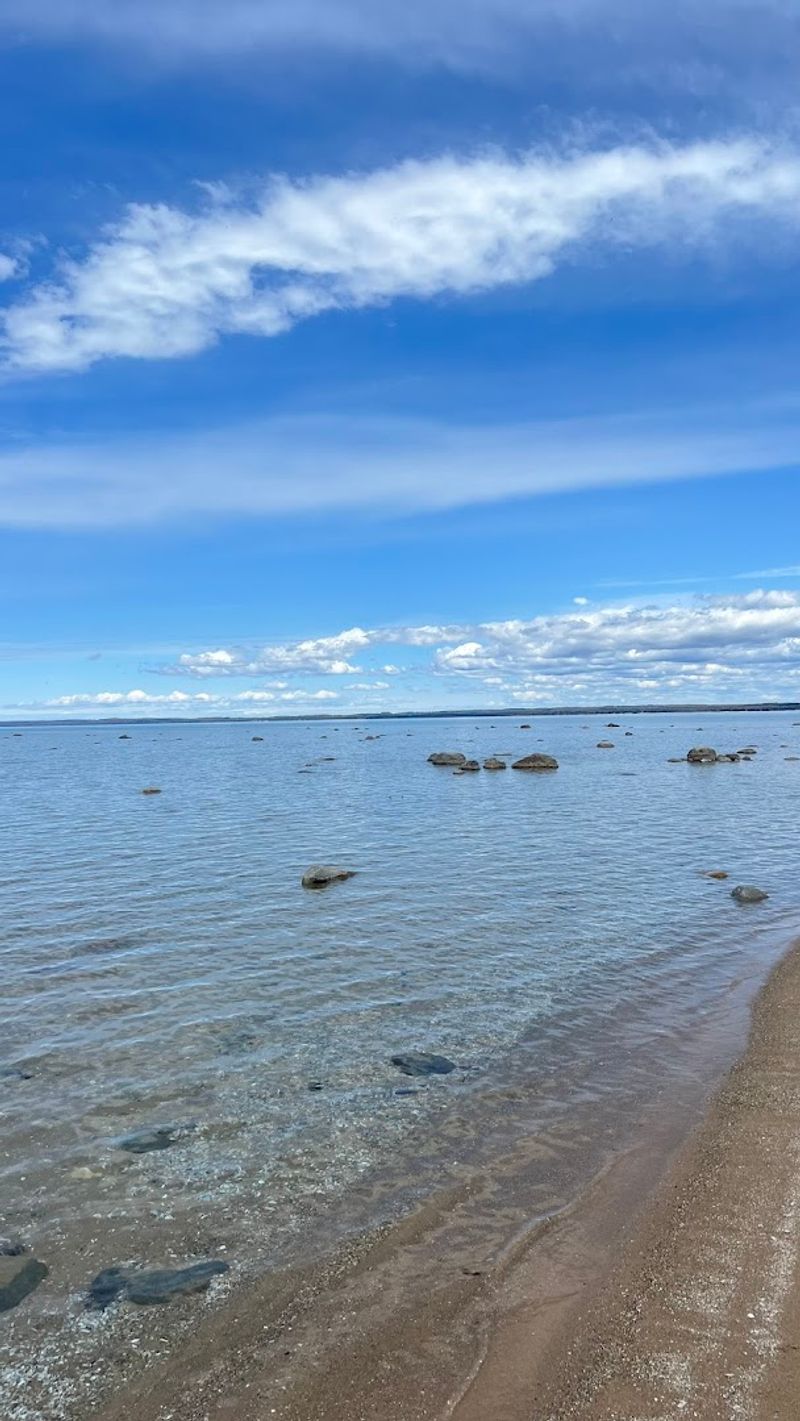
The water at Mission Point is almost startlingly clear. You can see every stone and shell on the bottom even in several feet of water, and the visibility gives the beach a look that feels more Caribbean than Great Lakes.
The reason for that clarity is a little bittersweet. Zebra mussels, an invasive species that arrived in the Great Lakes in the late 1980s, filter enormous quantities of water as they feed, which dramatically increases water transparency.
The beach is covered in their small, striped shells, and while the ecological impact of zebra mussels is genuinely concerning for the lake’s ecosystem, the visual result at the shoreline is undeniably beautiful.
The water also tends to warm up nicely in summer because of its shallowness over the sandbar, making it comfortable for wading even when deeper lake water is cold. Pack a pair of water sandals or old sneakers before you visit, because bare feet on those shells get uncomfortable quickly, and the experience is so much better when your feet are protected.
Trails Through the Woods Above the Bluff
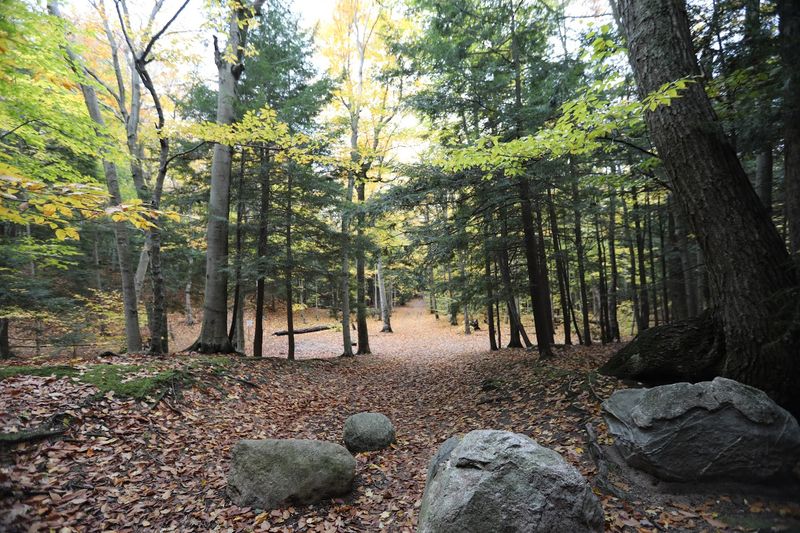
Most visitors head straight for the beach, and that is completely understandable, but the trail system winding through the park’s forested bluffs is worth every extra minute you can spare. The trails are well-marked and relatively flat, making them accessible for most fitness levels and genuinely enjoyable for families with kids.
One trail runs along a bluff above the lake, offering elevated views of the water through the tree line. In fall, the colors along this path are extraordinary, with maple and oak trees turning deep red and orange while the lake glitters below in shades of blue and silver.
Even in winter, the bare branches frame the water in a way that feels almost architectural.
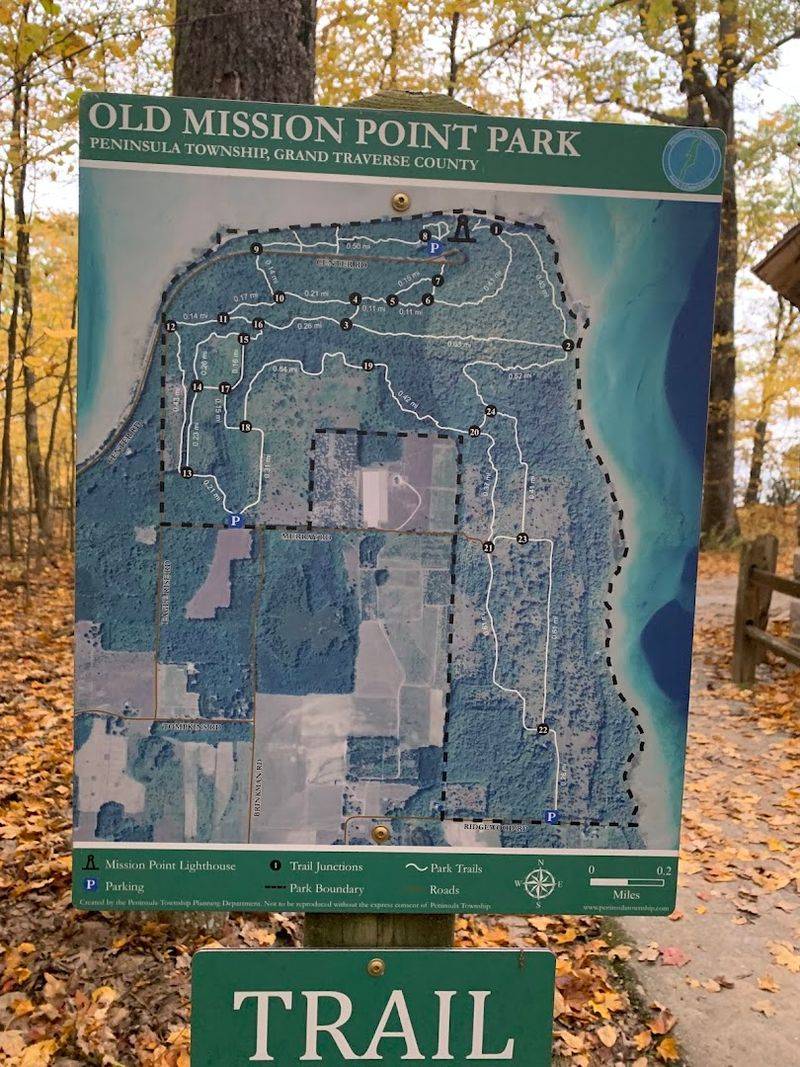
The park has multiple parking areas connected to the trail network, so you can start from different points and loop back without retracing the same ground. Geocaching enthusiasts will find plenty of hidden caches tucked along the routes, adding a fun treasure-hunt element that makes the hike especially entertaining for younger visitors who need a little extra motivation to keep walking.
The Museum and Gift Shop in Season
When the season is running, typically from late spring through early fall, the lighthouse opens its doors for guided tours and museum access. The admission fee runs around eight dollars for adults, which is a genuine bargain for what you get inside.
The museum covers the history of the lighthouse and its keepers, the shipping trade that once moved through Grand Traverse Bay, and the broader story of Great Lakes navigation. Artifacts, photographs, and interpretive panels fill the small interior space without feeling cluttered, and the layout is easy to follow even for younger visitors.
Climbing up inside the tower to look out over the lake is the undeniable highlight of the indoor experience. The view from the top puts everything you have seen at ground level into perspective, with the sandbar, the bay arms, and the forested peninsula stretching out below you in a panorama that is hard to forget.
A small gift shop near the entrance carries lighthouse-themed souvenirs, local books, and a few items that make genuinely thoughtful keepsakes rather than the usual tourist fare.
The Beach Scene: Dogs, Families, and Room to Breathe
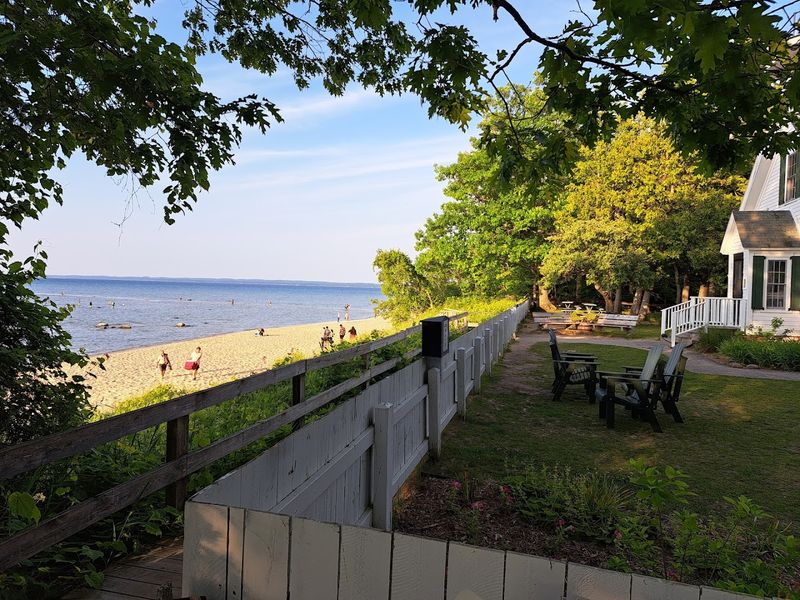
Mission Point Lighthouse Park doubles as a dog-friendly beach, and the combination of happy dogs, splashing kids, and relaxed adults gives the place an energy that is hard to manufacture. On a warm summer afternoon, the beach has a lively but never overwhelming atmosphere, and there always seems to be enough space for everyone to spread out comfortably.
The beach itself is a mix of sand and smooth stones, with shaded areas under trees along the edges and open sunny stretches near the water. Families tend to set up in the shade while the kids wade out along the sandbar, and dogs of every size seem to love the shallow, calm water just as much as the people do.
Parking is somewhat limited, with the lot filling up quickly on busy summer weekends, so arriving before noon gives you the best chance of a smooth experience. There are no changing facilities beyond basic vault-style restroom buildings, so plan your beach outfit accordingly before you leave the car.
The trade-off is a natural, uncrowded feel that a more developed beach would likely lose.
The Drive Up Old Mission Peninsula
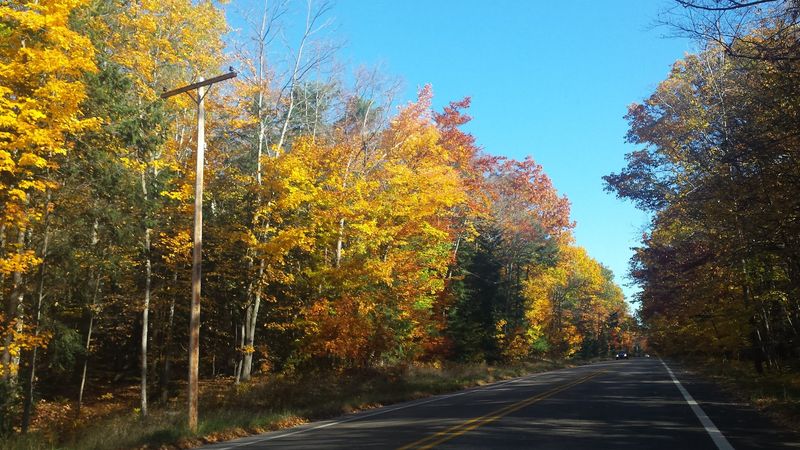
The road to the lighthouse is half the experience. Center Road runs straight up the spine of the Old Mission Peninsula for about 20 miles from downtown Traverse City, and the scenery along the way is genuinely impressive in every season.
Cherry orchards are the dominant feature in spring and early summer, when the trees bloom white and the air carries a faint sweetness through open car windows. By midsummer, the cherries hang heavy and dark on the branches, and roadside stands sell fresh fruit by the bag.
Vineyard rows take over in certain stretches, with grapevines climbing neat trellises along gentle hillside slopes.
The peninsula is narrow enough that you occasionally glimpse water on both sides of the road as you drive, which creates a pleasant sense of being slightly adrift between two bodies of water. The drive takes roughly 45 minutes from downtown Traverse City at a relaxed pace, and stopping at a farm stand or a scenic overlook along the way turns the trip into a full afternoon rather than just a quick errand to reach the park.
Sunsets and the 45th Parallel
The park sits just south of the 45th parallel, the invisible line that marks the halfway point between the equator and the North Pole. A small sign on the property notes this geographic fact, and it adds a surprisingly satisfying sense of being exactly somewhere specific in the world.
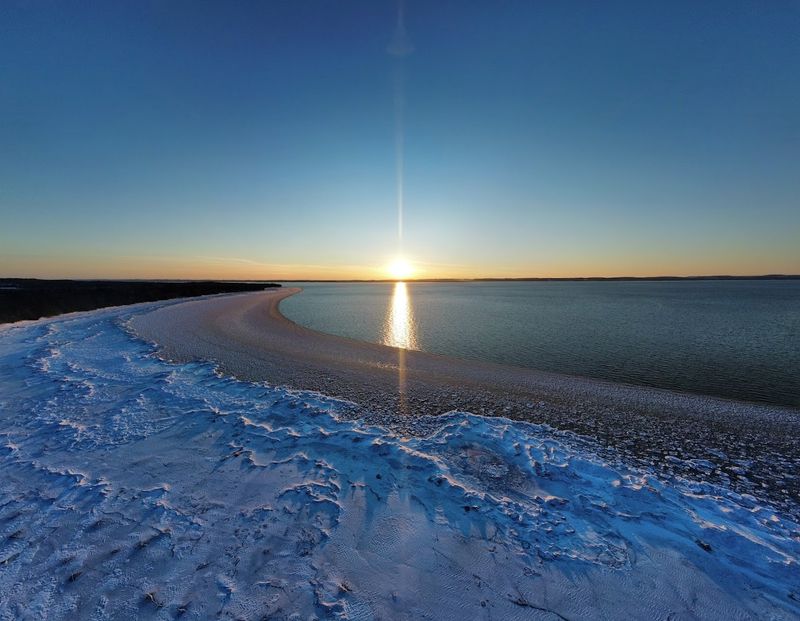
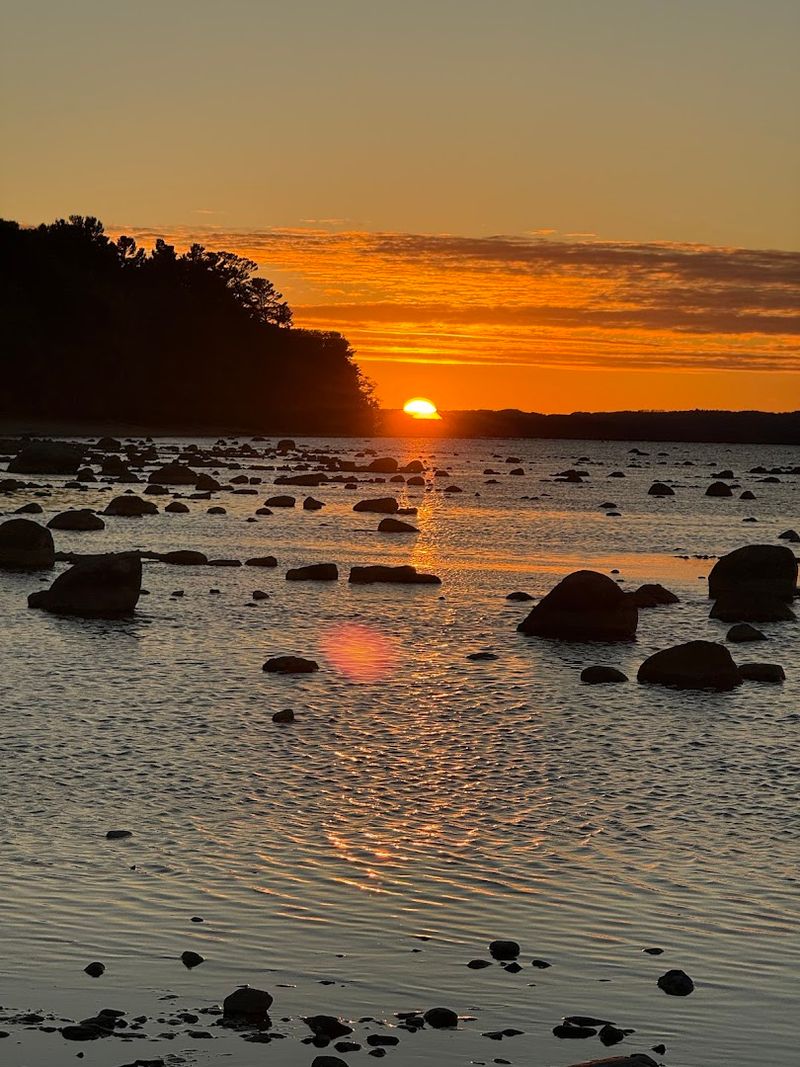
Sunsets at Mission Point are the kind that make people stop mid-sentence and just stare. The lighthouse faces west over Grand Traverse Bay’s West Arm, and when the sun drops toward the water in late afternoon, the light turns the lake surface into something that looks like hammered copper.
Fall sunsets here are particularly intense, with the colored leaves on the bluff adding warm tones to the already warm sky.
The park stays open until 10 PM every night of the week, which means you have plenty of time to arrive in the late afternoon, explore the beach and trails, and then settle in to watch the light change as evening comes on. Bringing a blanket and sitting on the beach as the sun goes down is one of those simple pleasures that costs nothing and leaves a lasting impression.
Winter Visits and the Off-Season Quiet
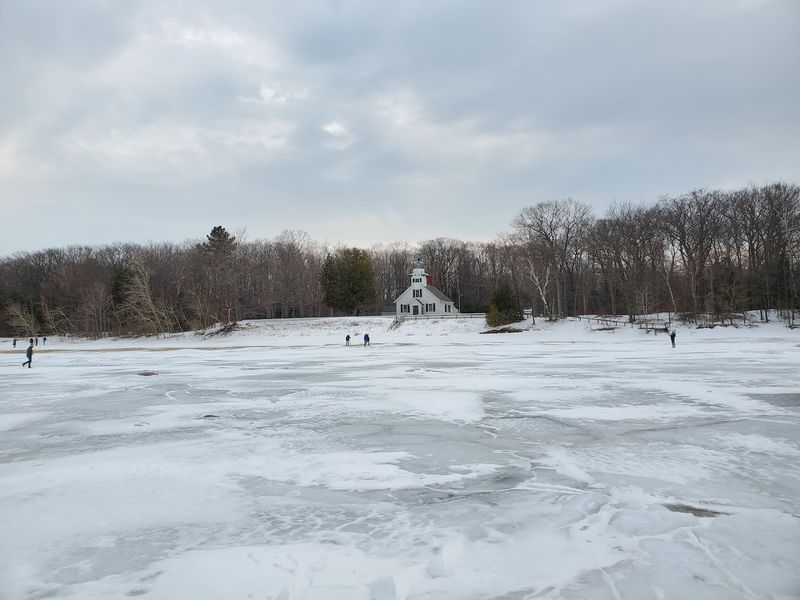
Most people think of Mission Point as a summer destination, but the park has a completely different and equally compelling personality in winter. The museum and tours close for the season, but the grounds remain accessible, and the absence of crowds gives the place a rare stillness that summer visitors never experience.
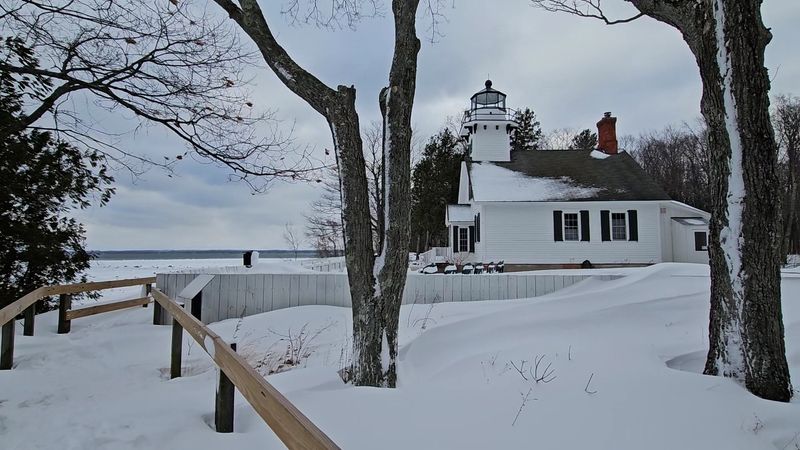
The beach in January or February is a landscape of ice formations, frost-covered stones, and pale blue water that has not quite frozen solid along the shore. The lighthouse stands white against a white-gray sky, and the quiet is so complete that you can hear the small waves moving under the ice shelf at the water’s edge.
A visit on New Year’s Day, for example, feels almost ceremonial, like starting the year at a place that has been marking time and guiding travelers since 1870. The parking lot is nearly empty, the air is sharp and clean, and the lighthouse looks exactly as it always has, unbothered by the cold, facing the lake with the same steady patience it has always shown.
Planning Your Visit: What to Know Before You Go
The park is free to enter, and the grounds are open daily from 9 AM to 10 PM year-round. Museum tours and lighthouse climbs are available in season, typically from late spring through early fall, with an admission fee of around eight dollars for adults.
Calling ahead at (231) 645-0759 is a good idea if you specifically want to go inside.
Parking is free but limited, with the main lot filling up quickly on summer weekends and holiday afternoons. Arriving before noon on busy days gives you the best shot at a spot close to the beach.
A second parking area connects to the trail system, so if the main lot is full, the trails offer an alternative starting point.
Water shoes are genuinely recommended rather than optional, given the rocky and shell-covered lakebed. Pack snacks and water because there are no concession stands on site.
The park is dog-friendly, so leashes are a good idea near the busier beach areas. Any season works beautifully here, though fall combines the best trail colors, manageable crowds, and some of the most dramatic light over the lake.



