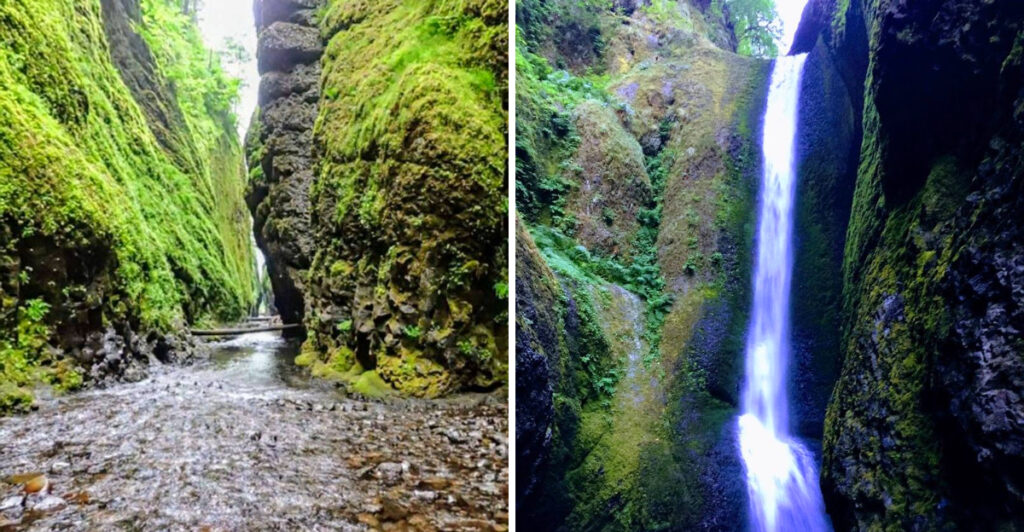
There is a narrow canyon in Oregon where the walls rise so close together that sunlight barely squeezes through, and the creek running along the floor is cold enough to make you gasp. Moss coats every surface in shades of green so vivid they look almost unreal.
This place sits within the Columbia River Gorge National Scenic Area, quietly drawing hikers who are willing to get their feet wet for a payoff that genuinely stuns. I have visited plenty of dramatic landscapes across the country, from the red rock country of the Southwest to the pine forests of Oklahoma, but nothing quite prepared me for the first time I rounded a bend and saw those basalt walls closing in overhead.
Keep reading, because this canyon earns every bit of its reputation.
Where Exactly You Will Find This Canyon
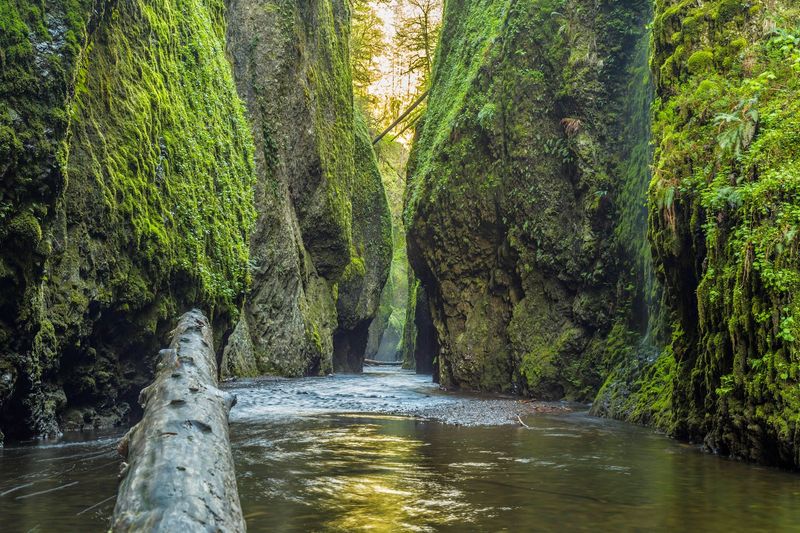
Oneonta Gorge sits along the Historic Columbia River Highway in the Columbia River Gorge National Scenic Area, with a mailing address of Oregon 97014, roughly 35 miles east of Portland. The gorge follows Oneonta Creek as it cuts through ancient basalt rock, forming one of the most dramatically narrow slot canyons in the entire Pacific Northwest.
The U.S. Forest Service has designated this area as a botanical zone, which means the plant life here receives special protection.
Many of the fern and moss species growing on these canyon walls cannot be found anywhere else in the world, which makes the gorge genuinely rare from a scientific standpoint.
Getting here is straightforward if you are coming from Portland. The drive along the Historic Columbia River Highway is scenic in its own right, passing multiple overlooks and trailheads before you reach the small parking area near the gorge entrance.
Plan ahead, because parking fills up fast on weekends, and arriving early makes the whole experience noticeably more peaceful.
The Basalt Walls That Frame Everything
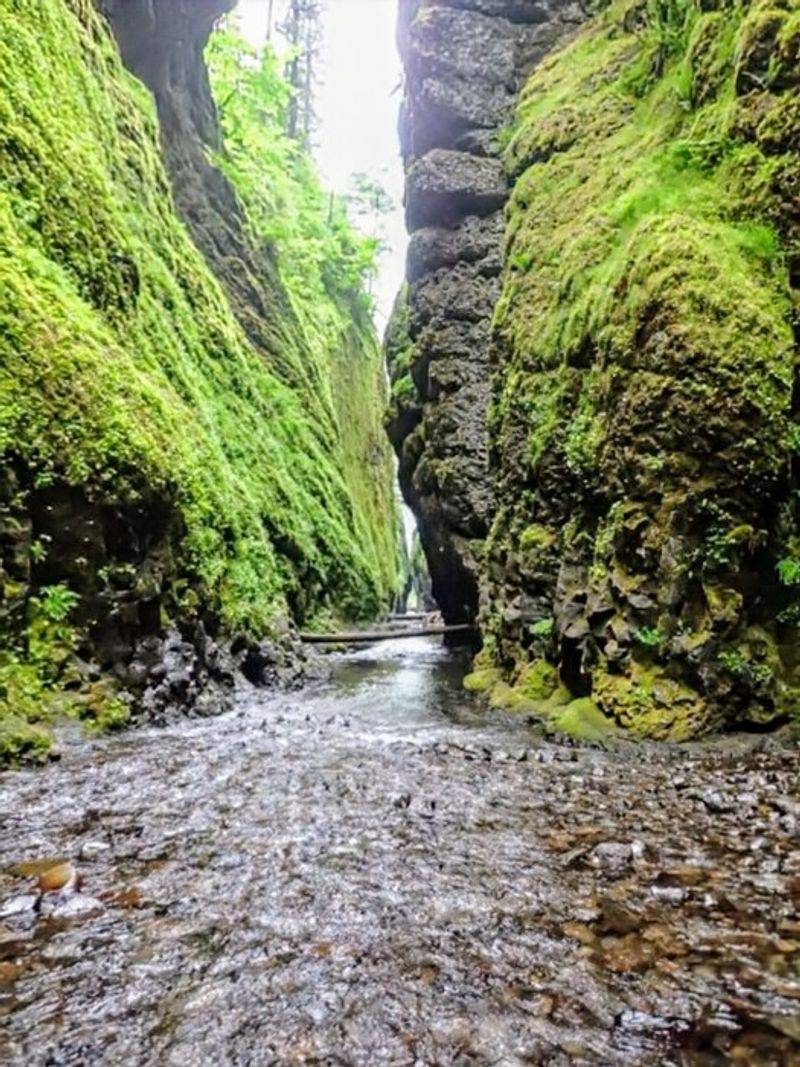
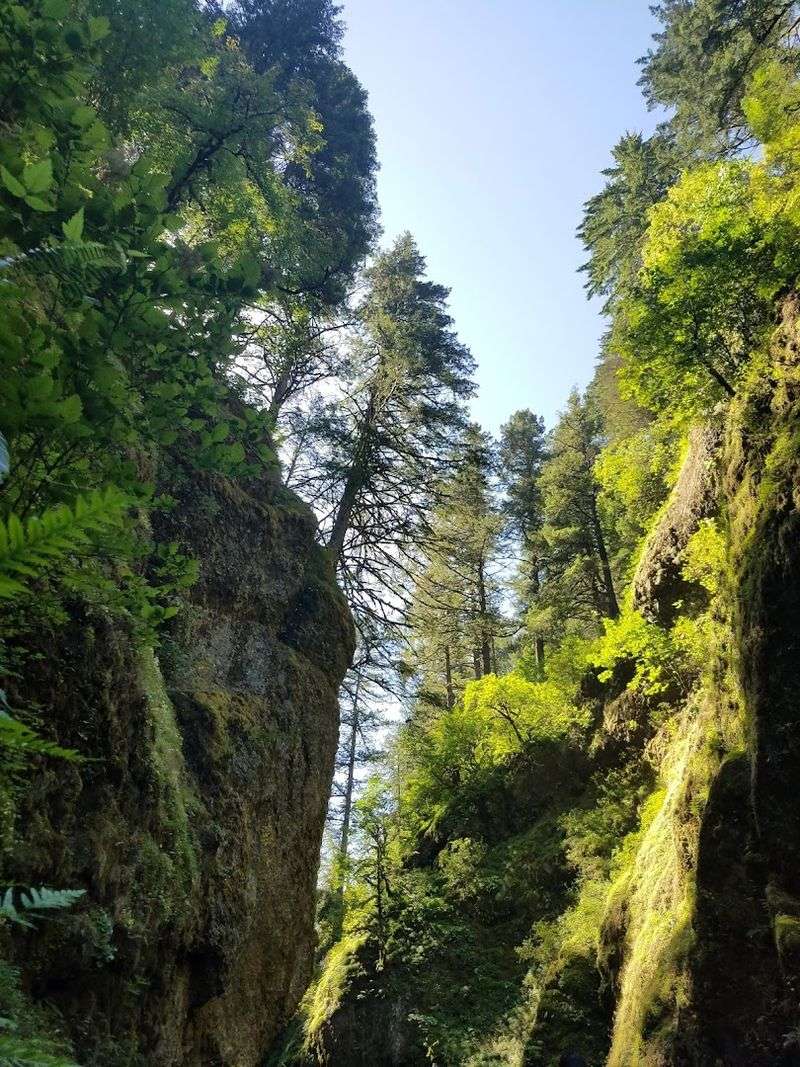
The canyon walls at Oneonta Gorge are not just tall. They are vertical, dark, and draped in so much moss that the stone beneath is almost completely hidden.
The basalt here formed from ancient lava flows, and over thousands of years, Oneonta Creek carved a passage so tight that in some spots you can almost touch both walls at once.
The color contrast inside the gorge is one of the first things that grabs your attention. The dark grey basalt acts as a backdrop for every shade of green imaginable, from pale lime on younger mosses to deep forest tones on the older growth.
On overcast days, the whole scene takes on a soft, almost glowing quality that feels completely different from anything you would see in a drier state like Oklahoma.
Geologists describe the basalt here as columnar jointing, meaning the rock broke into rough vertical columns as it cooled. Those columns create a textured, almost architectural look along the walls.
Running your eyes up from the creek to the strip of sky above is one of those small moments that stays with you long after the hike is over.
The Creek Walk That Gets You Soaked
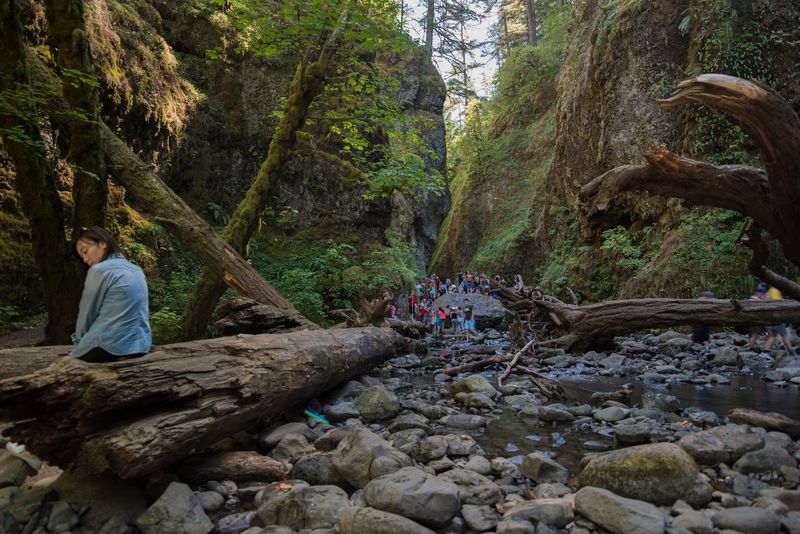
There is no dry route through Oneonta Gorge. The trail is the creek itself, and from the moment you step past the log jam near the entrance, cold water is rushing over your shoes.
The temperature of the water hovers around 50 degrees Fahrenheit even in summer, so the first few steps produce a sharp, breathless chill that quickly fades as your feet adjust.
The creek walk covers less than a mile round trip to reach the lower falls, but the terrain keeps things interesting the whole way. Rocks underfoot range from smooth and slippery to jagged and uneven, so every step requires attention.
Fallen logs occasionally block the path, and getting over or around them is part of the adventure rather than an obstacle to complain about.
Water depth varies depending on the season and recent rainfall. In late spring and early summer, the creek can reach chest height in one or two sections, while late summer often brings it down to knee level.
Waterproof sandals or old sneakers work far better than hiking boots here, and dry clothes waiting in the car at the end feel like the best reward imaginable.
Four Waterfalls Worth Knowing About
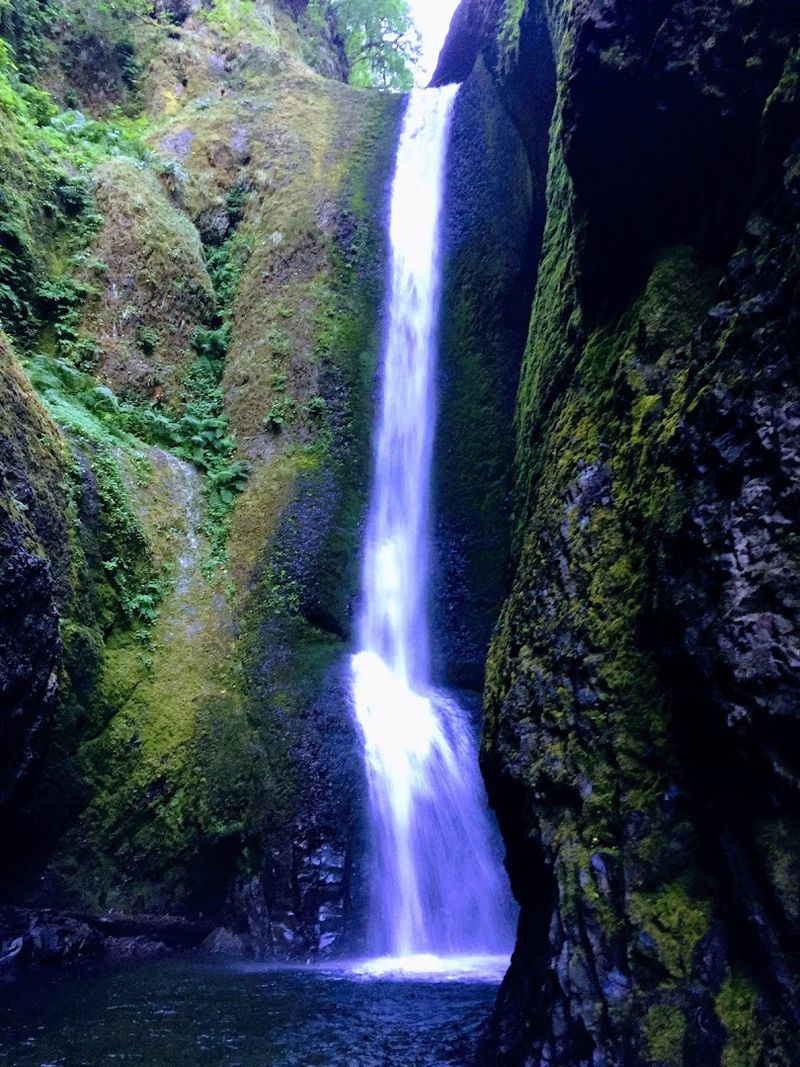
Oneonta Creek produces four distinct waterfalls as it moves through the gorge, and each one has its own character. The Lower Falls is the most famous and sits at the end of the creek walk, tucked into a cathedral-like alcove where the walls narrow to their tightest point.
A shaft of sunlight hits the top of this waterfall around midday on clear days, turning the mist into something that looks almost golden.
Middle Oneonta Falls drops 24 feet and can be seen clearly from a footpath without any wading required. Many visitors mistake it for the lower or upper falls simply because it is the most accessible.
The upper falls require scrambling up the creek or descending a canyon wall, making them a destination for more experienced hikers rather than casual visitors.
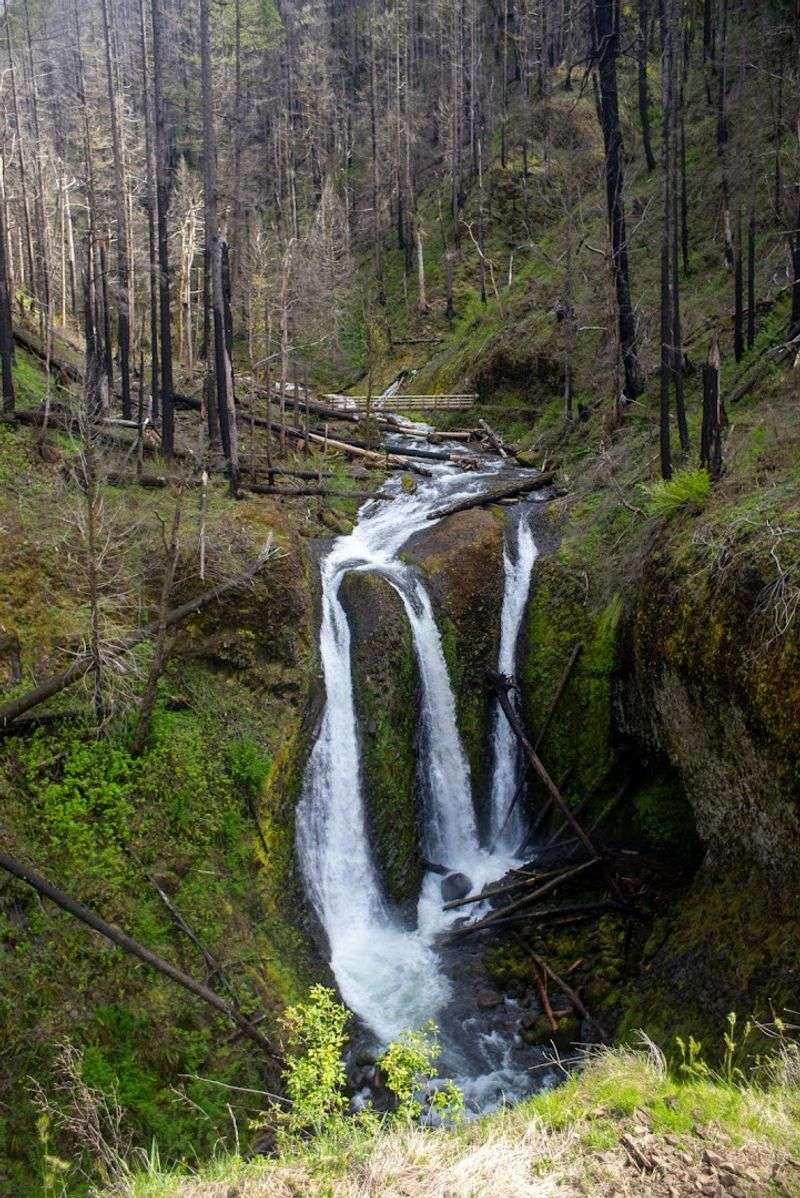
Triple Falls, the fourth waterfall in the system, sits higher up the canyon and is best viewed from the upper trails rather than from the creek bed. The 3.5-mile round-trip hike to Triple Falls involves real elevation gain and some genuinely fun switchbacks.
The view from the trail vantage point is wide and dramatic, a fitting reward for the extra effort it takes to get there.
The Historic Railroad Tunnel Next to the Trailhead
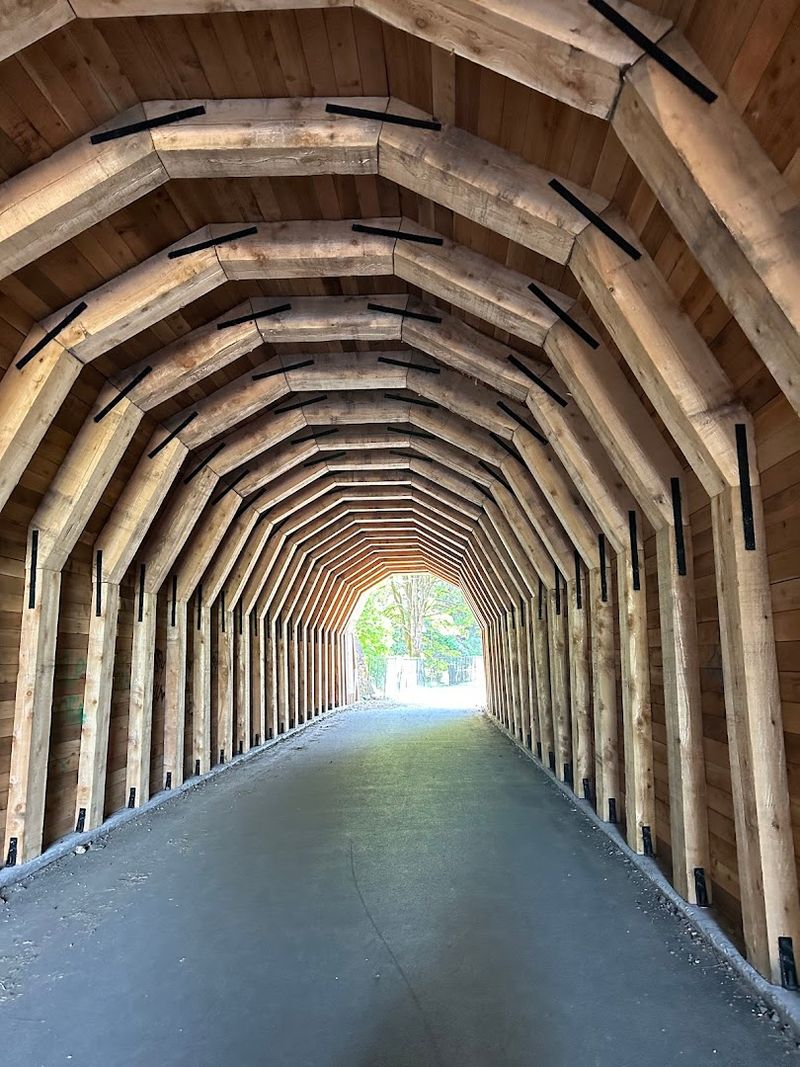
Right next to the gorge trailhead sits a historic railroad tunnel that now serves as part of the pedestrian path along the Historic Columbia River Highway. The tunnel is short enough to walk through in under a minute, but the transition from bright daylight to cool shadow and back again gives it a surprisingly theatrical quality.
The tunnel dates back to the early days of rail travel in the Columbia River Gorge, when the route was a major freight and passenger corridor. Over time, as highway travel took over, the old rail infrastructure was gradually converted into recreational trails.
The Oneonta Tunnel is one of the better-preserved examples of that transformation, and it adds a layer of history to what is already a visually rich area.
Small parking spots are available near the tunnel entrance, though the lot fills quickly on busy days. The tunnel itself was re-boarded with new wood after the Eagle Creek Fire of 2017, giving it a slightly fresh look while preserving its original structure.
Passing through it on the way to the gorge sets a mood that feels genuinely different from a standard trailhead experience, and that contrast is part of what makes this spot so memorable.
The Eagle Creek Fire and What Came After
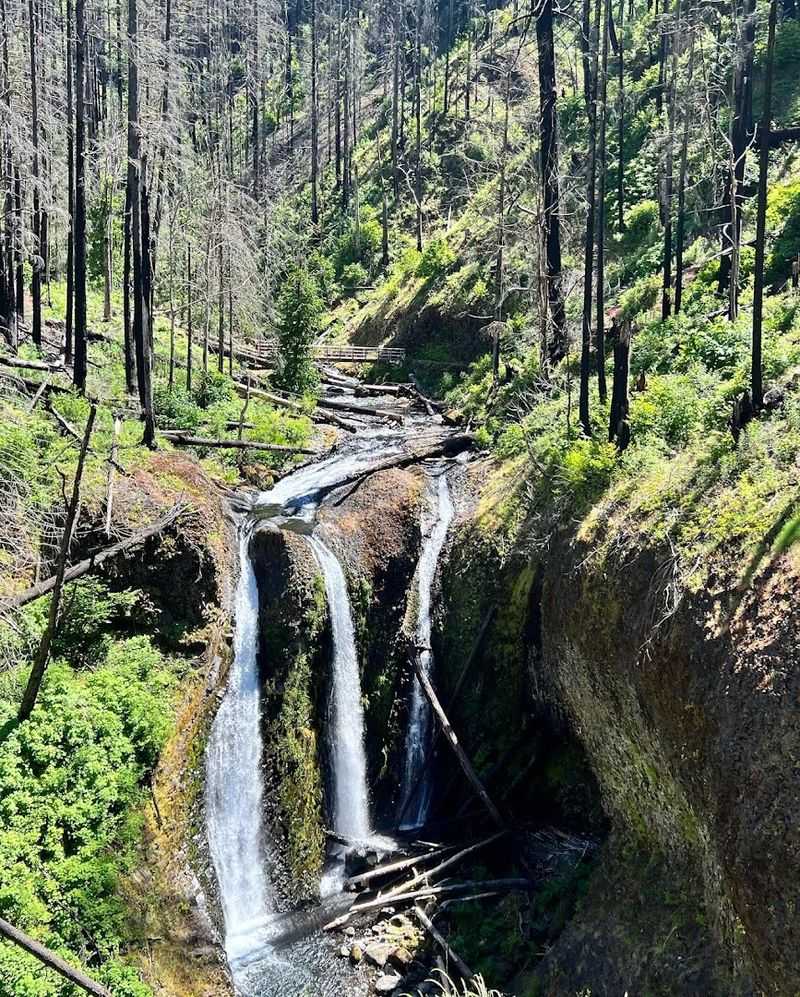
The Eagle Creek Fire of 2017 changed Oneonta Gorge significantly. The fire burned through large sections of the Columbia River Gorge National Scenic Area, and the gorge trail was closed for several years as a result.
Fencing went up around the trailhead, and access to the creek walk was restricted while authorities assessed safety conditions and monitored the natural recovery process.
Nature has been doing its work since then, and the regrowth visible along the canyon edges is genuinely striking. Burned tree trunks stand alongside new green shoots, creating a landscape that tells the story of both loss and renewal in the same frame.
Visiting even during the recovery period offered a different kind of appreciation for how resilient these ecosystems can be.
Trail access has been a moving target in recent years, with some sections reopening and others remaining closed depending on conditions. Checking current trail status with the U.S.
Forest Service before making the trip is strongly recommended. Unlike a flat prairie trail you might find in Oklahoma, the steep canyon walls here create real hazards after fire damage, and the closures have been in place for genuine safety reasons rather than bureaucratic caution.
The Botanical Designation That Makes This Place Unique
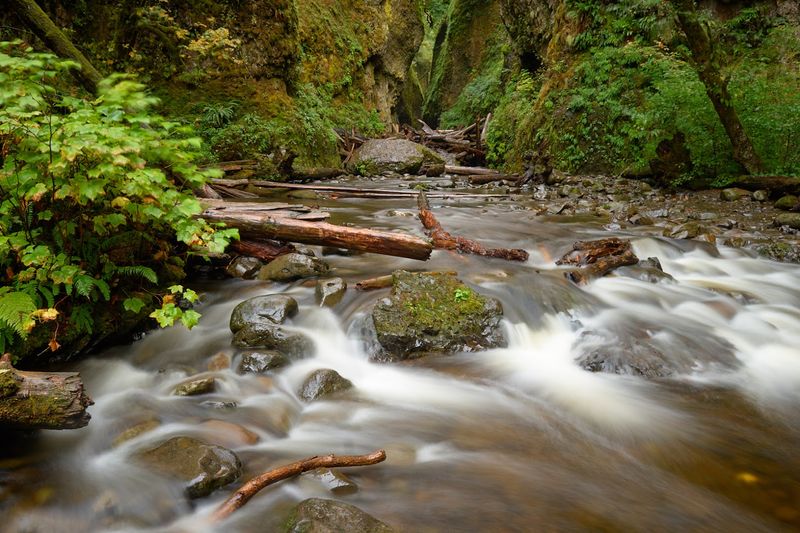
The U.S. Forest Service designated Oneonta Gorge as a botanical special interest area specifically because of the unusual plant communities that thrive here.
The combination of constant moisture from the creek, minimal direct sunlight, and the stable microclimate created by the narrow canyon walls supports species that simply cannot survive elsewhere. That designation is not ceremonial.
It comes with real rules about staying on the trail and leaving all vegetation untouched.
The mosses and ferns covering the walls are the most visible part of this botanical story, but the gorge also supports liverworts, lichens, and a range of flowering plants that crowd into every available patch of soil. The density of growth is part of what makes the gorge feel so lush and enclosed, almost like the canyon itself is alive.
Respecting these plants matters more here than at most hiking destinations. Touching the moss or stepping off the designated path causes damage that can take years to reverse in such a specialized environment.
The gorge rewards visitors who move through it carefully and quietly, and those who do tend to notice details that hurried hikers miss entirely. That kind of slow attention is what separates a good visit from a truly memorable one.
What to Wear and Bring for the Creek Walk
Gear choices make a real difference at Oneonta Gorge, and the wrong footwear can turn a fun adventure into a frustrating slog. Old sneakers or waterproof sandals with ankle support are the standard recommendation from people who have done this hike more than once.
Hiking boots trap cold water and become heavy and uncomfortable within minutes, so leave them in the car.
A dry bag or waterproof phone case is worth bringing along, especially if you want to take photos inside the gorge without worrying about water damage. The creek is shallow in most sections, but unexpected stumbles happen on slippery rocks, and protecting your electronics costs almost nothing compared to replacing them.
Trekking poles help with balance on the uneven creek bed, though they are not strictly necessary for most visitors.
Bringing a change of clothes and a towel to leave in the car is one of those small preparations that feels unnecessary until the moment you are soaking wet and grateful you thought ahead. The drive back along the Historic Columbia River Highway is much more enjoyable when you are dry and comfortable.
Anyone visiting from a flat, dry state like Oklahoma should also be prepared for the cooler temperatures inside the canyon, even on warm summer days.
The Best Time of Year to Visit
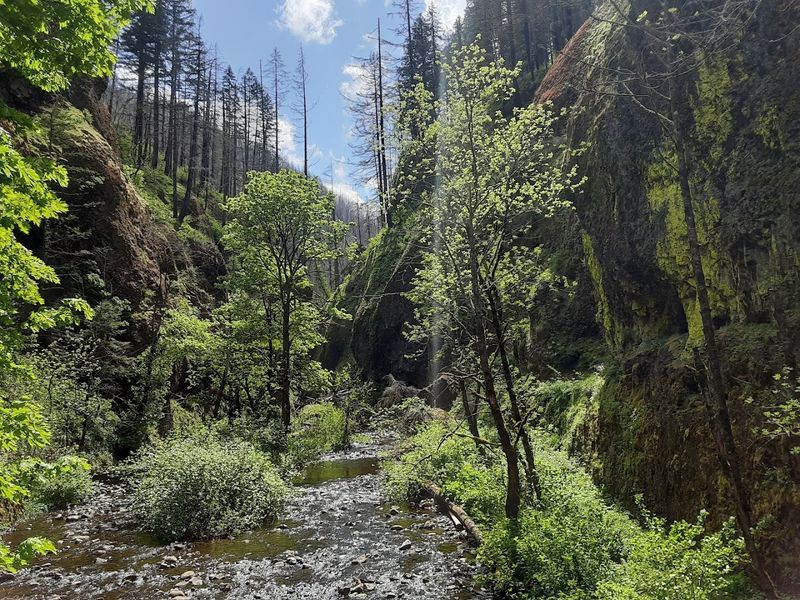
Late summer, from mid-July through September, is widely considered the best window for the creek walk at Oneonta Gorge. Water levels drop enough during this period to make the wading manageable for most visitors, and the temperatures inside the canyon, while still cool, are less of a shock than they are in spring.
The gorge is accessible year-round, but the experience changes dramatically depending on when you show up.
Spring brings higher water from snowmelt and rainfall, which can push creek depths into chest-high territory and make the lower gorge inaccessible without significant swimming. The vegetation is at its most vivid in spring, though, with mosses and ferns at peak saturation after months of moisture.
Visiting in April or May means trading easier wading for more dramatic scenery.
Sunrise visits are particularly rewarding regardless of season. The gorge faces in a direction that catches early morning light filtering down through the narrow opening, and the absence of crowds at that hour adds to the overall atmosphere.
Midday on a clear day produces the famous shaft of sunlight that falls across the top of the lower waterfall, which is a specific visual worth timing your visit around if you can manage the logistics.
The Upper Trail to Triple Falls
When the lower gorge trail is closed or the water levels are too high for comfortable wading, the upper trail to Triple Falls offers a genuinely satisfying alternative. The trailhead sits about 100 feet above the gorge trail and remains open even when the creek walk below is restricted.
The round trip to Triple Falls covers approximately 3.5 miles with meaningful elevation changes that make the legs work.
The trail winds through forest that shows the mix of established old growth and post-fire recovery typical of this part of the Columbia River Gorge. Switchbacks carry you up above the gorge rim, where occasional gaps in the trees reveal wide views of the canyon and the Columbia River below.
The sense of scale up here is completely different from the enclosed, intimate feeling of the creek walk.
Triple Falls itself is a three-tiered waterfall that drops in stages down the canyon wall, and the viewing point on the upper trail gives you a perspective that includes all three tiers at once. The hike back down moves faster than the climb up, and the trailhead parking area is a welcome sight after the full effort of the round trip.
This trail is challenging but genuinely rewarding, and the elevation views alone justify the extra miles.
Safety Considerations Worth Taking Seriously
Oneonta Gorge is not an official maintained trail in the traditional sense, and that distinction matters for safety planning. The creek bed is the path, and the rocks underfoot are consistently slippery with algae and moss.
A slow, deliberate pace is more effective than trying to move quickly, and watching where each foot lands prevents most of the stumbles that happen here.
Fallen logs across the creek present the most significant obstacle on the route. Some of these logs are large enough to require a real scramble to get over, and the combination of wet wood and cold hands creates slipping hazards that should not be underestimated.
Checking current conditions before visiting and turning back if the route feels beyond your comfort level is always the right call.
Children can absolutely enjoy this hike, but they need close supervision throughout, particularly near the log jams and in deeper water sections. The gorge attracts visitors of all experience levels, and the relaxed, otherworldly atmosphere can make it easy to forget that the terrain requires genuine attention.
The same focus you would bring to any technical trail applies here, even though the distances are short and the setting feels more magical than dangerous.
Why This Canyon Stays With You
Some places are beautiful in a way that is easy to describe, and some places are beautiful in a way that resists explanation. Oneonta Gorge falls firmly into the second category.
The combination of the narrow walls, the constant moisture, the botanical richness, and the sound of the creek echoing off basalt creates an experience that feels genuinely unlike anywhere else in the Pacific Northwest.
Visitors who grew up in flat, open landscapes, including plenty of people from Oklahoma who make the trip out to Oregon specifically for experiences like this, tend to react with particular intensity to the enclosed, vertical world of the gorge. The sense of being surrounded by living rock and green growth on all sides is something that photographs capture only partially.
Coming back after the Eagle Creek Fire closures, even to a partially recovered gorge, reinforced just how much this place matters to the people who have visited it. The loyalty of those visitors, the ones who kept checking trail status year after year and planning return trips, says something real about what the gorge offers.
A place that earns that kind of patient devotion has something genuinely special going for it, and Oneonta Gorge has earned it completely.
Share this story