There is a campus in a quiet Massachusetts town where red brick buildings sit behind boarded windows, mature trees line wide empty streets, and something new is quietly taking shape among the ruins of the past. The grounds feel like a place caught between two eras, one fading out and another just beginning to find its footing.
What was once a self-sufficient psychiatric hospital dating back to the late 1800s is now being reimagined as a destination for art, community, and cultural memory. If you have ever been curious about where history and creativity collide in unexpected ways, this is a place worth knowing about.
Over a Century of History Written in Brick
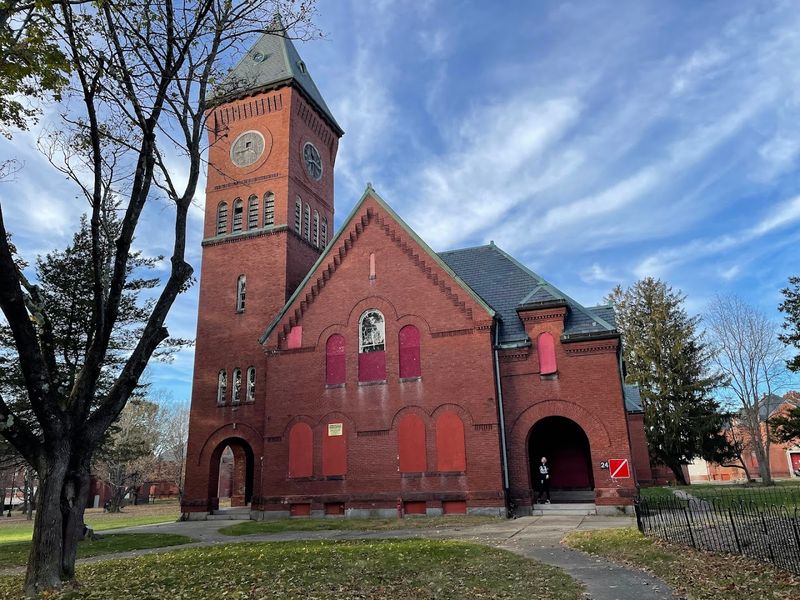
The hospital was built at a time when mental health treatment was shifting toward what reformers called moral treatment, the idea that a calm, structured environment could support healing. The Medfield campus was designed to be largely self-sufficient, with its own farm, power plant, and workshops where patients could work as part of their daily routine.
At its peak, the hospital housed over 2,000 patients. The sheer scale of the operation is visible even now in the number and size of the buildings spread across the property.
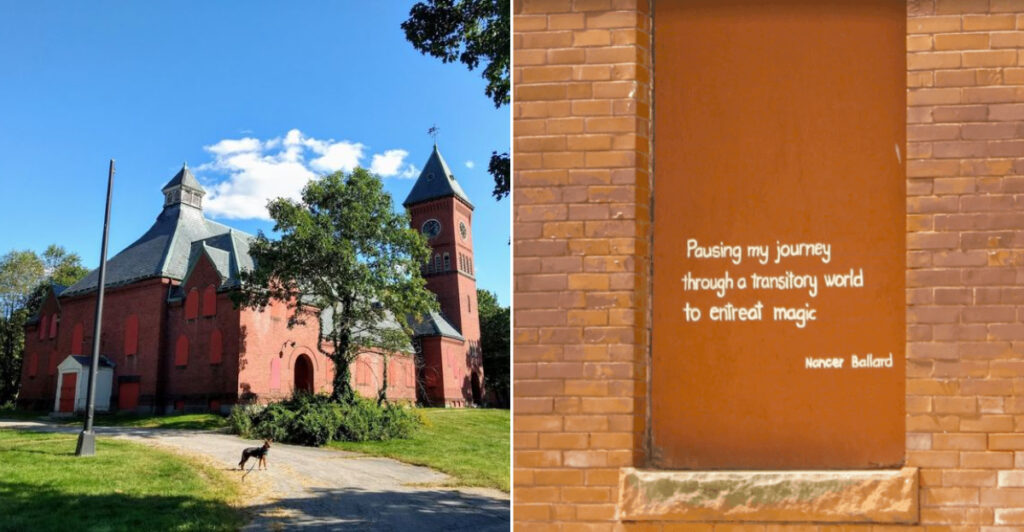
Walking the grounds today, you notice the layers of time embedded in every surface. Painted signs still mark old doorways.
Brick pathways lead to buildings that have not been entered in decades. The history here is not abstract or textbook-style.
It is right in front of you, tangible and a little overwhelming, in the best possible way.
Belleforge and the Vision Behind the Transformation
The organization driving the arts transformation at Medfield State Hospital is called Belleforge, a nonprofit that has been working with the town to activate the campus in thoughtful, community-centered ways. Their approach does not involve tearing down or covering up the past.
The goal is to work with the existing structures and spaces to build something new around them.
Belleforge has hosted outdoor concerts on the grounds, turning the wide open areas between buildings into informal performance venues. Tables, chairs, and seating areas have been set up in spots where patients once gathered outdoors, giving the spaces a new kind of life without erasing what they once were.
The long-term plan includes developing an arts center within one or more of the historic buildings, which would give artists, performers, and visitors a permanent home on the campus. Progress is steady, and the energy behind the project feels genuine and locally rooted.
What the Buildings Look Like Up Close
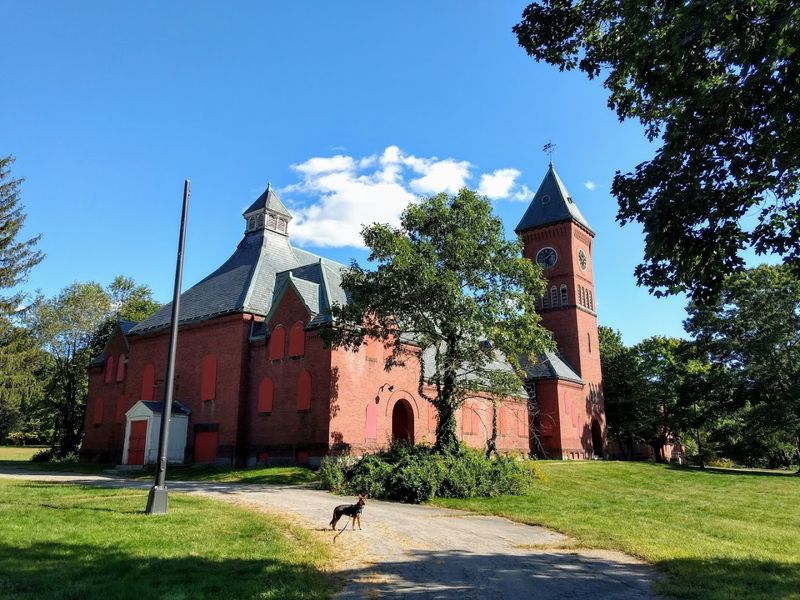
From a distance, the buildings at Medfield State Hospital look almost stately. Up close, they tell a more complicated story.
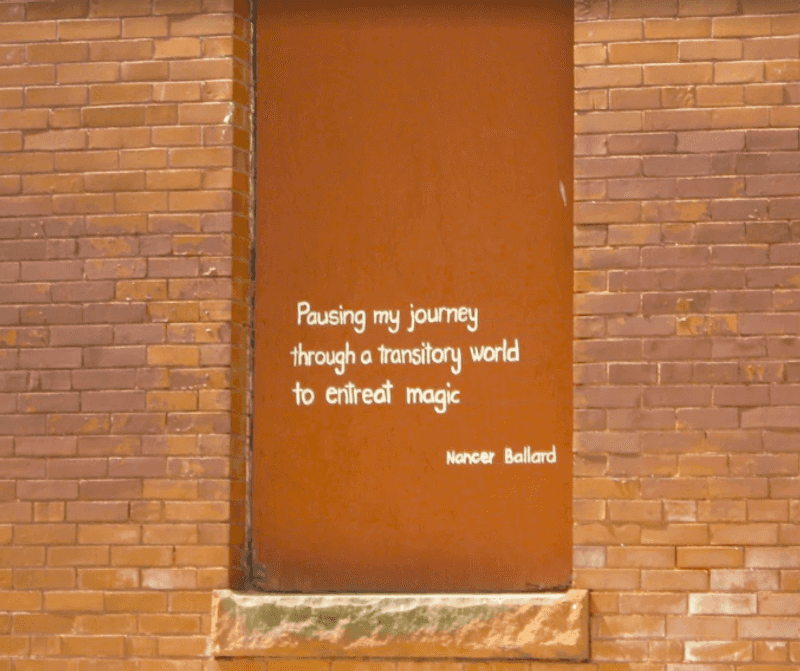
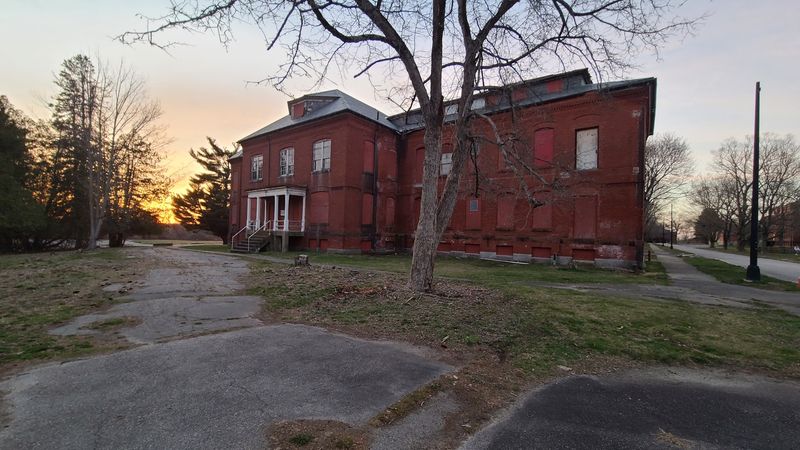
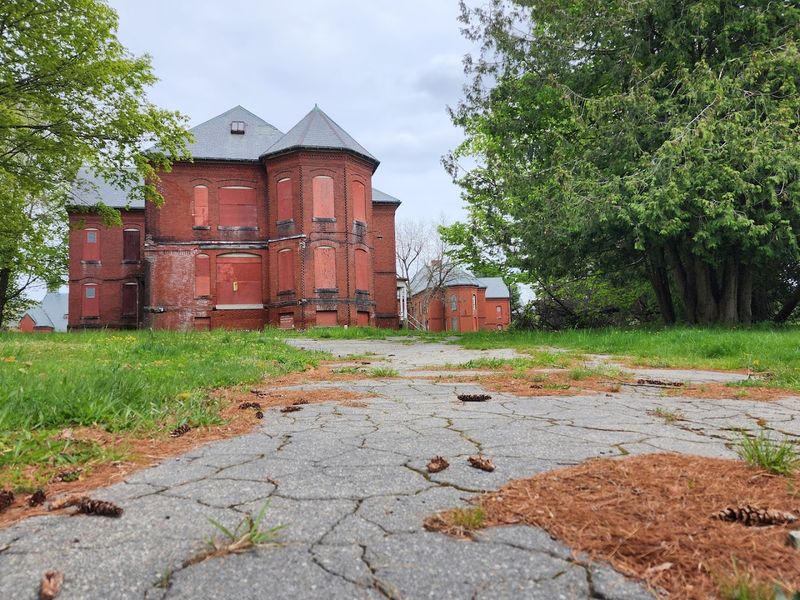
Most are boarded up, their windows covered with plywood or metal sheets that have darkened over the years. Paint peels from trim work that was once carefully maintained.
Despite the weathering, the architectural quality is still evident. Arched doorways, decorative brickwork, and multi-story facades give each building its own character.
Some structures are larger administration buildings, while others are smaller residential cottages that housed patients in a more homelike setting.
Visitors are not permitted to enter any of the buildings, which are structurally compromised in places and remain off-limits for safety reasons. But the exteriors alone offer an extraordinary amount to take in.
Photographers in particular find the variety of textures, shadows, and architectural details endlessly useful, and it is easy to spend hours moving from building to building without running out of new angles.
The Grounds as a Community Gathering Place
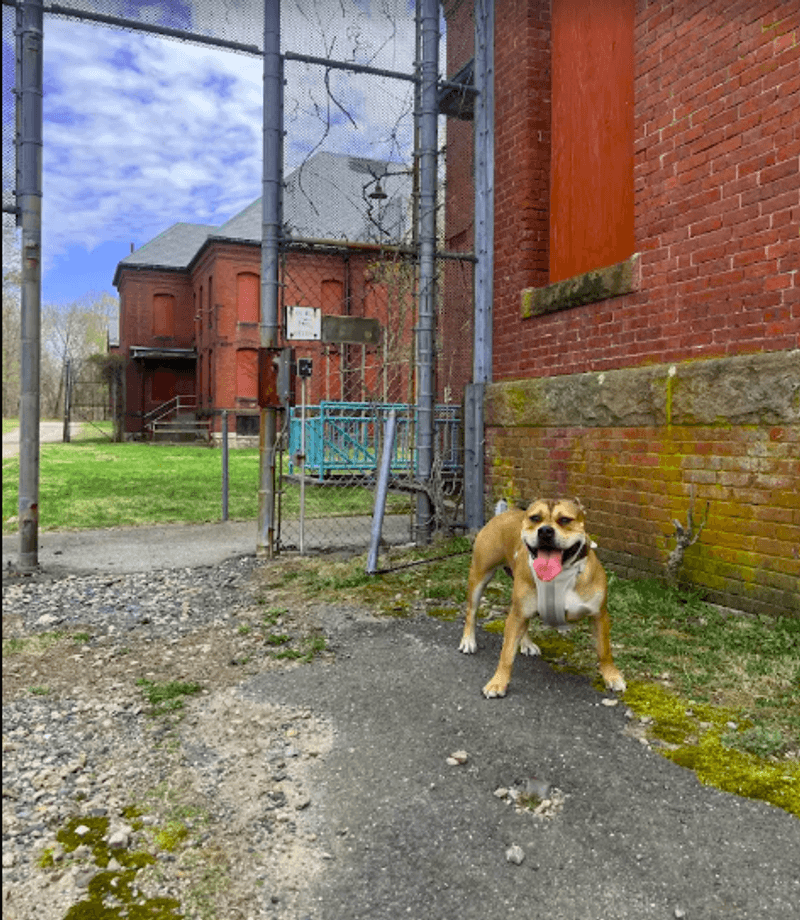
Long before any formal arts programming arrived, the people of Medfield had already claimed the campus as their own informal gathering space. Dog walkers, joggers, cyclists, and families have been using the wide paved roads and open lawns for years, turning the grounds into a kind of unofficial town park.
On any given weekend morning, you will find a steady stream of visitors making their way through the campus. The atmosphere is relaxed and neighborly.
People stop to chat, dogs get acquainted, and the pace slows down in a way that feels rare these days.
The community connection to the site runs deep. Some visitors have family members who worked at the hospital over the decades it was in operation.
Others simply grew up knowing the campus as a local landmark. That personal investment in the place makes the current arts transformation feel less like a development project and more like a community reclaiming something that already belongs to them.
Photography and the Campus That Keeps Giving
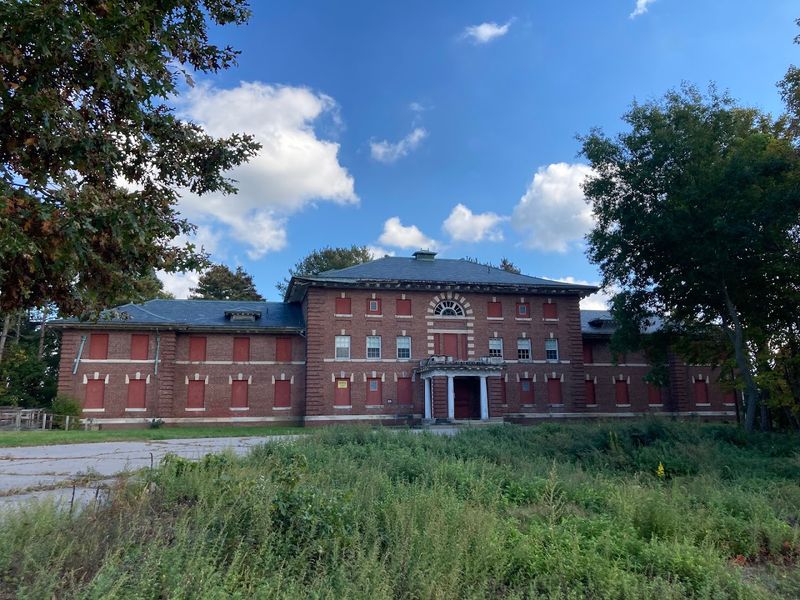
Few places in eastern Massachusetts offer the range of photographic backdrops that Medfield State Hospital does. The combination of aged brick, wide open roads, mature trees, and varied building styles creates a setting that works for almost any type of shoot.
Senior portrait photographers have discovered the campus in a big way. The variety of locations within walking distance of each other means a single session can move through multiple completely different-looking backdrops without anyone needing to get in a car.
The campus has also attracted editorial photographers, fine art photographers, and urban explorers who document historic and abandoned spaces. What makes it particularly useful is the layout.
Buildings are spaced far enough apart that multiple shoots can happen simultaneously without interfering with each other. The wide roads keep cars out of the frame naturally.
Whether the light is flat and overcast or sharp and golden in late afternoon, the campus tends to deliver something worth keeping.
The Charles River Runs Right Along the Edge
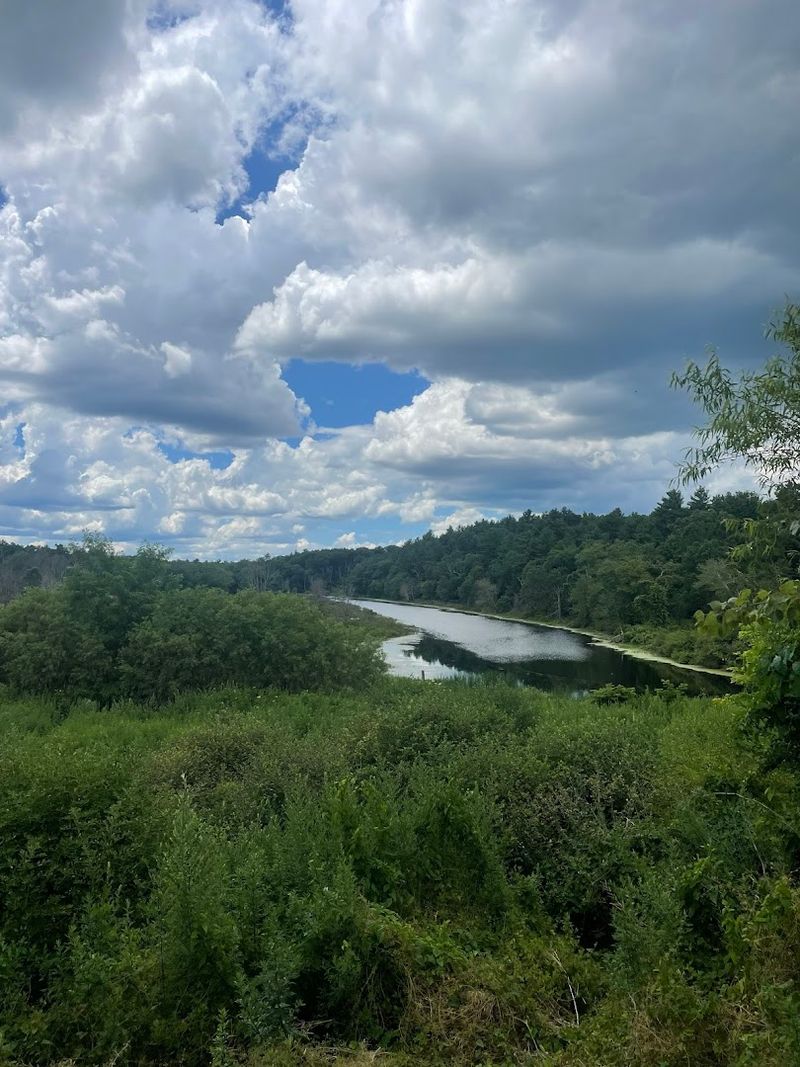
One detail that surprises many first-time visitors is the proximity of the Charles River to the campus. The river runs along the edge of the property, and a walk along its banks adds a completely different dimension to a visit to the site.
The section of the Charles near Medfield is quiet and relatively undeveloped, with tree-lined banks and calm water that reflects the surrounding woods. It is a sharp contrast to the built environment of the campus, and moving between the two feels like stepping between different worlds within the same short walk.
The river path is accessible from the campus grounds and offers a natural extension to any visit. Birdwatching is good here, particularly during migration seasons.
The combination of river access, open meadow areas, and historic architecture makes the Medfield State Hospital site genuinely multi-layered in a way that many single destinations simply are not.
Seasonal Shifts That Change Everything
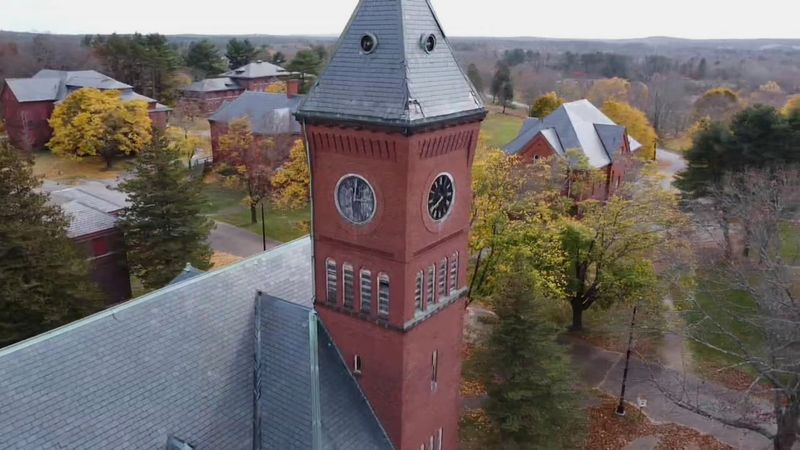
The campus at Medfield State Hospital looks different in every season, and each version has its own appeal. Fall is arguably the most striking time to visit.
The mature trees that line the campus roads turn deep red, orange, and gold, and the color frames the old brick buildings in a way that feels almost theatrical.
Winter strips the trees bare and gives the campus a starker, more exposed quality. The buildings stand out more clearly against gray skies, and the quiet deepens in a way that feels different from the rest of the year.
Spring brings new growth that softens the edges of the landscape, and summer fills the grounds with long shadows and green canopy. Outdoor concerts organized by Belleforge tend to happen in the warmer months, adding sound and movement to spaces that are otherwise still.
Visitors who return across seasons often say the place feels like several different destinations layered into one.
The Medfield on the Charles Car Show
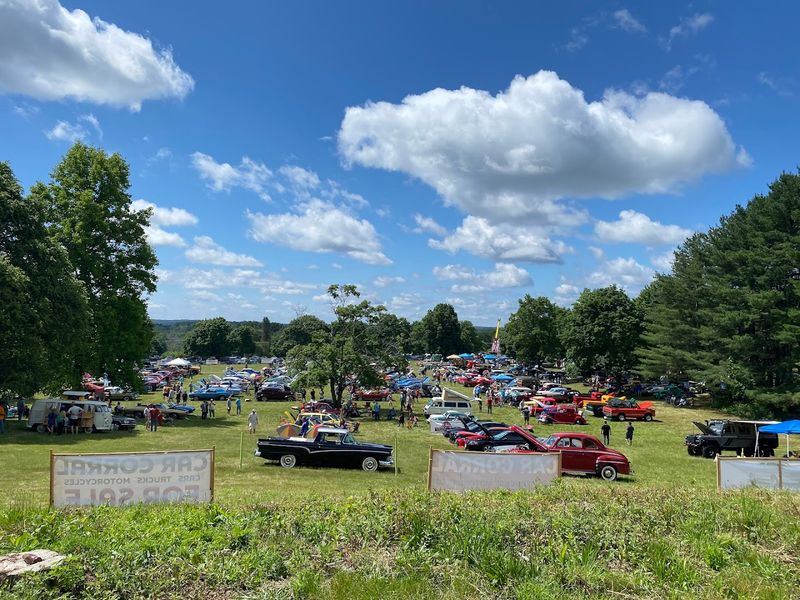
Each year, the campus hosts the Medfield on the Charles car show, an event that draws enthusiasts and curious visitors to the grounds for a day of classic vehicles, community socializing, and open-air browsing. The wide roads and open paved areas make the campus a natural fit for this kind of event.
The car show has become a local tradition that brings a different kind of energy to the campus than the arts programming does. Vendors set up, families spread out across the grounds, and the atmosphere takes on a festive quality that feels genuinely grassroots.
Events like this one are part of what makes the transformation of the campus feel sustainable. Rather than waiting for a finished arts center to attract visitors, the community has been activating the space in multiple ways simultaneously.
The car show, the concerts, the photography sessions, and the daily dog walks all layer together into something that already functions like a real destination.
Practical Things Worth Knowing Before You Go
The campus at 45 Hospital Road in Medfield, MA is open to the public, and admission is free. Parking is available in a small lot near the entrance, though it fills up quickly on busy weekends.
Arriving earlier in the day tends to make the experience more relaxed, both in terms of parking and foot traffic on the grounds.
Visitors should be aware that entering any of the buildings is not permitted. The exteriors are accessible and there is plenty to see without going inside.
Comfortable walking shoes are a good idea since the grounds cover a large area and some surfaces are uneven.
Dogs are welcome and very much present, so if you have a dog-reactive pet, keep that in mind. The grounds are not a formal park with maintained facilities, so bringing water is a smart move.
The campus rewards visitors who slow down and pay attention to what is right in front of them.
Why This Place Feels Different From Other Historic Sites
Most historic sites ask you to look at the past through a curated lens, with interpretive signs, guided tours, and carefully managed narratives. Medfield State Hospital does not work that way, at least not yet.
The campus is largely unmediated, which means you are left to make sense of it yourself.
That open-ended quality is part of what draws people back. There is no single correct way to experience the grounds.
Some visitors come for quiet reflection, others for creative work, and others simply to walk and let the surroundings sink in at their own pace.
The arts transformation underway through Belleforge is adding new layers to that experience without overwriting what already exists. The goal seems to be creating something that honors the complexity of the site rather than smoothing it over.
For a place with as much history as Medfield State Hospital carries, that feels like exactly the right approach, and it makes the campus worth watching as it continues to evolve.
The Campus That Started It All
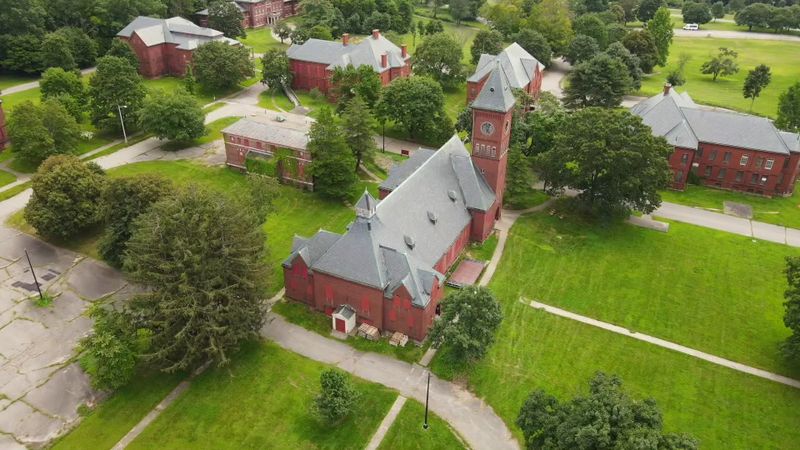
Not every historic site gets a second act, but the grounds at 45 Hospital Road in Medfield, Massachusetts are working toward exactly that. Medfield State Hospital, located in Medfield, MA 02052, opened in 1892 and operated as a psychiatric facility for over a century before closing in 2003.
The campus spans roughly 900 acres and includes more than 50 buildings, most of them constructed in the Victorian Kirkbride style that emphasized fresh air, open space, and natural surroundings as part of treatment.
Today, the town of Medfield owns the property, and a nonprofit organization called Belleforge has been leading efforts to transform parts of the campus into a working arts and cultural destination. The bones of the place are extraordinary, and anyone who has walked the grounds can tell you that the atmosphere is unlike anything else in the region.
Share this story