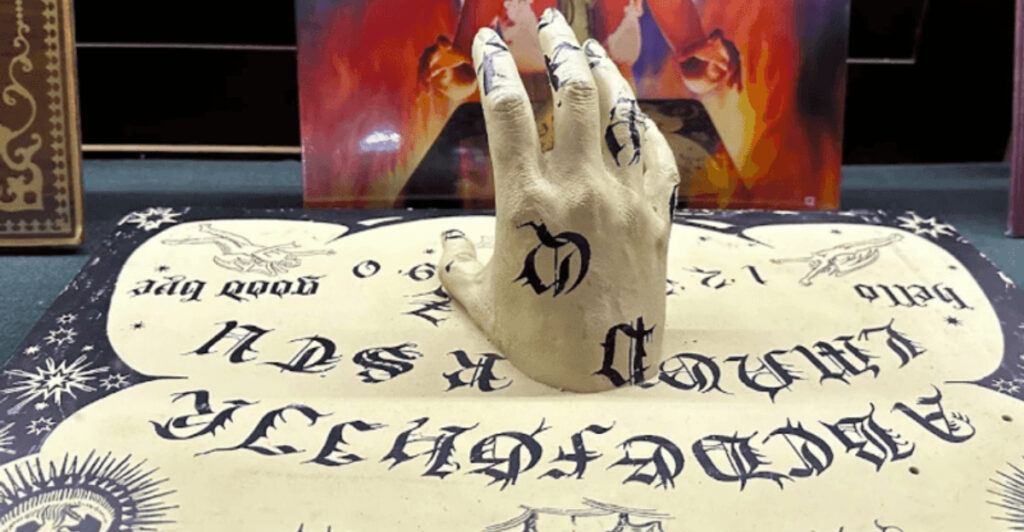
Salem, Massachusetts has no shortage of curious places to explore, but one small museum on Essex Street has built a reputation that stretches far beyond the city limits. This shop claims to house the world’s largest public display of Ouija boards and spirit boards, and that is not a title it holds quietly.
From rare antique boards to pop culture collectibles, the collection covers more than a century of history packed into one fascinating space. Whether you are a true believer, a skeptic, or simply someone who grew up hearing cautionary tales about these boards at slumber parties, this museum offers something that genuinely surprises most people who walk through the door.
The story behind how this collection came together, what makes it so unique, and why it keeps drawing people back is well worth exploring from start to finish.
A Collection That Earns the Word ‘Largest’
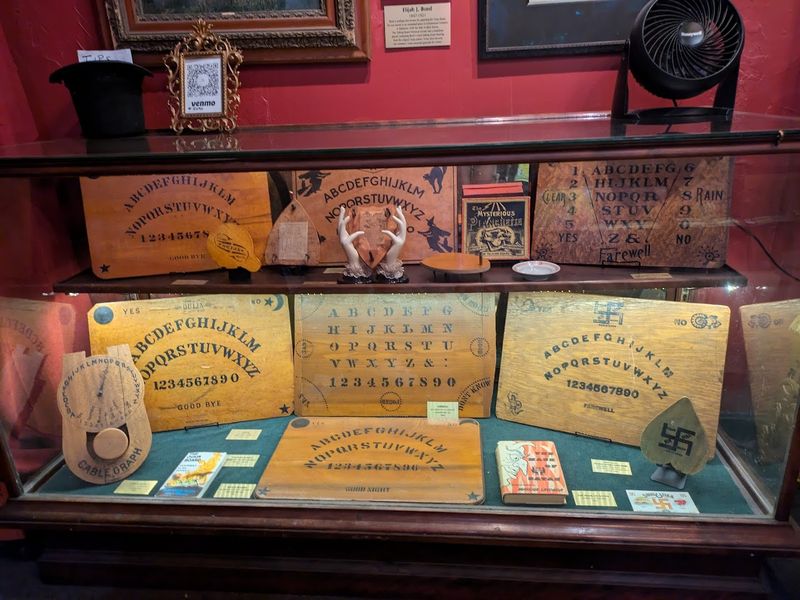
The claim of holding the world’s largest public display of Ouija boards is not something the Salem Witch Board Museum throws around casually. The collection spans well over a century of board history, featuring pieces that range from Victorian-era spirit boards to modern limited editions tied to films, music, and pop culture.
What makes the display genuinely impressive is the sheer variety. Not all boards look alike, and the museum makes that point clearly by presenting boards in wildly different shapes, sizes, materials, and artistic styles.
Some are delicate and ornate, others are bold and graphic, and a few are outright unexpected in their design choices.
Movie memorabilia boards and music-themed boards share wall space with boards that carry documented histories of their own. The range is broad enough that even someone who thought they already knew everything about Ouija boards tends to leave with a few surprises they did not anticipate finding here.
The Real History of the Ouija Board
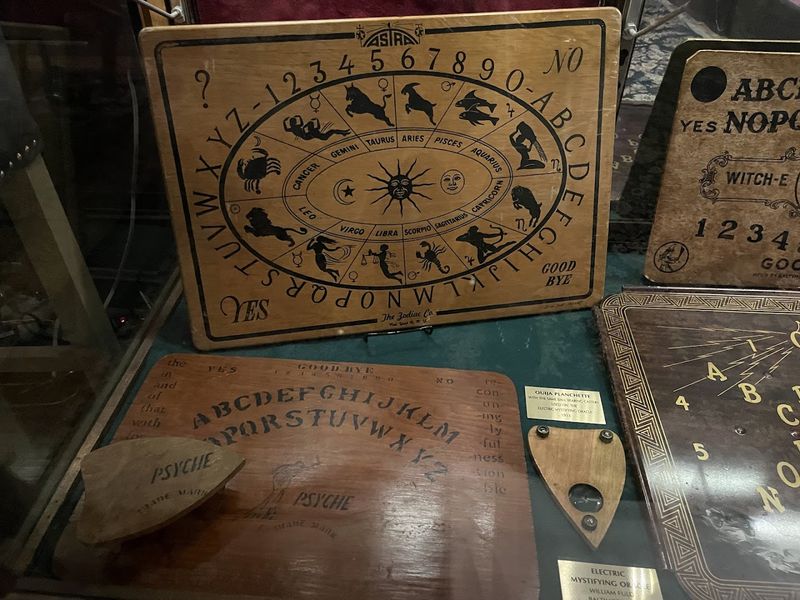
Most people arrive at the Salem Witch Board Museum with a version of Ouija board history shaped by horror movies and childhood warnings. The actual documented history is considerably more nuanced and, in many ways, more interesting than the fictional versions.
The Ouija board was patented in 1891 and was initially marketed as a parlor game rather than a tool for anything supernatural. It sold well, and its popularity shifted and evolved through different cultural eras, picking up layers of meaning and mythology along the way that had little to do with its commercial origins.
John walks through this timeline in a way that connects the dots between the board’s early days as a novelty product and its later status as a cultural flashpoint. Understanding that arc changes how most people think about the boards entirely, and the museum’s collection illustrates each chapter of that history with actual physical artifacts rather than just text panels.
Why Salem Is the Perfect Home for This Museum
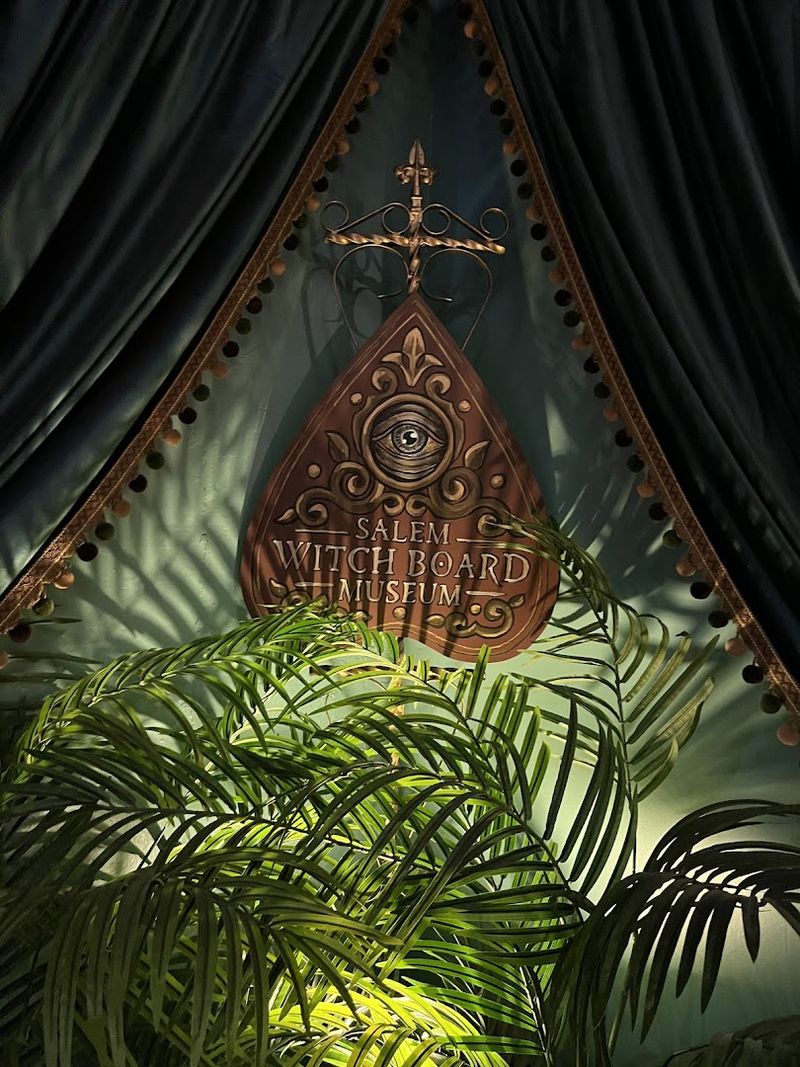
Salem carries a reputation built on centuries of history tied to witch trials, occult interest, and a tourism culture that leans fully into the city’s unusual past. Placing a museum dedicated to spirit boards in Salem is not a random choice; it is a natural fit that the city’s identity actively supports.
The city draws millions of visitors annually, with October being the most intense period of activity. But Salem’s appeal extends well beyond Halloween season, and the Salem Witch Board Museum benefits from that year-round curiosity.
People come to Salem specifically because they are interested in history that sits outside the mainstream, and a museum about Ouija boards fits squarely within that interest.
Essex Street, where the museum is located, keeps the foot traffic consistent across seasons. The museum’s all-week schedule and 6 PM closing time allow it to capture visitors who spend full days in the city and are still looking for something worth their time in the late afternoon hours.
Pop Culture Boards That Change the Game
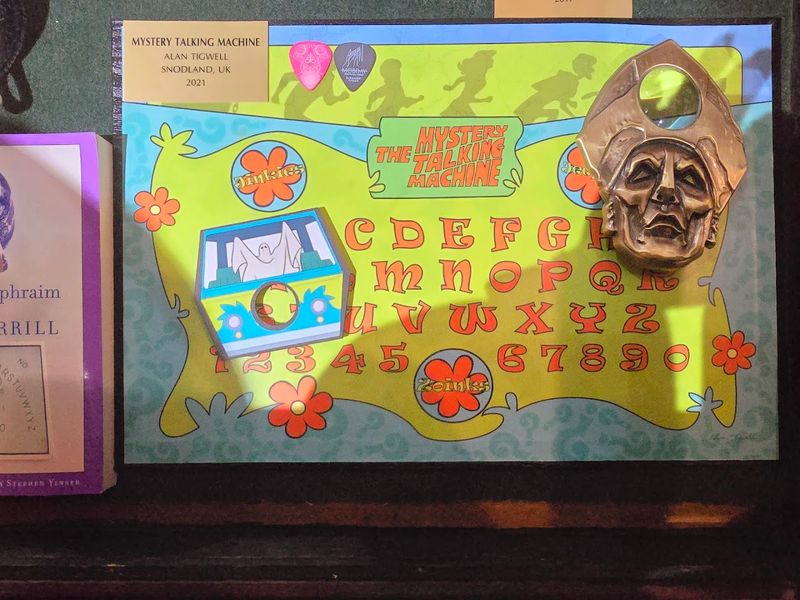
One of the more unexpected sections of the collection involves boards tied directly to movies, music, and entertainment. These are not cheap novelty items but actual collectible pieces that document how deeply the Ouija board embedded itself into popular culture throughout the twentieth century and beyond.
Film fans will recognize certain designs immediately, while music enthusiasts may spot boards connected to artists or albums they know well. The breadth of pop culture representation in the collection reinforces the idea that the Ouija board was never just a fringe curiosity but a mainstream cultural object that appeared across an enormous range of contexts.
Seeing these pieces grouped together with Victorian-era boards and rare antiques makes the timeline feel complete. The collection does not treat pop culture boards as lesser items; they occupy the same serious display space as the oldest pieces, which reflects John’s genuine respect for every chapter of the board’s commercial and cultural journey.
The Gift Shop and Boards Available to Buy
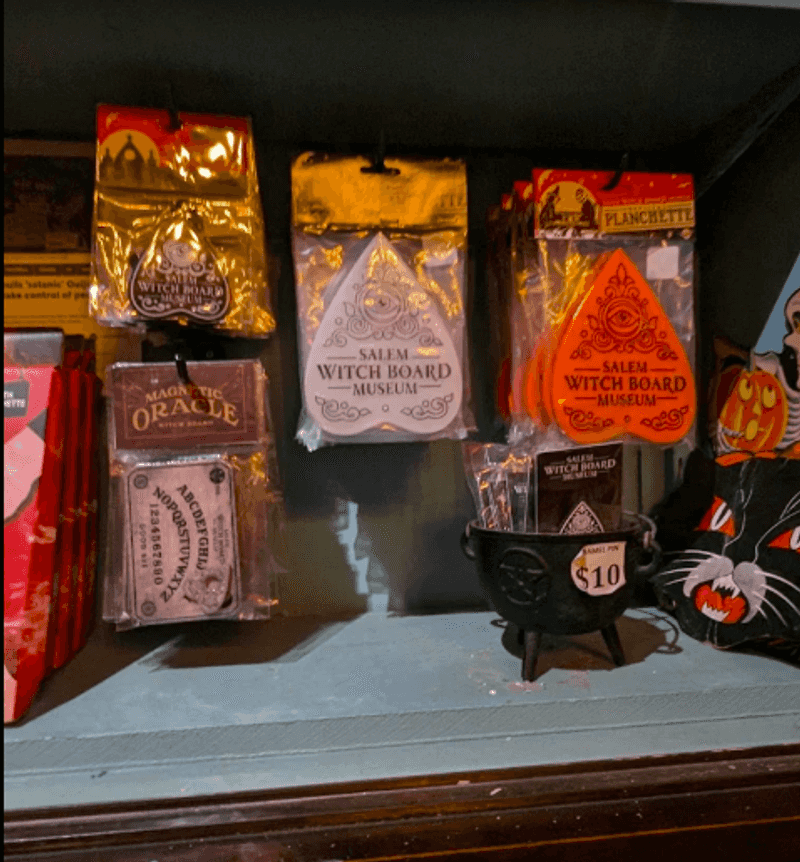
Beyond the museum itself, the Salem Witch Board Museum also functions as a place where people can purchase spirit boards. The gift shop portion of the space is accessible for free, meaning anyone can browse without paying the museum admission fee, which runs around ten dollars per person.
John takes his time with anyone interested in buying a board. He walks through what is available, shares any stories or history associated with specific pieces, and gives people room to make their own decision without pressure.
That approach has turned the purchasing experience into something closer to a personal consultation than a standard retail transaction.
For someone who has just spent time learning about the history and variety of these boards, the gift shop hits differently than it would have before the tour. People leave with boards that feel chosen rather than grabbed, which is exactly the kind of retail experience that turns a one-time visit into something people talk about for a long time afterward.
What to Expect When You Walk In
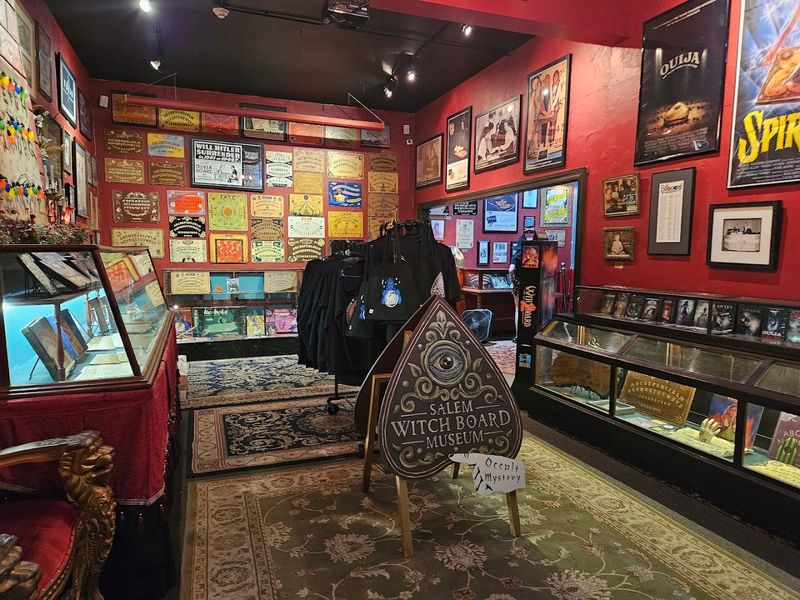
First-time arrivals sometimes describe a moment of being briefly overwhelmed when they step inside the museum. The boards are everywhere, covering walls from floor to ceiling in a way that takes a few seconds to fully process.
It is a dense, layered display that rewards close attention rather than a quick scan.
The space is small by traditional museum standards, which actually works in its favor. The compact layout means nothing is tucked away or easy to miss, and the proximity to each piece makes the details visible in a way that larger, more spread-out collections sometimes fail to achieve.
John is typically present and ready to engage from the moment someone enters. The experience can be as guided or as self-directed as a visitor prefers, and he adjusts accordingly.
Some people stay fifteen minutes, others end up staying two hours or more, and the museum accommodates both without anyone feeling rushed or out of place.
Boards With Stories Attached
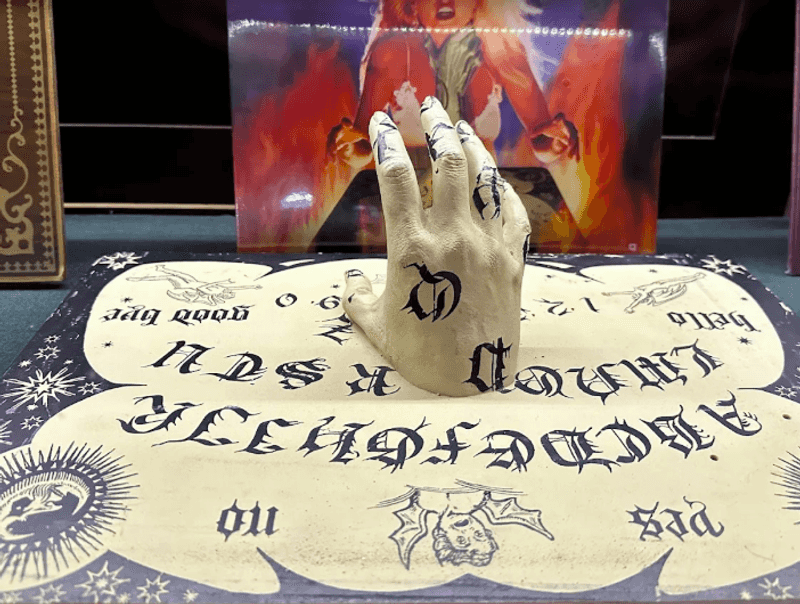
Several boards in the collection come with documented histories or stories connected to their previous owners. John shares these accounts during the tour, and they add a layer of context that transforms individual pieces from objects into artifacts with identities.
Some of the stories are straightforward historical accounts tracing a board’s path from one owner to another across decades. Others fall into the category of unexplained experiences that previous owners reported and passed along with the board when it changed hands.
John presents both types with equal seriousness and without embellishment.
This storytelling approach is one of the reasons people who expected a quick fifteen-minute look end up staying considerably longer. Each board becomes a conversation starter rather than just a static display piece, and the cumulative effect of hearing multiple stories in sequence builds a kind of momentum that keeps attention fully engaged.
The boards stop being curiosities and start feeling like chapters in a much longer story.
A Destination for Skeptics and Believers Alike
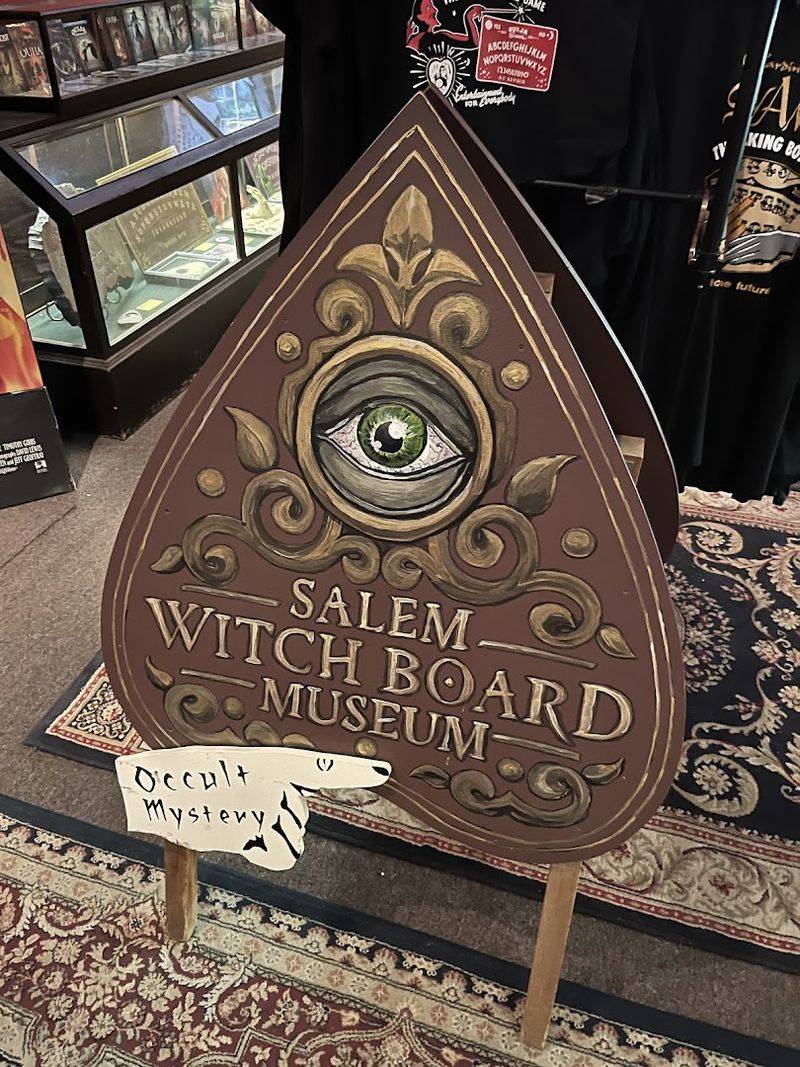
One of the more quietly impressive things about the Salem Witch Board Museum is how effectively it bridges the gap between people who take spirit boards very seriously and people who arrive thinking the whole subject is nonsense. That gap is wider than it might seem, and most museums that deal with fringe history struggle to speak to both groups at once.
The approach here centers on documented history and verifiable facts rather than pushing any particular interpretation of what these boards can or cannot do. That foundation gives skeptics something solid to engage with while still leaving room for the more open-ended questions that believers tend to bring.
People who walked in expecting to feel dismissive of the whole thing often leave with a genuinely shifted perspective, not because anyone tried to convert them to a particular viewpoint, but because the historical record itself is more complex and interesting than most people realize going in. That outcome is the museum’s quiet achievement.
Visiting During Peak Season vs. Off-Season
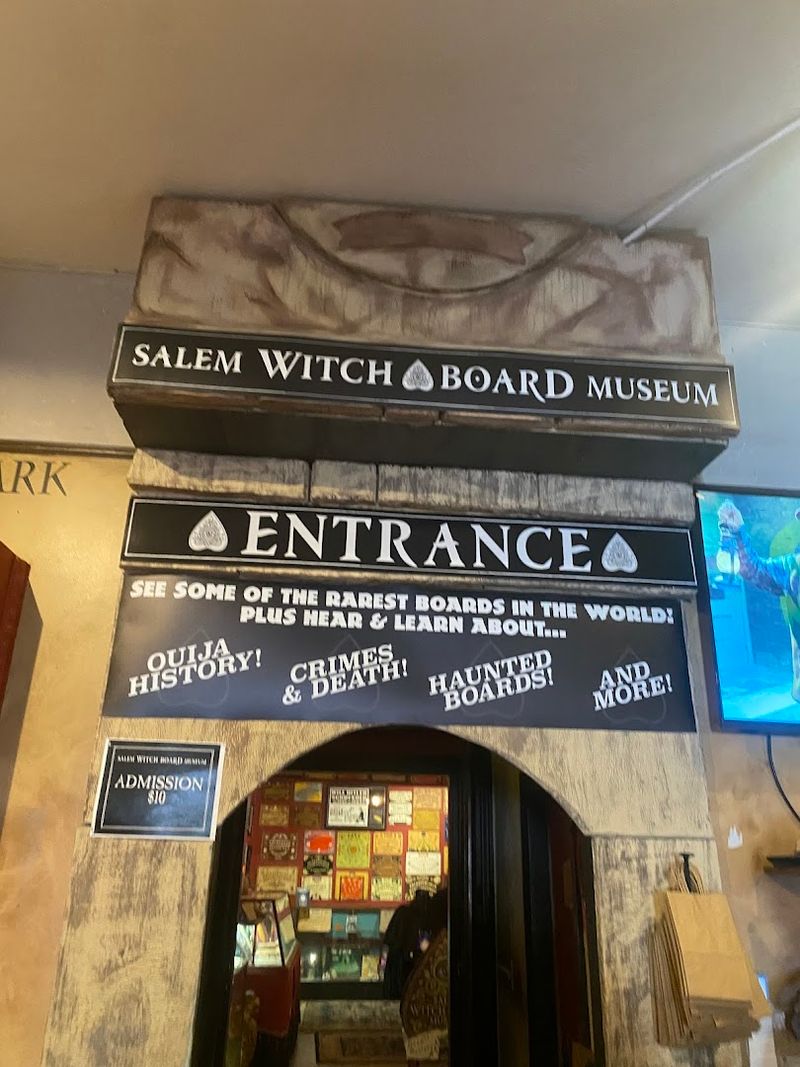
Salem in October is a city operating at full capacity, and the Salem Witch Board Museum is no exception to that seasonal surge. Halloween weekend draws the largest crowds, and the museum has been known to stay packed with people rotating through at a steady pace throughout the day.
Even during those peak periods, John makes it a point to give each person or group meaningful time with the collection. The museum does not turn into a conveyor belt experience just because the line is long.
That consistency under pressure is something that separates this place from attractions that only shine when conditions are easy.
Off-season visits have their own appeal. Arriving in late winter or early spring often means having the museum largely to yourself, which changes the dynamic considerably.
The conversation becomes more personal, the pace slows down, and the experience takes on a quieter character that some people actually prefer over the high-energy October version.
Why This Museum Sticks With You After You Leave
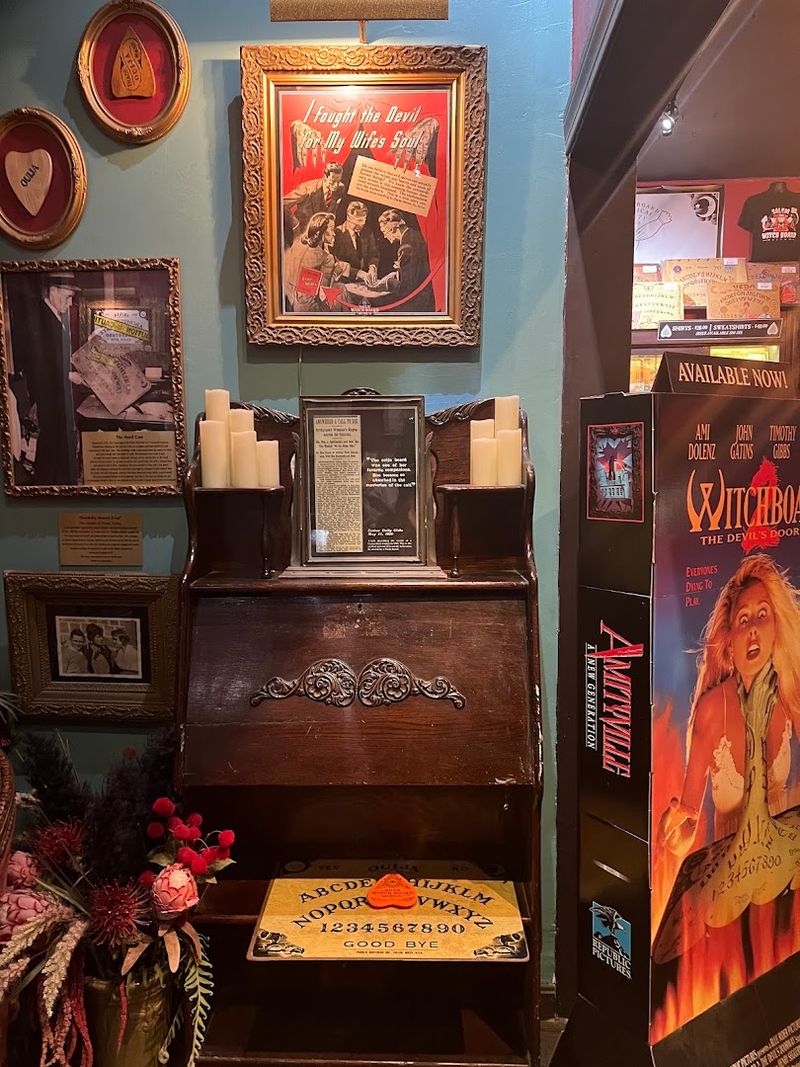
A lot of Salem attractions are memorable in the moment but fade quickly once the day is over. The Salem Witch Board Museum tends to linger longer than most, and the reason for that comes down to the combination of genuine historical content and personal storytelling that runs through the entire visit.
People leave having learned specific things they did not know before, which gives the experience a stickiness that pure spectacle rarely achieves. The history of the Ouija board touches on patent law, Victorian parlor culture, religious controversy, Hollywood, and documented accounts of unusual experiences, which is a wider range of territory than most visitors expect from a museum of this size.
The museum also sells boards, so some people leave with a physical object that continues the conversation at home. For those who do not buy anything, the stories and facts they carry out tend to resurface in conversations with friends and family for weeks after the visit, which might be the best measure of a museum’s lasting value.
Where It All Begins: The Address and Setting
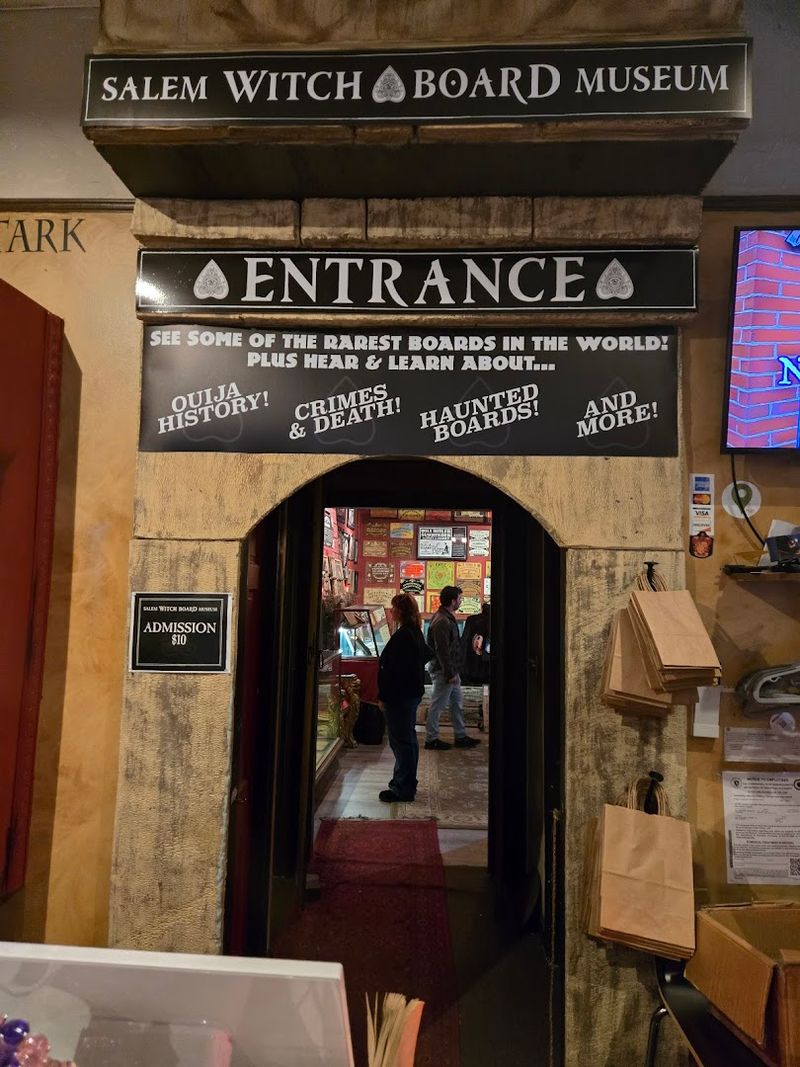
Right in the heart of Salem’s most active stretch of shops and attractions, the Salem Witch Board Museum sits at 127 Essex St, Salem, MA 01970. Essex Street is one of the city’s most well-traveled corridors, lined with historic architecture, specialty shops, and curious tourists at almost any time of year.
The museum’s location puts it within easy walking distance of many other Salem landmarks, which makes it a natural stop during a full day of exploring the city. Arriving here feels straightforward, and the storefront announces itself clearly enough to catch attention without being flashy.
Hours run from 11 AM to 6 PM every day of the week, which is notably later than several other Salem museums. That extended schedule gives afternoon explorers a solid opportunity to visit without rushing, making it a reliable anchor for the tail end of a busy Salem itinerary.
Share this story