Little Bighorn Battlefield National Monument preserves the site of the pivotal June 1876 battle that shaped the history of the American West. Visitors can walk Last Stand Hill, drive the self-guided battlefield route, and explore the Indian Memorial while learning about the events that unfolded here.
The monument honors both the Native warriors and U.S. soldiers who fought in the battle, offering a more complete view of its history. With ranger programs, guided tours, and the historic Custer National Cemetery, it remains one of Montana’s most important historic landmarks.
Where History Meets the High Plains: The Location and Setting
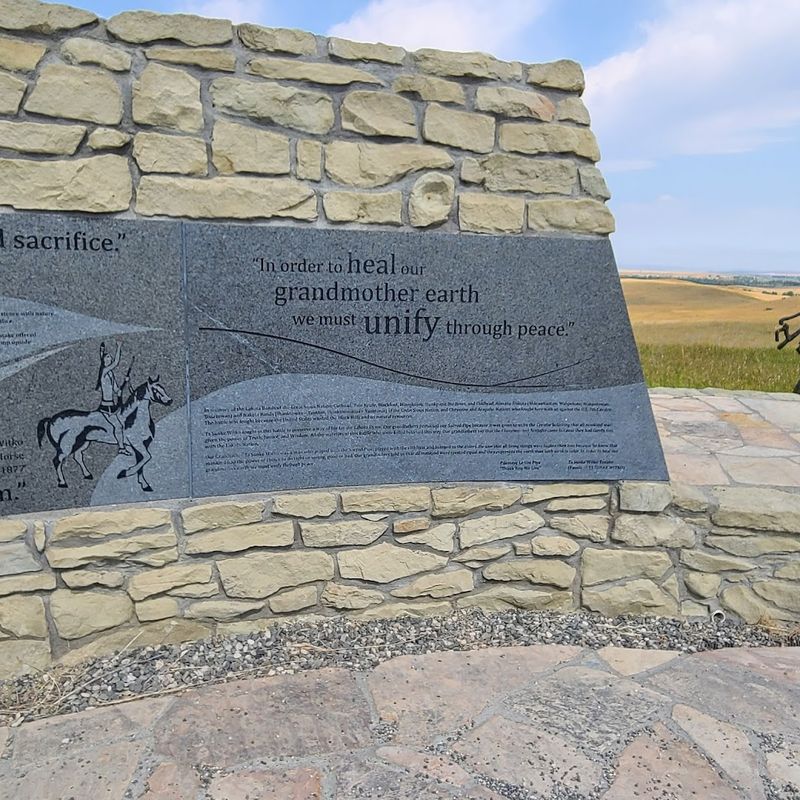
The address is Battlefield Tour Road, Crow Agency, MT 59022, and the drive there already starts to set the mood. The high plains of southeastern Montana stretch out in every direction, dry and golden, with the Little Bighorn River winding quietly through the valley below the ridge.
The landscape looks much the same today as it did in 1876, which is part of what makes this place feel so powerful. There are no skyscrapers on the horizon, no shopping centers crowding the view, just open sky and grass and the occasional hawk circling overhead.
The monument sits within the Crow Nation reservation, and that context matters. You are not just visiting a national park here; you are visiting land that carries deep meaning for Indigenous communities who have called this region home for generations. That awareness follows you the entire time you walk the grounds.
The Battle That Shocked a Nation: What Actually Happened Here
On June 25 and 26, 1876, a U.S. Army force led by Lieutenant Colonel George Armstrong Custer met a massive encampment of Lakota Sioux, Northern Cheyenne, and Arapaho warriors near the Little Bighorn River. Custer made the fateful decision to split his regiment of over 600 soldiers into three separate groups before fully understanding the size of the force he was facing.
The warriors, inspired by leaders including Sitting Bull and Crazy Horse, overwhelmed Custer’s column completely. All 210 to 268 men under Custer’s direct command were killed in what became known as Custer’s Last Stand, one of the most decisive Native American victories of the Plains Indian War.
The battle was not just a military event; it was a collision between two entirely different ways of life. The tribes were fighting to protect their territory and traditions against a government campaign designed to force them onto reservations. That context is impossible to separate from the story told here.
From Custer’s Name to a Shared Story: The Monument’s Evolving Identity
For many decades, this site carried a very different name. It was originally established as a national cemetery in 1879 and later called Custer Battlefield National Monument, a title that centered the story almost entirely on the U.S. Army’s experience.
In 1991, Congress officially redesignated the site as Little Bighorn Battlefield National Monument, a change that might seem small on paper but carried enormous symbolic weight. The new name acknowledged that the warriors who fought here were not a footnote; they were central to the story.
That shift in naming reflects a broader shift in how the monument presents its history today. Rangers and exhibits now make a clear effort to represent both sides of the conflict with equal respect and seriousness. Visitors consistently note that the balance feels genuine rather than forced, and that the information presented leans toward education rather than glorification of any single figure or faction.
Markers Across the Grass: Reading the Battlefield Like a Map
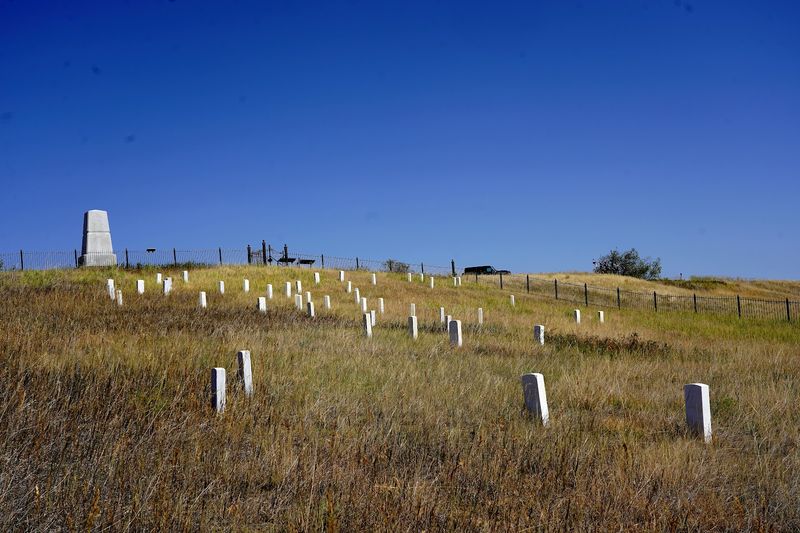
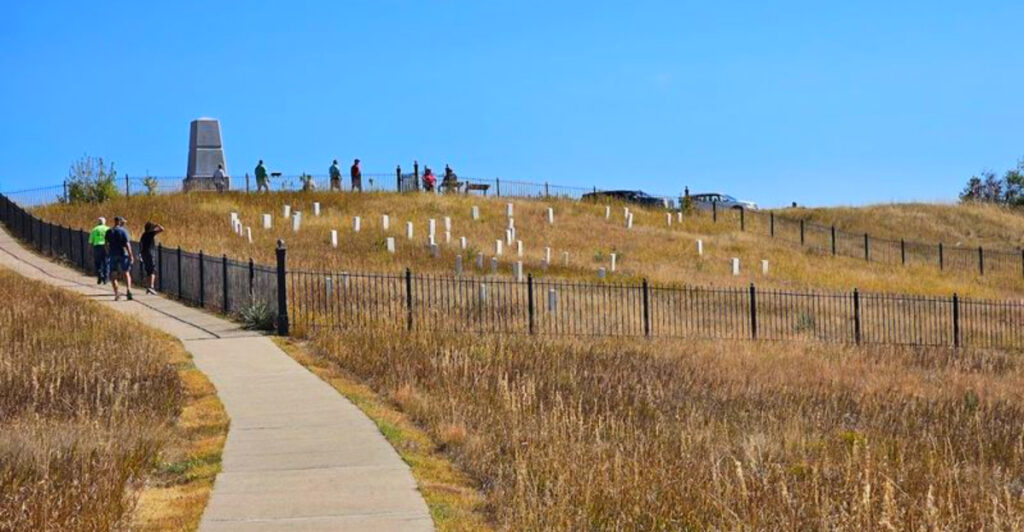
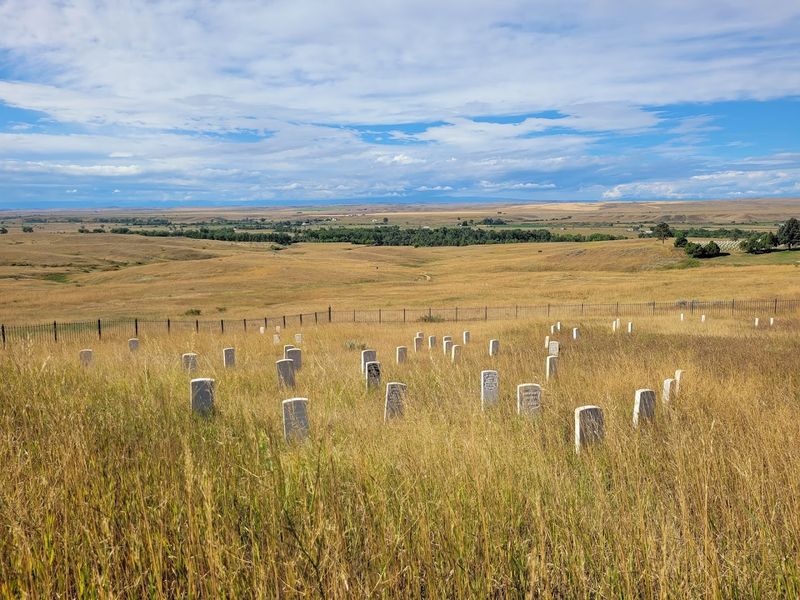
One of the most visually striking features of this battlefield is the way the markers are spread across the terrain. White marble stones indicate where U.S. soldiers fell, while red granite markers show where Native American warriors lost their lives during the fighting.
This is the only known battlefield in the country where commemorative markers identify the exact location where every soldier fell, making the landscape itself a kind of three-dimensional record of the battle’s movement and intensity. You can literally follow the story across the hills by reading the pattern of the stones.
Seeing dozens of markers clustered together on Last Stand Hill hits differently than reading about it in a book. The physical reality of that concentration of loss in such a small area is something no paragraph can fully capture. Plan to spend time just standing quietly at different points along the route, because the markers do most of the talking.
The Indian Memorial: A Long-Overdue Tribute
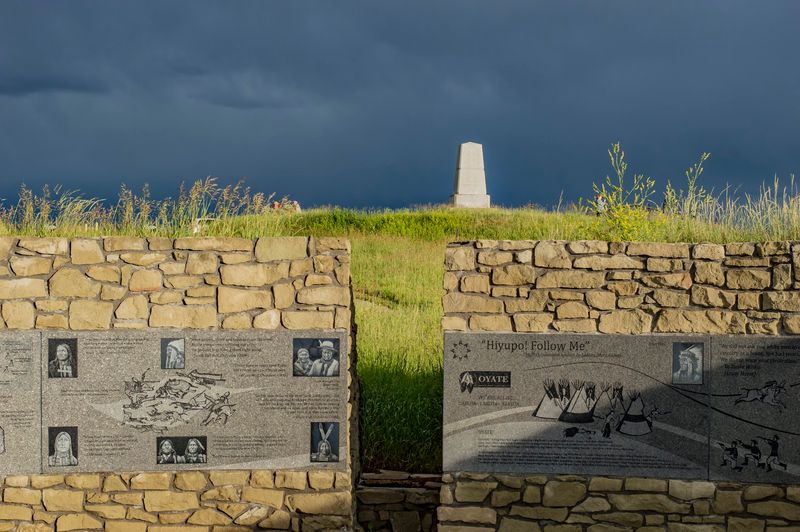
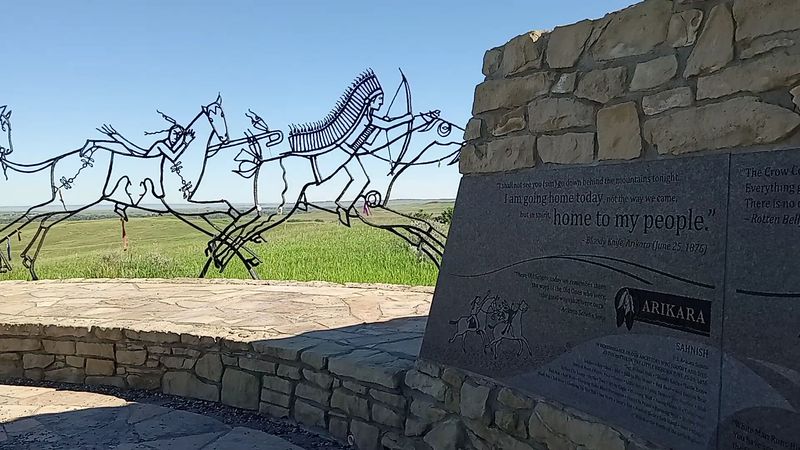
Completed in 2003 and further enhanced through the following years, the Indian Memorial stands near the entrance of the battlefield road and carries the theme “Peace Through Unity.” The circular design features bronze sculptures and relief panels that honor the Lakota Sioux, Northern Cheyenne, and Arapaho warriors who fought here.
The memorial took years of advocacy and planning to come to life, and its presence changes the entire tone of the site. Rather than arriving at a monument that feels like it belongs only to one group, visitors are immediately met with a structure that insists on a fuller, more honest version of history.
The design allows visitors to look through an opening in the wall directly toward the 7th Cavalry monument, a deliberate architectural choice that creates a visual dialogue between the two memorials. That quiet conversation between the two structures is one of the most thoughtful design decisions I have ever seen at any historic site, and it rewards those who take a moment to notice it.
Custer National Cemetery: A Resting Place for More Than One War
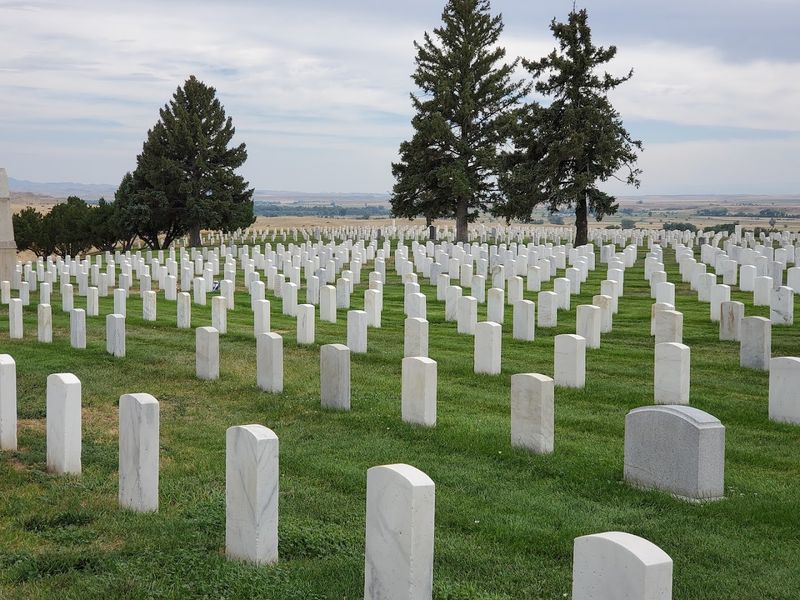
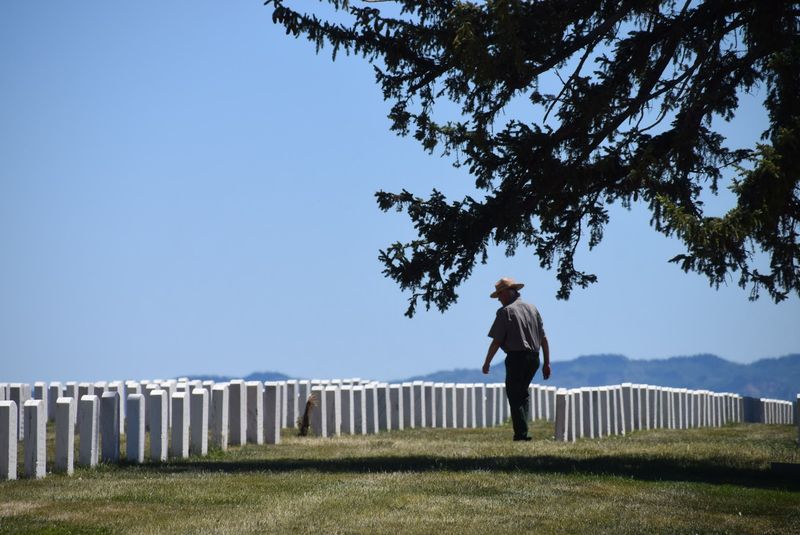
Many visitors do not realize that the grounds include a full national cemetery that serves as the final resting place for over 5,000 veterans from conflicts spanning well beyond the Battle of Little Bighorn. Custer National Cemetery holds the remains of veterans from the Civil War, World War I, World War II, Korea, and Vietnam, among others.
Walking through the cemetery is a genuinely humbling experience. The rows of white headstones stretch across a hillside that overlooks the same valley where the 1876 battle took place, creating an unexpected but powerful sense of continuity across generations of American military history.
Medal of Honor recipients are buried here as well, and their headstones carry a distinctive marker that stops you in your tracks when you spot one. The cemetery is open to visitors and is well maintained, with paved paths that make it accessible for most people. Do not skip this section of the grounds, because it adds a dimension to the visit that many people overlook entirely.
The Self-Guided Drive: 4.5 Miles of Living History
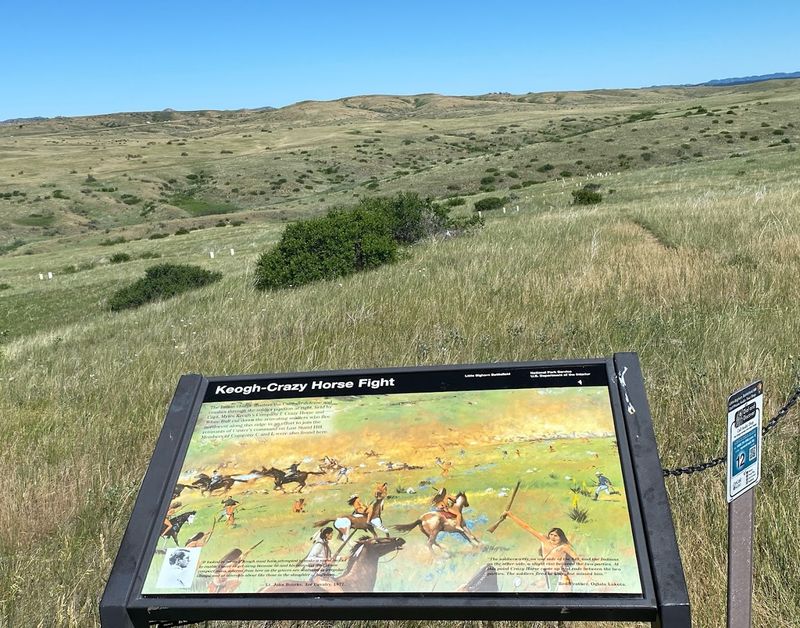
The main way to experience the battlefield is a 4.5-mile paved road that loops from the main area near Last Stand Hill down through the Reno-Benteen Battlefield and back. Pull-off areas appear regularly along the route, each one featuring informational kiosks that explain what happened at that specific location during the two-day battle.
The road is narrow, and that is not a minor detail worth skipping over. Large RVs and long vehicles have encountered serious difficulty navigating the route, and several visitors have had stressful experiences trying to turn around near the visitor center, especially during the ongoing construction period. If you are traveling in a large vehicle, research current conditions before you commit to the drive.
For everyone else, the self-guided experience is deeply satisfying. Some kiosks have QR codes that link to audio narration, though the audio quality has been mixed and is currently available only in English. Arriving with the NPS brochure in hand helps you connect each stop to the broader sequence of events.
Last Stand Hill: The Spot That Defined a Legend
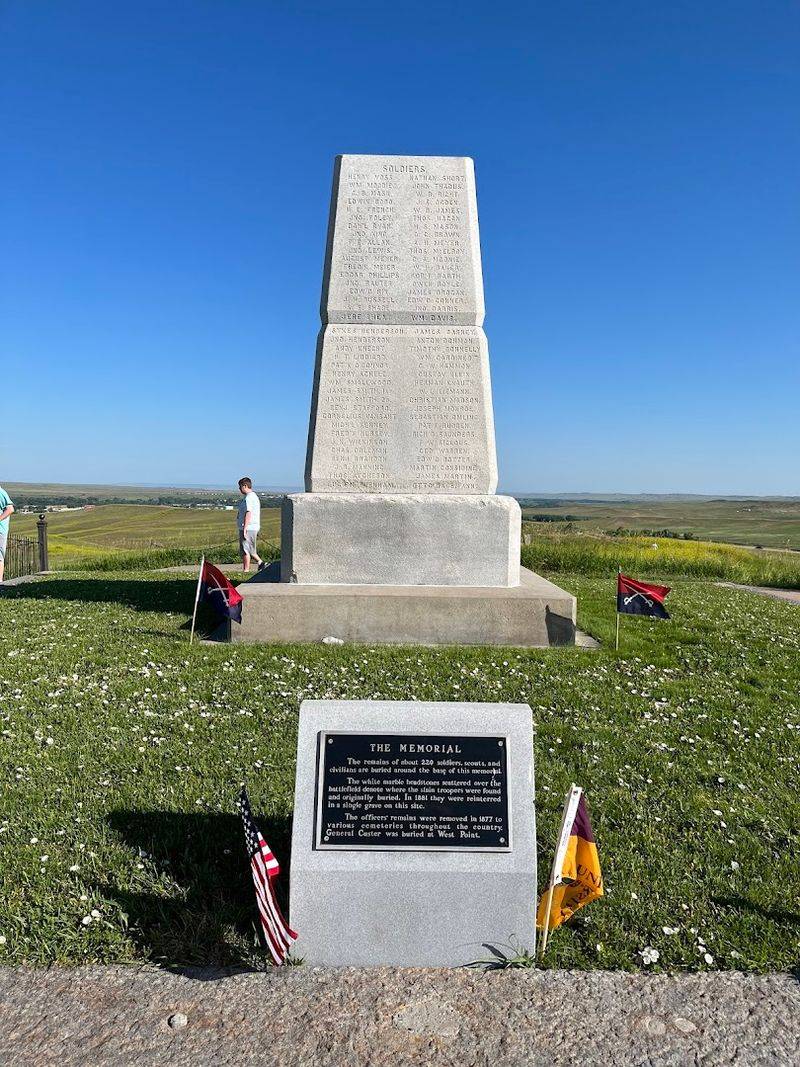
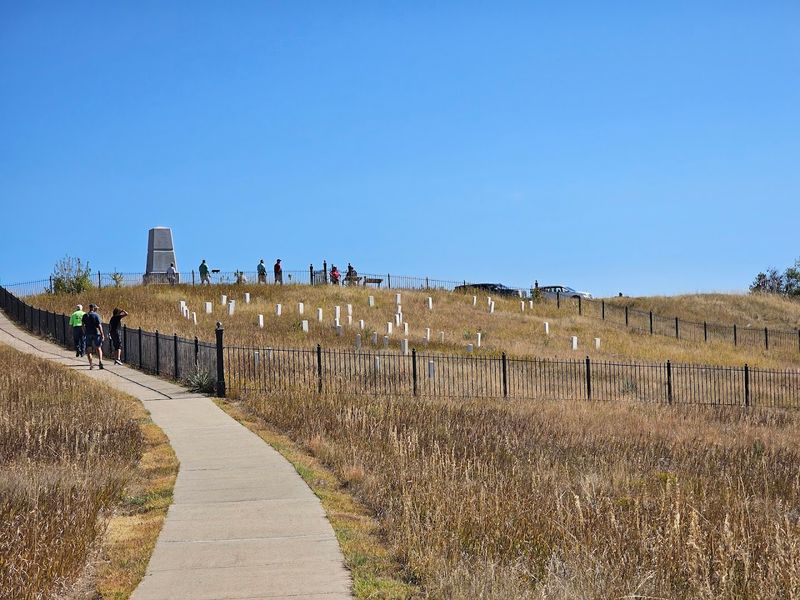
Last Stand Hill is the emotional centerpiece of the entire site, and the approach to it builds tension in a way that feels almost theatrical. A large granite monument marks the mass grave of the soldiers who fell on this hill, surrounded by a tight cluster of white marble markers that show just how compressed the final fighting was.
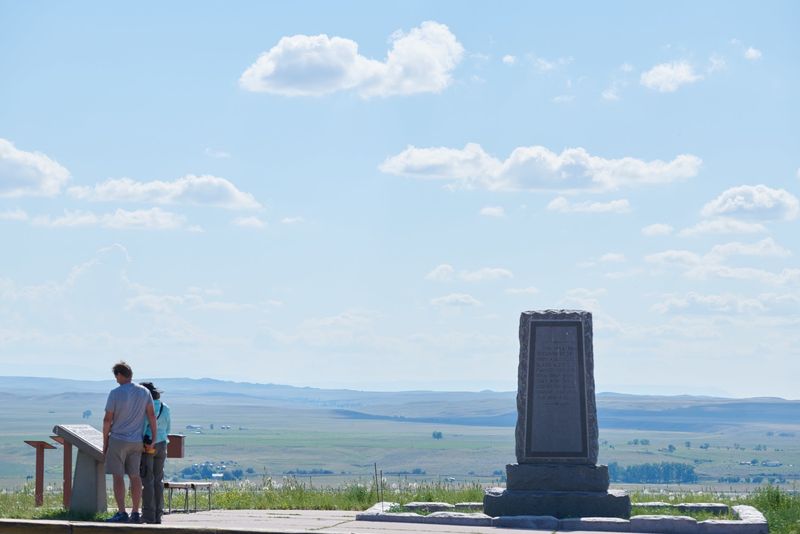
The hill offers a wide view of the surrounding valley, and standing there you can understand, at least in part, why Custer chose the high ground. You can also see how vastly outnumbered his force was once the full scale of the encampment below became clear to the men around him.
A short paved trail connects the cemetery area to the hill, though one stretch of the path currently has a steep angle and some loose surface material that requires careful footing. Three ADA-designated parking spots near the hill accommodate visitors who cannot manage the full trail walk, which is a practical detail worth knowing before you plan your approach.
Ranger Programs and Guided Tours Worth Your Time
The National Park Service rangers at this site offer interpretive talks that add real depth to what you see on the ground. Attending one of these programs is genuinely worthwhile, and the rangers present the history with a seriousness and balance that you notice immediately.
There is also a separately offered tour led by Native American guides, which costs around twenty dollars and takes more time than the standard ranger program. Multiple visitors have noted that the Native American-led tour feels especially informative because it brings a perspective and a level of personal connection to the material that standard interpretive programs simply cannot replicate.
If your schedule allows for only one guided experience, the Native American tour is the one to prioritize. Book ahead if possible, particularly during the summer months when the site draws its largest crowds. Going early in the day, especially in June rather than mid-July, helps you avoid the peak congestion that can make the narrow road and limited parking feel overwhelming.
Planning Your Visit: Hours, Access, and Practical Tips
Current operating hours run Friday through Sunday, from 8 AM to 4 PM, with the site closed Monday through Thursday due to ongoing parking lot construction. Those hours are subject to change, so checking the official NPS website at nps.gov/libi before you go is genuinely important, not just a suggestion.
The entrance fee applies, but visitors with a lifetime America the Beautiful access pass can use it here with a valid photo ID. The visitor center is currently housed in a temporary trailer while a new permanent facility is under construction, so expect limited interior space and a modest gift shop rather than a full museum experience.
Arriving early on an open day gives you the best chance at a calm, unhurried visit. Mid-July brings the largest crowds and the hottest temperatures on the Montana plains, so June visits tend to offer a more comfortable experience overall. Cell service is available on site, which makes the QR code audio stops functional for most visitors.
The Trading Post: A Worthwhile Stop Just Outside the Gates
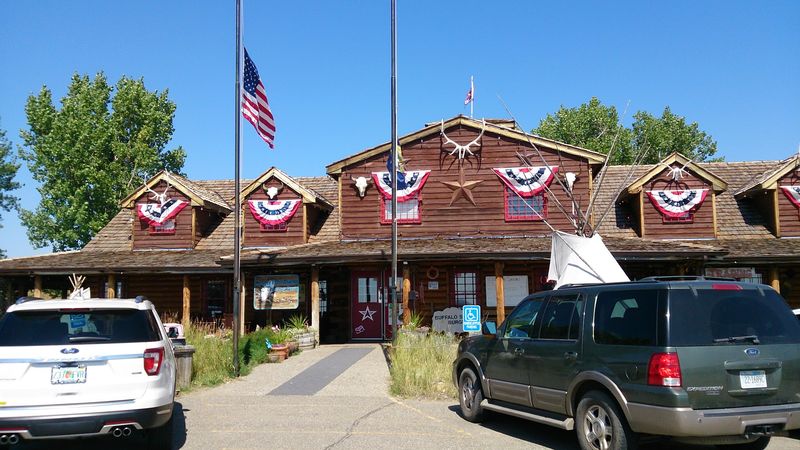
Just outside the main entrance, the Trading Post has become a beloved stop for visitors, including those who arrive on a closed day and need something to make the trip worthwhile. The store carries an impressive collection of Native American artifacts, handmade goods, and historical items that you will not find at a typical roadside shop.
The food served here has earned its own reputation. The Indian Tacos in particular come up repeatedly in visitor conversations as a highlight of the area, and the service is described as friendly and genuine. The owner, known locally as Puck, is a historian with deep knowledge of the region, and a conversation with him can add unexpected context to everything you have just seen on the battlefield.
Even on days when the monument itself is accessible, the Trading Post is worth building into your schedule. It offers a grounded, community-connected experience that feels like a natural extension of the broader story this entire area tells about culture, history, and resilience.
Why This Place Stays With You Long After You Leave
There are historic sites you visit and then move on from without much lingering thought. This battlefield is not one of them. The combination of the physical landscape, the density of information, and the genuine effort to represent all sides of the conflict creates something that feels more like a reckoning than a tour.
The fact that the site presents the battle as a tragedy rather than a triumph for either side is what makes it resonate so deeply. Both the warriors defending their way of life and the soldiers following orders were real people, and the markers on the ground make that human reality impossible to ignore.
Visitors who have spent their lives reading about this battle consistently say the place is smaller than they imagined but hits harder than they expected. That gap between expectation and experience is exactly what the best historic sites deliver, and Little Bighorn Battlefield National Monument delivers it without fanfare, without spectacle, and without letting you forget what actually happened here.
Share this story