There is a cliff in northern New Mexico that literally talks back to you. Tucked along US-84 near Abiquiu, this natural rock formation has been stopping road-trippers cold for decades, and for good reason.
The curved sandstone wall acts like a giant outdoor speaker, bouncing every sound you make right back at you with surprising clarity. Whether you whisper, clap, or shout your own name, the cliff answers every single time.
This is not a theme park trick or a man-made installation. It is pure geology doing something that feels almost too good to be true.
The place sits inside Carson National Forest, just a short drive north of Ghost Ranch, and it costs next to nothing to visit. This article breaks down everything worth knowing before you go, from the geology and history to the trail, the camping, and the best tips for making the most of your visit.
The Geology Behind the Echo
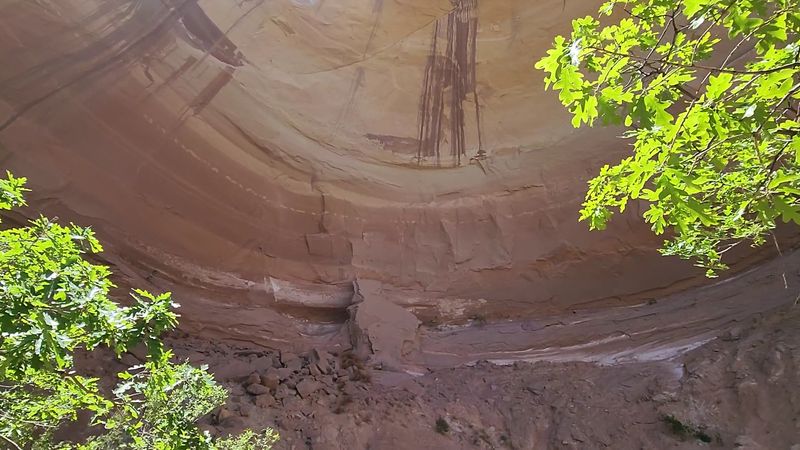
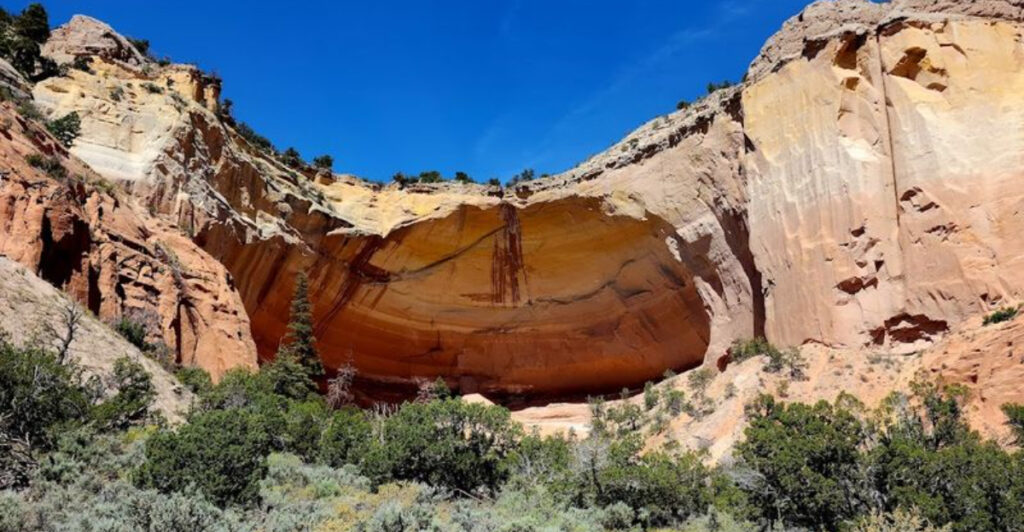
The echo at this site is not magic, but the science behind it is genuinely fascinating. The cliff face forms a large, concave bowl shape carved by millions of years of wind and water erosion working through the Entrada Sandstone formation.
That curved geometry acts like a parabolic reflector. Sound waves travel outward from a person standing in front of the wall, hit the curved surface, and bounce back in a focused path directly toward the source.
The result is a clear, crisp echo that repeats words and claps with surprising accuracy.
The reddish vertical streaks running down the otherwise horizontally layered cliff are caused by mineral varnish, a natural buildup of iron and manganese oxides. These streaks have inspired local legends over the centuries, though geologists point to straightforward mineralogy as the explanation.
The formation itself is estimated to be around 150 million years old, making this one very ancient sound system.
The Short Trail That Gets You There
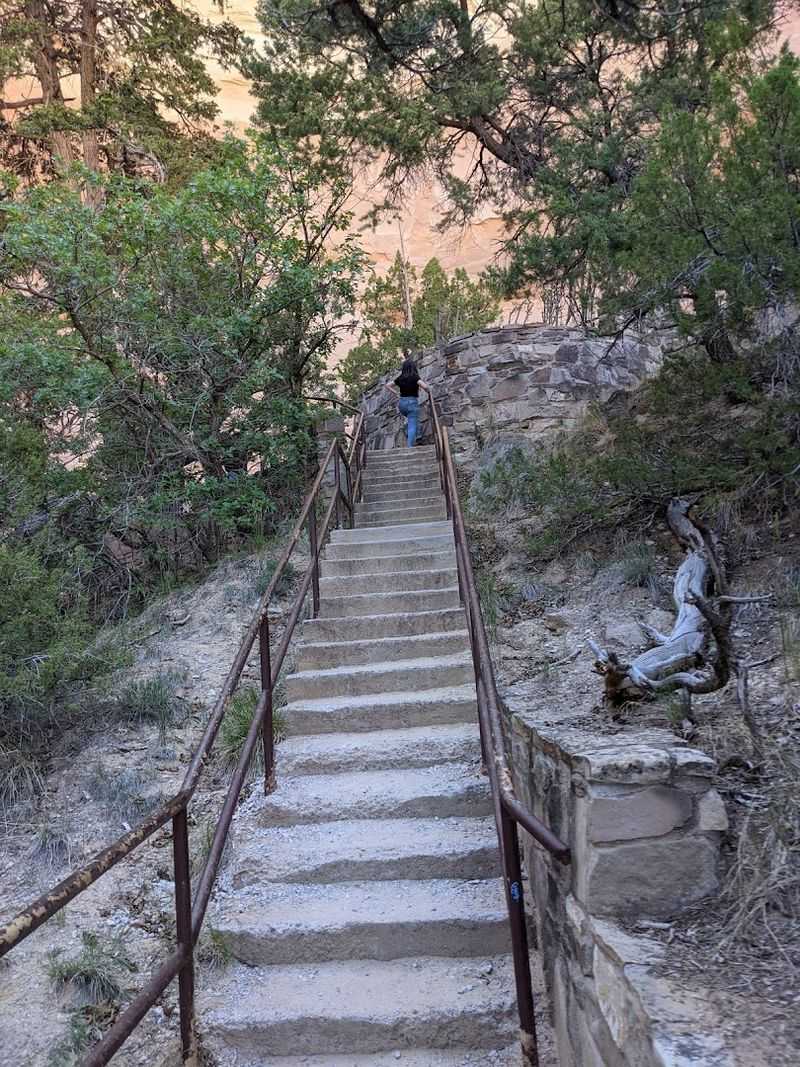
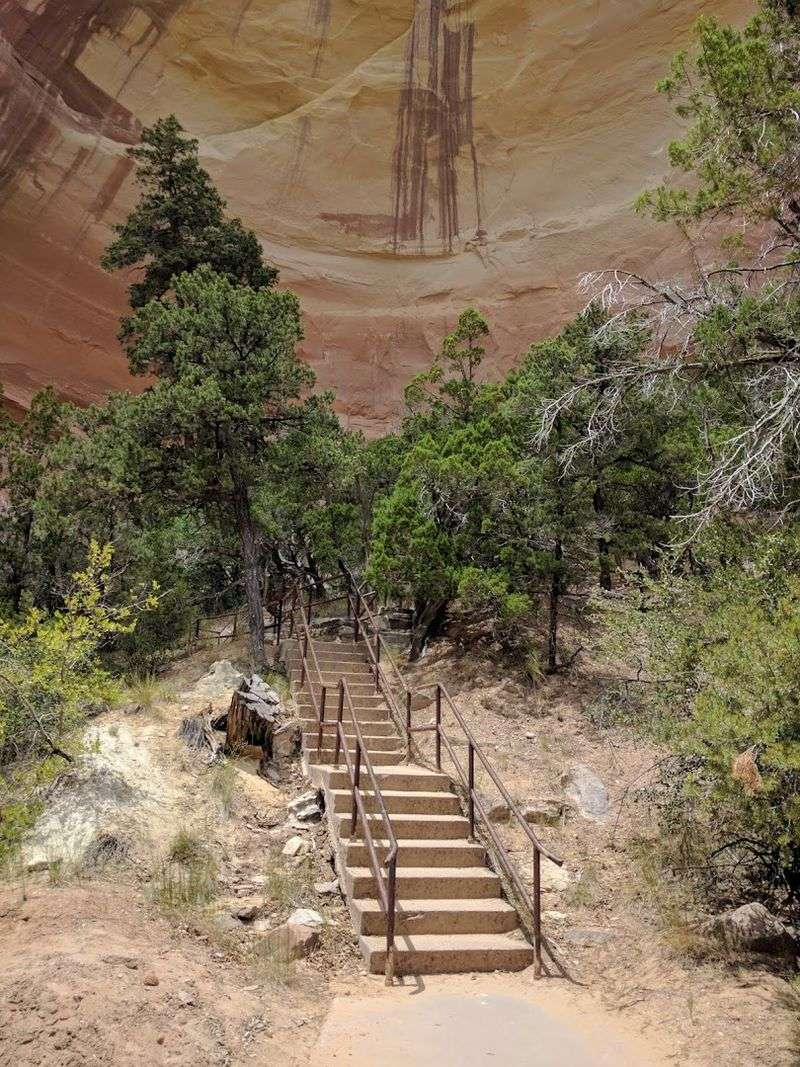
The hike to the amphitheater is genuinely short, which makes this stop accessible to just about anyone. From the parking area, a paved concrete path winds through a shaded stretch of evergreen trees before opening up to the base of the cliff.
The total walk is only a few hundred feet, and the surface is smooth and well-maintained throughout. Near the end of the path, there are roughly 15 to 25 steps up to a small platform directly in front of the cliff face.
A bench sits on the platform, along with a few small trees providing shade.
The trail is wheelchair-friendly along the main stretch, and dogs are welcome as long as they stay on a leash. The paved surface makes this an easy stop for families with young children or anyone who prefers a low-effort outing.
The payoff at the end, standing face-to-face with that towering curved wall, makes the short walk feel completely worthwhile.
What Actually Happens When You Yell
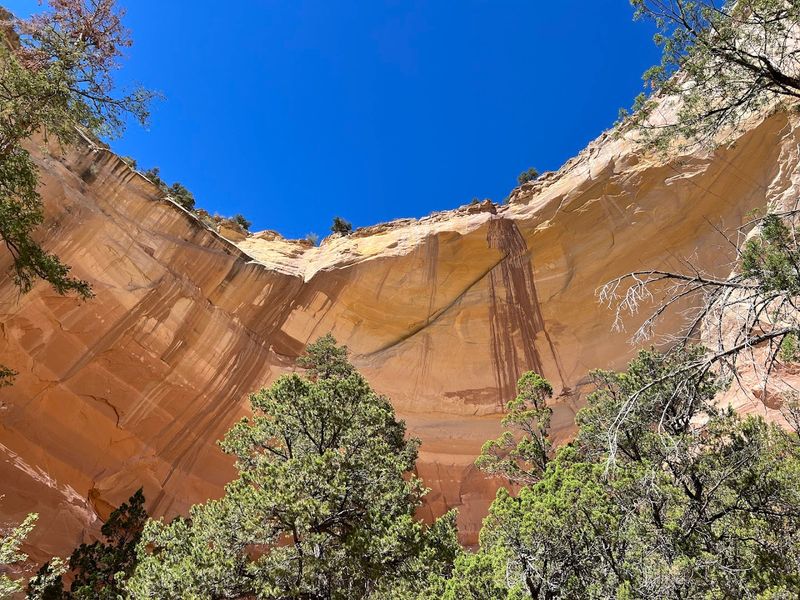
Standing on the platform in front of the cliff and making any sound produces a result that consistently surprises first-time visitors. The echo is clean and distinct, not a muddy blur of overlapping sound but an actual repetition of whatever was said or clapped.
Words come back clearly, which is what makes the experience so memorable. Clapping returns with a sharp, almost rhythmic response.
Some people bring instruments or try singing, and the curved wall handles those sounds with the same precision.
When the site is busy and multiple groups are making noise at the same time, the experience can get a little chaotic since every sound bounces back together. Visiting during a quiet weekday or early morning gives the best chance of having the space to yourself, which makes the echo effect far more personal and striking.
The cliff does not care what you say to it, it simply gives it all back without judgment.
The Legends and Lore Tied to This Cliff
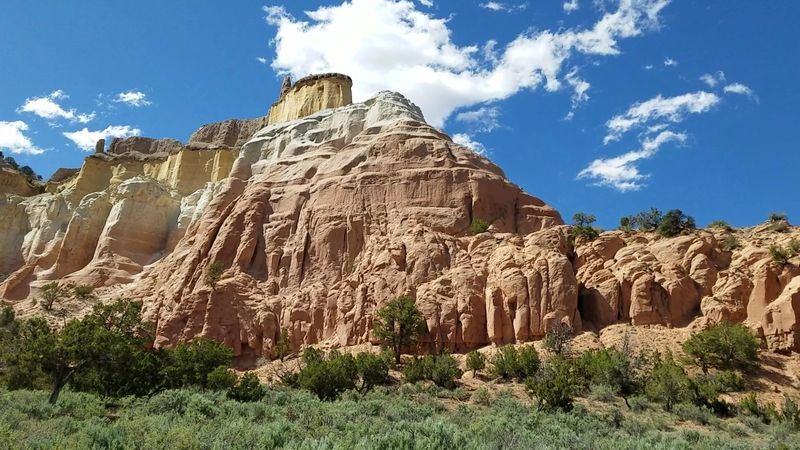
The red vertical streaks running down the sandstone wall have fueled local legends for a long time. One story claims the cliff was the site of a violent confrontation during the frontier era, with the mineral stains interpreted as evidence of the event.
Another version of the tale flips the narrative entirely, placing different groups in the same roles at the same location.
Historians and geologists note there is little to no documented evidence supporting these stories. The streaks are almost certainly iron and manganese oxide deposits, which form naturally in desert sandstone over long periods of time.
Still, the legends persist, partly because the red coloring is genuinely striking against the pale horizontal layers of rock. The echo itself has even been woven into the mythology, with some local folklore suggesting the sounds are the voices of those from the past.
True or not, the stories add an undeniable layer of atmosphere to an already dramatic natural feature.
Georgia O’Keeffe and This Corner of New Mexico
The area around Abiquiu and Ghost Ranch is closely associated with Georgia O’Keeffe, one of the most recognized American painters of the 20th century. She lived and worked in this region for decades, and the surrounding landscape appears repeatedly in her work.
The red cliffs, desert mesas, and wide open sky that define this stretch of northern New Mexico clearly made a lasting impression on her artistic output. Echo Amphitheater sits within this same visual territory, and the connection between the geology here and her painted subjects is hard to miss when standing at the base of the cliff.
Ghost Ranch, where O’Keeffe spent much of her time, is just a short drive down US-84 from Echo Amphitheater. Combining both stops on the same day gives a fuller picture of why this particular corner of New Mexico attracted such devoted attention from one of America’s most celebrated artists.
The landscape earns every bit of that reputation.
Camping Right Next to the Cliff
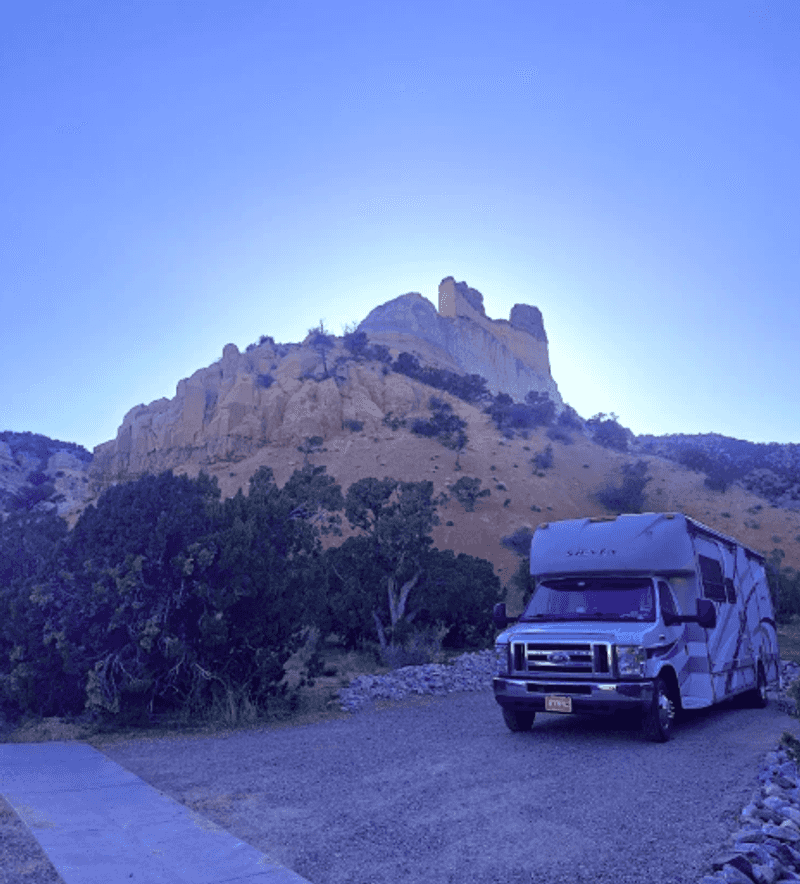
Echo Amphitheater is not just a quick roadside stop. The site includes a small campground managed by the U.S.
Forest Service, which makes it possible to spend the night within earshot of the cliff itself.
The campground is set among evergreen trees, offering some shade in an otherwise sun-heavy landscape. Picnic tables are available throughout the area, and the facilities include clean restrooms, which is a genuine bonus for a site this remote.
The campground is relatively small and fills up on busy weekends, so arriving early or planning ahead during peak season is worthwhile.
Camping here means waking up surrounded by the sandstone formations of northern New Mexico with very little noise from the outside world. Cell service is limited or nonexistent in this area, which either sounds like a problem or a feature depending on the kind of trip being planned.
For those wanting to disconnect from the usual noise, this campground delivers exactly that kind of quiet.
Picnic Areas and Facilities on Site
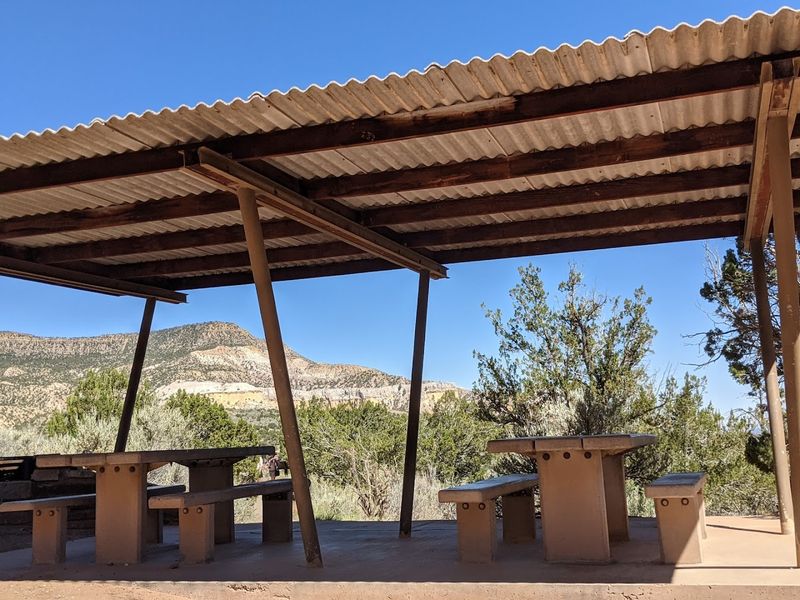
The facilities at Echo Amphitheater are notably well-kept for a remote Forest Service site. Clean restrooms are available near the parking area, and the maintenance level is higher than what many people expect from a small fee site in a national forest.
Picnic tables are spread throughout the shaded area between the parking lot and the trail, giving families and groups a comfortable place to stop for a meal before or after visiting the cliff. The tables sit under trees, which provides a break from the sun during warmer months.
The combination of restrooms, picnic shelters, and a paved accessible trail makes this site unusually well-suited for families traveling with young children or anyone who needs a proper rest stop along US-84. Road trips through this part of New Mexico can involve long stretches between services, so having a clean, pleasant stop with actual facilities and a natural attraction built in makes Echo Amphitheater a genuinely practical addition to any itinerary.
The Best Time of Year to Visit
Northern New Mexico has a high desert climate, which means warm summers, cold winters, and a fairly wide range of conditions in between. Echo Amphitheater is accessible year-round in most years, but the most comfortable visiting window runs from late spring through early fall.
Spring and early fall bring mild temperatures and manageable crowds. Summer weekends can draw more people, especially since Ghost Ranch nearby attracts a steady flow of travelers.
Visiting on a weekday or arriving early in the morning during summer gives the best chance of having the amphitheater to yourself for a few minutes.
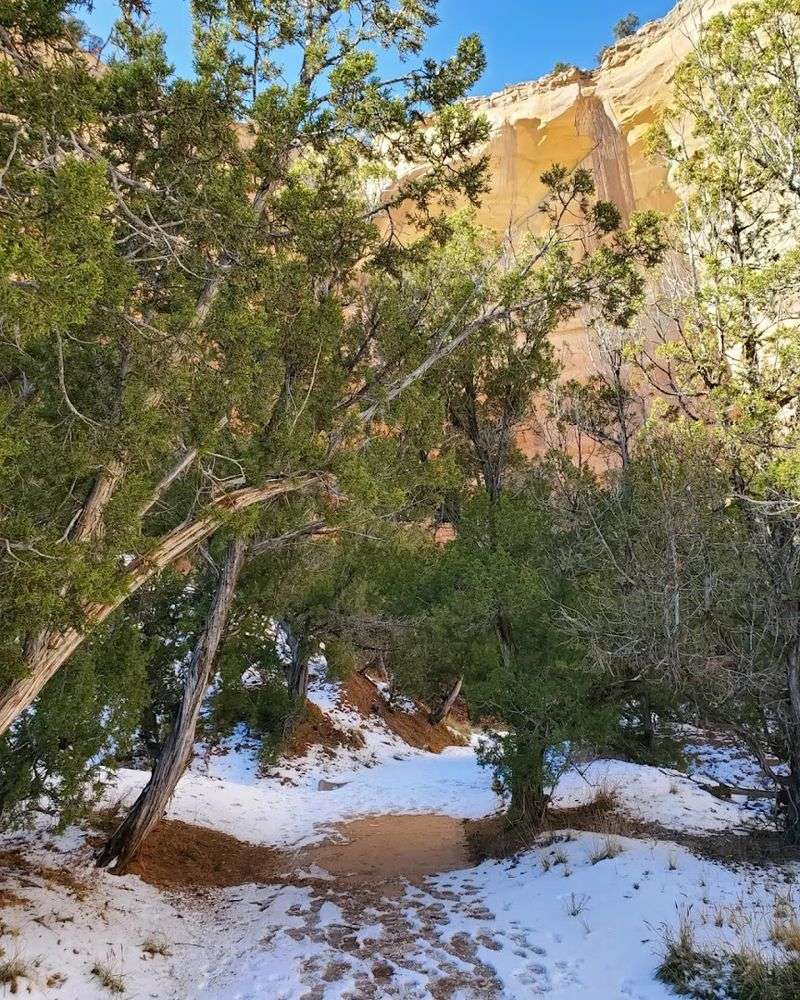
Winter visits are possible on clear days, but the road can become icy in this area, and the Forest Service recommends checking conditions before heading out. Snow on the red cliffs creates a dramatic contrast that makes for striking photographs.
Whatever time of year the trip happens, the cliff itself does not change, and the echo works just as well in February as it does in July.
Entry Fees and the America the Beautiful Pass
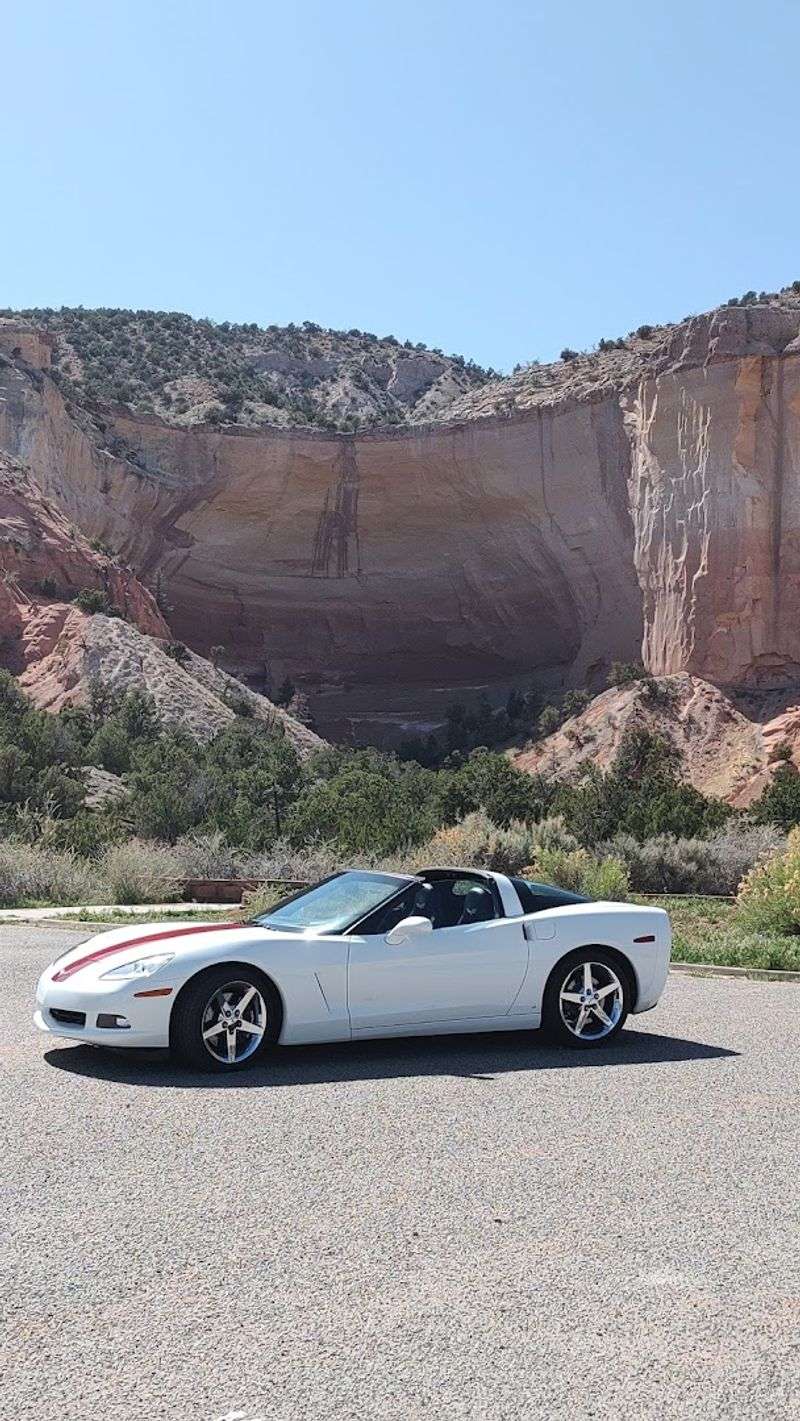
Echo Amphitheater charges a small entrance fee, which is collected at the site and goes toward maintaining the facilities and trail. The fee has historically been just a few dollars per vehicle, making it one of the more affordable natural attractions in the region.
Holders of the America the Beautiful Annual Pass can enter at no additional cost. That pass covers access to more than 2,000 federal recreation sites across the country, including national parks, national forests, and wildlife refuges.
For anyone planning multiple outdoor stops during a road trip through the Southwest, the pass pays for itself quickly.
The pass is available for purchase online through the U.S. Forest Service and National Park Service websites, as well as at many federal recreation sites in person.
Bringing the pass along on any trip through northern New Mexico makes stops like Echo Amphitheater completely seamless, with no need to hunt for exact change or wait at a fee station.
A Perfect Pairing With Ghost Ranch
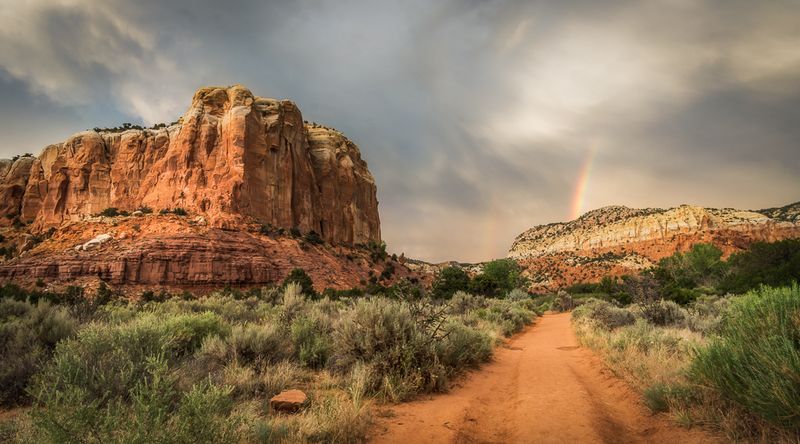
Ghost Ranch sits just a short drive south of Echo Amphitheater along US-84, and combining the two into a single half-day outing is a natural fit. Ghost Ranch is a conference and education center with deep ties to Georgia O’Keeffe, and it also sits on land that has yielded significant paleontological finds over the decades.
The two sites share the same dramatic landscape of red cliffs and high desert terrain, and visiting them back to back gives a fuller picture of what makes this stretch of northern New Mexico so distinctive. Ghost Ranch offers guided tours, hiking trails, and a small museum, while Echo Amphitheater provides a quick and memorable natural experience just up the road.
The drive between the two is only a few minutes, making the pairing easy to manage without a tight schedule. Most people who stop at one end up at the other within the same afternoon, and the combination makes for a well-rounded day in O’Keeffe Country.
Why This Stop Deserves a Place on Every New Mexico Road Trip
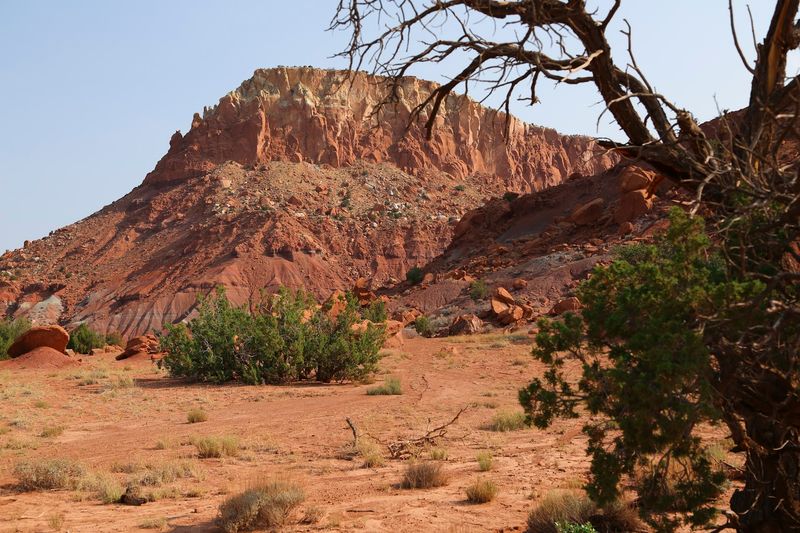
Not every road trip stop needs to be a full-day commitment to be worth making. Echo Amphitheater proves that a 30-minute detour off a highway can produce one of the most memorable moments of an entire trip.
The combination of accessible infrastructure, a genuinely unusual natural feature, clean facilities, and a connection to one of the most visually striking landscapes in the American Southwest puts this site in a category that few comparable stops can match. It works for solo travelers, couples, families with children, and anyone driving between Chama and Abiquiu or heading toward Pagosa Springs.
The cliff does not require advance booking, a guide, or any special equipment. A small fee, a short walk, and a willingness to say something out loud in front of a rock wall are all that is needed.
Few natural attractions in New Mexico deliver that kind of straightforward payoff with so little effort required to reach it.
Where Exactly This Place Is Located
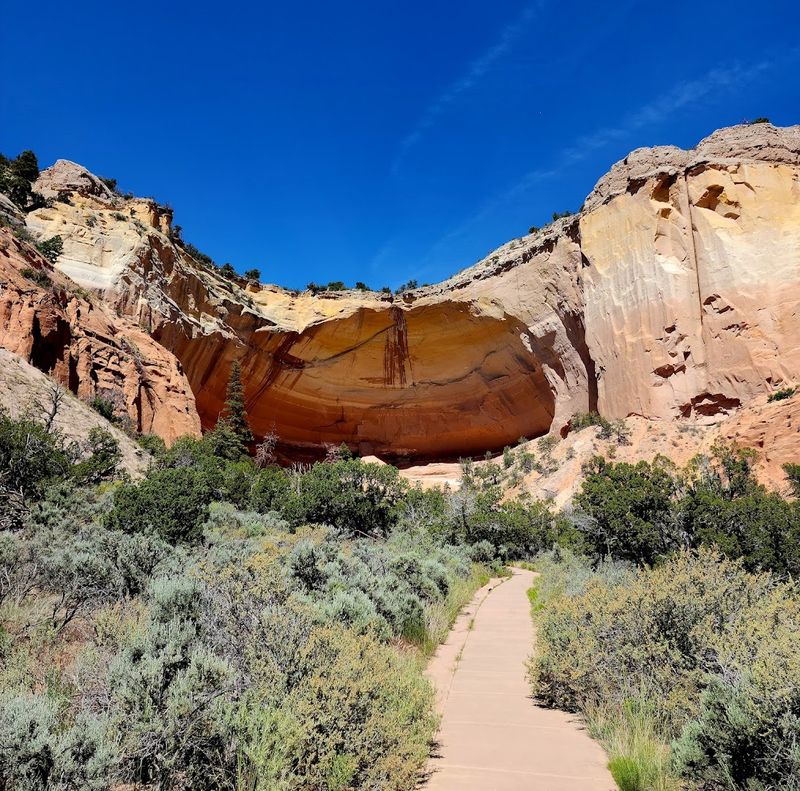
The address for Echo Amphitheater is US-84, Abiquiu, NM 87510, and it sits within Carson National Forest in Rio Arriba County, northern New Mexico. The site is roughly 17 miles northwest of the town of Abiquiu and just a short distance past the entrance to Ghost Ranch, on the left side of the road when heading north.
The drive along US-84 through this part of New Mexico is already worth the trip on its own. Red and tan sandstone mesas line the highway, and the landscape shifts from scrubby high desert into something that looks almost prehistoric.
There is a clearly marked turnoff with a parking area, so missing it is not easy. The site is managed by the U.S.
Forest Service, and a small fee is collected at the entrance. Cell service tends to disappear in this stretch of road, so downloading offline maps before leaving town is a smart move.
Share this story