 Unearth The Voyage
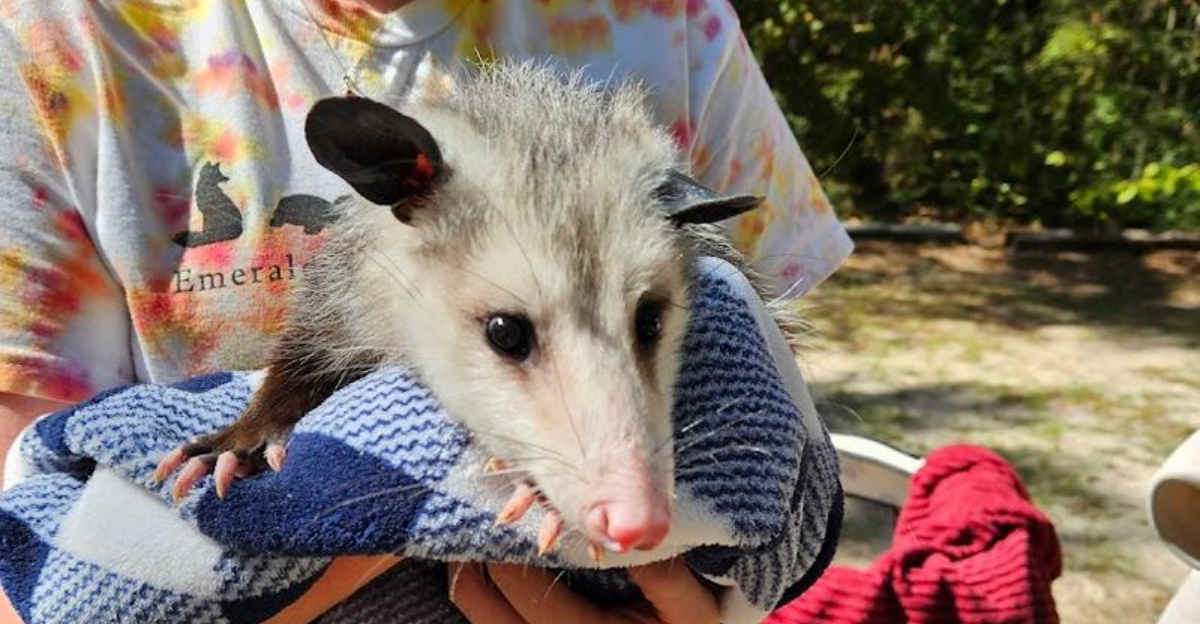
There is a quiet little corner of Navarre, Florida, where a three-legged opossum named Peggy holds court, a red-tailed hawk named Aries occasionally takes a swim, and a corn snake named Dwight is perfectly happy to be petted by curious strangers. This place is not a zoo, and it is not trying to be one.
It is a working wildlife refuge with a big heart, a passionate staff, and a rotating cast of animals that could not survive on their own in the wild. I visited on a weekday morning, and I left two hours later feeling like I had learned more about Florida’s native wildlife than I had in years of living near the Gulf Coast.
If you are anywhere near the Navarre area, this spot deserves a spot on your itinerary, and I am here to tell you exactly why.
Where the Refuge Calls Home
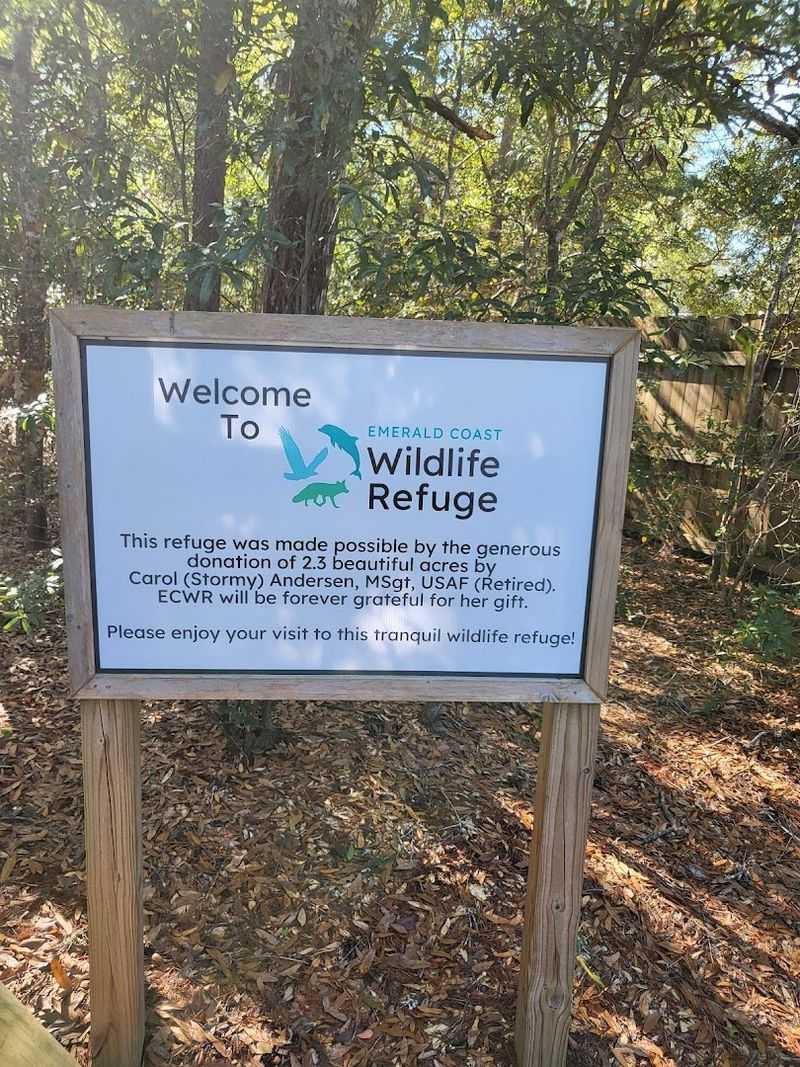
Tucked away on 2.5 donated acres at 3051 Cloptons Circle in Navarre, Florida 32566, the Emerald Coast Wildlife Refuge sits just far enough off the main road that many visitors drive right past it without knowing it is there.
That is honestly a shame, because this 501(c)(3) nonprofit is one of the more meaningful stops you can make along the Gulf Coast. The refuge is only about ten minutes from the Navarre Pier, which means it fits naturally into a beach day itinerary without much detour.
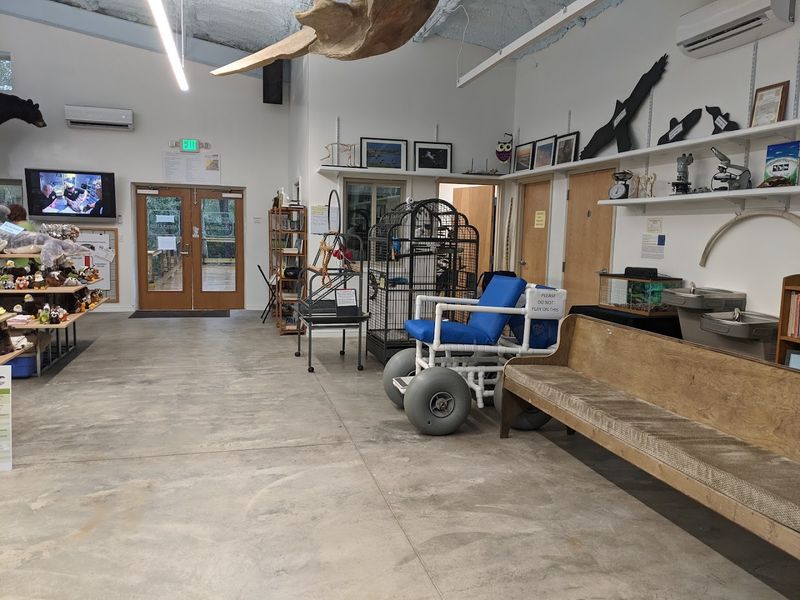
The grounds have a peaceful, unhurried feel, with a small education center, outdoor animal enclosures, and an animal hospital working quietly in the background. You can reach them at (850) 684-1485 or visit emeraldcoastwildliferefuge.org to plan your trip before you go.
The Mission Behind Every Animal Here
Not every animal at this refuge ended up here by accident. Each one has a story, and the common thread is that they can no longer survive on their own in the wild due to injury, human imprinting, or other circumstances beyond their control.
The refuge takes in injured and orphaned Florida native wildlife, rehabilitates as many animals as possible, and releases them back into their natural habitat when they are ready. The ones that cannot be released become permanent animal ambassadors, living at the facility and serving as living lessons for every visitor who walks through the gate.
In 2020 alone, the refuge took in nearly 2,000 animals, including a surge of wildlife displaced by Hurricane Sally. That number speaks to the scale of need along the Gulf Coast and the dedication it takes to meet it every single day.
Meeting Peggy, the Three-Legged Opossum
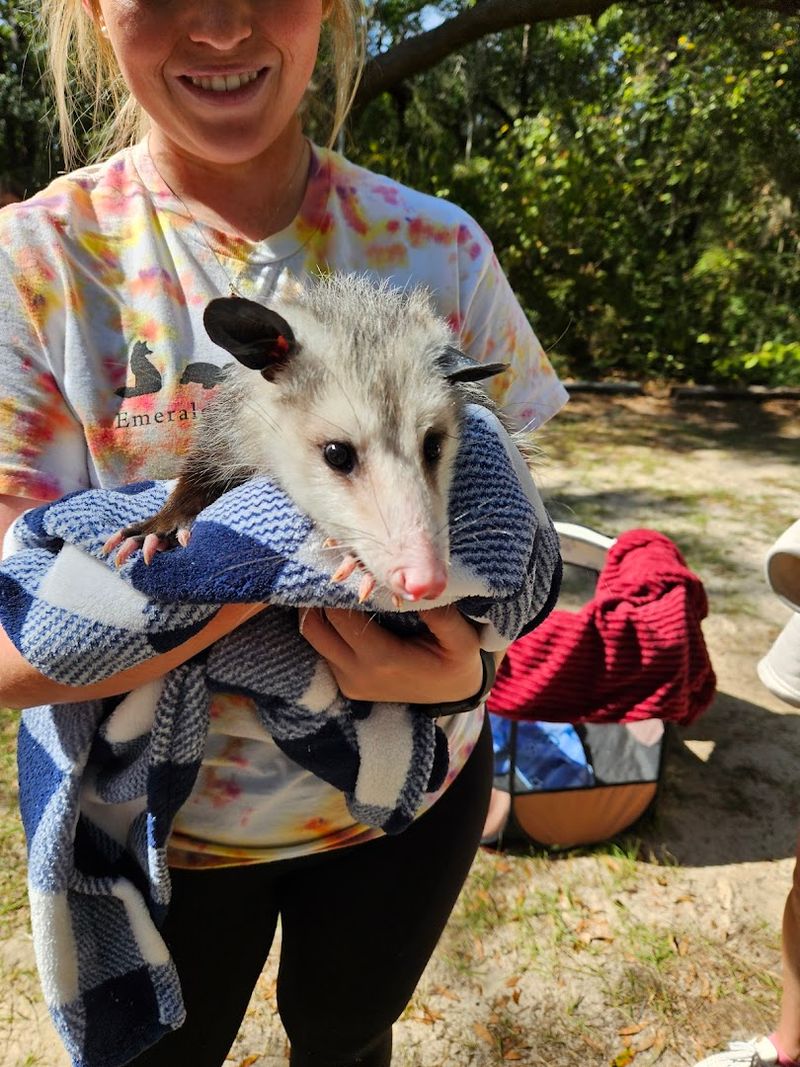
Peggy is the kind of animal that stops you mid-sentence. She is a Virginia opossum who lost one of her legs in an accident and now lives permanently at the refuge as one of its most beloved ambassadors.
She is remarkably calm around people, and staff members are happy to let visitors get a close look. What makes Peggy even more memorable is the creative fundraising she inspired: a volunteer began making plush opossum toys with one leg removed to create “Peggy” plushies, and the removed leg became a quirky little keychain sold in the gift shop.
It is the kind of detail that makes you smile and reach for your wallet at the same time. Peggy’s story is a perfect example of how the refuge turns difficult circumstances into something genuinely heartwarming for both the animals and the people who visit them.
Aries the Red-Tailed Hawk and Her Devoted Handler
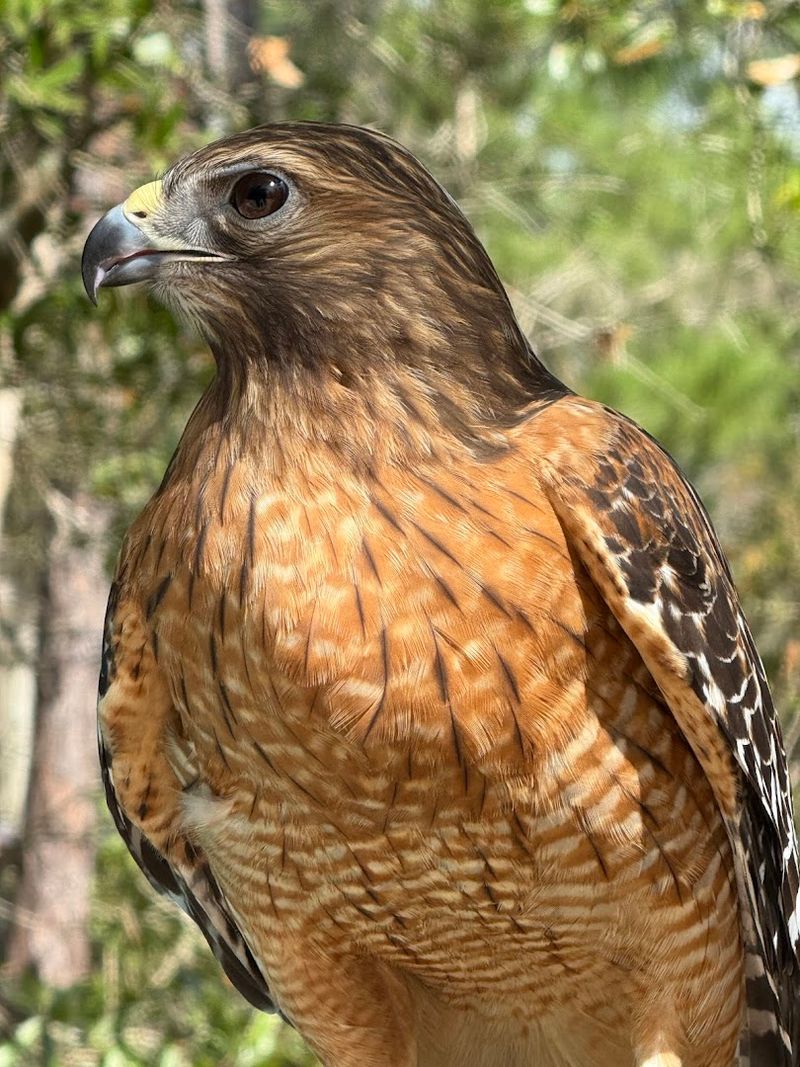
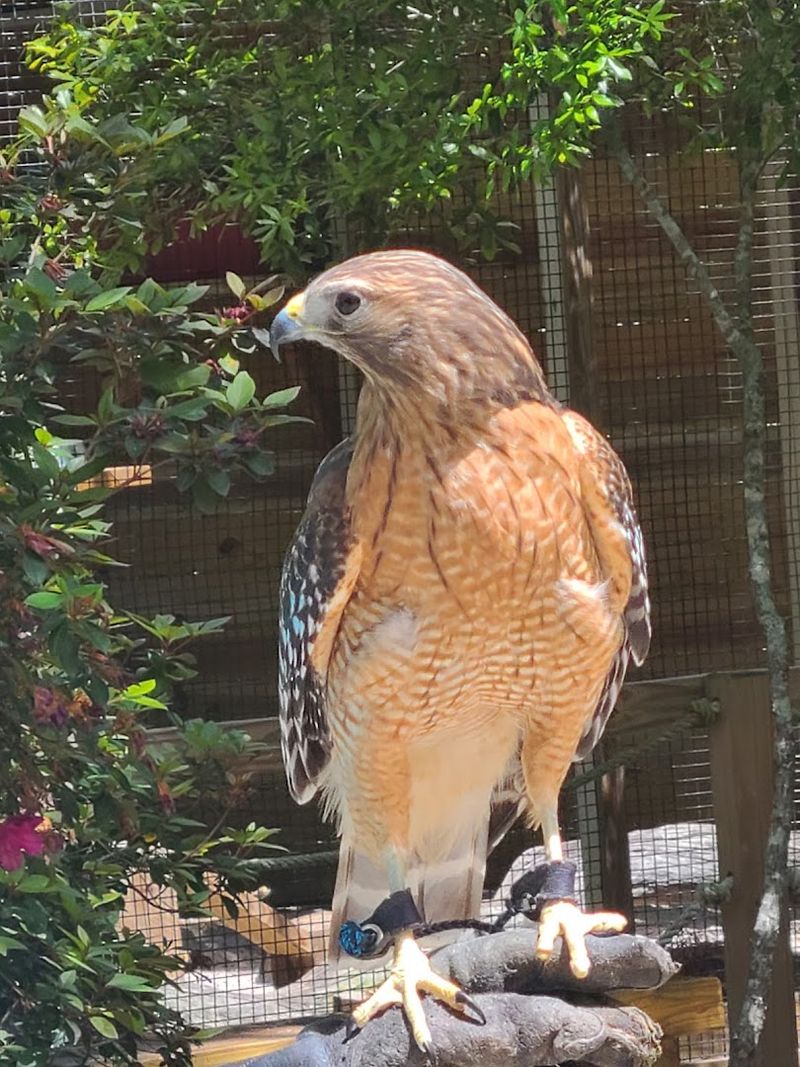
Aries is a red-tailed hawk with a personality that fills the entire enclosure. During my visit, the staff member who works with her was clearly deep in a mutual fan club situation, and watching the two of them together was one of the highlights of the whole trip.
The handler’s knowledge of raptors is impressive, and he shares that knowledge freely with anyone who wants to listen. Aries has been known to take a dip in her water feature while visitors watch, which is not something you expect from a hawk and is absolutely delightful when it happens.
Raptors like Aries are at the refuge because injuries or human contact have made release impossible. But she seems perfectly at ease in her role as an ambassador, and her striking feathers and sharp gaze make her one of the most photographed residents at the facility.
Owliver and the Aviary of Recovering Birds
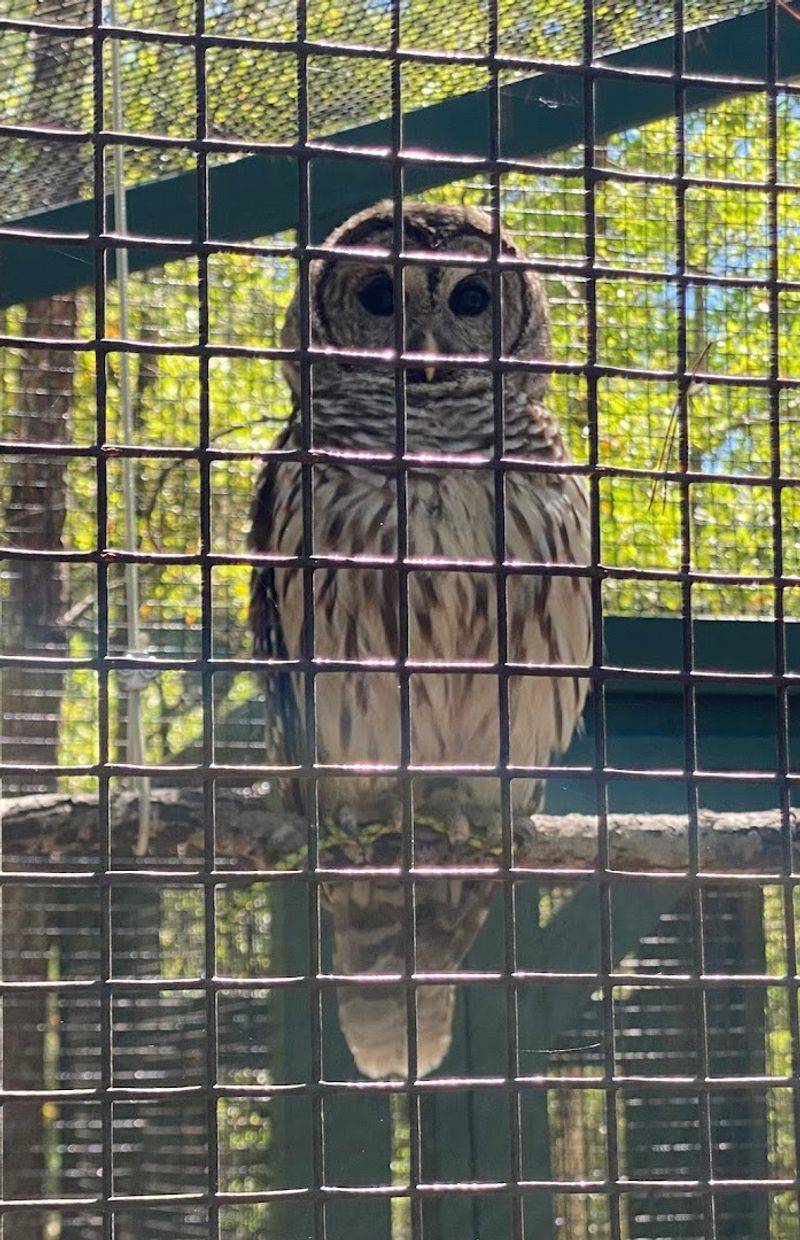
Owliver is a fan favorite among younger visitors, and it is not hard to understand why. Owls have a way of looking at you like they already know your deepest secrets, and Owliver is no exception.
The refuge maintains an aviary of pens where injured birds recover after receiving treatment in the animal hospital. Some birds eventually return to the wild, while others, like Owliver, stay on as permanent residents when full recovery is not possible.
The aviary setup gives visitors a chance to observe birds that most people never get to see this closely in a natural setting. Watching a recovering raptor or songbird from just a few feet away has a way of making you appreciate Florida’s native birdlife in a completely new way.
These are not display animals; they are patients and, in some cases, permanent neighbors who happen to be very good at staring.
Sheldon, Landlord, and the World of Florida Tortoises
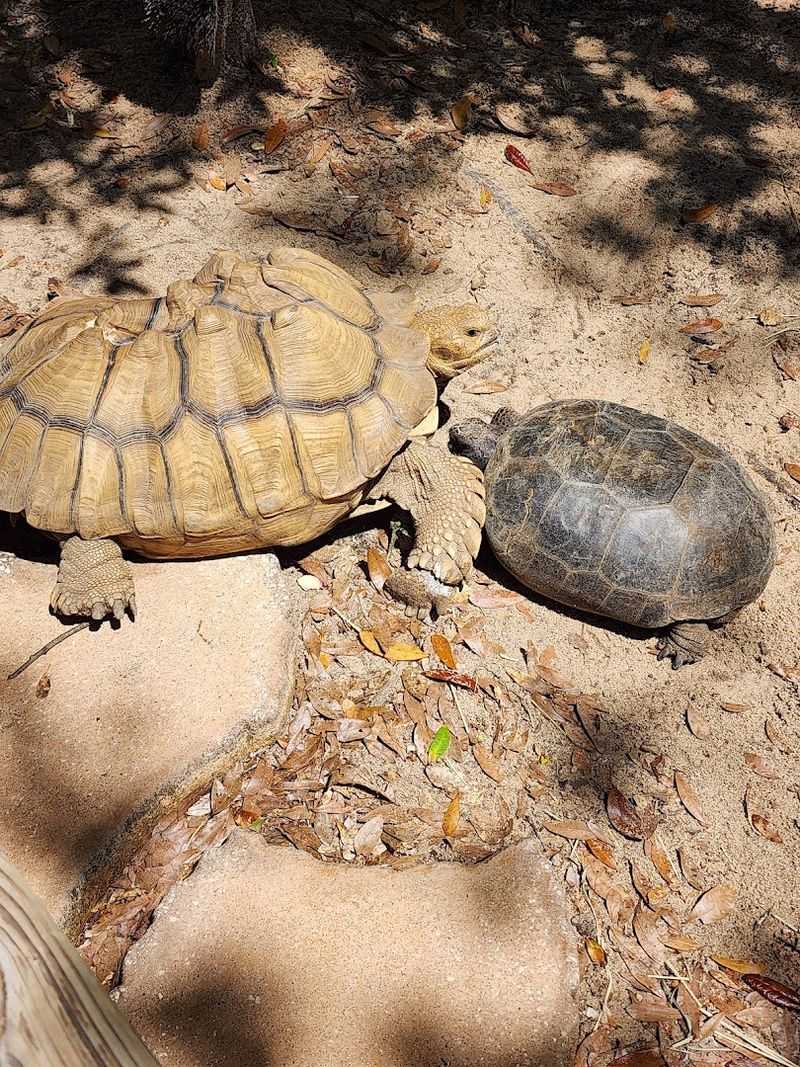
Sheldon and Landlord are the tortoises of the group, and they are exactly as laid-back as you would expect from animals that have been around in some form since the age of dinosaurs. Visitors are often allowed to pet them, which is a surprisingly touching experience.
Florida gopher tortoises are a keystone species, meaning dozens of other animals depend on the burrows they dig. Learning that fact while crouching next to one of these ancient-looking creatures gives the information a weight that a textbook simply cannot replicate.
The refuge does a thoughtful job of connecting each animal’s story to a broader lesson about Florida’s ecosystems. Sheldon and Landlord are not just crowd-pleasers; they are walking teachable moments about habitat, coexistence, and the importance of protecting species that quietly hold entire ecosystems together without ever asking for credit.
Gumbeaux the Opossum and Other Hands-On Encounters
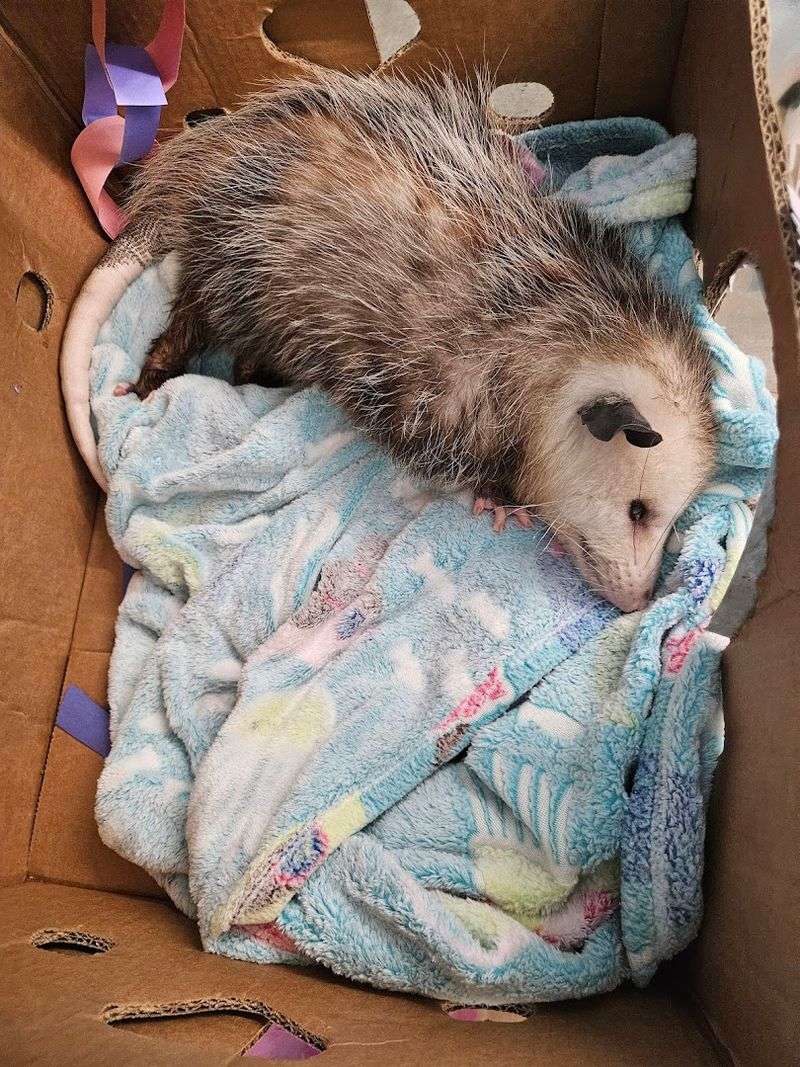
Beyond Peggy, the refuge has welcomed other opossum ambassadors over time, including Gumbeaux, who has charmed more than a few homeschool groups and scout troops during educational tours. Getting to pet an opossum is not something most people put on their bucket list, but it probably should be.
The hands-on opportunities at this refuge are what set it apart from a traditional nature documentary or a standard zoo visit. When a staff member places a corn snake named Dwight across your hands and explains why releasing former pet snakes into Florida’s wild is ecologically dangerous, the lesson sticks in a way that reading never quite manages.
These close encounters are handled with clear attention to animal welfare and visitor safety. Every interaction feels purposeful rather than performative, and the animals themselves appear comfortable and well-adjusted to the educational role they have taken on.
The Fox, the Raccoon, and the Skunk That Steals the Show
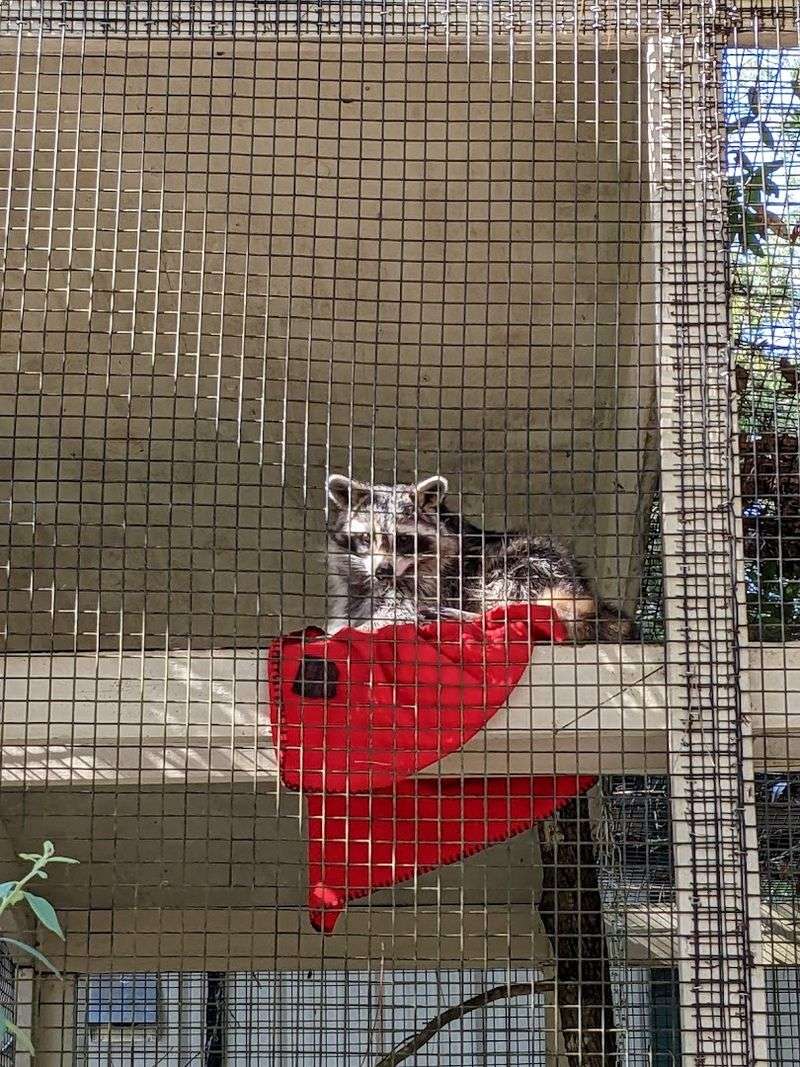
Florida has no shortage of foxes, raccoons, and skunks, but most people only see them darting across roads at night. At this refuge, you get a completely different kind of introduction to these animals, one that comes with context, backstory, and a staff member ready to answer every question you have.
The raccoon in particular has a devoted following among visitors. Rose, as she is known, has a way of making direct eye contact that feels oddly personal.
The fox is equally captivating, moving with that characteristic mix of grace and alertness that makes you understand why so many cultures have built mythology around them.
The skunk, true to form, sometimes decides to nap through the whole visit. But even a sleeping skunk draws a crowd here, because the staff turns every moment, active or drowsy, into an opportunity to share something genuinely interesting about Florida’s native wildlife.
Corn Snakes, Leopard Geckos, and the Problem with Pet Releases
One of the more surprising educational moments during my visit came when a staff member explained why the refuge takes in corn snakes and leopard geckos that were once kept as pets. When owners release these animals into Florida’s wild, the ecological consequences can be serious.
Florida’s warm climate makes it hospitable to species that would not naturally survive here, and introduced animals can disrupt food chains and outcompete native species. The Burmese python crisis in the Everglades is the most famous example, but it is far from the only one.
Corn snakes like Dwight end up at the refuge as a direct result of this problem, and their presence becomes a teaching tool. Dwight is calm, smooth-scaled, and completely unbothered by being handled, which makes him an ideal ambassador for a lesson that might otherwise feel like a lecture.
It is hard to ignore a message when it is wrapped around your wrist.
The Marine Mammal and Sea Turtle Stranding Program
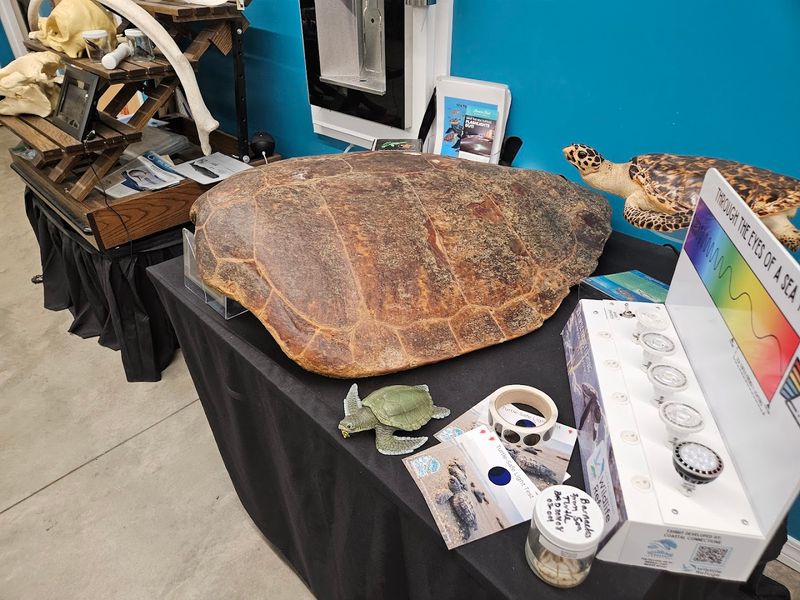
Most visitors come to see the land animals, but the Emerald Coast Wildlife Refuge also operates a Marine Mammal and Sea Turtle Stranding Program that responds to animals in distress along the Gulf Coast. This is a side of the operation that does not always get the attention it deserves.
When a sea turtle washes ashore or a marine mammal is spotted in trouble, the refuge is part of the response network that steps in. The program requires specialized training, equipment, and coordination with state and federal agencies, and it adds a layer of scope to the refuge’s work that goes well beyond what you see during a typical visit.
Florida’s Gulf Coast is home to several sea turtle species, including loggerheads and green turtles, and human activity creates real risks for these animals every year. Knowing that a small nonprofit in Navarre is part of the safety net for these creatures makes the admission fee feel like a very worthwhile investment.
Special Events, Critter Camp, and Scout Group Tours
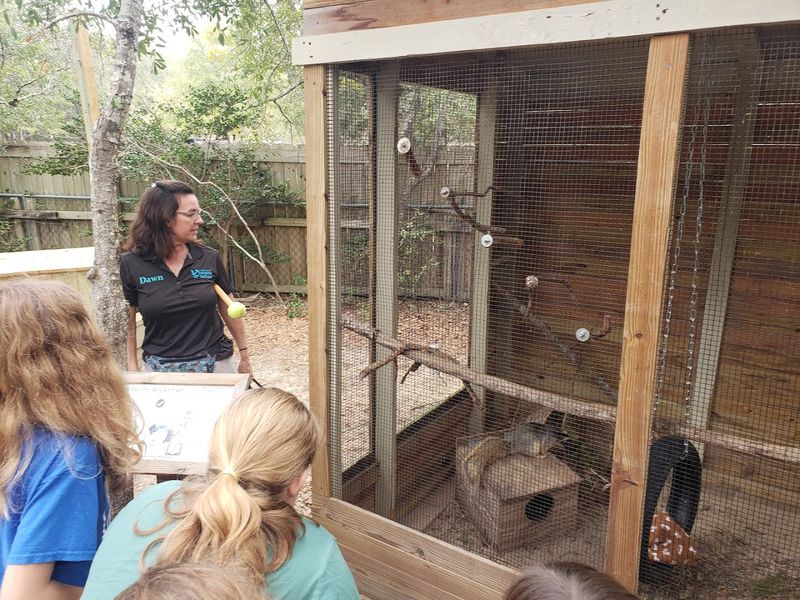
The refuge is not just a drop-in destination. It runs a full calendar of programming, including Critter Camp during the summer and spring break, Halloween events, and private group tours for schools, scout troops, and homeschool groups.
Critter Camp gives kids a hands-on, multi-day experience with Florida’s native wildlife that goes far beyond anything a classroom can offer. Parents who have sent their children year after year report that the kids come home buzzing with new knowledge and a genuine enthusiasm for conservation.
Girl Scout troops, church youth groups, and homeschool co-ops have all found the refuge to be an ideal field trip destination. The staff customizes tours to suit different age groups and learning goals, which makes the experience feel personal rather than scripted.
If you are planning a group outing anywhere near the Navarre area, this is the kind of stop that generates stories kids retell for years.
The Gift Shop That Actually Gives Back
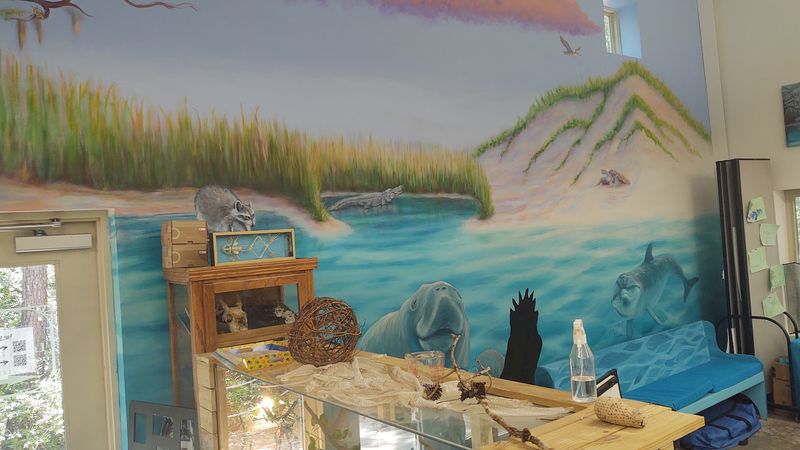
The gift shop at this refuge is genuinely worth your time, which is not something I say about every gift shop attached to an attraction. It features work from local artists rather than generic imported merchandise, so every purchase supports both the refuge and the creative community around it.
The Peggy plushies with the removable leg keychain are the standout item, but there are also books, stickers, and educational materials that make thoughtful souvenirs for kids and adults alike. The selection feels curated rather than cluttered, and the staff can tell you the story behind most items on the shelves.
A portion of every gift shop sale goes directly back to the refuge’s operating costs, which are considerable when you factor in veterinary care, food, enclosure maintenance, and staffing. Buying a sticker here is a small act with a direct impact, and that is a rare thing to be able to say about a souvenir shop.
Admission Prices, Hours, and What to Expect on Your Visit
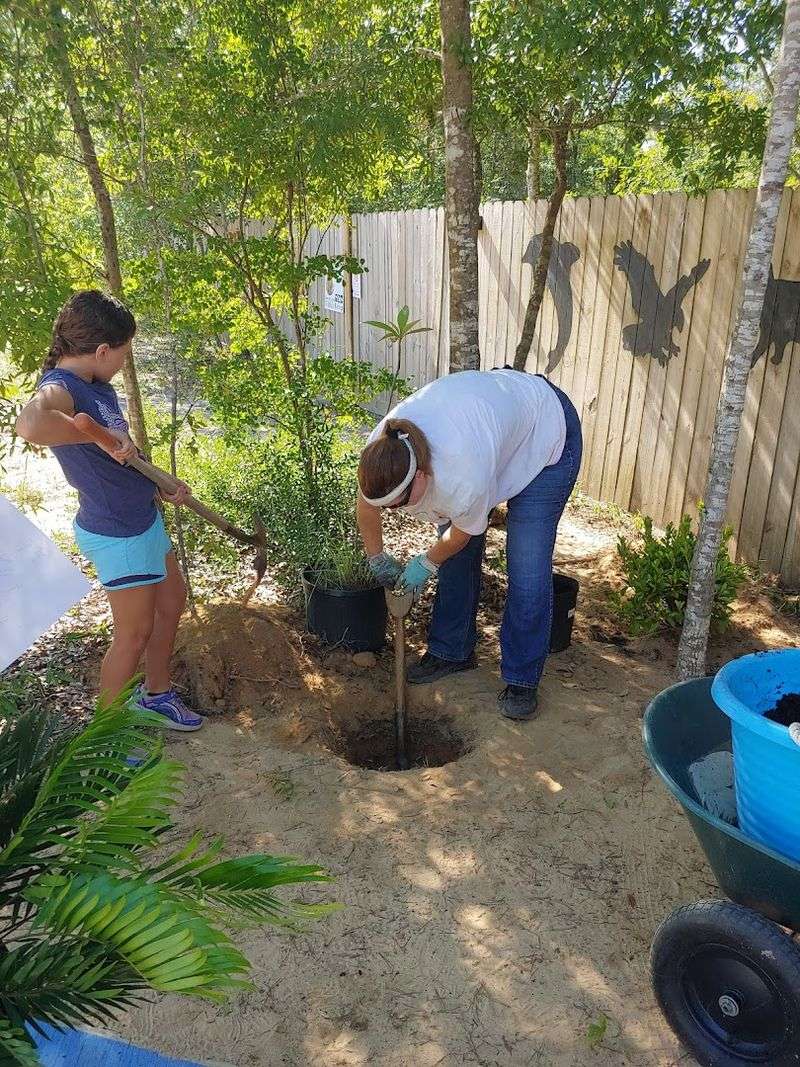
The refuge is open Wednesday through Saturday from 9 AM to 3 PM and on Sundays from 11 AM to 3 PM. It is closed Monday and Tuesday, so plan accordingly if you are working around a beach vacation schedule.
Admission is very affordable, with adult tickets running around six dollars, seniors slightly less, and children even lower than that. For what you get, including a guided or self-guided tour, animal encounters, and access to the education center, the value is hard to beat anywhere on the Gulf Coast.
A typical visit runs about one to two hours depending on how long you linger with each animal and how many questions you ask. My advice is to ask a lot of questions, because the staff here genuinely enjoys sharing what they know.
Arrive close to opening time for the best chance of seeing all the ambassadors active and alert.



