There is a place in the Nevada desert where the clocks seem to have stopped sometime around the early 1900s. Rusted mining equipment sits exactly where workers left it decades ago, wooden storefronts lean slightly in the dry wind, and the whole scene looks more like a film set than a real town.
What makes it even more remarkable is that you can actually spend the night there, sleeping in the same kind of rough cabins that gold miners once called home. This is not a theme park or a museum.
It is a living, breathing piece of American history that happens to still be open for visitors.
The Town That Time Forgot
Gold Point sits in Esmeralda County, Nevada, roughly 50 miles south of Tonopah along Nevada State Route 774, which actually ends right at this small community. The town is an unincorporated community, meaning it operates without a formal city government, and that sense of informal, untamed independence feels baked into every dusty corner.
The original settlement grew up around gold and silver mining activity in the late 1800s and early 1900s. At various points it was known by different names before becoming Gold Point, a nod to the mineral wealth that drew prospectors to this remote stretch of desert in the first place.
Today, very few permanent residents call it home. Yet the town remains remarkably intact, drawing curious travelers who want to see what a genuine Nevada mining community actually looked like before modernization swept most of them away.
A Name Rooted in Gold and Ambition
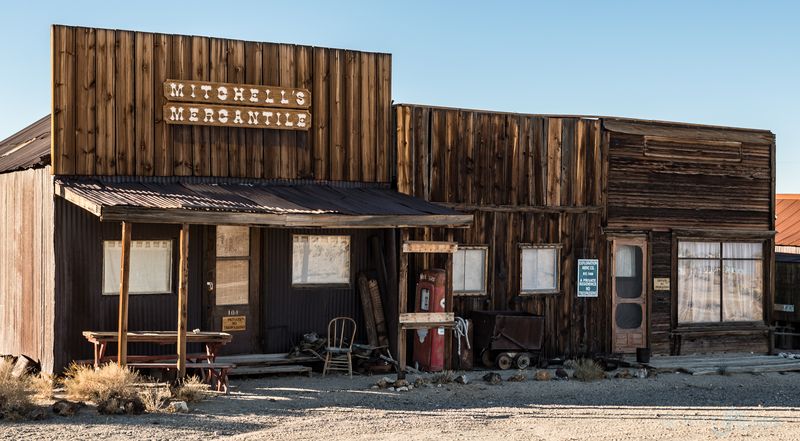
The name Gold Point is not poetic license. It directly references the gold-mining industry that built this community from the ground up.
Prospectors who flooded into this part of Nevada were chasing the same dream that drove men across the American West during the great mining rushes of that era.
The area around Gold Point yielded both gold and silver ore, and at its peak the community had a working population that supported saloons, a post office, and the kind of rough-and-tumble infrastructure that mining towns required. The boom and bust cycle familiar across Nevada played out here too, sending the population tumbling when ore production declined.
What survived is the physical skeleton of that ambition. Structures that once housed miners, merchants, and equipment still stand, telling the story of people who bet everything on what lay beneath the desert floor.
Buildings That Have Refused to Fall
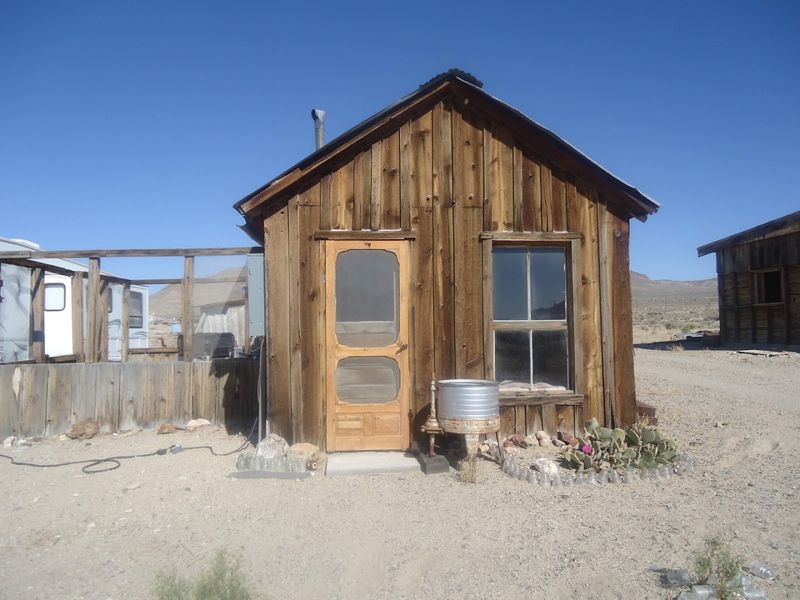
One of the first things you notice when you arrive at Gold Point is how much of it is still standing. Many Nevada ghost towns have been reduced to a few crumbled foundations or a single leaning wall.
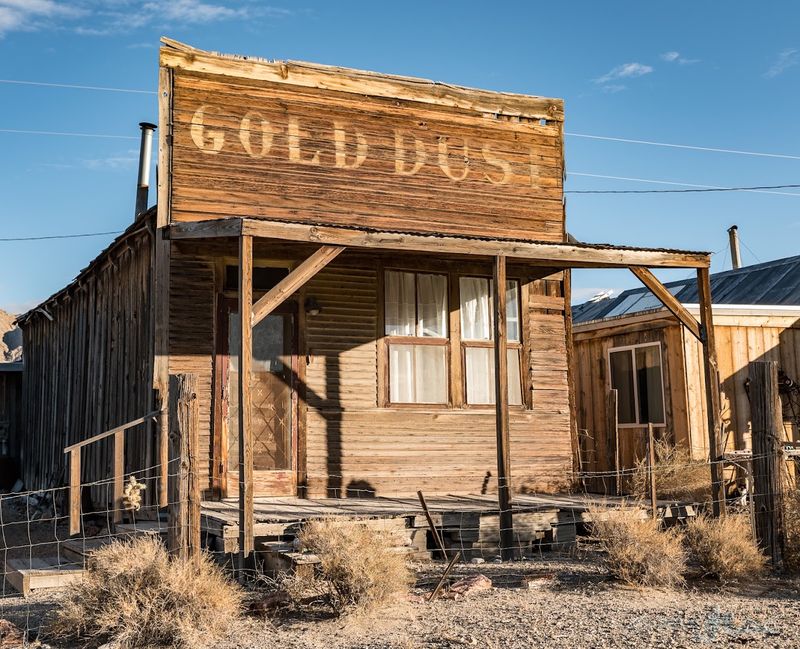
Gold Point feels different. Whole buildings remain upright, their facades aged but structurally present.
The structures carry the visual weight of real history. Wood has dried and cracked under decades of desert sun.
Paint that once advertised businesses has faded to ghostly traces. Metal roofs have oxidized into shades of rust and copper that almost glow in the afternoon light.
The overall effect is genuinely eerie in the best possible way. You can walk along what was once a working main street and get a surprisingly clear sense of the layout of daily life here more than a century ago.
Few ghost towns in the region offer this level of intact atmosphere.
Sleeping Where Miners Once Rested
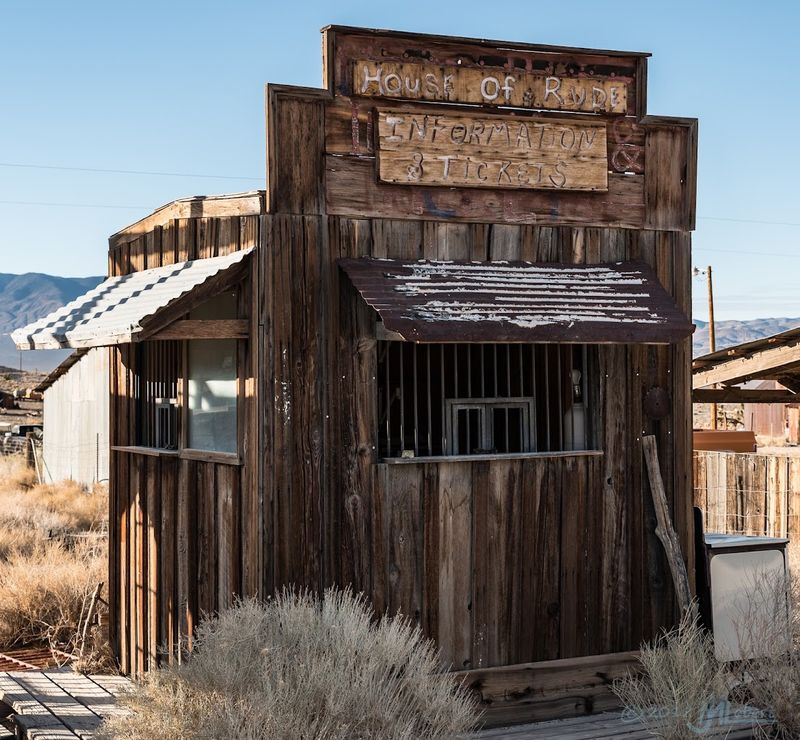
Here is the detail that stops most people mid-sentence when they first hear about it: Gold Point actually rents out miner cabins to overnight guests. This is not a polished glamping experience with temperature-controlled tents and spa services.
These are genuine, simple structures that connect directly to the town’s working history.
Staying overnight at Gold Point means falling asleep under a sky filled with more stars than most people ever see in their lives. The nearest city lights are far enough away that the darkness is almost total, and the silence is the kind that feels almost physical after years of urban noise.
Waking up inside a cabin that looks out over the same desert landscape those original miners saw every morning is a genuinely rare travel experience. It is the kind of thing that stays with you long after you have driven back to the modern world.
The Feeling of Stepping Into a Photograph
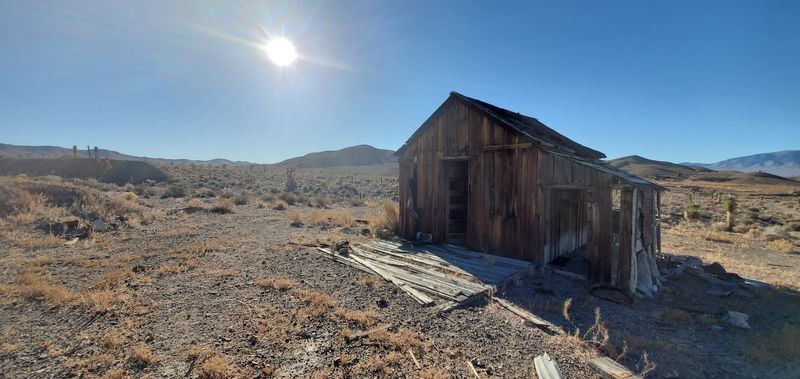
Photographers absolutely love Gold Point, and it is easy to understand why. Every angle offers a composition that looks like it belongs in a history book or a vintage postcard collection.
The light in the Nevada desert is particularly dramatic, especially in the early morning and late afternoon when shadows stretch long across the dirt roads.
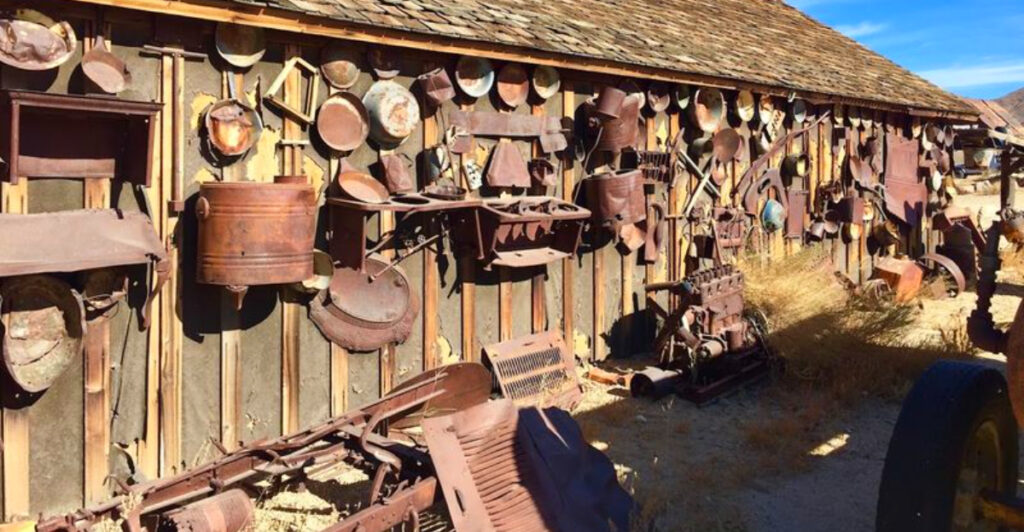
The rusted machinery scattered around the property adds to the visual richness. Old vehicles, mining equipment, and tools have been left more or less where they ended up when the town stopped operating at full capacity.
Nothing feels staged or artificially arranged for tourist appeal.
That authenticity is what separates Gold Point from reconstructed western towns that try to recreate the past with new materials. Here, the patina is real.
The weathering is real. The history embedded in every surface is real, and the camera picks all of it up beautifully.
Esmeralda County and the Remoteness Factor
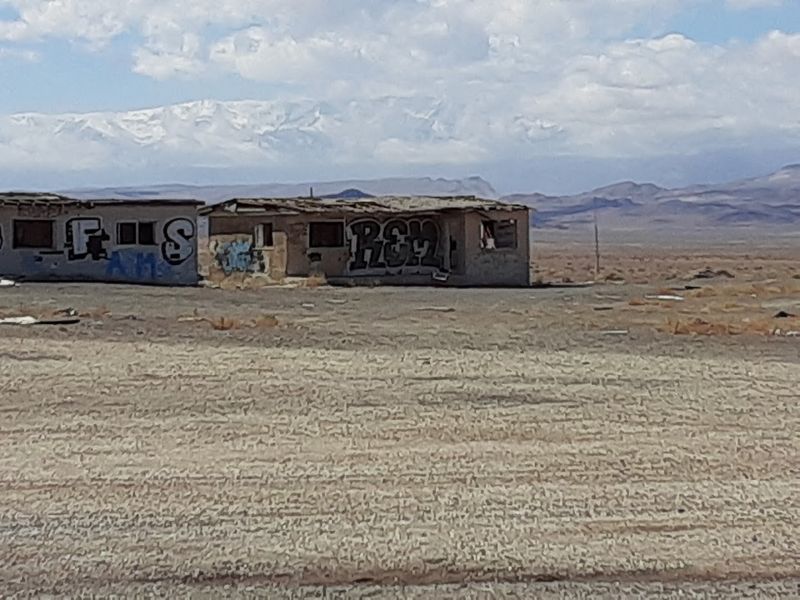
Esmeralda County is one of the least populated counties in the entire United States. That fact alone sets the tone for what visiting Gold Point actually feels like.
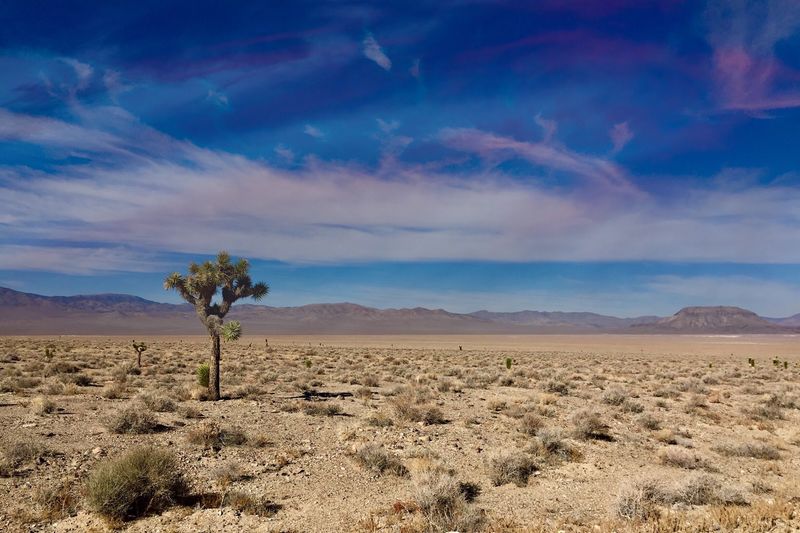
The drive out here takes you through stretches of open desert where the landscape is almost entirely uninterrupted by development.
The remoteness is a feature, not a drawback. There are no crowds, no parking structures, no souvenir kiosks selling mass-produced trinkets.
What you get instead is genuine solitude and the rare chance to experience a place that has not been smoothed over for easy consumption.
The approach along Nevada State Route 774 is itself part of the experience. The road cuts through terrain that feels ancient and enormous, and Gold Point appears in the distance almost like a mirage before it gradually becomes real.
That sense of discovery, earned by distance, makes the arrival feel genuinely meaningful.
Nevada State Route 774 and Its Unique Endpoint
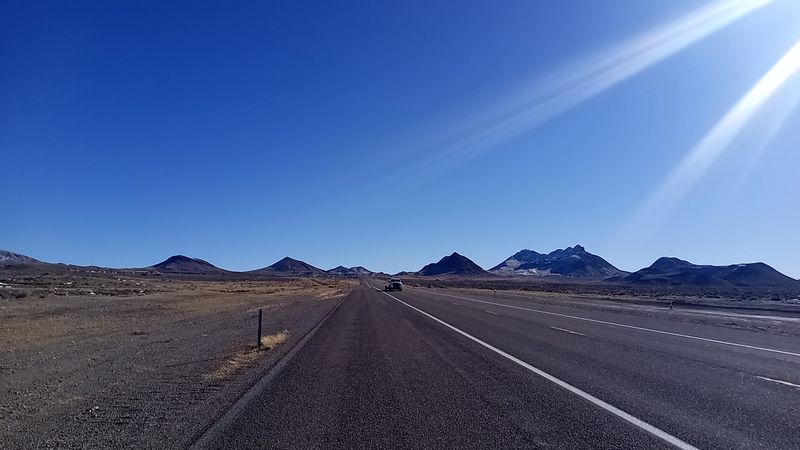
Gold Point holds an interesting distinction on Nevada’s road map. It serves as the southern terminus of Nevada State Route 774, meaning this is literally where that road ends.
For highway enthusiasts and road trippers who enjoy collecting unusual endpoints, that fact alone is worth noting.
The road itself passes through sparse, beautiful terrain that changes texture and color as you travel. Pale desert flats give way to low rocky hills, and the sky seems to expand the further you get from populated areas.
Driving Nevada State Route 774 toward Gold Point feels like following a thread back in time.
There is something philosophically satisfying about a road that leads to a ghost town. The endpoint is not a city or a highway interchange but a community frozen at a particular moment in history, which makes the journey feel more deliberate and more rewarding than a typical road trip stop.
What the Desert Preserves
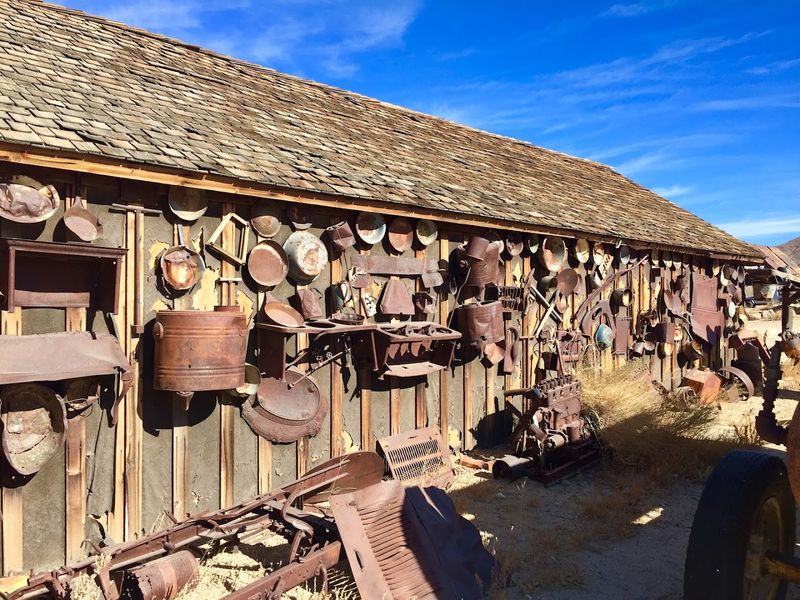
The Nevada desert is an accidental archivist. Its dry climate, low humidity, and minimal rainfall create conditions that slow the decay of wood, metal, and fabric far more effectively than wetter environments would.
Gold Point has benefited from this natural preservation in ways that make the town feel almost impossibly intact.
Objects that would have rotted away in a matter of decades in a humid climate have instead aged slowly and dramatically here. The result is a collection of artifacts that look like they belong in a museum but are simply sitting where they were left, under the open sky.
That quality of natural preservation gives Gold Point a texture that cannot be replicated or manufactured. The creak of old timber, the smell of sun-baked wood, the weight of silence over a landscape that has barely changed in a century: these are the details that make the visit feel genuinely irreplaceable.
The Kind of Stargazing That Changes Your Perspective
Spending the night at Gold Point opens up an experience that daytime visitors simply cannot access: the night sky over one of Nevada’s darkest corners. Light pollution is essentially nonexistent out here, and on a clear night the sky fills with stars in a way that feels overwhelming in the most positive sense.
The Milky Way is visible to the naked eye on most clear nights, arching across the sky in a wide band that most people raised near cities have never actually seen with their own eyes. It is the kind of sight that recalibrates your sense of scale and time.
Sitting outside a miner’s cabin in complete silence, looking up at a sky that would have looked exactly the same to the original residents of Gold Point, creates a connection to history that no museum exhibit can replicate. The experience is quiet, profound, and completely free.
A Living Piece of American Mining History
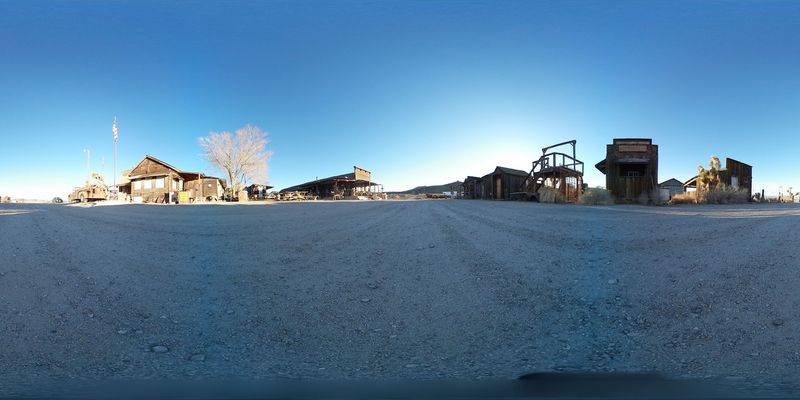
Most of what Americans know about the mining boom era comes from photographs, films, and museum displays. Gold Point offers something different: a physical, walk-through experience of what those communities actually looked like and felt like at ground level.
The scale is human-sized, not cinematic.
The buildings were not built to impress. They were built to function, quickly and practically, by people focused on extracting ore and surviving in a harsh environment.
That utilitarian honesty is visible in every beam and board, and it communicates something about the daily reality of mining life that no amount of reading can fully convey.
American history has a tendency to get polished and simplified over time. Places like Gold Point resist that smoothing process by simply existing as they are, unchanged and unromanticized, offering a more honest encounter with the past than most officially preserved historic sites manage to deliver.
Planning Your Visit to Gold Point
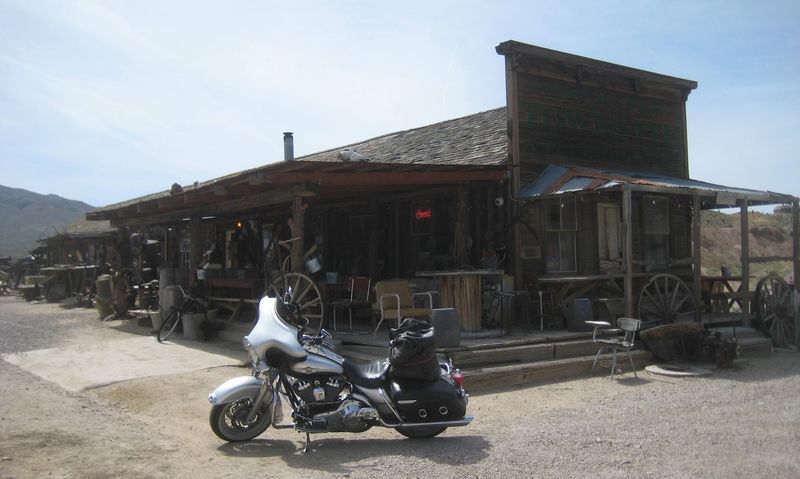
Getting to Gold Point requires a bit of planning, and that is part of what makes it special. The town is located in a remote section of Esmeralda County, and visitors should make sure their vehicle is in good shape and that they have enough fuel before heading out.
Services along the route are extremely limited.
The official website at goldpointghosttown.com is the best starting point for anyone interested in arranging a cabin rental or learning more about what to expect on arrival. Checking ahead of time is strongly recommended, especially for overnight stays, since accommodations are limited by the nature of the place.
The surrounding region of southern Nevada offers additional draws for travelers willing to explore further, including other historic mining communities and dramatic desert scenery that rewards those who take the time to slow down and look carefully at what this landscape has to offer.
Share this story