 Unearth The Voyage
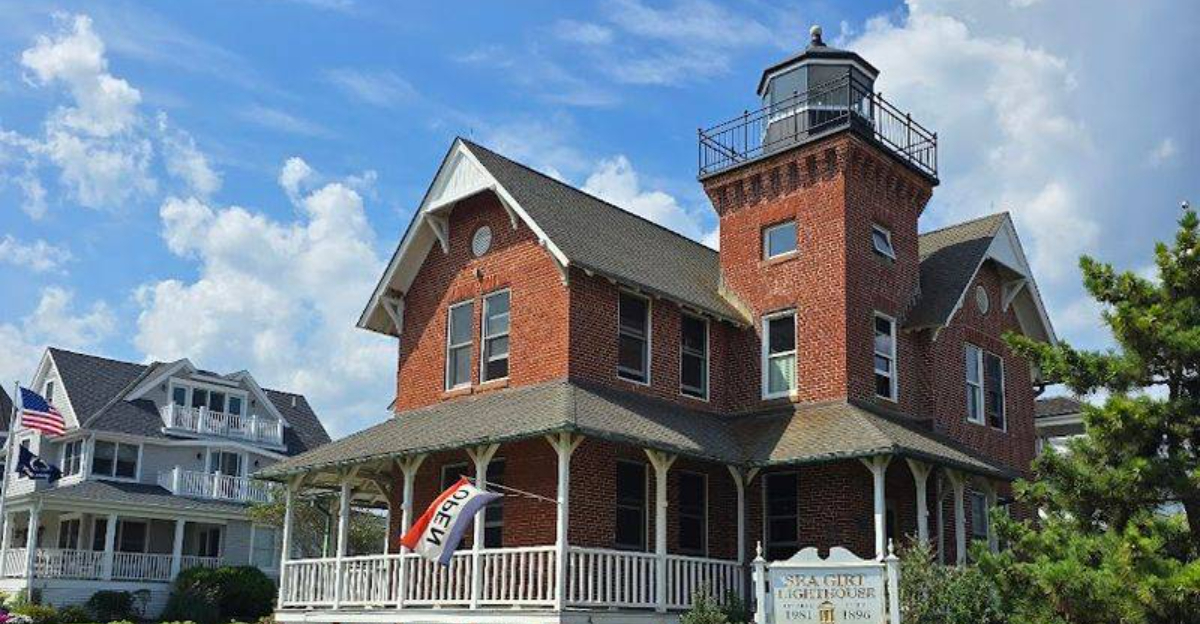
Along the New Jersey Shore, between the better-known beacons of Sandy Hook and Barnegat, there was once a 40-mile stretch of coastline that ships navigated in complete darkness. That gap was not a minor inconvenience; it was a real hazard for vessels moving along the Atlantic Coast in the late 1800s.
The solution came in the form of a red brick structure that was unlike any other lighthouse built on the East Coast at the time. Built directly into the keeper’s residence, this lighthouse filled a critical gap in coastal safety and went on to serve the community in ways nobody originally planned.
Its story is part maritime history, part community pride, and entirely worth knowing. Keep reading to find out why this small but mighty New Jersey lighthouse changed the way the coast was protected.
Where It All Stands: The Address and Location
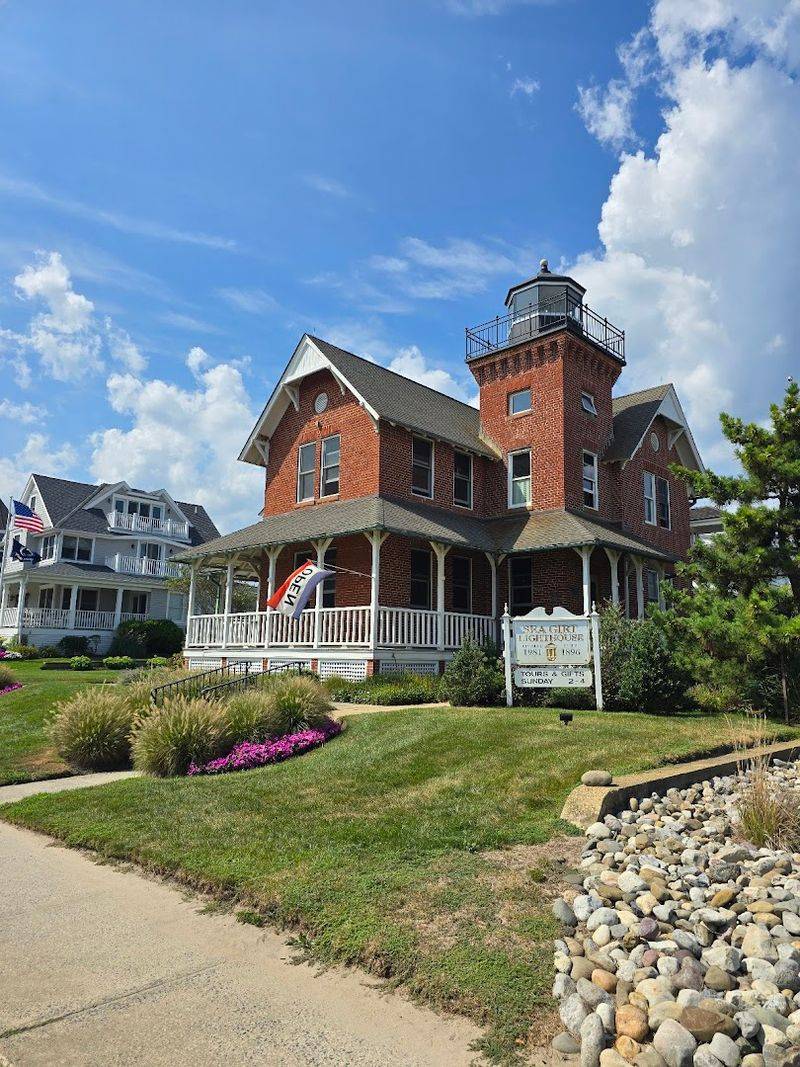
At 9 Ocean Ave N, Sea Girt, NJ 08750, the lighthouse sits just one block from the Atlantic Ocean, making its original purpose immediately clear the moment you see it.
Sea Girt is a small borough in Monmouth County, New Jersey, and the lighthouse anchors the northern end of the town’s oceanfront area with quiet confidence.
The building does not tower over the neighborhood in the way you might expect from a lighthouse. Because it was built directly into the keeper’s residence, it blends into the surrounding streetscape so naturally that first-time visitors sometimes walk right past it before realizing what they are looking at.
That architectural subtlety is part of what makes this location so interesting. The lighthouse is not a dramatic standalone tower; it is a home with a light on top, and that design choice tells you everything about the era in which it was built.
The Dark Gap That Started Everything
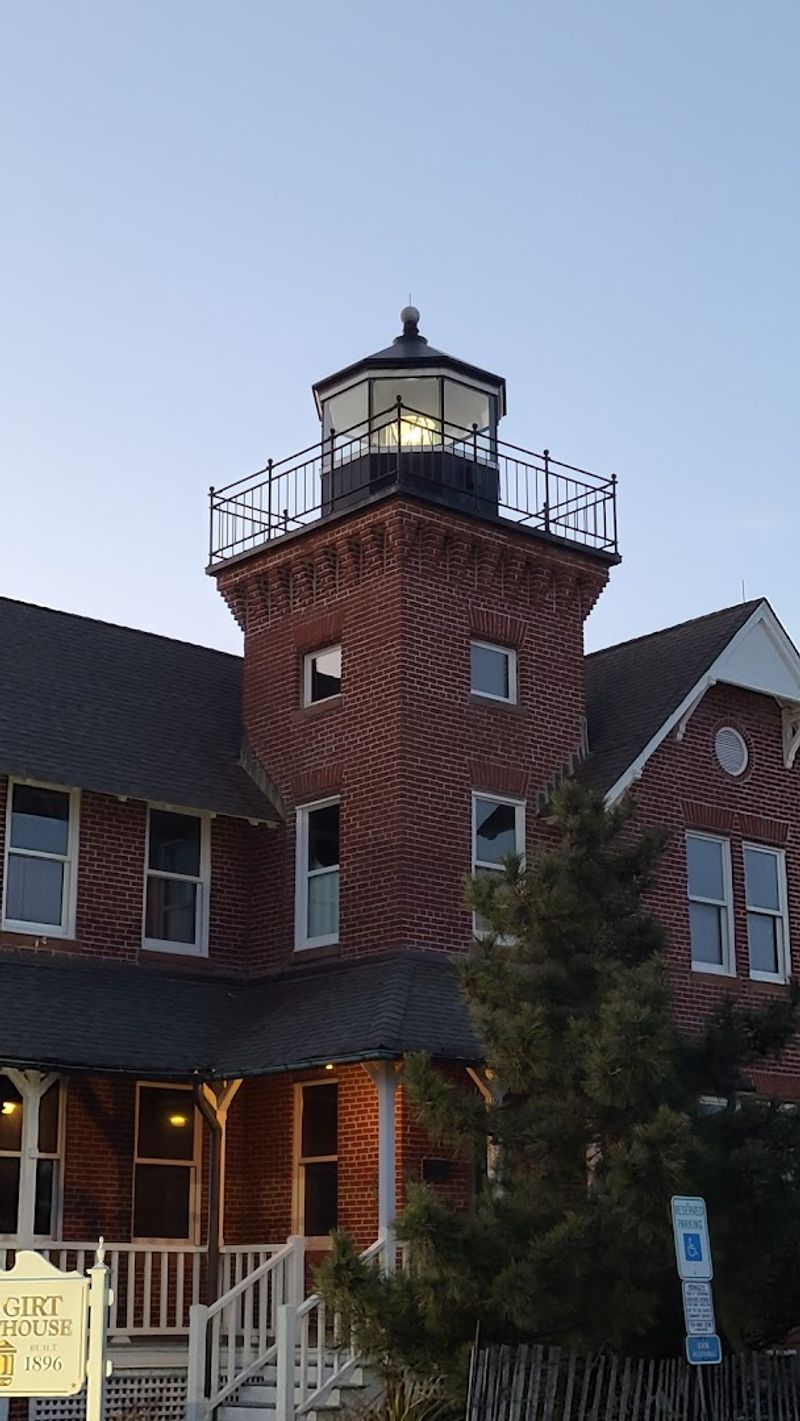
Before 1896, a roughly 40-mile section of the New Jersey coast between the Navesink and Barnegat lighthouses had no active light to guide ships through the night.
That stretch of water was a serious navigation challenge for vessels moving along the Atlantic seaboard. Ships relied on lighthouse beams to orient themselves, and a gap of that size left captains guessing in the dark.
The federal government recognized the problem and commissioned a new lighthouse specifically to fill that void. Sea Girt was chosen as the location because of its position roughly halfway between the two existing beacons.
When the light was first lit on December 10, 1896, its beam reached 20 miles out to sea, perfectly covering the previously unlit corridor. That single beam connected the dots between two major lighthouse systems and created a continuous line of guidance along one of the busiest stretches of the Eastern Seaboard.
The Last of Its Kind on the East Coast
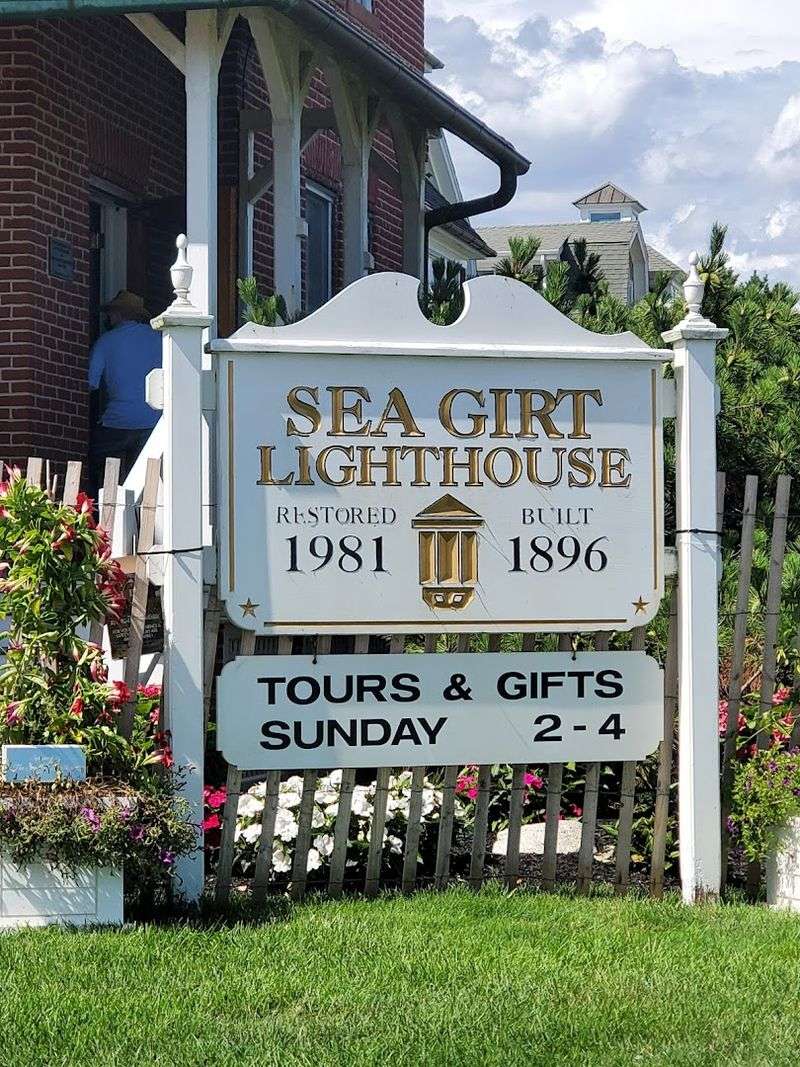
What makes the Sea Girt Lighthouse genuinely rare is the way it was constructed. It was the last integrated lighthouse and keeper’s residence built on the entire East Coast of the United States.
Rather than placing a standalone tower next to a separate house, the designers merged both structures into one continuous building. The light rose directly from the roofline of the keeper’s home, creating a compact and functional design that was both practical and cost-effective.
By the time Sea Girt was completed in 1896, lighthouse construction technology had moved on, and freestanding towers were becoming the standard. That makes this building a kind of architectural endpoint, the final chapter of a design tradition that had served coastal communities for generations.
No other lighthouse of this exact integrated style was built on the East Coast after Sea Girt. That fact alone gives the building a historical weight that goes well beyond its modest size and quiet neighborhood setting.
A Wartime Role Nobody Expected
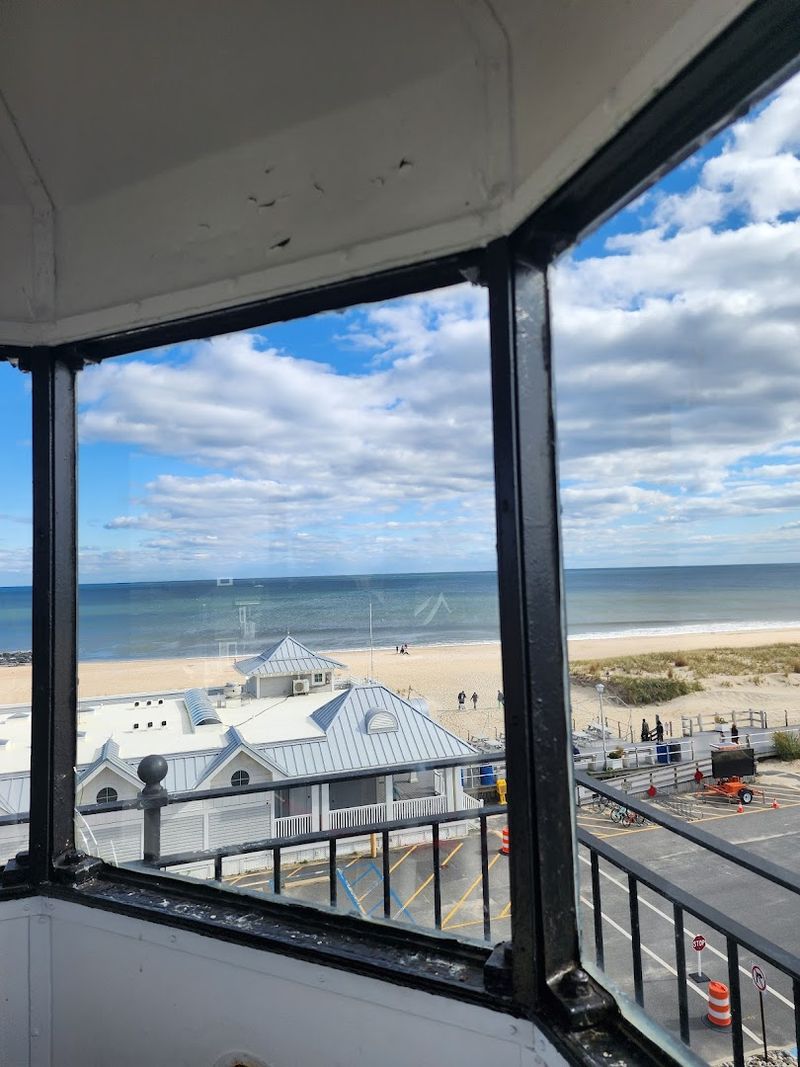
Lighthouses have always had a dual purpose: guiding ships and serving as observation points along the coast. During World War II, the Sea Girt Lighthouse took on that second role in a very direct way.
The structure was used as a lookout post during the war, giving military personnel an elevated position from which to monitor activity along the New Jersey shoreline. The Atlantic Coast was considered a strategically important zone during the conflict, and coastal stations like this one played a quiet but real part in keeping watch.
The lighthouse’s position close to the ocean made it well-suited for that purpose. From the upper level, the view extends far out over the water, offering a clear line of sight that would have been valuable to anyone tasked with monitoring the coastline.
That wartime chapter adds a layer to the building’s history that surprises many people who visit expecting only a story about maritime navigation and Victorian-era architecture.
Decommissioned but Not Forgotten
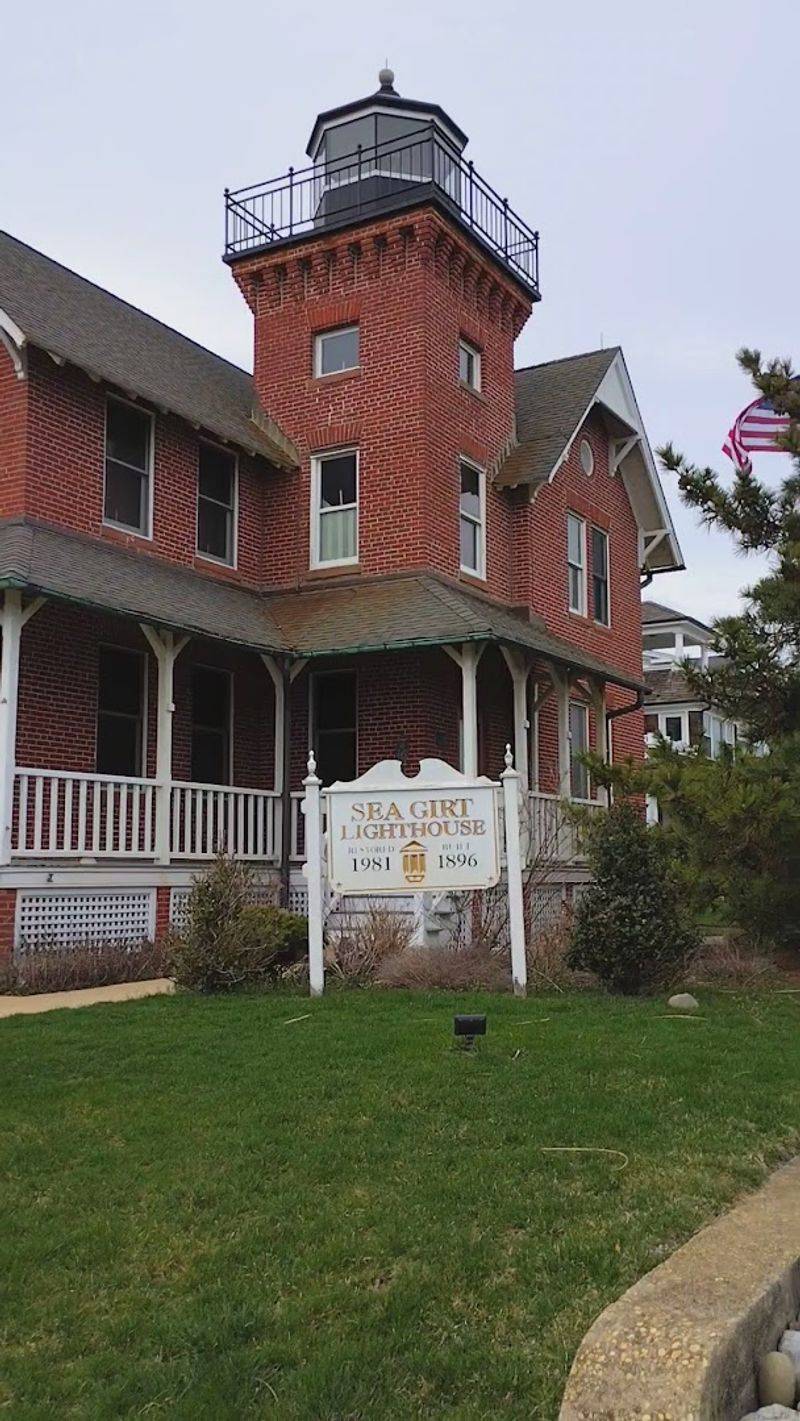
The lighthouse’s active service as a navigational aid came to an end in 1977, when the light was officially decommissioned. Modern navigation technology had made the original beam largely redundant, and the federal government no longer needed to maintain the structure for maritime purposes.
That could have been the end of the story. Many decommissioned lighthouses across the country have been left to deteriorate or demolished entirely once their operational purpose was gone.
Sea Girt took a different path. The town of Sea Girt acquired the building in 1980, just three years after decommissioning, and the community immediately began organizing around its preservation.
The Sea Girt Lighthouse Citizens Committee was formed to take on the work of maintaining and restoring the structure. That local commitment turned what could have been a loss into a continuing presence, keeping the building alive as a historical landmark rather than allowing it to quietly disappear from the landscape it had shaped for nearly a century.
The Citizens Committee That Keeps the Light Alive
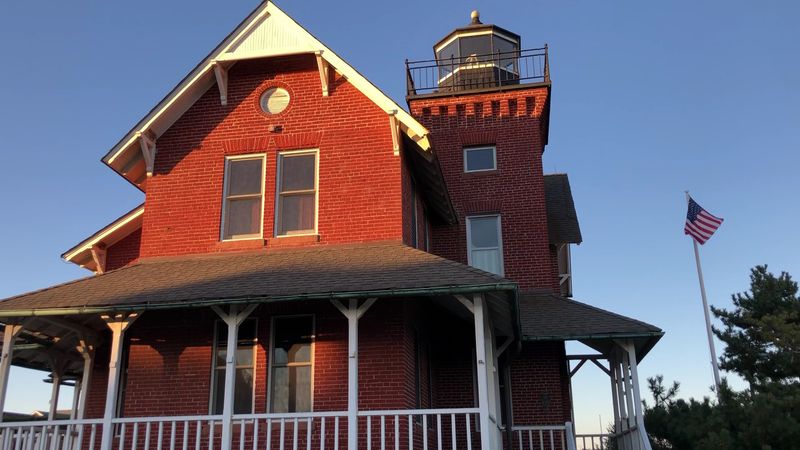
The Sea Girt Lighthouse Citizens Committee is the volunteer organization responsible for maintaining, preserving, and operating the lighthouse today. Without this group, the building would not be open to the public at all.
Tours run on Sundays from 2 to 4 PM, and the guides who lead them are volunteers with deep knowledge of the lighthouse’s history, the families who lived there, and the broader maritime context of the New Jersey Shore.
Each room inside the building is staffed by a knowledgeable volunteer who explains its original purpose and shares stories connected to the people who once called this lighthouse home. The experience is far more personal than a typical museum visit because the guides bring genuine enthusiasm and specific details that go beyond what any printed placard could offer.
Admission is free, though donations are strongly encouraged so the committee can continue its preservation work. That generosity from the public is what keeps this piece of history accessible to everyone.
Inside the Keeper’s Home
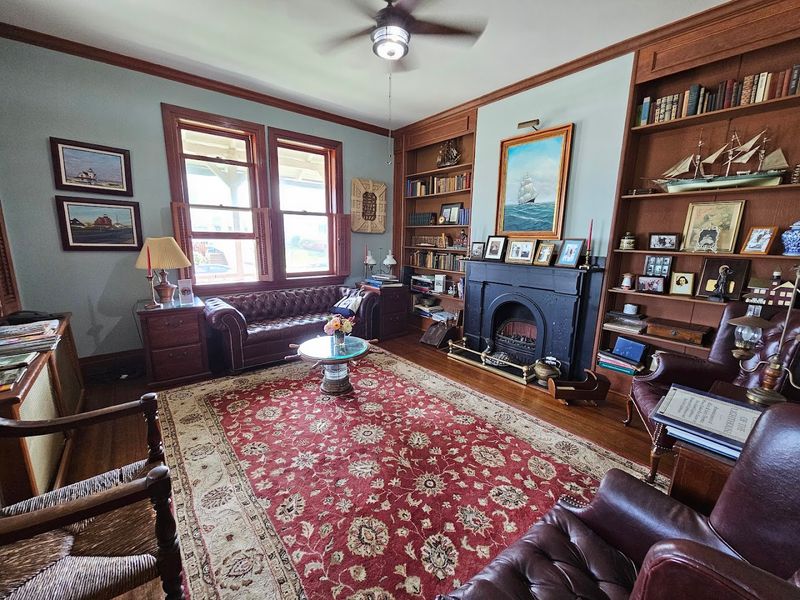
The inside of the Sea Girt Lighthouse is a preserved snapshot of domestic life in the late 19th century. The rooms reflect how the keeper and their family actually lived, with artifacts, maps, and photographs that place visitors directly in that historical moment.
Because the lighthouse was built as an integrated residence, the living quarters are part of the tour rather than a separate exhibit. You move through rooms that were once a real home, which gives the experience a grounded, human quality that larger lighthouse museums sometimes lack.
Period furnishings and historical displays fill the interior, and the layout has been maintained to reflect the building’s original design as closely as possible. The decor pulls the space back in time without feeling staged or artificial.
The collection of maps, photographs, and written histories displayed throughout the rooms gives context to the lighthouse’s role in regional maritime navigation, connecting the personal story of the keeper’s family to the larger history of the New Jersey coastline.
Climbing to the Top: The Light Itself
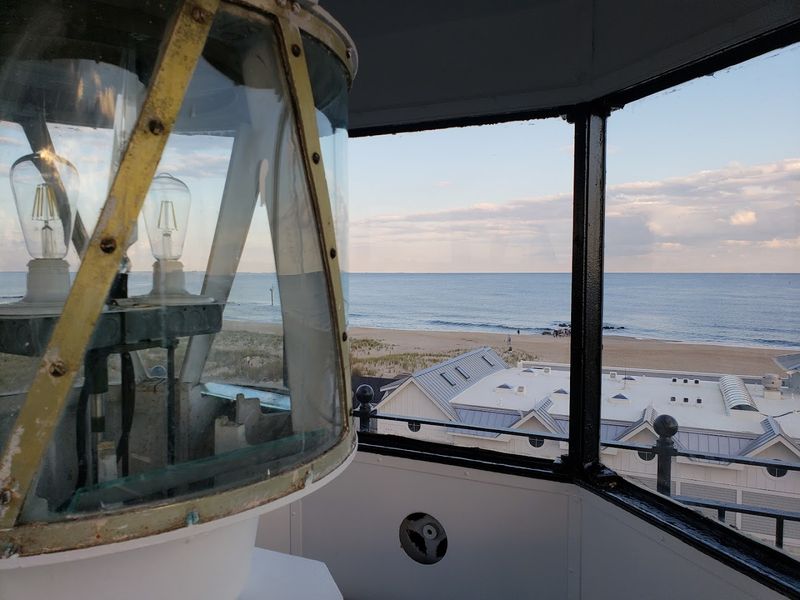
Getting to the top of the lighthouse requires a short ladder climb from the upper floor, which adds a bit of physical adventure to what is otherwise a leisurely historical tour.
The effort is worth it. From the lantern room at the top, the view stretches over Sea Girt’s coastline and out across the Atlantic Ocean.
Binoculars are available at the top, allowing visitors to scan the horizon and get a real sense of how far the original beam would have reached on a clear night.
That 20-mile range suddenly feels very real when you are standing at the light and looking out at the water below. The connection between the physical space and the historical function of the building becomes immediate and clear in a way that no exhibit or display can quite replicate.
The ladder requirement is worth noting for anyone with mobility concerns, but for those who can manage it, the climb offers one of the more memorable views on the entire New Jersey Shore.
Whale Watching From a Historic Vantage Point
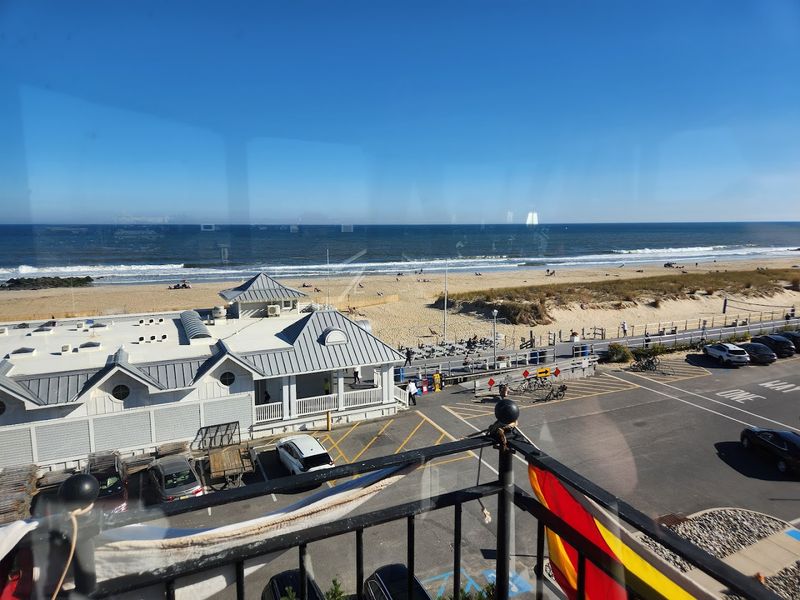
One of the more unexpected bonuses of visiting the Sea Girt Lighthouse is the possibility of spotting whales from its upper vantage point. The lighthouse sits close enough to the water that the open Atlantic is clearly visible from the top, and whale sightings from this spot have been reported on multiple occasions.
The waters off the New Jersey coast have seen increased whale activity in recent years, with humpback and other species moving through the area during certain seasons. A lighthouse that was built to watch over ships now occasionally offers a front-row perspective on marine wildlife.
That combination of history and nature is not something you typically find packaged together in one small brick building on a residential street. It adds a spontaneous, unpredictable element to a visit that is otherwise defined by careful historical preservation.
Bringing binoculars of your own is a good idea if whale watching is on your agenda, though the pair available at the top of the lighthouse gives a solid starting point.
The Boardwalk and Beach Right Next Door
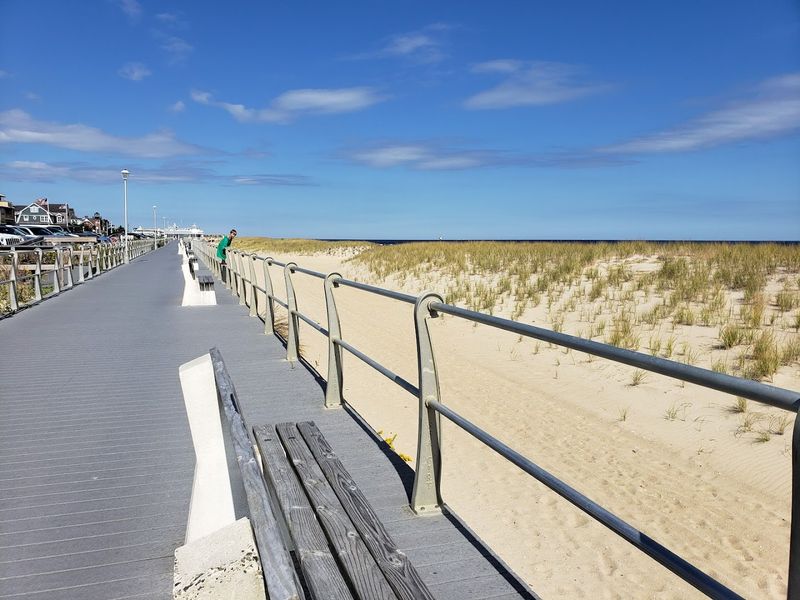
The lighthouse does not stand alone as the only reason to spend time in this part of Sea Girt. The boardwalk runs directly along the oceanfront just steps away from the building, and it connects to the neighboring community of Spring Lake for a longer coastal walk.
The combined boardwalk stretches for several miles and is well-maintained throughout the year. Benches, trash cans, and restroom facilities are available along the route, making it practical for extended walks regardless of the season.
The oceanfront homes lining the route are notable in their own right, with well-kept architecture that reflects the character of these long-established shore communities. The overall atmosphere is calm and residential rather than busy and commercial.
Restrooms are also available across the road from the lighthouse itself, which is a practical detail worth knowing before you plan your visit. The boardwalk works well as either a warm-up before the lighthouse tour or a relaxed way to extend the afternoon after you have finished inside.
Why This Small Lighthouse Carries Outsized Historical Weight
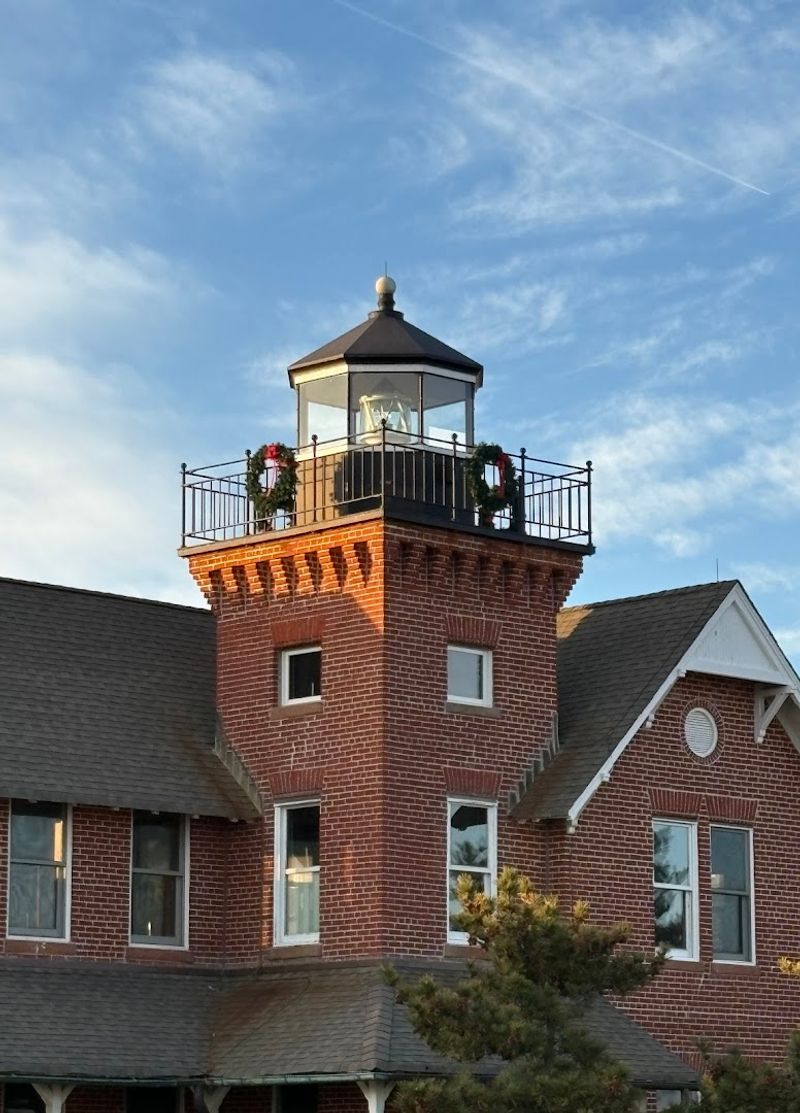
A lighthouse does not need to be the tallest or the oldest to matter. Sea Girt’s significance comes from a combination of factors that, taken together, make it one of the more historically layered structures on the entire New Jersey coastline.
It was the last integrated lighthouse and keeper’s residence on the East Coast. It filled a critical 40-mile navigation gap that had left ships without guidance for years.
It served as a wartime lookout post. And it was saved from neglect by a community that recognized its value before it was too late.
Each of those chapters represents a different kind of importance, and the building carries all of them within its compact red brick frame. The artifacts, the volunteer guides, the preserved rooms, and the view from the top all work together to tell a story that goes well beyond a single structure on a quiet New Jersey street.
For anyone curious about coastal history, maritime navigation, or the way communities protect what they value, this lighthouse offers a genuinely rewarding afternoon.



