 Unearth The Voyage
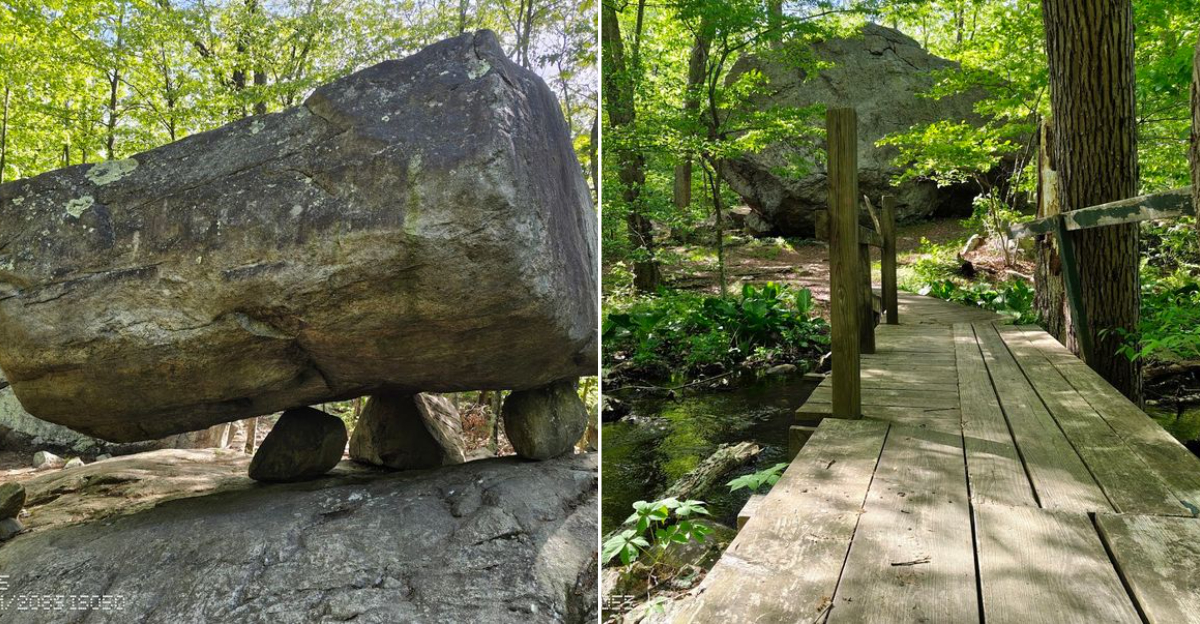
New Jersey has a lot going for it, but not many people expect to find a giant boulder the size of a small car balancing on three smaller rocks in the middle of the woods. Yet that is exactly what exists in Morris County, and it has been sitting there, completely still, for thousands of years.
Tripod Rock in Kinnelon is one of those places that stops you in your tracks the moment you round the trail bend and see it for the first time. No special effects, no construction crew, no Hollywood budget required.
Scientists believe glaciers from the last Ice Age are responsible for this geological curiosity, but standing in front of it, that explanation almost feels too simple. This article covers everything worth knowing before heading out to see one of New Jersey’s most genuinely jaw-dropping natural landmarks.
Where Exactly Tripod Rock Is Located
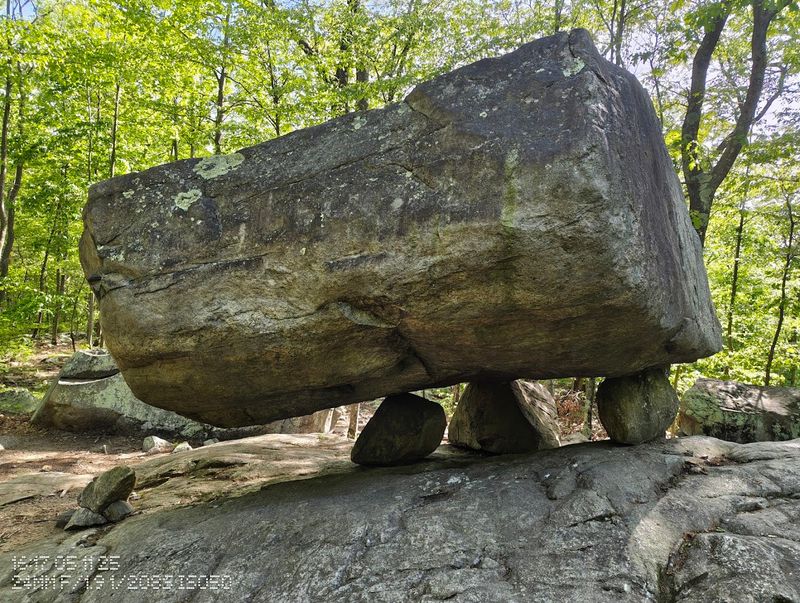
Tripod Rock sits within the Pyramid Mountain Natural Historic Area in Kinnelon, New Jersey 07405, located in Morris County. The preserve is managed by the Morris County Park Commission and covers over 1,500 acres of protected land.
The main trailhead and visitor center are the starting point for most hikers heading to Tripod Rock. The address for the Pyramid Mountain Natural Historic Area Visitor Center is 472 Boonton Avenue, Montville, NJ 07045, which serves as the primary access point for the trail system.
Kinnelon is a quiet borough in Morris County, roughly 30 miles west of New York City, making it a surprisingly accessible day trip from the metro area. The surrounding region is wooded and largely undeveloped, which adds to the sense of being far removed from suburban life.
Getting there by car is the most practical option, as public transit options to the trailhead are limited.
The Rock That Defies Easy Explanation
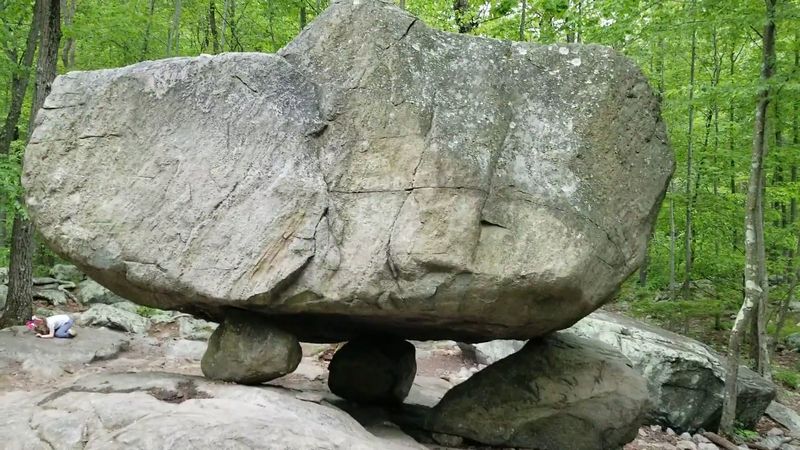
Tripod Rock is a glacial erratic, which is a boulder that was carried and deposited by a glacier during the last Ice Age, roughly 18,000 years ago. What makes this particular rock so striking is not just its size but the way it sits.
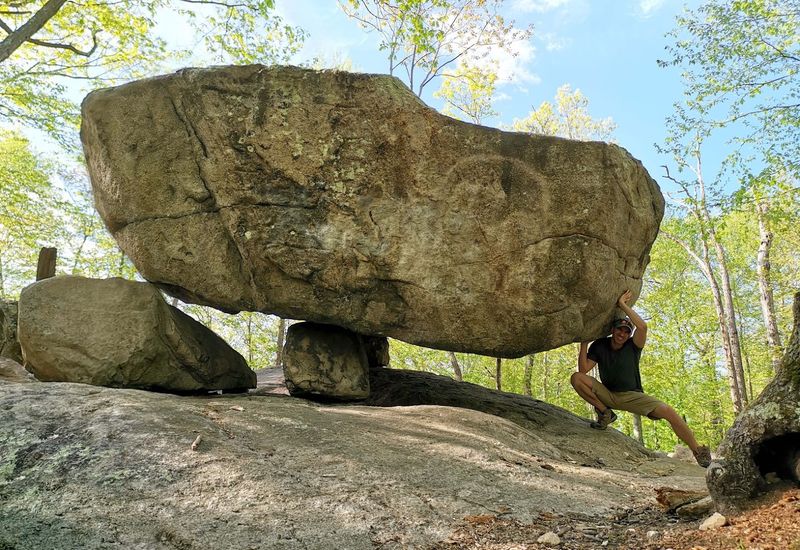
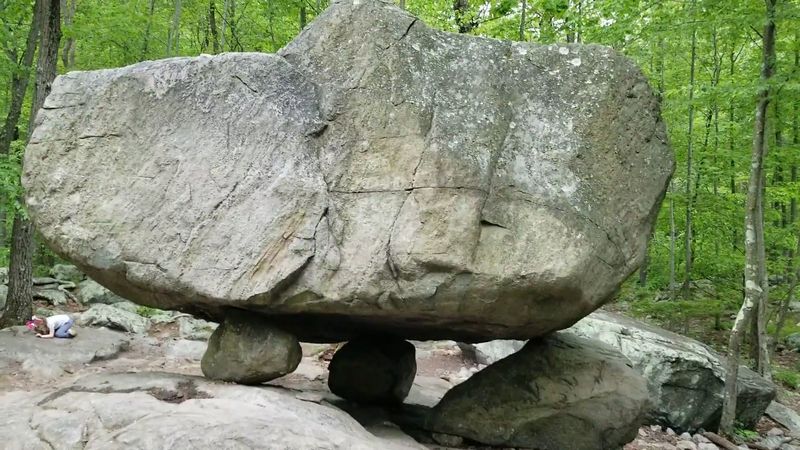
The main boulder weighs an estimated 160 tons and rests on three smaller support stones, creating a natural tripod formation that looks almost too deliberate to be accidental. The three support stones hold the massive boulder off the ground, leaving visible gaps beneath it that hikers can crouch down and look through.
Geologists explain that as glaciers melted and retreated northward, they deposited rocks of all sizes across the landscape. In rare cases, a large boulder landed on smaller ones and remained balanced due to the specific shape and distribution of weight.
Tripod Rock is one of the most dramatic examples of this process found anywhere in the northeastern United States.
A Site With Possible Ancient Significance
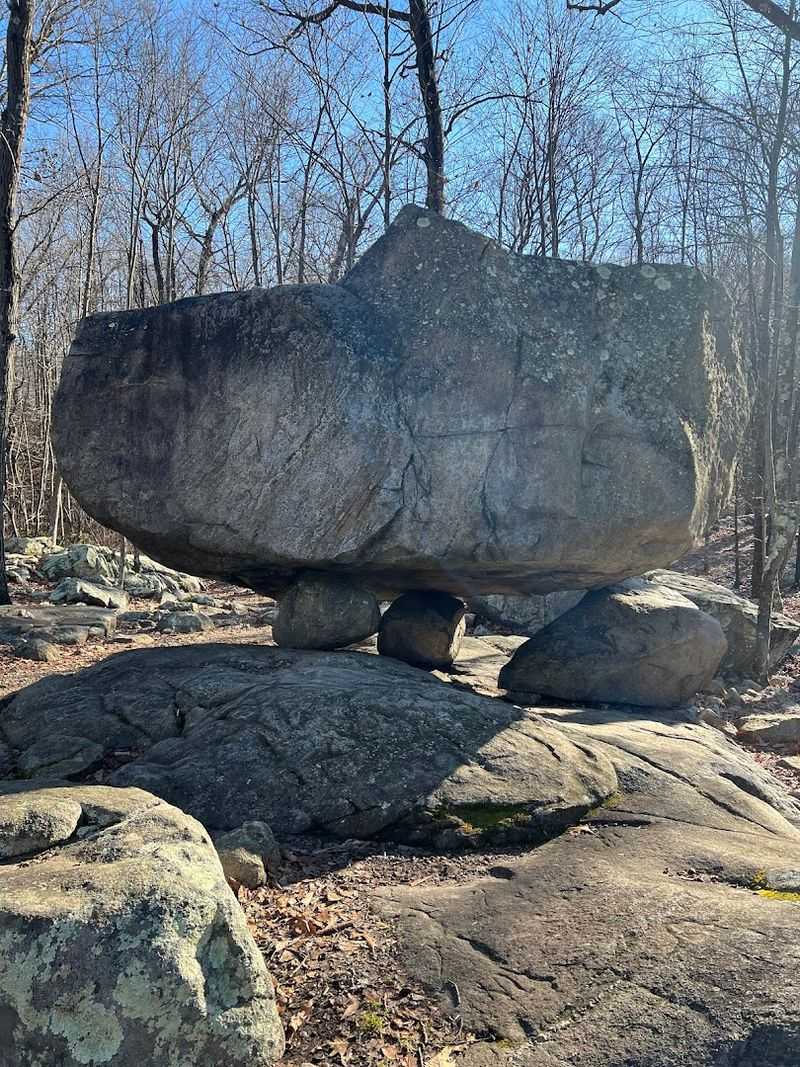
Beyond the geology, Tripod Rock carries a layer of historical intrigue that researchers and enthusiasts have debated for decades. Some archaeologists and historians believe the rock may have been used as a solar or lunar calendar by the Lenape people, the Indigenous group who inhabited this region long before European settlement.
The idea comes from the observation that two smaller nearby boulders, sometimes called the calendar stones, align with Tripod Rock in ways that correspond to the summer solstice sunrise. On the longest day of the year, the sun rises in direct alignment with these stones when viewed from a specific vantage point near Tripod Rock.
Whether this alignment was intentional or coincidental remains an open question among researchers. The Morris County Park Commission acknowledges the theory but stops short of calling it confirmed.
Still, the possibility adds a compelling human dimension to what might otherwise be seen as a purely geological curiosity.
The Trail System Getting You There
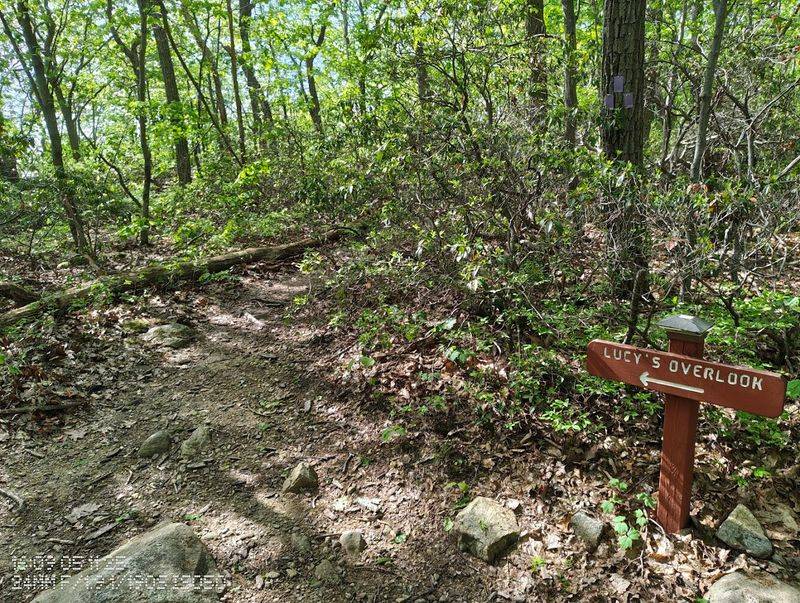
Reaching Tripod Rock requires a hike, and the trail system at Pyramid Mountain is well-marked but demands a reasonable level of fitness. The most commonly used route follows the Blue Trail, then connects to the Blue Dot Trail to reach the rock.
The round trip covers roughly two miles, though the terrain includes some steep sections, particularly near a small waterfall along the way. The elevation changes are moderate, not extreme, but hikers should wear proper footwear and bring water, especially in warmer months.
Trail signs at the preserve are clearly posted, and a trail map is available at the visitor center. Families with children have completed the hike without major difficulty, though younger kids may need assistance on the steeper segments.
The Blue Dot Trail is the most direct path to Tripod Rock and is the one most frequently recommended for first-time hikers visiting the preserve. Plan for about one to two hours total.
What the Hike Actually Looks Like
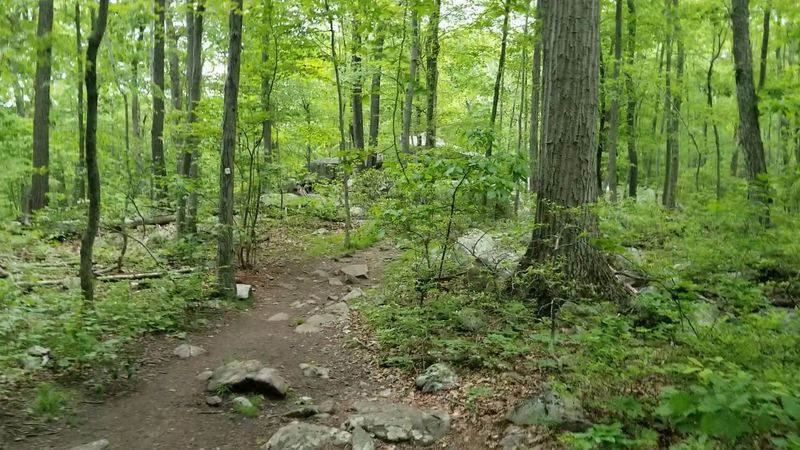
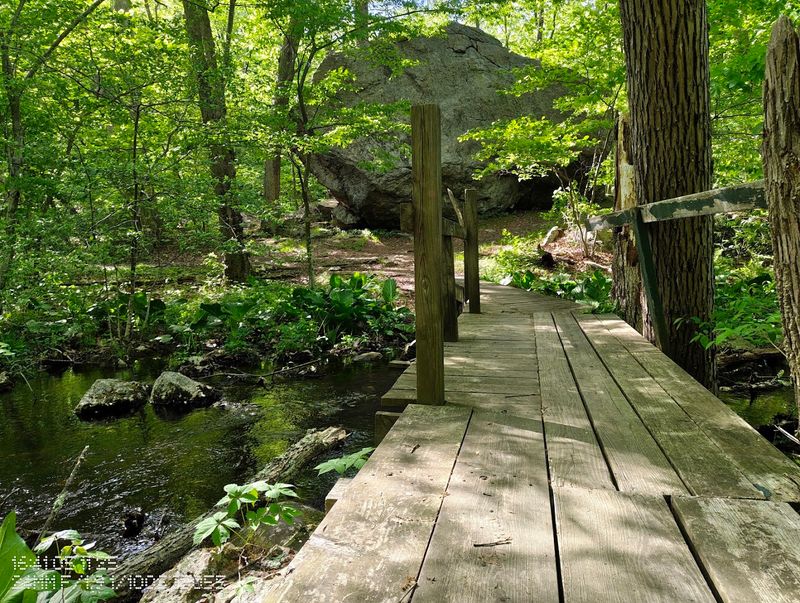
The trail to Tripod Rock winds through a dense mixed forest of oak, maple, and birch trees, with the canopy providing shade during warmer months. The path crosses over rocky outcroppings, tree roots, and small stream crossings that keep the hike interesting from start to finish.
Near the small waterfall section, the trail gets noticeably steeper and the footing becomes more uneven. This is the segment where trekking poles can be especially helpful, particularly for hikers who are not used to rocky terrain.
The waterfall itself is a modest but pleasant feature along the route.
As the trail levels out near the top, the forest opens slightly and the rock formations become more prominent underfoot. Then, almost without warning, Tripod Rock comes into view through the trees.
The transition from ordinary forest trail to standing in front of a 160-ton balanced boulder is one of the more satisfying payoffs on any trail in New Jersey.
Other Highlights Along the Way
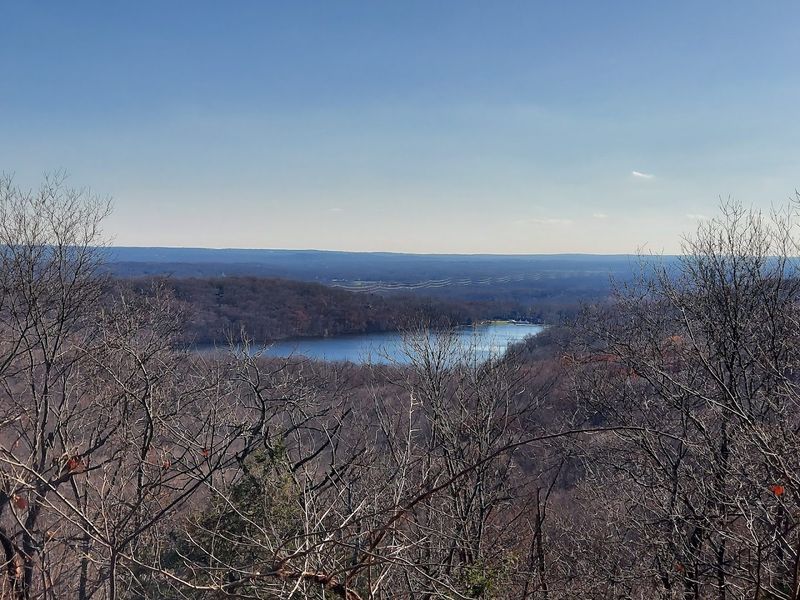
Tripod Rock gets most of the attention, but the Pyramid Mountain preserve has other notable stops worth building into the hike. Bear Rock is one of them, a massive flat-topped boulder formation accessible via the Yellow Trail, which branches off from the main route near the return path from Tripod Rock.
Lucy’s Overlook is another rewarding detour, offering an elevated view of the surrounding Morris County landscape. The overlook sits along the Blue Dot Trail and is a natural stopping point for a rest before or after visiting Tripod Rock.
For hikers interested in maximizing the outing, a suggested loop combines the Blue Trail, Blue Dot Trail for Tripod Rock, then connects to the Yellow Trail for Bear Rock, and returns via the Orange Trail back to the parking area. This extended route covers more ground and passes through varied terrain, making it a fuller experience of everything the preserve has to offer beyond just the headline attraction.
Best Times of Year to Visit
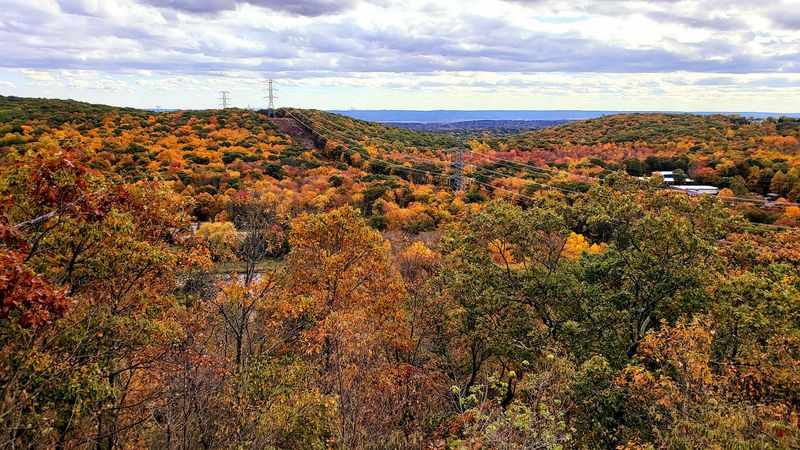
Pyramid Mountain and Tripod Rock are open year-round, but the experience changes significantly with the seasons. Spring and fall tend to be the most popular times to visit, when temperatures are comfortable and the forest is either greening up or displaying fall color.
Summer visits are entirely doable, and the tree canopy keeps the trails shaded for much of the route. Bringing extra water and starting early in the morning helps avoid the midday heat during July and August.
Weekends in summer can bring larger crowds to the trailhead parking area.
Winter hikes to Tripod Rock have their own appeal, particularly after a light snowfall when the forest is quiet and the boulder stands out even more dramatically against a white background. Ice on the rocky sections can make the trail slippery, so microspikes or traction devices are worth packing from December through February.
The preserve does not close for winter weather under normal conditions.
The Geology Behind the Balance
Understanding why Tripod Rock stays balanced requires a quick look at basic geology. During the last Ice Age, massive sheets of ice, some stretching miles thick, moved southward across North America, picking up and carrying rocks of all shapes and sizes along the way.
As temperatures rose and the glaciers retreated, the ice released the rocks it had been transporting, depositing them across the landscape in a process geologists call glacial deposition. Most of these deposited boulders, known as erratics, simply landed on flat ground.
A small number came to rest on top of other rocks, and an even smaller number landed in a configuration stable enough to remain standing for thousands of years.
Tripod Rock falls into that rare category. The specific geometry of the three support stones and the distribution of the main boulder’s weight create a structure that has remained stable since the glacier left it there.
No mortar, no engineering, just physics and luck working together across millennia.
What Makes This Place Feel Different
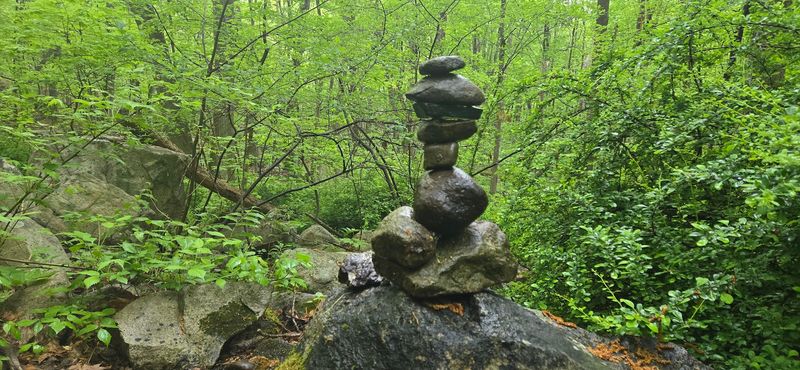
A lot of natural landmarks in New Jersey come with guardrails, observation platforms, and interpretive signs every few feet. Tripod Rock is refreshingly low-key by comparison.
The trail leads through the woods, and then the rock simply appears, unguarded and unadorned.
There is no fence around it, no gift shop nearby, and no admission fee. The preserve keeps the experience minimal and straightforward, which is part of what makes arriving at the rock feel genuinely rewarding rather than like a managed tourist attraction.
The quiet of the surrounding forest adds to that effect.
The scale of the boulder is harder to appreciate in photographs than it is in person. Standing next to it, the sheer mass of the rock becomes clear in a way that no image fully captures.
That disconnect between expectation and reality is part of what keeps people talking about Tripod Rock long after they have made the hike back to the parking lot.
Dogs on the Trail
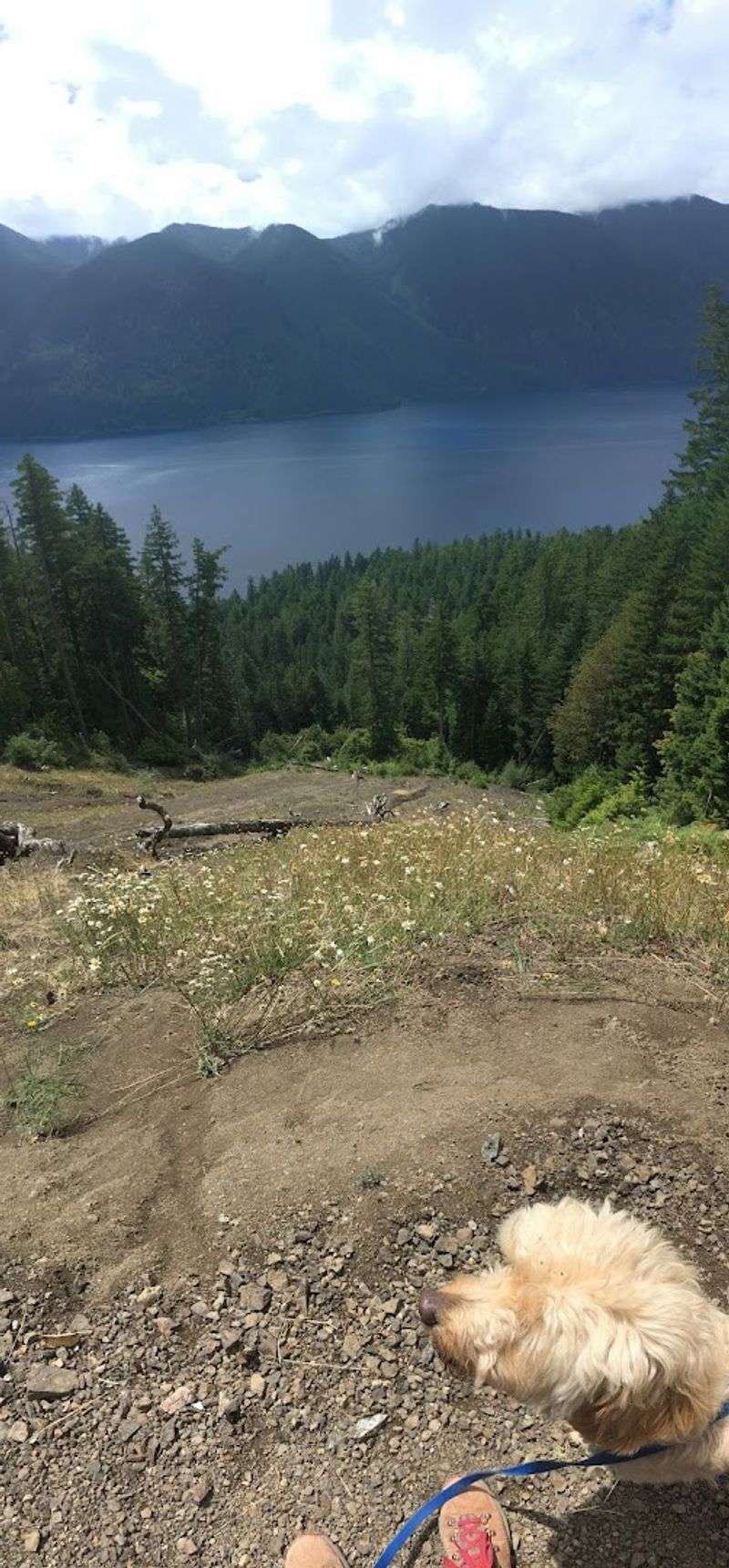
The Pyramid Mountain preserve is dog-friendly, and plenty of hikers bring their dogs along for the trip to Tripod Rock. The trail terrain, with its mix of packed dirt, rock, and tree roots, is generally manageable for most dogs of average fitness.
Leash rules apply throughout the preserve, and the Morris County Park Commission enforces this policy to protect wildlife and ensure a safe experience for all trail users. Most dog owners follow the rules without issue, though the occasional off-leash dog has been a point of frustration for other hikers in the past.
Bringing water for dogs is especially important during summer hikes, as the trail does not have reliable water sources along the way. A collapsible bowl and a full water bottle dedicated to the dog makes the outing much more comfortable for four-legged hikers.
The rocky terrain near the waterfall section may be slightly challenging for smaller or older dogs, so knowing your pet’s limits before heading out is always a good idea.
Photography Opportunities at the Rock
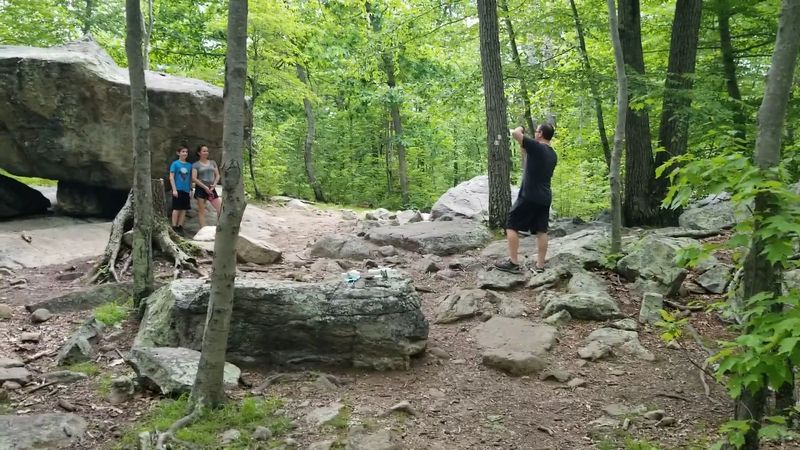
Tripod Rock is one of the more photogenic natural features in New Jersey, and the location draws photographers ranging from casual smartphone users to serious landscape and nature photographers. The rock’s unusual shape and the forest backdrop create a composition that is hard to replicate anywhere else in the state.
Morning light filtering through the trees tends to work well for photography, particularly in spring and fall when the angle of the sun is lower and the colors in the forest are more varied. Overcast days also produce clean, even light that works well for capturing the texture and scale of the boulder.
Getting a person in the frame next to the rock is one of the most effective ways to communicate its true size in a photograph. Without a reference point, images of the rock can look smaller than it actually is.
Wide-angle lenses give a fuller picture of the formation, while closer shots highlight the three support stones and the gap visible beneath the main boulder.
The Surrounding Natural History
The Pyramid Mountain Natural Historic Area protects more than just Tripod Rock. The preserve encompasses a landscape shaped by glacial activity, with rocky ridges, wetlands, streams, and diverse plant communities spread across its 1,500-plus acres.
The forest is home to a variety of wildlife, including white-tailed deer, wild turkey, and numerous bird species. The mix of upland forest and lowland wetland areas creates habitat diversity that supports a broader range of species than a purely upland forest would.
The Morris County Park Commission has worked to document and protect the natural and cultural history of the preserve for decades. Interpretive materials at the visitor center cover topics ranging from glacial geology to the history of the Lenape people who lived in this region.
For hikers with an interest in natural history, the preserve offers more depth than a single visit can fully cover. Returning in different seasons reveals new aspects of the landscape that a one-time trip will not.
Why Tripod Rock Keeps Drawing People Back
Not every natural landmark earns repeat visits, but Tripod Rock is one that does. Part of the reason is the hike itself, which is rewarding on its own terms regardless of the destination.
The forest, the waterfall, the rocky terrain, and the overlook views all add up to a trail experience that holds up well across multiple visits.
The rock also has a way of sparking curiosity that outlasts the hike. People leave with questions about how it got there, whether the solar alignment theory holds up, and what the site meant to the people who lived here centuries ago.
Those questions tend to bring people back for a second look.
For a state that sometimes gets overlooked in conversations about natural beauty, Tripod Rock is a quiet but convincing argument that New Jersey has more to offer than most people give it credit for. The rock has been sitting there for thousands of years, and it shows no signs of going anywhere anytime soon.



