There is a forest in western North Carolina where Hollywood came to film not one, not two, but three of its most iconic waterfall scenes. The same rushing water you saw in “The Last of the Mohicans” and “The Hunger Games” is still there, crashing and roaring just as dramatically as it did on screen.
Tucked into the Blue Ridge Mountains near Cedar Mountain, this 12,400-acre stretch of trails, lakes, and cascades is one of the most rewarding day hikes in the entire Southeast. The best part is that you do not need to be an experienced hiker to see all three falls in a single day.
Where the Forest Begins: Location and First Impressions
Your ears might actually pop on the drive up. DuPont State Recreational Forest sits at a high enough elevation in the Blue Ridge Mountains that the winding mountain road to the main trailhead on Staton Road, Cedar Mountain, NC 28718, gives you that unmistakable pressure change in your ears before you even park the car.
The forest covers 12,400 acres spread across Henderson and Transylvania Counties, and the moment you step out of the car, the air feels noticeably cooler and cleaner than what you left behind in the valley.
The main parking area near the visitor center is well-organized, with clean restrooms and water fountains that hikers genuinely appreciate after a long drive. Getting there early is not just a suggestion; on weekends, the lot fills up fast.
Plan to arrive before 9 AM to snag a good spot and get a head start on the trails before the crowds build up.
The Hollywood Connection That Makes This Forest Famous
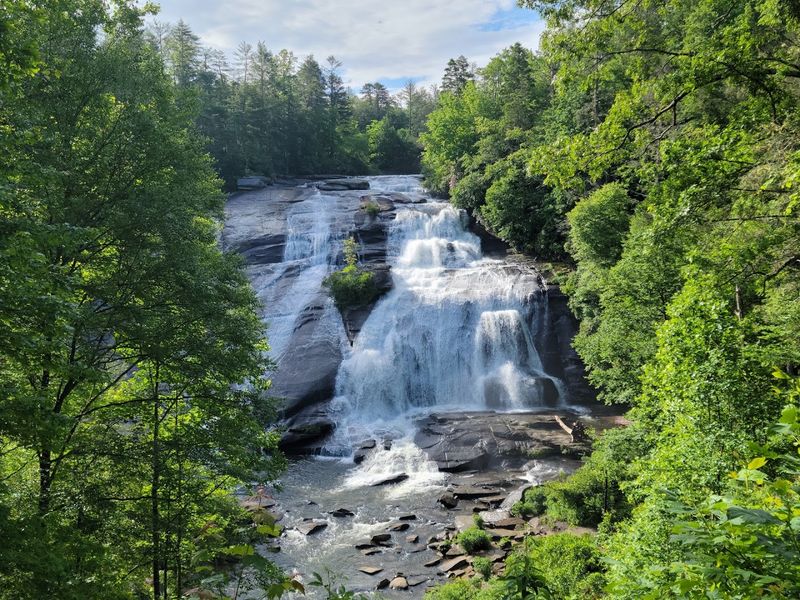
Few hiking destinations in America carry genuine movie credentials, and this one has two blockbusters on its resume. “The Last of the Mohicans” (1992) and “The Hunger Games” (2012) both used DuPont’s waterfalls as filming locations, and specific falls like Triple Falls, High Falls, Hooker Falls, and Bridal Veil Falls all made appearances on the big screen.
Standing at the base of Triple Falls, it is surprisingly easy to recognize the ledges and rocky outcroppings from the chase scenes. The water tumbles in three distinct tiers, each one dropping into a wide pool before spilling forward again, and the whole thing looks almost too dramatic to be real.
Knowing that camera crews hauled equipment through these same trails adds a fun layer to the hike. You are not just chasing waterfalls; you are walking through a real outdoor film set.
That context makes every bend in the trail feel a little more exciting, especially for kids or teenagers who have seen either movie.
Triple Falls: The Showstopper of the Trail
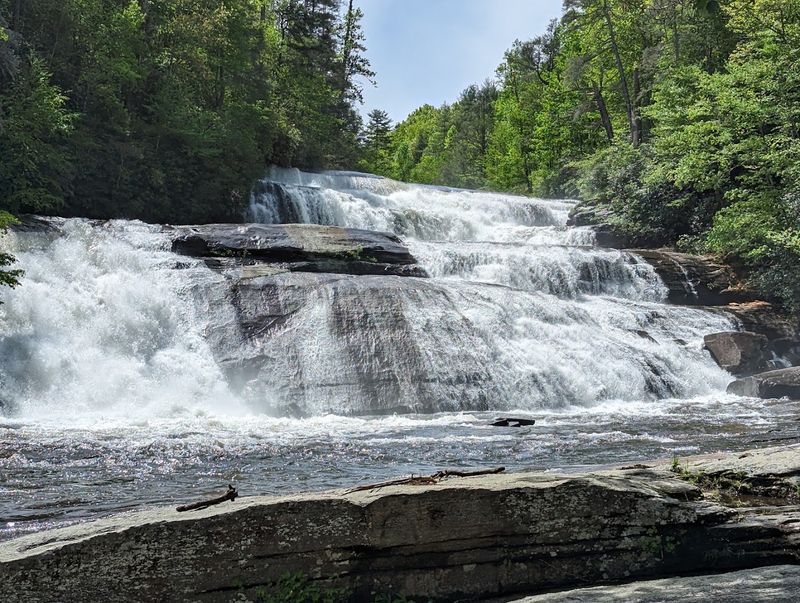
Triple Falls is the kind of waterfall that makes you stop mid-sentence. The water splits across three wide, staggered ledges of exposed granite, and the combined roar of all three drops fills the surrounding forest with a constant, low rumble you can hear long before you see the falls.
The trail to Triple Falls from the main Buck Forest Road parking area is well-marked and relatively smooth, with a gravel surface for much of the approach. The round trip is manageable for most fitness levels, including families with older children.
Footing near the lower viewing area can get slippery when wet, so trail shoes with some grip are worth wearing.
One thing worth noting right now: the overlook platform for Triple Falls was fenced off during a recent visit due to ongoing maintenance, so check the forest’s official website before your trip for current trail and overlook conditions. Even without the platform, the view from the trail is genuinely spectacular and absolutely worth the walk.
High Falls: The Undisputed Highlight of the Day
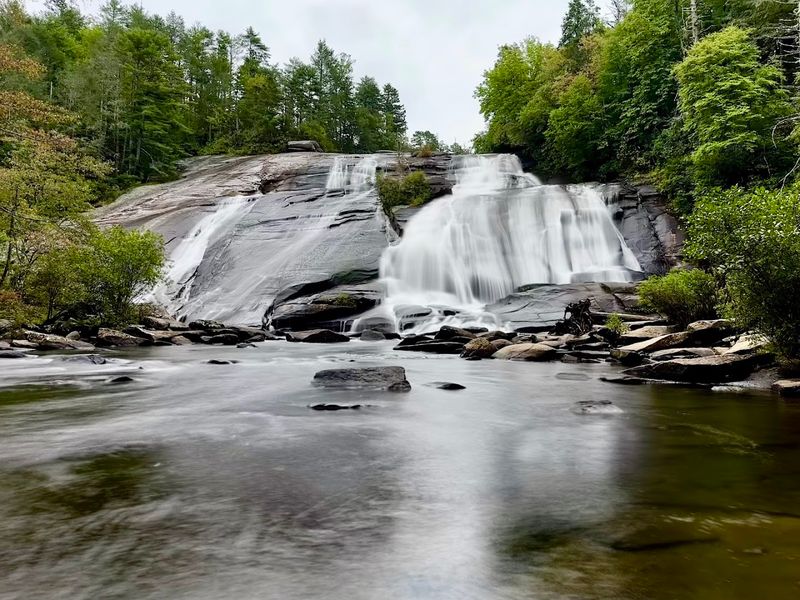
High Falls earns its name without any argument. A wide curtain of water drops roughly 120 feet over a broad granite face, and the pool at the bottom is large enough that the mist reaches you well before you get close.
This is the waterfall that consistently draws the biggest reactions from first-time visitors.
Two trail options lead to High Falls. A shorter, slightly uphill path delivers a stunning upper-level view without much effort.
A more demanding trail takes you down to the base, where you can hop across rocks and get within just a few feet of the falling water. Both routes are worth doing if your legs are up for it.
Bringing a packed lunch and eating on the flat rocks at the base of High Falls is one of the better decisions you can make on this trip. The sound of the water, the cool mist in the air, and the sheer size of the falls overhead create a setting that no restaurant patio can compete with.
It is the kind of lunch break that stays with you.
Hooker Falls: The Easiest and Most Swimmer-Friendly Stop
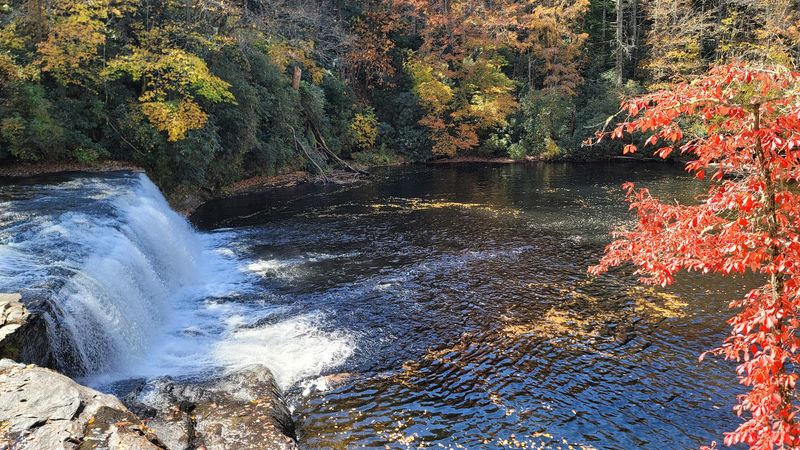
Hooker Falls has a reputation as the most accessible waterfall in the forest, and that reputation is well-earned. The walk from the Hooker Falls parking area to the falls is roughly 0.8 miles on a smooth, mostly flat gravel trail that genuinely works for almost everyone, including young kids and older adults.
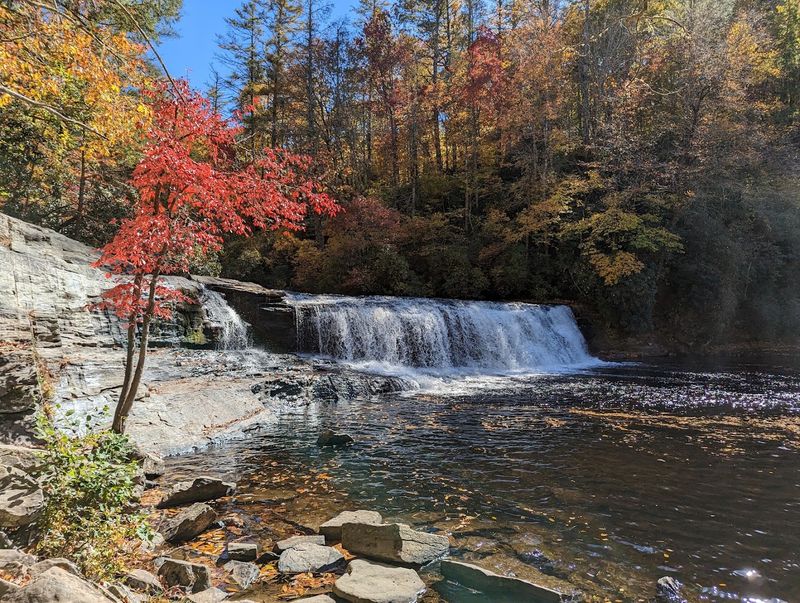
The falls themselves drop about 12 feet into a wide, clear pool that is a popular swimming spot during warm months. Dogs splash around in the shallows alongside their owners, and families spread out on the surrounding rocks to dry off and enjoy the sun.
The energy here is more relaxed and social compared to the quieter upper falls.
This is also the spot that gets called a “hot spot for swimming” by regulars, and on a warm summer weekend it earns that description completely. Going on a weekday gives you more space and a calmer atmosphere.
The trail here is so well-maintained that some visitors have shown up in surprisingly non-hiking attire and still had a great time, which tells you everything about how forgiving this particular route is.
Planning Your Three-Waterfall Day: The Smart Route
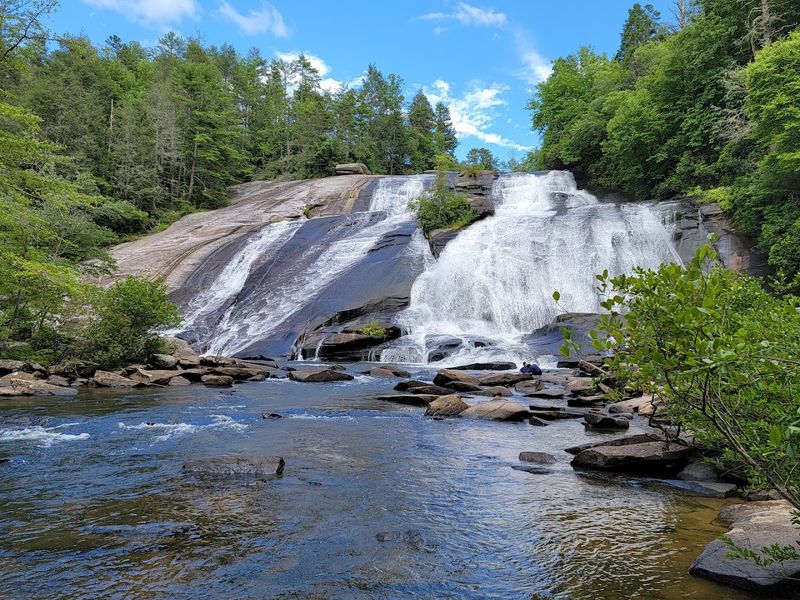
Seeing all three major waterfalls in one day is completely doable, but the layout of the forest rewards a little planning. The park is large enough that randomly wandering between trailheads can turn a fun outing into an unexpectedly long and tiring one.
The smartest approach is to use the parking areas strategically.
Start at the Buck Forest Road parking area for Triple Falls and High Falls, since those two are connected by a logical trail loop. After exploring both, drive to the Hooker Falls parking area separately rather than attempting to hike between all three from a single starting point.
That simple adjustment saves significant mileage and keeps everyone’s energy levels reasonable.
Trail signage at DuPont is generally solid for major routes, though distance markers are occasionally missing on some connector paths. Downloading the AllTrails map for the forest before you leave home is a genuinely useful backup.
One maintenance worker named Sammy, known for helping lost visitors find their way back to their cars, is proof that the staff here are friendly, but arriving with a plan is always better than relying on a lucky encounter.
What the Trails Are Actually Like Underfoot
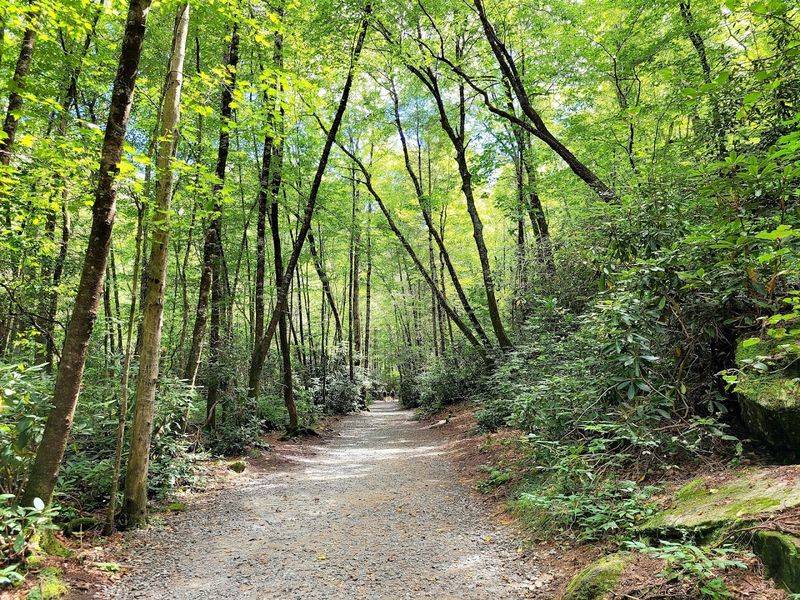
The trail quality at DuPont is one of its most underrated strengths. The main waterfall routes use compacted gravel surfaces for large portions of the approach, which makes them far more comfortable and stable than the rocky, rooted paths you find in many other mountain forests in the region.
That said, the terrain does vary. Some connector trails get narrower and rougher, and areas near the water can become slick after rain.
Waterproof trail shoes or hiking boots with decent grip are the practical choice, even on days when the sky looks clear, because mountain weather in western North Carolina changes quickly.
The forest is well-maintained overall, and the trail crew clearly puts real effort into keeping the main routes clear and safe. Even in the aftermath of hurricane-related damage that temporarily closed several trails, the core waterfall paths were restored and reopened with care.
Always check the official website at dupontstaterecreationalforest.com for current trail conditions and any closures before heading out, since conditions can shift between seasons.
Wildlife, Mushrooms, and the Small Wonders Along the Way
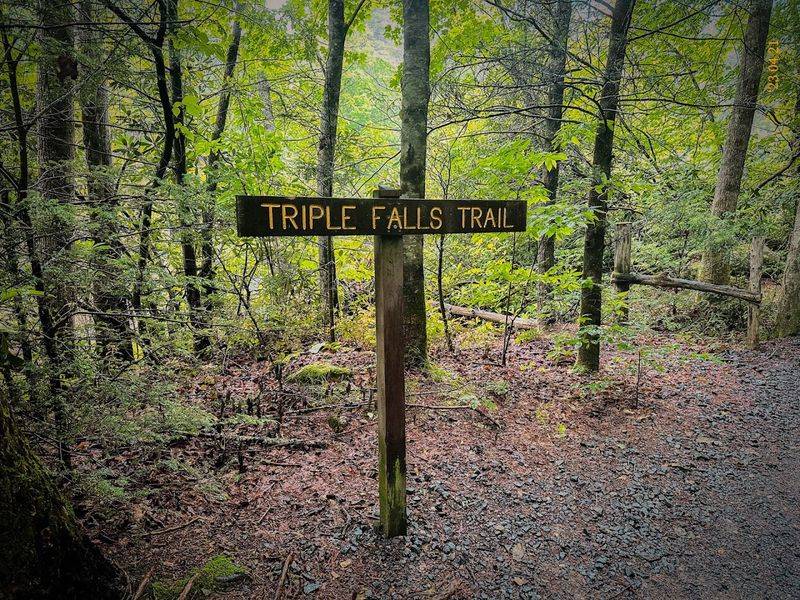
The walk to the waterfalls is not just about the destination. The forest floor along the main trails is packed with detail, and hikers who slow down and look around tend to find things that stick with them long after the trip.
Vibrant mushrooms in colors you would not believe grow on mossy logs along the trail, and the variety of species is striking enough to stop even non-nature-enthusiasts in their tracks.
The forest supports a healthy mix of wildlife, including birds, salamanders near the stream banks, and the occasional deer spotted through the trees. Dogs on leashes are a common sight and clearly love the smells and textures of the trail environment.
The sound of flowing water follows you through most of the hike, since streams and smaller cascades appear well before you reach the main falls.
That sensory combination of rushing water, cool air, birdsong, and forest smells is part of what makes a day here feel genuinely restorative rather than just physically tiring. The forest has a way of pulling your attention away from your phone without you even noticing it has happened.
Beyond Waterfalls: Lakes, Bikes, and Horses
The waterfall trails get most of the attention, but DuPont State Recreational Forest offers a surprisingly wide range of activities beyond hiking. Mountain bikers have claimed this forest as one of their favorite spots in the Southeast, and for good reason.
Trails like Ridgeline deliver fast, flowy descents, while routes like Jim Branch and Isaac Heath mix smooth surfaces with punchy climbs that keep things interesting without turning brutal.
A full mountain bike loop through the forest, including a snack stop at Grassy Creek Falls, covers around ten miles with about 1,300 feet of elevation gain and takes roughly two hours at a relaxed pace. That combination of manageable challenge and beautiful scenery makes it ideal for riders of varying skill levels, including teenagers and adults who are still building their trail confidence.
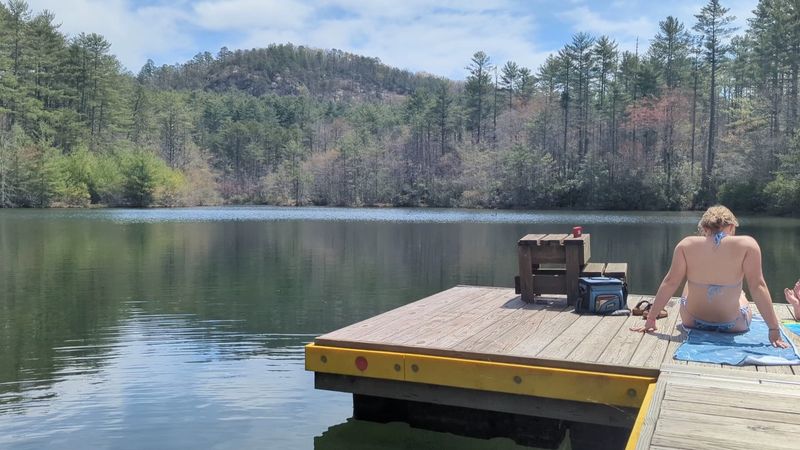
Equestrian trails wind through sections of the forest as well, and it is not unusual to share a stretch of path with riders on horseback. The forest also has scenic lakes, fishing access, and seasonal hunting areas.
Whatever draws you outdoors, there is a strong chance DuPont has a version of it waiting.
Crowds, Parking, and the Case for Arriving Early
DuPont’s popularity is both its best quality and its biggest logistical challenge. On weekends, particularly in summer and fall, the parking lots fill up early and the main waterfall trails get noticeably busy.
The experience is still worthwhile, but the solitude factor drops considerably once the late-morning crowds arrive.
The forest is open daily from 5 AM to 10 PM, which means early risers have a genuine advantage. Arriving at or shortly after opening gives you the trails mostly to yourself, better light for photos, and the best chance of finding parking without circling.
Weekday visits offer the most peaceful experience of all, with far fewer people on the paths and more room to spread out at the falls.
Parking strategy matters too. Each waterfall section has its own lot, and trying to see everything from one parking spot adds unnecessary mileage.
Driving between lots is the smarter play.
For questions or trail updates, the forest can be reached at (828) 877-6527, and the staff are known for being genuinely helpful when visitors need guidance.
Family-Friendly, Dog-Friendly, and Genuinely Accessible
Few forests in the Carolinas check as many accessibility boxes as DuPont does. The main waterfall trails are genuinely manageable for families with kids of almost any age, and the smooth gravel surfaces on the primary routes make the walk comfortable even for those who do not hike regularly.
Toddlers in carriers, older adults, and first-time hikers all show up here and have a great time.
Dogs are welcome on leashes throughout the forest, and they are everywhere on the trails. The streams and pools give four-legged visitors plenty of opportunities to cool off and splash around, which seems to be a highlight of the trip for the dogs involved.
The Hooker Falls swimming area in particular draws a crowd of both human and canine swimmers on warm days.
The visitor center near the main trailhead has clean restrooms, working water fountains, and staff who can answer questions. These small comforts matter more than people expect after a long drive, and DuPont delivers them reliably.
The overall vibe is welcoming and unhurried, which is exactly the atmosphere that makes a family outing feel like a real success.
The Best Time to Visit and What to Bring
Spring and fall are the peak seasons at DuPont for good reason. Spring brings higher water flow to the falls, making them louder and more dramatic, while the surrounding forest is lush and green from seasonal rain.
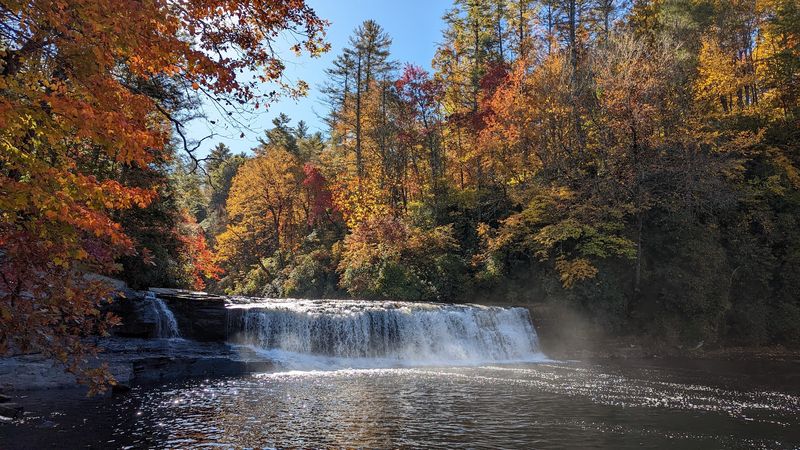
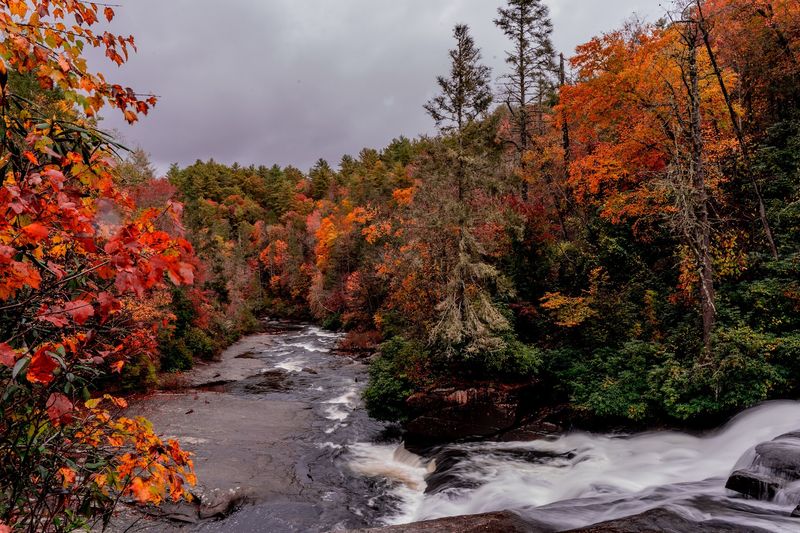
Fall delivers the color payoff, with the hardwood trees turning orange, red, and gold around the trails and reflecting in the pools below the falls.
Summer visits are popular but come with the trade-off of larger crowds and warmer temperatures on the lower trails. The elevation keeps things cooler than the surrounding lowlands, but a hot July afternoon can still make the hike feel more demanding than expected.
Winter visits are quieter and sometimes reward hikers with partially frozen falls and a completely different kind of beauty.
Packing smart makes a real difference regardless of season. Bring water, snacks, a light rain jacket, and comfortable footwear with grip.
A fully charged phone with the AllTrails map downloaded is worth more than any amount of printed directions once you are deep in the forest.
Leave no trace, pack out your trash, and the forest will reward you with a day that is very hard to forget.
Share this story