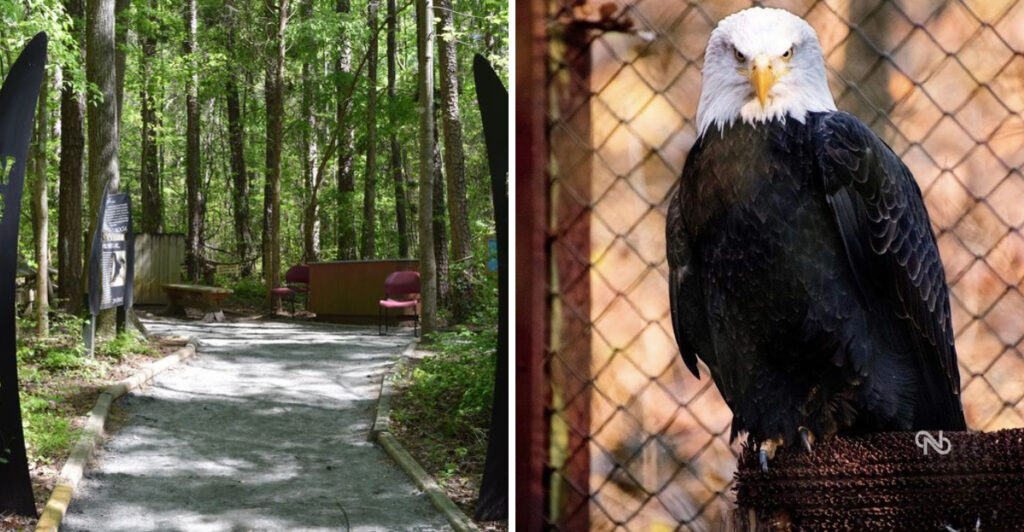
There is a trail in North Carolina where a bald eagle might lock eyes with you from just a few feet away, and a great horned owl might swivel its head to track your every step. The whole experience feels less like a typical nature outing and more like walking through a living field guide.
Tucked inside a forested preserve near Charlotte, this nonprofit center gives rescued birds of prey a permanent home while letting visitors get closer to these animals than most people ever will. Whether you are a first-time visitor or a seasoned birder, the combination of shaded woodland paths, knowledgeable staff, and genuinely impressive birds makes this one of the most memorable outdoor spots in the region.
Finding the Place: Address, Setting, and First Impressions
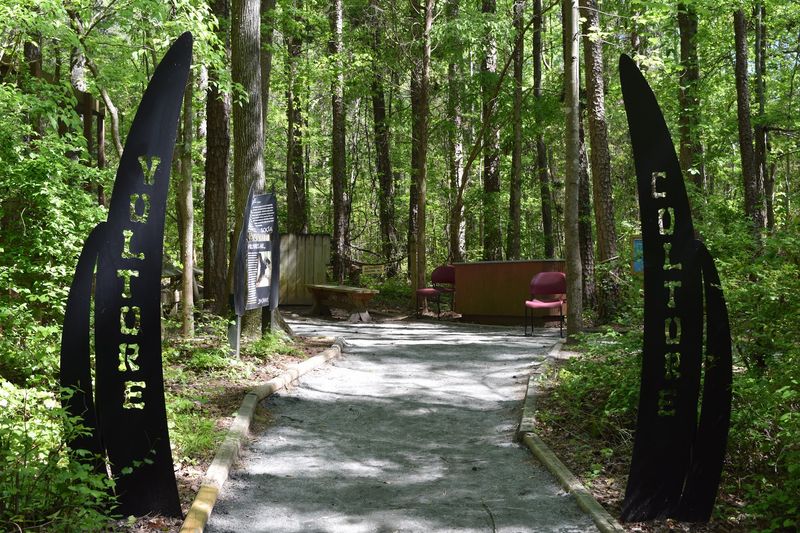
The drive to Carolina Raptor Center at 6000 Sample Rd, Huntersville, NC 28078 already sets the mood. You wind through Latta Nature Preserve, passing dense Carolina forest before the parking area comes into view, and by the time you step out of your car, the canopy overhead is already doing its job of filtering the sun.
The center sits on 57 acres of wooded land, and that natural setting is not just a backdrop. It is the whole point.
Birds of prey need space, shade, and a calm environment, and the preserve delivers all three. The entrance is unpretentious, and the staff at the front desk greet you warmly without any of the rushed energy you sometimes feel at busier attractions.
Parking is easy to find, and ticket lines move quickly. The center is open every day of the week from 10 AM to 4 PM, which gives you a solid window to explore without feeling rushed.
A phone call to +1 704-875-6521 or a visit to carolinaraptorcenter.org can help you plan your timing before you arrive.
The Mission Behind the Birds: Rescue, Rehabilitation, and Conservation
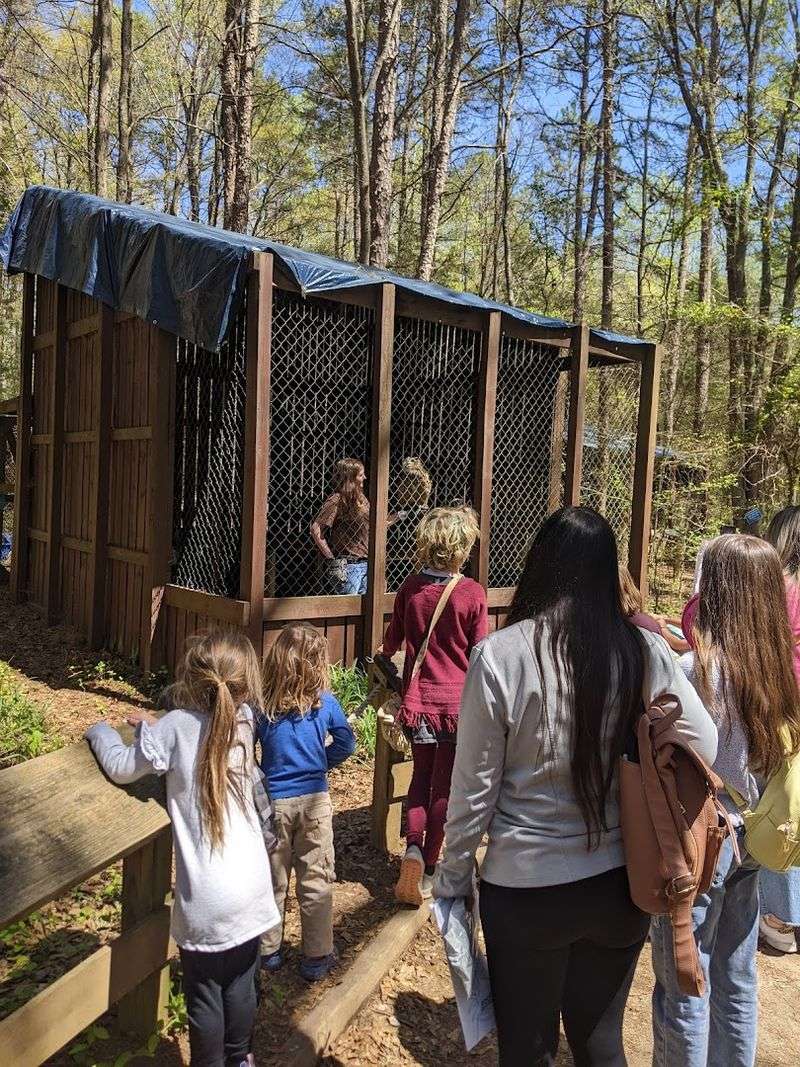
Most of the birds living at Carolina Raptor Center arrived there because something went wrong in the wild. A collision with a car, a power line strike, or a gunshot wound left them unable to survive on their own.
The center takes in these injured animals, provides veterinary care, and works to release those who recover fully back into the wild.
The birds that cannot be released become permanent residents and educational ambassadors. That distinction matters because it changes how you see every single bird on the trail.
You are not looking at a captive-bred exhibit animal. You are meeting a survivor with a real story, and the staff are genuinely eager to share those stories with anyone who asks.
The center also runs captive breeding programs for certain species as part of broader conservation efforts, which means the work extends well beyond just the animals you see on your visit. As a registered nonprofit, the center relies on admissions, memberships, and donations to keep operating, and that community support shows in every corner of the property.
The Trail Itself: A Three-Quarter Mile Walk Through the Woods
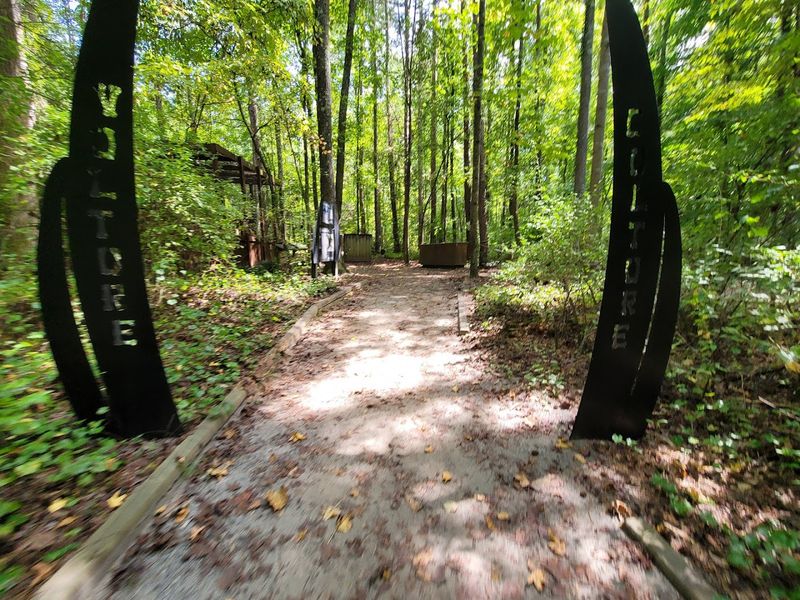
The main trail at Carolina Raptor Center runs about three-quarters of a mile, and the whole loop takes most visitors between one and two hours depending on how long they linger at each station. The path is flat, made of packed dirt, and shaded almost entirely by the surrounding forest canopy, which keeps temperatures noticeably cooler than the open air outside the preserve.
Benches are placed throughout the trail so you can sit and watch a particular bird without feeling like you need to keep moving. That unhurried pace is one of the best things about the experience.
There is no conveyor belt of exhibits pushing you along. You set your own rhythm, and the birds reward patience with some genuinely striking behavior.
The trail is accessible enough for visitors with mobility concerns, and the flat terrain makes it manageable for strollers and older guests alike. Comfortable closed-toe shoes are a smart choice since the ground can be uneven in spots.
Bringing water and a light snack is also worth doing, especially if you are visiting with young children, since food options nearby are limited.
Bald Eagles Up Close: An Encounter That Stays With You
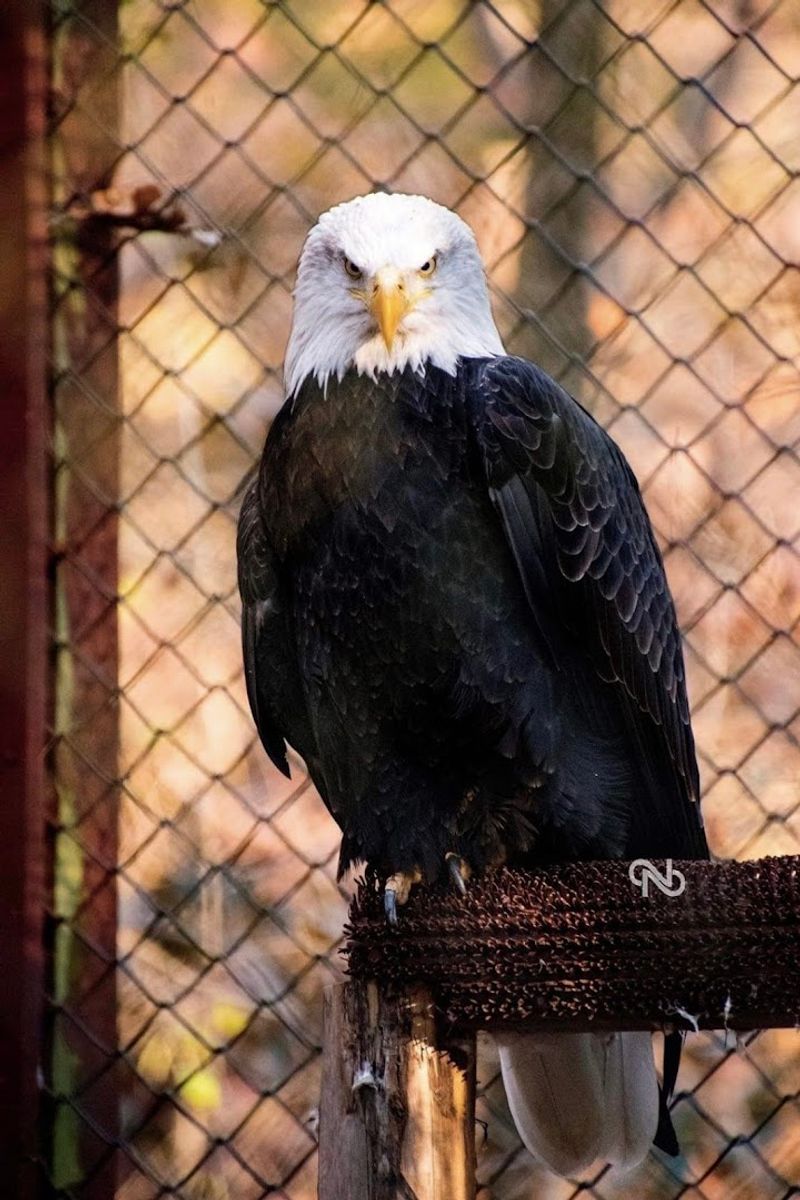
Seeing a bald eagle on a nature documentary and standing three feet from one are two completely different experiences. The size alone is startling.
The wingspan of a mature bald eagle can reach over seven feet, and when one of them shifts its weight and spreads its wings even slightly, you feel it in your chest.
The center houses several bald eagles, all of which came in as injured or non-releasable birds. Their enclosures are built into the forest, which gives the setting a natural feel rather than a zoo-like one.
Informational signs at each station explain the bird’s background, the injury that brought it to the center, and details about its species in the wild.
One of the highlights that visitors consistently mention is arriving shortly after 10 AM when feeding happens. Watching a bald eagle receive and handle its food is a reminder that these animals are apex predators, not just symbols on a flag.
That moment of raw, unfiltered wildlife behavior is exactly the kind of thing that makes the whole visit feel genuinely worthwhile.
Owls of All Sizes: From Tiny Screech Owls to Great Horneds
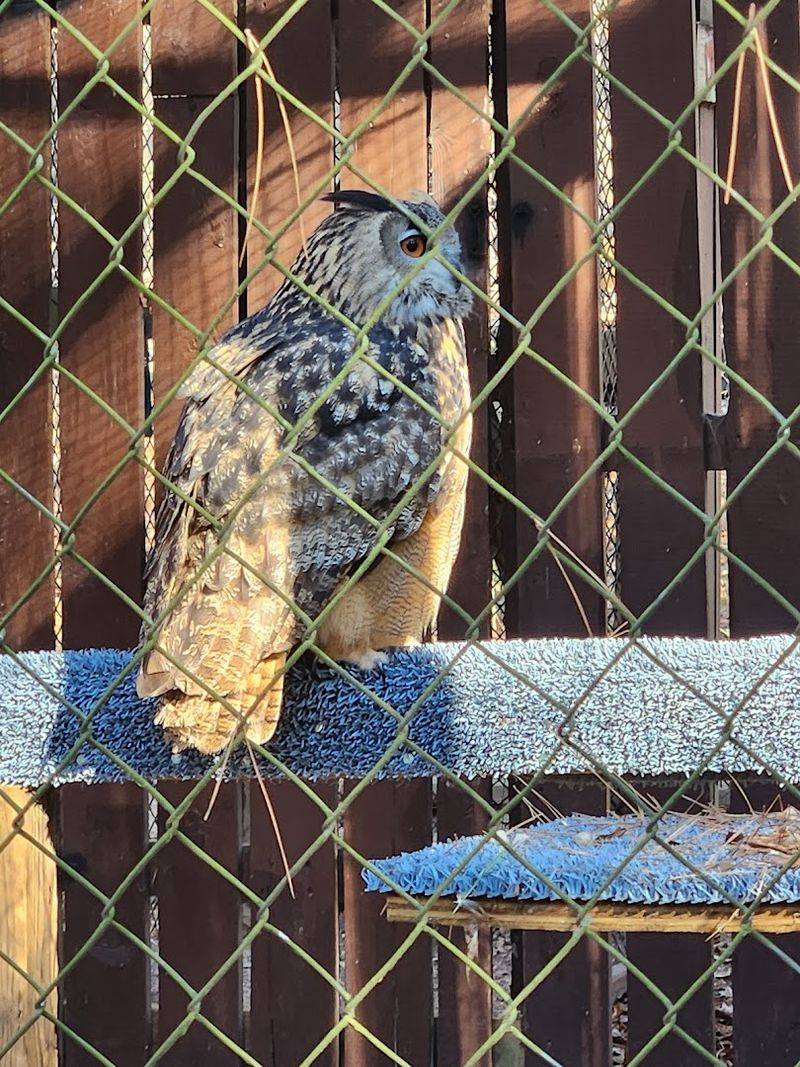
Owl fans are going to have a very good time on this trail. The center houses multiple owl species, and the size range between them is almost comical.
A great horned owl is an imposing creature with ear tufts, golden eyes, and a presence that commands attention. An eastern screech owl, by contrast, fits comfortably in the palm of a hand and somehow looks equally serious about everything.
Each owl enclosure is positioned along the trail at a comfortable viewing distance, and the educational panels beside them explain the behavioral quirks that make owls so different from other raptors. Their silent flight, their rotating necks, and their exceptional night vision all get covered in plain, engaging language that works well for kids and adults alike.
Guides stationed along the trail are happy to go deeper on any topic that catches your interest. The owls themselves tend to be active and alert during morning visits, which makes earlier arrival times worth considering.
Watching a great horned owl track your movement with those unblinking eyes is one of those small moments that somehow ends up being the thing you talk about for weeks afterward.
Falcons and Hawks: Speed, Precision, and Pure Athletic Beauty
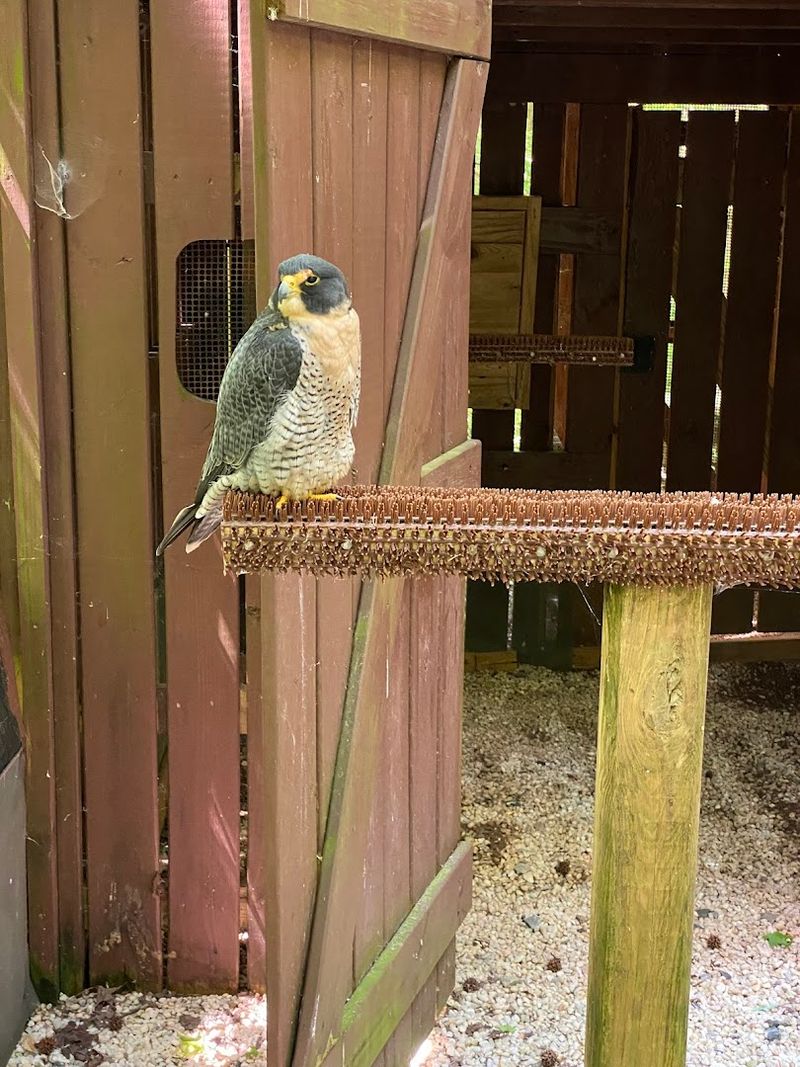
Falcons have a reputation for being the sports cars of the bird world, and spending time near them at the center does nothing to challenge that reputation. The peregrine falcon, which is the fastest animal on Earth in a dive, carries itself with a particular intensity even when it is simply perched and watching visitors walk by.
The center also houses several hawk species, including red-tailed hawks and others that are common across North Carolina but rarely seen this close. Having them at eye level with clear educational context makes you realize how little most people actually know about the birds they see every day from car windows or backyard feeders.
The flight demonstrations, when they run, are a genuine highlight. Watching a trained raptor fly freely and return to its handler gives you a sense of the trust and time that goes into that relationship.
Arrival times and demonstration schedules can vary, so checking the website at carolinaraptorcenter.org before your visit helps you catch the best programming. The staff recommend the flyby in particular as something not to miss.
The Meet-a-Raptor Experience: Getting Even Closer
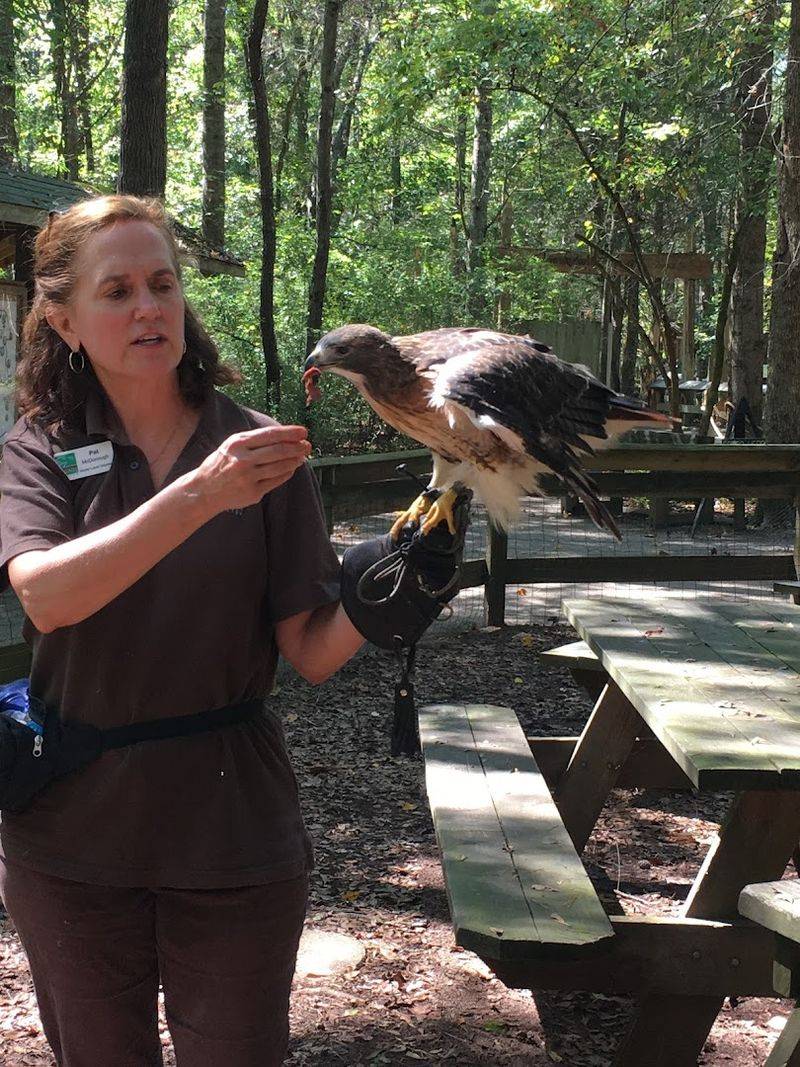
Beyond the self-guided trail, the center offers structured programs that bring visitors into even closer contact with the birds. The Meet-a-Raptor session is one of the most popular options, pairing a small group with an educator and a live bird for an up-close learning session that goes well beyond what the trail alone provides.
These sessions are designed to be engaging for both kids and adults, and the educators handle questions with the kind of enthusiasm that makes you think they genuinely love what they do, because they clearly do. The combination of a morning Meet-a-Raptor session followed by an afternoon raptor encounter makes for a full day that feels varied and never repetitive.
Booking in advance is a smart move since these programs fill up, especially on weekends and during school field trip season. The center also offers group rates and homeschool program options, making it a practical choice for educators looking for a hands-on science experience.
For families, the structured sessions give younger kids a focused experience that holds attention better than a self-guided walk alone might.
School Groups, Families, and the Crowd Factor
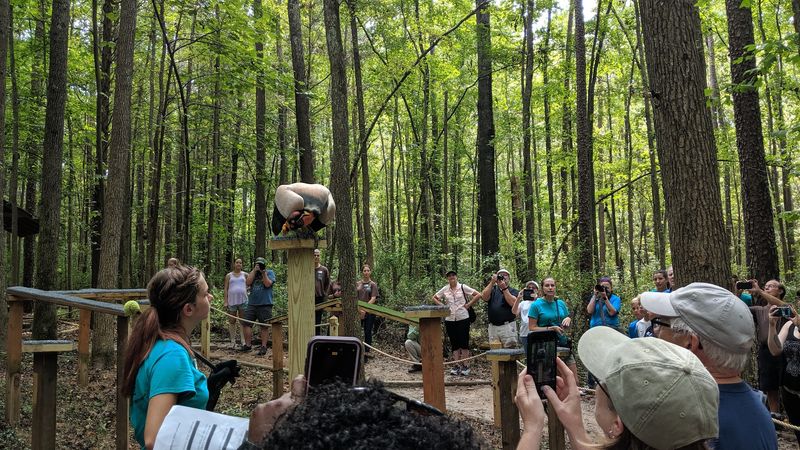
Carolina Raptor Center is a popular field trip destination, and on some days the trail can fill up with school groups moving through in organized clusters. That energy is fun to be around if you enjoy seeing kids react to a bald eagle for the first time.
It is less ideal if you came for a quiet, contemplative morning in the woods.
The practical workaround is timing. Visiting after midday on a weekday, or on a weekend morning before groups arrive, tends to give you more breathing room on the trail.
The center is compact enough that even a moderate crowd can feel like a lot in certain spots, but the layout allows for natural dispersal once everyone spreads out along the path.
Membership options are worth considering if you plan to visit more than once in a year. A seasonal pass gives you repeat access at a reduced per-visit cost, and regular visitors often find that coming back in different seasons, fall foliage versus spring greenery versus winter quiet, makes each visit feel like a slightly different experience.
The birds are there year-round, and the forest changes around them.
Practical Tips for Making the Most of Your Visit
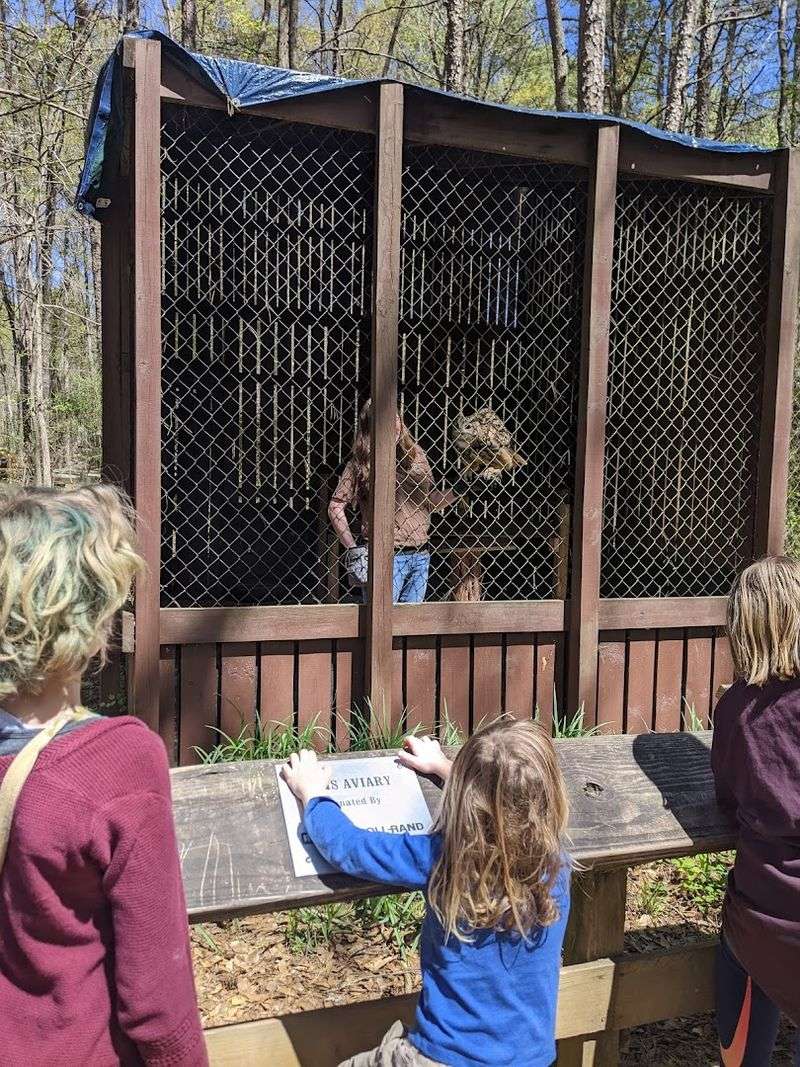
A few small preparations make a real difference at Carolina Raptor Center. The trail is almost entirely shaded, which keeps things cool even in summer, but that same canopy creates ideal conditions for mosquitoes.
Bug spray is a genuinely useful thing to pack, especially for afternoon visits or in warmer months.
Admission runs around $45 for two kids and one adult, which puts it in the mid-range for family attractions in the Charlotte area. The gift shop carries reasonably priced items and is worth a look at the end of your visit.
Bathrooms are available on-site, though capacity can feel limited when large groups are present, so plan accordingly.
Bringing snacks and drinks from home is a smart move since there are no food vendors on the property and the nearest options require a drive back out through the preserve. The center’s phone number is +1 704-875-6521 if you want to confirm hours or ask about same-day programming before making the trip.
Most visits run between one and two hours, but the benches scattered throughout the trail make it easy to slow down and stay as long as you like.
Share this story