There is a tiny town tucked along the banks of the Pamlico River in eastern North Carolina that most people have never heard of, yet it holds a title no other town in the state can claim. It was the first chartered town in all of North Carolina, and its streets still carry the quiet weight of more than three centuries of history.
The houses are old, the trees are tall, and the waterfront views are the kind that make you stop mid-step and just take it all in. I visited on a crisp fall morning, and by the time I left, I understood exactly why historians, travelers, and locals treat this place with such reverence.
This is a town that rewards the curious traveler, and I am here to tell you every reason why it deserves a spot on your must-visit list.
North Carolina’s Oldest Town: Bath in Beaufort County
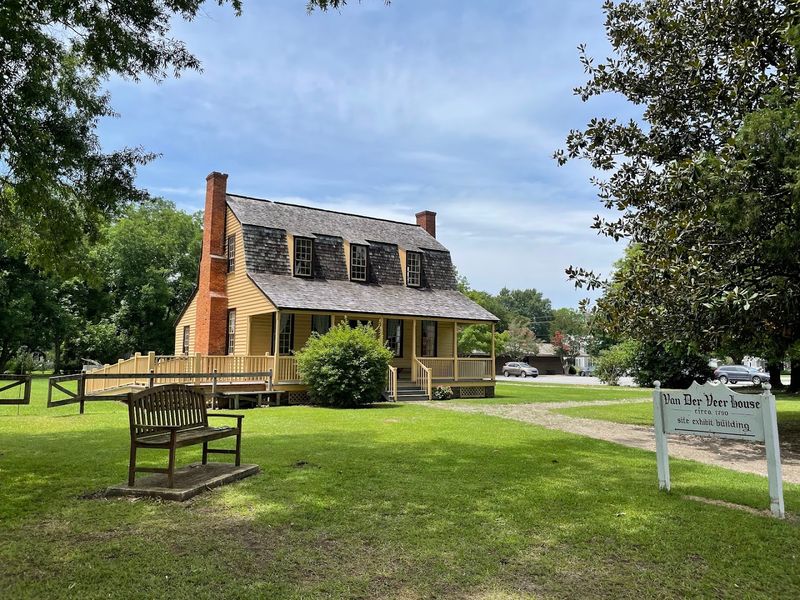
Bath, North Carolina, sits quietly in Beaufort County at the edge of the Pamlico River, about 15 miles southeast of Washington, NC, along State Road 92, in the 27808 zip code area. Chartered on March 8, 1705, it holds the distinction of being North Carolina’s first incorporated town and its first official port of entry.
That is not a small thing. While other towns were still just trading posts or scattered homesteads, Bath was already drawing merchants, sailors, and settlers from across the Atlantic world.
The town’s population today is just around 245 people, which makes it feel more like a living museum than a modern municipality. The streets are narrow, the pace is slow, and nearly every corner holds a piece of documented American history.
Bath was once a hub for trade in naval stores, tobacco, and furs, which gave it outsized importance for such a small footprint. Visiting here feels like pressing your hand against the very first page of North Carolina’s story, and that connection to the past is something no theme park or recreation can replicate.
The Palmer-Marsh House and Its Enduring Architecture
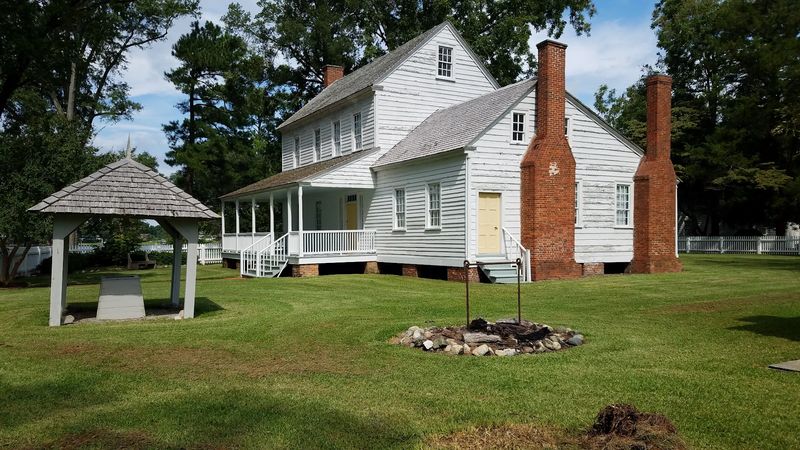
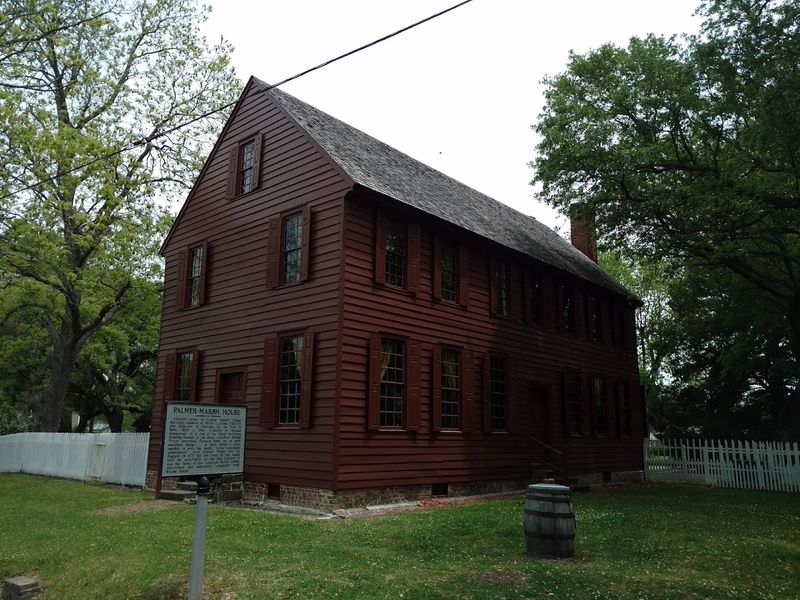
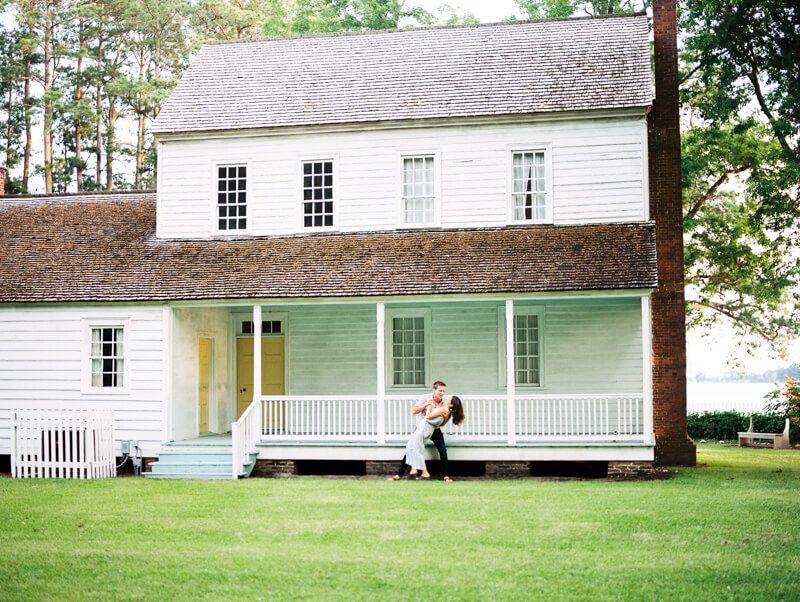
One of the most striking structures standing in Bath today is the Palmer-Marsh House, built around 1751, which makes it one of the oldest surviving homes in all of North Carolina. The house belonged to Robert Palmer, a prominent colonial official, and its double-shouldered chimney is a rare architectural feature that immediately catches the eye.
That chimney alone draws architecture enthusiasts from across the state, and honestly, once you see it up close, you understand the fuss.
The exterior has been carefully preserved, and the grounds around the house maintain a period-appropriate simplicity that lets the structure speak for itself. There is no flashy signage competing for attention, just the house, the trees, and the quiet hum of history.
Tours of the interior offer a detailed look at colonial domestic life, from the furnishings to the layout of rooms that served very different purposes than what modern homes demand. The Palmer-Marsh House is managed as part of the Historic Bath State Historic Site, which means it receives professional preservation care.
Standing in front of it, I kept thinking about how many North Carolina seasons that chimney has witnessed.
Historic Bath State Historic Site: The Heart of the Town
The Historic Bath State Historic Site serves as the official anchor for the town’s preservation efforts, and it does a genuinely impressive job of bringing three centuries of history to life for everyday visitors. The site includes multiple historic structures, a well-staffed visitor center, and guided tours that cover everything from colonial politics to daily domestic routines.
The staff here clearly love what they do. The guides speak with real enthusiasm about the town’s past, and they have a knack for making 18th-century life feel surprisingly relatable.
The visitor center itself offers exhibits that walk you through Bath’s founding, its early trade economy, its role in colonial governance, and the colorful characters who passed through over the centuries. There are artifacts, period maps, and detailed timelines that give context to everything you see outside.
Admission is free, which makes this one of the most accessible history experiences in the entire state. The site is open most days of the week, though hours vary by season, so checking ahead before your visit is always a smart move.
For anyone with even a passing interest in American colonial history, this site delivers far more depth than its small size might suggest.
St. Thomas Church: The Oldest Church in North Carolina
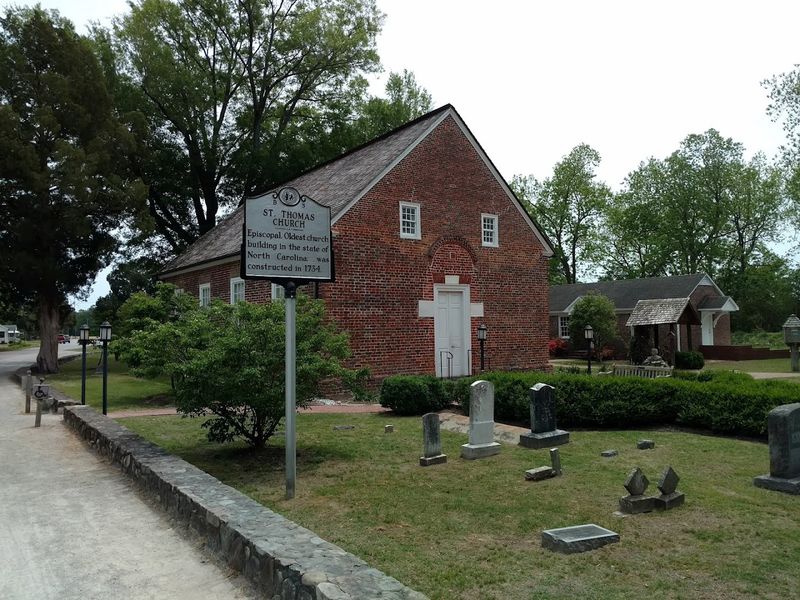
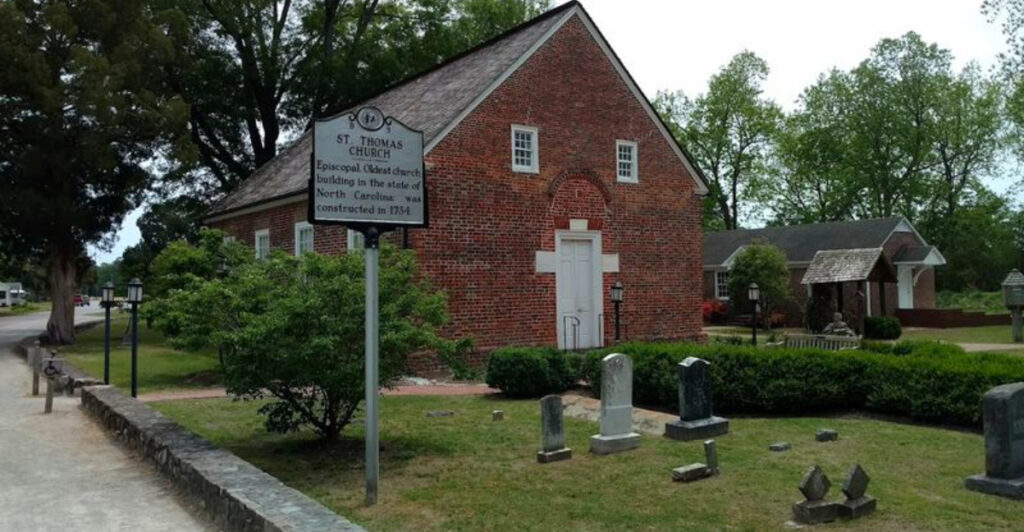
St. Thomas Church in Bath is not just old by North Carolina standards. Built around 1734, it is the oldest surviving church in the entire state, and it is still an active Episcopal congregation, which makes it something truly rare in American religious history.
The brick walls are original. The interior retains its colonial-era simplicity, with wooden pews and a straightforward layout that reflects the practical faith of early settlers.
The churchyard holds graves dating back to the early 1700s, and reading the weathered inscriptions on those stones is a quiet, affecting experience. Some of the names carved into the markers appear in the town’s founding documents, which creates a direct human connection to Bath’s earliest days.
The church has survived hurricanes, political upheaval, and the passage of more than 280 years, yet it continues to hold regular services. That continuity is remarkable and speaks to the deep community roots that Bath has managed to maintain despite its tiny population.
Visiting St. Thomas is one of those experiences that stays with you long after you have driven back home, the kind of place that quietly reframes how you think about American history.
The Bonnet House and the Legend of Blackbeard
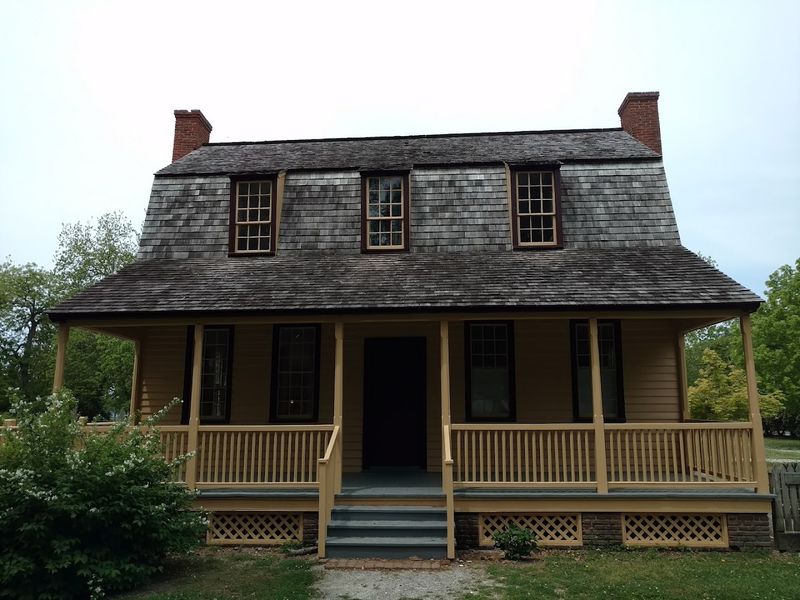
Bath has a pirate problem, and honestly, it is one of the best things about the town. The infamous pirate Edward Teach, better known as Blackbeard, reportedly used Bath as a home base in the early 1700s, and the town leans into that history with just the right amount of flair.
The Bonnet House, named for another notorious pirate, Stede Bonnet, is one of the properties connected to this swashbuckling chapter of Bath’s past. The structure dates to the colonial period and adds another layer to the town’s already dense historical fabric.
Blackbeard is said to have received a royal pardon in Bath and settled here briefly before returning to his old ways. Local lore suggests he married a local woman and that his presence in town was both tolerated and quietly celebrated by some residents who benefited from his trade connections.
Whether every detail of the legend is perfectly accurate is almost beside the point. The pirate history gives Bath a roguish edge that makes the town feel like a place where genuinely interesting things happened, not just to powerful men in wigs, but to real, complicated people living real, complicated lives.
The Pamlico River Waterfront and Its Natural Beauty
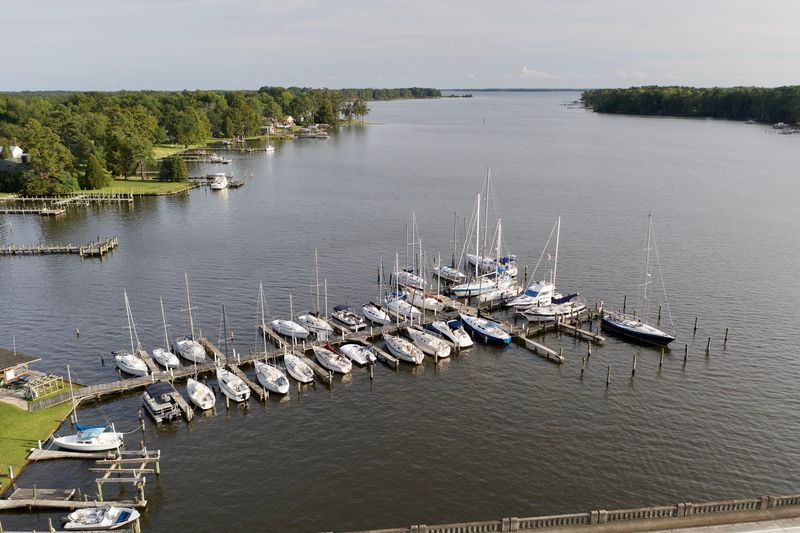
The Pamlico River is the reason Bath exists at all. Early colonists recognized that a navigable river connected to the Pamlico Sound gave this location serious commercial potential, and they were right.
Ships carrying tobacco, furs, and naval stores once crowded these waters, and while the cargo traffic is long gone, the river itself remains breathtaking.
The waterfront in Bath is unhurried and beautifully undeveloped. There are no loud boardwalks or tourist shops crowding the bank, just open views of the river, the marsh grasses swaying in the breeze, and the occasional boat drifting past.
On the morning I visited, the light on the water had that particular golden quality that photographers chase for hours. I sat on a dock for a while and did absolutely nothing, which felt like exactly the right response.
The river also offers practical recreational opportunities, including kayaking, fishing, and boating, all of which fit naturally into the slow, unhurried character of the town. The surrounding wetlands support a rich variety of birds and wildlife, making this a rewarding spot for nature lovers.
The Pamlico River is Bath’s front porch, and it is one of the most quietly spectacular natural settings in eastern North Carolina.
Kayaking and Boating on the Pamlico Sound Region
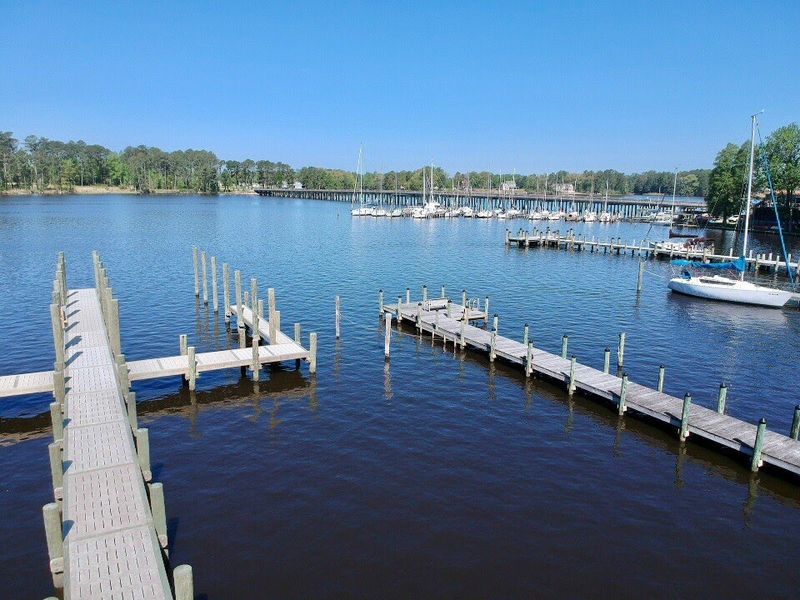
Eastern North Carolina’s waterways are some of the most underappreciated paddling destinations in the entire Southeast, and Bath puts you right in the middle of them. The Pamlico River connects to a vast network of creeks, marshes, and tidal flats that reward kayakers and canoeists with scenery that feels genuinely wild.
Launching from Bath, you can paddle along quiet stretches of shoreline where the only sounds are water, wind, and birdsong. The flatwater conditions are generally calm and manageable, making this a great option for paddlers of various experience levels.
Fishing is equally popular here, and the Pamlico River system is known for producing striped bass, flounder, and a range of other species that keep anglers coming back season after season. The town has a public boat ramp that makes access straightforward.
Even if you are not an active paddler or angler, simply being near this water has a restorative quality that is hard to put into words. The scale of the landscape, the open sky, and the unhurried pace of the river have a way of slowing your thoughts down to something manageable.
Bath earns its reputation as a natural retreat as much as a historical one.
The Town’s Remarkably Preserved Colonial Streetscape
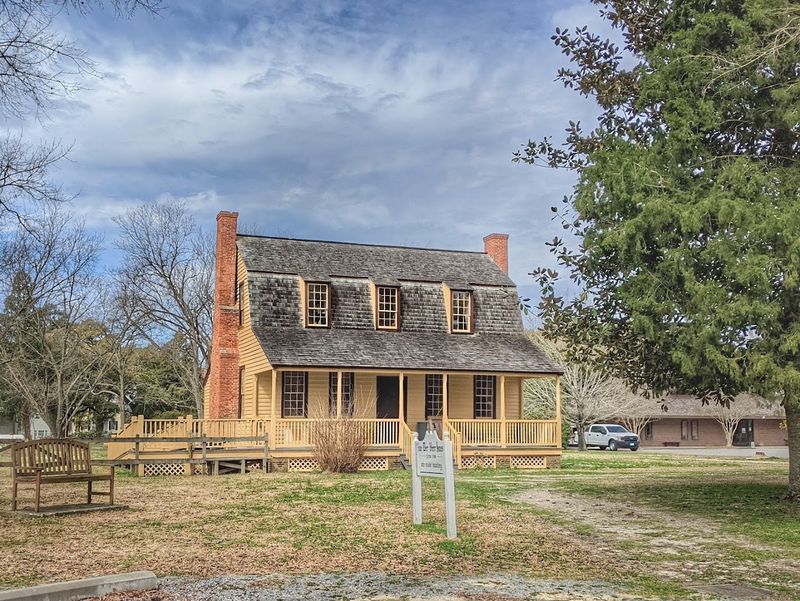
Few towns in the American South have managed to preserve their colonial-era streetscape as completely as Bath has. The main roads through town feel genuinely old in a way that careful restoration alone cannot manufacture.
The proportions of the lots, the spacing of the houses, and the canopy of mature trees all contribute to an atmosphere that transports you backward in time without any theatrical help.
Walking through Bath is a low-key, deeply satisfying experience. There are no crowds, no entrance fees for the streets themselves, and no pressure to move quickly from one attraction to the next.
The houses along the main roads range from carefully restored colonial structures to modest homes that have simply aged gracefully over the decades. White picket fences, kitchen gardens, and wide front porches add to the sense that this is a real, lived-in community rather than a stage set.
The town’s small size means you can cover the entire historic district on foot in an afternoon without feeling rushed. Every block offers something worth pausing over, whether it is a date carved into a foundation stone or the way the afternoon light falls through a stand of ancient oaks.
Bath is proof that authenticity is its own form of beauty.
Wildlife and Birdwatching in the Surrounding Wetlands
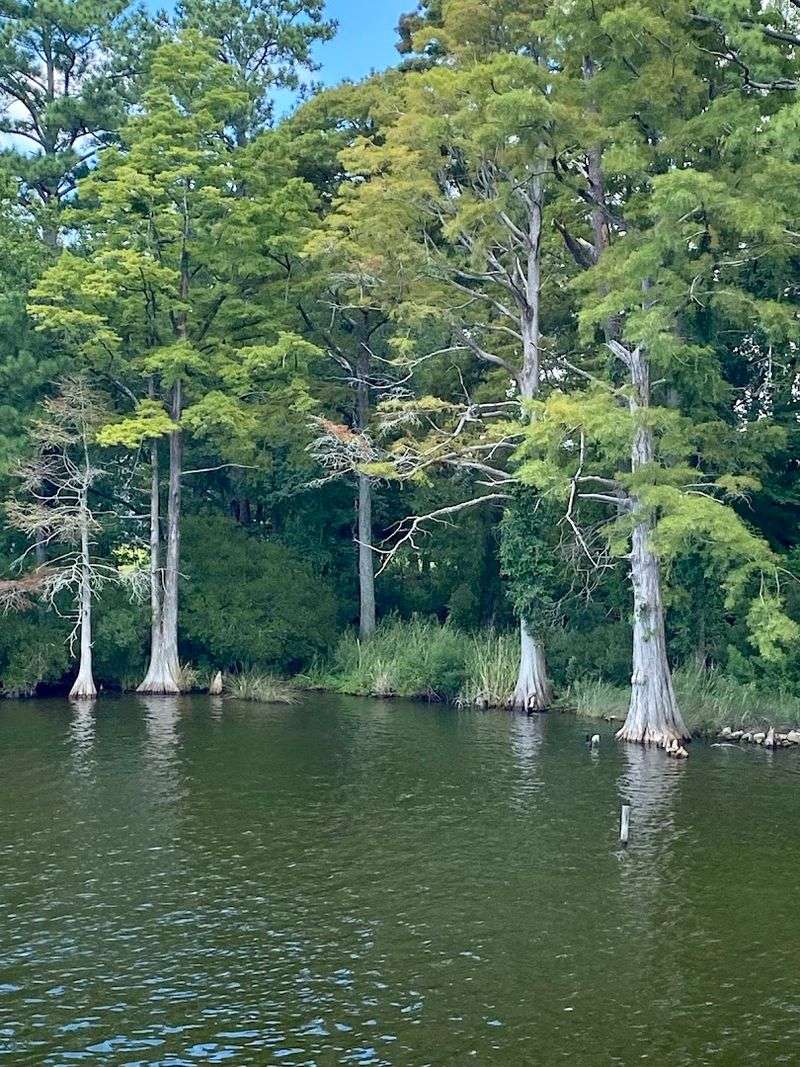
The wetlands surrounding Bath are not just scenic backdrops. They are functioning ecosystems that support an impressive range of bird and wildlife species, and for anyone who enjoys birdwatching, this corner of Beaufort County is a genuine treat.
Great blue herons are almost guaranteed sightings along the river margins. Ospreys circle overhead with a focused intensity that is fun to watch, and during migration season, the skies above the Pamlico River fill with species moving through the Atlantic Flyway in substantial numbers.
The tidal marshes and forested creek edges also support wood ducks, painted buntings, red-tailed hawks, and a rotating cast of shorebirds depending on the time of year. Bringing binoculars to Bath is never a bad idea.
Beyond birds, the wetlands are home to river otters, white-tailed deer, and a variety of turtles and amphibians that make the natural environment feel richly layered. The transition zone between freshwater and brackish marsh creates habitat diversity that supports species you simply would not find in more developed areas.
Bath may be famous for its human history, but the natural world surrounding it is equally compelling and equally worth your time and attention.
Best Time to Visit Bath and Practical Travel Tips
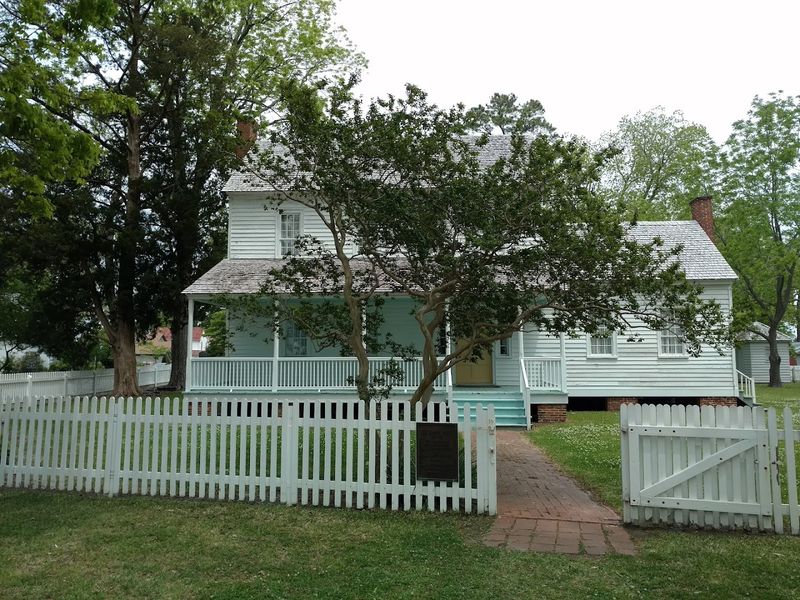
Spring and fall are the sweet spots for visiting Bath, North Carolina. Spring brings wildflowers to the roadsides and mild temperatures that make walking the historic district genuinely comfortable, while fall delivers the kind of foliage color that makes every photograph look like it was taken with a professional filter.
Summer is warm and humid in eastern North Carolina, as it is across most of the coastal plain, but the river breezes in Bath help take the edge off on most days. Winter visits are quiet and atmospheric, with fewer visitors and a stillness that suits the town’s contemplative character.
Bath is about a two-hour drive east of Raleigh and roughly 30 minutes from the town of Washington, NC, which offers more lodging and dining options if you are planning an overnight trip. Bath itself has limited accommodations, so planning ahead is wise.
The Historic Bath State Historic Site is free to visit, and the town has no admission charges for walking its streets. Cell service can be spotty in spots, which, honestly, feels completely appropriate for a town that predates the concept of a telephone by about 170 years.
Bath’s Role in Colonial North Carolina Governance
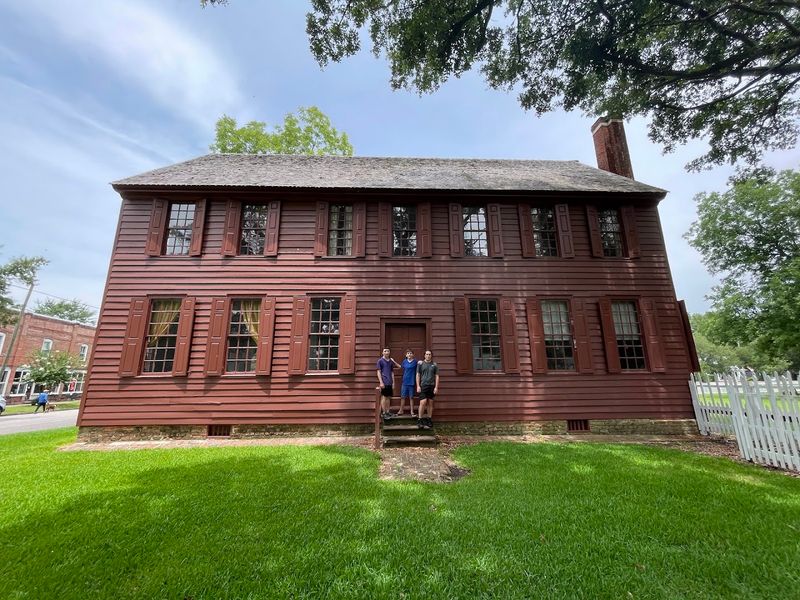
Bath was not just the first town in North Carolina. For a period in the early 1700s, it was the center of colonial power in the region.
The colonial assembly met here, governors resided in the area, and Bath functioned as the administrative heart of what was then a young and politically turbulent colony.
The town’s status as North Carolina’s first port of entry meant that ships arriving from England, the Caribbean, and other colonies had to pass through Bath for customs processing. That gave the town both economic influence and political visibility that far exceeded what its size might suggest.
Bath’s early prominence eventually gave way to other towns as the colony grew and population centers shifted westward and southward. New Bern eventually took over as the colonial capital, and Bath settled into a quieter role, which, as it turns out, is part of why so much of it survived intact.
Less development meant less demolition. The very forces that reduced Bath’s political importance also preserved its physical character, leaving behind the extraordinary concentration of early colonial architecture that visitors can explore today.
History has a funny way of working out like that sometimes.
Why Bath Deserves a Place on Every North Carolina Itinerary
Bath does not announce itself with billboards or flashy attractions. It simply exists, quietly and confidently, as the oldest town in North Carolina, and that is more than enough reason to make the drive out to Beaufort County.
The combination of colonial architecture, waterfront scenery, pirate history, and natural wetlands makes Bath unusually versatile as a travel destination. History lovers, outdoor enthusiasts, photographers, and anyone who just needs a day away from noise and speed will all find something worth their time here.
The town’s tiny population means it never feels crowded, and the absence of commercial development along the riverfront means the views are clean and uncluttered. There is a real sense that Bath has been protected, both by the state’s preservation efforts and by the community’s own commitment to maintaining what makes the place special.
North Carolina has no shortage of beautiful towns, but Bath occupies a category of its own. It is the original, the starting point, the place where the story of this state first took organized shape.
Every road trip through eastern North Carolina should find a way to pass through here, because Bath is the kind of place that makes you grateful you took the scenic route.
Share this story