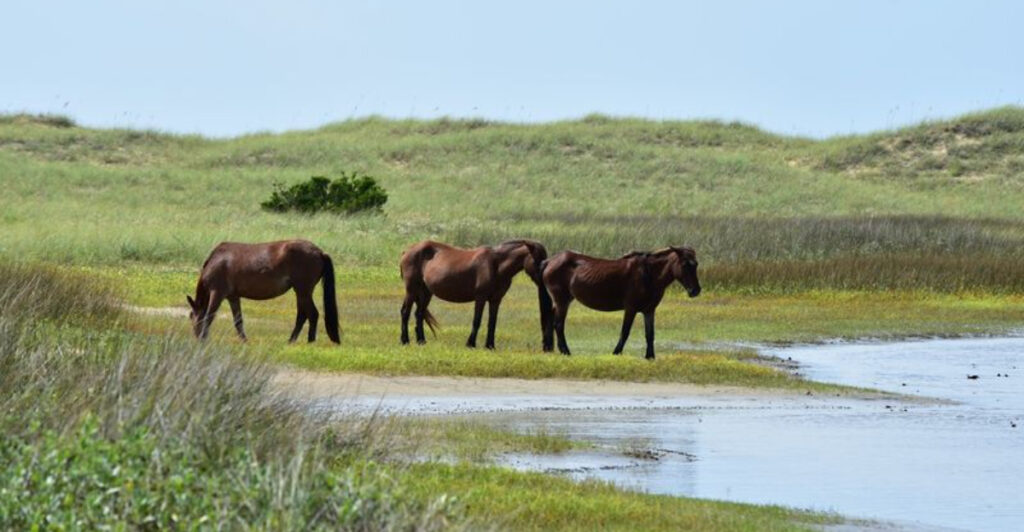
There is a narrow strip of land off the coast of North Carolina where wild horses roam freely along sandy beaches, graze on sea oats, and live exactly as their ancestors did hundreds of years ago. No roads, no crowds, no lifeguards, and no concession stands.
Just raw, windswept coastline and horses that answer to no one. I visited this barrier island on a clear spring morning, and I can honestly say it reset something in me that I did not even know needed resetting.
This article covers everything you need to know before you go, from how to get there to what to pack, what to expect from the horses, and why this place deserves a permanent spot on your travel list.
Getting There: The Ferry Ride That Sets the Mood
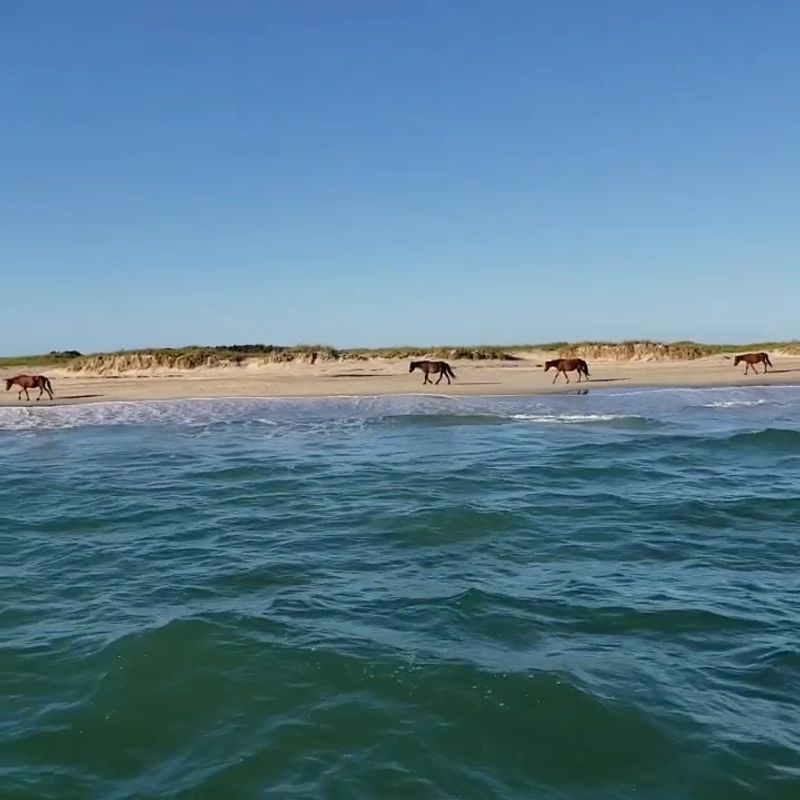
The adventure starts before you even set foot on the island. Shackleford Banks sits off the coast of Carteret County, North Carolina, and the most popular way to reach it is by ferry from the Harkers Island Visitor Center, part of Cape Lookout National Seashore.
Island Express Ferry is the go-to option for most visitors, and a round-trip ticket runs about thirty dollars per person. Ferries run regularly, and they pick up passengers once an hour, so you have full flexibility over how long you stay.
The boat drops you off at the easternmost tip of the island, and from that moment on, the place belongs entirely to you and whoever else made the crossing that day. There are no docks with fancy railings or welcome signs with maps.
You simply step off the boat onto the sand and start walking.
That first crunch of shell and sand underfoot, with nothing but open beach stretching in both directions, is a feeling that is hard to put into words. The ferry ride itself is short but scenic, with views of the surrounding marshes and waterways that remind you just how wild this corner of the Carolina coast really is.
The Island Itself: Nine Miles of Untouched Barrier Beach
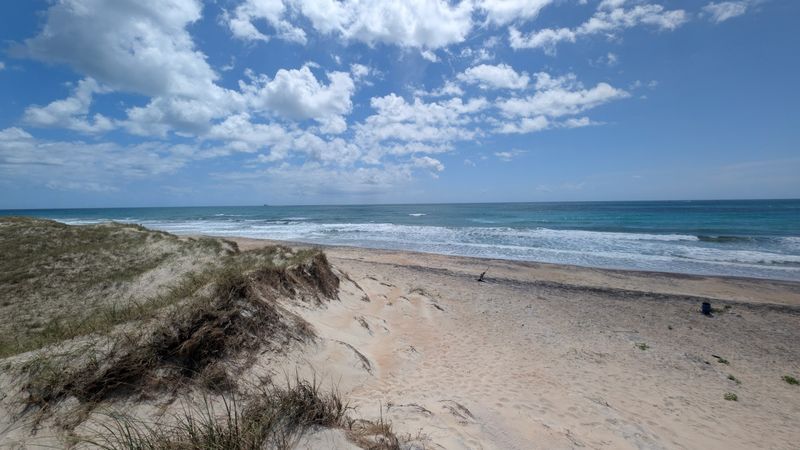
Shackleford Banks stretches nine miles long and about one mile wide, sitting between Back Sound and the Atlantic Ocean. It is part of Cape Lookout National Seashore and is protected from any kind of development, which means what you see is exactly what has always been here.
The southern side of the island faces the open Atlantic, where waves roll in with real force and a steady ocean breeze keeps things cool even on warm days. The northern side faces the calmer Back Sound, where the water is shallow, clear, and warm enough to wade out fifty meters and still only be knee-deep.
The interior of the island is a mix of rolling sand dunes, patches of maritime shrub, and tall grasses that the horses use for both food and shelter. It looks easy to navigate from a distance, but those dunes can be deceptive and tiring to cross on foot.
Visitors who stick to the shoreline tend to have an easier time getting around, and the shelling along the beach is genuinely outstanding. Conch shells, whelks, and dozens of smaller spiral varieties show up regularly, especially earlier in the morning before other visitors have swept the tide line clean.
The Wild Horses: A Herd With Centuries of History
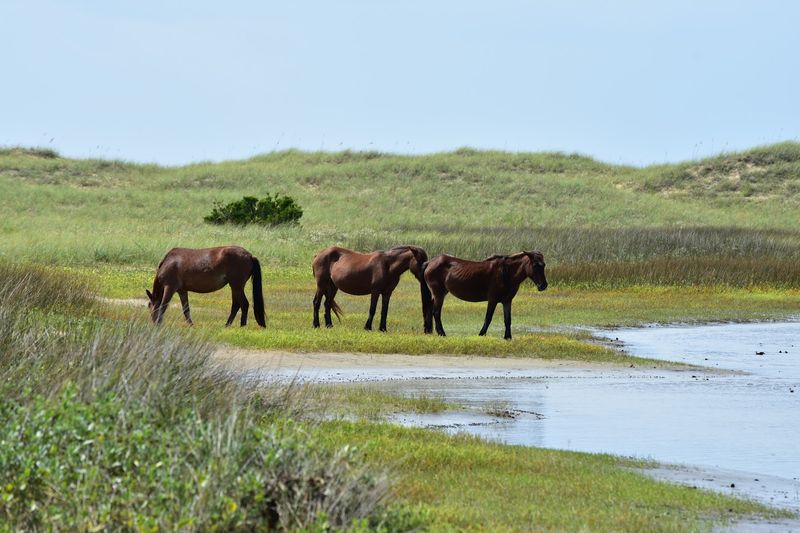
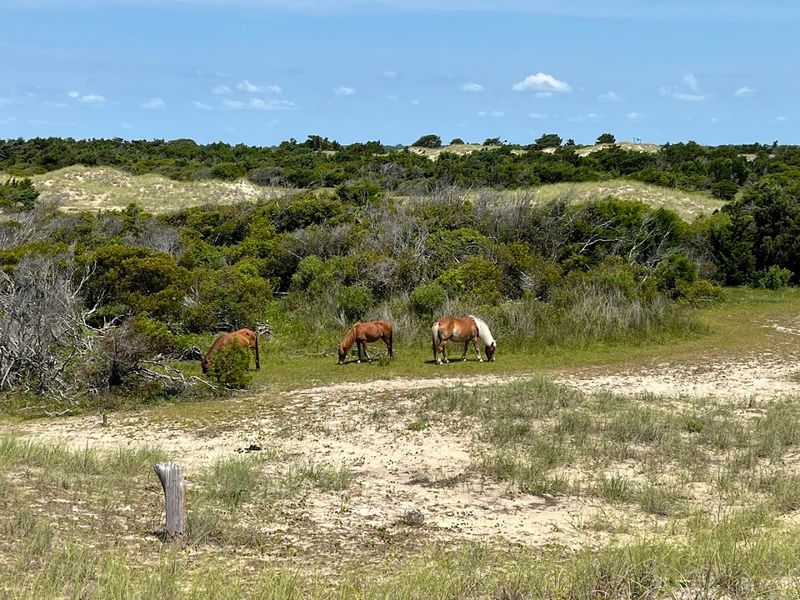
The horses are the main reason most people make the trip, and they do not disappoint. The herd at Shackleford Banks is believed to be descended from Spanish mustangs brought to the Outer Banks region as far back as the sixteenth century, likely from shipwrecks or early colonial settlements along the coast.
Today the herd numbers around one hundred horses, managed carefully by the Foundation for Shackleford Horses in cooperation with the National Park Service. They roam freely across the entire island, grazing on sea oats, marsh grass, and whatever else the land offers them.
On one visit, a group of twenty-three horses was spotted within the first three miles of walking from the eastern ferry drop-off point. They move through the tall grass in loose family groups, and watching them interact with each other and with the landscape feels genuinely rare.
These horses have never been tamed, fed by humans, or kept in enclosures. They are wild in the truest sense, and the Park Service asks visitors to stay at least fifty feet away at all times.
Getting close is tempting, but respecting that boundary keeps both the horses and the people safe.
Best Time to Visit and What the Seasons Feel Like
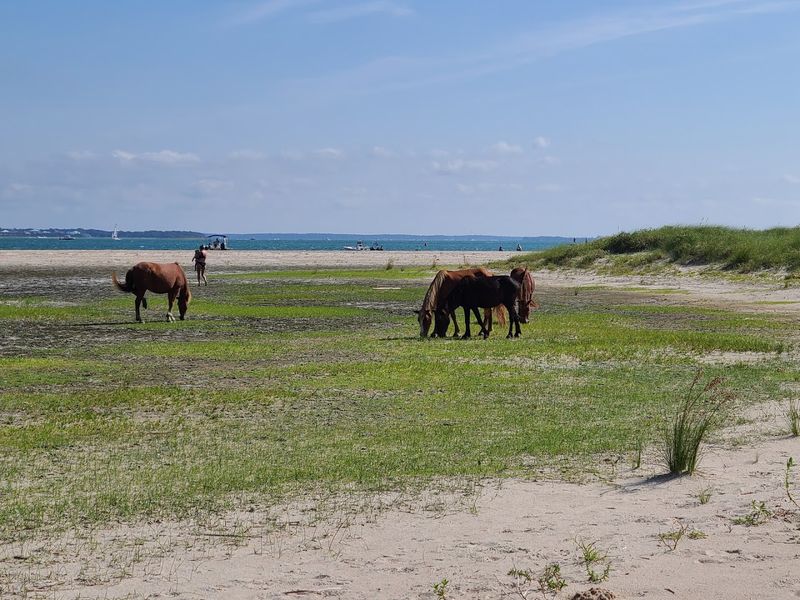
Early spring is one of the best windows to visit, and April hits a particularly sweet spot. The temperatures are comfortable, the mosquito population has not yet reached its summer peak, and the number of visitors is manageable enough that you can actually feel the solitude the island is known for.
Summer brings more foot traffic and significantly more insects, especially in the island’s interior where the tall grass traps heat and humidity. Bug spray is not optional during those months.
It is a hard requirement if you plan to leave the beach and search for horses in the grass and dunes.
Fall is another solid choice, with cooler temperatures and fewer crowds, though ferry schedules may be reduced depending on the operator. Winter visits are possible but require more planning, as services are limited and the island feels genuinely remote in the colder months.
No matter the season, mornings tend to be the most rewarding time on the island. The light is softer, the horses are more active, and the shells along the tide line have not yet been picked over by other visitors.
Arriving on the first ferry of the day is always worth the early alarm.
Shelling on the Beach: A Collector’s Dream
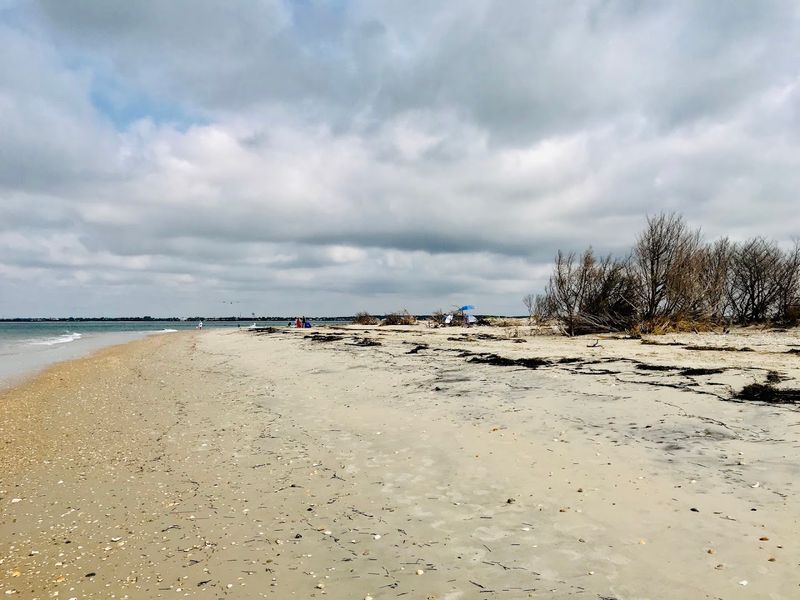
The shelling at Shackleford Banks has a reputation that reaches well beyond North Carolina’s Crystal Coast, and that reputation is completely earned. The island’s position along the Atlantic means shells wash ashore in impressive variety and size, from tiny spiral shells no bigger than a fingernail to full-sized conch shells the size of a human fist or larger.
The southern, ocean-facing side of the island tends to produce the largest shells, pushed in by the stronger wave action of the open Atlantic. The calmer northern side offers a different selection, often with more delicate or intact pieces that have not been tumbled as aggressively by surf.
Sea glass also shows up occasionally, which adds a fun extra element to the hunt. Visitors who arrive early and walk steadily along the tide line tend to find the best pieces before the crowds thin out the supply.
There are no restrictions on collecting shells for personal use within Cape Lookout National Seashore, as long as the shells are empty and the collection is for non-commercial purposes. Packing a small bag or bucket is a good idea, because you will almost certainly find more than you expected and you will want a way to carry them back to the ferry.
Wildlife Beyond the Horses: Dolphins, Birds, and More
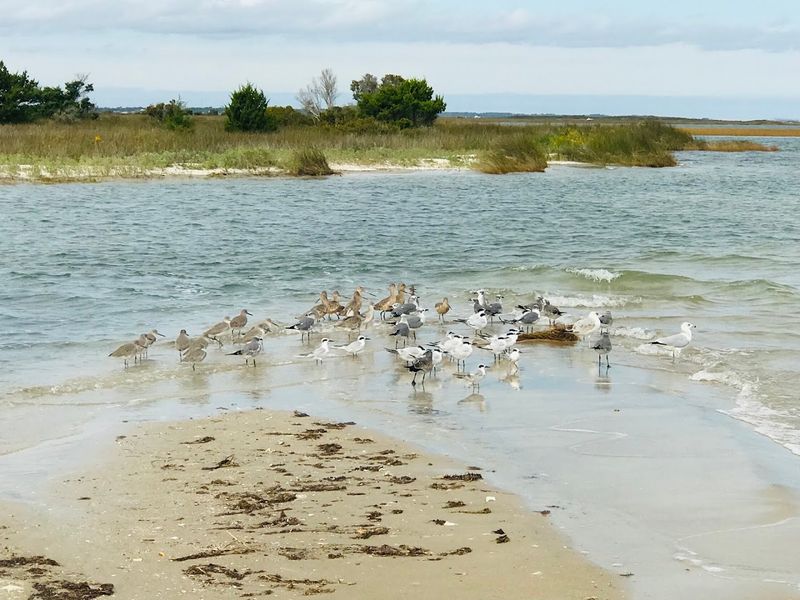
The horses get all the headlines, but the wildlife scene at Shackleford Banks goes well beyond the famous herd. Bottlenose dolphins are spotted regularly, both from the ferry crossing and from the shoreline of the island itself.
On some visits, they come close enough to the beach that you can hear them surfacing just offshore.
Shorebirds are plentiful throughout the year, with brown pelicans, oystercatchers, terns, and various sandpiper species working the tide line alongside human visitors. The island sits along the Atlantic Flyway, making it a productive stop for migratory birds in spring and fall.
Loggerhead sea turtles nest on the beaches during summer months, and the National Park Service monitors those nests carefully. Visitors are asked to avoid disturbing any marked nesting areas, which are usually flagged with simple signs or stakes in the sand.
The waters surrounding the island are also rich with marine life, and kayakers who paddle the Back Sound side sometimes spot rays gliding along the shallow bottom. The whole ecosystem feels intact and active in a way that is increasingly rare along the developed stretches of the American coastline, and that alone makes the trip feel worthwhile.
What to Pack: The Gear That Makes or Breaks the Day
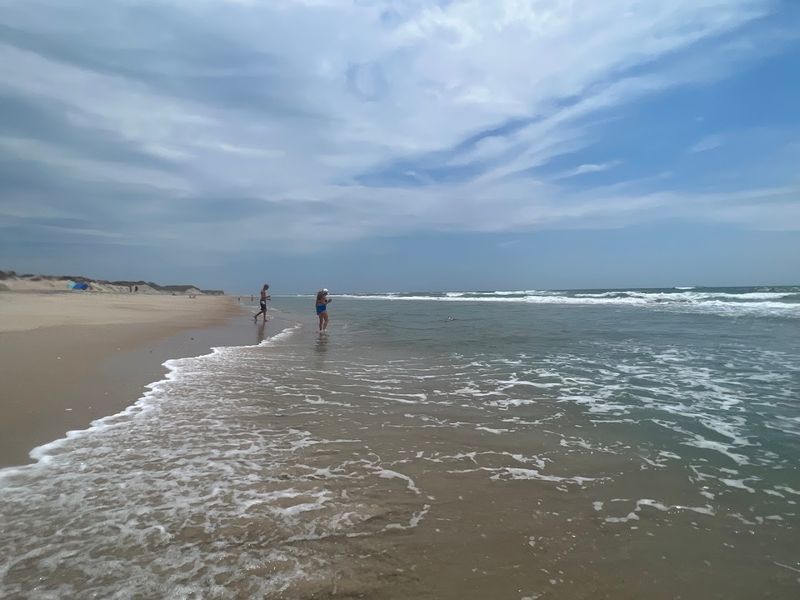
Packing for Shackleford Banks requires a bit more thought than your average beach day, because the island has zero infrastructure. There are no shops, no restaurants, no fresh water sources, and no shade structures of any kind.
Everything you need for the day must come with you on the ferry.
Water is the most critical item. The sun reflects off the sand with real intensity, and walking several miles across dunes and beach in that heat burns through hydration faster than most people expect.
Sports drinks or electrolyte tablets are a smart addition alongside plain water.
Bug spray ranks just as high on the priority list, particularly if you plan to venture into the interior of the island. The mosquitoes in the grass and marsh areas can be relentless, and they are not impressed by light applications of spray.
Reapply often and bring more than you think you will need.
Footwear matters more here than on most beaches. The island has scattered patches of prickly pear cactus, and flip-flops offer zero protection against the thorns.
Sturdy water shoes or old sneakers are the right call. A hat and high-SPF sunscreen round out the essentials, and a packed lunch turns the day from a quick visit into a proper adventure.
Camping Under the Stars on the Island
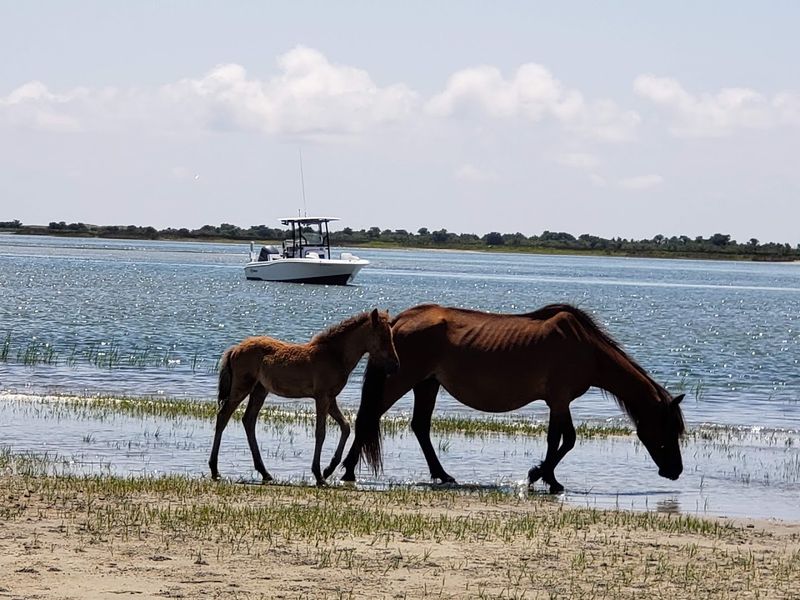
Day trips are the most common way to experience Shackleford Banks, but spending the night on the island is a completely different level of experience. Primitive camping is permitted throughout the island, and the National Park Service does not charge a fee for it, though you are required to obtain a free backcountry permit before you go.
The ferry does not run through the night, so overnight visitors need to either arrange a private boat pickup or commit fully to staying until morning service resumes. That commitment is part of what makes it special.
Once the last ferry of the day heads back to Harkers Island, the place belongs entirely to whoever remained.
Campers who have spent nights on the island describe waking up to horses grazing just outside their tents as one of the most surreal and memorable experiences of their travel lives. The night sky out there, away from any light pollution, is also genuinely spectacular.
Bringing a tent with good bug protection is non-negotiable for overnight stays. The insects are more active after dark, and a tent without a proper mesh lining will make for a very long night.
Everything else follows the same packing logic as a day visit, just in larger quantities and with a sleeping bag added to the load.
The Cape Lookout Lighthouse Views From the Island
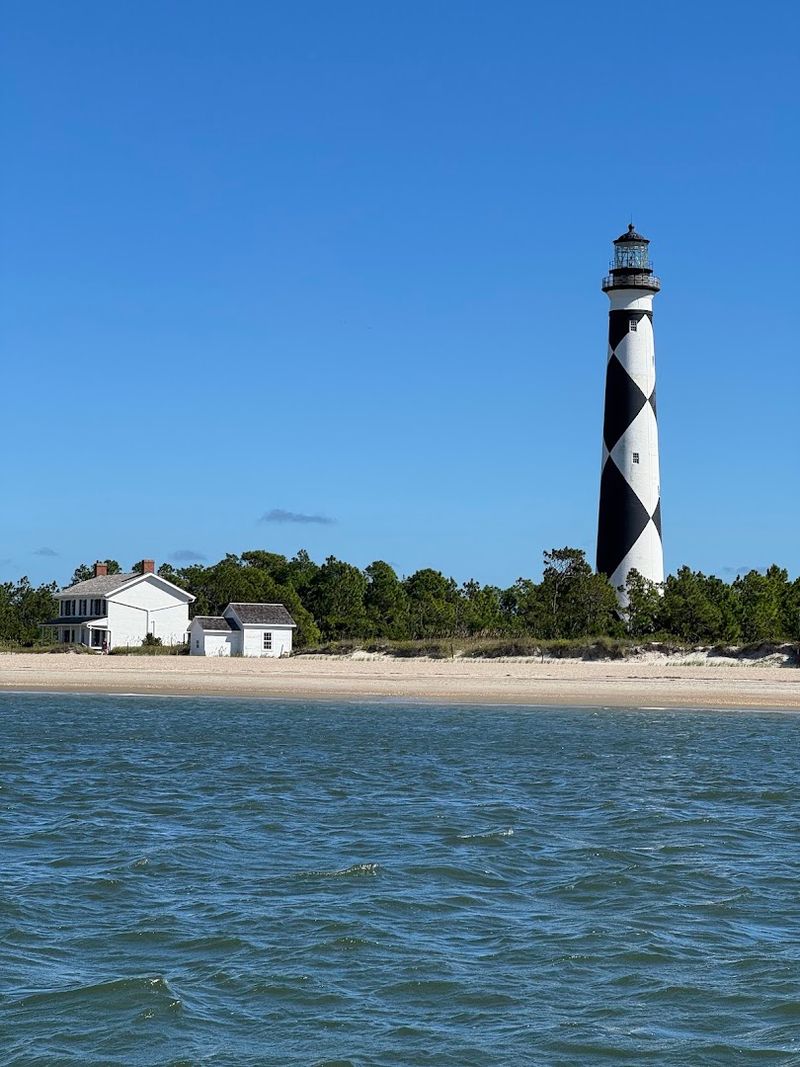
One of the quiet bonuses of visiting Shackleford Banks is the view across the water to Cape Lookout Lighthouse. The lighthouse stands on the neighboring Cape Lookout spit, and its distinctive black and white diamond pattern makes it one of the most recognizable structures on the entire North Carolina coast.
From the eastern end of Shackleford Banks, the lighthouse is clearly visible across the inlet, and on calm days the reflection in the water adds another layer to an already photogenic scene. Many visitors combine a trip to Shackleford with a stop at Cape Lookout on the same day, since the ferry operators often service both locations.
The lighthouse itself was completed in 1859 and stands 163 feet tall. It is open for climbing during certain seasons, and the view from the top reaches across both the island and the open Atlantic in a way that gives real scale to how remote this part of the coast actually is.
Having that lighthouse visible from the beach at Shackleford Banks gives the whole scene a historical anchor. You are standing in a place that sailors, traders, and early settlers navigated past for centuries, and the lighthouse stands as the most visible reminder that this stretch of coastline has a long and layered story behind it.
Practical Tips and Visitor Rules Worth Knowing Before You Go
A few practical points can make the difference between a smooth visit and a frustrating one. The island is managed by Cape Lookout National Seashore, and the rules reflect a genuine commitment to keeping the place as undisturbed as possible.
Feeding the horses is prohibited, and so is approaching them closer than fifty feet.
Dogs are allowed on the island but must be kept on a leash at all times. The horses and the dogs do not mix well, and any incident involving an unleashed dog near the herd is taken very seriously by both rangers and other visitors.
If your dog is not reliably leash-trained, this may not be the right destination for that particular trip.
There are composting toilets at the eastern ferry drop-off point, which is the only restroom facility on the entire island. Plan accordingly before you start walking west.
The toilets are basic but functional, and knowing they exist before you head off into the dunes is genuinely useful information.
Collecting live shells, disturbing nesting birds, or removing any plants from the island is not permitted. The whole point of a protected barrier island is that it stays protected, and visitors who treat it with that kind of respect are the reason places like this still exist in their current form.
Share this story