There is a patch of sandy ground in North Carolina where two brothers from Ohio quietly rewrote the rules of what humans could do. No fancy lab, no government funding, just grit, curiosity, and a whole lot of trial and error.
On December 17, 1903, the world changed in twelve seconds and about 120 feet of distance. I made the drive out to the Outer Banks specifically to stand on that ground, and I can tell you firsthand that the feeling of being there is something no history book fully prepares you for.
Where It All Happened: The Address and Setting
The address is 1000 N Croatan Hwy, Kill Devil Hills, NC 27948, and it sits right along the main coastal highway that cuts through the Outer Banks. Kill Devil Hills is a small beach town on a narrow barrier island, with the Atlantic Ocean on one side and Albemarle Sound on the other.
The park is managed by the National Park Service and is open daily from 9 AM to 5 PM. Parking costs around ten to twenty dollars depending on the season, though an America the Beautiful pass gets you in free.
The grounds are wide and open, with flat sandy paths that are easy to walk even for younger visitors. The landscape feels genuinely historic, not polished or over-manicured, which is exactly what you want from a place like this.
A light coastal breeze follows you around the whole property, and on a clear day, the views across the flat terrain stretch impressively far in every direction.
The Story Behind the First Flight
Orville and Wilbur Wright were bicycle mechanics from Dayton, Ohio, not scientists with degrees or wealthy investors behind them. They taught themselves aerodynamics through years of reading, experimenting, and building their own equipment, including wind tunnels they constructed by hand to test wing shapes.
The brothers made four flights on December 17, 1903. The first, piloted by Orville, lasted twelve seconds and covered 120 feet.
The final flight that day, with Wilbur at the controls, covered 852 feet and lasted 59 seconds.
What makes the story so compelling is how many times they failed before getting it right. The memorial actually features a set of pillars that visually represent the number of attempts and setbacks they faced along the way.
Seeing that physical representation makes you appreciate their determination in a way that reading about it simply does not. Their persistence without any guarantee of success is honestly the most remarkable part of the whole story.
The Visitor Center and Its Impressive Renovation
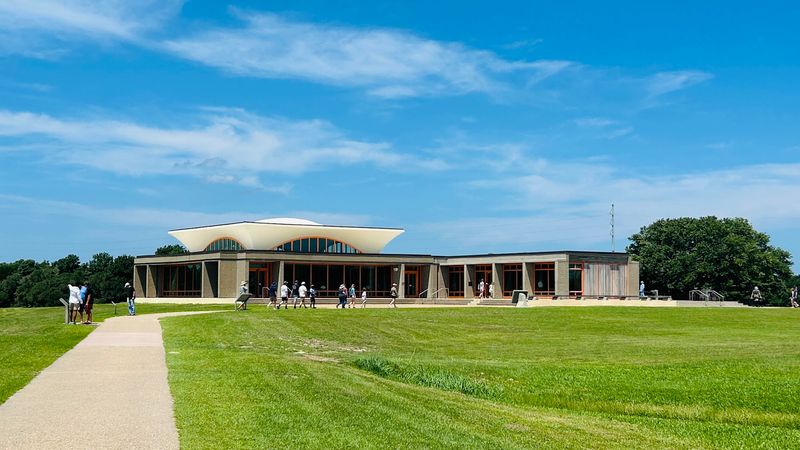
The visitor center went through a significant renovation a few years back, and the results are genuinely impressive. The building is clean, air-conditioned, and thoughtfully laid out so that you move through the story of flight in a logical, engaging order.
Inside, you will find detailed exhibits covering everything from the brothers’ early glider experiments to the engineering challenges they solved one by one. The displays explain how they developed wing warping for control, built counter-rotating propellers more efficient than anything available at the time, and designed a lightweight aluminum engine when no commercial option met their needs.
A silent video in one room shows early flight footage, and a separate screening room plays a longer documentary that draws a steady crowd. The staff throughout the building are knowledgeable, approachable, and clearly enthusiastic about the subject matter.
Rangers offer live programs near the replica aircraft, and those presentations are absolutely worth sticking around for. The visitor center alone could easily fill an hour of your time before you even step outside.
The Life-Size Wright Flyer Replica
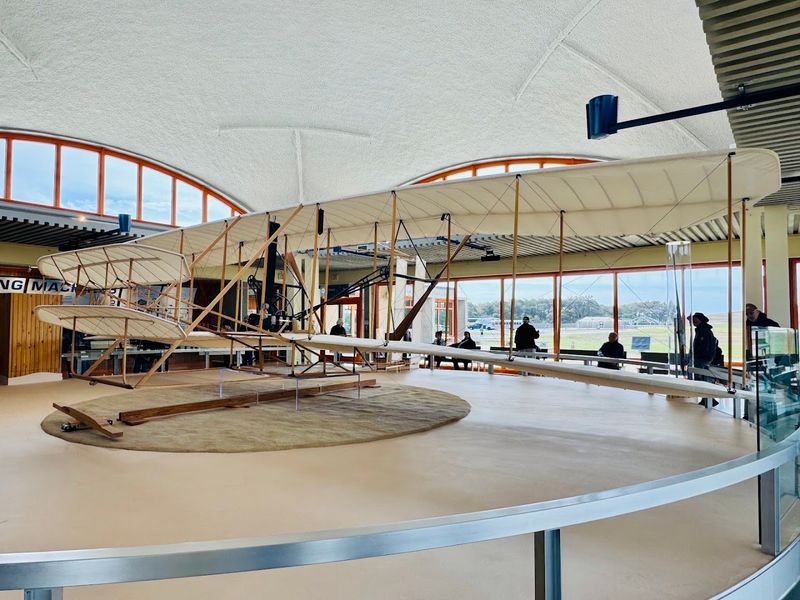
One of the most striking things inside the memorial complex is the full-scale replica of the 1903 Wright Flyer. Seeing it in person completely reframes how you think about early aviation.
The machine looks almost impossibly fragile. It is made of spruce wood, muslin fabric, and wire, and it weighs just over 600 pounds with the pilot on board.
The wingspan stretches 40 feet, and the whole thing looks more like a large kite than a flying machine. Knowing that this design actually worked, repeatedly, is a bit mind-bending.
A small piece of the original fabric from the actual 1903 Flyer is also on display, and that detail tends to stop visitors in their tracks. Rangers stationed near the replica are happy to answer questions and often deliver short presentations that highlight specific engineering choices the brothers made.
Standing next to this aircraft and really looking at the construction gives you a deep respect for what those two men figured out with hand tools and determination.
The Flight Markers Laid Out in Stone
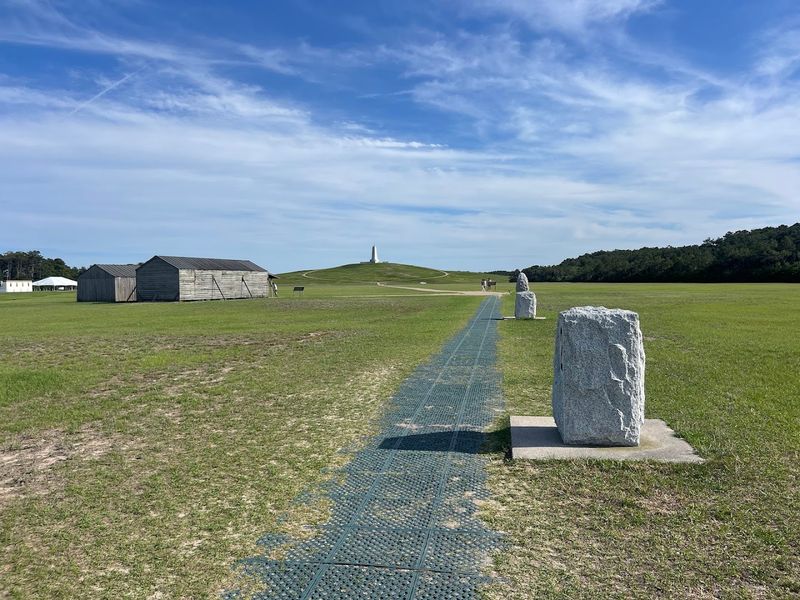
Outside the visitor center, granite stones are set into the ground to mark the exact distances of all four flights made on December 17, 1903. You can literally walk the length of each flight and feel the scale of it under your feet.
The first flight covered 120 feet, which is shorter than many people expect. By the fourth flight, the distance had stretched to 852 feet, which genuinely surprises most visitors.
Walking that distance yourself, on the same flat sandy ground where it happened, gives the numbers a physical reality that statistics on a page never quite deliver.
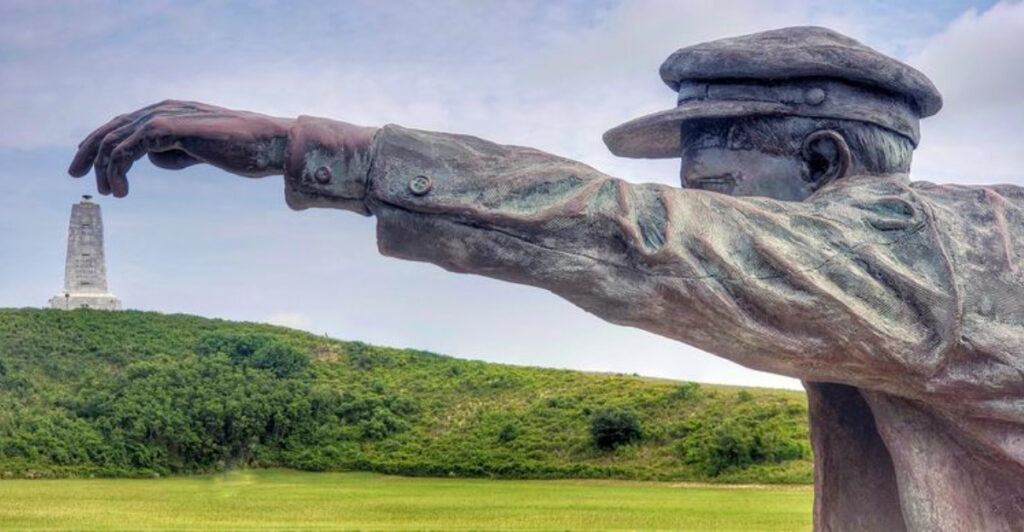
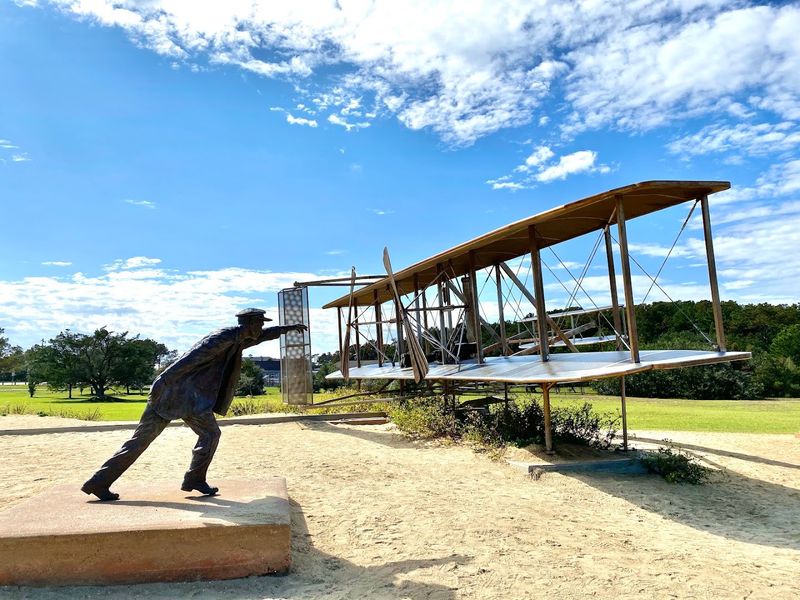
A recreation statue near the flight line captures the moment of the first takeoff, complete with figures representing the Wright brothers and the five witnesses who were present that day. The sculpture is detailed and emotionally resonant without being overdramatic.
Many visitors spend quiet time here just absorbing the scale of what those stone markers represent, and it is one of those rare spots where you genuinely feel the weight of history pressing up through the ground beneath you.
Climbing the Hill to the Granite Monument
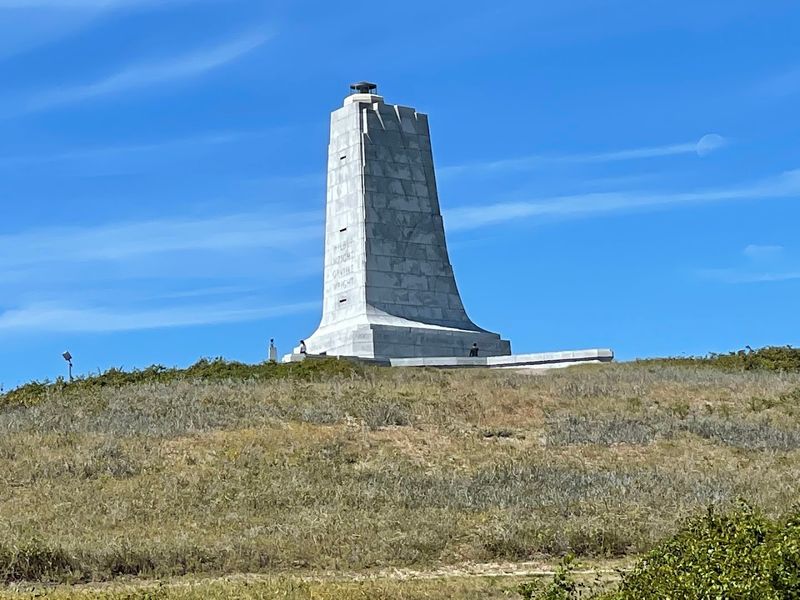
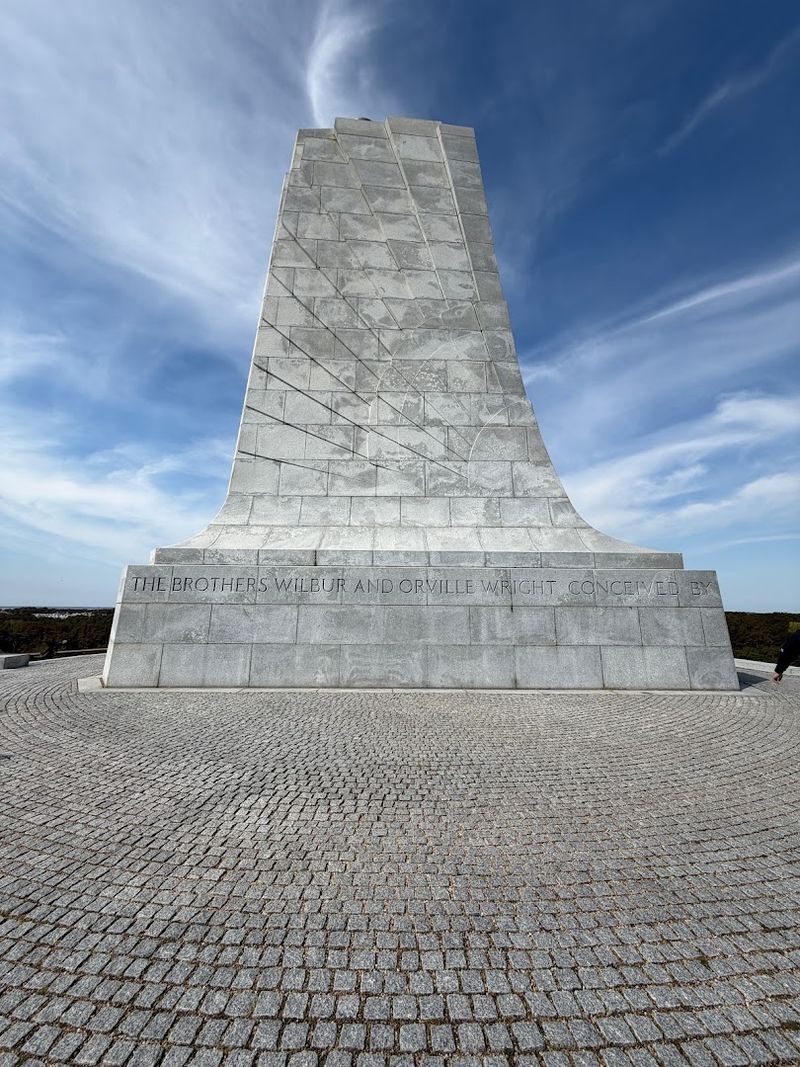
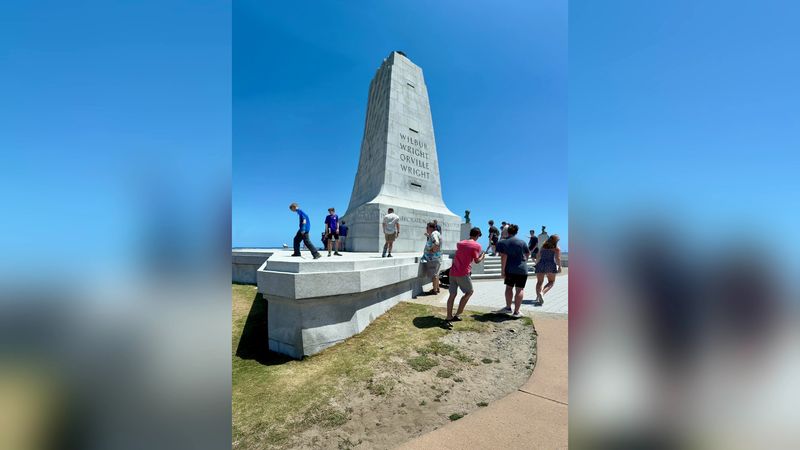
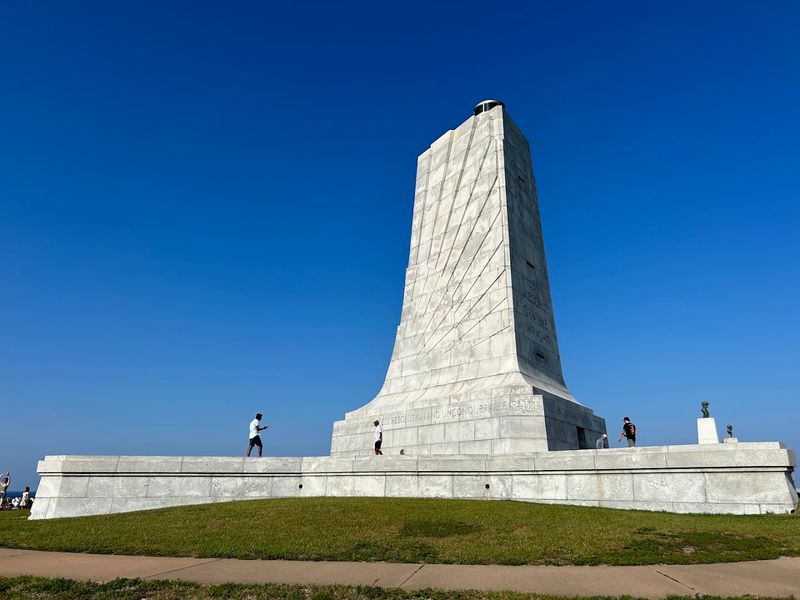
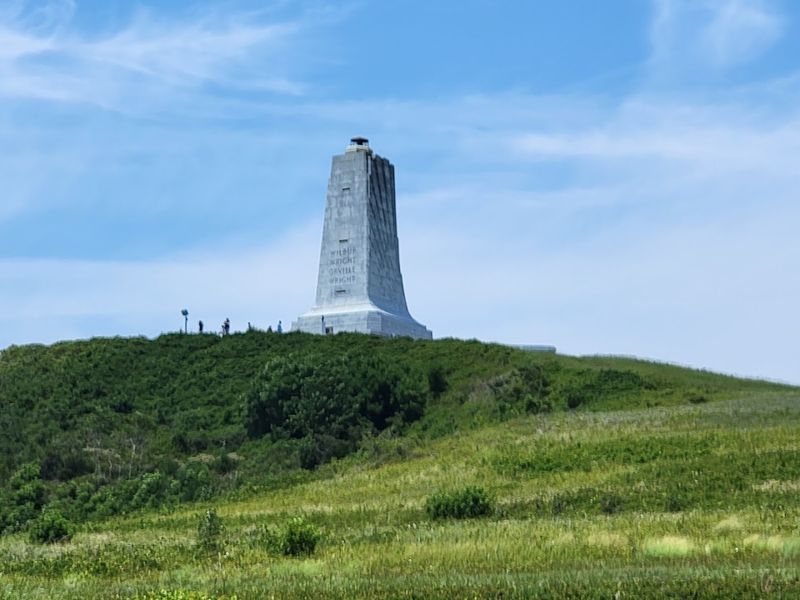
The centerpiece of the entire site is the 60-foot granite monument that sits on top of Big Kill Devil Hill, the sand dune from which the brothers launched their early glider tests. The walk up is not a casual stroll, especially on a warm or humid day, but the view from the top makes it completely worthwhile.
The hill rises about 90 feet above sea level, which is modest by most standards but feels significant on this flat coastal landscape. From the top, you can see across the Outer Banks in multiple directions, with ocean and sound both visible on clear days.
The monument itself is sleek and modernist, dedicated in 1932 and carved with reliefs honoring the achievement.
Underneath the monument, a small underground chamber explains the engineering that went into building a permanent structure on top of a shifting sand dune, which was apparently quite a challenge in itself. The walk back down is noticeably easier than going up, as more than one visitor has cheerfully noted.
Bring water and sunscreen, because the path offers very little shade.
The Sculpture Gift from North Carolina
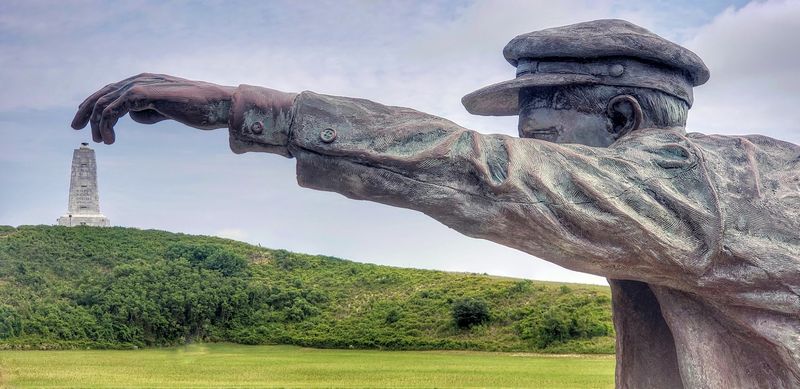
Behind the main monument, there is a powerful bronze sculpture that the state of North Carolina donated to the national park. It is one of the more emotionally striking pieces on the grounds, and many visitors walk right past it without realizing its significance.
The sculpture captures the moment of the first flight with remarkable energy and detail. It shows the Flyer just leaving the ground, with Orville prone at the controls and Wilbur running alongside.
The scale of the piece is impressive, and it rewards a slow, close look from multiple angles.
North Carolina and Ohio have long had a friendly rivalry over bragging rights to the Wright Brothers, since the brothers were from Ohio but made their historic flights here. The license plate slogan “First in Flight” is North Carolina’s proud claim, and this sculpture is part of that story.
Honestly, both states have something worth celebrating. The fact that this place exists at all, preserved and honored on the exact ground where it happened, feels like a gift to everyone who visits, regardless of which state they drove in from.
Ranger Programs Worth Staying For
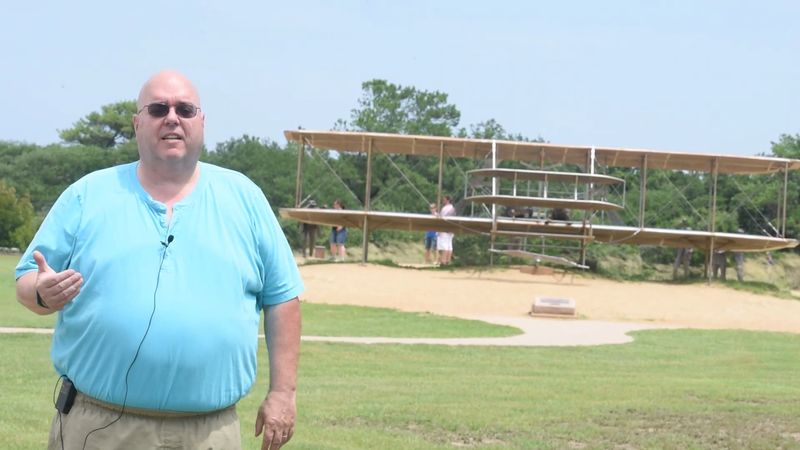
The ranger programs at this site are genuinely one of its best features, and skipping them would be a mistake. Rangers set up in a large tent between the visitor center and the monument area and deliver presentations on the history of the Wright Brothers and early flight that are informative, entertaining, and clearly delivered by people who love what they do.
The presentations cover topics like the brothers’ scientific process, the role of their bicycle business in funding the experiments, and the specific aerodynamic problems they solved before the 1903 flight. Rangers also discuss the glider tests conducted here in 1900, 1901, and 1902, which were essential steps toward the powered flight breakthrough.
Multiple visitors have mentioned specific rangers by name in reviews, praising their energy and depth of knowledge. The presentations run throughout the day during peak season, and the schedule is usually posted at the visitor center entrance.
If a ranger program is happening when you arrive, rearrange your plan and catch it first. You will cover the grounds with a much sharper understanding of everything you are looking at afterward.
The Junior Ranger Program for Young Visitors
Families with kids have a built-in reason to spend extra time at the memorial, and that reason is the Junior Ranger program. Available through the National Park Service at this site, the program gives children an activity booklet to complete during their visit.
The tasks involve exploring the exhibits, answering questions about the Wright Brothers story, and engaging with the rangers and displays in a hands-on way. Once a child completes the booklet, a ranger reviews it with them and awards an official Junior Ranger badge, which is a genuinely exciting moment for most kids.
The program works well for a range of ages and keeps younger visitors focused and curious rather than restless. Parents report that their kids leave with a real understanding of why this place matters, which is no small feat for a history site.
The visitor center is also well set up for families, with clean restrooms, a well-stocked gift shop full of aviation-themed items for all ages, and enough open outdoor space for kids to move around freely between exhibits. It is one of those rare spots that genuinely works for everyone in the group.
The Small Airstrip and What It Represents
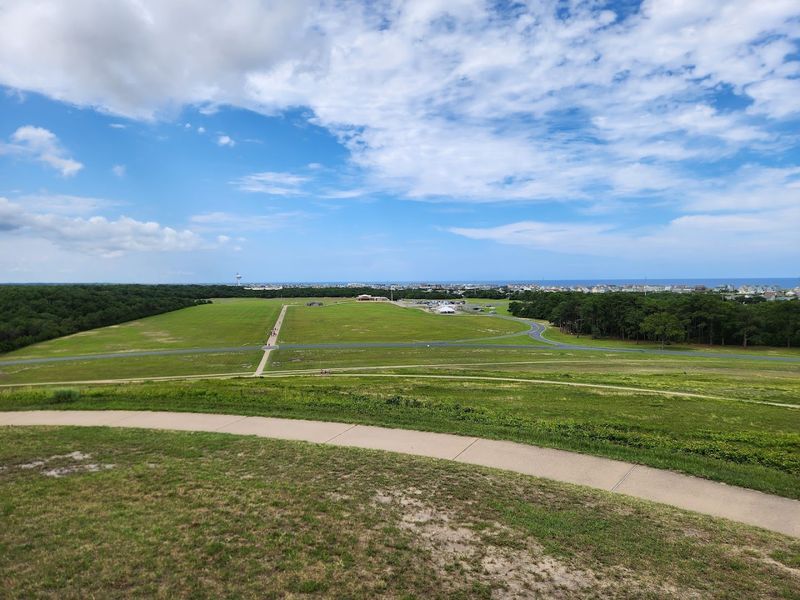
Right next to the memorial grounds, there is a small airstrip called First Flight Airport, and it carries one of the most meaningful names in aviation. The strip is designated with the ICAO identifier FFA, and small private aircraft can land and take off there, making it one of the most historically charged runways in the world.
Watching a small plane taxi or take off from this spot adds a layer to the visit that is hard to describe. The contrast between a modern aircraft and the mental image of the 1903 Flyer lifting off just a few hundred feet away is quietly staggering.
Pilots who visit the memorial often describe landing at First Flight Airport as a bucket list moment, and it is easy to understand why. The airstrip is not just a functional piece of infrastructure but a living continuation of what began here in 1903.
One review from a pilot visiting the site captured it well: standing on the flight line, looking across the grounds, and knowing that this is where it all started produces a feeling that no amount of museum reading quite replicates. Aviation history is alive here in a very literal sense.
Practical Tips for Planning Your Visit
A visit to the memorial typically takes between one and two hours, depending on how long you spend in the exhibits and whether you catch a ranger program. That estimate assumes you walk the full grounds, climb the hill, and spend time in the visitor center.
The park is open daily from 9 AM to 5 PM, and the phone number for visitor information is (252) 473-2111. The official website at nps.gov/wrbr has current information on hours, fees, and programs.
Parking costs around ten to twenty dollars, and the America the Beautiful annual pass covers the fee entirely.
There is no food service on the grounds, so bring snacks and water, especially if you are visiting in summer when the humidity along the Outer Banks can be significant. Comfortable walking shoes are a practical choice, since the paths are sandy in places and the hill climb is real.
The gift shop is well-stocked with aviation books, apparel, and souvenirs for all ages. Getting your National Parks passport stamped here is also a satisfying ritual that many regular park visitors make a point of doing.
Why This Place Still Matters Today
More than 120 years have passed since December 17, 1903, and the world of aviation has moved so far beyond that first 120-foot hop that the two events barely seem connected. And yet, standing on this ground, the connection feels completely clear.
Every commercial flight, every satellite launch, every emergency air transport traces its lineage back to two brothers who refused to accept that powered flight was impossible. The memorial does not overstate this.
It presents the facts, the artifacts, and the landscape, and lets the significance land on its own weight.
The site has a 4.8-star rating from over 10,000 reviews, and the consistent theme across all of them is that the place exceeds expectations. People arrive thinking they are visiting a history exhibit and leave feeling like they witnessed something.
That reaction makes sense. This is not a recreation or a tribute to something that happened elsewhere.
The ground you walk on is the actual ground. The hill you climb is the actual hill.
That kind of authenticity is rare, and it makes Wright Brothers National Memorial one of the most genuinely moving stops on any Outer Banks itinerary.
Share this story