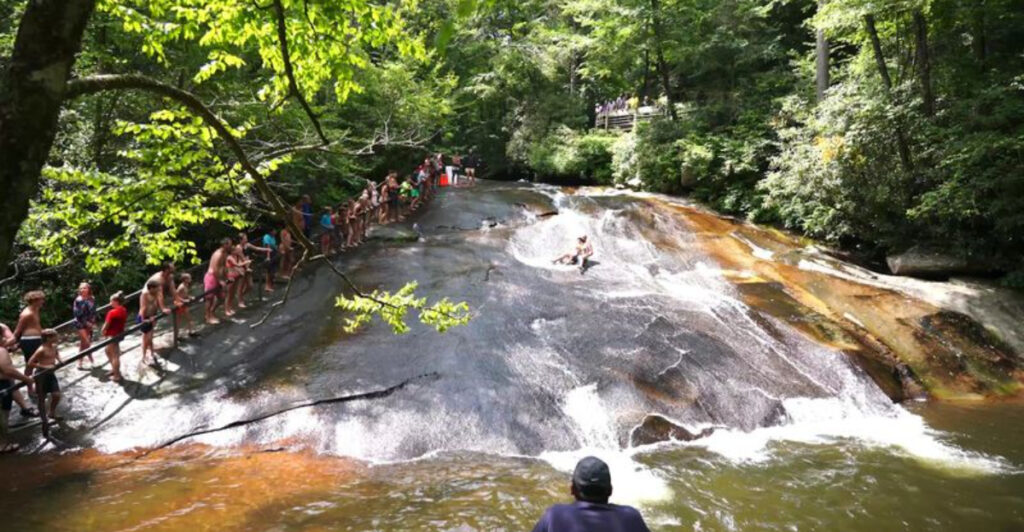
There is a spot in the mountains of western North Carolina where a waterfall does double duty, and nature basically built its own water park long before anyone thought to charge admission. The rock face is 60 feet long, the pool at the bottom reaches about 8 feet deep, and the water hovers around a brisk 55 degrees year-round.
I had heard about this place from a friend who described it with the kind of wide-eyed enthusiasm usually reserved for roller coasters and championship games. After finally making the drive out to Pisgah National Forest, I completely understood the hype.
This is one of those rare outdoor experiences that delivers exactly what it promises, and then some.
Where Exactly You Will Find This Natural Wonder
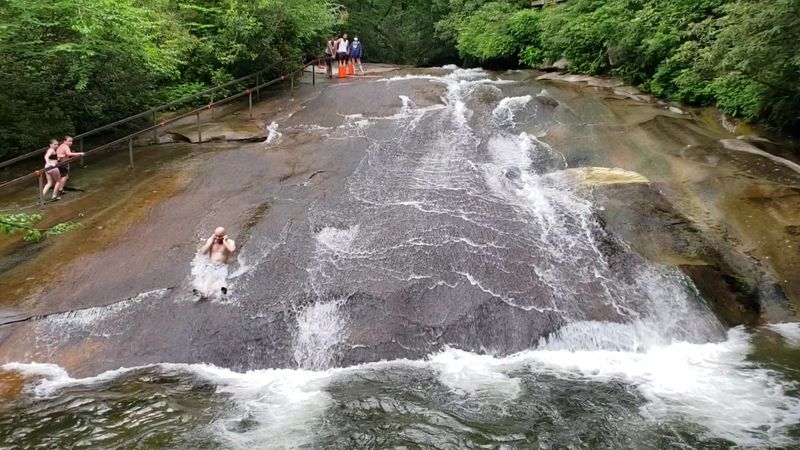
Tucked into the heart of Pisgah National Forest, Sliding Rock sits along US-276 in Brevard, North Carolina 28768, about 7.5 miles north of the town of Brevard and roughly 25 miles from Asheville. The forest wraps tightly around the site, and the drive in along the winding two-lane road through the trees is its own kind of reward before you even reach the rock.
The address places you squarely in Transylvania County, a region known for its dramatic mountain terrain and dozens of waterfalls scattered throughout the forest. Sliding Rock is managed by the U.S.
Forest Service as part of the Pisgah Ranger District, which means it has the kind of reliable upkeep you want when you are trusting a rock face with your body at full speed.
The site is clearly marked with signage along US-276, and the parking area is right off the highway. First-timers sometimes miss the turn, so keep your eyes open and slow down as you approach.
The coordinates 35.3114991, -82.7872344 will get you there without any guesswork on your phone.
The Rock Itself: What Makes It So Unusual
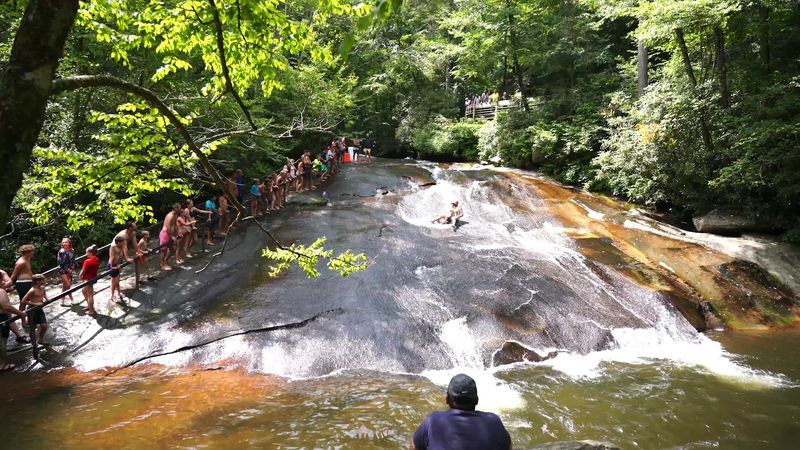
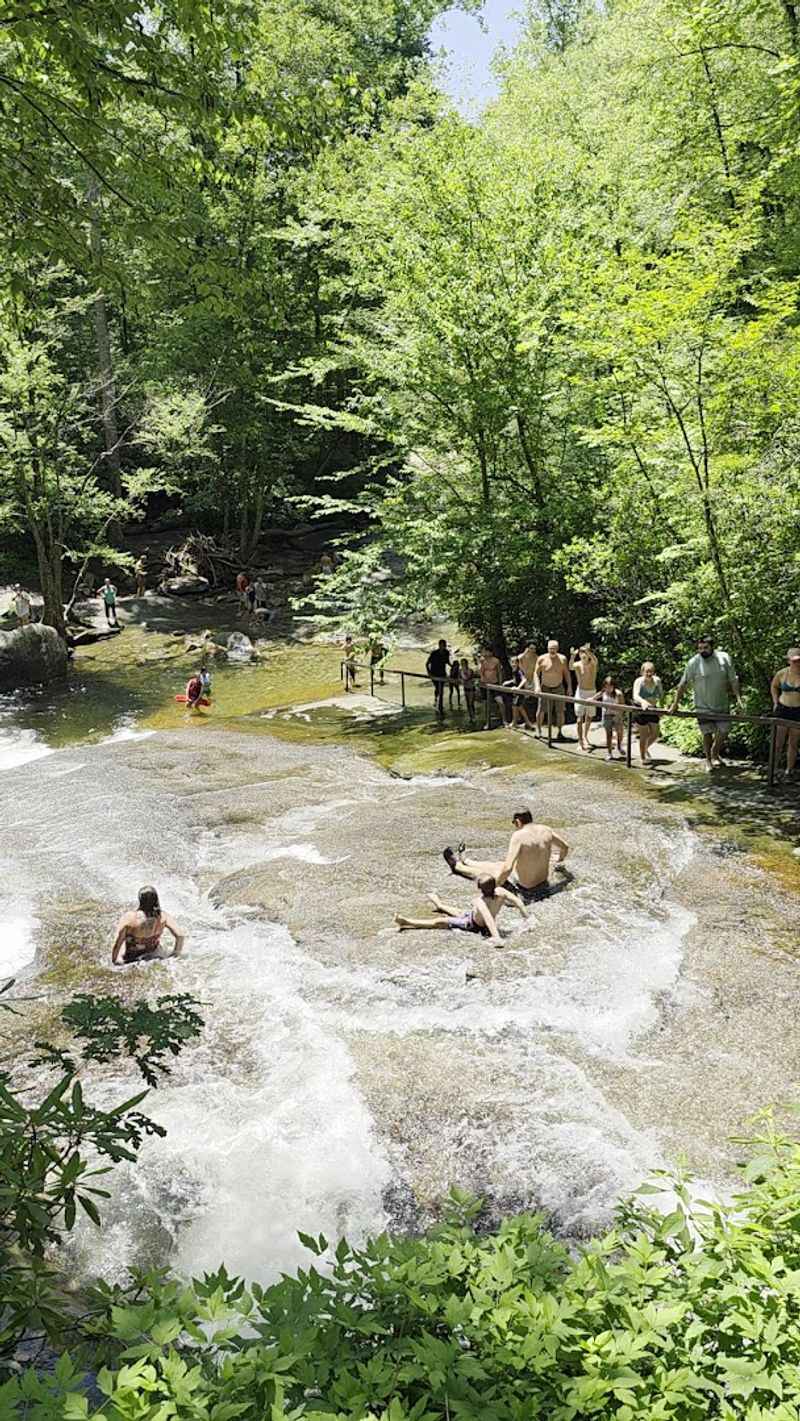
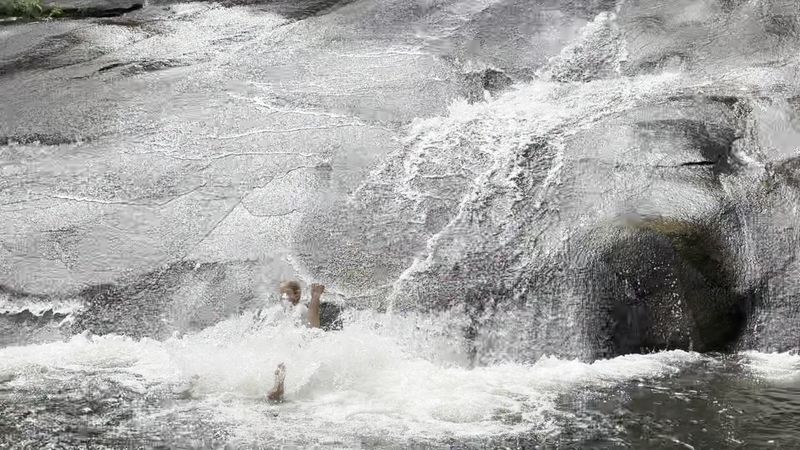
Not every waterfall moonlights as a thrill ride, but Sliding Rock has been doing exactly that for generations. The rock face stretches 60 feet from top to bottom, worn smooth over centuries by the constant flow of Looking Glass Creek rushing across its surface.
The result is a natural slide that requires zero engineering and delivers a surprisingly fast ride.
The creek feeds a steady sheet of water across the rock at all times, which is what makes the slide work. The stone itself has a gentle but consistent pitch, enough to build speed without turning the experience into something terrifying.
Most riders end up in the 8-foot-deep pool at the base, where the cold water greets you with a full-body shock that is, in the best possible way, completely unavoidable.
The rock has a rough texture along the edges and some spots mid-slide that can catch a knee or an elbow if you are not careful about your positioning. Wearing a swimsuit with some coverage and water shoes is a genuinely smart call here.
The rock does not care how confident you feel at the top.
The Temperature of the Water Will Get Your Attention
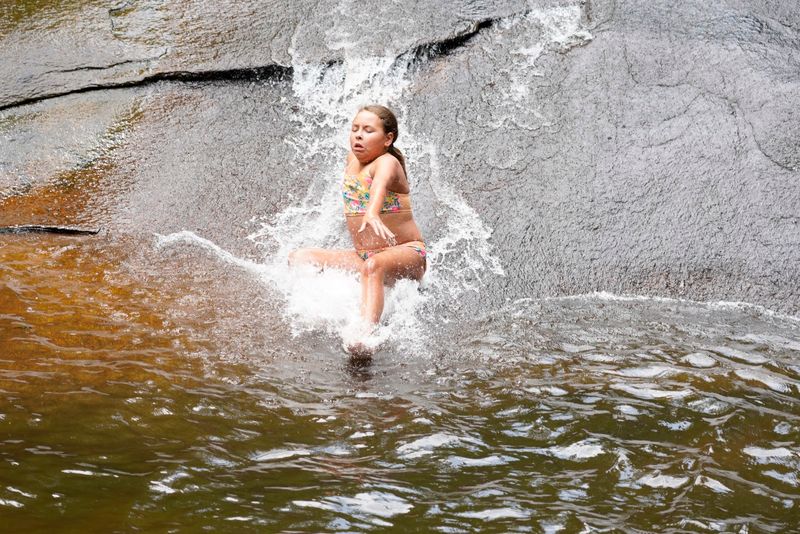
The water at Sliding Rock sits at a consistent 55 degrees Fahrenheit throughout the year. That number sounds manageable in theory, but the moment your body hits that pool, every nerve in your system sends the same urgent message at once.
It is cold in a way that makes you laugh involuntarily, gasp, and immediately want to do it again.
Looking Glass Creek, which feeds the slide, flows down from the higher elevations of the Pisgah National Forest. The water does not have much chance to warm up before it crosses the rock, so even on a blazing July afternoon, you are getting a full 55-degree welcome at the bottom.
Summer visitors often describe the pool as the most refreshing thing they have experienced all season, which is probably true.
Off-season visitors, particularly those who show up in early spring or late fall, should know that the cold hits differently when the air temperature is also low. One visitor made two runs in late fall on a cloudy 69-degree day and reported a surprisingly fast recovery from the chill.
But two runs was apparently the sensible limit that day.
Admission Fees and What You Get for Your Money
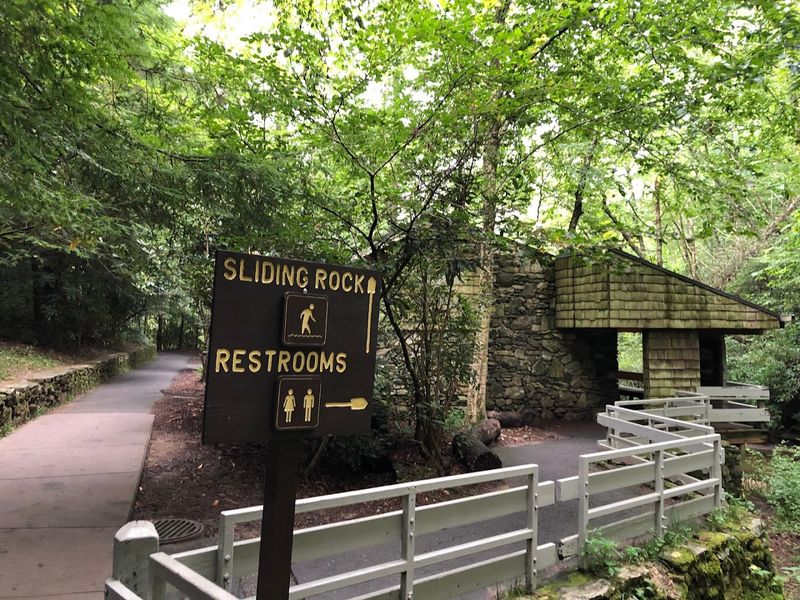
The entry fee at Sliding Rock is currently $6 per person, a price that covers access to the slide, the pool area, the observation deck, restrooms, changing facilities, and the presence of on-duty lifeguards during operating hours. For a managed natural attraction with this level of infrastructure, that is a reasonable deal by most standards.
The U.S. Forest Service operates the site, and if you already hold an America the Beautiful National Parks Pass, you can use it here to cover the entry fee for everyone in your vehicle.
Getting that pass ahead of your visit is a move that pays off quickly if you plan to hit more than one national forest or park site during your trip through western North Carolina.
There have been some changes over the years. Older visitors remember when the site was free and you simply pulled off the road and slid.
The current setup is more organized, with staff, lifeguards, and clearer safety protocols in place. The experience costs a bit more now, but the added structure means fewer unpredictable situations on a busy summer weekend.
Lifeguards, Safety Rules, and What to Know Before You Go
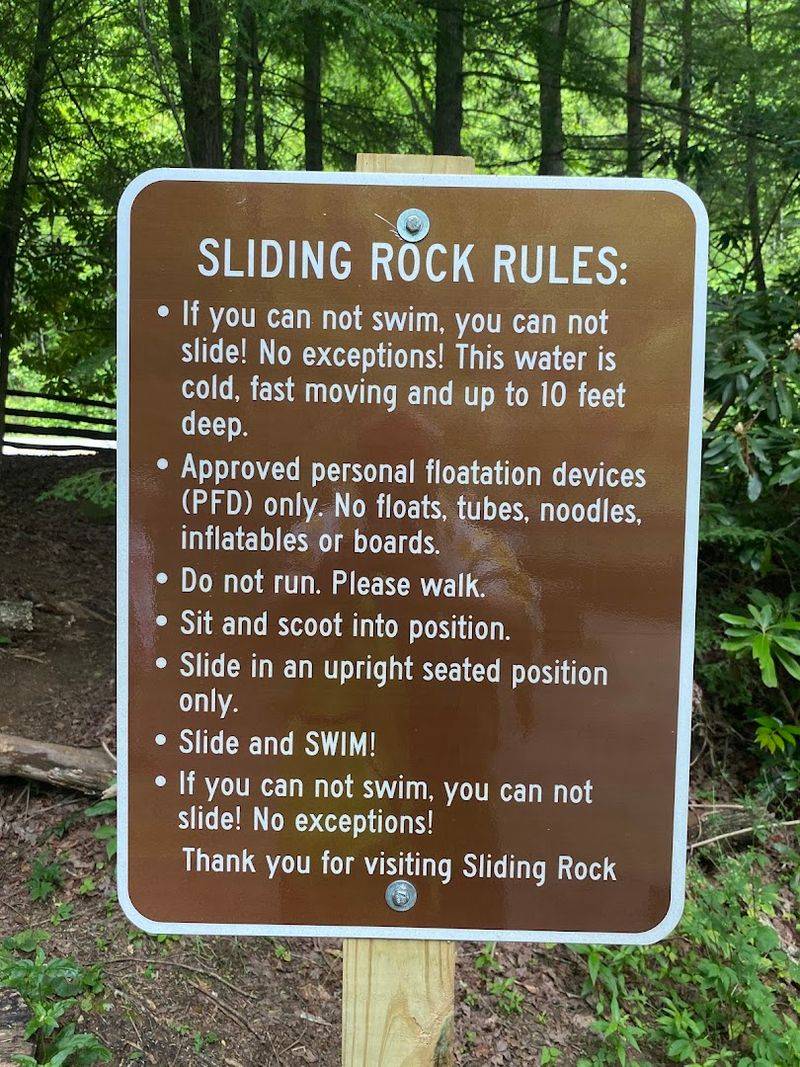
Lifeguards are on duty at Sliding Rock until 6:00 PM during the regular operating season. After that, the site remains accessible but sliding is at your own risk, with no professional supervision present.
Most families with young children wisely plan their visits well within those staffed hours.
The rules posted at the site are straightforward: you must be able to swim to use the slide, since the pool at the bottom reaches 7 to 12 feet deep depending on conditions. Life jackets are strongly recommended for younger children, and several visitors noted that the cold water alone can affect even confident swimmers.
The shock of 55-degree water can make treading water harder than expected, even for kids who swim regularly.
Swim shoes are another practical recommendation, both for the rock surface and for scrambling out of the pool after your run. The exit area involves some wet, uneven rock, and bare feet make that part trickier than it needs to be.
The staff on site are consistently described as friendly and helpful, and law enforcement is sometimes present on particularly busy days to help manage the crowds safely.
Crowds, Lines, and the Best Time to Show Up
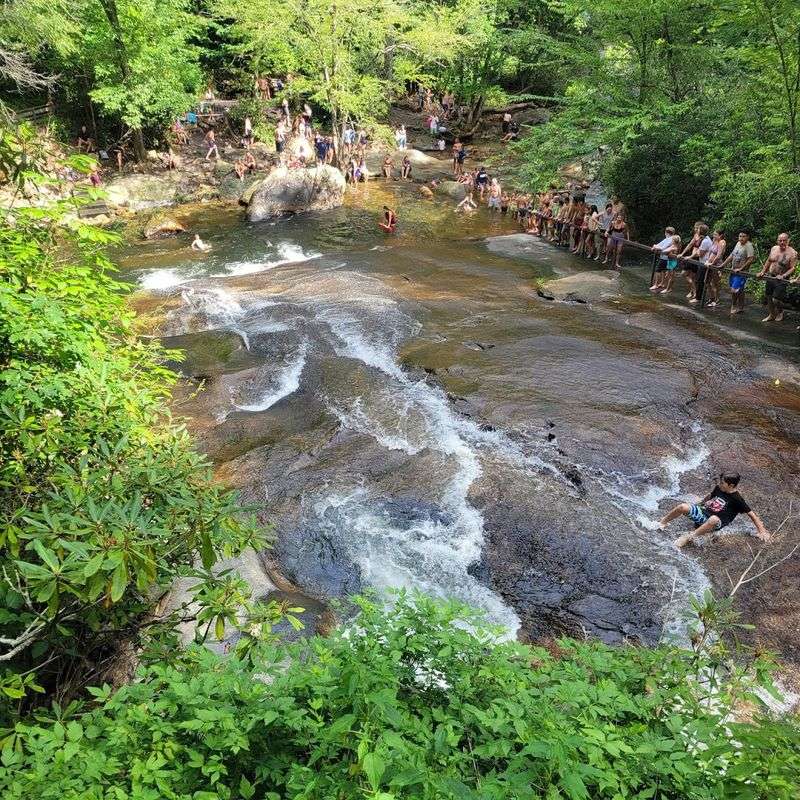
Weekends in summer at Sliding Rock are a full commitment. Lines to reach the top of the slide can stretch to 30 minutes or more, and the parking lot fills up fast enough that latecomers end up parking along the highway and walking in.
The site is popular in a way that reflects just how unique the experience is, but that popularity comes with real wait times.
The smartest strategy is arriving right when the site opens, ideally on a weekday. Visitors who get there before 10:00 AM consistently report shorter lines and a more relaxed atmosphere.
By 11:30 AM on a busy day, the crowd is already in full swing and the wait for a single slide can feel disproportionate to the 10 or so seconds the ride actually lasts.
September visits tend to offer a sweeter balance of manageable crowds and still-warm enough air temperatures to make the cold water bearable. The shoulder season in general is worth considering if flexibility is an option for your trip.
Off-season visits, like late March, mean nearly empty rocks and a very personal relationship with that 55-degree water.
The Drive Through Pisgah: A Road Worth Savoring
The road to Sliding Rock is part of the experience in a way that most attraction drives are not. US-276 through Pisgah National Forest winds through dense tree cover, crosses mountain streams, and passes at least one other notable waterfall before you even reach the main site.
The road earns its reputation as one of the more scenic drives in western North Carolina.
Look Glass Falls is visible right from the road a few miles before Sliding Rock, and it is the kind of 60-foot curtain waterfall that makes you pull over whether you planned to or not. Many visitors combine both stops into a single half-day outing, which works well since they are so close together along the same route.
The winding nature of US-276 means the drive rewards patience and a moderate speed. Larger vehicles should be aware that the road gets narrow in places, and passing other cars at certain curves requires a bit of mutual cooperation.
That said, the payoff at the end of the drive makes every curve feel intentional, like the road itself is building anticipation for what is waiting at the bottom of that rock.
Facilities on Site: More Than You Might Expect
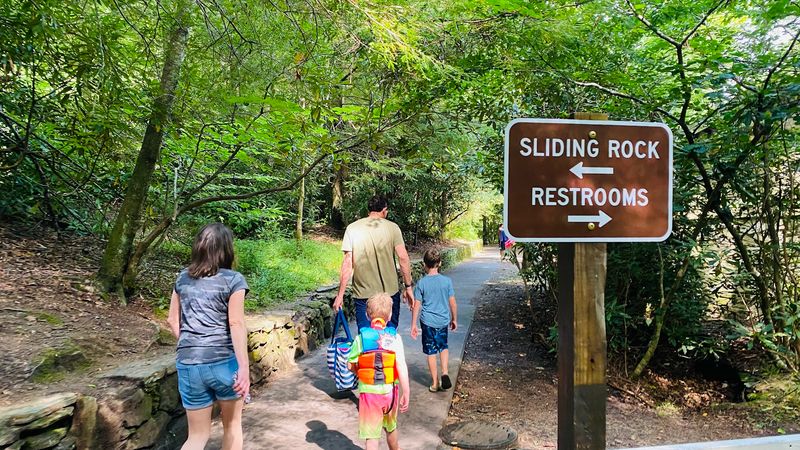
For a natural outdoor attraction, Sliding Rock comes with a solid set of amenities that make the visit more comfortable than a typical forest swimming hole. Restrooms and changing rooms are available on site, which matters a lot when you are arriving in street clothes and leaving soaking wet.
Having a place to change before the drive home is a small luxury that adds up.
There is also a paved parking area, though it fills up quickly on busy days. An observation area allows non-sliding visitors, whether cautious parents, grandparents, or anyone who simply wants to watch, to get a clear view of the action without getting in the water themselves.
That setup makes the site genuinely welcoming for groups with mixed levels of enthusiasm for cold water.
Picnicking is not allowed at the site itself, reportedly due to bear activity in the area, so plan to eat before you arrive or after you leave rather than packing a lunch to enjoy on the rocks. The site does not have a concession stand, so bringing snacks and water in a bag you can stow in your car is the practical approach for a longer visit.
What to Wear and Pack for Your Visit
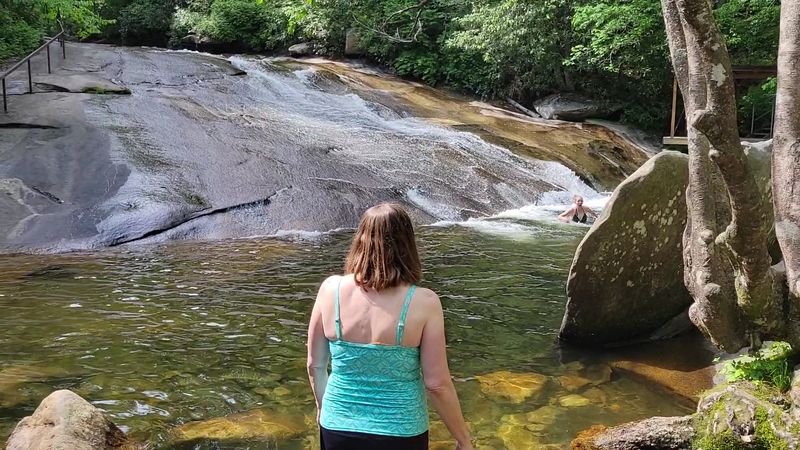
Packing smart for Sliding Rock makes a real difference in how much you enjoy the experience. A swimsuit with good coverage is the top recommendation, since the rock surface can be rough in spots and bare skin does not always win that negotiation.
Board shorts or a one-piece suit hold up better than a bikini bottom or loose swim trunks that can shift mid-slide.
Water shoes are close to essential. The rock around the pool and along the exit path is wet, uneven, and can be slippery.
Standard flip-flops tend to come off in the water, and bare feet on wet granite with a current is not the most comfortable combination. A pair of secure water shoes keeps you moving confidently between the pool and the slide entrance.
A dry bag or waterproof case for your phone is worth throwing in the car. The temptation to photograph or video the slide is strong, and the pool is deep enough that a dropped phone is a lost phone.
Towels, sunscreen, and a change of clothes round out the kit. The water is cold enough that a light layer waiting for you at the car will feel genuinely welcome after a few runs.
Activities Beyond the Slide Itself
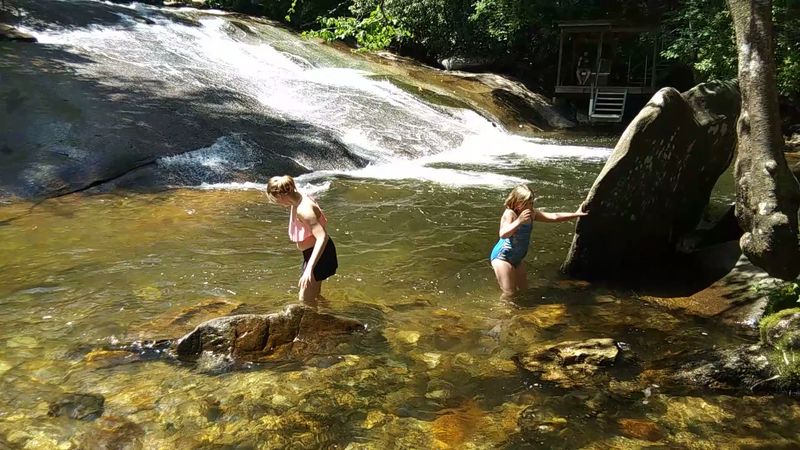
The slide gets all the attention, but Sliding Rock has more going on than the main event. The creek below the rock offers a stretch of shallow, rocky water where younger kids can splash around without committing to the full slide experience.
The current is gentle enough in most sections for small children to wade and explore while parents keep a close eye.
Downstream from the main site, the creek continues through the forest and offers some casual exploring for those who want to wander a bit. The rocks along the stream are fun to hop between, and the scenery holds up beautifully in every direction.
It is the kind of unstructured outdoor time that does not require a plan or a guide.
The surrounding Pisgah National Forest has miles of hiking trails accessible from nearby trailheads, making Sliding Rock a natural anchor for a fuller day in the woods. The Art Loeb Trail, the Cat Gap Loop, and several other routes are within a short drive.
Combining a morning hike with an afternoon at the slide is a genuinely satisfying way to spend a full day in this part of North Carolina.
A Place That Has Meant Something to Multiple Generations
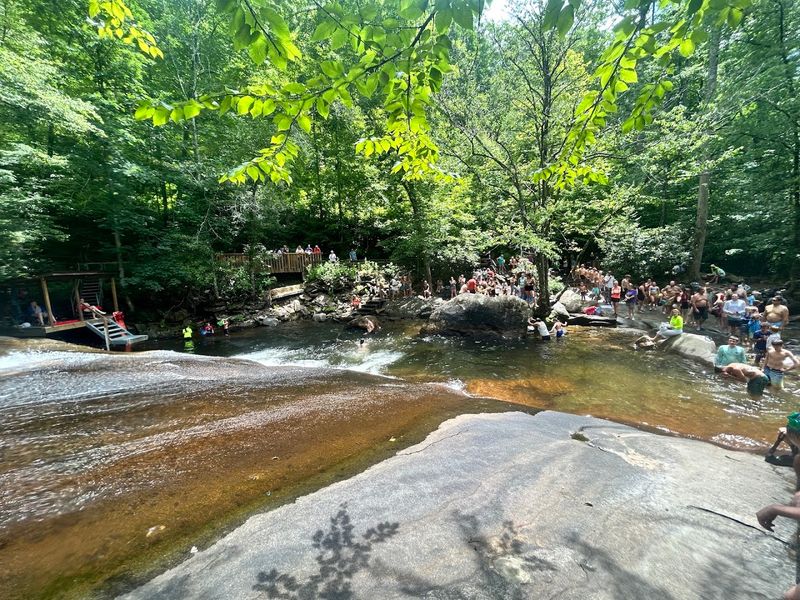
There is something quietly remarkable about a place that has been drawing visitors for decades without changing its core appeal. Sliding Rock has been a family destination in western North Carolina for generations, and the stories people carry from it are remarkably consistent across time.
Grandparents who slid as kids bring their grandchildren. Adults who came as teenagers return with their own families.
The experience has gotten more organized over the years, with fees, lifeguards, and managed access replacing the old pull-off-the-road-and-go approach. Some longtime visitors feel a little nostalgia for the wilder version of the site.
But the fundamental thing, a 60-foot rock with cold water running over it into a deep pool in the middle of a national forest, has not changed at all.
That continuity is part of what makes Sliding Rock feel different from a manufactured attraction. The rock was here long before anyone put up a sign, and it will be here long after the current generation of visitors grows up and brings their own kids back.
Some places earn their reputation one cold, laughing splash at a time, and this is one of them.
Final Thoughts on Making the Most of Your Visit
Sliding Rock rewards the visitors who treat it as a full outing rather than a quick stop. Getting there early, wearing the right gear, and building in time to explore the creek and the surrounding forest turns a 10-second slide into a half-day adventure worth remembering.
The cold water is part of the deal, and leaning into that rather than bracing against it makes the whole thing more fun.
The drive through Pisgah National Forest to reach the site sets a tone that carries through the entire visit. This is not a theme park version of nature.
It is actual nature, with a rock that happens to be shaped perfectly for sliding, a creek that stays cold year-round, and a forest that makes every visit feel a little removed from the ordinary pace of things.
Whether you are a first-timer or someone returning after a decade away, the experience holds up. The water is still cold, the rock is still fast, and the pool at the bottom still delivers that full-body jolt that makes everyone around you burst out laughing at the same time.
That shared reaction is its own kind of magic, and it costs exactly six dollars to feel it.
Share this story