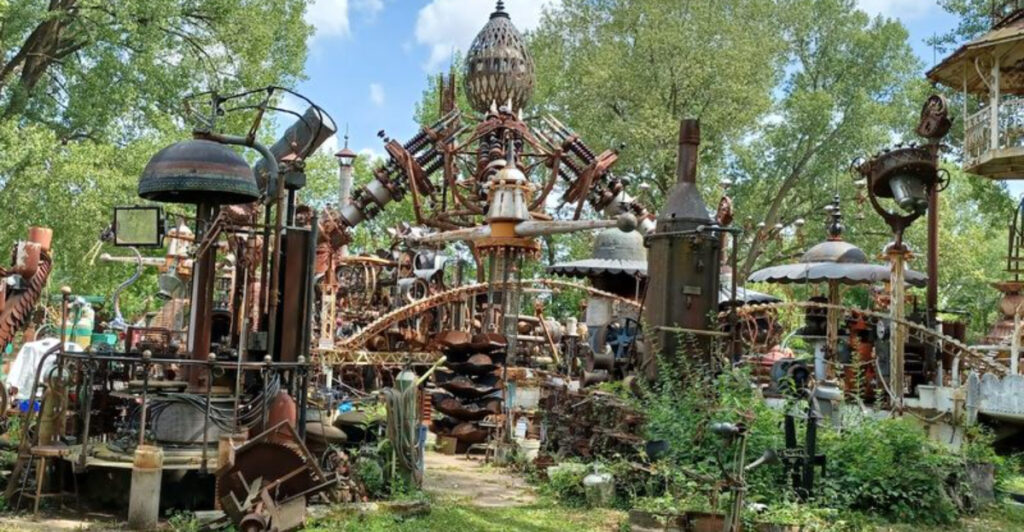
Somewhere along a stretch of highway in rural Wisconsin, a world unlike anything else in the country quietly waits for curious travelers to pull over and take a look. A retired junk dealer named Tom Every spent decades collecting industrial scraps, antique machinery, and metal odds and ends, then welded them into towering creatures, mechanical birds, and a centerpiece so massive it earned a world record.
The park has no entry fee, no velvet ropes, and no pretension. What it does have is a 300-ton scrap-metal structure that reaches toward the sky and a sprawling landscape full of metallic wonders that make you question how one person could have that much vision.
The Forevertron: A World Record in Scrap Metal
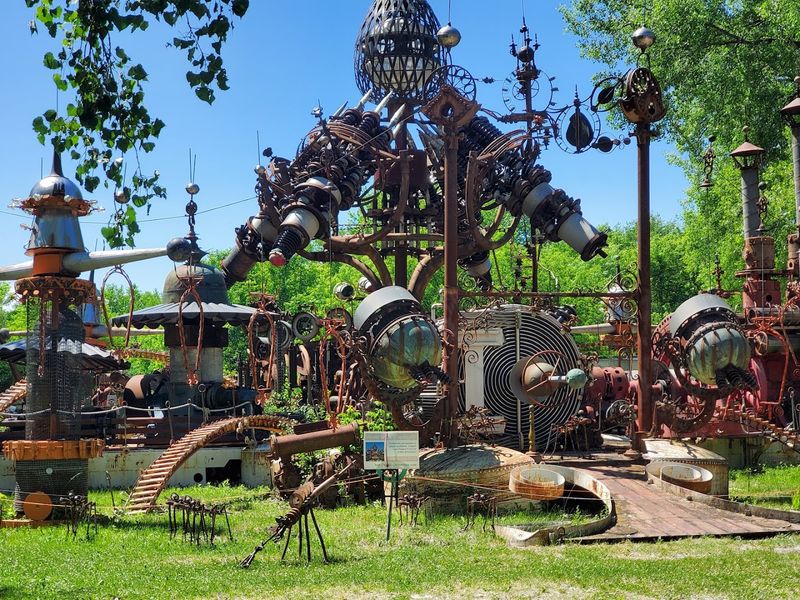
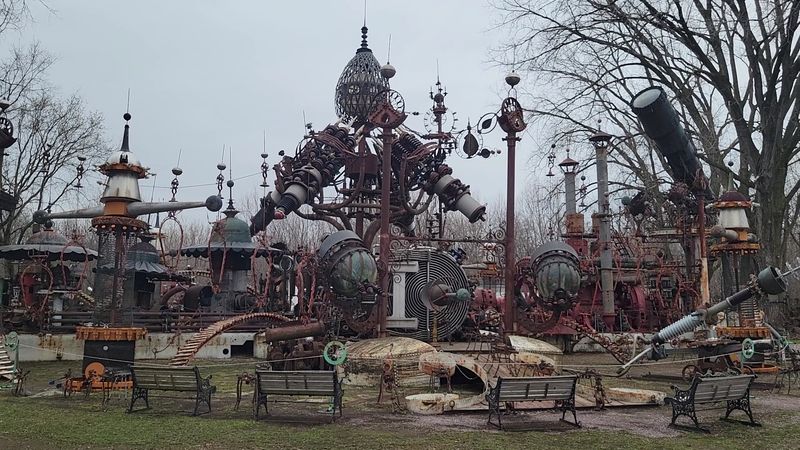
The centerpiece of the entire park is the Forevertron, a structure that weighs approximately 300 tons and was recognized by the Guinness Book of World Records as the largest scrap metal sculpture in the world.
Built from decommissioned industrial equipment, the Forevertron was designed by Dr. Evermor as a machine meant to launch him into the cosmos aboard a glass ball propelled by a lightning force. The concept is theatrical, ambitious, and completely committed to its own internal logic.
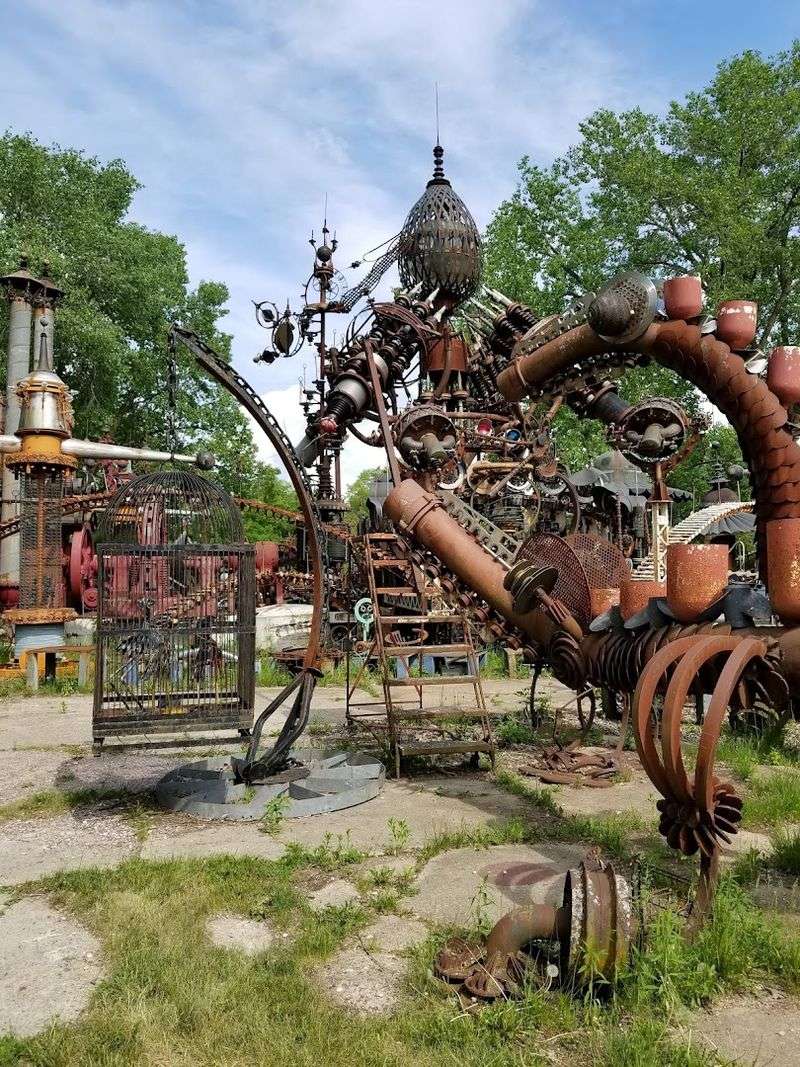
Up close, the scale of the structure is hard to process at first. Towers of welded metal rise overhead, and every surface is packed with gears, pipes, valves, and antique machinery parts that were salvaged from real industrial facilities.
Walking around it from multiple angles reveals new details each time, which is part of what keeps people circling it for far longer than they planned.
A Park Built on Creative Chaos
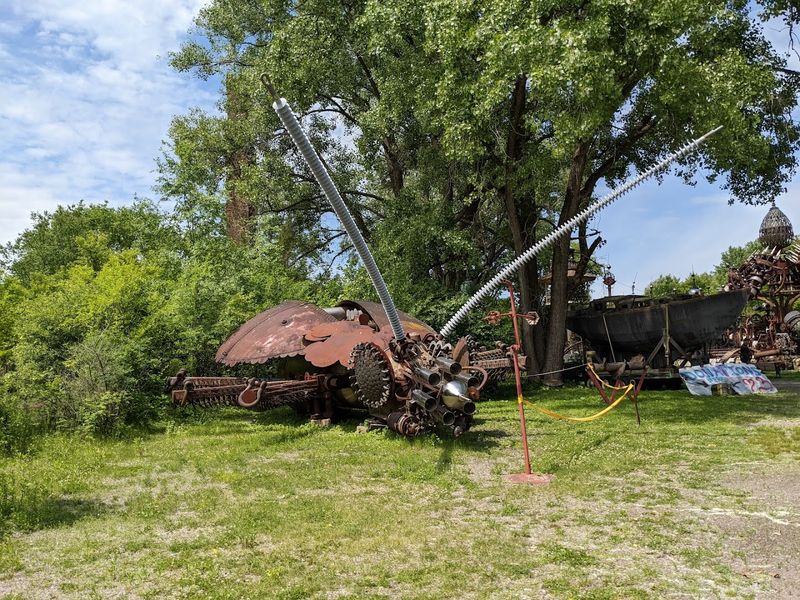
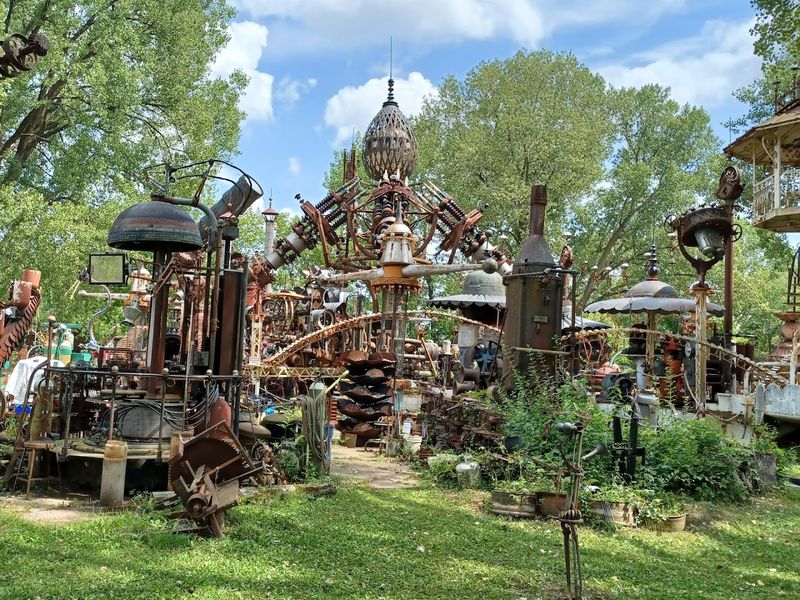
Beyond the Forevertron, the park is filled with dozens of additional sculptures spread across the grounds in a layout that feels more organic than planned. There is no strict path or numbered route to follow.
That freedom to wander is actually one of the park’s strongest qualities. Each turn reveals something new, and looking back from a different angle often makes a familiar sculpture look entirely different.
The compositions shift depending on where you stand, which gives the whole experience a quality that rewards slow exploration rather than a quick walk-through.
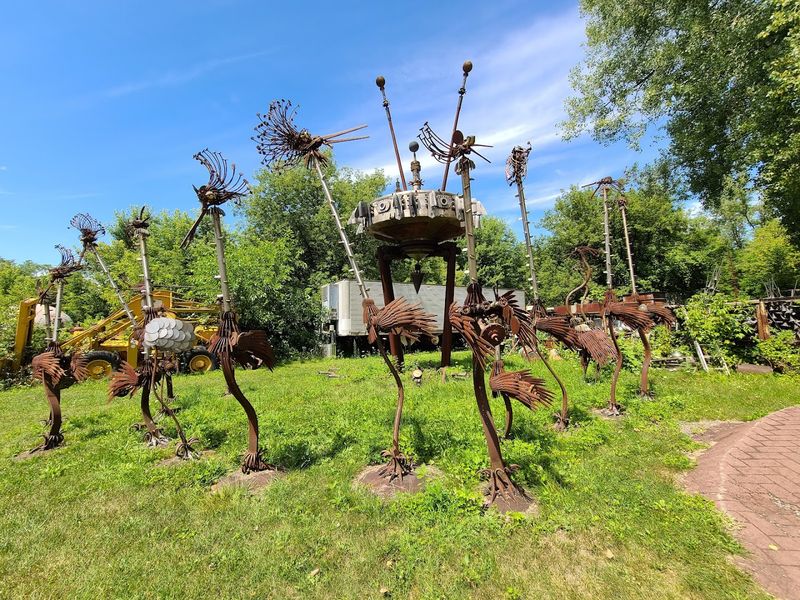
Among the many pieces, there are oversized beetles, towering bird figures, mechanical beasts, and abstract constructions that blur the line between creature and machine. Some pieces are interactive in small ways, and QR codes on select sculptures link to background information about the materials used and the ideas behind them.
The variety keeps the park from ever feeling repetitive.
The Bird Band and Musical Sculptures
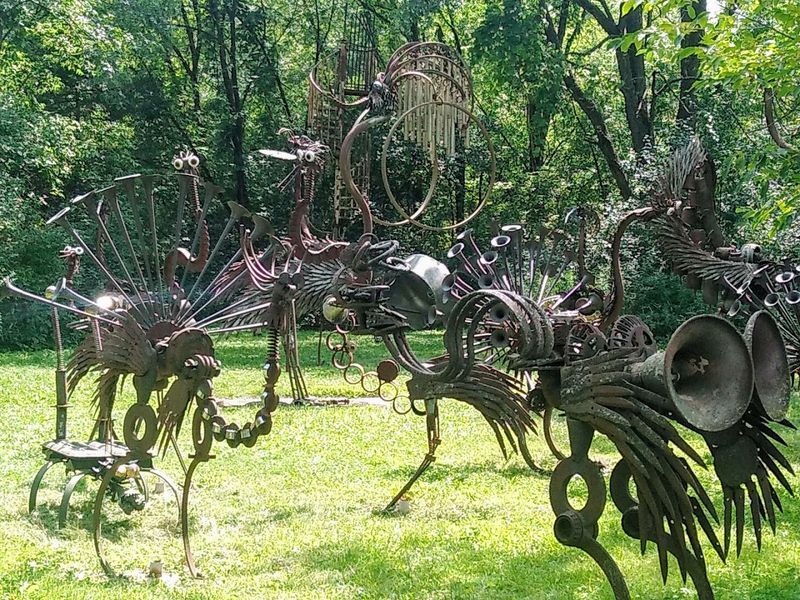
One of the most talked-about sections of the park features a group of bird sculptures built around recycled musical instruments. The birds are arranged as if mid-performance, with a conductor figure presiding over the group.
The use of actual instrument parts woven into the metalwork gives this section a layered quality that rewards close inspection. Horns, strings, and percussion elements appear throughout the figures, connecting the visual art to the idea of sound in a way that feels both playful and deliberate.
This kind of thematic grouping appears throughout the park, where Dr. Evermor organized sculptures into loose narratives rather than displaying them as isolated objects. The bird band has become one of the most photographed corners of the park, and it is easy to understand why.
The conductor alone, frozen mid-gesture with scrap metal arms raised, carries a personality that few purely abstract sculptures manage to project.
Free to Enter, Funded by Generosity
Admission to the park operates entirely on a donation basis, which means there is no ticket booth and no required fee to walk through. A donation box sits near the entrance, and whatever guests choose to contribute goes toward maintaining the grounds and supporting the family that keeps the park running.
For a destination of this scale and quality, the donation model feels almost surprising. The park covers a large area, the sculptures require ongoing care, and the family is present most open days to answer questions and sell artwork and merchandise in a small on-site shop.
Parking is also free, which makes the stop genuinely low-cost for road-trippers. The shop carries art pieces and T-shirts at reasonable prices, and buying something there is a meaningful way to support the park beyond dropping cash in the donation box.
The whole setup reflects the unpretentious spirit that defines the place.
What the QR Codes Actually Tell You
Scattered across the park, QR codes attached to individual sculptures offer a layer of context that a simple walk-through cannot provide on its own. Scanning them pulls up details about the specific materials used, where certain components came from, and the stories or concepts Dr. Evermor had in mind when building each piece.
For anyone who wants to understand the work on a deeper level, these codes are genuinely useful. The sculptures are complex enough that knowing a gear came from a specific decommissioned facility, or that a particular component was salvaged from a historic industrial site, adds real meaning to what might otherwise look like a collection of interesting metal shapes.
Not every sculpture has a code yet, and the park continues to expand its documentation over time. But even the coded pieces represent a thoughtful effort to make the art accessible to people who want more than just a photo opportunity.
A Stop That Fits Right Into a Dells Road Trip
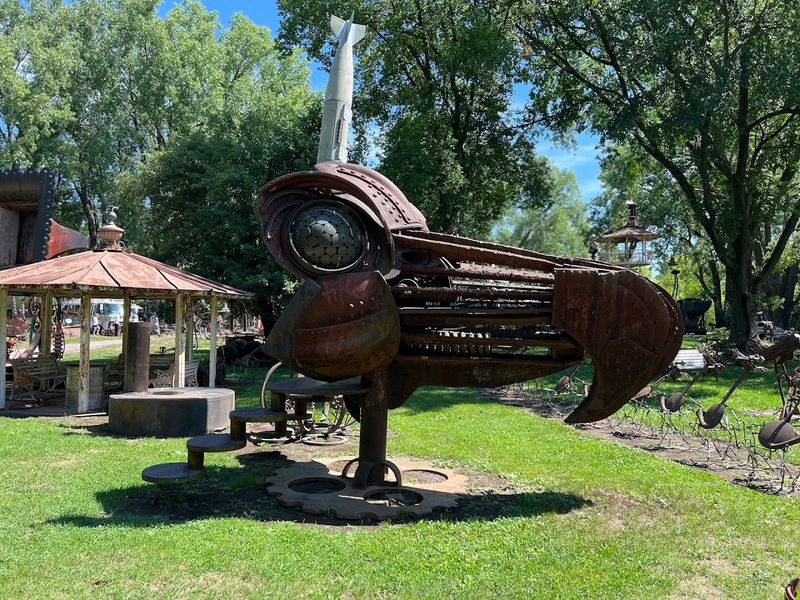
The park’s location on Highway 12 puts it directly on one of Wisconsin’s most-traveled road trip routes, sitting between Madison and the Wisconsin Dells. Thousands of cars pass the spot every week, and many drivers have gone years without realizing what was right there beside the road.
For anyone making the Dells trip, adding this stop requires almost no detour. The highway runs right past the entrance, and even a 45-minute visit to the park adds something genuinely memorable to what might otherwise be a routine drive.
The combination of the Dells and the sculpture park makes for a full day with two very different kinds of experiences. One is loud and commercial, and the other is quiet and strange in the best possible way.
That contrast actually works in both destinations’ favor, and plenty of people who stop once end up making the park a regular part of their route north.
Kid-Friendly in Unexpected Ways
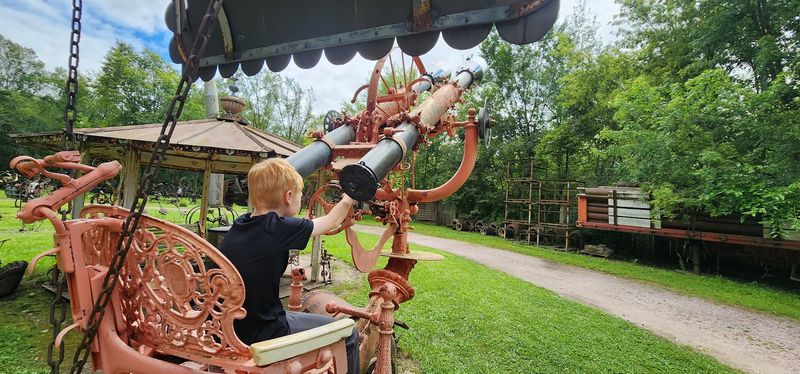
The park is not designed as a children’s attraction in any deliberate way, yet kids consistently respond to it with real enthusiasm. The oversized bugs, mechanical creatures, and towering bird figures hit a frequency that younger audiences find instantly compelling.
There is plenty of open space for kids to run around between sculptures, and the grounds are flat enough that keeping track of younger children is not difficult. The lack of ropes or barriers means families can get close to the artwork and examine the details at their own pace, which turns the visit into something more interactive than a traditional museum trip.
The beetles in particular tend to attract younger guests, with their segmented bodies and large mechanical forms looking like something out of a science fiction story. Parents who visit often note that their kids spent more time at the park than expected, which is the kind of outcome that makes a road trip stop genuinely worth the pull-off.
The Grounds, the Layout, and Getting Around
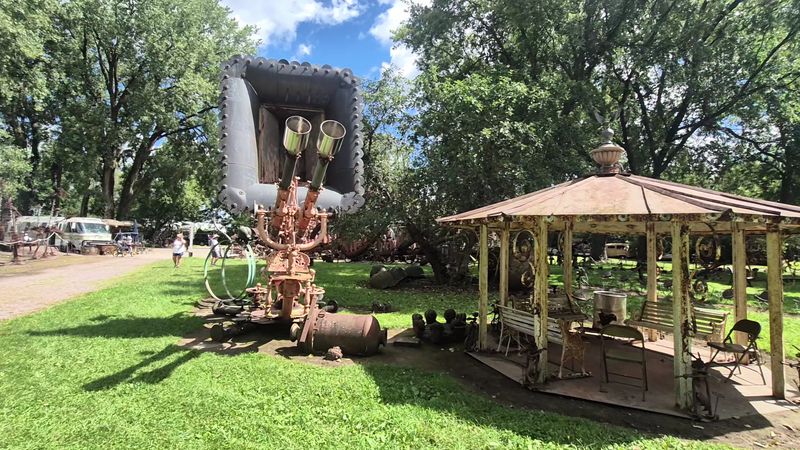
The park’s layout is open and easy to navigate without a map. Sculptures are spread across a large grassy area, and there are no strict paths or required routes, which gives the visit a relaxed, self-guided quality.
Benches are placed throughout the grounds, offering spots to sit and take in larger groupings of sculptures without rushing. The terrain is mostly flat, which makes the park accessible for a wide range of mobility levels.
Guests with limited mobility have been accommodated by driving through portions of the park when needed.
There is a grassy area near the parking lot that works well for a picnic, and the open layout means the park never feels crowded even when a fair number of people are exploring at the same time. The whole experience is unhurried, and the park’s design seems to actively encourage that kind of slow, wandering approach rather than a quick loop and exit.
The Family Keeping the Vision Alive
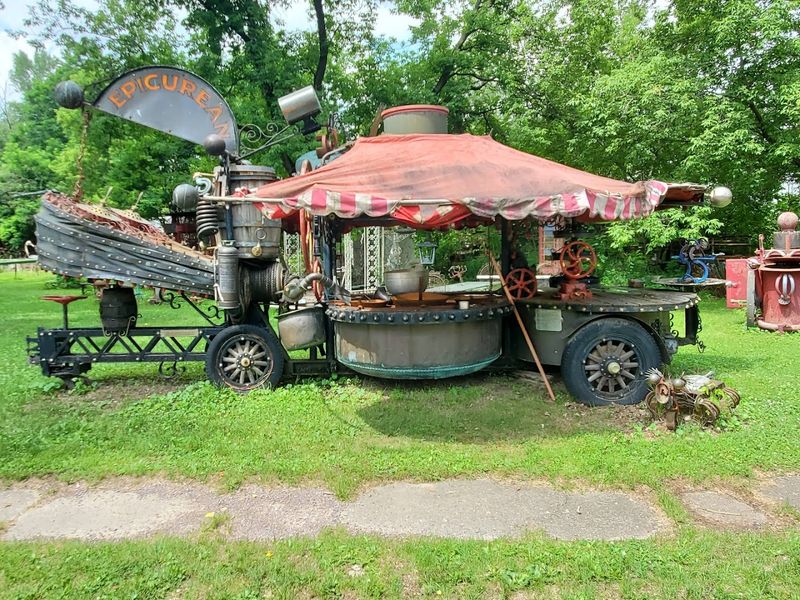
After Dr. Evermor passed away in 2020, the park did not close or fade into neglect. His wife and daughter took over operations and have continued to run the park with the same open, welcoming approach that defined it during his lifetime.
On most open days, family members are present on the grounds, available to chat with guests and share stories about the park’s history. They also manage a small shop where handmade art pieces and branded merchandise are available at prices that reflect a genuine interest in accessibility rather than profit maximization.
New sculptures have continued to be added to the park since Dr. Evermor’s passing, which signals that the creative work is not frozen in time. The family’s commitment to keeping the park active and growing is part of what makes it feel like a living place rather than a preserved monument.
That ongoing energy is something guests consistently notice and appreciate.
Steampunk Aesthetics and Industrial Imagination
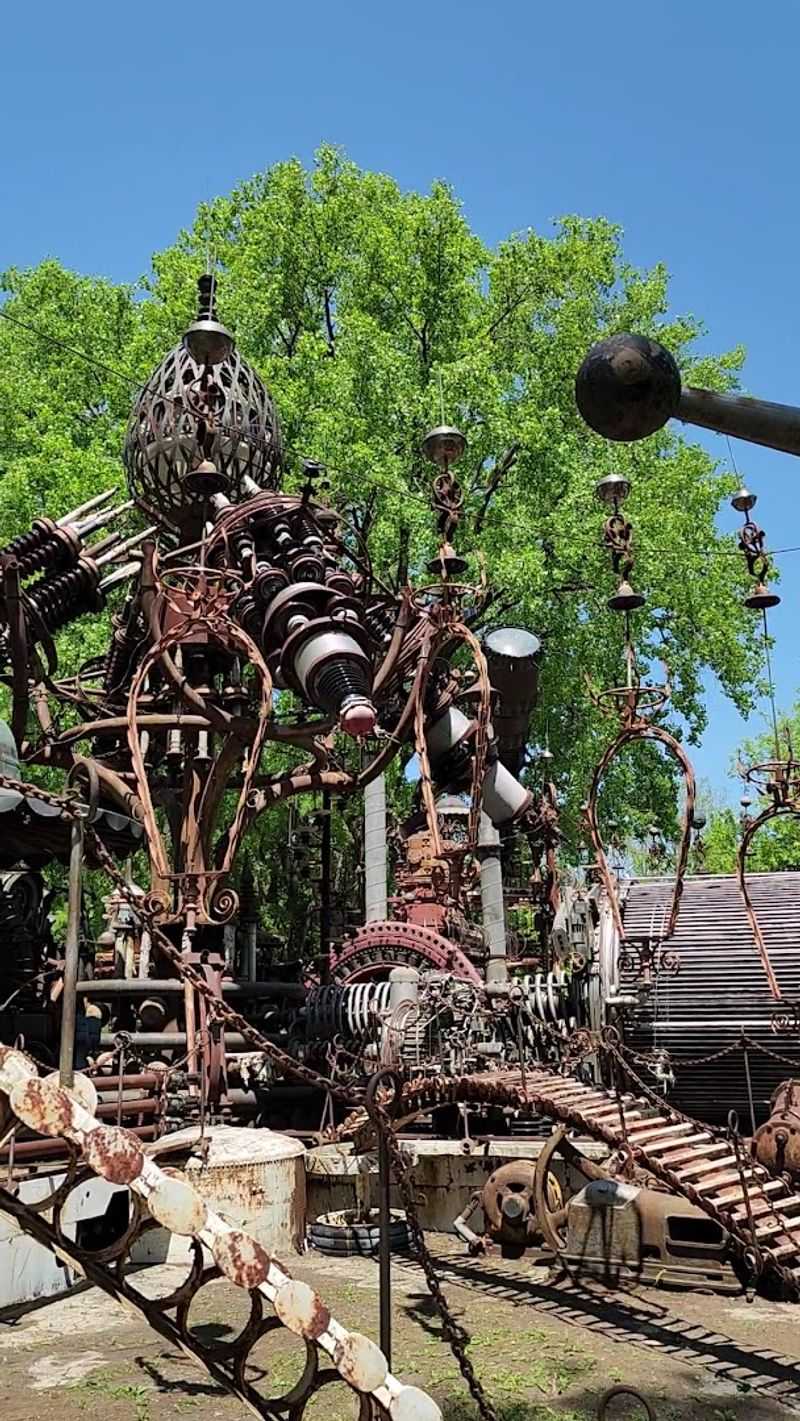
The visual language of the park draws heavily from industrial history, with components sourced from real factories, power plants, and demolition sites across the Midwest. The result is an aesthetic that has been described as steampunk, though Dr. Evermor himself operated from a very personal creative framework rather than any established design movement.
Every sculpture reflects a deep familiarity with machinery. Gears, boilers, valves, pipes, and structural steel appear throughout the work in combinations that feel both technically informed and wildly imaginative.
The materials carry their own history, and knowing that many of them came from actual industrial facilities adds a layer of meaning that purely fabricated materials could not provide.
The park offers a rare opportunity to see heavy industrial material transformed into something that operates entirely outside its original purpose. That transformation is the core of what makes the work compelling, and it holds up across dozens of individual sculptures without ever starting to feel repetitive.
Why This Place Stays With You
Most roadside attractions offer a quick photo opportunity and not much else. The sculpture park along Highway 12 in North Freedom operates on a completely different level, one that tends to linger in the mind long after the drive continues.
The combination of scale, detail, and personal vision gives the park a weight that is hard to replicate. Dr. Evermor spent decades building a world entirely from materials most people discard, and that commitment shows in every welded joint and salvaged component across the entire property.
People who visit once almost universally return, bringing friends or family who had not heard of the place before. The park has a way of turning skeptical passengers into converts within the first few minutes of walking the grounds.
For a free stop on a rural Wisconsin highway, that kind of lasting impression is genuinely rare, and it is the clearest sign that the work here is something worth going out of the way to experience.
Where to Find This One-of-a-Kind Place
The address is S7703 US-12, North Freedom, WI 53951, and the park sits right along the side of Highway 12, making it a surprisingly easy stop for anyone driving between Madison and the Wisconsin Dells.
The location itself is part of what makes the park feel special. There are no grand gates or elaborate signs announcing something extraordinary is about to unfold.
The sculptures simply start appearing along the roadside, almost like the park is showing off before you even park the car.
Hours run Thursday through Saturday from 11 AM to 5 PM, Friday from 11 AM to 5 PM, Sunday from 12 PM to 5 PM, and Monday from 11 AM to 5 PM. Tuesday and Wednesday the park is closed.
Parking is free, and admission operates on a donation basis, so there is really no financial reason not to stop.
Share this story