There is a covered bridge in northeast Ohio that does not just cross a river. It holds a record that the entire country has not been able to beat.
At 613 feet long, it stretches across the Ashtabula River gorge in a way that stops traffic, both literally and figuratively. I had seen plenty of covered bridges before, but nothing quite prepared me for the scale and quiet beauty of this one.
The surrounding landscape, the sound of the water below, and the second smaller bridge tucked beneath it all make this spot feel like something out of a storybook. By the time I left, I had taken more photos than I care to admit, and I was already planning my return trip for fall foliage season.
Where to Find the Longest Covered Bridge in America
The full address is 4878 Plymouth Ridge Rd, Ashtabula, and getting there is surprisingly straightforward once you are on the rural roads of Ashtabula County in northeast Ohio.
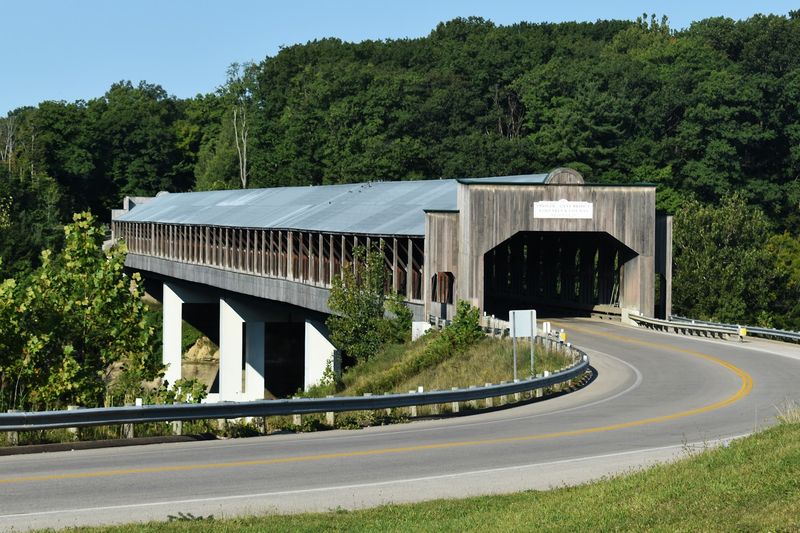
The bridge sits along a well-traveled county route, which means you can actually drive your vehicle through it while also having the option to walk along the dedicated pedestrian walkways on both sides.
A parking area is available nearby, along with an informational pavilion that gives visitors a solid overview of the covered bridge history in the region. Ashtabula County is home to 18 covered bridges in total, making it one of the most concentrated collections in the United States.
The Smolen-Gulf Covered Bridge is the crown jewel of that collection, and the surrounding landscape of rolling hills and river gorge makes the drive out there feel like a reward in itself.
The Record-Breaking Numbers Behind This Bridge
At 613 feet in length, the Smolen-Gulf Covered Bridge officially holds the title of the longest covered bridge in the United States, and that number is even more impressive when you are standing on it.
The bridge spans the Ashtabula River gorge at a height that gives you a genuine sense of scale, especially when you look down through the gaps and see the shallow creek winding below.
It was completed in 2008 and named after John Smolen, the Ashtabula County Engineer who designed it, and Eugene Gulf, after whom the local gulf area is named. The design is based on the Pratt truss style, which gives the interior that classic covered bridge look while still being structurally modern.
Walking its full length takes only a few minutes, but the experience stretches well beyond those 613 feet in your memory.
The Engineering Story That Built a Record
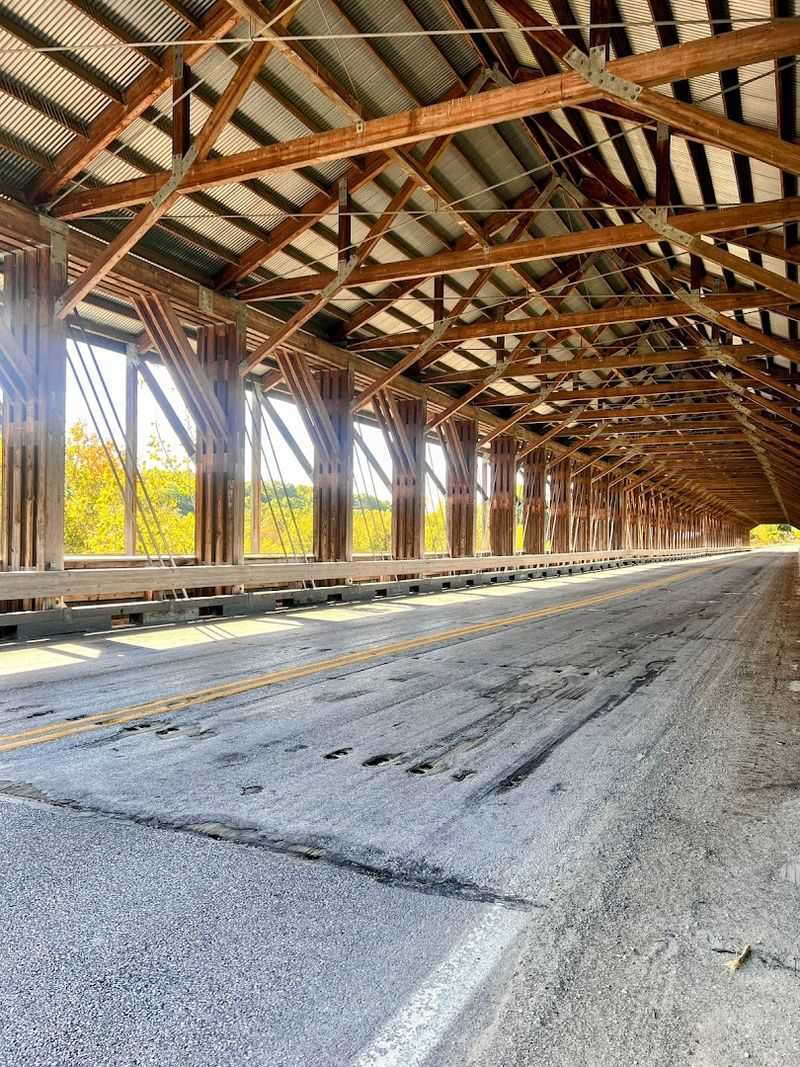
What makes this bridge genuinely fascinating is that it was not built as a tourist attraction. It was designed as a functional road bridge that also happened to revive a beloved American tradition.
John Smolen, the county engineer, championed the covered bridge design at a time when most infrastructure projects leaned toward concrete and steel. His commitment to the Pratt truss style gave the structure both visual charm and structural integrity.
The wood used throughout the bridge gives it an authentically classic appearance, while the engineering underneath meets all modern load-bearing requirements for vehicle traffic. That combination of old-world aesthetics and new-world engineering is rare, and it is part of why this bridge draws visitors from across the country.
Walking through the interior, you can see the exposed wooden framework above you, and it genuinely feels like stepping into a piece of American craftsmanship that was built to last.
Two Bridges for the Price of One Visit
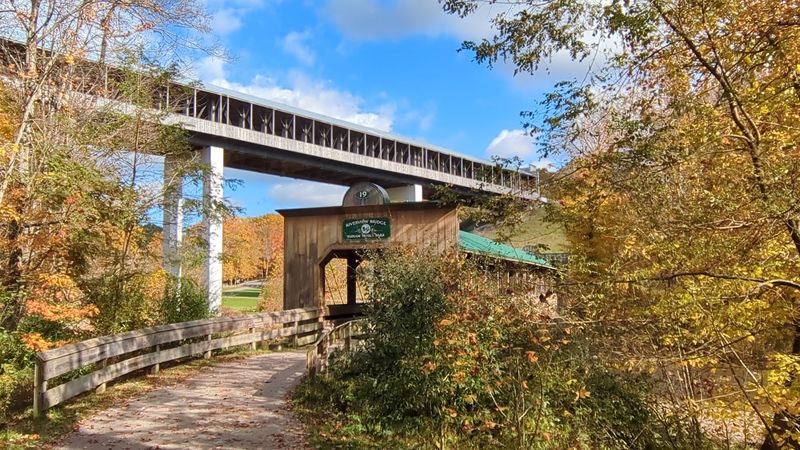
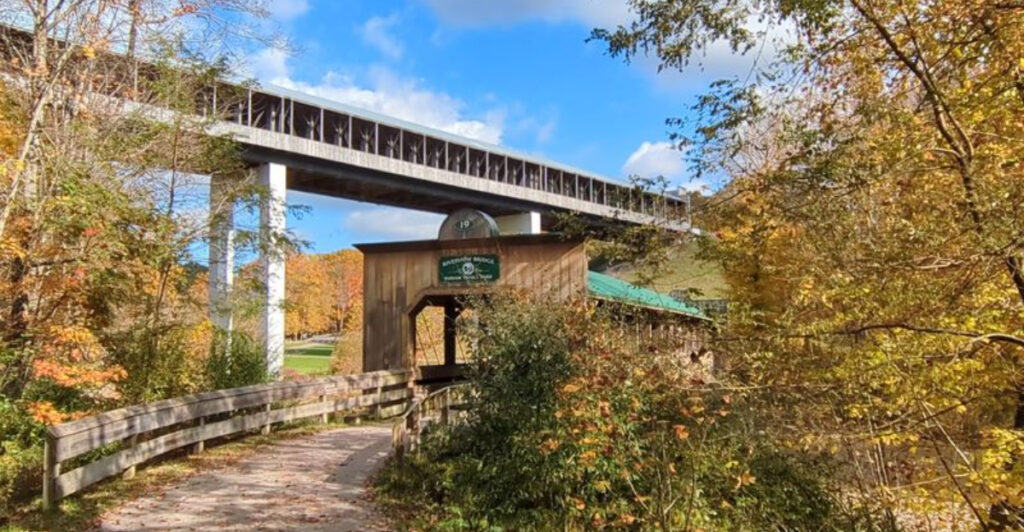
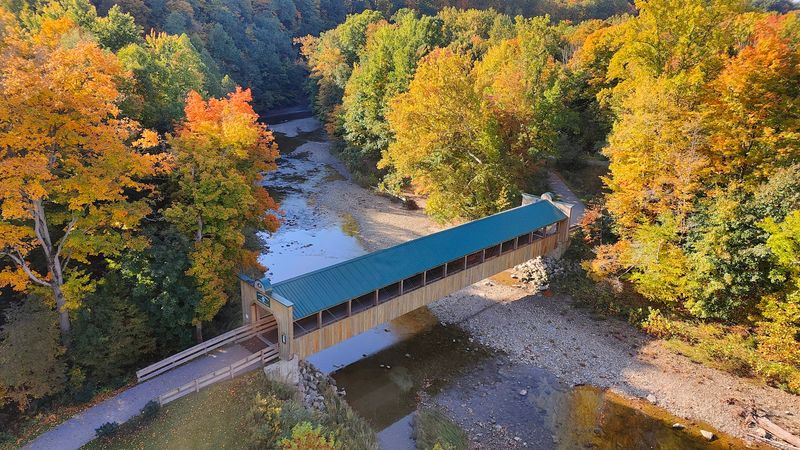
One of the best surprises at this site is that you do not just get one covered bridge. A second, smaller covered bridge sits below the main structure, accessible by a walking trail that leads down to the river level.
The lower bridge is reserved for pedestrians and horses only, which gives it a quieter, more intimate feel compared to the vehicle traffic crossing above. The shallow creek below is clear enough to wade through during warmer months, and families often make an afternoon out of exploring both bridges and the surrounding natural area.
Standing on the lower bridge and looking up at the 613-foot span overhead is one of those views that genuinely earns a spot in your camera roll. The contrast between the two structures, one massive and modern in scale, the other small and classic in feel, creates a scene that is hard to find anywhere else in the country.
What the River Gorge Looks Like From Up Top
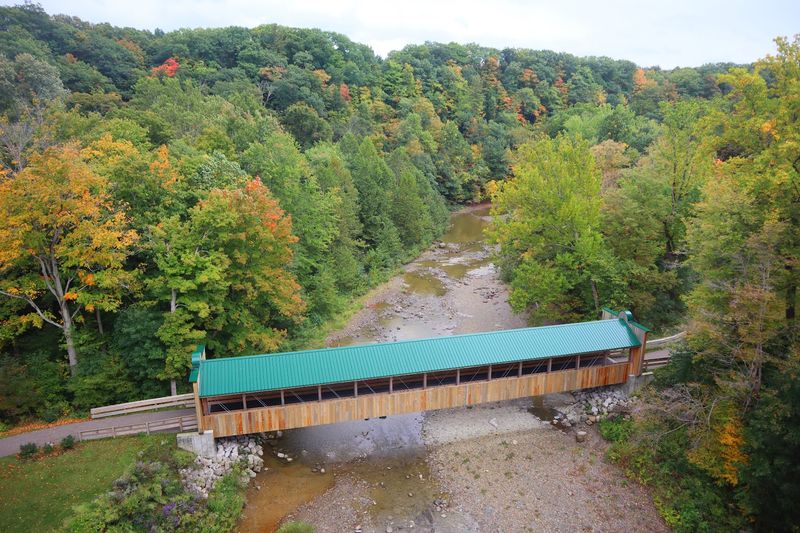
The Ashtabula River gorge is the real backdrop of this entire experience, and the view from the bridge does it full justice.
Looking out from the pedestrian walkway on either side of the main bridge, you get a clear sightline down into the gorge, where the river moves slowly over smooth rocks and the tree canopy stretches out in every direction. In summer, the green is almost overwhelming in the best way.
The water below is shallow enough in most spots that you can see the riverbed clearly, and on a calm day the reflection of the trees on the water surface adds another layer of visual interest.
The gorge also creates a natural wind tunnel through the bridge, so even on warm days there is usually a pleasant breeze moving through. That combination of scenery and cool air makes the walk across the bridge feel refreshing rather than just picturesque.
Fall Foliage at the Bridge Is Absolutely Unmatched
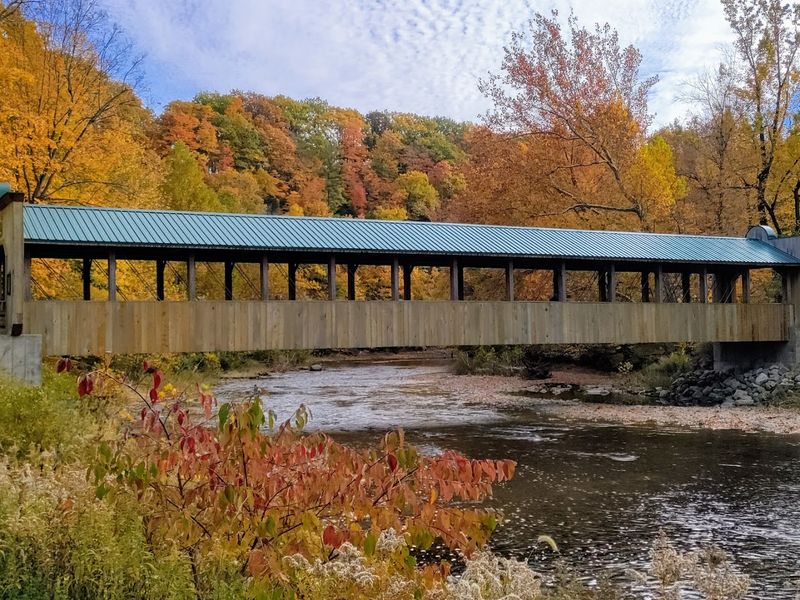
If there is one time of year that makes this bridge look like it belongs on a postcard, it is October. The hills surrounding the Ashtabula River gorge turn into a patchwork of orange, red, and gold that frames the bridge from every angle.
The scenic overlook near the parking area becomes a prime spot for photographers during peak foliage season, and the informational pavilion nearby gives you context about the area while you wait for the perfect light.
I visited in late October and the colors were genuinely outstanding. The contrast between the warm wooden tones of the bridge and the blazing autumn leaves around it creates a visual combination that feels almost too good to be real.
The area was well-maintained and not overly crowded on a weekday morning, which made the whole experience feel personal rather than touristy. Autumn here is not just a season, it is a full sensory event.
Visiting After Dark for a Completely Different Experience
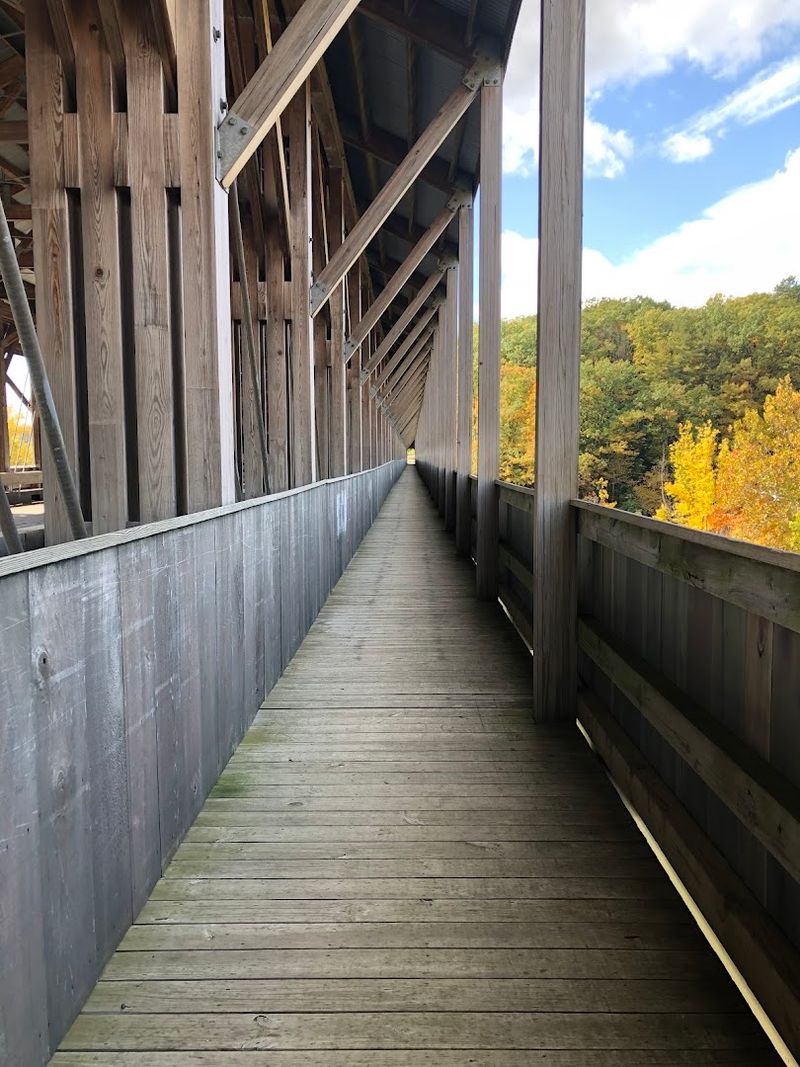
The bridge is open 24 hours a day, every day of the week, which opens up a side of this destination that most casual visitors never think to explore.
At night, the rural location means very little light pollution, and the sky above the gorge becomes its own attraction. The quiet is striking after dark.
There is no background city noise, just the sound of the river below and whatever wind moves through the trees. The bridge itself takes on a completely different character in low light, with the wooden structure casting long shadows and the gorge below disappearing into darkness.
I would recommend visiting during a clear night in late summer or early fall when the temperature is comfortable and the stars are sharp. Bring a flashlight for the lower trail if you plan to walk down to the river.
The nighttime sky viewing here is genuinely one of the more underrated perks of this location.
Trails, Walks, and Ways to Explore the Surrounding Area
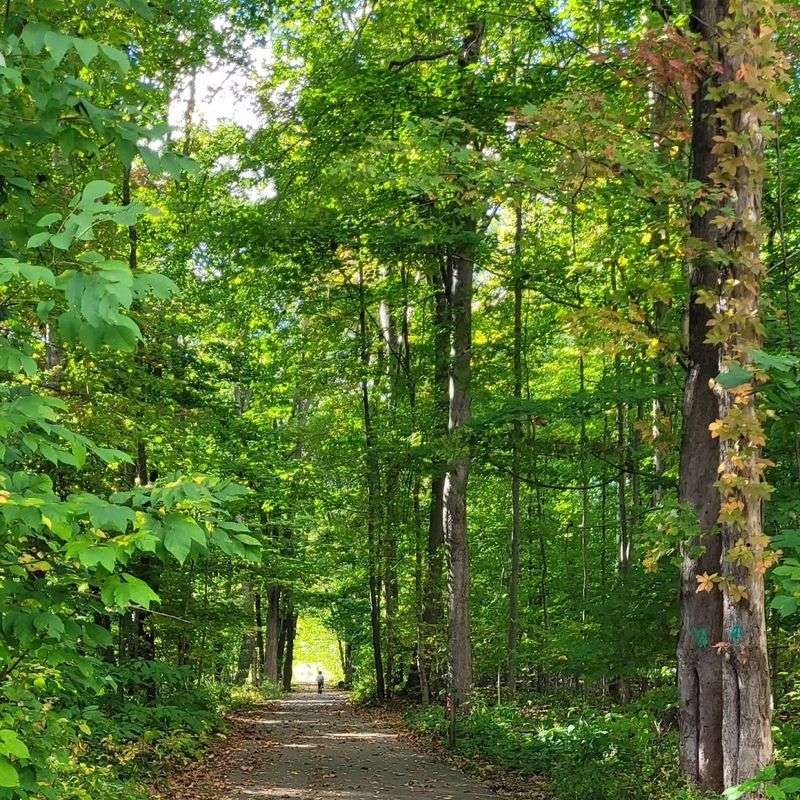
Beyond the bridge itself, the surrounding area offers enough to fill a solid half-day of outdoor exploration without requiring any special gear or fitness level.
The trail down to the lower bridge is short and manageable for most visitors, though it does involve a descent into the gorge, so comfortable shoes are a good idea. Along the trail, the river is visible through the trees, and in warmer months the sound of moving water follows you the whole way down.
The shallow sections of the creek are popular for wading, and families with kids tend to spend extra time at the water’s edge.
The area around the parking lot and pavilion is flat and easy to walk, making it accessible for visitors who prefer to stay on level ground. There is no admission fee to park or explore the area, which makes this one of the most low-barrier outdoor destinations in northeast Ohio.
The Informational Pavilion and What You Can Learn There
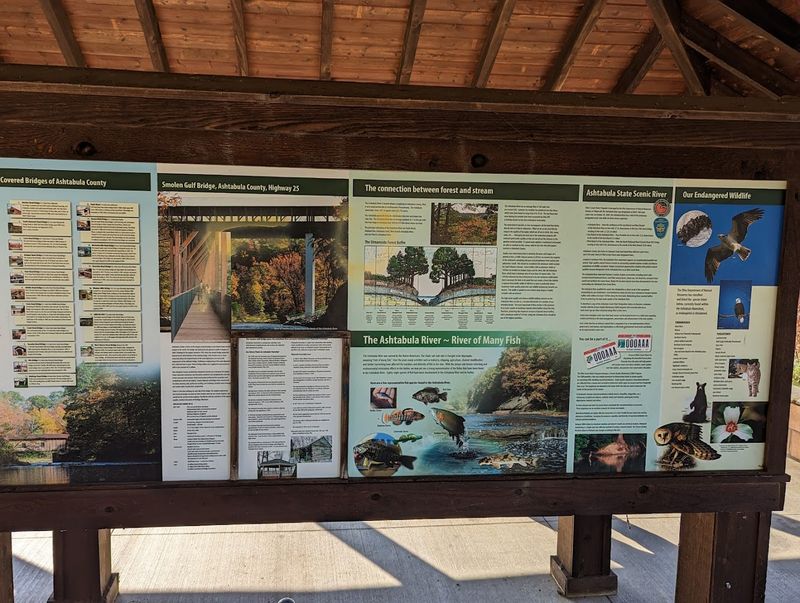
Near the main parking area, a covered informational pavilion gives visitors a quick education on the covered bridge history of Ashtabula County, and it is worth a few minutes of your time before or after crossing the bridge.
The displays explain the construction methods, the history of covered bridges in Ohio, and the significance of the 18 bridges that remain in Ashtabula County today. For anyone who came across this bridge by accident while passing through, the pavilion often turns a quick stop into a longer visit.
It is also a useful planning tool if you want to turn your trip into a full covered bridge tour of the county. Each bridge has its own character and setting, and the pavilion gives you enough information to map out a route.
The fact that all 18 are considered worth a stop says a lot about just how rich this particular corner of Ohio really is.
Why This Bridge Belongs on Your Ohio Road Trip List
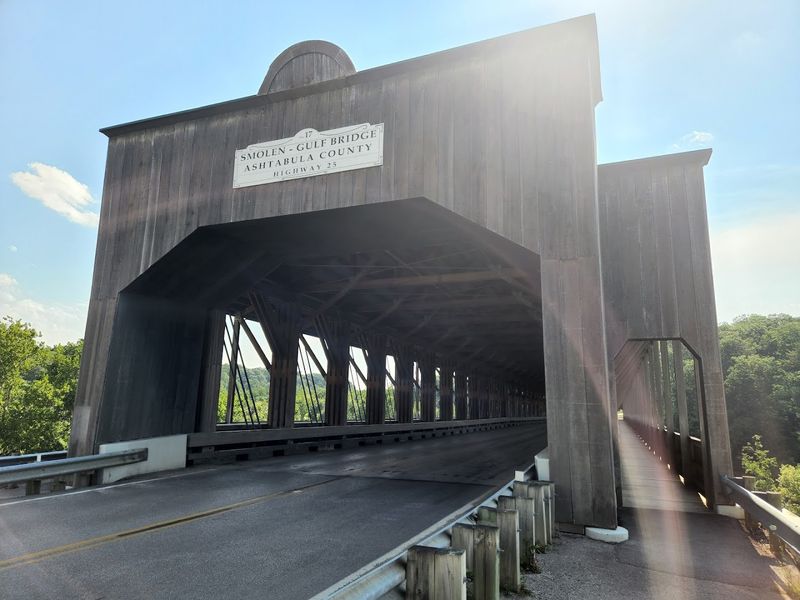
A road trip through northeast Ohio that skips this bridge is genuinely missing one of the region’s most distinctive stops, and the fact that it costs nothing to visit makes the case even stronger.
The combination of record-breaking size, natural scenery, a second bonus bridge, accessible trails, and year-round availability puts this destination in a category that very few free attractions can match. It works equally well as a planned destination or a spontaneous detour, and it appeals to a wide range of visitors, from history enthusiasts to families looking for a scenic afternoon outdoors.
Ashtabula County itself has more covered bridges than most people realize, and this one serves as the perfect anchor for a longer self-guided tour of the area. Once you cross the longest covered bridge in America on foot, with the river gorge stretching below you and the wooden beams framing the sky above, you will understand exactly why people keep coming back.
Share this story