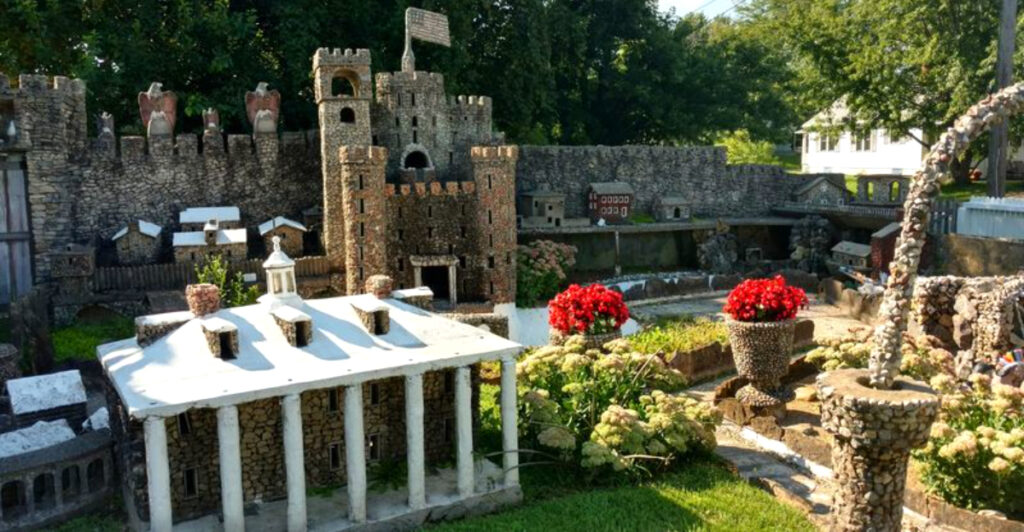
There is a backyard in Springfield, Ohio, where one man spent over a decade turning ordinary stones into something extraordinary. Ben Hartman, a machinist by trade, used roughly 250,000 rocks and concrete pieces to build miniature castles, historical landmarks, religious scenes, and Depression-era pop culture tributes, all by hand.
What makes this place so compelling is not just the sheer volume of work, but the fact that he did it while battling serious illness. The garden sits quietly on a residential street, and most people driving past have no idea what is tucked behind that fence.
Once you walk through, though, the scale of one man’s dedication hits you in a way that is hard to shake. Keep reading to find out what makes this folk art landmark one of Ohio’s most genuinely surprising places to visit.
The Man Behind the Masterpiece
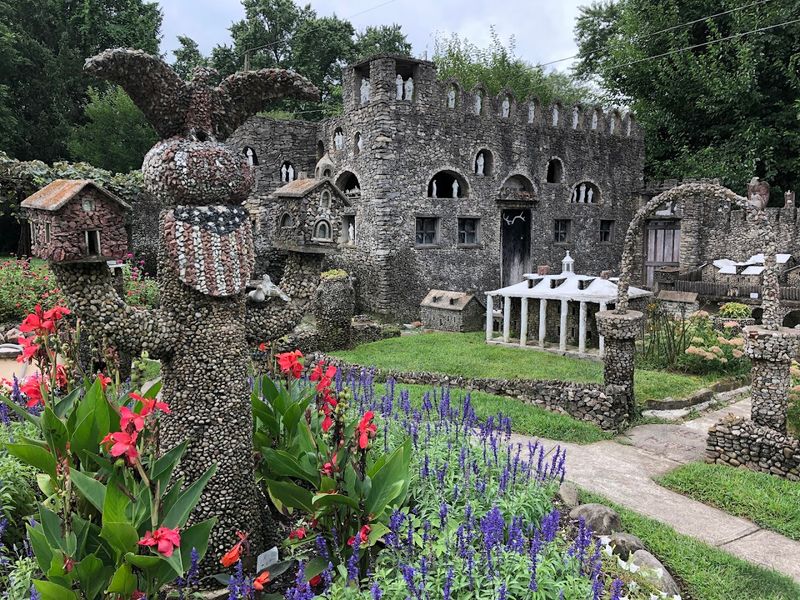
Ben Hartman was not a trained artist, an architect, or a sculptor. He was a machinist from Springfield, Ohio, who picked up his first rock in 1932 and did not stop building until 1944.
What drove him to create an entire folk art garden in his backyard is part of what makes his story so compelling. Hartman was dealing with serious health struggles during those years, and the garden became both his creative outlet and his legacy project.
He worked with what he had, using stones, concrete, and found materials to construct detailed miniature scenes that reflected his personal interests, his faith, and the cultural touchstones of the Depression era.
The result was not just a hobby project. It became one of the most detailed and emotionally resonant pieces of folk art in the entire Midwest, built entirely by one determined man.
Finding the Garden on Russell Avenue
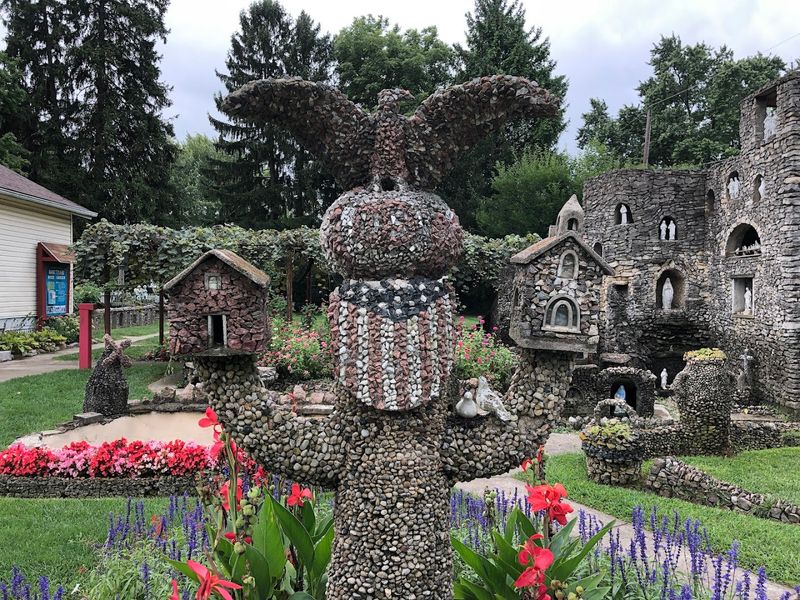
The address is 1905 Russell Ave, Springfield, OH 45506, and the first thing you notice when you arrive is how ordinary the street looks.
Houses line both sides of a calm neighborhood road, and there is nothing dramatic about the exterior that hints at what is waiting in the back. Street parking is available right out front, and from the curb, it genuinely looks like you might be at the wrong place.
That moment of doubt is actually part of the experience. Once you walk around back and the garden opens up in front of you, the contrast between the quiet neighborhood setting and the elaborate stone world inside is genuinely startling.
The garden is open daily from 8 AM to 8 PM, admission is completely free, and a donation box near the entrance gives visitors a way to support ongoing preservation efforts.
250,000 Stones and Counting
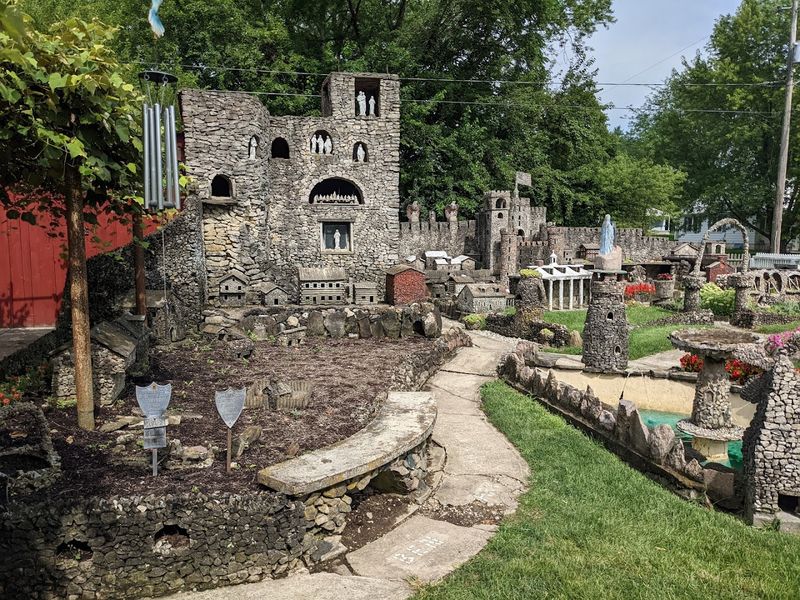
The number alone is enough to make you stop and think. Over 250,000 individual stones and concrete pieces went into building this garden, and every single one was placed by Ben Hartman himself.
There were no crews, no contractors, and no heavy equipment. Just one man, his hands, and an extraordinary amount of patience and vision.
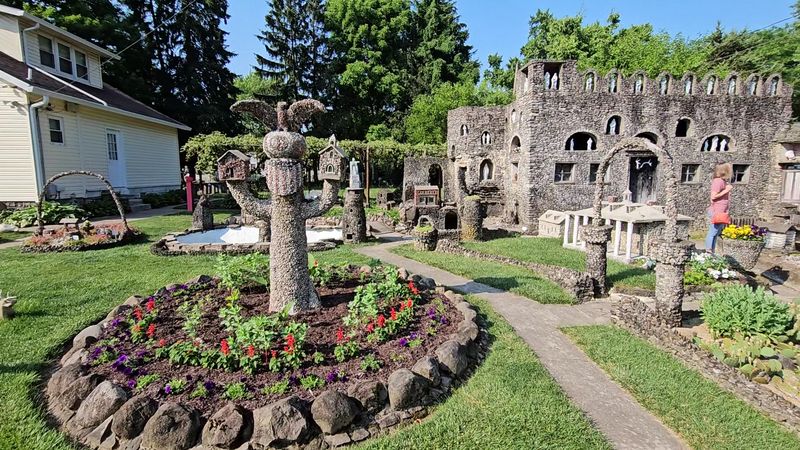
The structures range from small decorative figures to large castle-like buildings that tower over a visitor’s head.
Walking through the garden, you start to appreciate the physical effort involved. Each stone had to be sourced, carried, shaped if necessary, and set in place with enough precision to hold together decades later.
The fact that so many of the structures are still standing, still detailed, and still recognizable after more than 80 years of Ohio weather is a testament to how carefully and deliberately Hartman approached every single piece.
Miniature Castles That Stop You in Your Tracks
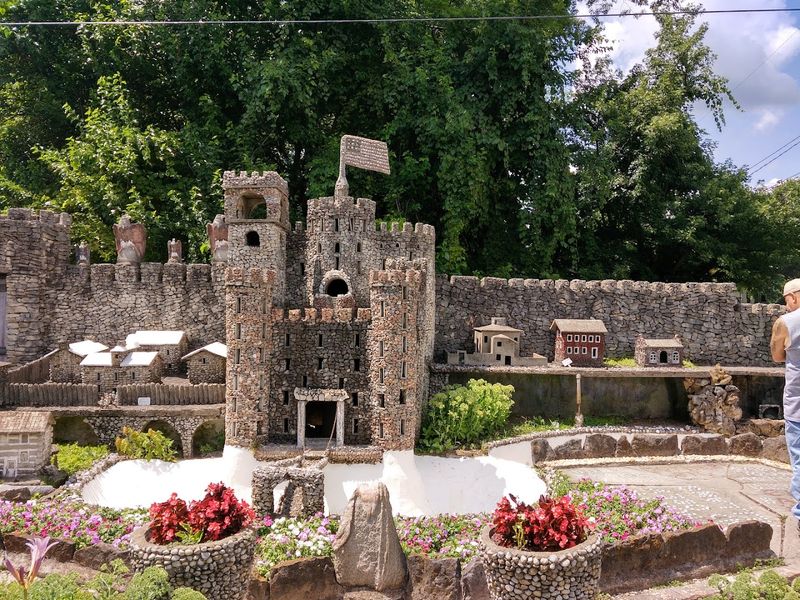
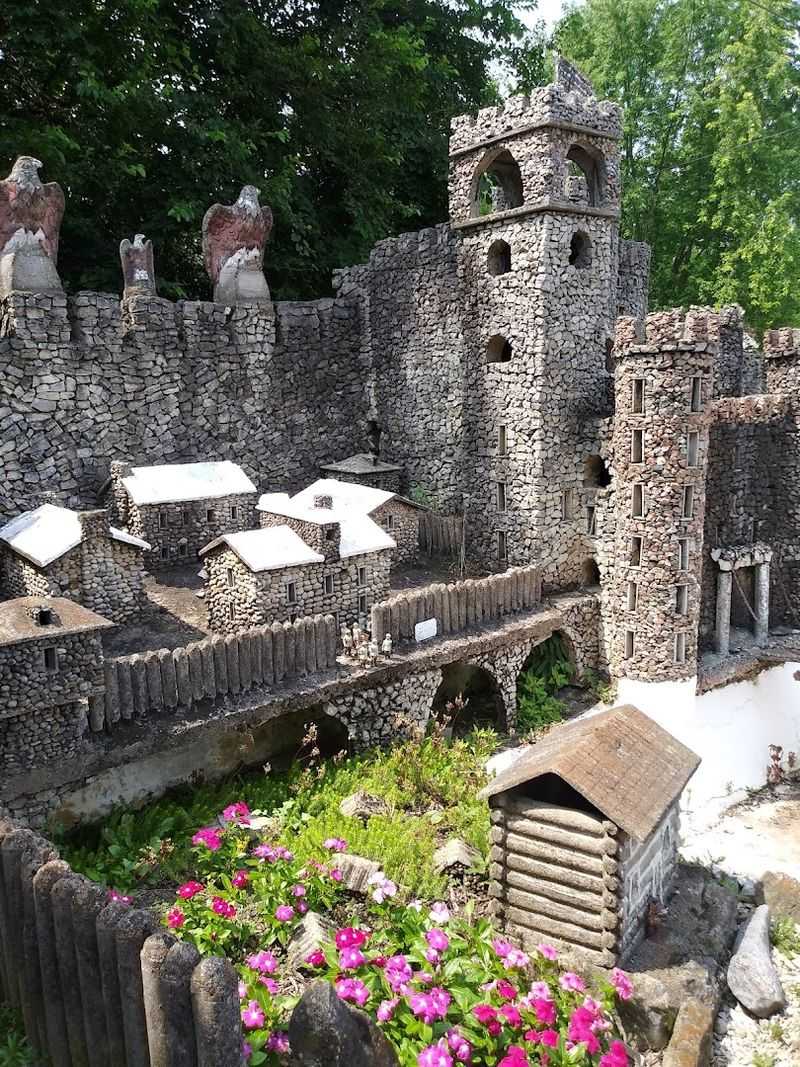
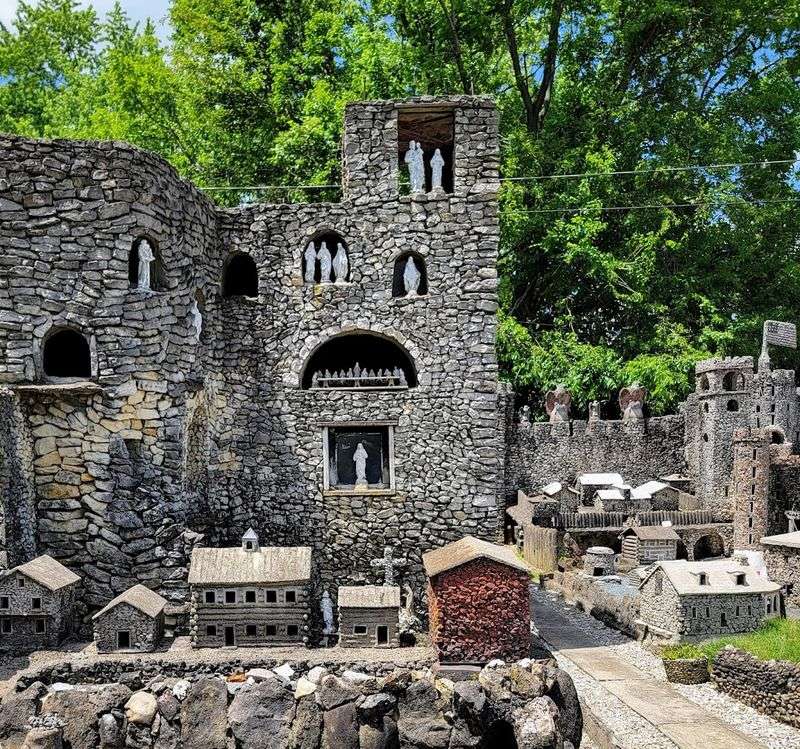
The castles at Hartman Rock Garden are the first things that tend to grab people’s attention, and for good reason. They are impressively large for structures built entirely by one person working alone in a residential backyard.
Hartman constructed these castle-style buildings with real architectural detail, including towers, archways, and textured stone walls that give them a surprisingly convincing three-dimensional presence. Standing next to one and realizing it was built without any professional tools or formal training is a genuinely humbling moment.
The craftsmanship is not rough or haphazard. There is a clear sense of planning and care in the way each stone was selected and placed.
These structures also hold up remarkably well to close inspection. The closer you get, the more detail you find, which is the kind of quality that separates truly skilled folk art from a casual weekend project.
Historical Scenes Recreated in Rock
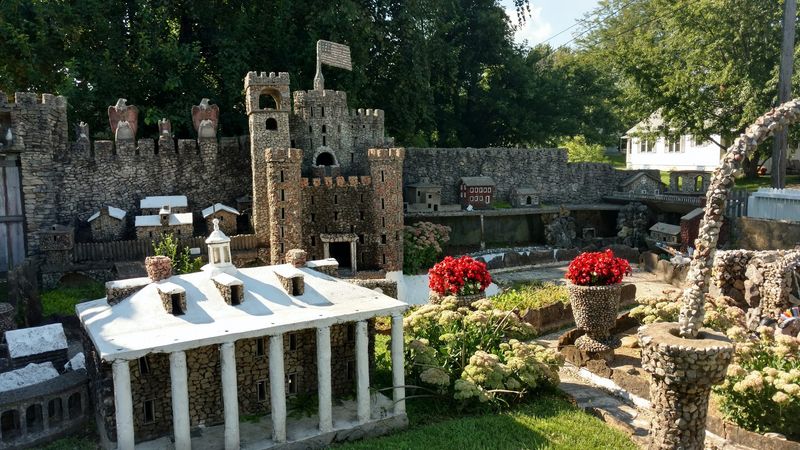
One of the most fascinating aspects of the garden is how Hartman used his rock-building skills to recreate famous historical landmarks and scenes. Representations of the Lincoln Tomb and the White House are among the recognizable subjects he chose to honor.
These are not abstract interpretations. Hartman clearly studied his subjects and worked to capture specific architectural details within the constraints of his materials and the scale of his backyard.
The Lincoln Tomb recreation, in particular, carries a quiet weight to it. Knowing that Hartman built it by hand during the Depression, when many Americans were struggling and looking to history for inspiration, adds a layer of meaning that goes beyond the physical craft.
Each historical scene in the garden functions as a small window into what mattered to Hartman personally, turning the entire space into something closer to an autobiography written in stone.
Noah’s Ark and the Religious Themes
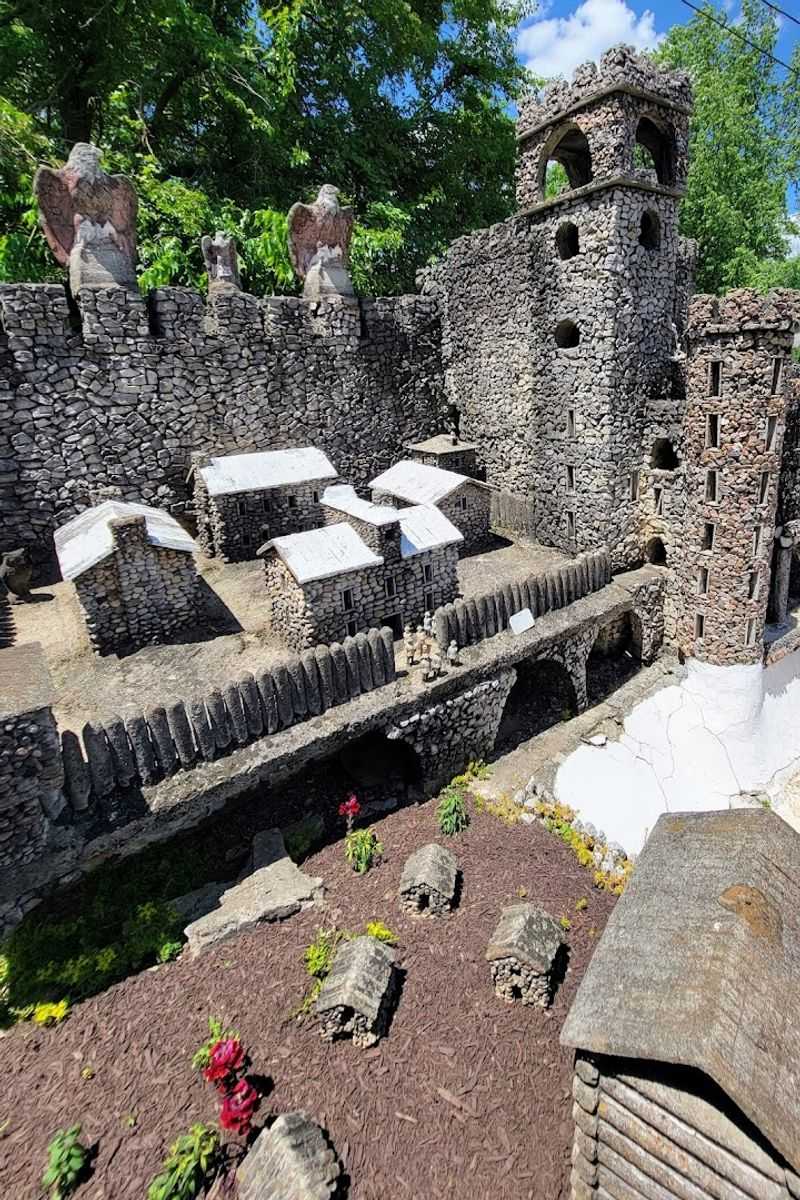
Faith clearly played a central role in Ben Hartman’s life, and that comes through unmistakably in the garden’s religious sections. The Noah’s Ark display is one of the most talked-about features among visitors, combining storytelling with Hartman’s signature rock-building technique.
The level of narrative detail packed into these religious scenes is impressive. Hartman did not just build a generic ark shape.
He created a scene with figures and context that tells the biblical story in a way that feels personal and sincere rather than decorative.
There are other religious references scattered throughout the garden as well, woven naturally into the overall layout rather than grouped into one separate section.
For many visitors, these faith-based displays add an emotional dimension to the experience that purely aesthetic folk art sometimes lacks. They remind you that Hartman was not just building structures.
He was expressing what he believed in, one rock at a time.
Depression Era Pop Culture in Stone
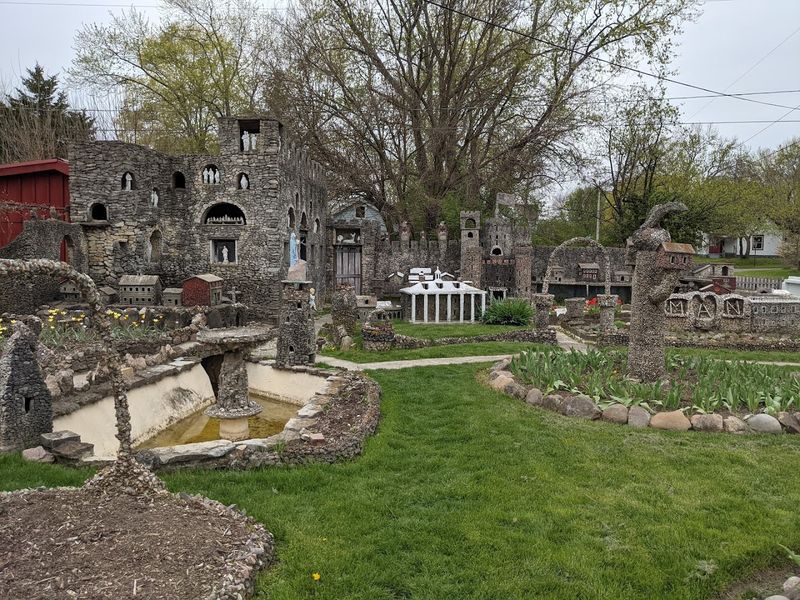
Not everything in the garden is solemn or historical. Hartman also captured the lighter side of 1930s American culture, incorporating pop culture references from the Depression era into his stone creations.
These sections give the garden a playful energy that balances the more serious historical and religious displays. Seeing familiar cultural touchstones from nearly a century ago rendered in rock and concrete is both charming and a little surreal.
It also reveals something important about Hartman as a person. He had a sense of humor and a genuine interest in the world around him, not just in grand historical or spiritual themes.
For visitors who enjoy the quirky side of roadside Americana, these pop culture sections are often the unexpected highlight of the tour. They show that folk art at its best is never just about technique.
It is about personality, and Hartman had plenty of it.
A Self-Guided Tour That Rewards Slow Walkers
The garden operates as a self-guided experience, which means you set your own pace and follow your own curiosity rather than keeping up with a group.
Some visitors move through in about 10 to 15 minutes, taking in the big picture and snapping a few photos. Others spend a full hour or more, crouching down to examine individual stones and tracing the details of each scene with their eyes.
The slower you go, the more you get out of it. Small figures, embedded objects, and carefully placed decorative elements reward the visitors who take their time and look closely.
Printed brochures are available on-site and include interactive elements designed specifically for kids, turning the walk into a mini scavenger hunt that keeps younger visitors engaged from start to finish. It is a genuinely well-designed experience for all ages and attention spans.
Free to Visit, Priceless to Experience
There is no ticket booth, no entrance fee, and no reservation required to visit the garden. It is completely free and open to the public every day of the week from 8 AM to 8 PM.
That combination of zero cost and generous hours makes it one of the most accessible cultural attractions in the Springfield area. Whether you have a full afternoon to spend or just 20 minutes between other plans, the garden fits into almost any schedule.
A donation box near the entrance gives visitors a simple and voluntary way to contribute to the ongoing preservation of the site. The garden requires regular maintenance to hold up against Ohio’s seasonal weather, and those donations go directly toward keeping Hartman’s work intact for future visitors.
Leaving a few dollars behind is a small gesture that carries real impact, and most visitors who have been moved by what they saw are happy to contribute.
The Preservation Story Behind the Garden
Ben Hartman completed the garden in 1944, but the story did not end there. Keeping a structure made of rocks, concrete, and found materials intact through decades of freeze-thaw cycles and Ohio weather is no small task.
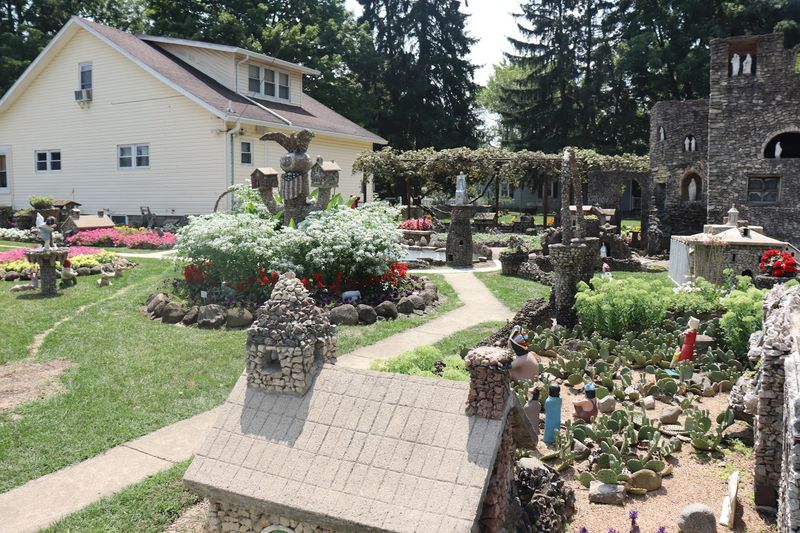
A dedicated group of volunteers and preservationists has worked over the years to restore and maintain the garden, ensuring that Hartman’s vision survives for generations who never got the chance to meet him. The work is ongoing and requires both physical effort and financial support.
The garden was eventually listed on the National Register of Historic Places, which brought greater attention and resources to the preservation effort. That recognition also helped establish the site as a legitimate piece of American folk art history rather than just a local curiosity.
Seeing the community rally around one man’s backyard creation, decades after he built it, says something genuinely moving about how art outlasts the artist.
Perfect for Families and Curious Kids
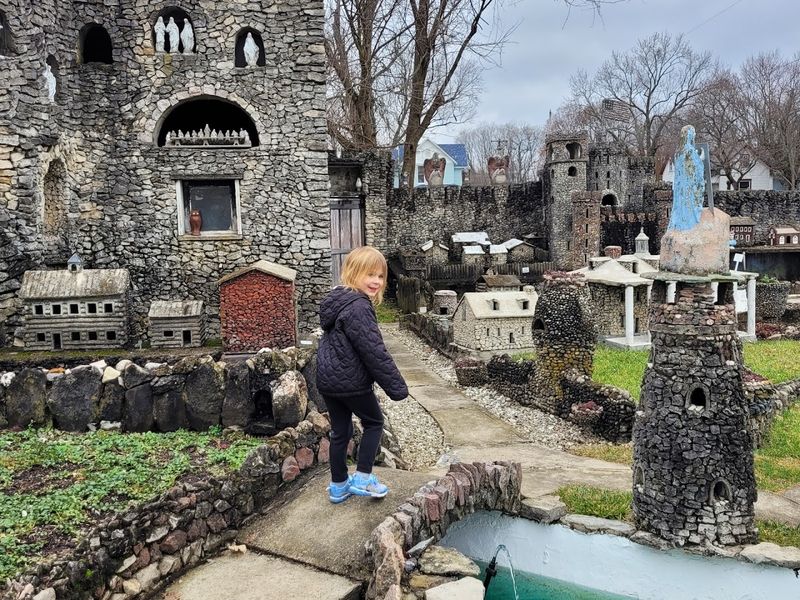
Kids tend to respond to the garden in a very specific way. The miniature scale of many structures triggers the same instinct that makes dollhouses and model trains so captivating, and the variety of scenes means there is always something new to spot around the next corner.
The scavenger hunt brochure available on-site turns the visit into an active game rather than a passive walk, which makes a real difference for younger children who need something to do with their hands and their attention.
Parents often find themselves just as absorbed as their kids, especially when they start reading about the history behind each display and realizing how much thought went into every section.
The garden is entirely outdoors and easy to navigate, with no barriers or roped-off areas that keep visitors at a frustrating distance from the art. You can get close, look carefully, and really take it all in.
Why This Garden Still Matters Today
Folk art often gets treated as a lesser category, something charming but not quite serious. Hartman Rock Garden pushes back against that idea every single day it is open.
What Hartman built was not just decorative. It was a full artistic statement created under difficult personal circumstances, using unconventional materials, with no institutional support or formal training.
That combination of factors is exactly what makes it worth paying attention to.
The garden also functions as a time capsule. The scenes Hartman chose to recreate, the historical figures he admired, and the cultural moments he captured in stone all reflect a specific moment in American history that feels both distant and surprisingly familiar.
Visiting it today is a reminder that extraordinary things can come from ordinary places, and that one person’s quiet, persistent effort can create something that outlasts them by nearly a century and counting.
Share this story