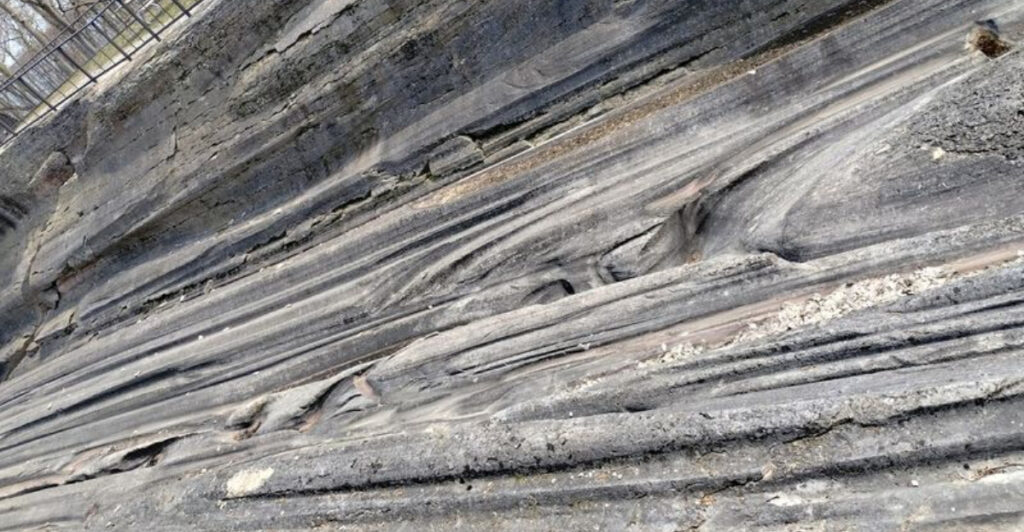
Buried beneath the surface of Lake Erie sits a small island holding one of the most jaw-dropping geological features in the entire country. About 18,000 years ago, a massive glacier crept across the land, dragging enormous boulders with it and carving deep, parallel channels into solid limestone bedrock.
What remains today is a stretch of grooves so large, so precise, and so well-preserved that geologists consider it among the finest examples of glacial erosion on Earth. Getting there requires a ferry ride, but once you see these ancient scars in the rock up close, you will completely understand why people call this place unforgettable.
What the Glacial Grooves Actually Are
Most people hear the words “glacial grooves” and picture something small, like a scratch on a rock. These grooves are nothing like that.
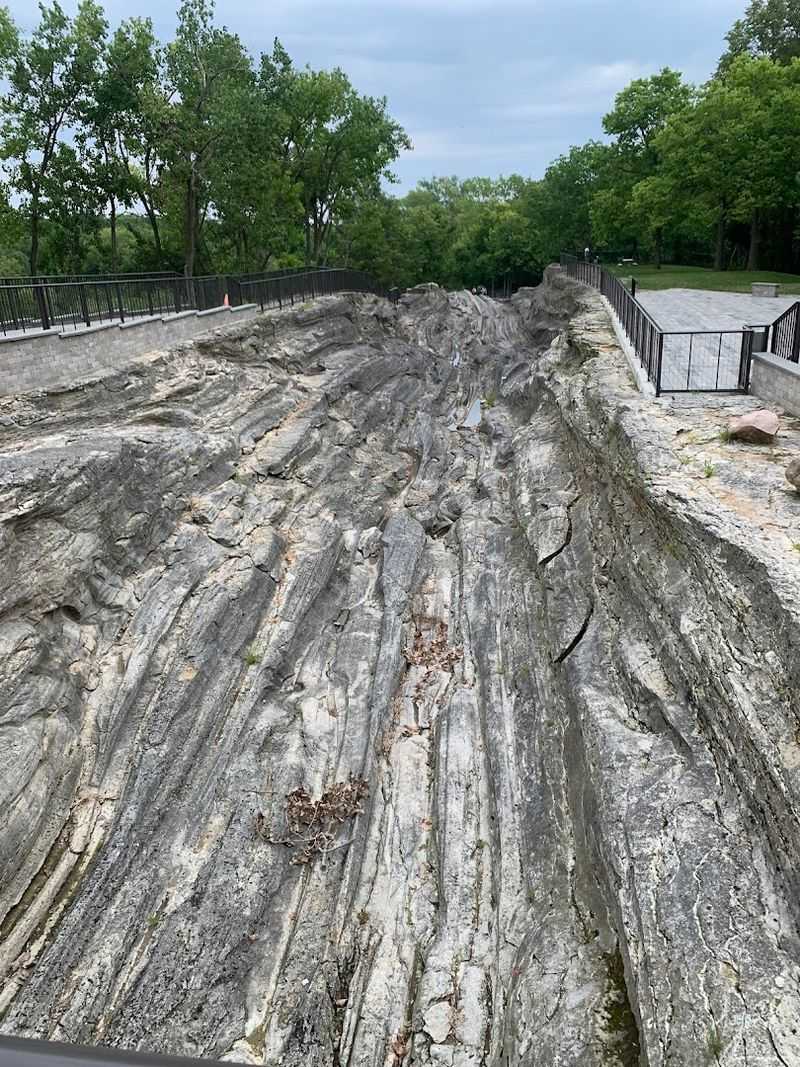
At Kelleys Island, the channels carved into the limestone bedrock run nearly 400 feet long, up to 35 feet wide, and as deep as 10 feet in places.
A glacier carrying boulders frozen into its base acted like a giant sanding machine moving across the landscape. The weight and pressure were immense, and the rock simply had no choice but to give way.
What you see today is the direct result of that slow, grinding force.
The Glacial Grooves State Memorial at 739 Division St, Kelleys Island, OH 43438, protects this extraordinary site within a well-maintained preserve open to visitors daily. No other publicly accessible site in the world displays glacial grooves of this scale so clearly.
How a Glacier Could Carve Through Solid Rock
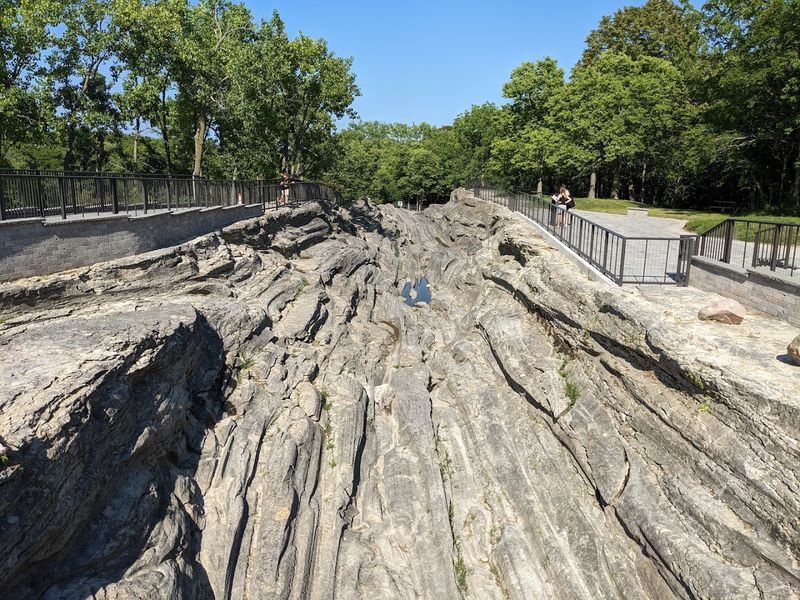
One of the first questions most visitors ask is simple: how does ice cut through rock? The answer is surprisingly straightforward once you think about the scale involved.
The Laurentide Ice Sheet that covered this region was thousands of feet thick, pressing down with unimaginable weight.
Rocks and boulders frozen into the glacier’s base became dragged along like teeth on a grindstone. Over thousands of years, those embedded stones ground steadily through the limestone, creating the parallel channels visible today.
The grooves run in a consistent north-to-south direction, which tells geologists exactly which way the glacier was flowing when it passed through.
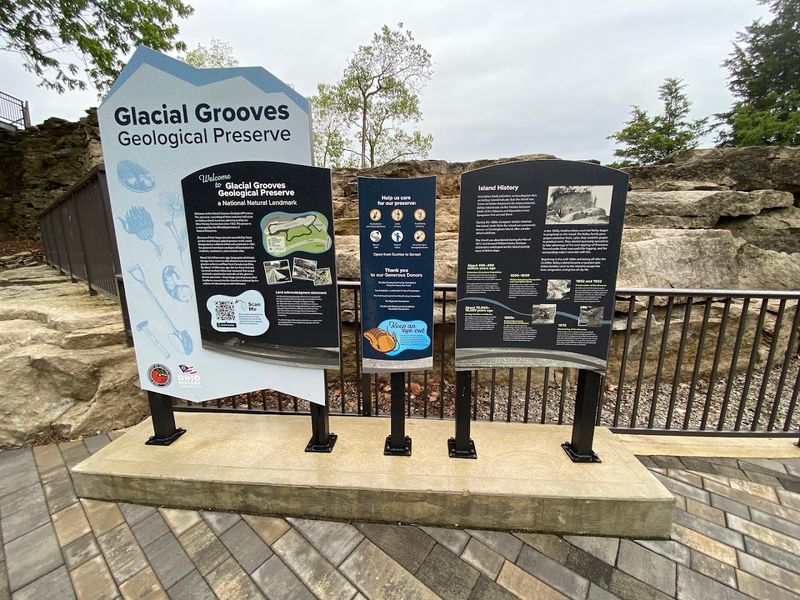
Reading the informational plaques around the site makes this process easy to understand, even for younger visitors. The displays translate complex geology into clear, visual explanations that genuinely bring the science to life without overwhelming anyone who is not a geologist.
The Sheer Size of What Remains
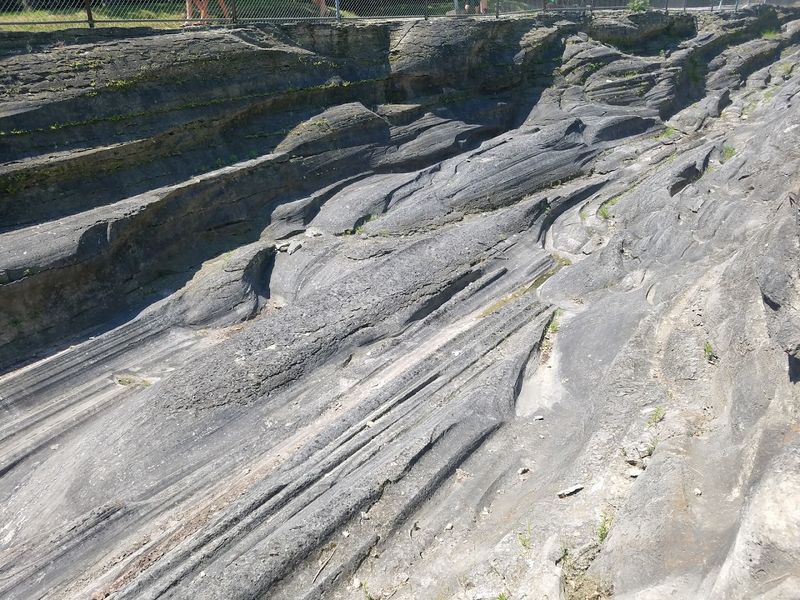
Standing at the edge of the viewing walkway and looking down into those channels genuinely shifts your sense of scale. The grooves are not subtle.
They are bold, dramatic, and surprisingly deep, making it immediately clear that whatever carved them was operating on a completely different level than anything in everyday experience.
What makes the size even more impressive is knowing that most of the original groove field was lost to limestone quarrying operations in the 1800s. The section preserved today represents only a portion of what once existed across this part of the island.
Even so, what remains is still considered the largest accessible glacial groove formation in the world.
Visitors frequently mention being caught off guard by how much bigger the grooves look in person than in photographs. That gap between expectation and reality is part of what makes the first visit so memorable.
Fossils Hiding in Plain Sight
The glacial grooves get most of the attention, but the limestone bedrock itself holds another secret that rewards careful observers. Ancient marine fossils are embedded throughout the exposed rock, visible to the naked eye once you know what to look for.
The limestone on Kelleys Island formed hundreds of millions of years ago when this entire region sat beneath a shallow tropical sea. Coral, brachiopods, and other ancient sea creatures left their impressions in the sediment, which eventually hardened into the rock the glacier later carved.
Walking around the site, you can spot these fossil outlines pressed into the same surface that the glacier scraped clean.
The informational signage around the preserve points out where to look and what different fossil shapes mean, turning a geology visit into a bit of a treasure hunt. Kids especially love scanning the rock surface for shapes they can recognize.
The Walkway and Viewing Experience
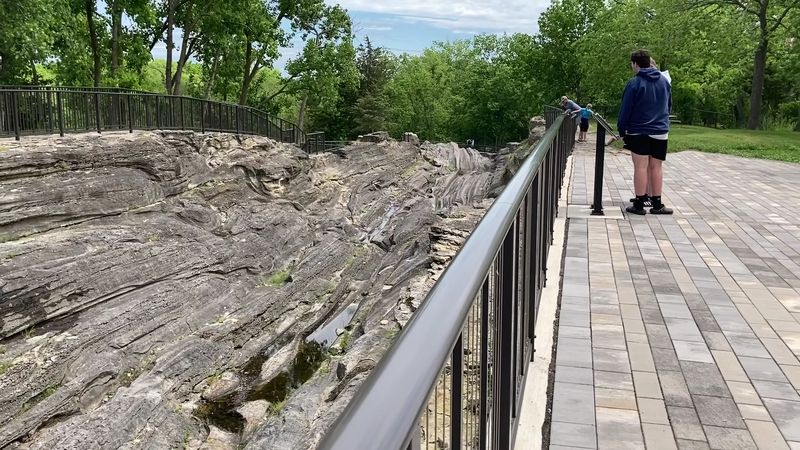
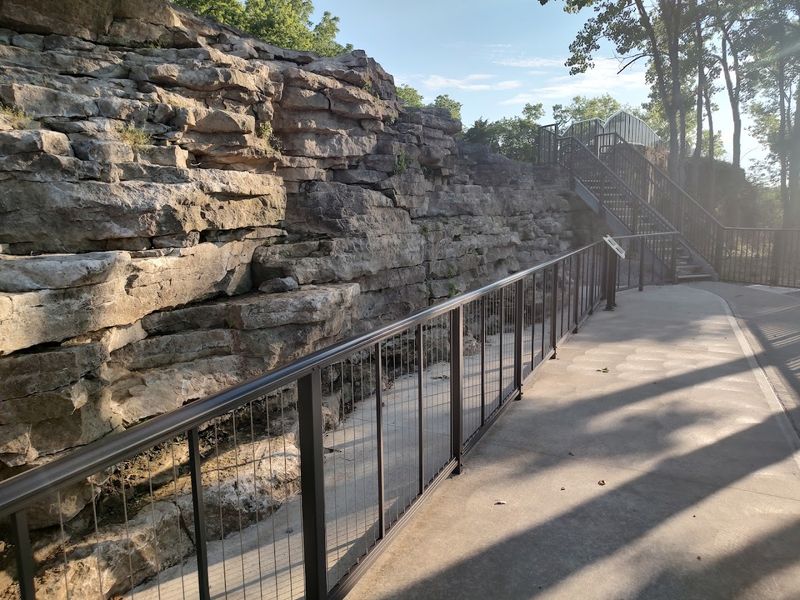
Getting close to the grooves without stepping on them requires a well-designed viewing path, and the one at this site genuinely delivers. The walkway follows the perimeter of the groove field using paved surfaces and sturdy railings, giving visitors multiple angles and elevations from which to appreciate the formation.
Several overlook points along the route offer different perspectives, including views down into the deepest sections of the channels. The path was updated with pavers and improved accessibility features in recent years, making it comfortable for visitors using wheelchairs or strollers.
The layout flows naturally, guiding you around the site without feeling rushed or confusing.
There is something thoughtful about how the walkway was designed to blend with the surrounding landscape rather than dominate it. The natural tree cover nearby keeps the area shaded and quiet, which adds to the reflective mood that most visitors seem to settle into as they walk the path.
No Admission Fee and Free Parking
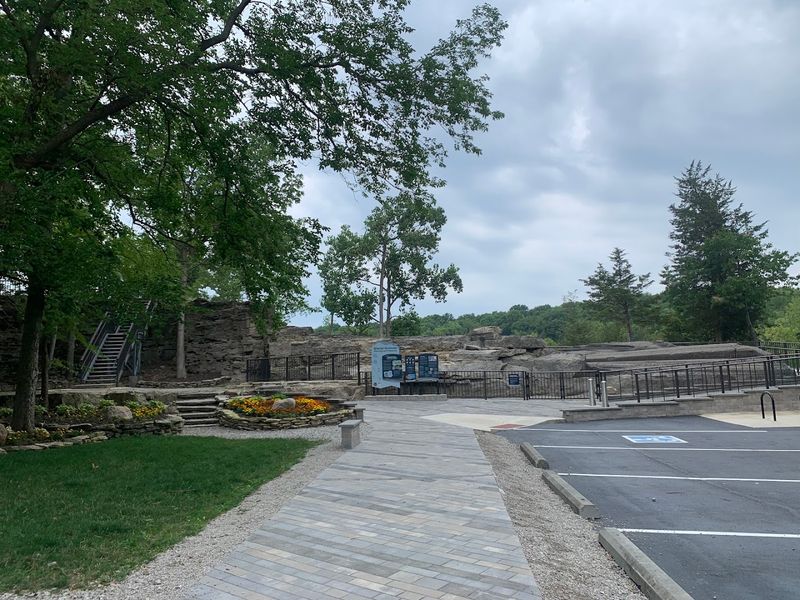
Here is a detail that surprises a lot of people: visiting the Glacial Grooves costs absolutely nothing. There is no admission fee, no ticket booth, and no reservation required.
You simply arrive, park in the free lot, and walk in.
For a site of this geological significance, that open-access policy feels almost too good to be true. Ohio has maintained it as a state memorial, which means the preservation and maintenance costs are covered without passing the burden onto visitors.
The parking area accommodates a reasonable number of cars, though weekend visits during peak season can get busy enough that arriving earlier in the day is a smart move.
The combination of free access and the ferry ride required to reach Kelleys Island creates an interesting dynamic. Getting to the island has a cost, but once you are there, the grooves themselves welcome everyone without asking for anything in return.
Why the Quarry Next Door Changed History
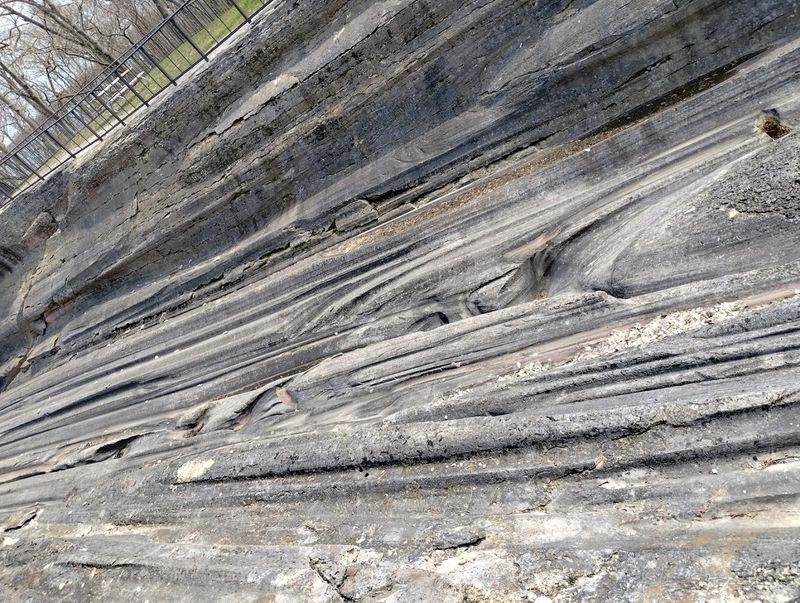
The story of the Glacial Grooves is not just about what survived. It is equally about what was lost.
Limestone quarrying operations on Kelleys Island during the 1800s removed a significant portion of the original groove field before preservation efforts began. The rock was commercially valuable, and at the time, the geological significance of the grooves was not yet fully understood or prioritized.
What remains today exists largely because a portion of the site was recognized and protected before the quarry could reach it. The old quarry is still visible from certain overlook points along the walkway, where the sharp, blasted cliff edges stand in stark contrast to the naturally smoothed limestone of the groove field.
That contrast is sobering in the best way. Seeing both features side by side drives home exactly how close the entire formation came to disappearing, and why ongoing preservation matters so much for geological heritage.
The Connection to the Great Lakes
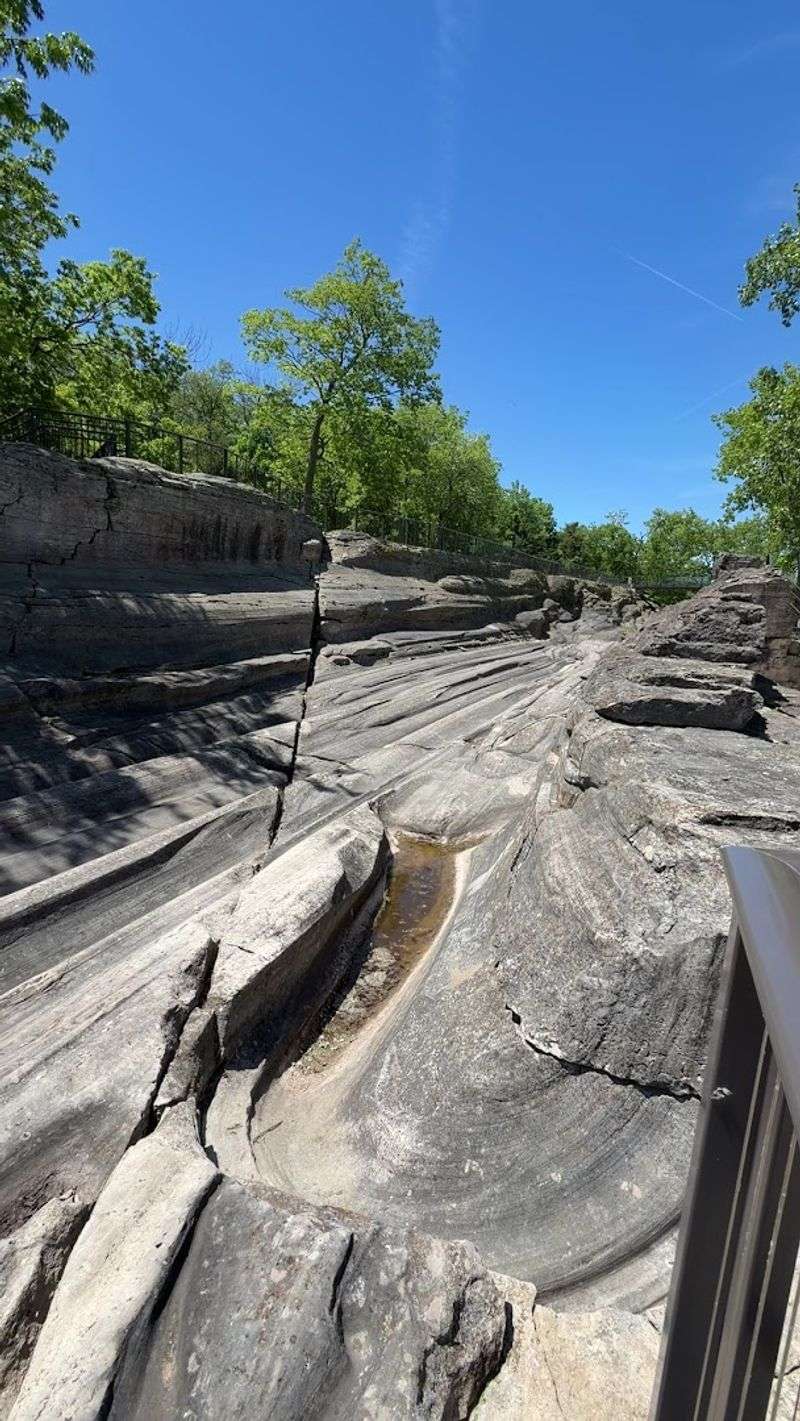
Most people think of Lake Erie as simply a lake, but its origin is directly tied to the same glacial forces that carved the grooves on Kelleys Island. The Laurentide Ice Sheet that passed over this region shaped the entire basin that Lake Erie now fills, gouging out the landscape on a massive scale before eventually retreating northward as temperatures warmed.
Kelleys Island sits right in the middle of that story. The island itself is composed of the same limestone bedrock the glacier scraped across, and the grooves are essentially a freeze-frame of the glacier’s movement captured in stone.
Standing at the site, you are looking at direct physical evidence of the process that created one of the largest freshwater systems on Earth.
That connection gives the grooves a significance that extends well beyond their visual drama. They are not just impressive to look at.
They are part of the geological foundation of the entire Great Lakes region.
Visiting with Kids and Families
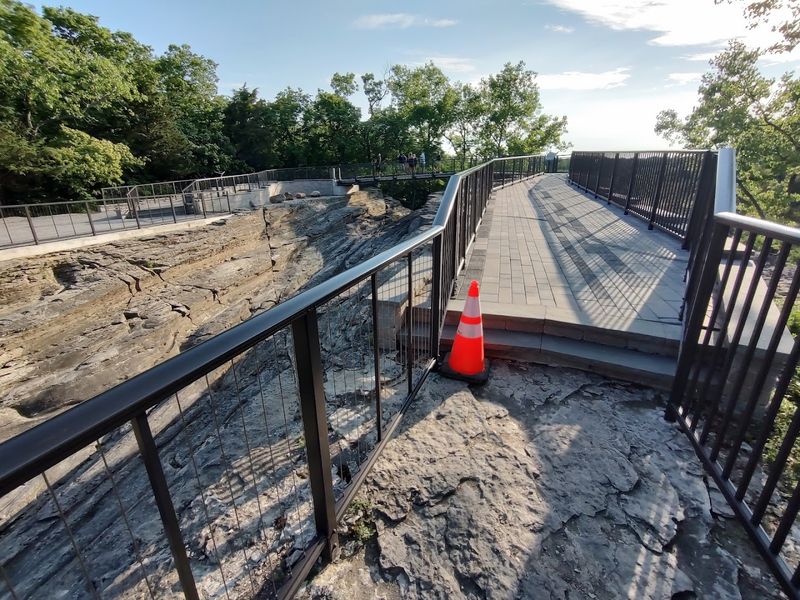
Taking kids to a geology site sounds like it could go either way, but the Glacial Grooves consistently deliver as a family-friendly stop. The visual scale of the grooves does a lot of the work that words cannot.
Children who might tune out a textbook description tend to go quiet and wide-eyed when they see the actual channels carved into the rock right in front of them.
The fossil hunt aspect adds an interactive element that keeps younger visitors engaged beyond just looking at the grooves. Scanning the limestone surface for ancient sea creature impressions gives kids something specific to do and find, which extends the visit naturally.
Parents appreciate that the paved walkway keeps strollers and little legs comfortable throughout.
The entire site moves at a relaxed pace, so families can linger at each overlook without feeling pressure to keep moving. That unhurried quality makes it genuinely enjoyable rather than just educational.
Hiking Trails Near the Preserve
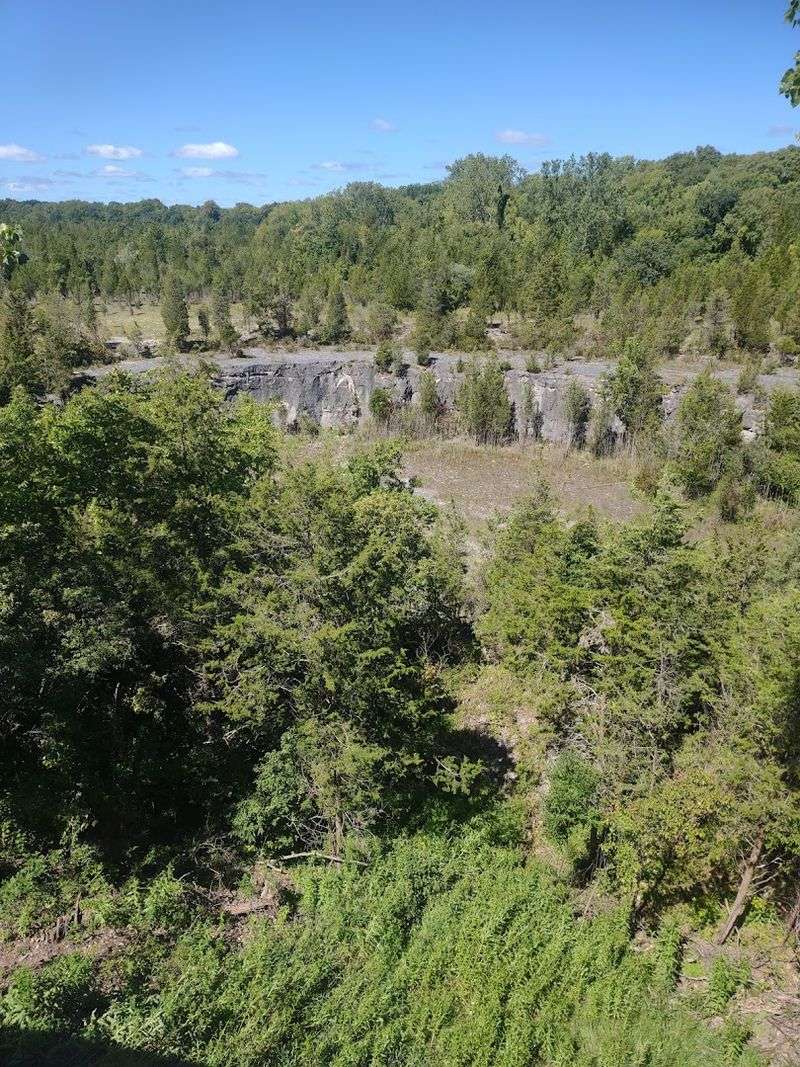
The Glacial Grooves preserve sits alongside additional hiking trails that extend the visit for anyone who wants more time outdoors. A trail near the entrance runs alongside the preserve and dips into a valley area where you can look out over the old quarry from different vantage points.
The terrain shifts noticeably once you leave the paved walkway and move into the more rugged trail sections.
These trails offer a different kind of engagement with the landscape, less structured than the groove viewing path and more exploratory. The wooded sections feel genuinely quiet, especially on weekday visits when crowds are thinner.
Some trail sections bring you close enough to the quarry edge to appreciate just how dramatically the landscape was altered by industrial activity.
Combining the groove viewing area with even a partial trail walk rounds out the experience considerably. The two complement each other well, offering both geological education and straightforward outdoor enjoyment within the same compact area.
Getting to Kelleys Island by Ferry
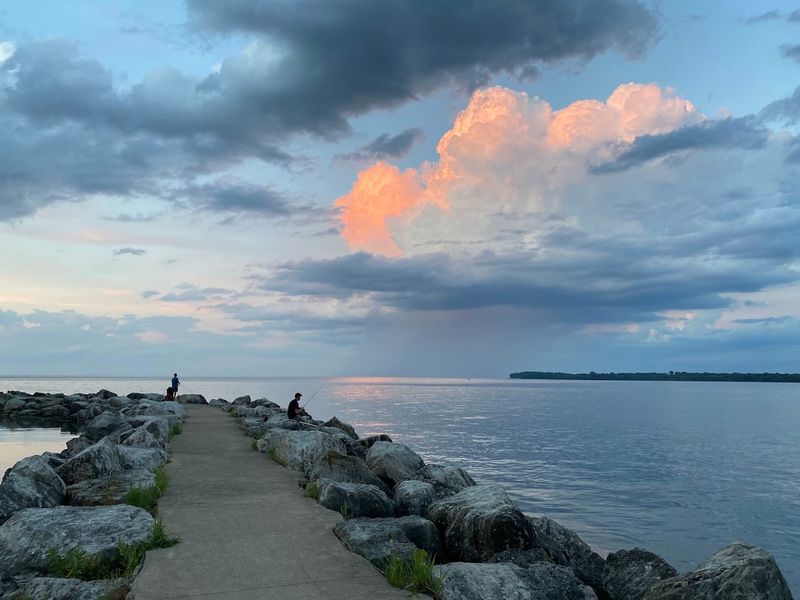
Reaching Kelleys Island requires a ferry crossing, which turns the trip into more of an adventure than a standard drive-to-the-parking-lot visit. The ferry operates between the mainland and the island, carrying both passengers and vehicles, and the crossing gives you a genuine sense of arrival that you simply cannot get at a roadside attraction.
Many visitors choose to leave their cars on the mainland and rent golf carts on the island instead, which is actually the most popular way to get around. The island is small enough that a golf cart covers the main attractions comfortably, and it adds a relaxed, unhurried quality to the whole day.
The Glacial Grooves are within easy reach of the ferry dock by golf cart.
Planning around ferry schedules is the main logistical consideration. Checking departure times before you go keeps the day running smoothly and avoids the scramble of a rushed return trip to the dock.
Best Times to Visit the Site
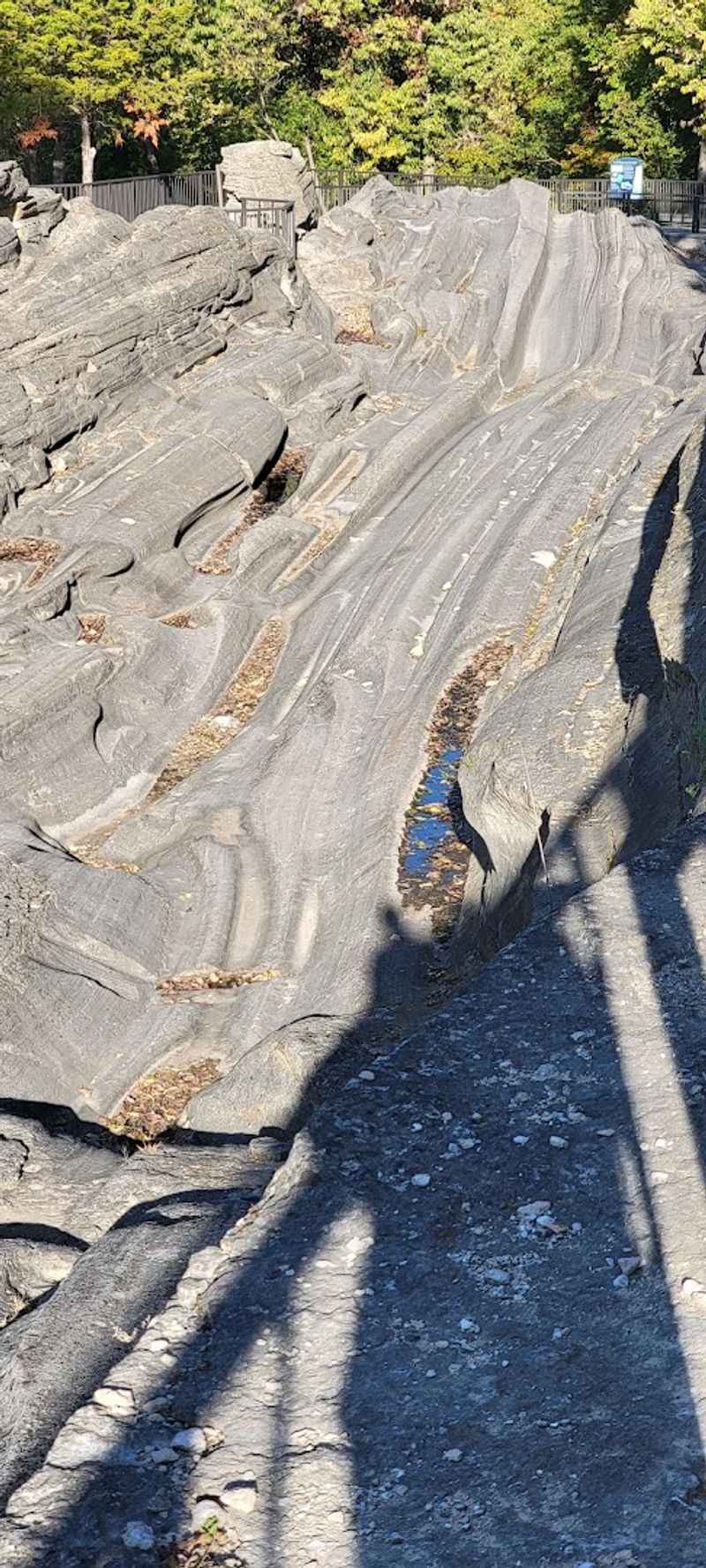
The preserve is open daily from 6:30 AM to 8:45 PM, which gives visitors a wide window to work with. Early mornings offer the most peaceful experience, with soft light falling across the grooves in a way that emphasizes their depth and texture.
The site feels almost meditative at that hour, before the weekend crowds arrive.
Summer weekends draw the largest numbers of visitors to Kelleys Island overall, and the Glacial Grooves reflect that pattern. Arriving mid-morning or later on a Saturday can mean sharing the walkway with quite a few other people, though the site is large enough that it never feels truly packed.
Weekday visits are noticeably quieter at any hour.
Fall is worth considering as a travel window. The surrounding trees shift color in autumn, adding visual warmth to the stone and creating a different kind of atmosphere than the lush green of summer.
The crowds also thin considerably after Labor Day.
What Makes This Site Globally Significant
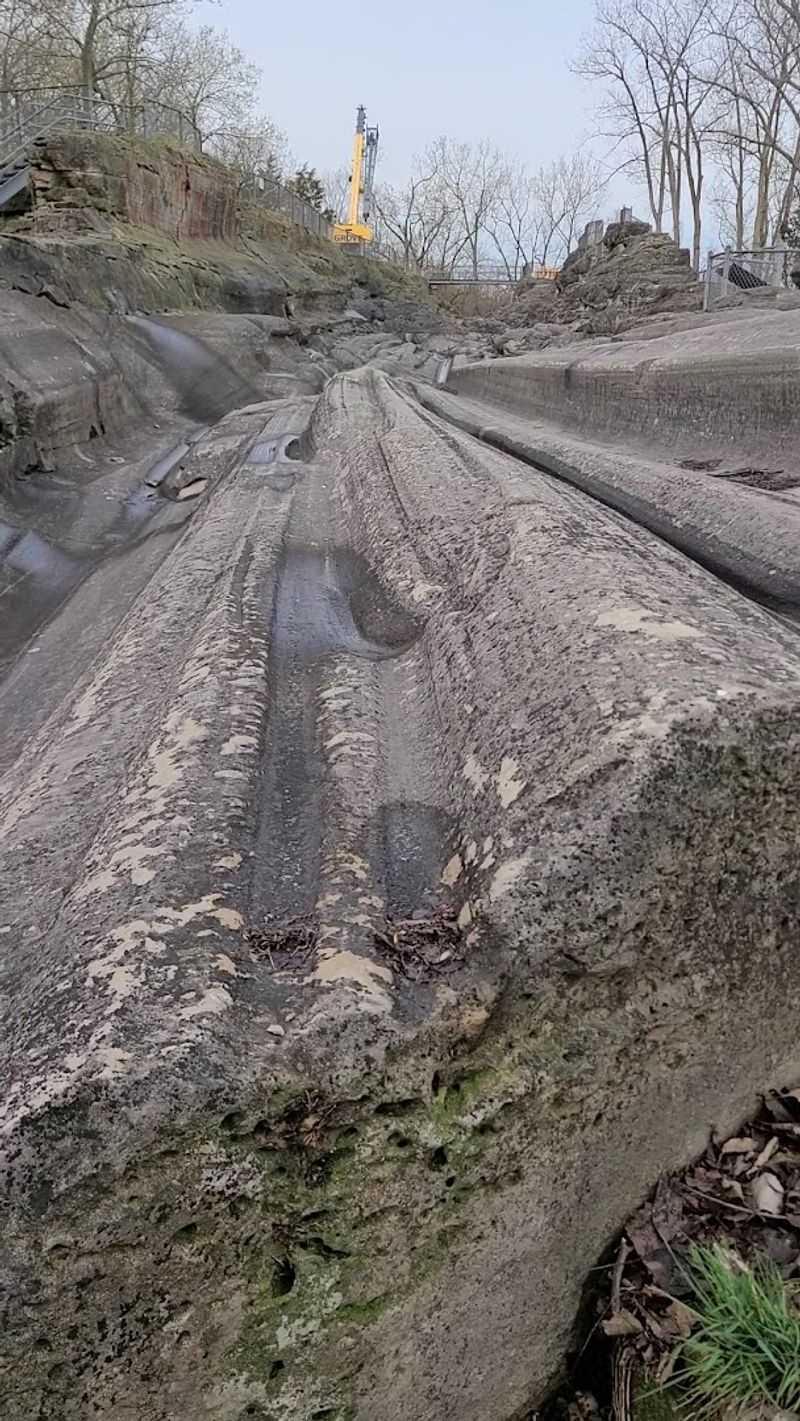
Few geological features in the world combine public accessibility with this level of preservation and scale. The Glacial Grooves on Kelleys Island are widely recognized as the largest accessible glacial grooves on Earth, a distinction that puts this small Ohio island on the map for geologists and geology enthusiasts worldwide.
What makes that claim particularly meaningful is the clarity of the formation. The grooves are not faint or eroded to the point of ambiguity.
They are sharp, readable, and visually striking in a way that communicates their origin immediately. Even someone with no geology background can look at those parallel channels and understand that something enormous moved across this rock with tremendous force.
Sites like this one serve as physical anchors for understanding deep time, the concept that Earth has been shaped by processes operating over timescales far beyond human experience. The grooves make that abstract idea suddenly, viscerally real in a way that no textbook illustration can fully replicate.
Practical Tips for Making the Most of Your Visit
A few simple preparations make the visit noticeably better. Wearing comfortable walking shoes matters more than it might seem, because while the main walkway is paved, some of the surrounding trail sections involve uneven terrain.
Bringing water is a good habit on any outdoor visit, and the site does not have food or drink vendors on-site.
Taking time to read the informational plaques rather than skipping past them pays off. The signs are genuinely well-written and add context that makes the grooves more impressive rather than less.
Many visitors who rush through later wish they had slowed down.
Binoculars are not necessary, but a camera with a zoom lens helps capture the full depth of the grooves from the elevated overlook points. Morning light tends to produce the most dramatic photographs, with shadows deepening the channels and emphasizing the texture of the carved limestone.
Plan for at least an hour on-site to feel unhurried.
Share this story