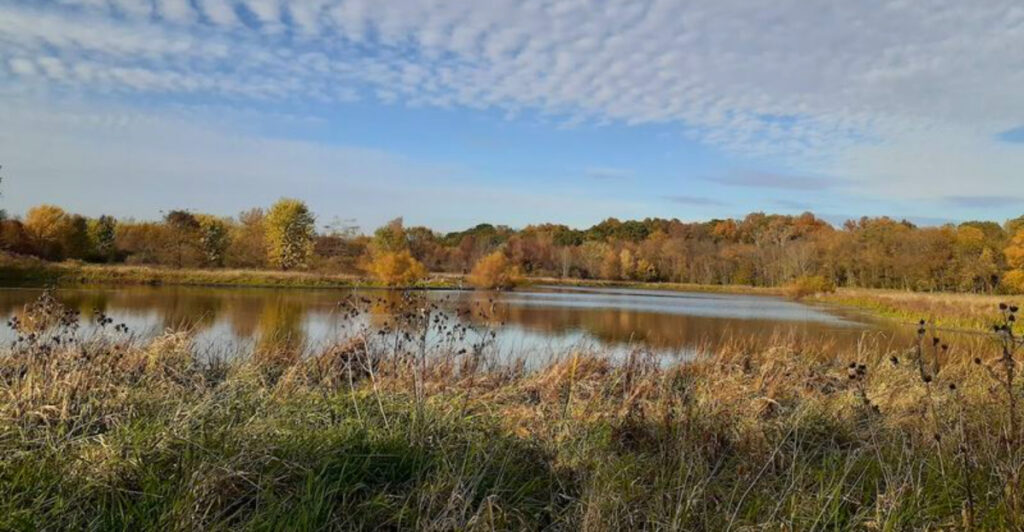
Somewhere in central Ohio, a pond sits quietly in a bowl carved by a retreating glacier thousands of years ago. Most people drive right past it without realizing what they are missing.
Stage’s Pond State Nature Preserve in Ashville, Ohio protects one of the finest examples of a glacial kettle lake in the entire state, and the wooden boardwalks that wind through its wetlands make it one of the most peaceful and surprising walks in the region. Whether you are a birder, a wildflower enthusiast, or simply someone who wants a few hours away from everything loud and busy, this preserve has a way of pulling you in and making you stay longer than planned.
What a Glacial Kettle Lake Actually Is
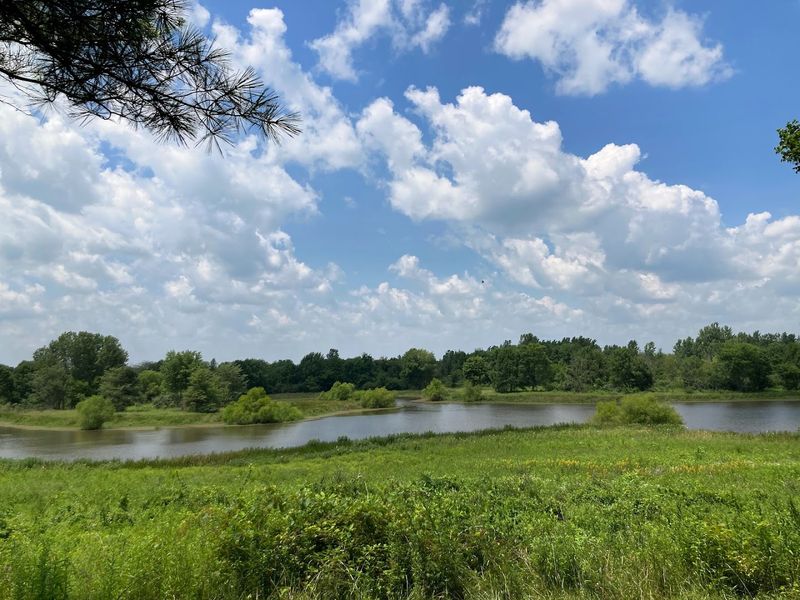
Long before Ohio looked anything like it does today, massive glaciers pushed south across the land. When they eventually melted and retreated, chunks of ice sometimes broke off and got buried under sediment.
As those ice chunks melted, they left behind bowl-shaped depressions in the earth. Fill those depressions with water, and you have a kettle lake.
Stage’s Pond is one of the best-preserved examples of this geological process in Ohio. The pond itself sits in a basin that was shaped entirely by glacial activity, making it a rare and scientifically significant feature.
Most kettle lakes in Ohio have been drained, developed, or otherwise disturbed over the centuries.
This one survived. The Ohio Department of Natural Resources designated it a state nature preserve specifically to protect its ecological integrity.
Standing at the bird blind overlooking the water, it is easy to appreciate just how ancient and remarkable this landscape truly is.
Finding Stage’s Pond State Nature Preserve
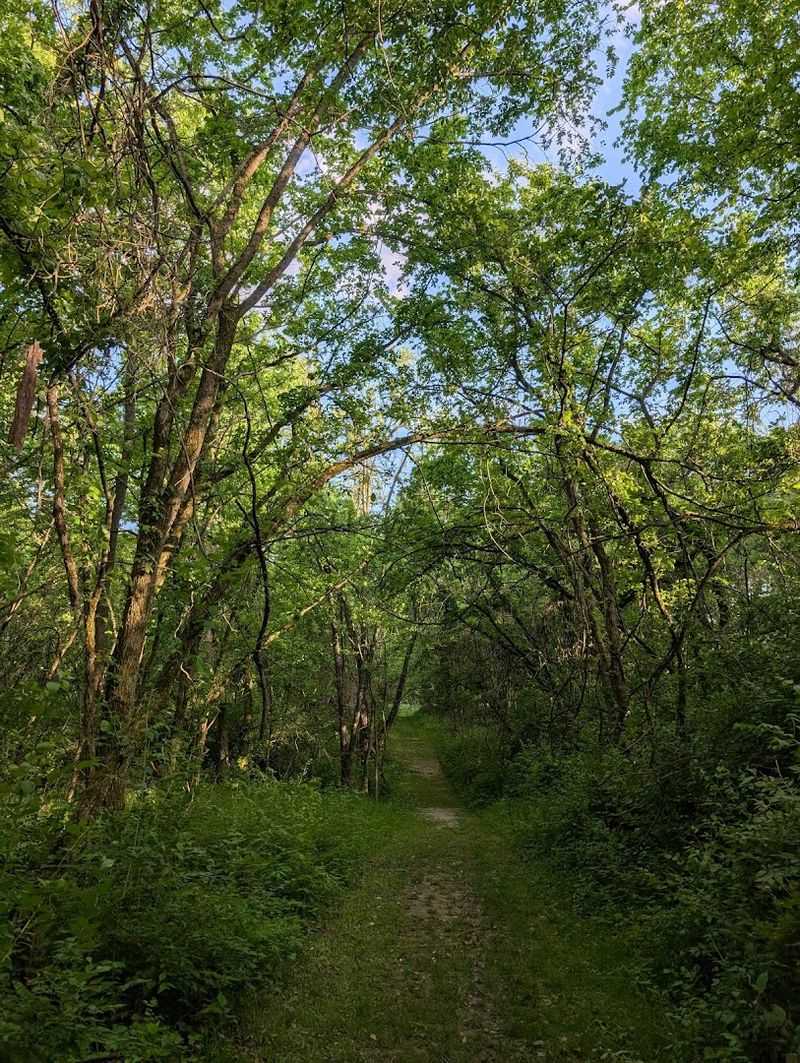
Stage’s Pond State Nature Preserve sits at 4792 Hagerty Road in Ashville, Ohio, managed by the Ohio Department of Natural Resources. The address is straightforward enough, but the drive itself feels like a gradual transition from the ordinary world into something quieter and older.
The preserve is open daily from 8 AM to 5 PM, which gives visitors a solid window for a morning walk or an afternoon exploration before the golden hour light settles over the pond. Parking is available near the entrance, and the trails begin just a short walk down the road from the lot.
One practical tip worth remembering: take a photo of the trail map posted near the entrance before you head out. Trail markers exist throughout the property, but having that map on your phone makes navigating the various loops and connectors much easier, especially deeper into the preserve where signage thins out.
The Wooden Boardwalk Through the Wetlands
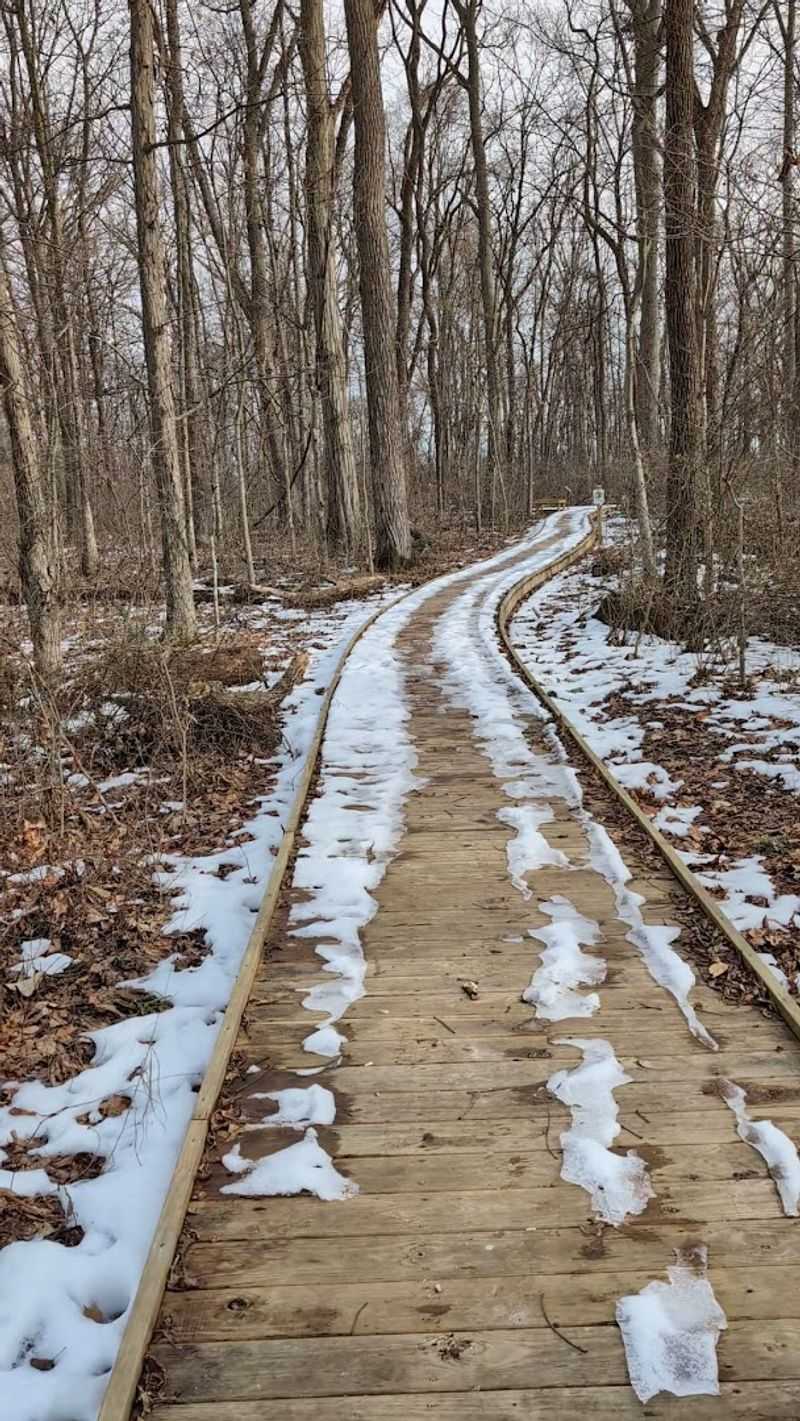
Trail B is the one that tends to stick with people long after the visit. Locals who return regularly often describe it as feeling like an enchanted forest, and once you step onto its wooden boardwalk, that description makes complete sense.
The planks carry you over the wetland floor where the ground would otherwise be muddy and impassable.
What makes this boardwalk stand out from others is a practical but thoughtful detail: wire mesh covers the wooden surface. Wet boardwalks can be dangerously slippery, and the mesh provides real traction even after rain.
It is the kind of small decision that shows genuine care for visitor safety.
The canopy closes in overhead as you move deeper along the trail, filtering the light into something soft and green. Birds call from the branches above, and the sound of the surrounding wetland fills every quiet moment.
It is genuinely one of the more memorable short walks in central Ohio.
Two Bird Blinds With Very Different Personalities
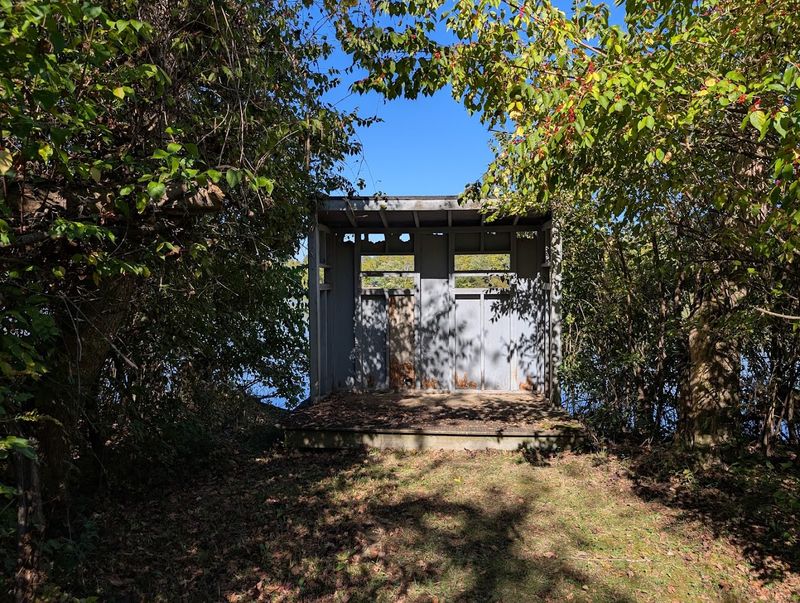
Stage’s Pond has two bird blinds, and they are not created equal. The first one, closest to the parking area and reachable by a paved path, delivers one of the most rewarding views in the preserve.
A wide, calm stretch of water opens up in front of the blind’s viewing slots, and information boards inside identify the duck species most likely to be seen on the pond throughout the year.
The second blind, tucked into the far northwest corner of the preserve, offers a more modest reward after a longer walk. The view is smaller and the setup less dramatic, though it still gives you a quiet place to pause and scan the water.
Most visitors agree the first blind is the star of the show. Blue-winged teal, wood ducks, and various waterfowl have all been spotted from its windows depending on the season.
Spring visits tend to produce the most activity on the water.
The Meadow Trail and Its Open Sky Views
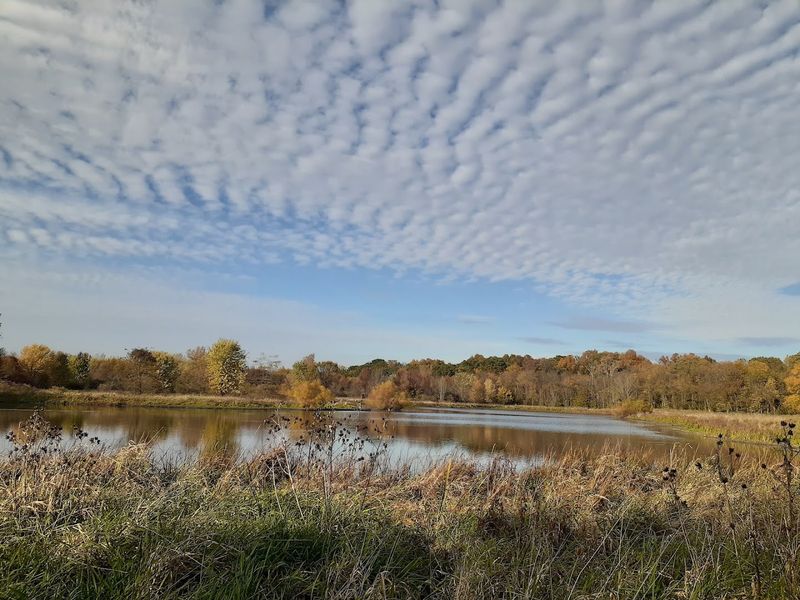
Not every trail at Stage’s Pond winds through dense woods. The meadow trail opens things up completely, trading the forest canopy for a wide stretch of sky and a landscape filled with wildflowers, grasses, and the kind of open space that feels rare in central Ohio.
Walking this trail in the early morning, when the dew is still on the grass, is a genuinely peaceful experience.
The mowed path through the meadow is well-maintained and easy to follow. Birds are active throughout the open area, and the contrast between the meadow and the adjacent wooded sections makes the overall trail system feel more varied than its modest size might suggest.
Sunset walks along the meadow trail have a particular appeal. The flat terrain means the light spreads evenly across the landscape, and the preserve’s layout positions the meadow in a way that catches the late afternoon color especially well.
It is worth timing a visit for that.
Wildlife That Shows Up Without Warning
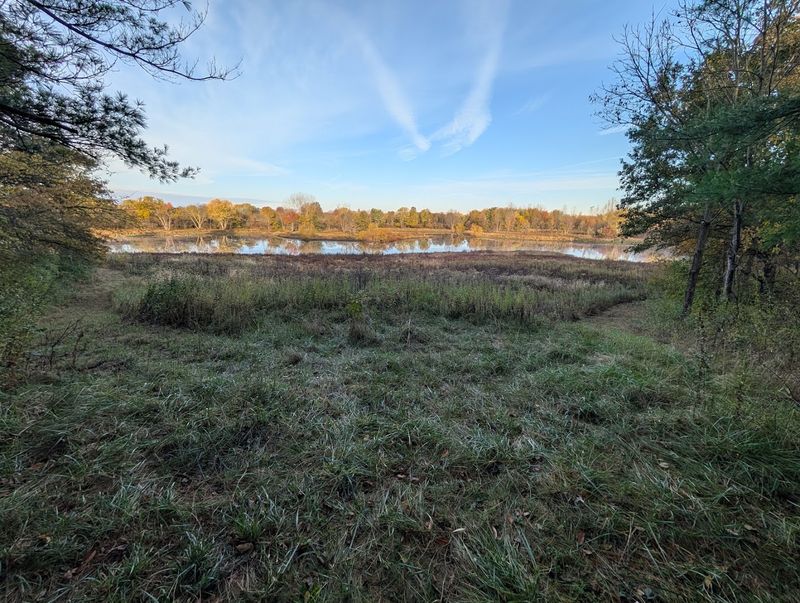
One of the most reliable pleasures of walking Stage’s Pond is not knowing exactly what will appear around the next bend. White-tailed deer move through the preserve regularly, often visible near the tree line where the meadow meets the woods.
Woodpeckers drum steadily from somewhere in the canopy overhead. Robins and blue jays are constant companions along almost every trail.
The wetland areas support a particularly rich variety of wildlife. Frogs, turtles, and various waterfowl use the pond and its surrounding vegetation throughout the warmer months.
During migration periods, the pond becomes a temporary rest stop for species passing through central Ohio.
Bugs are part of the package, especially in the wooded sections during summer. Insect repellent is genuinely useful here, not just a precaution.
The presence of insects, as one regular visitor pointed out, is actually a sign that the ecosystem is functioning exactly as it should.
Accessible Trails That Welcome Everyone
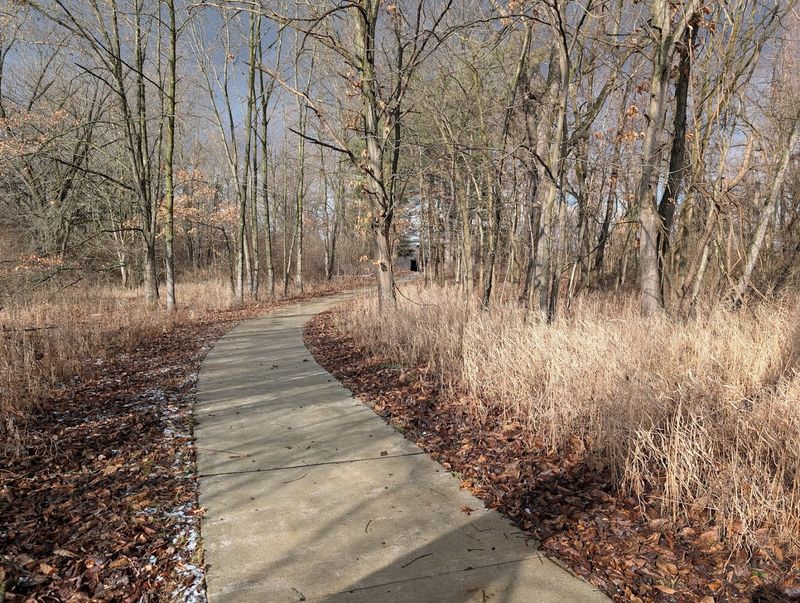
Stage’s Pond is one of the more thoughtfully designed nature preserves in the Ohio state system when it comes to accessibility. Two of the trails are fully paved with concrete, making them usable for visitors in wheelchairs and for anyone who has difficulty navigating uneven terrain.
The paved path leading to the first bird blind is one of these accessible routes.
A newer concrete walkway leading to an observation area was added in recent years, expanding the preserve’s accessible options even further. These additions reflect a genuine effort to make the natural world reachable for more people, not just those who can handle rugged trails.
The wire mesh surface on the wooden boardwalk sections adds another layer of practical safety for all visitors. Most of the preserve’s terrain is flat, which reduces the physical demands of the walk considerably.
A full loop of the trail system covers a little over three miles with minimal elevation change throughout.
What the Boundary Trail Reveals at Sunrise
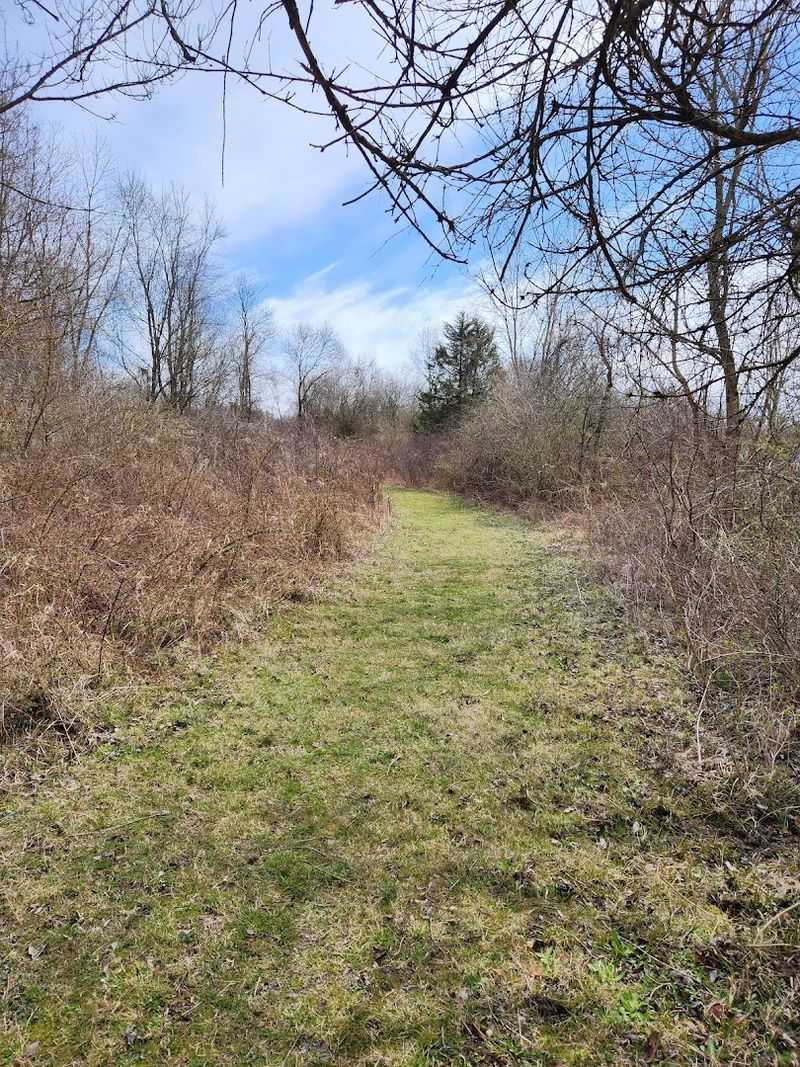
The Boundary Trail runs in a straight line from near the parking area all the way to the back of the preserve, following a fence line the entire way. It is not the most dramatic trail in the system, but it has a specific quality that early risers have come to appreciate.
At sunrise, the light travels along the fence line and stretches across the flat terrain in a way that makes for genuinely striking photographs.
The trail is simple and direct, which actually makes it useful as a navigation tool when you are ready to loop back through the woods after exploring the meadow and wetland areas. It serves as a reliable landmark in a preserve that can feel slightly maze-like the first time you visit.
Deep into the woods beyond the Boundary Trail, the trees eventually give way again to reveal a large open field filled with wildflowers and birds. That transition is one of the more satisfying moments the preserve delivers.
Birding at Stage’s Pond Through the Seasons
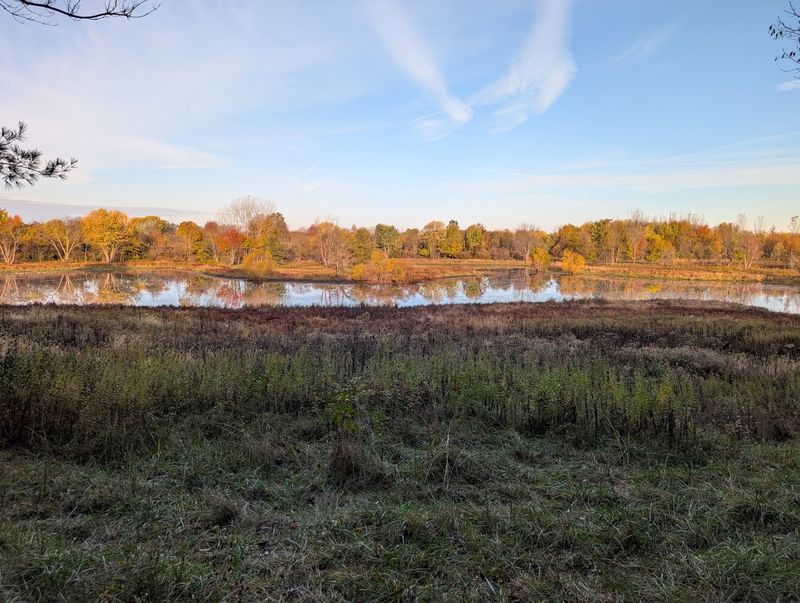
Birding at Stage’s Pond rewards patience and timing. The pond itself attracts waterfowl throughout the year, with spring and fall migration periods bringing the widest variety of species.
Blue-winged teal have been spotted on the water during spring visits, and the information boards inside the first bird blind help visitors identify what they are seeing.
The wooded trails support a different set of species than the open meadow and pond areas. Woodpeckers, jays, robins, and various songbirds move through the trees throughout the day.
The transition zones between habitat types, where the forest meets the meadow or where the meadow meets the pond edge, tend to be the most productive spots for watching bird activity.
The preserve’s no-pets policy helps keep wildlife undisturbed, which directly benefits birding quality. Animals that might otherwise stay hidden tend to move more freely and visibly when the trails are quiet and dog-free.
The Quiet That Sets This Place Apart
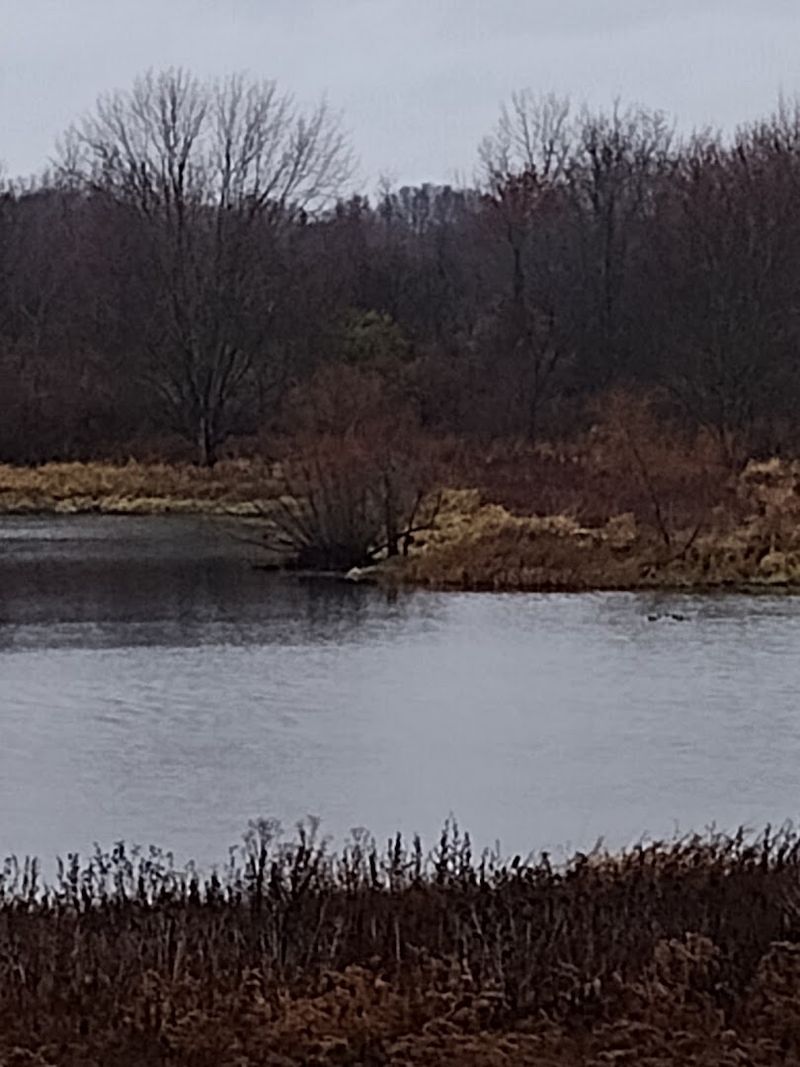
Stage’s Pond does not draw large crowds. On a beautiful October Sunday, a visitor might walk the entire trail system and encounter only a handful of other people.
That low-traffic quality is one of the preserve’s most valuable and least advertised features.
The absence of noise is striking. When the wind settles and the leaves stop moving, the preserve fills with the sounds of wildlife rather than human activity.
Frogs, birds, and the occasional rustle of a deer in the underbrush replace whatever mental noise you carried in from the outside world.
This is a place that works especially well for long, uninterrupted conversations with someone you actually want to talk to, or equally well for complete solitude. The flat terrain and manageable trail length make it accessible without demanding much physically.
The experience it delivers, though, feels quietly significant in a way that is hard to explain until you have been there.
Old Growth Forest Sections Worth Slowing Down For
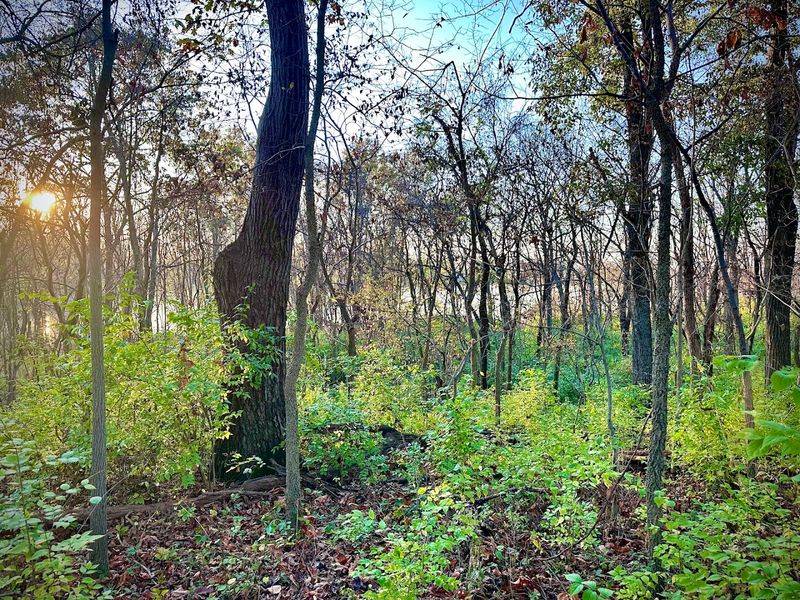
Parts of Stage’s Pond preserve contain old growth forest sections dominated by mature oak trees. Walking through these areas feels noticeably different from the younger second-growth woods that cover much of central Ohio.
The trees are larger, the canopy higher, and the understory more open, giving the forest a cathedral-like quality that is genuinely hard to rush through.
These older forest sections support a different ecological community than younger woods. The bark of mature oaks provides habitat for insects, which in turn attract woodpeckers and other cavity-nesting birds.
The root systems of old trees create micro-habitats at ground level that support plants and small animals you simply would not find in younger forest stands.
Trail B, the wooden boardwalk route, passes through some of the most impressive forest sections in the preserve. Moving slowly and looking up as often as you look down tends to reveal details that a faster pace would completely miss.
Practical Tips for Planning Your Visit
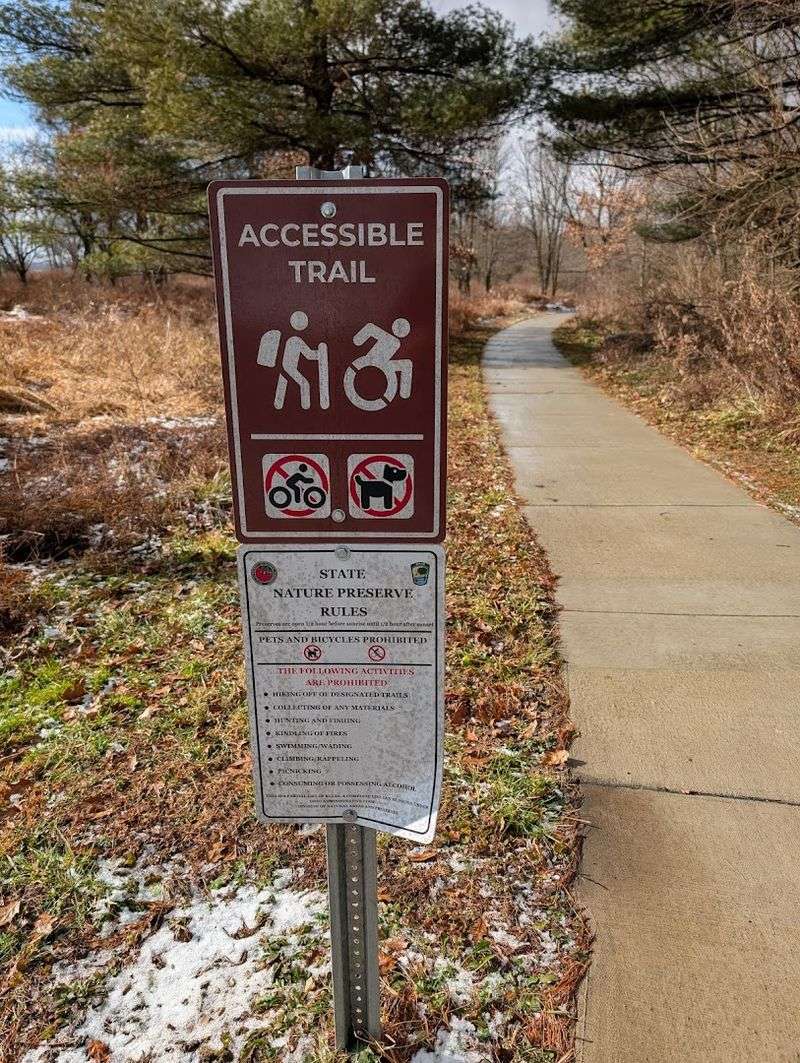
A few practical details can make the difference between a good visit and a great one at Stage’s Pond. The preserve opens at 8 AM every day and closes at 5 PM, so plan accordingly if you want to catch the best morning light or a late afternoon walk without feeling rushed near closing time.
Pets are not allowed on the property, which is worth knowing before you load up the car. Insect repellent is genuinely recommended during warmer months, particularly for the wooded trail sections.
The bugs are a feature of a healthy ecosystem, but that does not mean you need to feed them.
Restroom facilities are limited, so plan ahead. The parking area has a ranger station building, but access to facilities there is not always guaranteed.
Photographing the trail map at the entrance before you start walking will save you from any navigation confusion deeper in the preserve where directional signage is less frequent.
How the Preserve Fits Into a Larger Day Trip
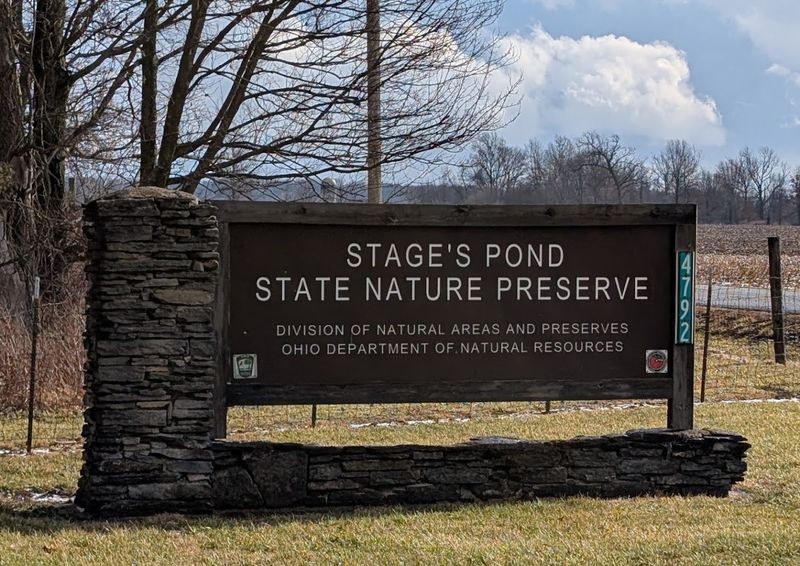
Stage’s Pond sits between Columbus and Chillicothe, which makes it a natural stopping point for anyone driving that route. The preserve is close enough to both cities to serve as a genuine destination rather than just a roadside pause, yet far enough from either to feel completely removed from urban life.
A visit to the preserve typically takes between 45 minutes and two hours, depending on how thoroughly you explore the trail system and how long you spend at each bird blind. That time frame fits comfortably into a larger day trip without dominating the entire schedule.
The surrounding area of Pickaway County offers additional natural scenery for those who want to extend the outing. The drive itself through rural central Ohio has its own quiet appeal, with flat farmland and small towns that feel genuinely unhurried.
Stage’s Pond works as an anchor for a day spent at a slower pace.
Why People Keep Coming Back
Stage’s Pond is the kind of place that surprises people who were not expecting much. More than a few visitors have mentioned asking friends and neighbors about it beforehand, only to hear that everyone had heard of it but nobody had actually gone.
The first visit tends to change that pattern permanently.
The combination of geological rarity, accessible trails, thoughtful design, and genuine wildlife diversity creates something that holds up across multiple seasons. Spring brings wildflowers and waterfowl migration.
Summer delivers the full green canopy and active wetland life. Autumn turns the forest into something visually spectacular.
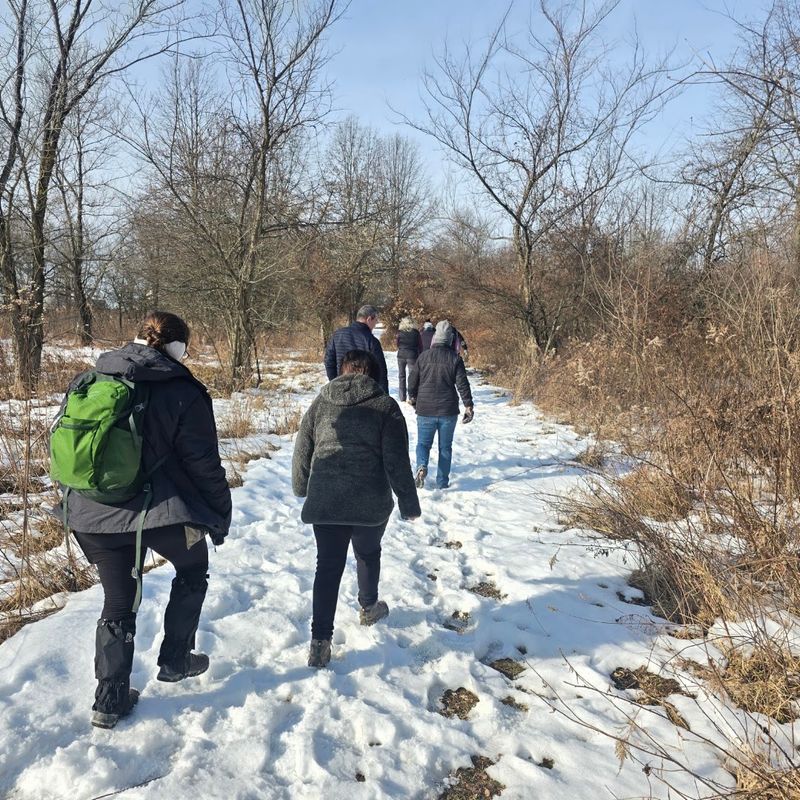
Winter ODNR programs occasionally bring guided walks that reveal the preserve from an entirely different perspective.
There is no single dramatic feature that makes Stage’s Pond worth returning to. It is the accumulation of small, well-considered details, the wire mesh on the boardwalk, the information boards in the blind, the accessible paths, the quiet, that adds up to something genuinely worth protecting and visiting.
Share this story