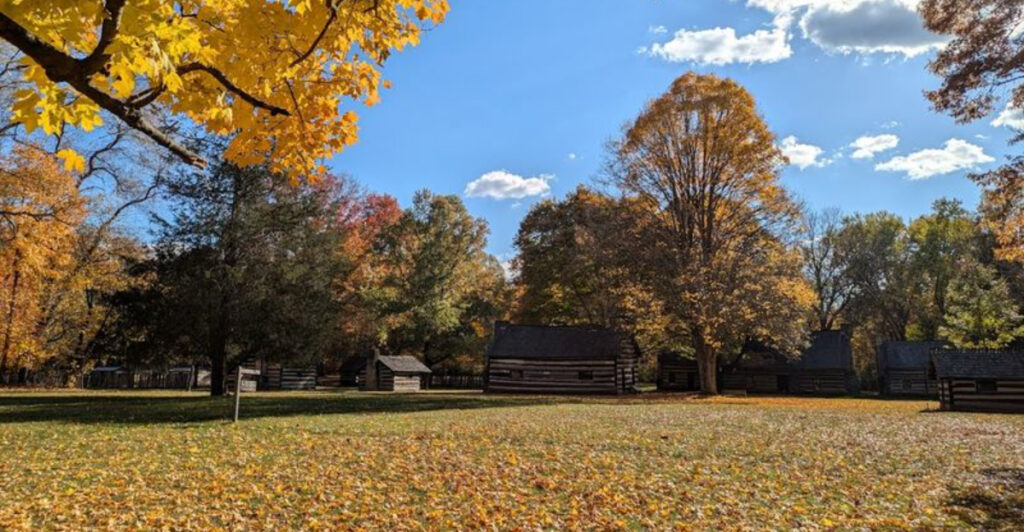
Most people drive through eastern Ohio without realizing they are passing within a few miles of the very spot where the state’s entire story began. Back in 1772, a small group of Moravian missionaries and Delaware Native Americans built Ohio’s first permanent settlement, complete with a church, a school, and rows of log cabins.
That settlement was called Schoenbrunn, a German word meaning “beautiful spring,” and today you can walk right through a carefully reconstructed version of it. What makes this place genuinely surprising is how much has survived and how much has been brought back to life for visitors of all ages.
The Story Behind Ohio’s Very First Settlement
Not every state can point to the exact location where its history officially started. Ohio can.
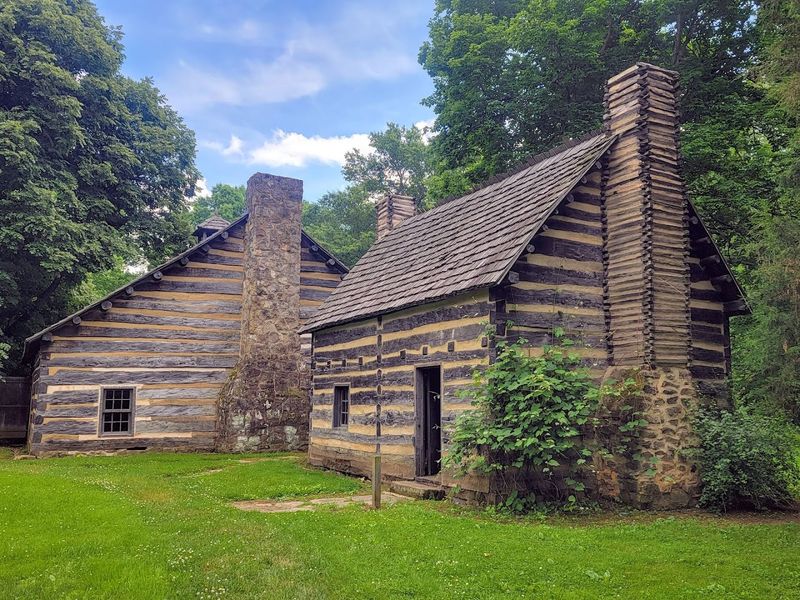
In 1772, Moravian missionary David Zeisberger led a group of Christian Delaware Native Americans to a stretch of land along the Tuscarawas River and founded Schoenbrunn Village, recognized as Ohio’s first permanent settlement.
The Moravians were a Protestant Christian group from Europe who had a deeply peaceful approach to missionary work. Rather than forcing their beliefs on the Delaware people, they built a shared community where both groups lived and worked side by side.
That level of cooperation was genuinely rare for the era.
The village grew quickly, eventually including dozens of cabins, a school, a church, and surrounding farmland. Understanding that backstory before you arrive makes every log cabin and worn graveyard marker feel far more significant once you are actually standing there.
Where Schoenbrunn Village Is Located Today
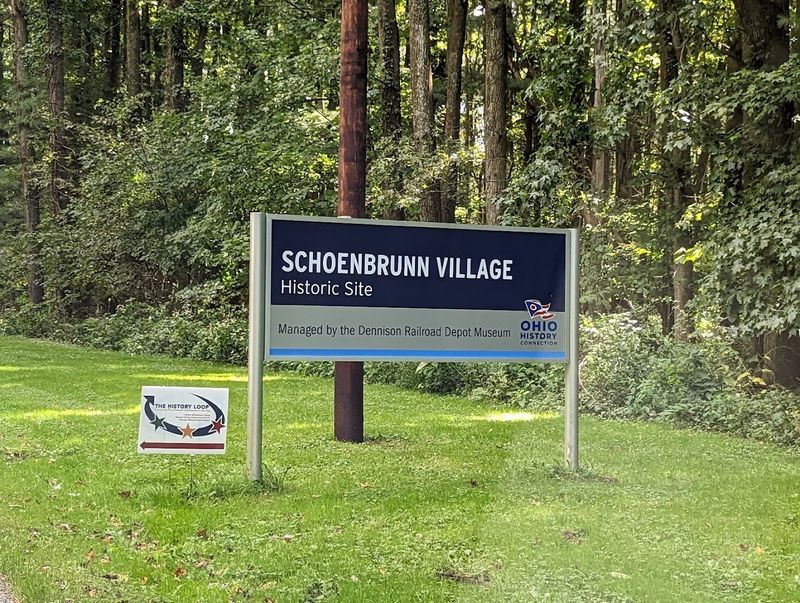
Schoenbrunn Village State Memorial sits at 1984 E High Ave, New Philadelphia, Ohio 44663, managed by the Ohio History Connection. The site is easy to find and well marked, making it a straightforward stop whether you are planning a full day trip or just passing through Tuscarawas County.
New Philadelphia itself is a quiet, welcoming city in eastern Ohio, and Schoenbrunn fits naturally into the surrounding landscape. The grounds feel open and unhurried, a real contrast to the kind of crowded tourist attractions that leave you exhausted before you even get inside.
The visitor center is your first stop, and it sets the tone for everything that follows. A short orientation video plays before you head out to the reconstructed village, giving you just enough historical context to make the self-guided walk genuinely meaningful rather than just a stroll through old buildings.
The Introductory Video That Actually Prepares You
Before most visitors step outside toward the reconstructed cabins, they settle into the visitor center for a short introductory video. Running roughly ten minutes, it covers the founding of Schoenbrunn, the relationship between the Moravians and the Delaware people, and the village’s eventual abandonment during the turmoil of the American Revolutionary War.
What makes the video work is that it does not talk down to you. The storytelling is clear and emotionally honest, giving real weight to a community that was doing something remarkably progressive for the 1700s.
By the time the screen goes dark, you are already invested in the people whose lives unfolded on this exact piece of land.
That emotional investment carries you through the rest of the visit in a way that a simple brochure never could. It is one of those rare orientation experiences that actually earns its place in the itinerary.
Walking Through the Reconstructed Log Cabin Village
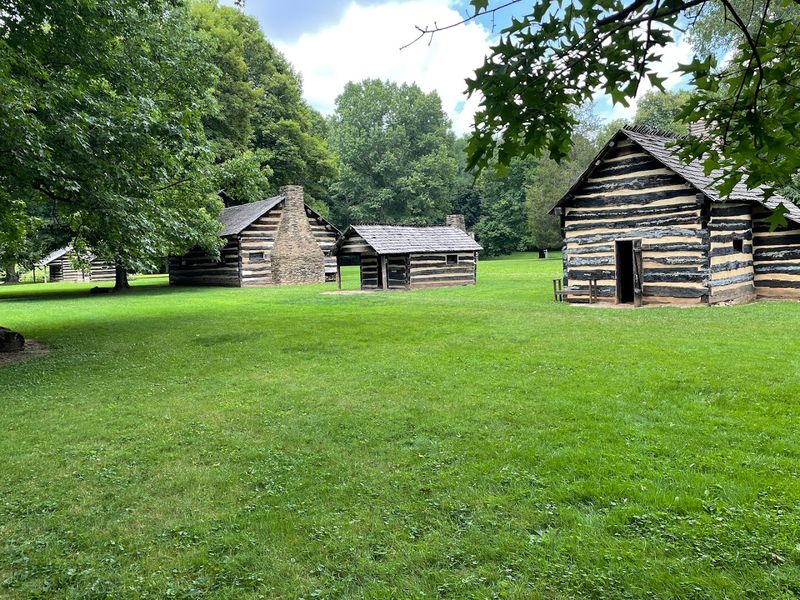
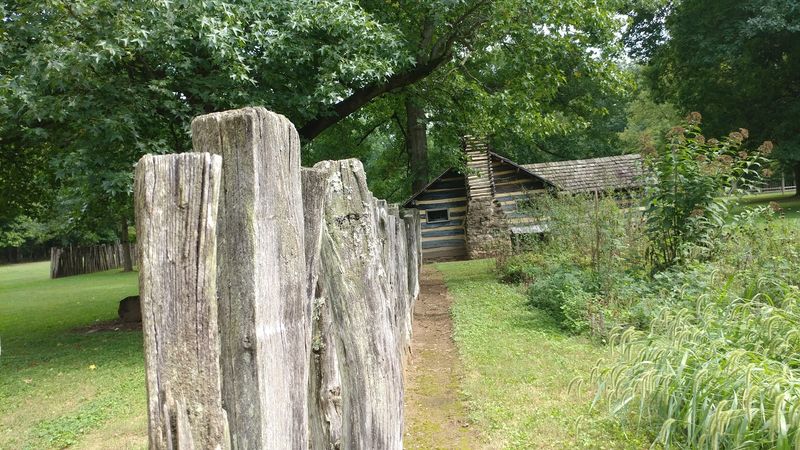
Once you step outside the visitor center, the reconstructed village spreads out ahead of you across a wide, open field. The cabins are built to historically accurate dimensions and positioned along paths that follow the original layout of the 1772 settlement.
Most of the cabins are open to enter, which makes the experience feel interactive rather than purely observational.
Each cabin interior shows the kind of spare, functional life the settlers actually lived. Simple wooden furniture, basic tools, and minimal decoration reflect a community focused on survival, faith, and cooperation rather than comfort or display.
Spending time inside each one gives you a genuine sense of how compact and deliberate daily life was.
The walk itself covers a comfortable distance across mostly level ground, though the paths run through a mowed field, so practical footwear is worth considering before you arrive, especially during wetter months.
Ohio’s First Schoolhouse and What It Meant
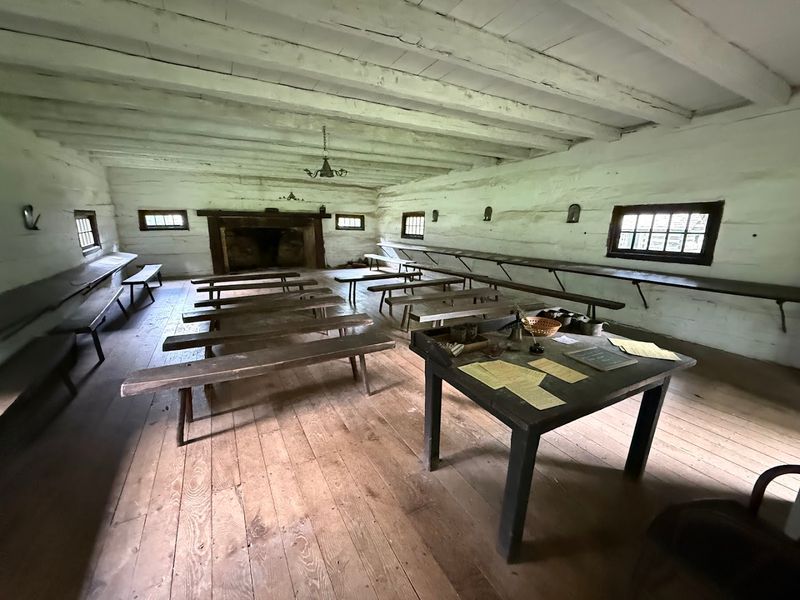
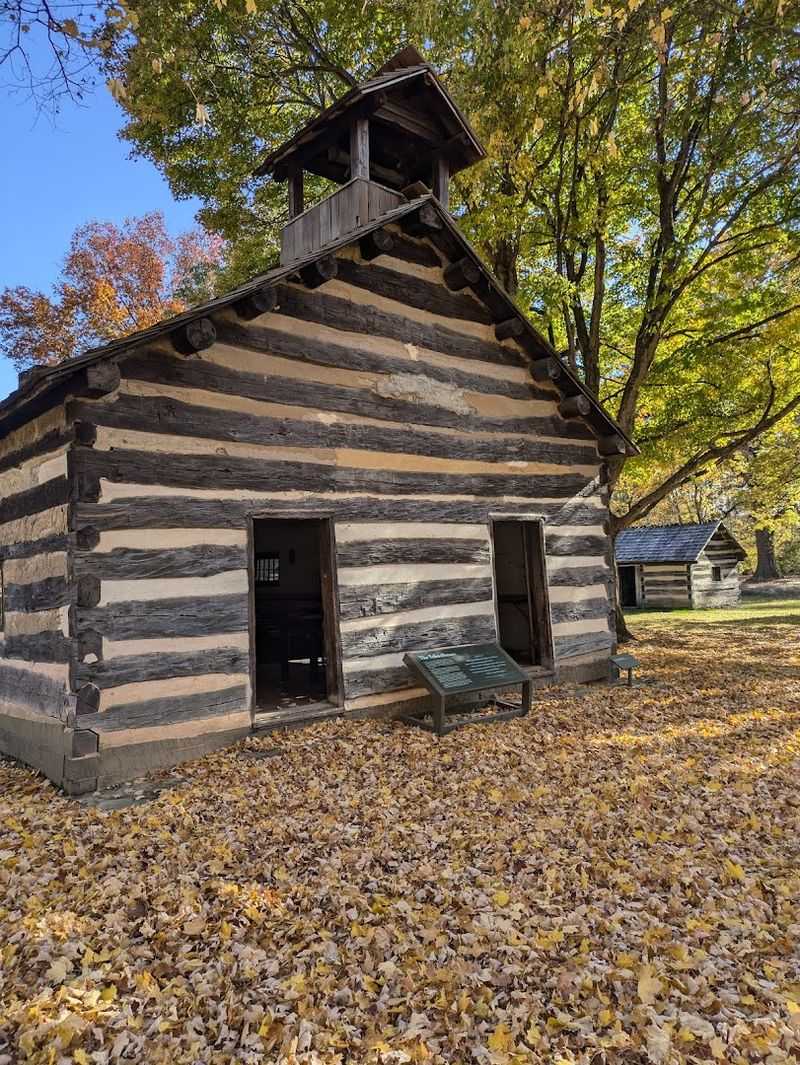
One of the most quietly remarkable features of Schoenbrunn Village is its schoolhouse, which represents the first school ever established in Ohio. That fact alone is worth pausing on.
In 1772, while most of the continent was still being settled and formal education was far from guaranteed, this small community prioritized learning for both boys and girls.
That commitment to equal education was genuinely ahead of its time. The Moravian approach to community life included the belief that everyone deserved access to literacy and religious instruction, regardless of gender.
Seeing that value reflected in a reconstructed building from over 250 years ago gives the schoolhouse a weight that no museum label could fully capture.
The building itself is modest and unadorned, which somehow makes it more powerful. There is nothing grand about it, and yet it represents the beginning of a tradition that shaped an entire state’s relationship with public education.
The Original Graveyard That Draws Visitors In
At the edge of the reconstructed village lies the original graveyard, and it is one of the most affecting parts of the entire visit. Unlike the cabins and church, which are reconstructions built on the original footprints, the grave markers here are genuinely old.
Some of the headstones are weathered to the point where the inscriptions are nearly impossible to read, but that difficulty somehow adds to their power.
The people buried here were real members of the 1772 community, both Moravian settlers and Delaware converts who chose this place as their home. Standing among those markers connects you directly to the human scale of the settlement in a way that no exhibit panel can replicate.
A main informational sign and a site map help orient visitors who want to understand what they are looking at. The graveyard is quiet, unhurried, and genuinely moving in a way that stays with you long after you leave.
Artifacts Inside the Museum That Predate the Revolution
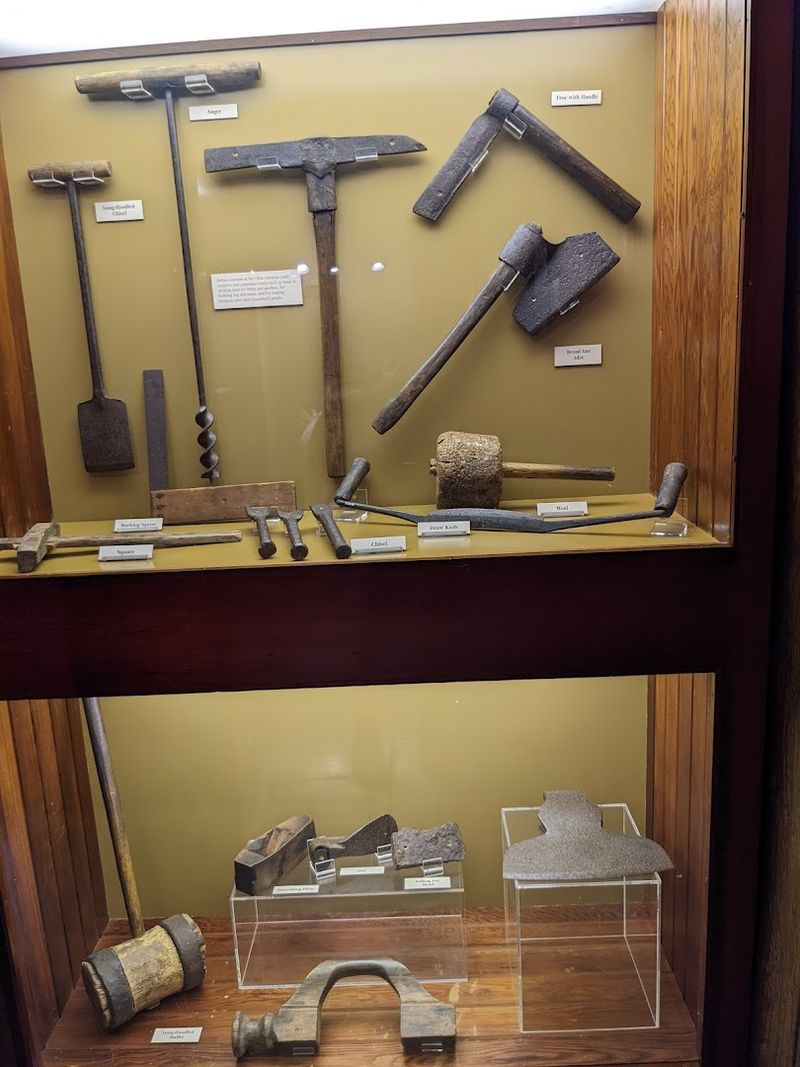
After walking through the outdoor village, the museum inside the visitor center offers a different kind of connection to Schoenbrunn’s past. The collection includes genuine artifacts recovered from the original site, some of which predate the American Revolution by several years.
Among the most striking items are two Bibles dated to 1765, still intact after more than two and a half centuries. Seeing physical objects from that era, held in the hands of people who actually lived in this village, shifts the experience from educational to genuinely personal.
The museum is compact but thoughtfully arranged, covering the Moravian mission, the Delaware community’s way of life, and the circumstances that eventually led to Schoenbrunn’s abandonment during the Revolutionary War period. Every artifact feels purposefully chosen rather than randomly collected, making the space feel curated rather than cluttered.
It rewards slow, careful attention.
The Moravian and Delaware Partnership That Built a Community
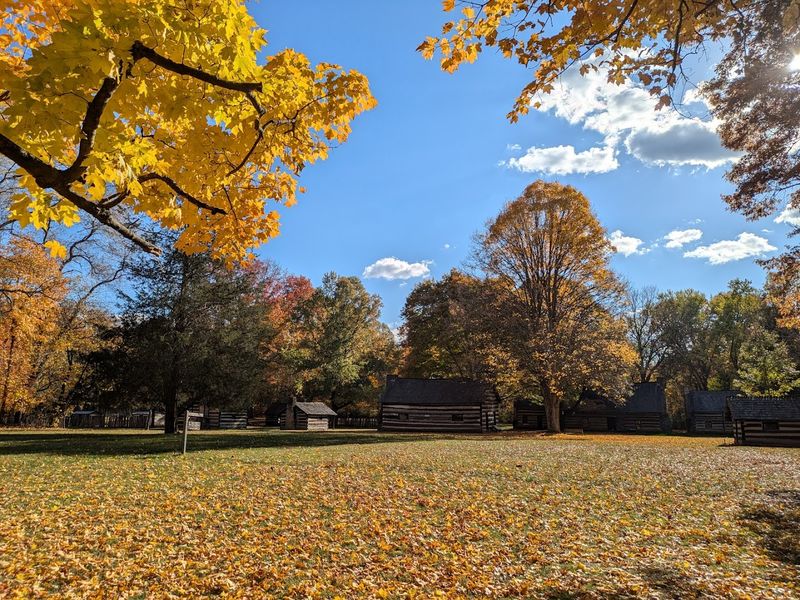
What set Schoenbrunn apart from other frontier settlements was the relationship at its core. The Moravian missionaries who founded the village did not arrive as conquerors or colonizers in the traditional sense.
They came as teachers and community builders, and the Delaware people who joined them were willing, active participants rather than passive subjects.
The community that formed was genuinely integrated by the standards of any era. Delaware converts adopted Moravian Christian practices, while the Moravians learned from the Delaware people’s knowledge of the land, the seasons, and the region’s resources.
That exchange shaped everything from the village’s layout to its agricultural practices.
This history gives Schoenbrunn a dimension that many historical sites simply do not have. It is not a story of one group imposing itself on another.
It is a story, however complicated by the broader colonial context, of two groups choosing to build something together. That nuance is worth understanding.
Seasonal Events That Bring the Village Back to Life
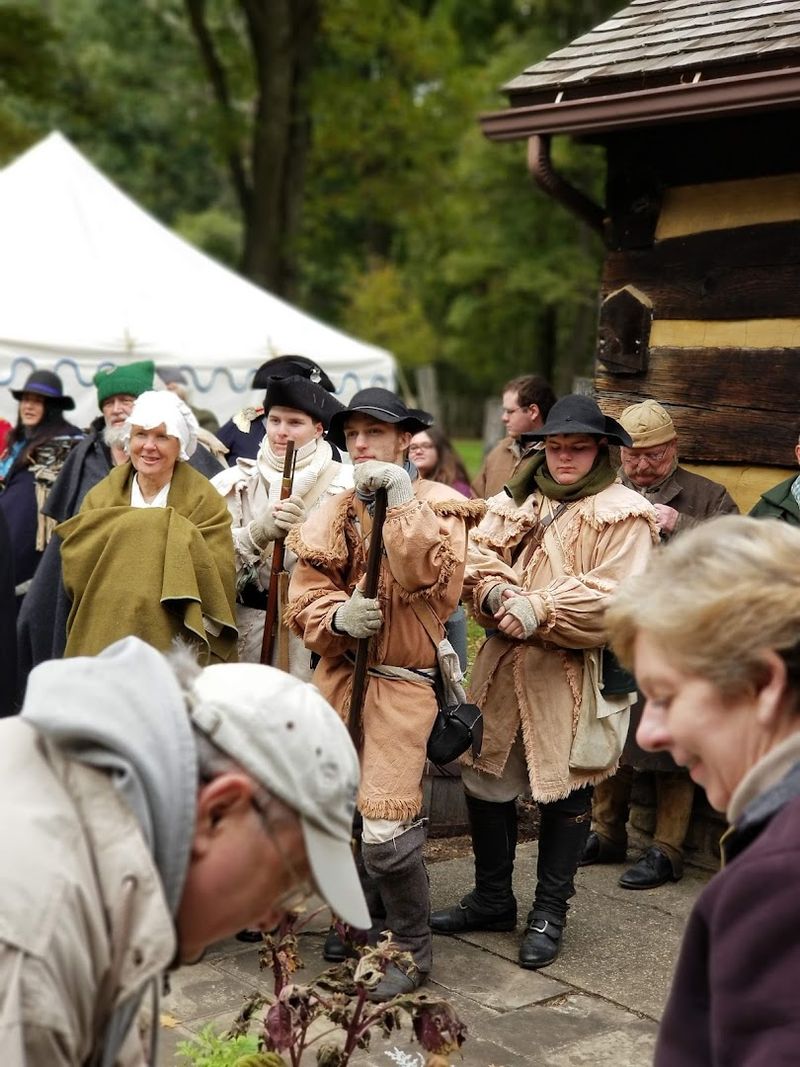
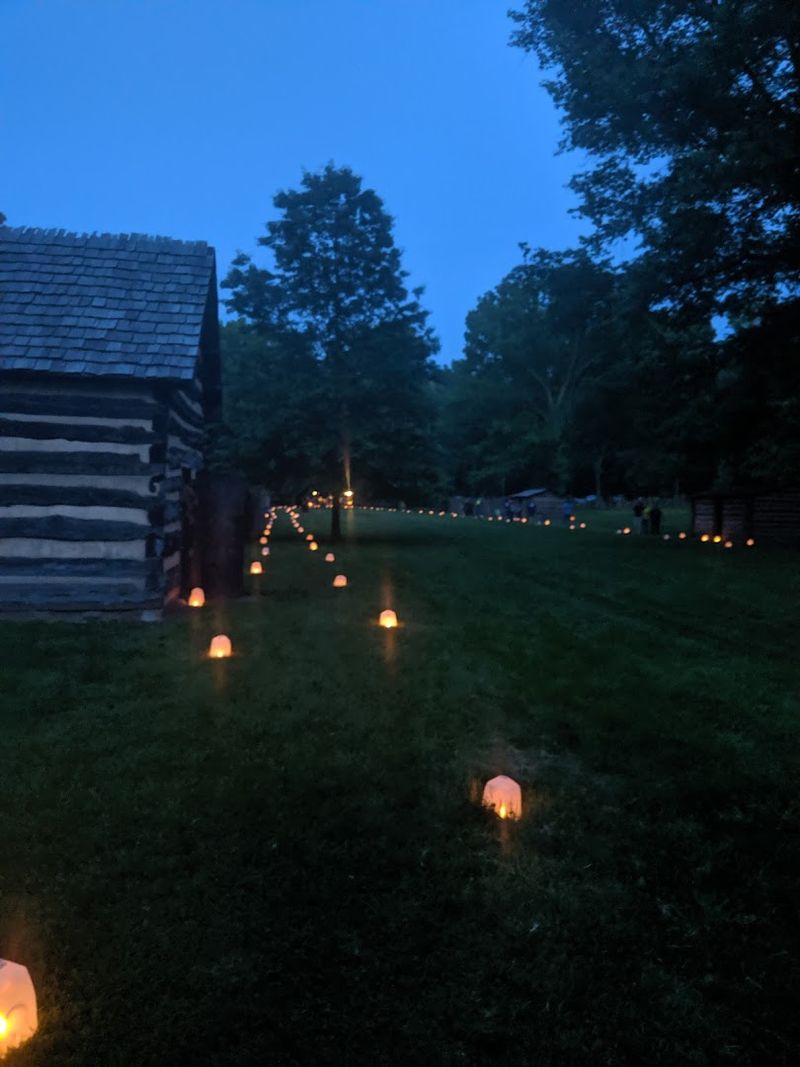
Schoenbrunn Village comes alive in a different way during its seasonal events, and the fall lantern tours are among the most talked-about experiences the site offers. As daylight fades and lanterns cast warm light across the cabin walls, reenactors move through the village sharing stories of life in the 1770s.
The atmosphere shifts from educational to genuinely atmospheric in a way that daytime visits simply cannot replicate.
The site also hosts a colonial trades fair, where artisans demonstrate period crafts and visitors get hands-on exposure to skills like pottery, basketry, and traditional cooking. Events like these are particularly well-suited for families with children who learn better through experience than through reading.
Checking the Ohio History Connection’s event calendar before you plan your visit is worth the extra step. Arriving on an event day transforms an already worthwhile stop into something you will genuinely talk about afterward.
Traditional Foods and Crafts You Can Experience
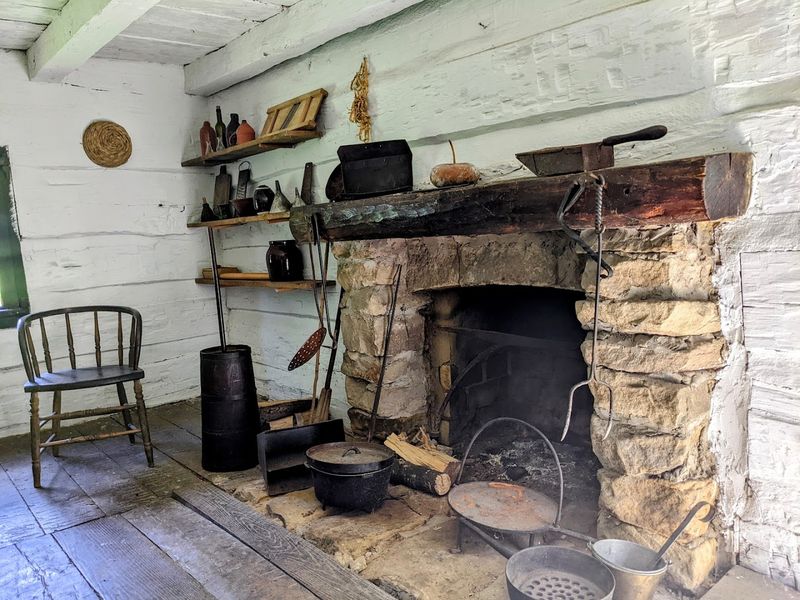
On event days and during special programming, Schoenbrunn Village offers visitors a taste of what the settlement’s residents actually ate and made. Bean soup, johnnycake, and thick-cut bacon have all been part of food demonstrations at the site, reflecting the simple, hearty diet of an 18th-century frontier community.
Craft demonstrations go even further, with handmade pottery, woven baskets, leather goods, and traditional tools on display. Seeing a skilled artisan work with period-accurate materials gives you a completely different appreciation for how much time and effort went into objects that modern life makes effortless to acquire.
For younger visitors especially, these hands-on moments tend to be the ones that stick. A child who has watched someone shape clay by hand or grind corn for johnnycake carries that understanding in a way that no textbook lesson delivers.
The crafts program turns history from a subject into an experience.
Practical Tips for Planning Your Visit
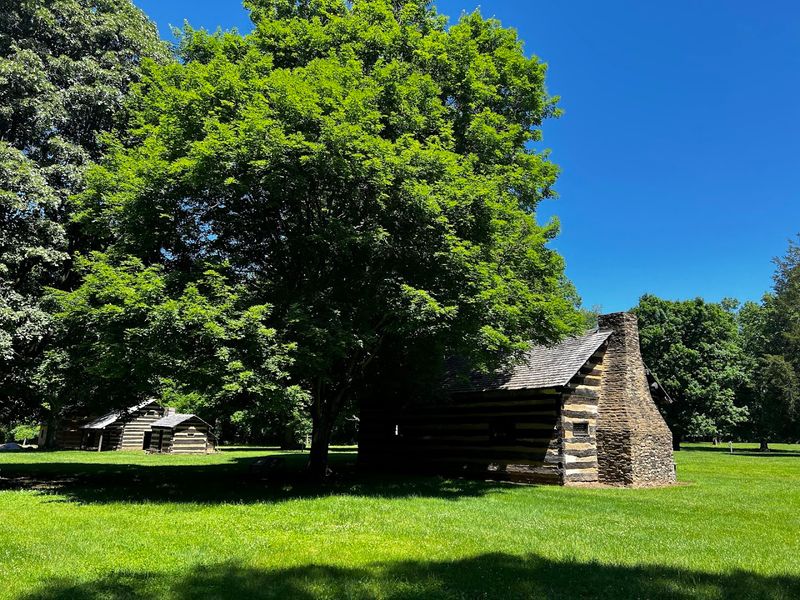
Schoenbrunn Village is open Wednesday through Saturday from 10 AM to 5 PM and on Sundays from 12 PM to 5 PM. The site is closed on Mondays and Tuesdays, so planning around that schedule before you make the drive is a smart move.
Admission is affordably priced, and visitors with an Ohio History Connection membership get in free.
The grounds include clean restrooms and a picnic area, making it a comfortable half-day outing for families. The outdoor walking path runs through a mowed field, so flat, comfortable shoes are a better choice than sandals, particularly after rain.
A military discount is also available for active and veteran service members. The gift shop inside the visitor center is well stocked with history-related books, reproduction crafts, and souvenirs that reflect the site’s Moravian and Delaware heritage.
Arriving with a little extra time to browse it on the way out is genuinely worthwhile.
Why This Place Stays With You After You Leave
There are historical sites you visit, check off a list, and forget by the following week. Schoenbrunn Village is not one of those places.
The combination of genuine artifacts, thoughtfully reconstructed buildings, and a founding story rooted in cooperation rather than conflict gives it a staying power that surprises most first-time visitors.
What lingers most is the human scale of it all. The cabins are small.
The school is modest. The church is plain.
And yet those simple structures represent something that mattered enough for a community to build, live in, and ultimately grieve when they had to leave it behind during the Revolutionary War period.
Visitors who come for a quick afternoon often find themselves staying longer than planned, wandering back through the village a second time or lingering in the museum over artifacts they rushed past the first time. That is the quiet power of a place that tells a true story well.
Share this story