 Unearth The Voyage
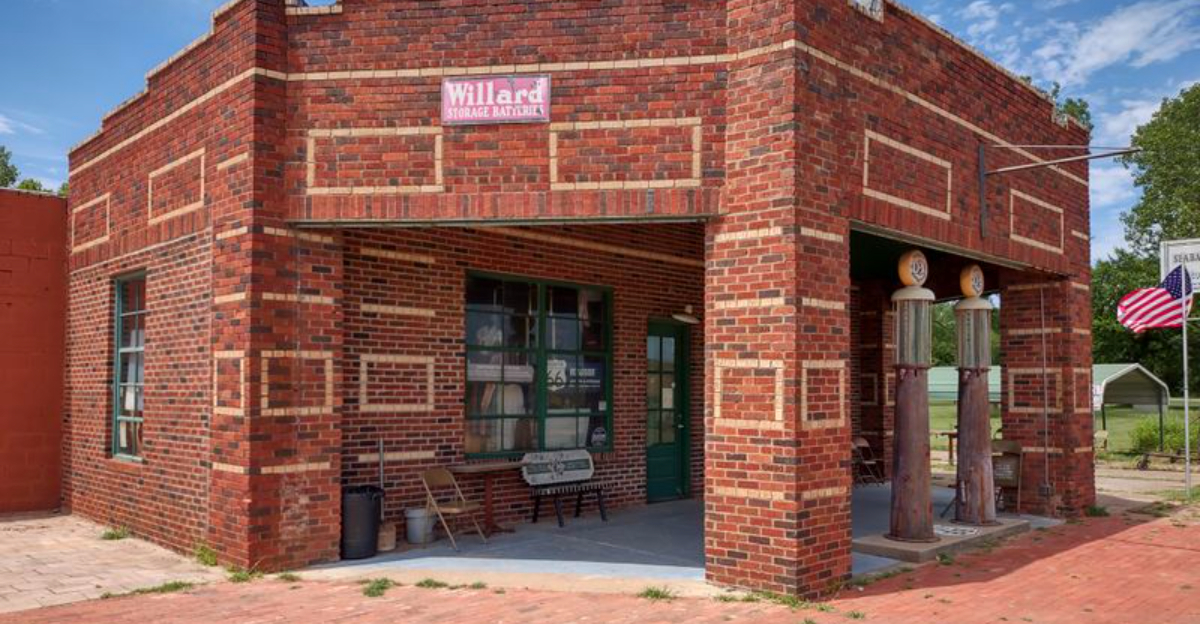
Route 66 has always been more than just pavement and painted lines. It represents freedom, adventure, and the open road calling to anyone brave enough to answer.
Tucked along this legendary highway in Oklahoma sits a treasure that most travelers zoom right past without realizing what they’re missing.
Inside an unassuming building, hundreds of vintage motorcycles stand frozen in time, each with its own story to tell. These aren’t just machines collecting dust.
They’re pieces of American history, engineering marvels, and works of art all rolled into two wheels and chrome.
I had the chance to visit this incredible collection, and what I discovered was far more impressive than I ever imagined. From rare Indian motorcycles to classic Harleys, from European beauties to Japanese legends, this place holds one of the most remarkable motorcycle collections in the entire country.
Let me take you through what makes this spot so special.
A Hidden Gem Along Historic Route 66
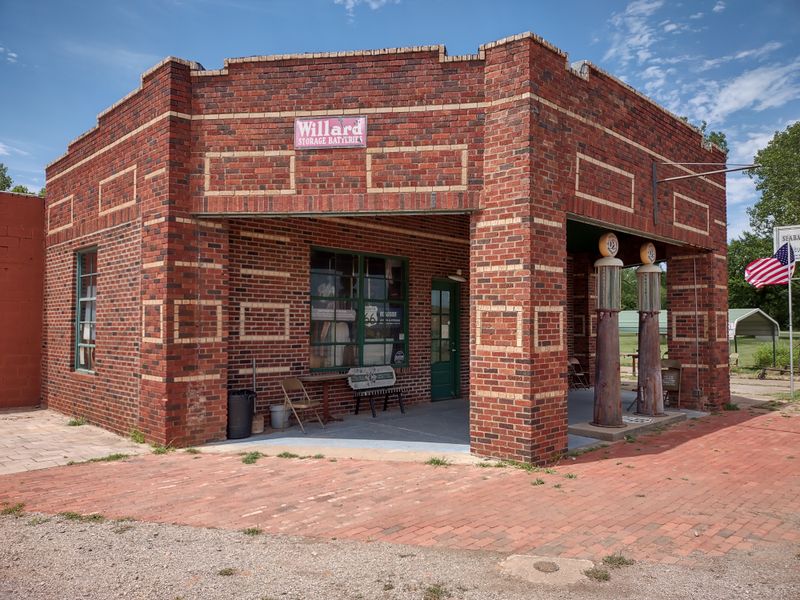
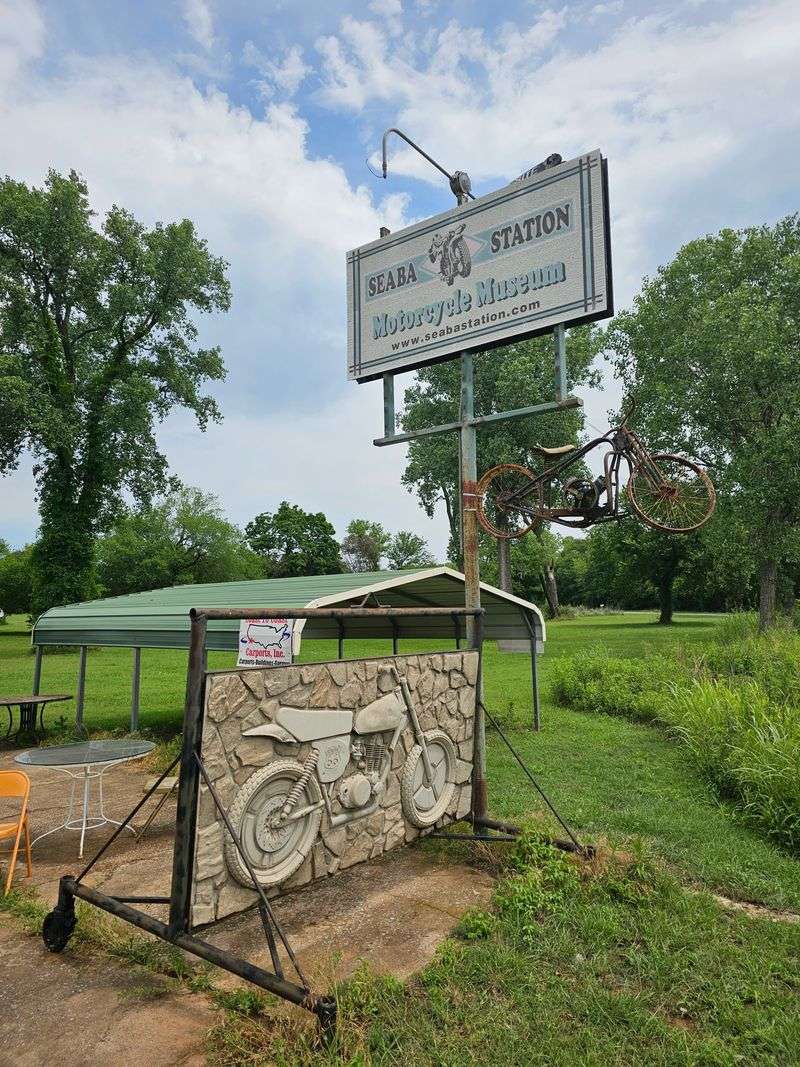
The Seaba Station Motorcycle Museum sits at 336992 East, OK-66, Warwick, Oklahoma 74881, right along one of America’s most famous roads. When I first pulled into the parking area, I wasn’t quite sure what to expect from the exterior alone.
The building itself has character, but nothing screams ‘world-class motorcycle collection’ from the outside.
That’s exactly what makes this place so special. There’s no flashy signage or tourist trap atmosphere.
Instead, you get an authentic experience that feels like discovering a secret.
The museum operates Tuesday, Thursday, Friday, Saturday, and Monday from 10 AM to 5 PM, staying closed on Wednesdays and Sundays. I recommend calling ahead at 405-258-9141 if you’re planning a special trip, just to confirm they’re open.
The location couldn’t be more perfect for motorcycle enthusiasts traveling Route 66. You can combine your visit with the full Mother Road experience, stopping at other historic sites along the way.
What struck me immediately was how this place preserves both motorcycle history and Route 66 heritage in one location. The building itself has roots as an old service station, which adds another layer of authenticity.
You’re not just visiting a museum. You’re stepping into a piece of Oklahoma history that honors the golden age of American motorcycling.
The Man Behind the Collection
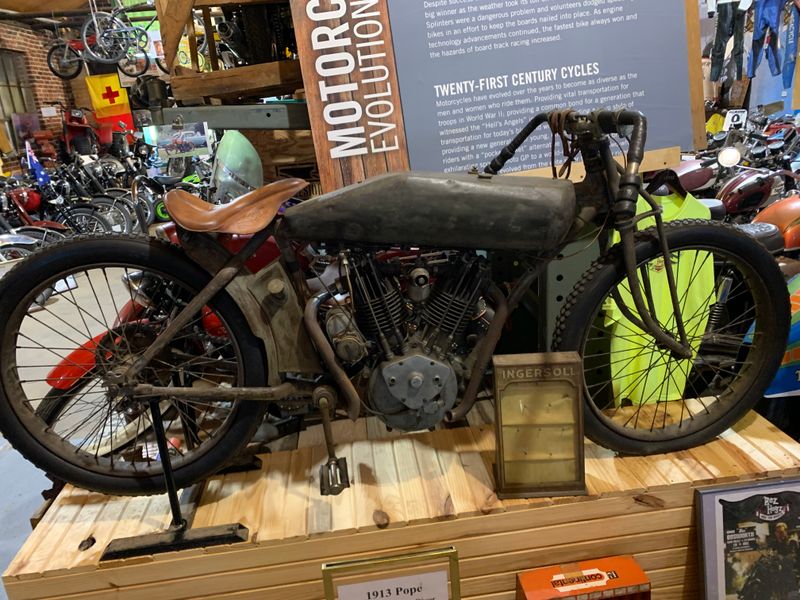
Every great collection needs a passionate collector, and this museum has exactly that. The vision and dedication of one individual transformed what could have been just another roadside attraction into something genuinely extraordinary.
Walking through the exhibits, you can feel the care and attention that went into selecting and preserving each motorcycle.
The founder didn’t just buy bikes randomly. He sought out specific models with historical significance, rare examples, and machines that tell the story of motorcycling’s evolution.
Some collectors focus on one brand or era, but this collection spans decades and continents.
What impressed me most was learning about the restoration work involved. Many of these motorcycles arrived in rough condition and required countless hours of meticulous work to bring them back to their former glory.
The attention to detail shows in every polished chrome piece and perfectly painted tank.
The museum also benefits from donations and loans from other collectors who trust this institution to properly display and care for their prized machines. That level of trust speaks volumes about the museum’s reputation in the motorcycle community.
During my visit, I heard stories about how certain bikes were acquired, sometimes through years of patient negotiation. The passion behind this collection transforms it from a simple display into a living tribute to motorcycle culture.
Indian Motorcycles Take Center Stage
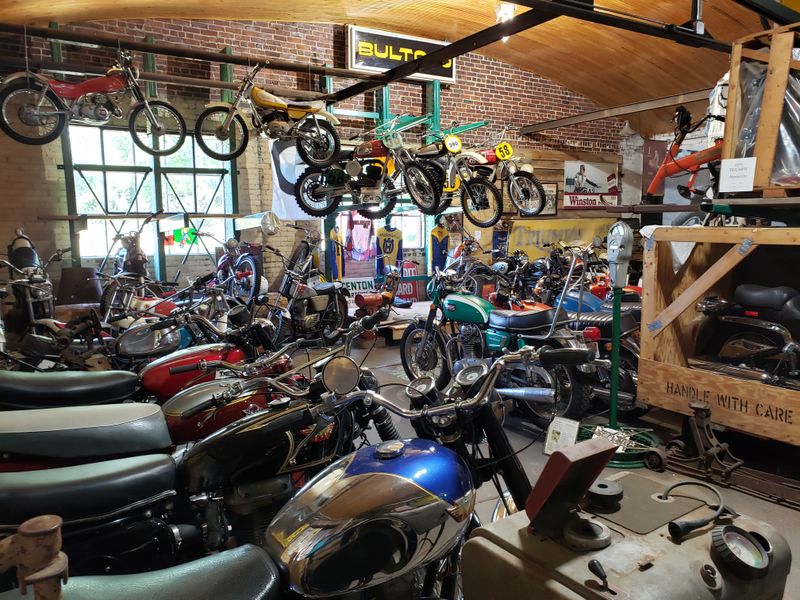
Among the most prized possessions in any motorcycle collection are Indian motorcycles, and this museum doesn’t disappoint. Indian was once America’s largest motorcycle manufacturer, producing some of the most beautiful and innovative bikes ever made.
Seeing these machines up close gave me goosebumps.
The museum houses several Indian models spanning different eras, from early board track racers to the gorgeous Chiefs that defined American motorcycle styling. Each one represents a different chapter in Indian’s storied history.
What makes these bikes so special isn’t just their rarity, though many are incredibly hard to find today. It’s the craftsmanship and artistry that went into every detail.
The teardrop fuel tanks, the swooping fenders, the distinctive war bonnet logo all combine to create motorcycles that are as much sculpture as transportation.
I spent considerable time examining an Indian Chief, marveling at its condition and beauty. The deep paint, the perfectly spoked wheels, the leather saddle all looked like they could have rolled off the showroom floor yesterday.
Indian motorcycles have experienced a resurgence in recent years, but seeing the originals reminds you why these bikes captured hearts in the first place. The museum’s Indian collection alone would be worth the visit, but it’s just the beginning of what awaits inside.
Harley-Davidson Heritage on Display
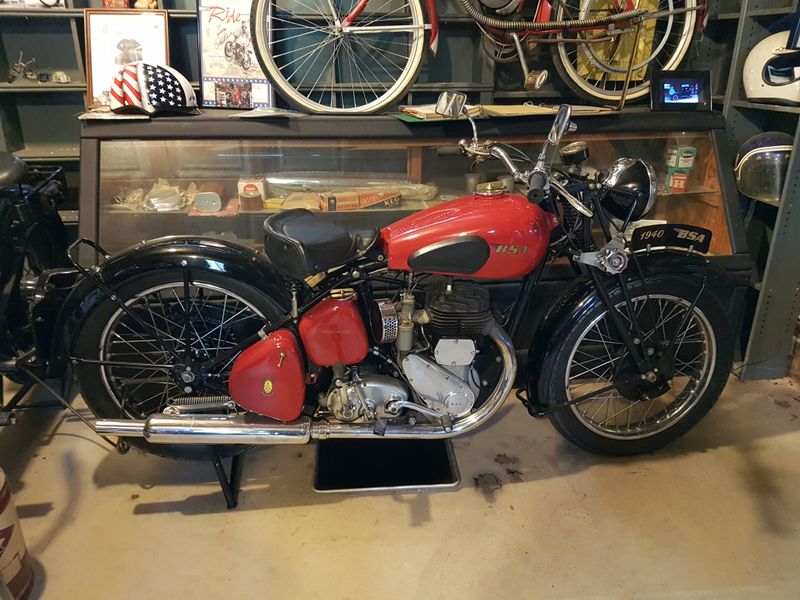
No motorcycle museum would be complete without Harley-Davidson, and this collection features some truly exceptional examples. Harley-Davidson essentially wrote the book on American motorcycle culture, and seeing the evolution of their designs through the decades was fascinating.
The museum showcases everything from early flathead models to Knucklehead, Panhead, and Shovelhead engines. Each engine design represents a different era of Harley innovation and performance.
Standing next to a perfectly restored Knucklehead, I could almost hear the distinctive rumble these engines were famous for.
What I appreciated most was how the display helps visitors understand the technical evolution alongside the cultural impact. Harley-Davidson didn’t just make motorcycles.
They created an entire lifestyle and identity that persists to this day.
Several of the Harleys on display are incredibly rare variants or limited production models that most people will never see anywhere else. The condition of these bikes is museum-quality, with original paint and components carefully preserved or expertly restored.
I noticed details that would escape casual observers: the way tank badges changed over the years, the evolution of suspension systems, the subtle differences in frame geometry. These machines tell the story of American manufacturing and engineering excellence across nearly a century of production.
European Classics and British Legends
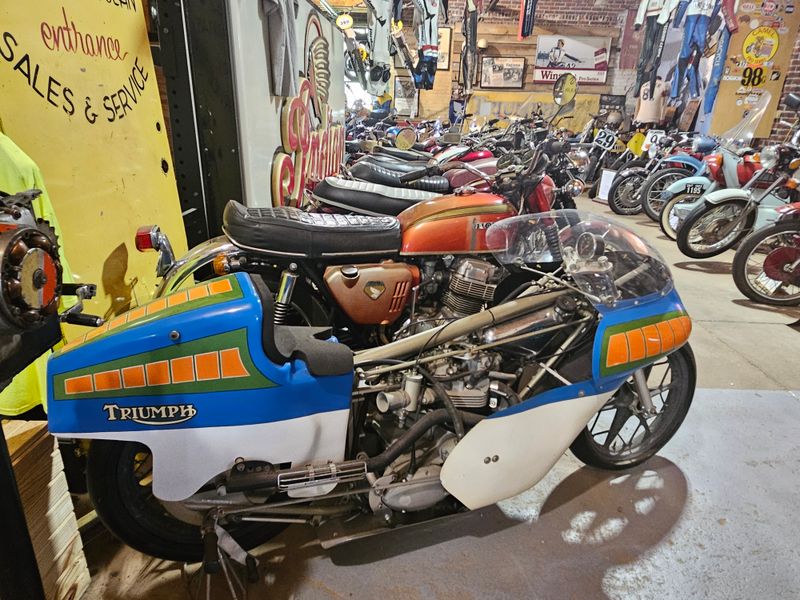
The collection extends far beyond American iron, featuring impressive examples of European and British motorcycle engineering. Brands like Triumph, BSA, Norton, and Vincent represent a different approach to motorcycle design, emphasizing handling and performance over pure displacement.
British motorcycles dominated racing and road riding for decades, and seeing these legendary machines in person helps you understand why. The engineering is elegant, the styling is purposeful, and the history is rich with competition success and cultural significance.
I was particularly drawn to a Triumph Bonneville, perhaps the most iconic British motorcycle ever made. The parallel twin engine, the distinctive exhaust note, the clean lines all combine to create a bike that still looks modern despite being decades old.
The museum also features some truly rare European marques that even hardcore enthusiasts might not recognize. These bikes represent the diversity of motorcycle design across different countries and cultures, each solving the same problems in unique ways.
What struck me about the British bikes was their mechanical simplicity compared to modern machines, yet they were remarkably effective. Many riders today seek out vintage British motorcycles specifically for that pure, unfiltered riding experience.
Seeing them displayed alongside American and Japanese bikes highlights the different philosophies that shaped motorcycle development worldwide.
Japanese Innovation and Engineering
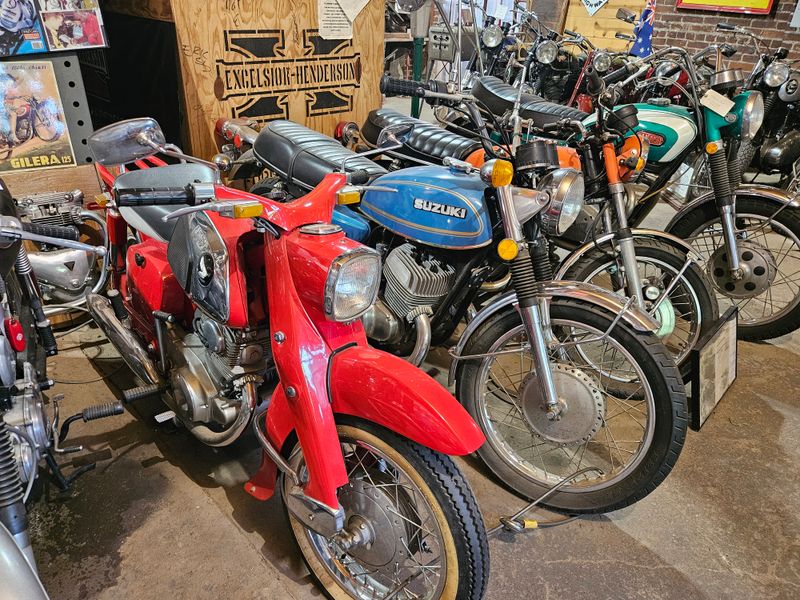
The museum’s collection wouldn’t be complete without representing the Japanese manufacturers that revolutionized motorcycling in the 1960s and 70s. Honda, Yamaha, Suzuki, and Kawasaki brought reliability, performance, and affordability to the masses in ways that changed the industry forever.
Seeing early Honda CB models and Kawasaki Z-series bikes reminded me how these machines democratized motorcycling. Before the Japanese invasion, motorcycles were often temperamental, expensive, and required constant maintenance.
Japanese bikes changed all that.
The technical innovation on display is remarkable. Multi-cylinder engines, electric starters, disc brakes, and sophisticated suspension systems all became standard features thanks to Japanese engineering.
These weren’t just incremental improvements. They were revolutionary leaps forward.
I spent time examining a pristine Honda CB750, the bike that essentially created the superbike category. Its four-cylinder engine, front disc brake, and electric start were groundbreaking when introduced.
Today it looks almost quaint, but in its time, this was cutting-edge technology.
The museum’s Japanese collection shows how these manufacturers learned from European and American designs, then improved upon them with better manufacturing processes and engineering refinement. The impact of Japanese motorcycles on the industry cannot be overstated, and this collection honors that contribution perfectly.
Racing Machines and Competition History
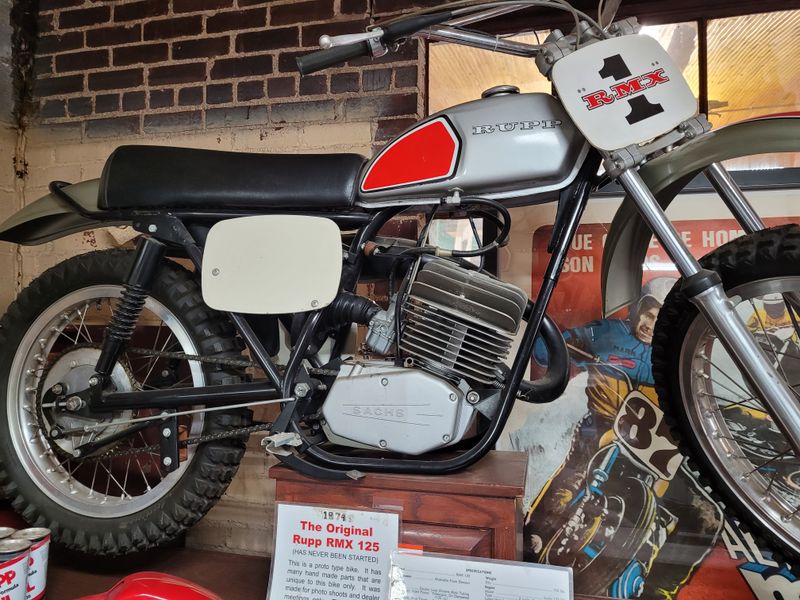
Some of the most exciting bikes in the collection are purpose-built racing machines that never saw street use. These stripped-down, fire-breathing competition bikes represent the pinnacle of performance from their respective eras.
Standing next to them, you can almost feel the speed they were built to achieve.
Racing has always driven motorcycle innovation, and the museum showcases bikes that competed in everything from flat track to road racing to motocross. Each discipline required different approaches to design, resulting in wildly diverse machines.
What fascinated me most was seeing how minimalist these racing bikes were. Every component served a purpose, with nothing added for comfort or convenience.
The fuel tanks were tiny, the seats were barely padded, and the riding position was purely functional.
Several bikes on display have legitimate racing pedigrees, having competed in famous events or been ridden by notable racers. The stories behind these machines add another dimension to their appeal beyond just the hardware itself.
I noticed the evolution of racing technology through the decades, from rigid frames and girder forks to modern suspension and chassis design. Each generation of racing bike pushed the boundaries of what was possible, and those innovations eventually trickled down to street bikes that regular riders could enjoy.
Rare and Unusual Motorcycles
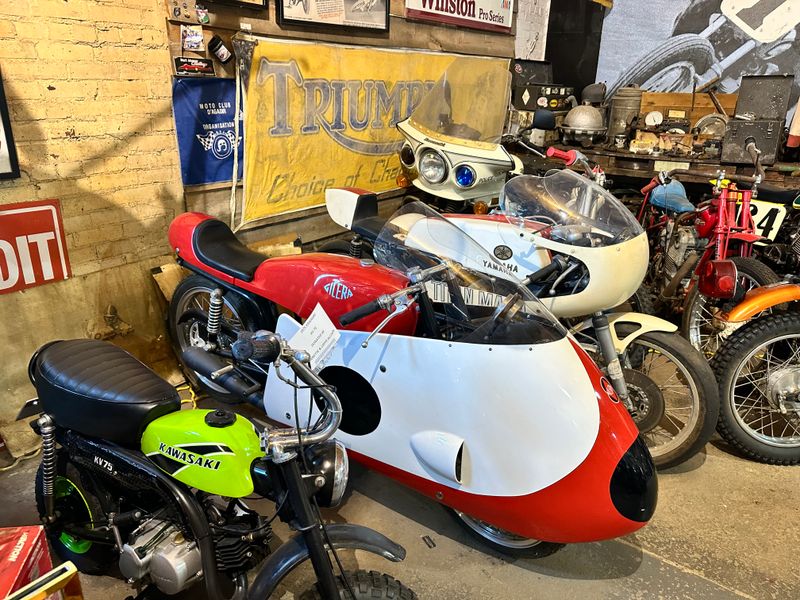
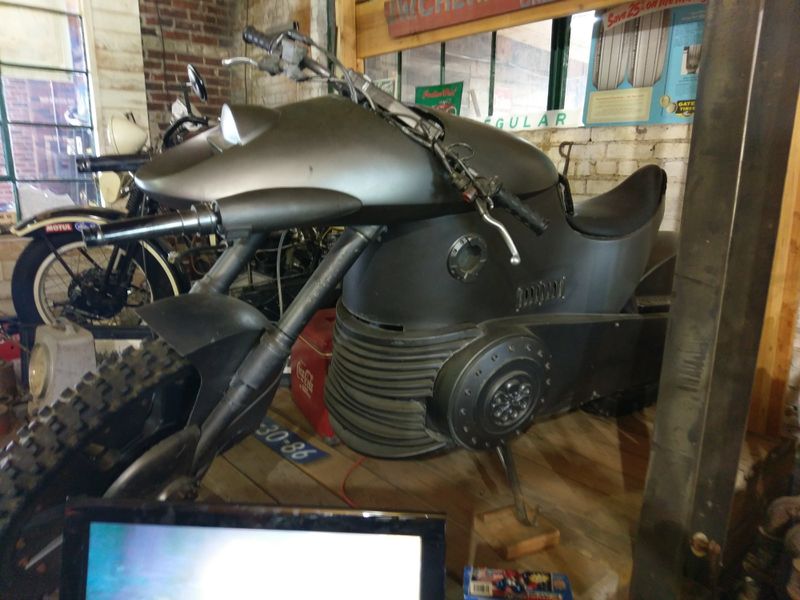
Beyond the famous brands and common models, the museum houses some truly unusual motorcycles that most people have never heard of. These oddities and rarities represent the experimental side of motorcycle design, where manufacturers tried different approaches that didn’t always succeed commercially.
I discovered bikes with unusual engine configurations, strange suspension designs, and innovative features that were ahead of their time or simply too weird to catch on. Some of these machines are so rare that only a handful still exist anywhere in the world.
What makes these unusual bikes so interesting isn’t just their rarity. They represent the creativity and risk-taking that drove motorcycle development.
Not every experiment succeeded, but each one taught valuable lessons that influenced future designs.
The museum staff clearly takes pride in these oddball machines, displaying them with the same care and attention as the more famous models. Each unusual bike has a story about why it was created, what made it different, and why it ultimately succeeded or failed in the marketplace.
I found myself spending extra time with these rare machines, trying to understand the thinking behind their design choices. Some were brilliantly innovative but poorly executed.
Others were well-made but solved problems nobody actually had. All of them add fascinating depth to the collection.
Restoration and Preservation Efforts
Maintaining a collection of this size and quality requires serious dedication to restoration and preservation. The museum doesn’t just display motorcycles.
It actively works to save and restore machines that might otherwise be lost to time and neglect.
During my visit, I learned about the meticulous process involved in bringing a rusty barn find back to showroom condition. It’s not just mechanical work.
It requires research to ensure authenticity, sourcing correct parts that may no longer be manufactured, and applying period-correct finishes and techniques.
The level of detail in these restorations is impressive. Paint is matched to original factory specifications.
Chrome is replated to factory standards. Even rubber components are sourced to match original specifications as closely as possible.
What separates a good restoration from a great one is respect for originality. The museum’s approach preserves as much original material as possible while ensuring the bikes remain structurally sound and visually stunning.
It’s a delicate balance between preservation and restoration.
I appreciated seeing some bikes displayed in unrestored condition alongside their fully restored counterparts. This comparison helps visitors understand the incredible transformation these machines undergo and the skill required to accomplish it.
The before-and-after effect is truly remarkable.
The Route 66 Connection
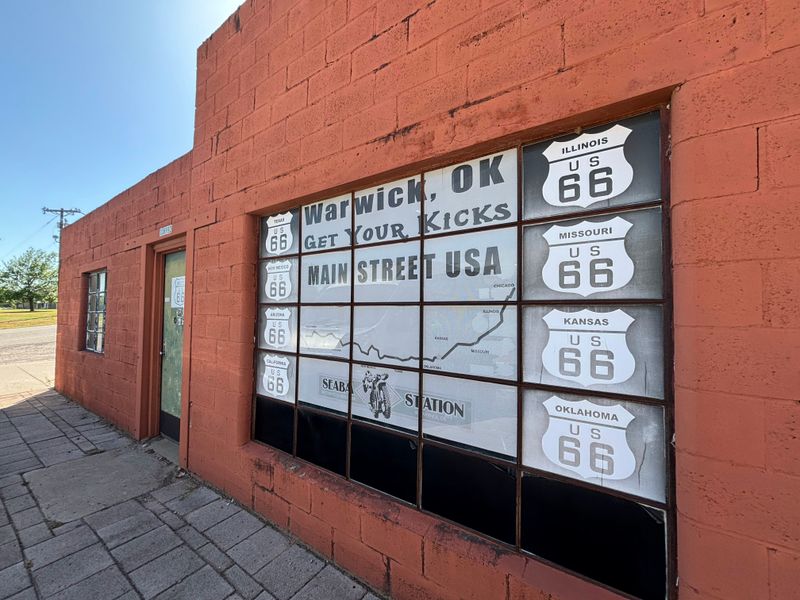
The museum’s location along Route 66 isn’t coincidental. The Mother Road and motorcycle culture have been intertwined since the highway’s creation.
Motorcycles offered freedom and adventure to travelers seeking to explore America, and Route 66 was the ultimate road for that journey.
The building itself honors this connection, having served as a service station in Route 66’s heyday. Travelers would stop here for fuel, repairs, and refreshments before continuing their journey across Oklahoma and beyond.
Now it serves a different purpose but maintains that spirit of hospitality.
I loved how the museum incorporates Route 66 memorabilia and history alongside the motorcycle displays. Vintage gas pumps, old road signs, and period photographs help recreate the atmosphere of the highway’s golden age.
Many visitors arrive on their own motorcycles, continuing the tradition of two-wheeled Route 66 exploration. The museum serves as both destination and waypoint, a place to appreciate motorcycle history while creating new memories on the historic highway.
The synergy between the museum and Route 66 enhances both experiences. You’re not just seeing old motorcycles or visiting a historic road.
You’re connecting with a larger story about American freedom, exploration, and the open road that defined generations of riders and travelers.
Educational Value and Historical Context
Beyond simply displaying beautiful machines, the museum provides genuine educational value. The exhibits help visitors understand how motorcycles evolved technically, culturally, and aesthetically over more than a century of development.
I appreciated the informative placards accompanying each bike, offering details about the model, its significance, and interesting facts about its history or technical features. The information is accessible without being dumbed down, making it valuable for both casual visitors and serious enthusiasts.
The museum effectively shows how motorcycles reflected broader social and technological changes. Post-war prosperity, the rise of youth culture, environmental concerns, and globalization all influenced motorcycle design and marketing in different eras.
For younger visitors, the museum offers a window into a world before modern electronics and computer controls. These mechanical machines with their exposed engines and simple controls represent a more direct, visceral approach to transportation that’s increasingly rare today.
I left with a deeper appreciation for motorcycle history and engineering. The museum doesn’t just preserve old bikes.
It preserves knowledge, stories, and cultural heritage that might otherwise fade away. That educational mission elevates this collection beyond mere nostalgia into something genuinely valuable for future generations.
Planning Your Visit
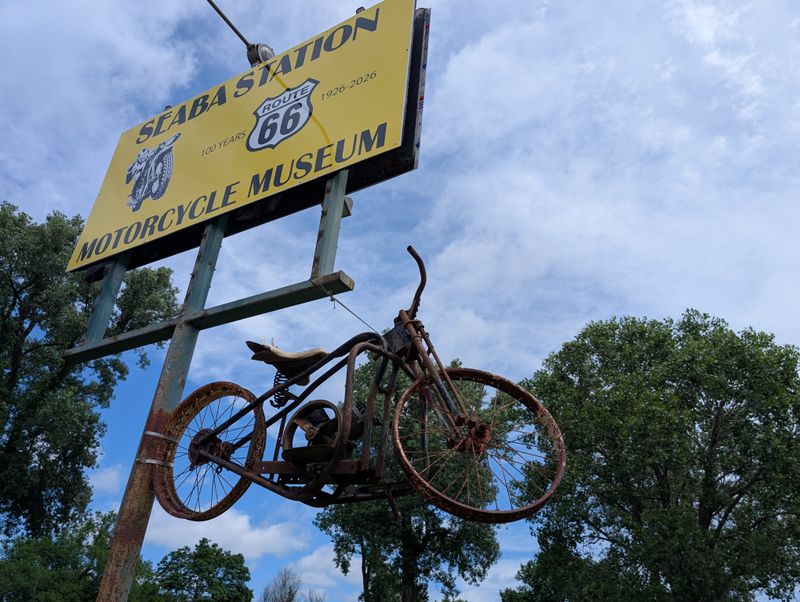
A trip to this museum requires some planning but rewards the effort with an unforgettable experience. The museum is open Tuesday, Thursday, Friday, Saturday, and Monday from 10 AM to 5 PM, closed Wednesdays and Sundays.
I recommend allowing at least two hours to properly appreciate the collection, though serious enthusiasts could easily spend much longer.
The admission price is very reasonable considering the quality and size of the collection. The museum operates largely through the passion of its founders and the support of visitors, making every admission dollar important for continued operation and expansion.
Photography is generally permitted, which is fantastic for motorcycle enthusiasts who want to document their visit or study details later. The lighting inside is decent, though bringing a camera capable of handling indoor conditions will yield better results than most phone cameras.
The museum’s website at seabastation.com provides additional information, though calling ahead at 405-258-9141 is smart if you’re traveling from far away. The staff is knowledgeable and friendly, often happy to answer questions or share stories about specific bikes.
Oklahoma may not be the first place people think of for world-class museums, but this collection rivals anything you’ll find in major cities. Combined with the Route 66 experience and the friendly small-town atmosphere, it makes for a perfect day trip or stop on a longer journey.



