There is a stretch of gravel road in northeastern Oklahoma where you can roll down your windows, cut the engine for a moment, and hear nothing but wind moving through tall grass and the low rumble of bison somewhere nearby. I had no idea a place like this still existed in the lower 48 states until a friend insisted I make the drive out to Osage County.
What I found was one of the largest protected tallgrass prairies on the planet, home to more than 2,100 free-roaming bison spread across nearly 40,000 acres. By the time I finished the bison loop and pulled back onto the paved road, my car was coated in dust and my camera roll was completely full.
Where the Prairie Begins: Address, Location, and Getting There
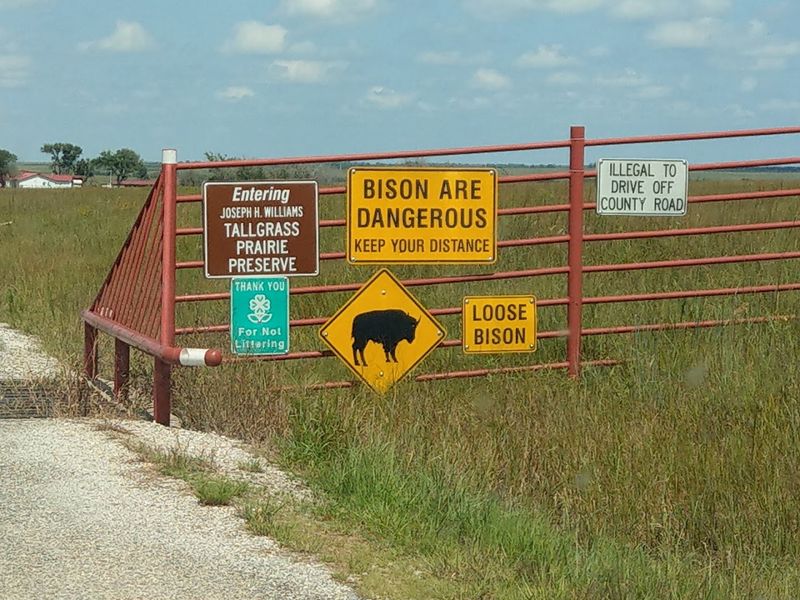
The Joseph H. Williams Tallgrass Prairie Preserve sits at 15316 Co Rd 4201, Pawhuska, OK 74056, tucked into the Osage Hills of northeastern Oklahoma.
The Nature Conservancy manages this sprawling reserve, which covers close to 40,000 acres and represents the largest protected tallgrass prairie remaining in the world.
From Tulsa, the drive takes roughly 90 minutes heading northwest. Most visitors follow Grandview Avenue north out of Pawhuska and then track the well-placed brown directional signs that guide you toward the visitor center and the famous bison loop.
The route is straightforward once you are on the right road, but relying solely on GPS can sometimes drop you onto a confusing network of dirt tracks, so the signage is genuinely your best friend out here.
The preserve is open every day from 7 AM to 7 PM, and admission is completely free. You can reach the preserve by phone at +1 918-918-2552, and additional details are available through the Nature Conservancy website.
Plan to arrive early in the morning when the light is golden and the bison tend to be closer to the road.
The Scale of the Land: 40,000 Acres of Open Tallgrass Prairie
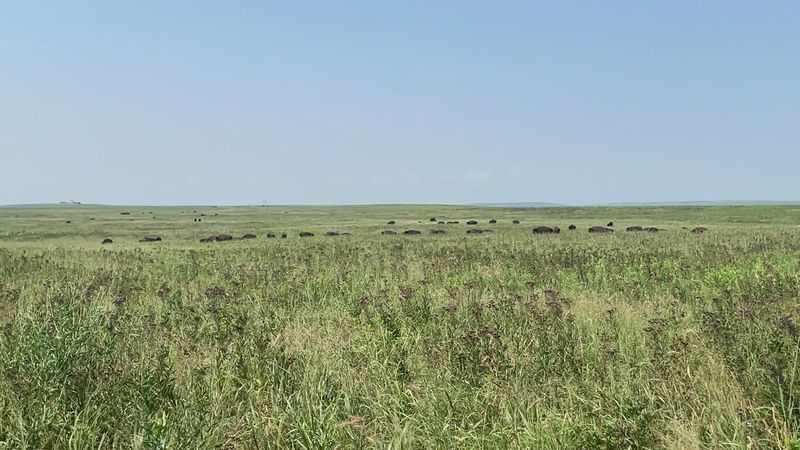
Nothing quite prepares you for the sheer size of this place. The moment you pass through the preserve gate and the pavement ends, the land opens up in every direction with a kind of quiet authority that makes you feel very small in the best possible way.
The tallgrass prairie ecosystem once covered roughly 170 million acres across North America, stretching from Canada down through Texas. Today, less than four percent of that original expanse remains intact, and the Joseph H.
Williams Tallgrass Prairie Preserve protects one of the most significant surviving pieces. The grasses here, primarily big bluestem, indiangrass, and switchgrass, can grow taller than six feet in a good season.
Driving through, you pass scenic overlooks that offer sweeping views across the rolling Osage Hills. The landscape shifts with the seasons, turning from vibrant green in spring to deep amber and rust by autumn.
Wildflowers dot the hillsides during warmer months, and the sky feels almost impossibly wide without buildings or trees crowding the horizon. This is the kind of scenery that stays with you long after you have driven back to the city.
More Than 2,100 Bison: The Heart of the Preserve
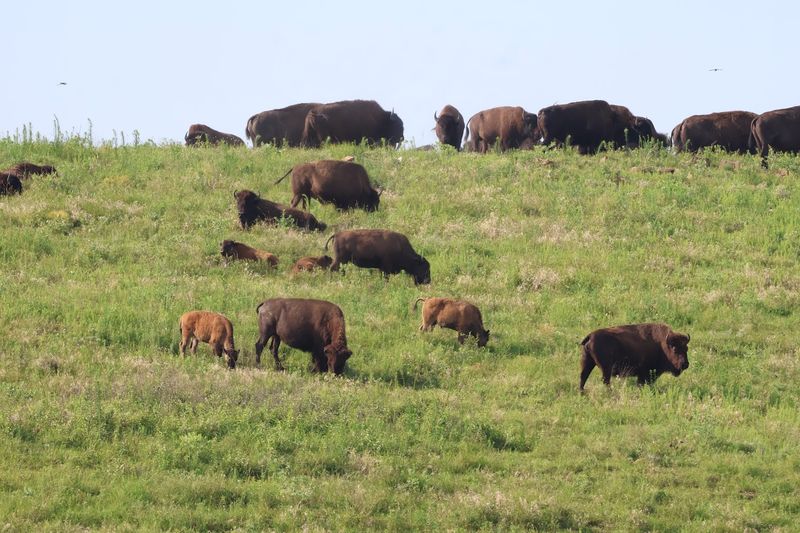
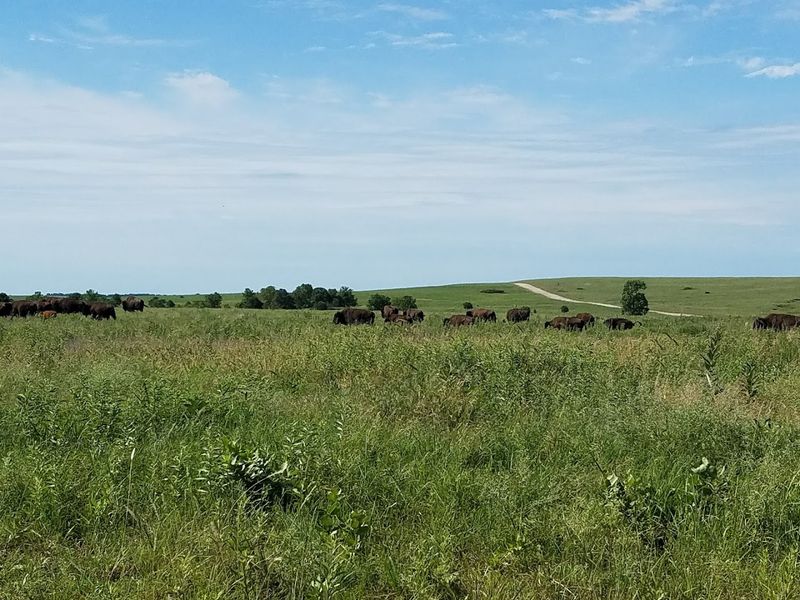
The bison herd at this preserve is not a backdrop or a novelty. These animals are central to the ecological mission of the place, and the Nature Conservancy manages them carefully to restore the natural grazing patterns that shaped the tallgrass prairie for thousands of years.
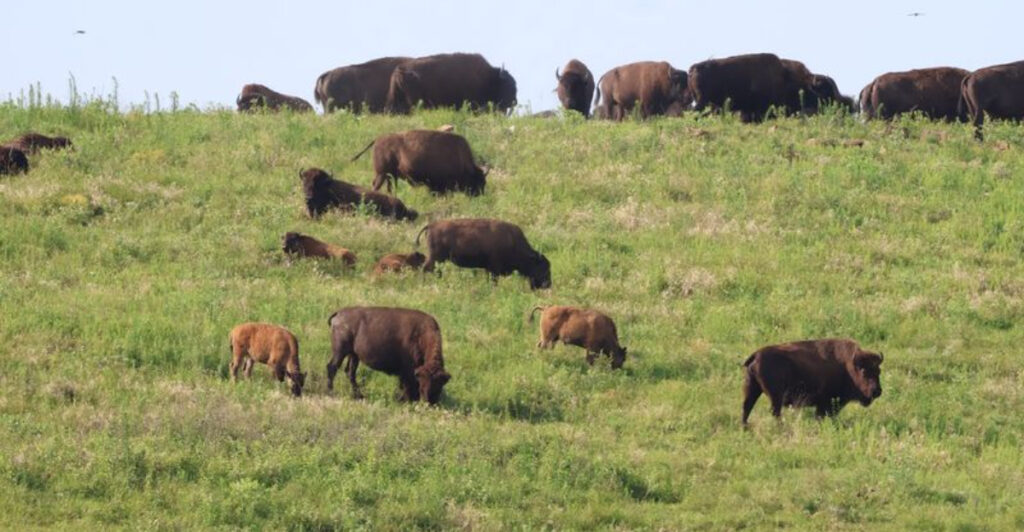
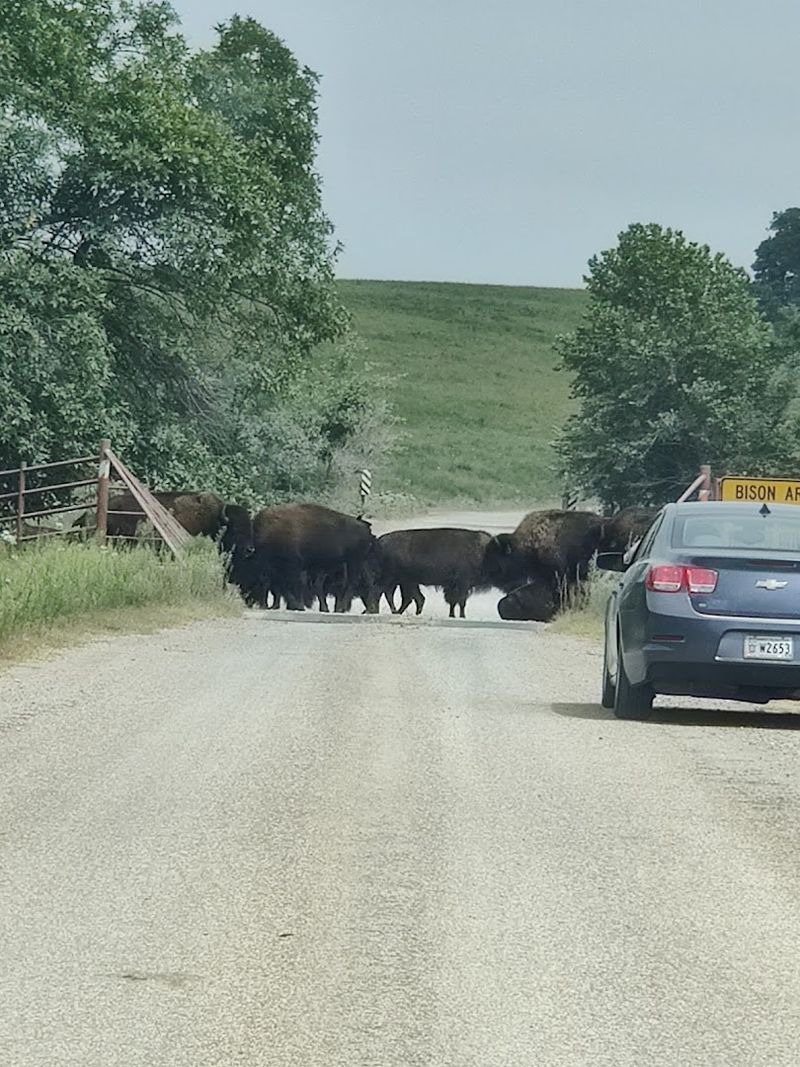
With more than 2,100 animals roaming the property, encounters are common and genuinely thrilling. On my visit, a group of about 30 bison crossed the gravel road directly in front of my car, and I sat there for a solid ten minutes while they shuffled past at their own unhurried pace.
Adult bison can weigh up to 2,000 pounds and are deceptively fast, so staying in your vehicle at all times is not just a suggestion but a serious safety rule.
Spring is a particularly rewarding time to visit because the calves arrive in late spring and are noticeably smaller and a warm cinnamon color compared to the darker adults. Binoculars are helpful since the herds sometimes spread far across the open range, though many visitors spot bison right beside the road without needing any extra gear.
The 15-Mile Bison Loop: What the Drive Is Actually Like
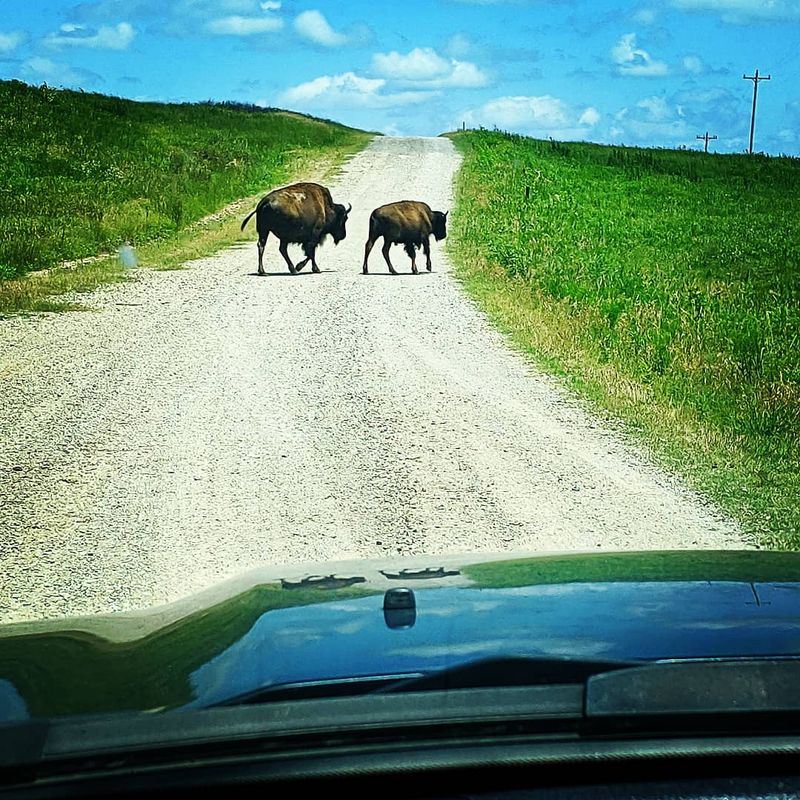
The bison loop is the main event, and it earns every bit of its reputation. The route stretches roughly 15 miles along unpaved gravel roads that wind through the heart of the preserve, offering a self-guided driving experience unlike anything else in the region.
Plan to spend at least an hour on the loop, though many visitors take longer when bison are close to the road or when the light is particularly good for photography. The roads are well-graded and passable in a standard car, though an SUV or pickup truck handles the gravel and occasional low-water crossings more comfortably.
Your vehicle will collect a generous layer of dust, so a car wash on the way home is basically mandatory.
Speed limits on the loop top out around 30 to 35 mph, which encourages a slow, observant pace. Along the way you will pass through open grassland, over small creek crossings, and past several scenic pullouts where you can stop and take in the view.
Deer cross the road frequently, coyotes occasionally trot through the grass, and on clear nights the preserve offers some of the darkest skies in Oklahoma for stargazing.
The Visitor Center: Friendly Faces and Useful Information
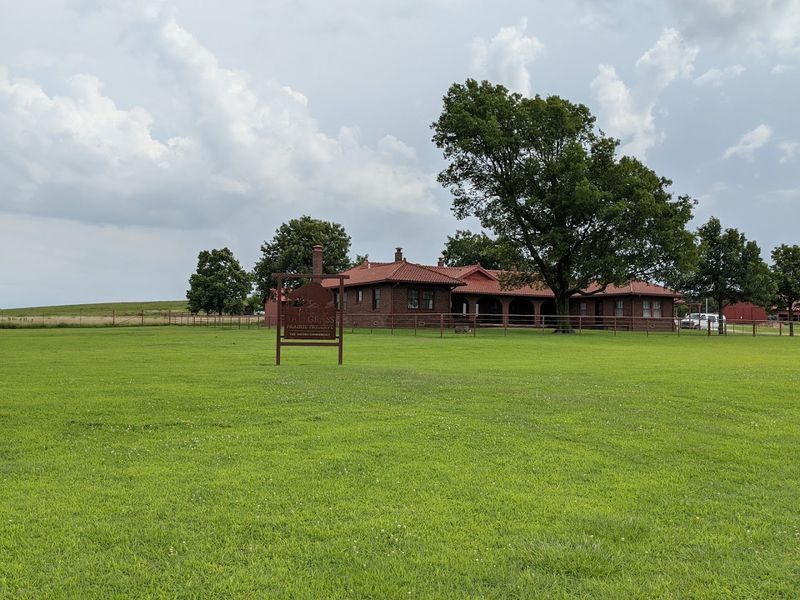
The visitor center sits near the end of the bison loop and serves as a helpful anchor point for the whole experience. The volunteers and docents stationed there bring a level of enthusiasm that is genuinely refreshing and not at all performative.
On my visit, the staff answered every question I had about bison behavior, prairie ecology, and the best spots to find the herd that day. They shared details about how the Nature Conservancy uses controlled burns to maintain the prairie, why bison grazing is essential to keeping the ecosystem healthy, and what other wildlife I might spot along the way.
That kind of firsthand, specific knowledge makes a real difference in how you experience the drive afterward.
The visitor center also has restrooms, which is more valuable than it sounds when you are out on 40,000 acres of open range with no services nearby. Note that the gift shop is no longer operating as of recent visits, so do not count on picking up souvenirs there.
The center keeps the same hours as the preserve, 7 AM to 7 PM daily, and the staff genuinely seem to love what they do.
Wildlife Beyond Bison: Deer, Coyotes, Birds, and Turtles
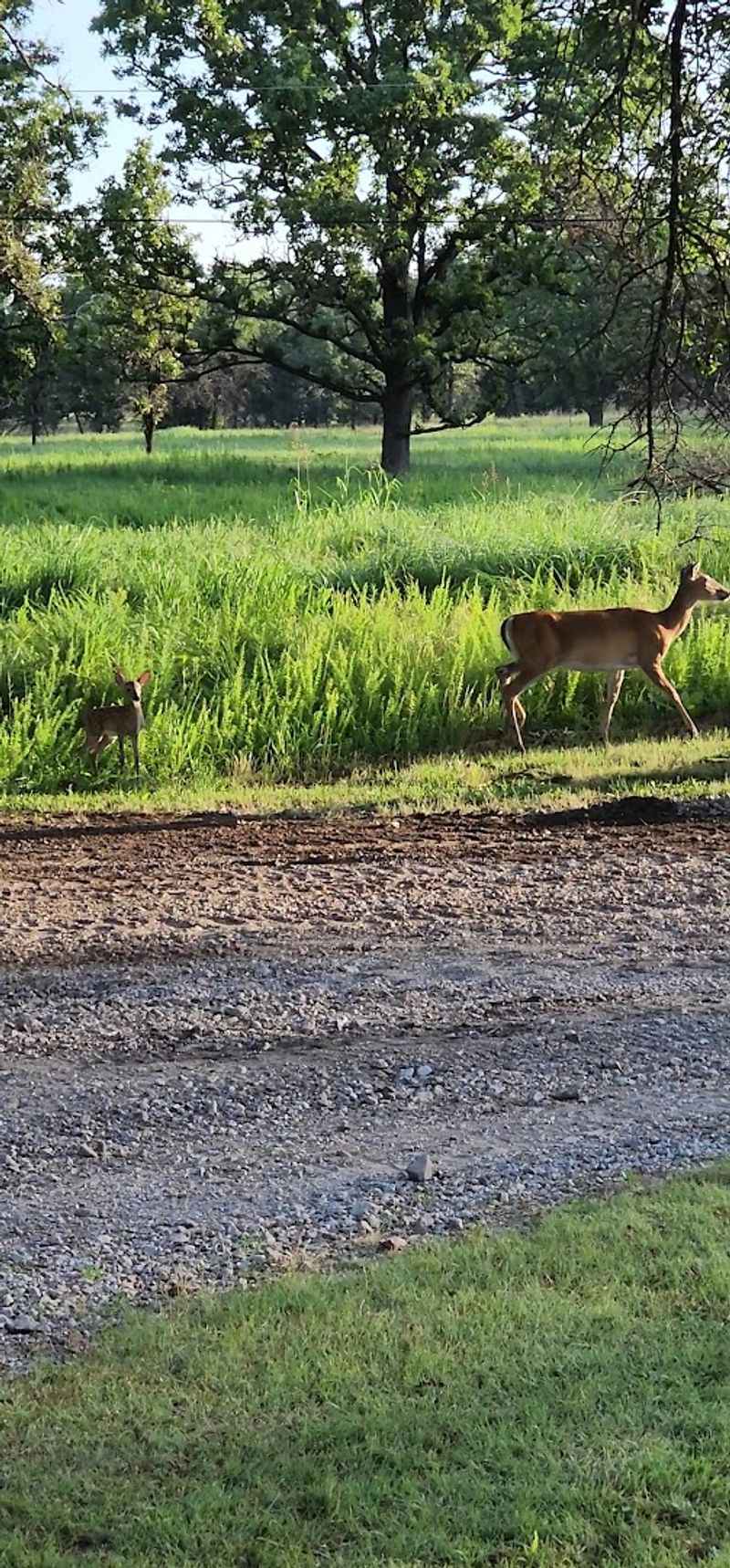
Bison get all the headlines, but the preserve hosts a surprisingly rich variety of wildlife that rewards patient observers. White-tailed deer are almost a certainty on any visit, often darting across the gravel road in small groups or standing at the edge of the grass watching your car with calm, unhurried eyes.
Coyotes make regular appearances, particularly in the early morning and late afternoon hours. Red-tailed hawks and other raptors circle overhead regularly, scanning the grassland below.
During warmer months, the preserve buzzes with insect life, and the wildflower patches attract a wide variety of butterflies that add unexpected color to the landscape.
At the low-water crossings scattered along the loop road, it is worth slowing down to check for turtles basking in the sun or crossing between pools. The diversity of species here reflects the health of the ecosystem, and spotting something unexpected, whether a coyote trotting through the tall grass or a painted turtle crossing the road, adds a spontaneous quality to every visit that makes no two trips identical.
Bring a field guide if you have one, because there is more to see here than most people expect.
Hiking Trails: Stretching Your Legs on the Prairie
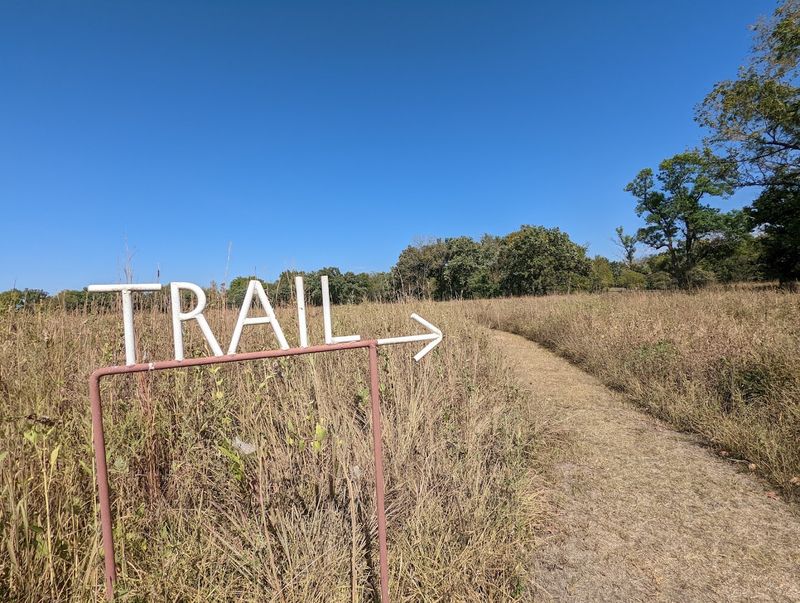
The preserve is not only a drive-through experience. Several walking trails branch off from the main road and give you a chance to experience the prairie at a slower, more intimate pace that a car window simply cannot provide.
The trails are mowed and well-maintained, with benches placed at intervals that invite you to sit, breathe, and watch the grass move. The longer trail is labeled as difficult on the map but is more accurately described as moderately demanding, covering varied terrain over a couple of hours.
The views from the higher points along the trail are genuinely worth the effort, stretching out across the Osage Hills in a way that feels cinematic.
A few practical notes: sunscreen is essential because most of the trails run through open ground with little shade, and insect repellent is strongly recommended, particularly for ticks during spring and summer. Wearing long socks and checking yourself thoroughly after hiking is a sensible habit out here.
The trails also include a memorial bench area that holds personal significance for some visitors, adding a quiet, reflective quality to certain stretches of the walk.
Best Time to Visit: Seasons, Light, and What to Expect
Every season brings something different to the preserve, and honestly, there is no bad time to make the trip. That said, spring stands out as particularly rewarding.
The grass is lush and green, wildflowers are blooming across the hillsides, and the bison calves arrive in late spring as small, cinnamon-colored additions to the herd that are almost impossibly photogenic.
Summer visits work well for early morning arrivals when the temperature is manageable and the bison tend to be more active before the midday heat settles in. Autumn transforms the prairie into a palette of amber, copper, and deep red as the grasses shift color, making it a favorite season for photographers and landscape enthusiasts.
Winter visits are quieter and the bison are easier to spot against the pale grass, though the visitor center hours may vary and the roads can be muddy after rain. For nighttime visitors, the preserve sits far enough from city lights that the star visibility is exceptional, especially on a clear, moonless night.
Arriving around sunset and lingering into the early evening gives you both golden-hour photography and a sky full of stars, which is a combination that is hard to beat anywhere in Oklahoma.
Practical Tips: What to Bring and How to Prepare
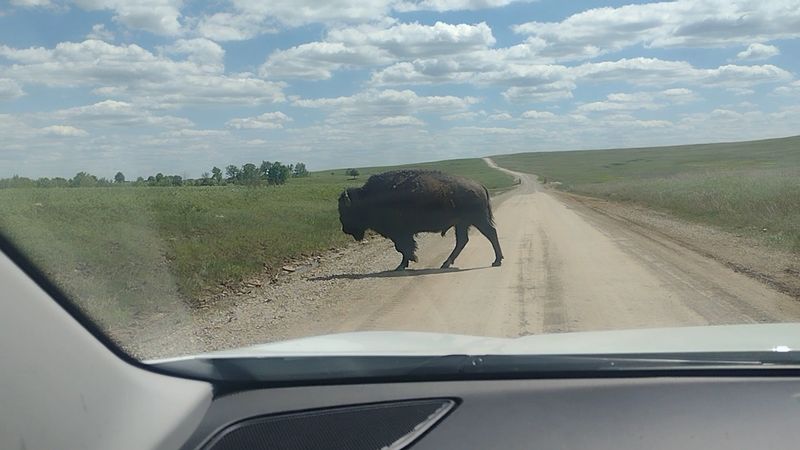
A little preparation goes a long way at a preserve this large and remote. The roads are entirely unpaved once you pass the entrance, so your vehicle will come home dusty regardless of what you drive.
An SUV or truck handles the gravel and the occasional low-water bridge crossings with more comfort than a low-clearance sedan, though plenty of visitors complete the loop in standard cars without trouble.
Fuel up before leaving Pawhuska because there are no services inside the preserve. Bring water, snacks, and more storage space on your phone or camera than you think you will need.
The bison encounters happen quickly and the light changes fast, so having your camera ready rather than buried in a bag makes a real difference.
Insect repellent, sunscreen, and a hat are practical essentials for anyone planning to hike. A pair of binoculars is worth packing since the herds sometimes spread across distant ridges.
Cell service is limited inside the preserve, so downloading an offline map beforehand is a smart move. The preserve is free to enter, which makes it one of the most remarkable no-cost experiences available anywhere in the state.
Nearby Pawhuska: Extending Your Day Trip
The preserve pairs naturally with a visit to Pawhuska, the small Osage County seat that sits just a short drive south of the entrance. The town has quietly become a destination in its own right, anchored by the Pioneer Woman Mercantile on Main Street, which draws visitors from across the country for its food and baked goods.
After a morning on the dusty gravel roads of the bison loop, sitting down for a proper meal in town feels like a well-earned reward. The Mercantile serves a full menu and tends to draw a lively crowd, particularly on weekends, so arriving earlier rather than later saves you a wait.
The surrounding downtown has a handful of shops and a genuinely friendly small-town atmosphere that complements the wildness of the preserve nicely.
Pawhuska also sits within the Osage Nation, and the area carries a rich cultural history that is worth learning about before or after your visit. The Osage Nation Museum in town offers context about the tribe’s history and relationship with this land that adds meaningful depth to what you experience out on the prairie.
Together, the preserve and the town make for a full and satisfying day out of Tulsa or Oklahoma City.
Share this story