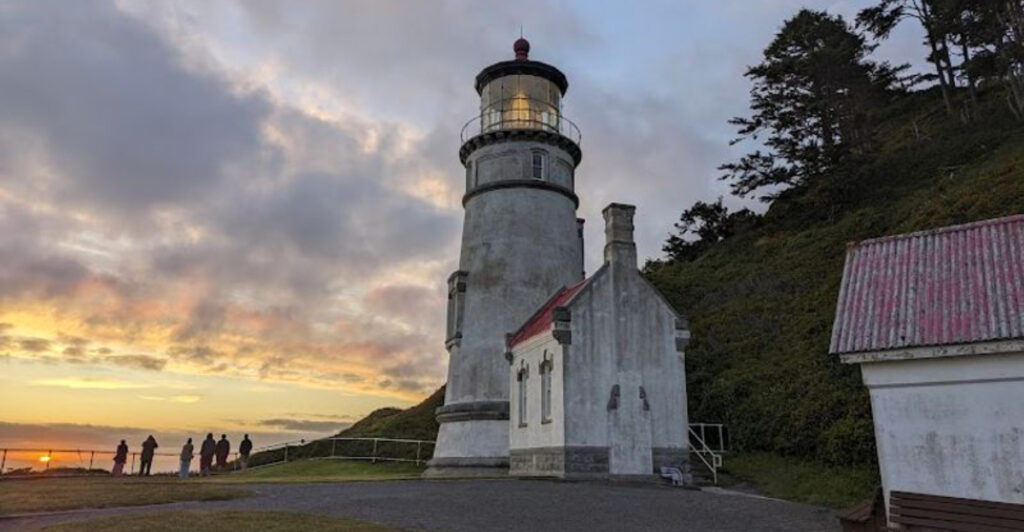
There is a lighthouse on the Oregon Coast that stops people mid-sentence. You are driving along Highway 101, the Pacific stretching endlessly to your left, and then it appears: a white tower perched on a cliff so dramatic it looks like a painting.
By day, the views are the kind that make you forget what you were worrying about. By night, the same spot takes on a completely different personality, one that has kept ghost hunters, historians, and curious travelers coming back for over a century.
This is the story of one of the most beloved and talked-about coastal landmarks in the entire Pacific Northwest, and trust me, you are going to want to read every single section.
Where Exactly This Landmark Stands
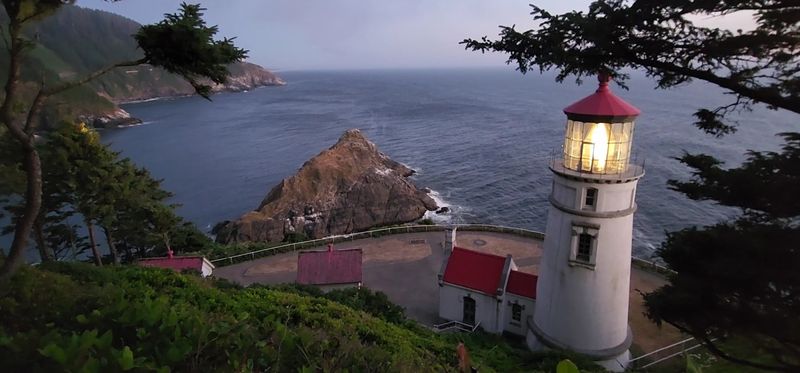
The official address for Heceta Head Lighthouse is 725 Summer St, Florence, OR 97439, tucked along the central Oregon Coast just off US Highway 101, roughly 13 miles north of Florence. The lighthouse sits within Heceta Head Lighthouse State Scenic Viewpoint, a unit of the Oregon State Parks system.
Getting here is genuinely part of the experience. The drive along Highway 101 curves through dense coastal forest before suddenly opening up to sweeping ocean views.
A small parking area sits at the base of the hill, and from there a well-maintained trail winds upward about half a mile to the lighthouse itself.
The park is open every day from 6 AM to 9 PM, which means you can catch both sunrise light and the eerie blue dusk that settles over the cliffs. Parking does require a fee, currently around ten to twelve dollars for out-of-state visitors, though an Oregon State Parks pass covers you for the day.
The lighthouse phone number is (800) 551-6949 if you want to call ahead for tour availability or seasonal updates before making the trip.
A Quick History of the Tower Itself
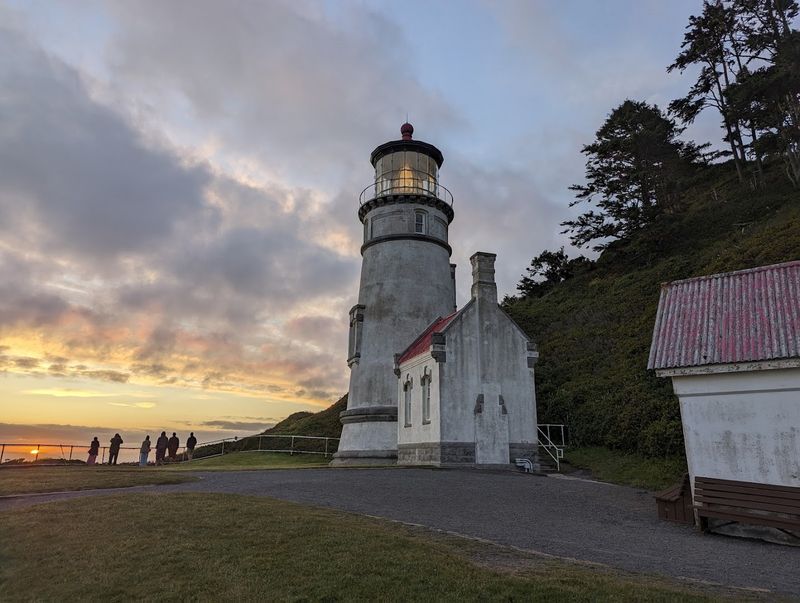
Built in 1894, Heceta Head Lighthouse has been guiding ships along one of the most treacherous stretches of the Oregon Coast for well over a century. The lighthouse is named after Spanish explorer Bruno de Heceta, who sailed past this headland in 1775 and was one of the first Europeans to document the coastline in this region.
The tower stands 56 feet tall, but because it sits on a cliff about 205 feet above sea level, the light itself reaches an impressive distance of roughly 21 miles out to sea. That made it one of the most powerful navigational aids on the entire Pacific Coast when it first went into operation.
The original Fresnel lens, a first-order lens of extraordinary complexity, is still in place and still functioning. The state of Oregon has invested significant effort in restoring both the tower and the surrounding structures to their original 19th-century condition.
Volunteers who staff the lighthouse love talking about the restoration process, and their enthusiasm for preserving this piece of maritime history is genuinely contagious when you visit in person.
The Hike Up to the Lighthouse
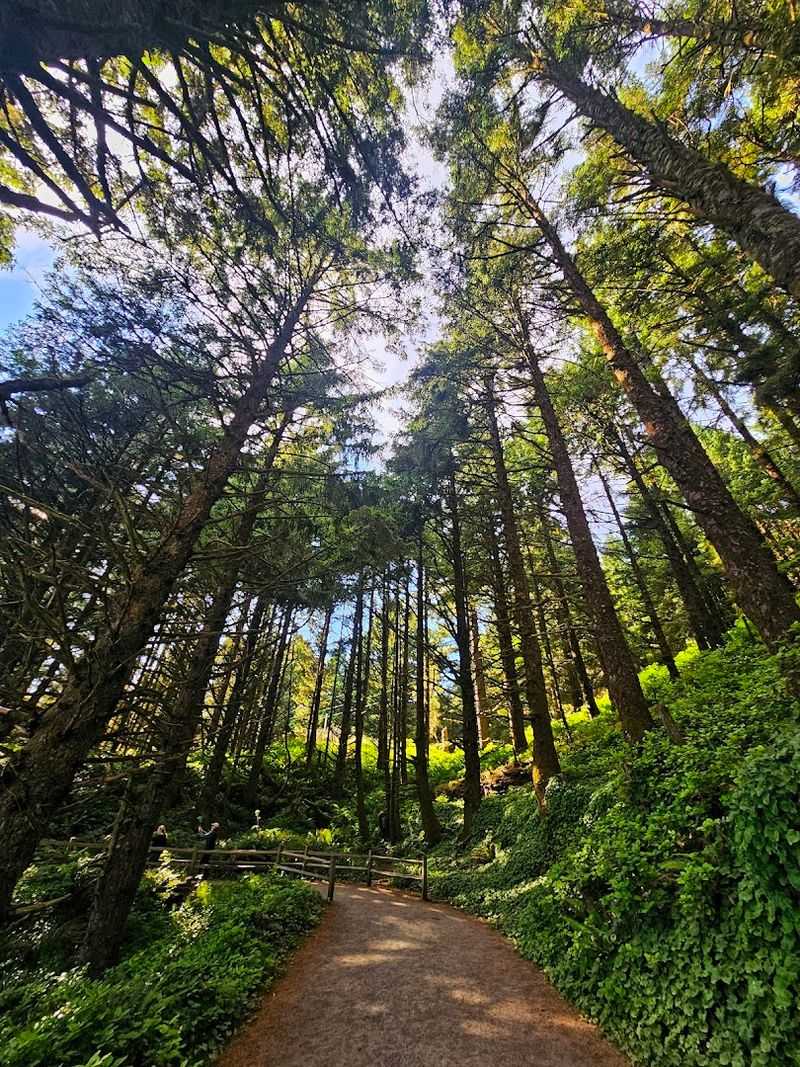
The trail from the parking lot to the lighthouse is about half a mile, and while it does involve a steady uphill climb, it is absolutely manageable for most people. The path is wide, clearly marked, and well-maintained by Oregon State Parks staff throughout the year.
Along the way, the forest opens up in several spots to reveal stunning views of the coastline below. You can see the historic bridge built in the 1930s from certain points on the trail, and it frames the ocean in a way that practically begs you to stop and take a photo.
A gift shop sits roughly halfway up the hill, which makes a convenient rest stop and sells surprisingly well-priced souvenirs.
For visitors with mobility concerns, there is bench seating near the lighthouse at ground level, along with restroom facilities and helpful park staff on hand. The trail above the lighthouse continues even higher, offering vistas that look straight down onto the tower from above.
That upper trail is quieter and rewards hikers with a perspective on the lighthouse that most visitors never see.
What the Views Actually Look Like From the Top
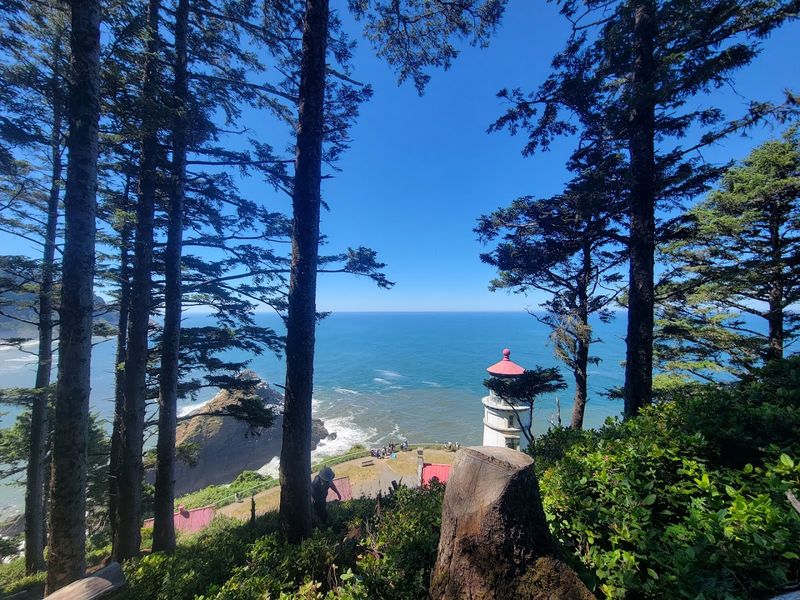
Standing next to the lighthouse and looking out over the Pacific is one of those moments that genuinely quiets the brain. The cliffs drop sharply below you, and waves crash against the rocks in slow, rhythmic bursts that you can feel as much as hear.
On a clear day, the horizon stretches so far that the ocean and sky blur into one seamless shade of blue.
The views shift constantly depending on the time of day and the weather. Morning fog rolls in thick and low, wrapping the headland in a soft gray silence.
By midday, the sun burns through and turns the water a brilliant teal. Late afternoon brings long golden shadows across the cliff face that make the white tower practically glow.
Clouds and light move quickly here, and no two visits look exactly the same. Returning visitors mention noticing something new every single time, whether it is the way a particular shadow falls across the rocks or a bald eagle riding a thermal above the treeline.
The lighthouse sits at the center of all of it, patient and permanent, while the scenery keeps changing around it.
The Fresnel Lens and the Light Mechanism
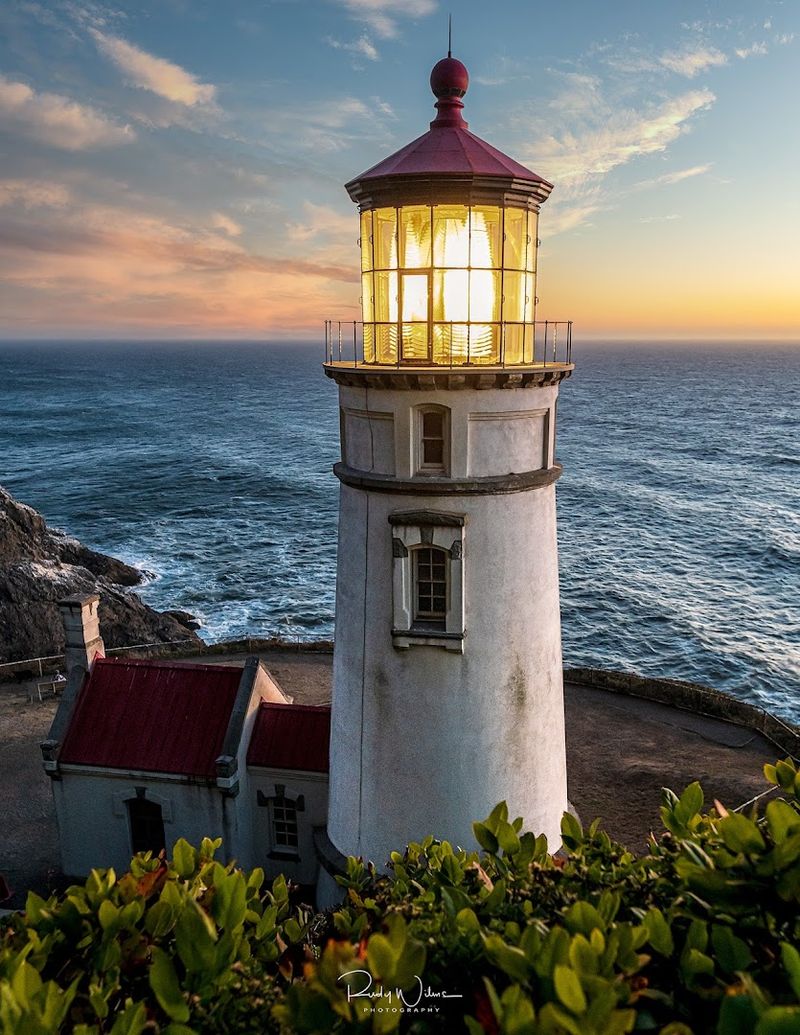
Most people do not realize just how remarkable the lens inside this lighthouse actually is until a volunteer explains it. The first-order Fresnel lens at Heceta Head is an engineering achievement that was astonishing even by modern standards.
It is made up of hundreds of precisely cut glass prisms arranged in a specific pattern to concentrate and project light across enormous distances.
The lens was manufactured in France and shipped to Oregon in the late 19th century, a journey that itself required considerable logistical effort given the size and fragility of the equipment. Once installed, it transformed what would have been a modest flame into a beacon visible 21 miles offshore on a clear night.
Volunteers at the lighthouse are particularly enthusiastic about explaining the optical physics behind the lens, and their explanations are surprisingly easy to follow even if science was never your strongest subject. The prism structure at the top is described by many visitors as almost impossibly complex up close.
The entire lens assembly has been painstakingly maintained and restored, and it remains one of the finest examples of 19th-century lighthouse technology still in active use anywhere on the West Coast.
The Haunted Side of Heceta Head
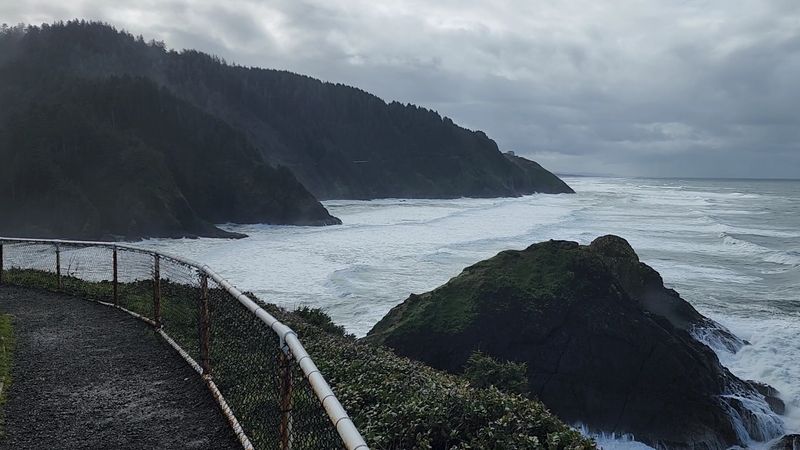
Here is where things get genuinely interesting. The lighthouse and its surrounding buildings carry a reputation as one of the most actively haunted locations in the entire state of Oregon, and the stories have been circulating for well over a hundred years.
The most frequently reported presence is a woman known locally as Rue, believed to be the spirit of a lighthouse keeper’s wife from the late 1800s. Her story involves a child whose small grave was discovered on the property during a renovation project decades ago.
The connection between Rue and the grave has never been fully explained, which only adds to the unsettled atmosphere after dark.
Workers performing renovations at the site have reported tools moving on their own, mirrors shattering without cause, and the distinct feeling of being watched from empty rooms. The B&B guests who stay overnight in the old keeper’s cottage sometimes report unexplained sounds during the night.
Whether you believe in that sort of thing or not, the way the fog rolls in after sunset and the way the lighthouse beam sweeps silently over the dark water does make the place feel like something else entirely once the sun goes down.
Staying Overnight at the Keeper’s Cottage B&B
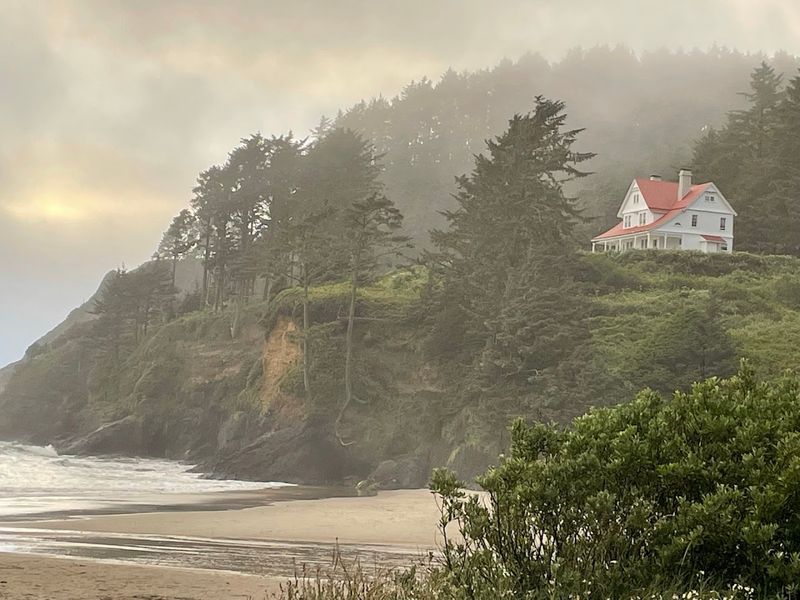
The old lighthouse keeper’s residence has been converted into a six-room bed and breakfast, and staying there is one of the more unusual overnight experiences available anywhere on the Oregon Coast. The building dates back to the same era as the lighthouse itself, and the interior has been carefully restored to reflect its 19th-century character while still offering modern comfort.
Waking up here means opening your eyes to ocean views that most people only see for a few minutes on a day trip. The surrounding forest and cliffs are completely quiet in the early morning hours, and the only sound is the distant rhythm of waves and the occasional call of a seabird.
It is the kind of morning that makes you reconsider your usual routine back home.
The B&B is privately operated and books up well in advance, particularly during summer months, so planning ahead is essential. Guests have access to the lighthouse grounds after the general public has left for the day, which gives the property a completely different atmosphere.
And yes, given the ghost stories attached to the keeper’s cottage, some guests do report that the nights feel a little more eventful than they expected when they made the reservation.
Wildlife You Might Spot on the Headland
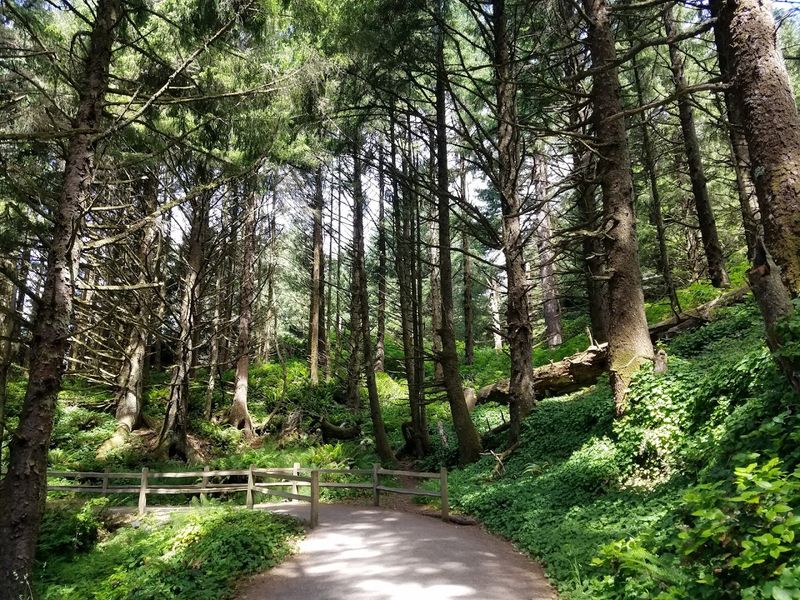
The headland around the lighthouse is surprisingly rich with wildlife, and keeping your eyes open during the hike pays off in ways that have nothing to do with the lighthouse itself. Bald eagles are spotted regularly in the area, including younger birds with brown plumage that can be tricky to identify at first glance.
One park visitor recently spotted a juvenile brown eagle perched on a tree near the trail, close enough to observe but just far enough to require a decent zoom lens.
Sea lions haul out on the rocks below the cliffs, and on calm days you can hear their barking carried up on the wind. Gray whales pass along this stretch of coast during their seasonal migrations, and the elevated position of the lighthouse viewpoint makes it one of the better whale-watching spots in the region without requiring a boat.
Shorebirds, cormorants, and various coastal songbirds are present throughout the year, and the forested trail up to the lighthouse passes through habitat that supports a different set of species than the open clifftop. Bringing a small pair of binoculars adds a whole new layer to a visit here, especially during the quieter shoulder seasons when the crowds thin out and the animals get easier to observe.
The Historic Bridge and the Beach Below
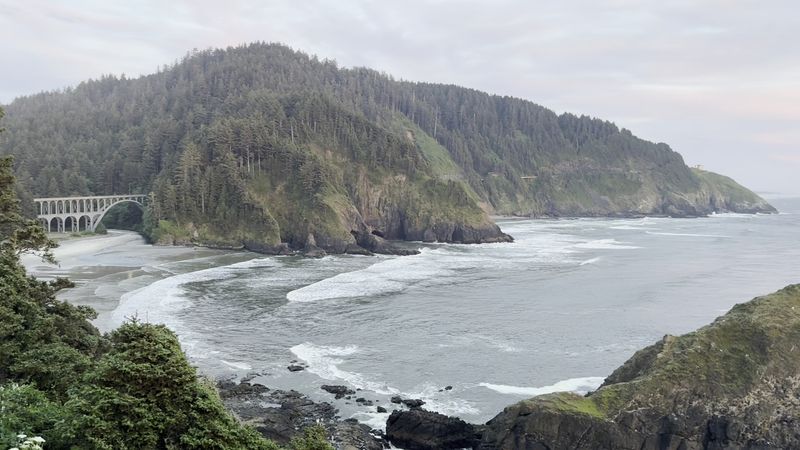
Just below the lighthouse, where a small creek meets the ocean, sits a historic bridge that was constructed in the 1930s as part of a broader coastal infrastructure project. The bridge is visible from several points along the lighthouse trail, and its concrete arches frame the beach and river outlet in a way that feels almost deliberately scenic.
The beach at the base of the headland is accessible and worth the extra few minutes it takes to walk down. The spot where the creek flows into the ocean creates a calm, shallow area that is popular with families and anyone who wants to get their feet wet without dealing with the full force of the Pacific surf.
The sand here is dark and fine, and the surrounding cliffs give the cove a sheltered, enclosed feeling.
Hobbit Beach, a short trail away from the main lighthouse area, is another destination that regular visitors mention enthusiastically. The hike from the lighthouse to Hobbit Beach adds real variety to the day and passes through dense coastal forest that feels completely different from the open headland above.
Between the bridge, the beach, and the lighthouse, a single visit here can easily fill an entire afternoon without any sense of running out of things to see.
Best Times to Visit and Parking Tips
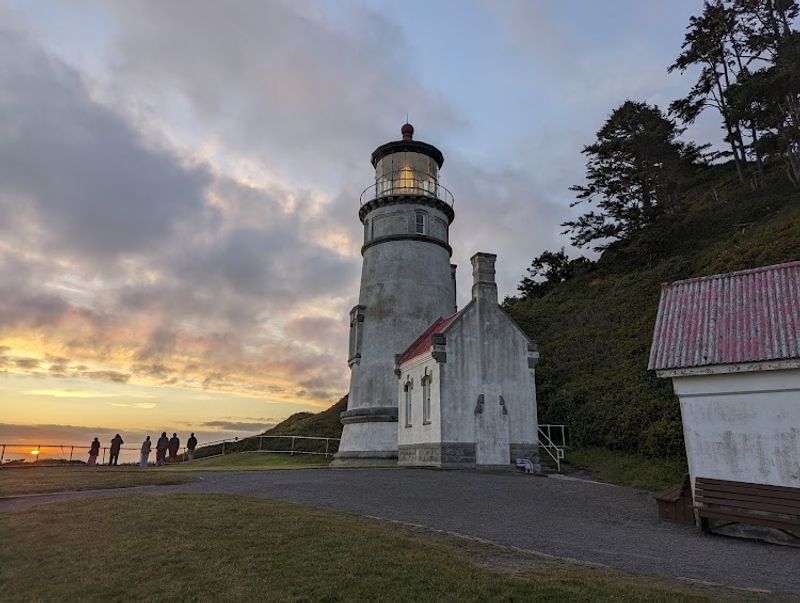
Summer is peak season here, and the parking situation can get genuinely challenging by mid-morning on weekends. By 10 AM in August, the main lot is often completely full.
The best strategy for avoiding the scramble is arriving early, ideally before 9 AM, or coming during the week rather than on a weekend.
If the main lot is full, there is overflow parking available along Highway 101 in a large pull-off on the southbound side near the park entrance. It adds a short walk but is a reliable backup that most visitors overlook in the stress of finding a spot.
Parking fees apply and are currently around ten to twelve dollars, so having cash or a card ready saves time at the entrance.
Fall is a notably quieter season here, and the weather along the central Oregon Coast can still be sunny and mild well into October. The light in autumn has a warmth and angle that summer cannot match, and the reduced crowds make the whole experience feel more personal.
Spring visits come with a higher chance of dramatic weather, which, depending on your preferences, can actually make the lighthouse look even more impressive than it does on a calm, sunny day.
The Volunteer Guides Who Bring It All to Life
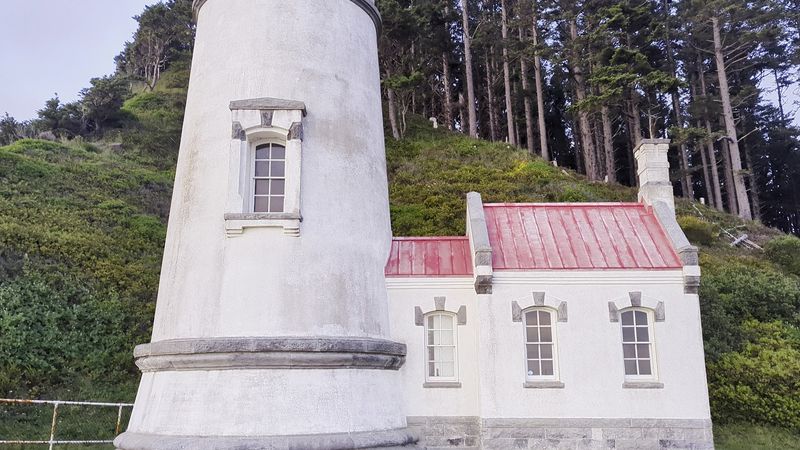
One of the genuinely unexpected highlights of a visit here is the quality of the volunteer guides who staff the lighthouse during open hours. These are not people who are simply reading from a script.
They are deeply knowledgeable, clearly passionate, and willing to spend real time answering questions about everything from the optical mechanics of the Fresnel lens to the ghost stories attached to the property.
Volunteers are typically present between 11 AM and 3 PM, though hours can vary seasonally, so calling ahead is worth doing if meeting a guide is a priority for your visit. The ground floor of the lighthouse is accessible to visitors, and the guides there make the experience significantly richer than simply walking up and looking at the outside of the building.
The staircase to the top of the tower is not open to the general public, but the guides do an excellent job of describing what the view from up there looks like and what the keeper’s daily routine would have involved back in the 19th century. Their enthusiasm for this particular piece of Oregon history is the kind of thing that stays with you long after you have driven back down the highway and the lighthouse has disappeared from your rearview mirror.
Why This Place Keeps Pulling People Back
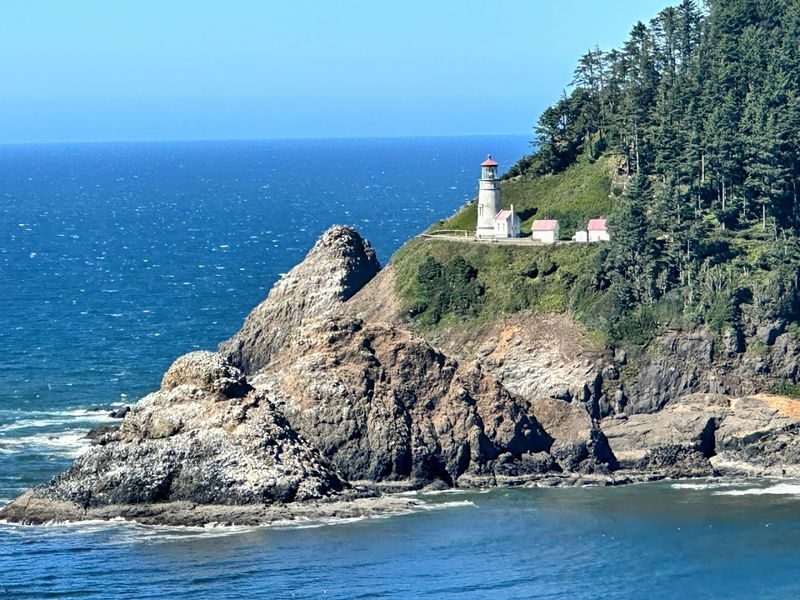
There are plenty of lighthouses along the Oregon Coast, but this one keeps showing up at the top of lists, in travel conversations, and in the memories of people who visited years ago and still talk about it. A 4.8-star rating across nearly 2,600 reviews is not an accident.
It reflects something real about the experience of being here.
Part of it is the setting, which is objectively dramatic in a way that photographs only partially capture. Part of it is the history, which is layered enough to reward curiosity without requiring any prior knowledge.
And part of it is the ghost stories, which give the place a personality that most scenic viewpoints simply do not have.
Repeat visitors mention noticing something new each time, whether it is a different quality of light, a new piece of information from a volunteer, or simply a mood that the place carries differently depending on the season and the weather. The lighthouse has been standing on this cliff for well over a century, watching ships pass and fog roll in and tourists arrive with cameras.
It has earned its reputation, and spending time here makes it easy to understand exactly why people keep finding their way back.
Share this story