There is a short detour off Highway 18 near the Oregon Coast that most drivers blow right past without a second glance. A small sign, a narrow road, and a creek winding through tall trees are the only hints that something genuinely worth stopping for is waiting just 1.3 miles down the hill.
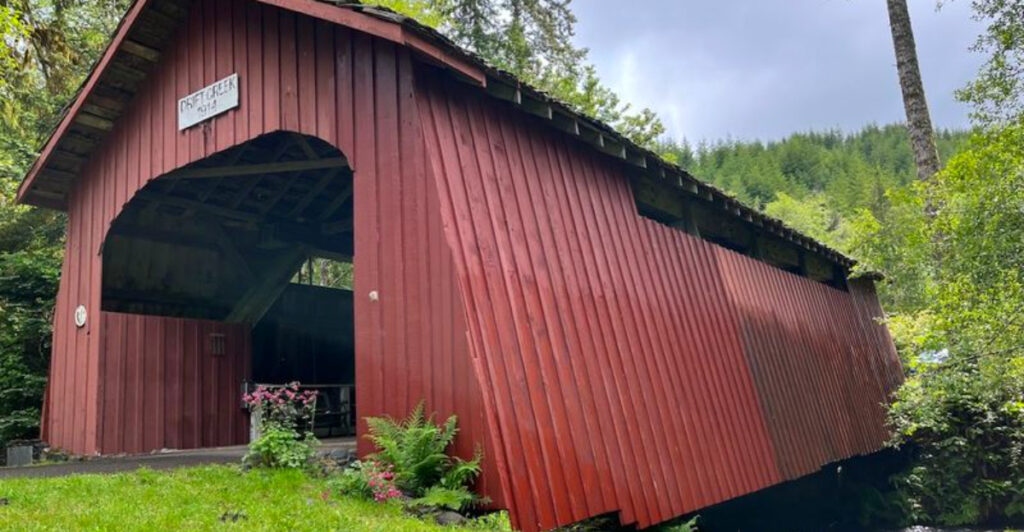
The Drift Creek Covered Bridge sits on Bear Creek Road in Otis, Oregon, and it carries more than a century of history on its wooden beams. From a near-collapse in the late 1980s to a full community-driven resurrection on private land, this bridge has a story that is far more interesting than its modest roadside sign lets on.
Keep reading to find out why this little red bridge keeps pulling people back.
A Bridge With a Remarkable Origin Story
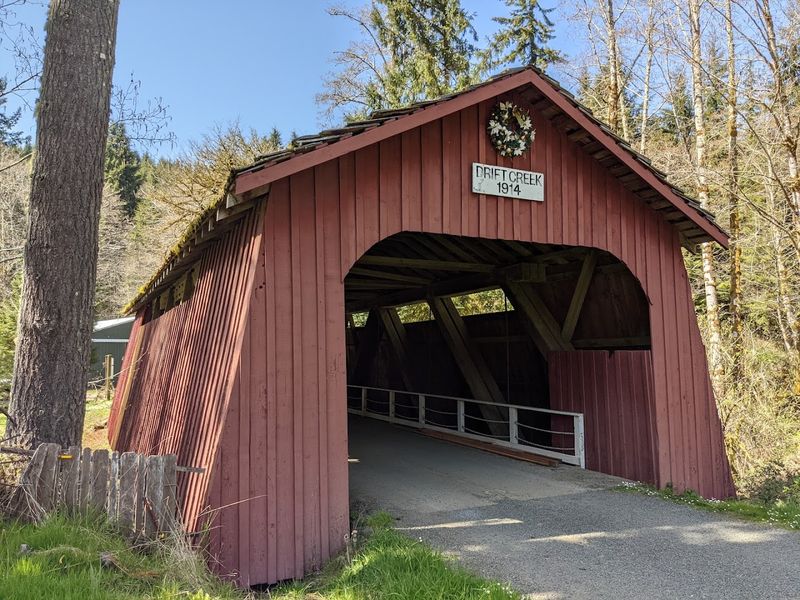
Built in 1914, the Drift Creek Covered Bridge originally stood near Lincoln City, just about 1.5 miles from the Oregon Coast, serving as part of a main north-south route along the coastline. At the time of its construction, it was surrounded by a small community called Lutgens, which later renamed itself Nice, and then changed names at least eight more times before the local post office closed in 1919.
For decades, the bridge carried traffic faithfully until new roads and concrete spans made it obsolete. By the 1960s, the county had bypassed it entirely, but officials recognized its historical value and passed an ordinance preserving it as a memorial to early Oregon pioneers.
By 1988, rot and insect damage had taken such a toll that pedestrian access had to be blocked entirely, and steel beams were installed just to keep the structure upright. The bridge was officially dismantled in 1997 after efforts to limit access failed.
What happened next is where the story gets truly remarkable, and it all starts with one determined family who refused to let a piece of Oregon history disappear into a landfill forever.
The Sweitz Family and the Rescue Mission
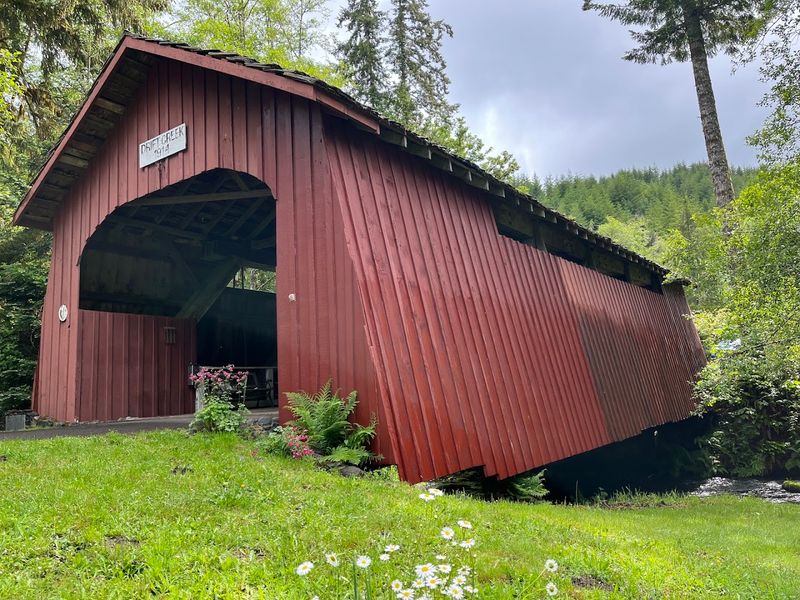
When Lincoln County decided to demolish the old covered bridge in 1997, the Sweitz family stepped forward with a plan that most people probably thought was impossible. They asked for the salvaged pieces of the dismantled structure and were granted them, along with the enormous challenge of putting everything back together on their own property, roughly eight miles north of the original site.
The family envisioned rebuilding the bridge over a concrete span that already served as a driveway crossing Bear Creek on their land. That concrete foundation became the base, and the original wooden covered superstructure was reconstructed on top of it, piece by piece, in a small park-like setting designed to welcome the public.
The informational plaques posted at the site tell this story in detail, and there is even a printed account tucked inside the bridge itself for visitors to read. The restoration testimony, as some visitors have called it, is genuinely moving because it shows what a small group of dedicated people can accomplish with patience, skill, and a deep respect for local heritage.
The Sweitz family turned what could have been a loss into a living landmark that Oregon can be proud of.
Finding the Bridge: Location and Access
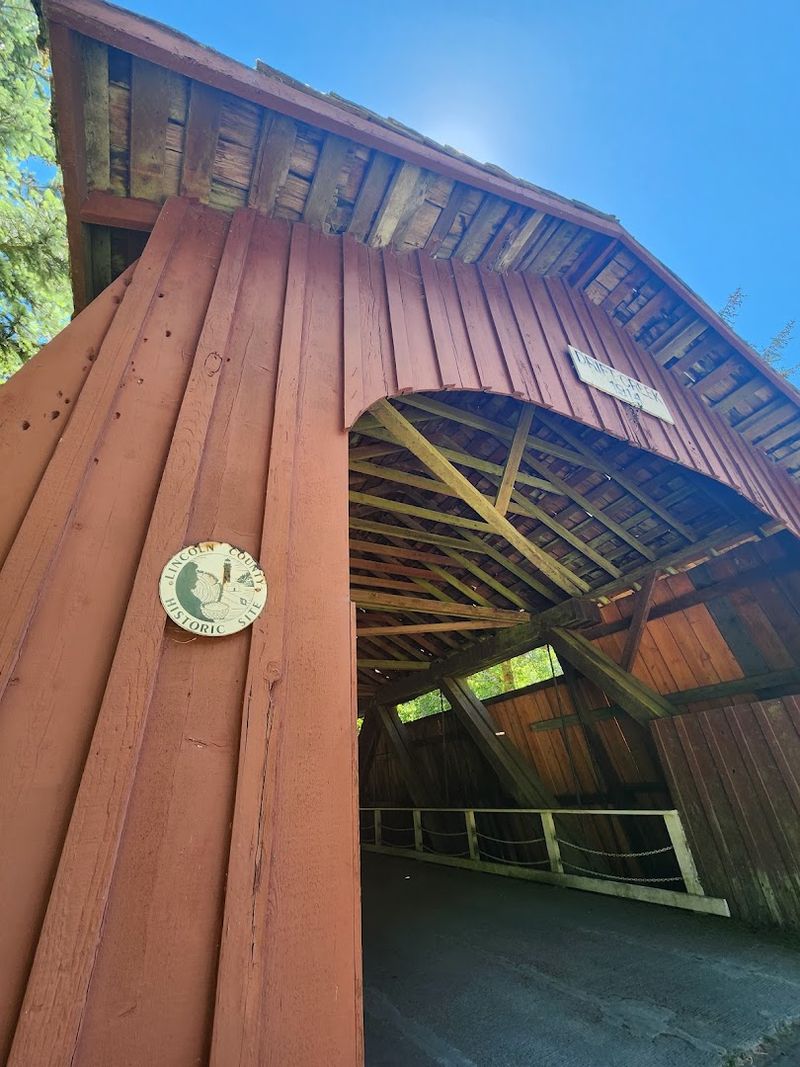
The bridge sits at Bear Creek Road in Otis, Oregon 97368, tucked just 1.3 miles off Highway 18. If you are heading toward Lincoln City from the Willamette Valley, the turnoff sneaks up on you quickly, so keep your eyes open for the sign.
The road itself is a pleasant surprise, curving alongside a creek through tall trees in a way that makes the short detour feel worthwhile even before you arrive.
Parking is available on the right side of the road, in front of a green barn that serves as a handy landmark. The bridge sits on private property owned by the Sweitz family, but they have generously kept it open to the public for foot traffic.
There are no posted hours since the site is accessible around the clock, though daylight visits make the most sense for photography and reading the historical plaques.
Foot traffic only means exactly that: do not attempt to drive a vehicle across the bridge. The concrete base beneath handles the family driveway, but the wooden covered structure above is for walking only.
Respecting that boundary keeps this free, public experience available for everyone who makes the short detour off the highway.
What the Bridge Actually Looks Like Up Close
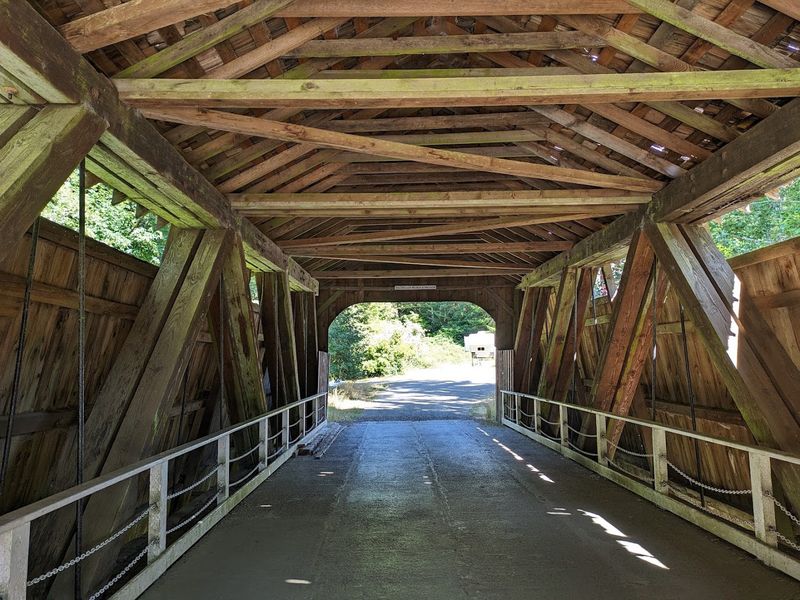
The bridge is a classic covered wooden structure painted red, and it has the kind of weathered, honest character that modern construction simply cannot replicate. Up close, you notice the texture of the old wood, the way light filters through the gaps in the siding, and the faint smell of aged timber that hits you as soon as you step inside the covered span.
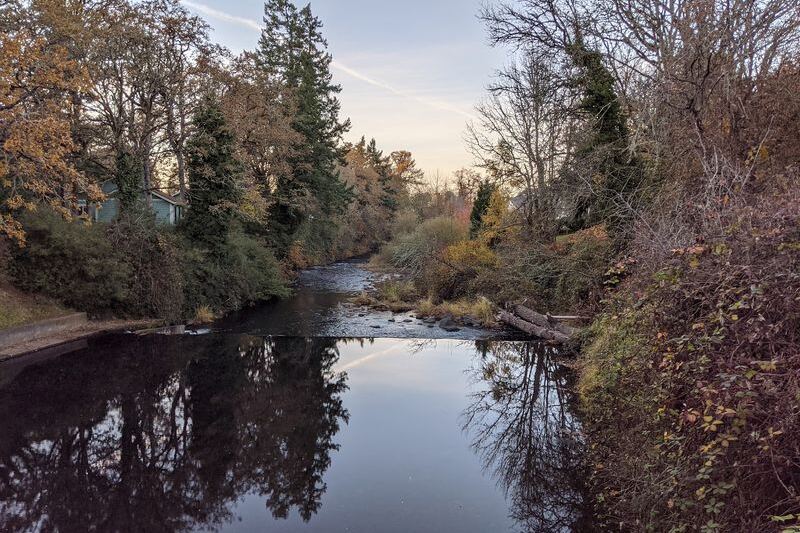
Bear Creek runs underneath, shallow and clear, with the sound of moving water adding a layer of calm that is hard to describe without experiencing it directly. The creek view from inside the bridge is one of those small, quiet pleasures that rewards anyone who takes the time to pause mid-crossing rather than rushing straight through.
Some visitors have noted that a few vines have crept into the interior over the years, giving parts of the bridge a slightly wild, overgrown look. Rather than detracting from the experience, this natural encroachment adds a layer of organic charm that makes the whole scene feel less like a museum exhibit and more like a living piece of the landscape.
The bridge genuinely belongs to its surroundings in a way that feels earned rather than arranged.
The Guestbook and the Story Inside the Bridge
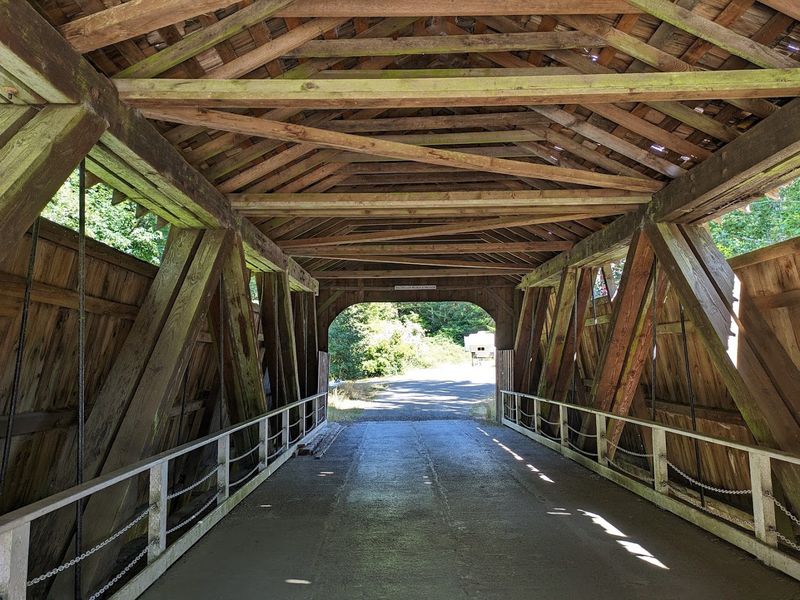
One of the most unexpectedly charming details about this stop is what you find once you step inside the bridge itself. A guestbook is tucked under the covered span, inviting visitors to leave their names and thoughts, creating a running record of everyone who has made the short detour off Highway 18 to stand in this spot.
Alongside the guestbook, a printed account of the full bridge history is available for visitors to read and even take home. That document covers the original construction in 1914, the decades of service, the deterioration, the dismantling, and the painstaking reconstruction by the Sweitz family.
Reading it while standing inside the very structure it describes adds a layer of immediacy that no museum display could quite match.
Geocachers have also discovered the site, and a cache container has reportedly been placed near a bench on the property. The combination of history, handwritten notes, and a small community of explorers who track the bridge down gives the place a layered identity that goes well beyond what you might expect from a single roadside stop.
Every visit adds one more page to a story that the Sweitz family started writing back in 1997.
The Picnic Area and Creek-Side Setting
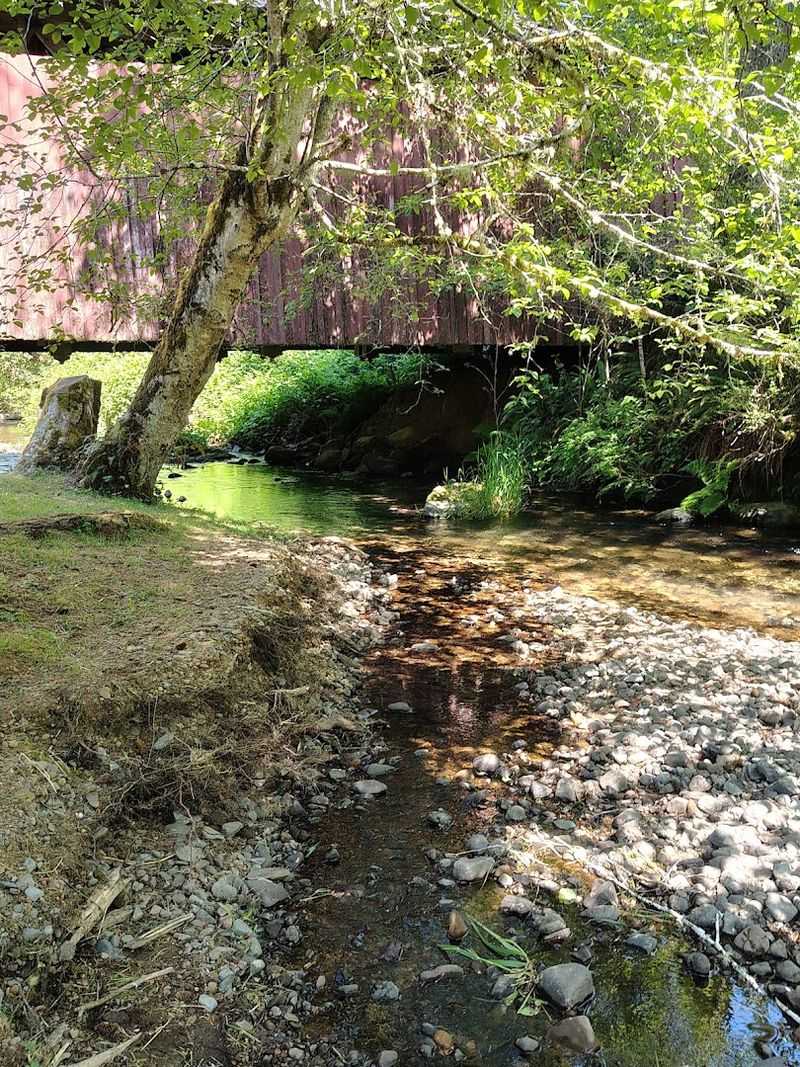
Beyond the bridge itself, the surrounding area has been arranged into a genuinely pleasant little park-like space. A picnic table sits near the creek, positioned close enough to the water that you can hear it clearly while you eat, and the shade from the surrounding trees keeps the spot cool even on warmer days.
A bench or two are scattered around the property as well, offering places to sit, read, or simply listen to the creek without any agenda at all. For families traveling the Highway 18 corridor between the Willamette Valley and the coast, this spot works perfectly as a low-key rest stop that happens to come with a history lesson attached.
A porta-potty is available on the property, which is a practical detail that matters more than it might sound after a long drive. The combination of shade, moving water, a picnic table, and restroom access makes this far more than a quick photo stop.
Visitors traveling with dogs have found it equally useful as a spot to stretch legs and let pets explore the creek bank before getting back on the road toward Lincoln City or the return trip home.
Best Times to Visit and What to Expect in Each Season
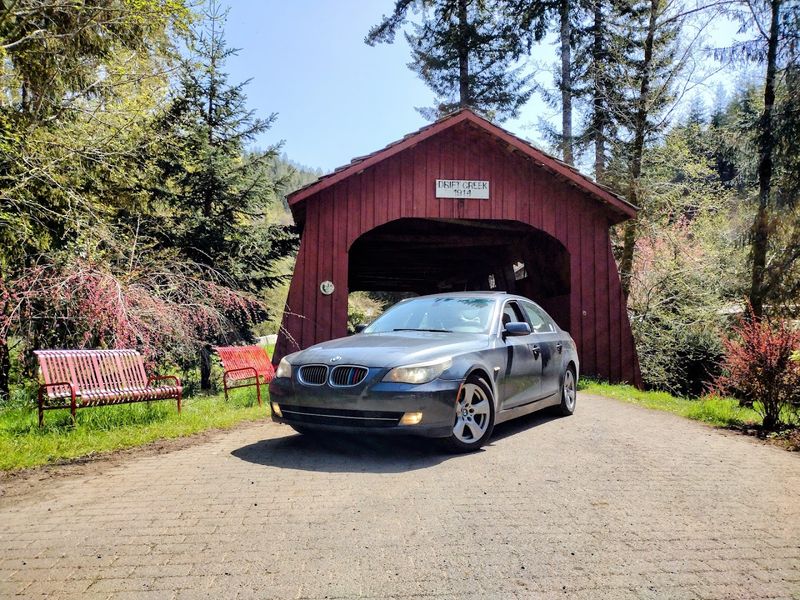
The bridge is open around the clock every day of the year, which means there is technically no wrong time to visit. That said, each season brings a noticeably different experience, and knowing what to expect helps you plan a stop that matches what you are hoping to get out of it.
Autumn is particularly stunning along the Bear Creek Road corridor, with deciduous trees turning orange and gold against the deep green of the surrounding conifers. The drive itself becomes part of the attraction during October and early November, and the softer light of overcast fall days is ideal for photography inside and around the bridge.
Summer visits are warmer and brighter, with the creek running lower and clearer, making it easier to see the rocky streambed from inside the bridge. Spring brings higher water and lush new growth, with the property feeling especially alive and green.
Even rainy days, which are common on the Oregon Coast side of the Coast Range, do not ruin the visit. The covered bridge keeps you dry while the rain drums on the roof above, and the creek swells with a satisfying energy that dry-season visitors never get to witness.
Pairing the Bridge With Drift Creek Falls
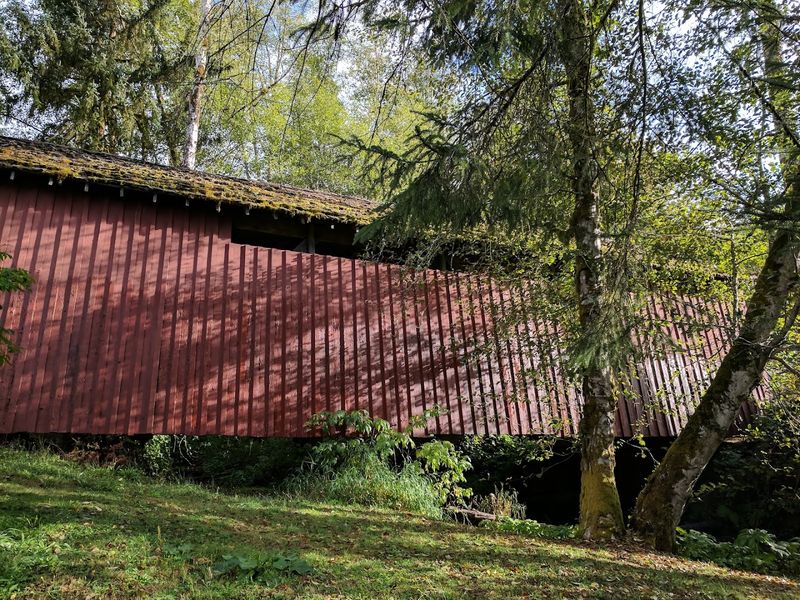
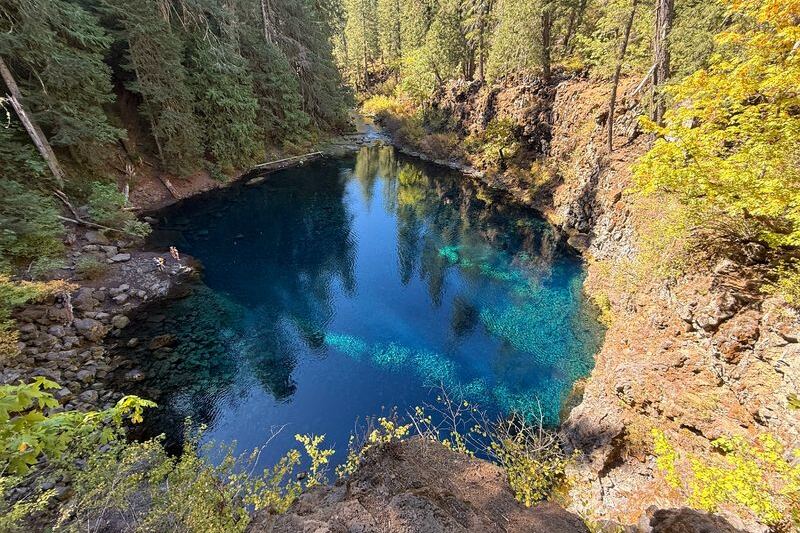
The covered bridge makes the most sense as part of a larger day out in the area rather than a standalone destination for a long drive. The most natural pairing is with Drift Creek Falls, a popular hiking trail that ends at a dramatic suspension bridge above a waterfall, located just a few miles away in the Siuslaw National Forest.
The Drift Creek Falls trail runs about 3 miles round trip with around 400 feet of elevation change, making it manageable for most hikers while still delivering a genuinely rewarding payoff at the end. After the hike, the covered bridge serves as a perfect decompression stop on the way back to the highway, with the creek, the shade, and the picnic table offering exactly the kind of low-effort recovery that tired legs appreciate.
Several visitors have described discovering the covered bridge on the way back from the falls trail, which suggests that the two stops pair naturally in terms of both geography and pacing. Combining both into a single outing gives you a full morning or afternoon of Oregon Coast Range scenery without requiring a major itinerary overhaul, and the covered bridge adds a cultural and historical dimension that the hike alone does not provide.
The Historical Significance of Oregon Covered Bridges
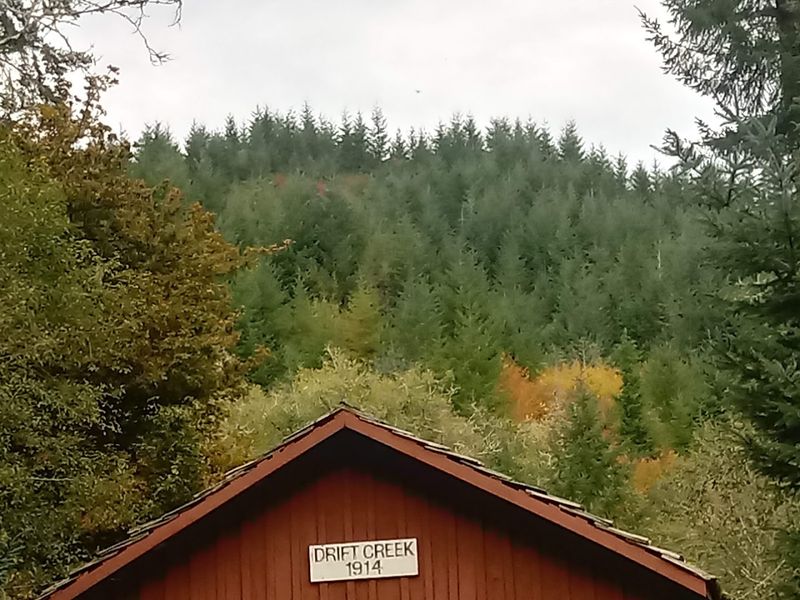
Oregon has a surprisingly rich covered bridge heritage, particularly in the Willamette Valley, where dozens of historic wooden spans have been preserved and maintained over the decades. The Drift Creek Bridge holds a special place in that tradition because of its age and its dramatic survival story rather than simply its location or size.
At the time of its dismantling in 1997, it was considered the oldest remaining covered bridge in Oregon, a title that carries real weight in a state that takes its covered bridge history seriously. The fact that it now stands on private land rather than a public road does not diminish that legacy; if anything, it makes the preservation more impressive because it happened without government funding or institutional support.
Covered bridges were built with wooden roofs primarily to protect the structural timbers from rain, extending the life of the bridge by decades. In the wet Pacific Northwest climate, that design choice was especially practical, and bridges built with proper roofing often outlasted their uncovered counterparts by a significant margin.
The Drift Creek Bridge stands as a tangible example of that engineering logic, and the fact that pieces of a 1914 structure are still standing today makes the case more convincingly than any textbook could.
Tips for Making the Most of Your Visit
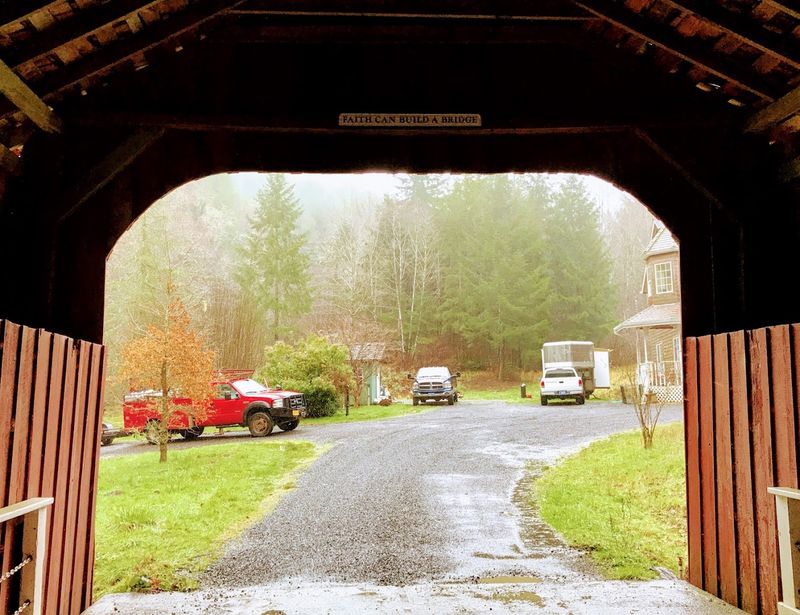
A few practical notes can make the difference between a satisfying stop and a slightly frustrating one. The turnoff from Highway 18 arrives quickly and can be easy to miss at highway speeds, so slow down once you pass the crest of the hill heading toward Lincoln City and watch for the sign on the left side of the road.
Parking fits a handful of vehicles in front of the green barn, so arriving early on busy summer weekends is a smart move. The site is free to visit, which is a detail worth appreciating given how much effort the Sweitz family has put into maintaining public access on their private property.
Leaving the space cleaner than you found it is the least visitors can do in return for that generosity.
Bring a camera, comfortable shoes for the short walk across the bridge and around the creek bank, and maybe a lunch to eat at the picnic table. Cell service can be spotty along Bear Creek Road, so downloading directions before you leave the highway is a good habit.
The whole stop, including reading the history plaques and signing the guestbook, takes about 20 to 30 minutes, making it a perfectly sized addition to any coastal road trip itinerary without consuming the entire afternoon.
Share this story