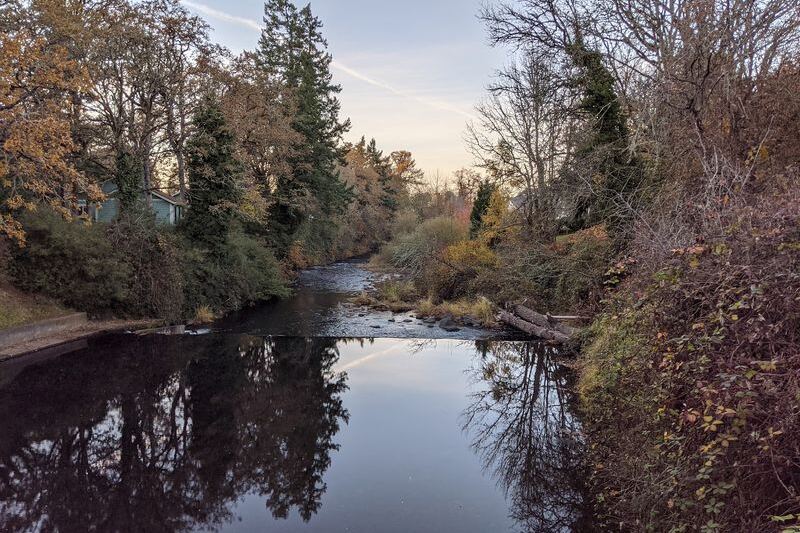
There is a place in Oregon where the Oregon Trail, the Columbia River, and the entire future of the American West once converged at a single dusty crossroads. Travelers arriving here after months on the trail had to make a critical choice: brave the dangerous river rapids ahead or find another way to reach their destination.
That tension, that history, and that raw pioneer spirit are still very much alive today. The museum sitting on this ground preserves one of the most fascinating chapters of 19th-century American life, and its stories will genuinely surprise you.
From a resident cat who greets visitors at the gate to a carriage house full of antique vehicles, every corner of this place holds something worth discovering.
The Address, Location, and Setting of Fort Dalles Museum
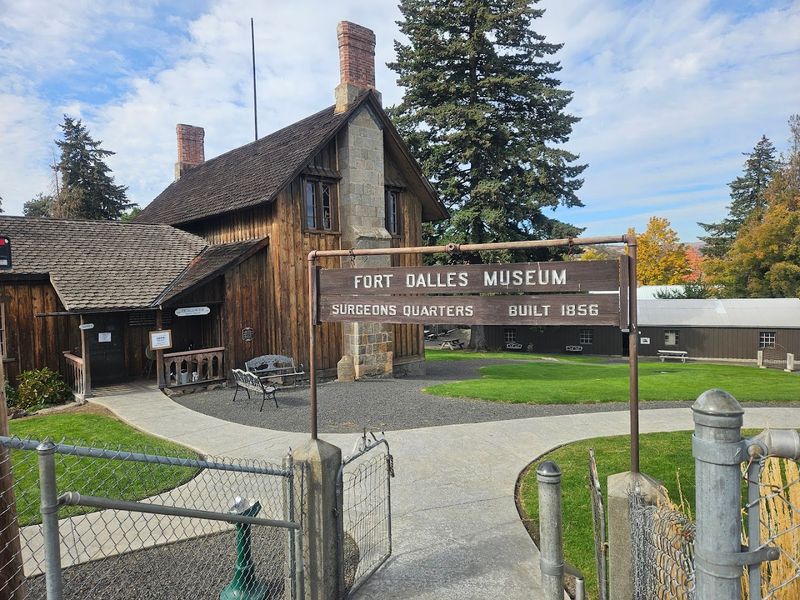
Right at the corner of West 15th and Garrison Street in The Dalles, Oregon, at 500 W 15th and Garrison St, OR 97058, sits one of the most historically loaded pieces of real estate in the Pacific Northwest.
The Dalles sits along the Columbia River, roughly 80 miles east of Portland, and it served as the official end of the overland section of the Oregon Trail. Every wagon train that crossed the continent had to pass through this spot, making it a genuine hub of American westward expansion in the mid-1800s.
The museum grounds feel surprisingly peaceful today, with wide green lawns, tall trees, and carefully maintained historic structures spread across two adjacent properties. Free parking is available right on site, which makes a visit here easy and stress-free.
The whole area has a quiet, almost dignified atmosphere that feels completely fitting for a place with this much weight behind it. You get the sense that the ground itself remembers everything.
The History Behind the Fort and Why It Mattered
Fort Dalles was established in 1850 by the U.S. Army, and its purpose was not to fight wars in the traditional sense.
The fort was created to protect and assist the thousands of emigrants pouring westward along the Oregon Trail, making it one of the most unusual military installations in American history.
By the time settlers reached The Dalles, they had already crossed plains, deserts, and mountain ranges. The fort provided supplies, medical care, and a sense of order at a moment when exhausted travelers needed it most.
It also served as a buffer during rising tensions between settlers and the Indigenous communities whose land was being rapidly overtaken.
The fort was decommissioned in 1867, after the great wave of Oregon Trail migration had slowed significantly. By 1905, preservation efforts began, and the surgeon’s quarters, one of the last surviving original buildings, became the heart of what is now the museum.
The story of Fort Dalles is really the story of how the American West was built, one difficult mile at a time. That legacy feels very much present when you walk the grounds.
The Surgeon’s Quarters Building and Its Gothic Revival Design
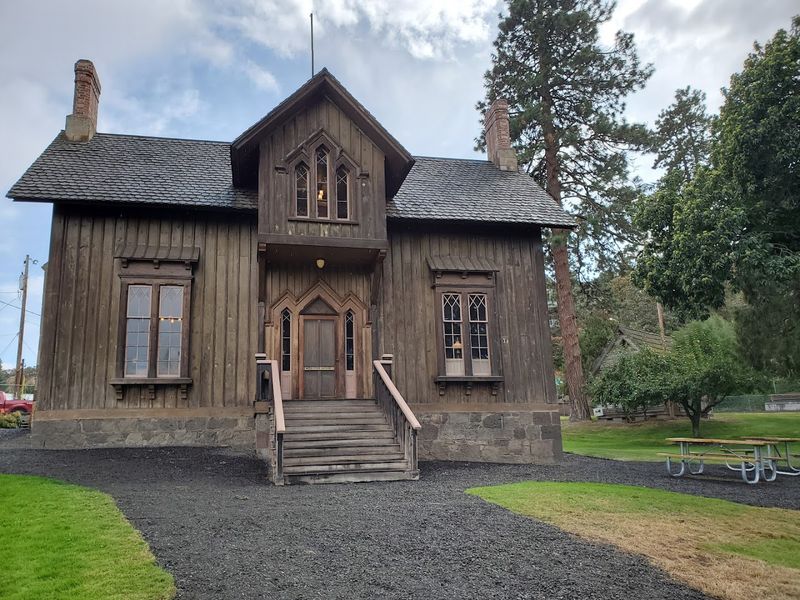
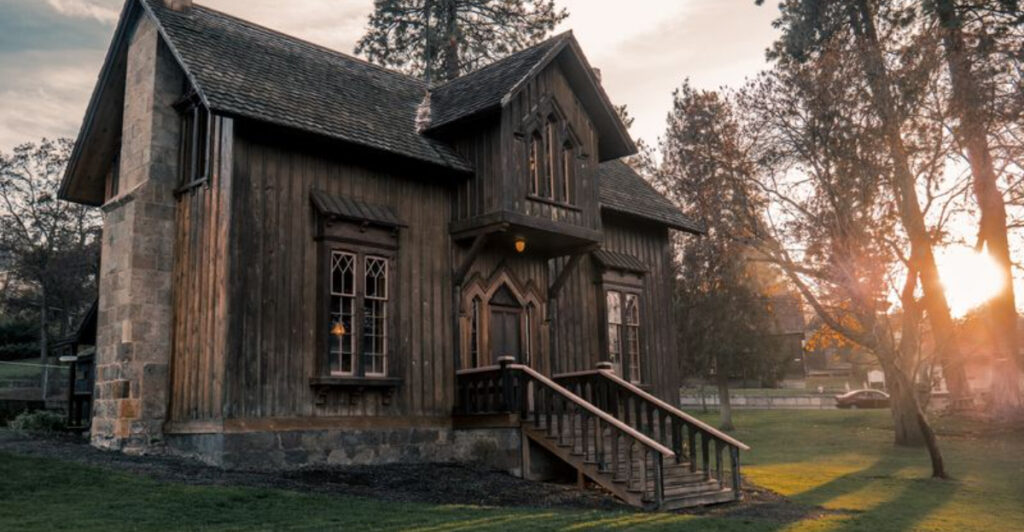
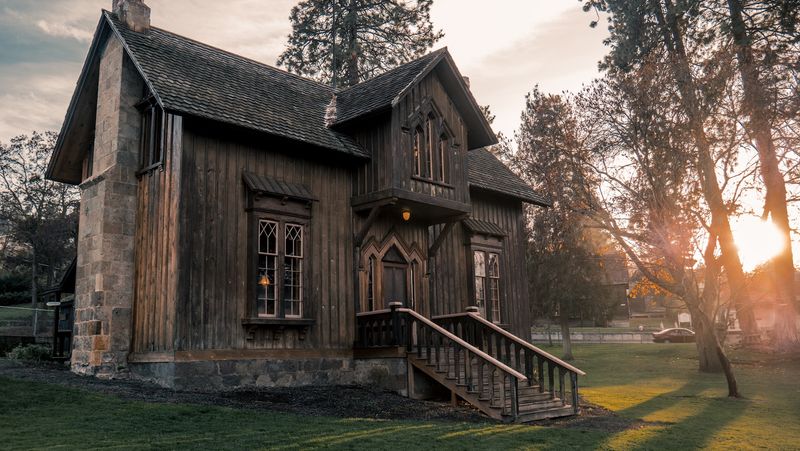
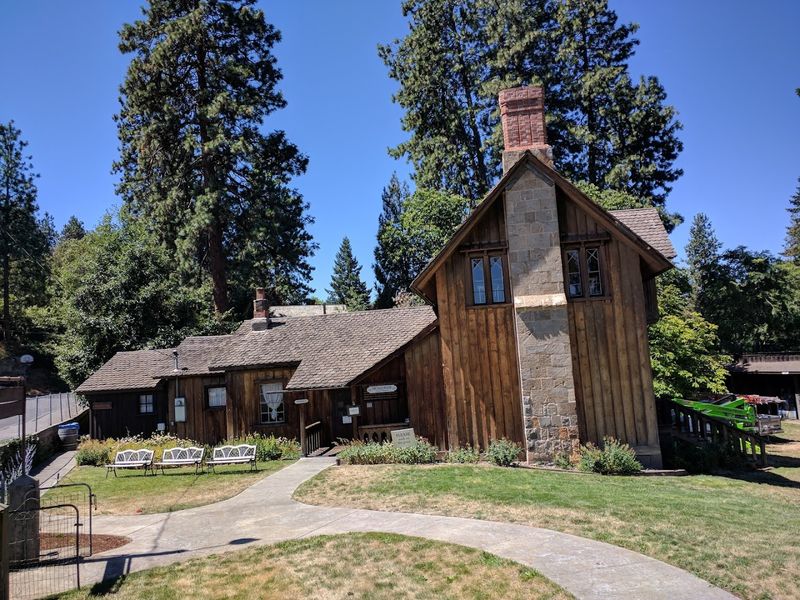
The star architectural feature of the museum campus is the 1856 surgeon’s quarters, a beautifully preserved Gothic Revival structure that stands out immediately against the Oregon sky. Its steeply pitched roofline, decorative bargeboards, and elegant proportions look more like something from a New England village than a frontier military post.
The building was designed by Captain Thomas Jordan, a West Point-trained officer with a genuine eye for design. It is one of the finest surviving examples of Gothic Revival military architecture in the entire country, and the fact that it has lasted this long in such good condition is a credit to generations of careful caretakers.
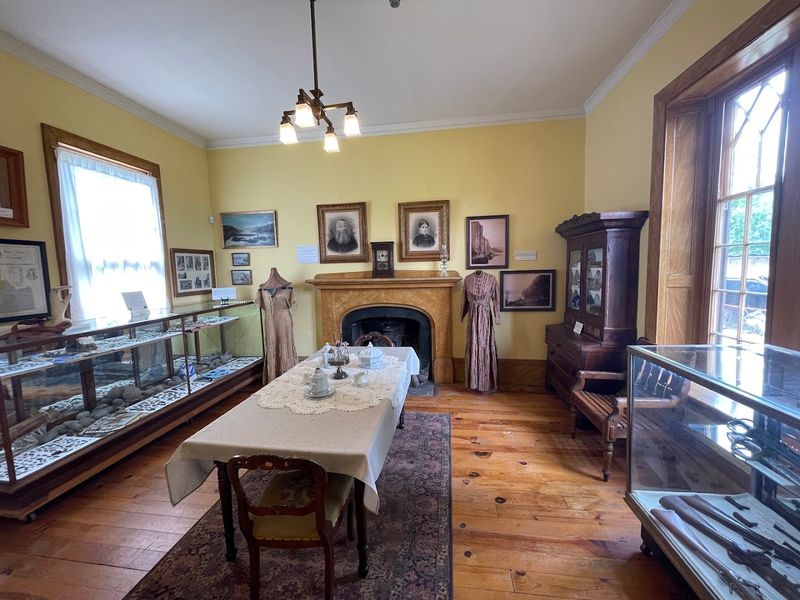
The interior has been thoughtfully restored to reflect the period when a fort doctor would have lived and worked here. Period furniture, medical artifacts, and personal items fill the rooms, giving visitors a tangible sense of daily life on the frontier.
Running your eyes over the original woodwork, you start to appreciate how much skill and care went into building something this refined in such a remote location. It genuinely earns its place as the museum’s centerpiece.
The Anderson Homestead and Its Pioneer Story
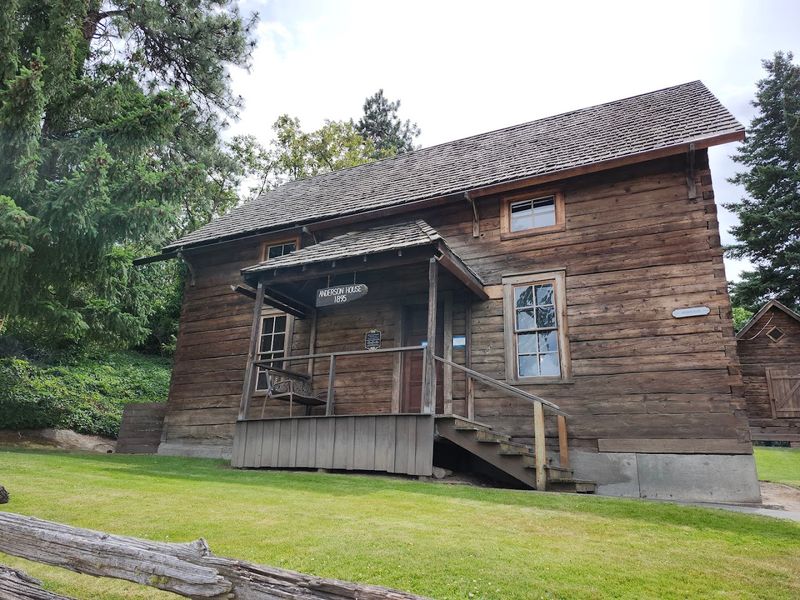
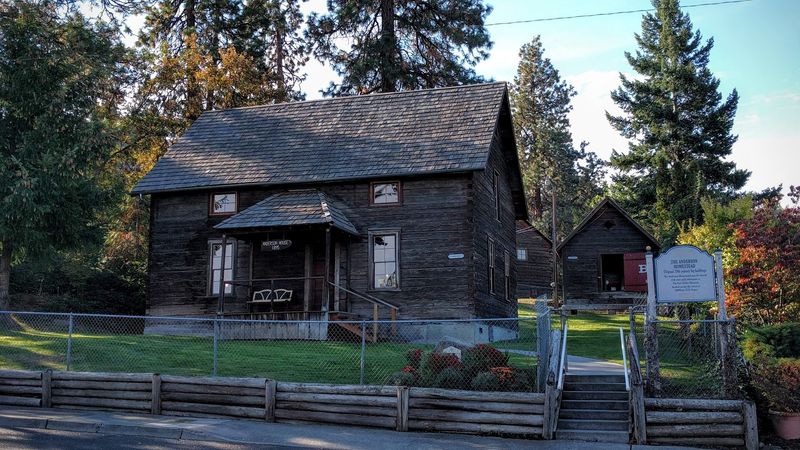
The Anderson Homestead is the second major property that makes up this museum complex, and it adds an entirely different layer to the experience. While the surgeon’s quarters tells the story of military life, the homestead tells the story of the ordinary families who chose to put down roots in this demanding landscape.
The Anderson family were among the earliest settlers to establish a permanent home in The Dalles area, and their house has been preserved as a living record of what pioneer domestic life actually looked like. The rooms feel personal and specific, not like a generic display but like someone’s real home frozen in a particular moment of history.
Recent ownership changes have brought a full restoration effort, with the current owners actively updating displays and returning the space to something closer to a true period home. Items are being carefully curated, some removed and others added, to create a more authentic and immersive environment.
The grounds surrounding the homestead are immaculately kept, adding to the sense that real pride and care goes into maintaining this place. Every room you enter feels like a small discovery waiting to happen.
The Antique Vehicle Collection That Steals the Show
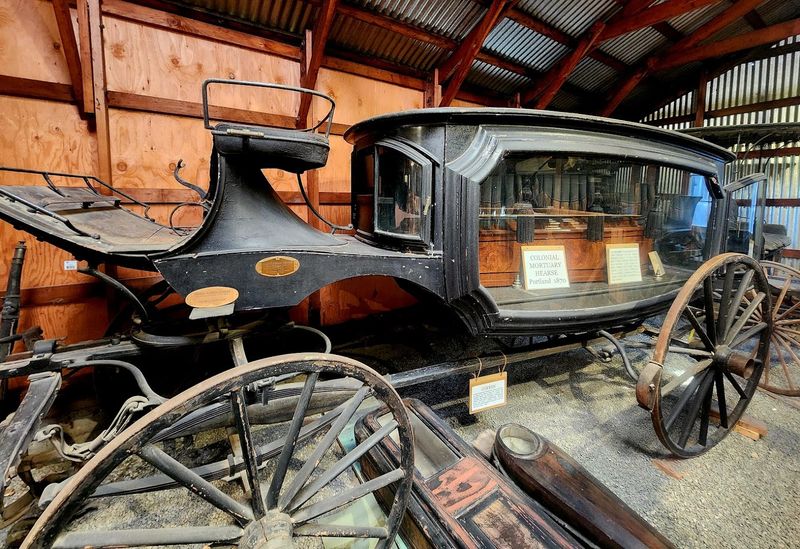
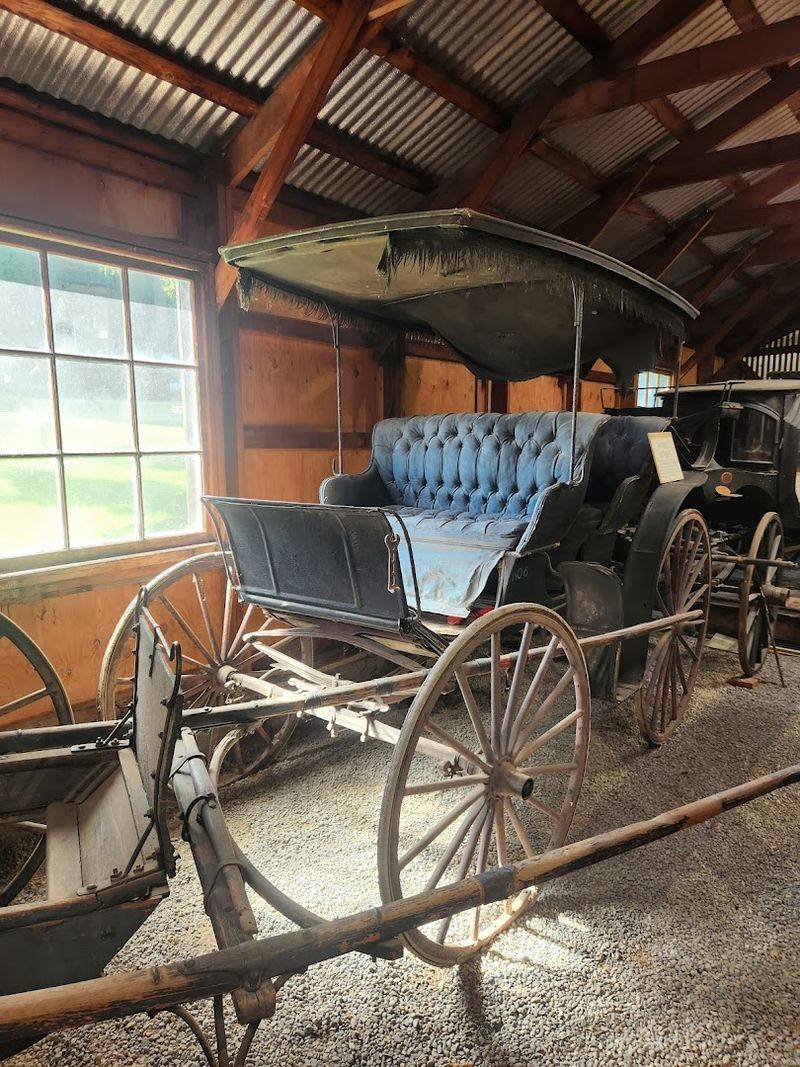
One of the biggest surprises tucked inside the Fort Dalles Museum campus is the antique vehicle collection housed in the carriage building. Most visitors do not expect this, and the collection genuinely earns its own visit.
The garage holds a remarkable range of vehicles spanning several decades of transportation history, from elegant horse-drawn carriages to early automobiles, including a rare old electric car that draws particular attention from curious visitors. Two of the carriages on display were specifically built for funeral processions and were used to carry the departed down the road to the Pioneer Cemetery nearby.
That detail alone gives the collection a haunting and memorable quality.
The vehicles are well maintained and displayed with enough context to make them meaningful rather than just decorative. Car enthusiasts and history buffs alike tend to linger here longer than they planned.
There is something unexpectedly moving about seeing these machines that once carried real people through real moments of joy and grief, now resting quietly under the same Oregon sky. The collection is a reminder that transportation history is also human history, told one wheel at a time.
Midnight the Cat and the Warmth of the Welcome
Not every history museum greets you with a purring black cat named Midnight, but Fort Dalles Museum is not every history museum. Midnight has become something of an unofficial mascot for the property, and she is known among regular visitors for her exceptionally sociable personality and her enthusiasm for belly rubs.
For families with children, Midnight is often the first highlight of the visit, and she has a talent for breaking the ice and setting a relaxed, friendly tone before anyone has even stepped inside a building. Multiple visitors have mentioned her specifically when describing their experience, which says a great deal about the kind of welcoming atmosphere the museum cultivates.
Beyond Midnight, the human staff and volunteers carry that same warmth throughout the entire experience. The docents here are genuinely knowledgeable, full of stories, and clearly passionate about the history they are sharing.
They treat every question as a good one, whether it comes from a curious nine-year-old or a seasoned history enthusiast. That combination of a friendly cat and a friendly team makes Fort Dalles feel less like a formal institution and more like a place where history is genuinely enjoyed.
Midnight simply makes it official.
What the Oregon Trail Connection Really Means
The Dalles holds a specific and critical place in Oregon Trail history that goes beyond just being a stop along the route. For most of the trail’s active years, The Dalles was the point where overland travel essentially ended, and emigrants faced the daunting task of deciding how to complete the final stretch to the Willamette Valley.
Before the Barlow Road opened in 1846, the only option was to load wagons onto rafts and float down the Columbia River through genuinely treacherous rapids. Many families lost everything in those waters.
Fort Dalles existed, in part, to help people navigate that terrifying transition from land to river travel.
The museum does an excellent job of conveying just how significant this location was in the broader story of American westward expansion. Unlike states such as Oklahoma, where the land rush came later and under different circumstances, The Dalles was already a critical pressure point decades earlier.
The exhibits here connect local history to national history in a way that feels earned rather than forced. By the time you leave, The Dalles feels less like a small Oregon city and more like the hinge point of an entire era.
The Exhibits Inside and What You Will Actually See
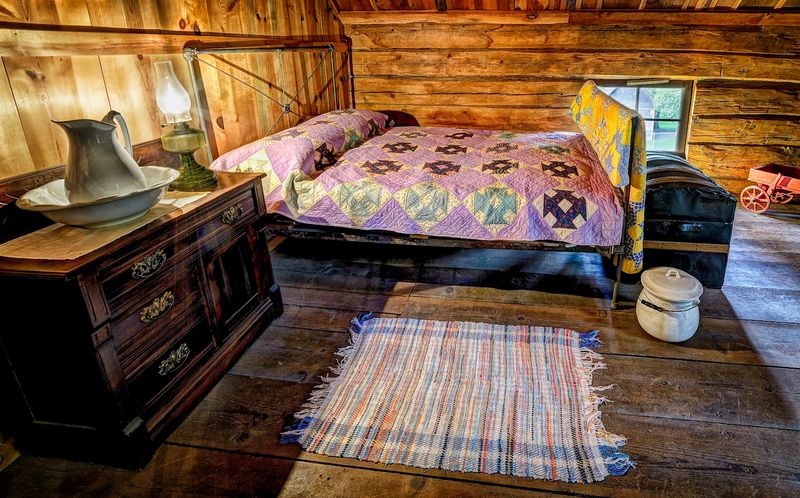
The exhibits at Fort Dalles Museum cover a wide and genuinely interesting range of frontier life, from military history and pioneer household objects to medical equipment and personal belongings from the families who shaped this region. The displays are hands-on in places, and some areas allow visitors to touch artifacts directly, which makes the experience feel participatory rather than passive.
One popular feature for families with younger children is a scavenger hunt-style activity where kids search the house for specific items. It keeps them engaged and curious while also teaching them to look carefully at their surroundings, which is a genuinely smart educational approach.
The staff are happy to help guide families through it.
The curation has improved significantly since new ownership took over, with a more focused effort to present the space as a true period home rather than a cluttered warehouse of random objects. Each room now tells a clearer story, and the overall flow of the visit feels more intentional.
At just eight dollars per person, the value here is hard to argue with. You come expecting a quiet little regional museum and you leave with a surprisingly full picture of what life on the frontier actually demanded from real people.
Practical Tips for Planning Your Visit
Fort Dalles Museum is open every day of the week from 10 AM to 5 PM, which makes it easy to fit into almost any travel schedule. The museum is family-friendly, kid-friendly, and surprisingly accessible for a historic site of this age and character.
Admission is around eight dollars per person, which is a genuinely reasonable price given the scope of what you get to explore across two properties. Free parking is available directly on site, so you do not need to worry about finding a spot or paying for one.
The phone number for the museum is (541) 296-4547, and the website at www.fortdallesmuseum.org has current information on hours and any special events.
The Dalles is located along Interstate 84 in the Columbia River Gorge, making it a natural stop on a road trip between Portland and eastern Oregon. Bringing a picnic is a great idea since the grounds are open and well maintained.
The staff welcomes all types of visitors, and the atmosphere is relaxed and unhurried. Whether you have an hour or an entire afternoon, Fort Dalles Museum rewards the time you give it with interest, warmth, and a perspective on history that genuinely sticks with you.
Why Fort Dalles Museum Deserves a Spot on Your Oregon Road Trip
Oregon has no shortage of spectacular places to visit, but Fort Dalles Museum occupies a category all its own. It is not a theme park version of history or a polished corporate attraction.
It is a real place where real history happened, and the people who run it clearly understand the difference.
The museum sits at the intersection of military history, pioneer culture, and Indigenous history in a way that few sites in the Pacific Northwest can match. Compare that to historical sites in Oklahoma, which tell important but geographically distinct stories of westward expansion, and you start to appreciate how Fort Dalles fills a specific and irreplaceable gap in the national narrative.
Oklahoma’s story and Oregon’s story are connected threads in the same larger tapestry of American history.
The combination of the Gothic Revival surgeon’s quarters, the Anderson Homestead, the carriage house, the knowledgeable staff, and yes, Midnight the cat, creates an experience that is richer than its modest size suggests. Visitors consistently rate it at 4.8 out of 5 stars, and that number reflects genuine satisfaction rather than polite enthusiasm.
Fort Dalles Museum is the kind of place that reminds you why exploring local history in person, rather than reading about it online, is always worth the drive.
Share this story