There is a hillside in Portland, Oregon, where the Pacific Northwest rain and ancient Japanese design traditions meet in a way that feels almost unreal. The garden there covers 5.5 acres of carefully shaped landscapes, koi ponds, a teahouse, and views of Mount Hood that stop you mid-step.
Some visitors fly in from as far as the United Kingdom just to see it, and more than a few locals hold year-round memberships so they never have to miss a season. By the time you finish reading, you will understand exactly why this place has earned the reputation of being the most authentic Japanese garden experience you can find outside of Japan itself.
Where the Garden Begins: Address and First Impressions
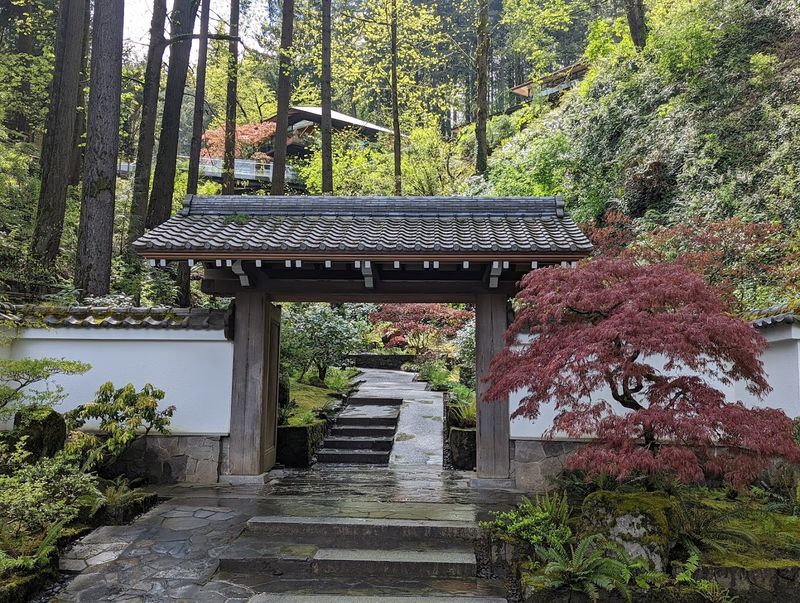
The address is 611 SW Kingston Ave, Portland, OR 97205, and the moment you arrive, the surroundings already start doing their job. The garden sits within Washington Park, tucked into the West Hills above the city, and that elevation alone gives everything a slightly otherworldly quality.
Getting there requires a little planning. Parking fills up fast, especially on weekends, but a free shuttle runs from the lower parking area up to the main entrance, which is a genuinely thoughtful touch.
Timed entry tickets are required, so buying them online before your visit saves a lot of frustration at the gate.
The entry fee is around $22 for adults, which some visitors find steep, though most agree the experience justifies it. College students can ask about discounted rates, which is a nice perk worth knowing.
The garden is open from 10 AM most days, closed on Tuesdays, and members get access as early as 8 AM, which is a real advantage for photographers and early risers who want the place mostly to themselves.
The History Behind the Hillside
Most people arrive at this garden without knowing its backstory, and that backstory makes the whole visit land differently. The Portland Japanese Garden was established in 1967, just over two decades after the end of World War II, as a gesture of peace and cultural connection between Japan and the United States.
The design was created by Professor Takuma Tono, a landscape architect from Tokyo who spent considerable time shaping the grounds into something that honored traditional Japanese garden principles. His work drew on centuries of Japanese horticultural philosophy, where every stone placement, water feature, and pruned branch carries intentional meaning.
Oregon has long had cultural and trade connections with Japan, and this garden became a living symbol of that relationship. It is not just a tourist attraction but a genuine cultural institution that has hosted diplomats, artists, and scholars over the decades.
The garden has expanded and evolved since its founding, adding new pavilions and art spaces while staying faithful to the original design philosophy. That combination of deep history and ongoing care is a big reason why the place feels so different from a standard botanical garden or park.
Five Garden Styles in One Stunning Space
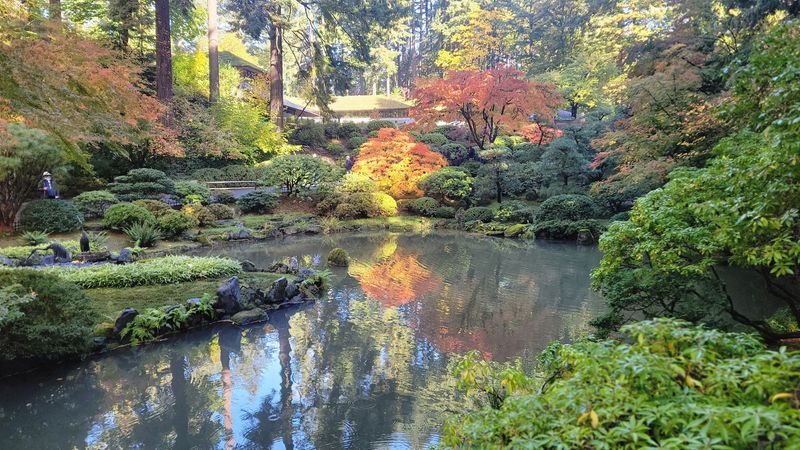
One of the things that genuinely surprises first-time visitors is realizing the garden is not a single unified landscape but a collection of five distinct garden styles woven together across 5.5 acres. Each style reflects a different tradition in Japanese garden design, and moving between them feels like flipping through chapters of a very beautiful book.
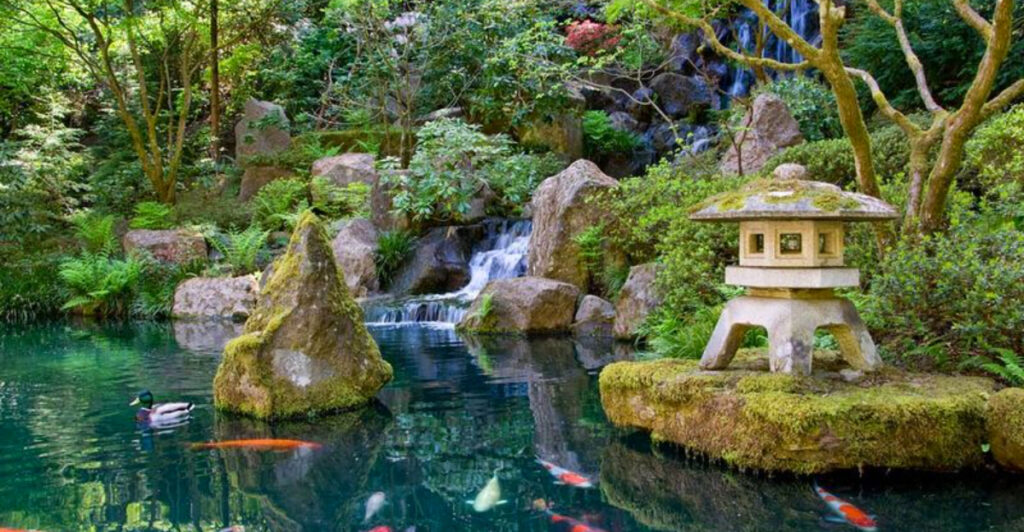
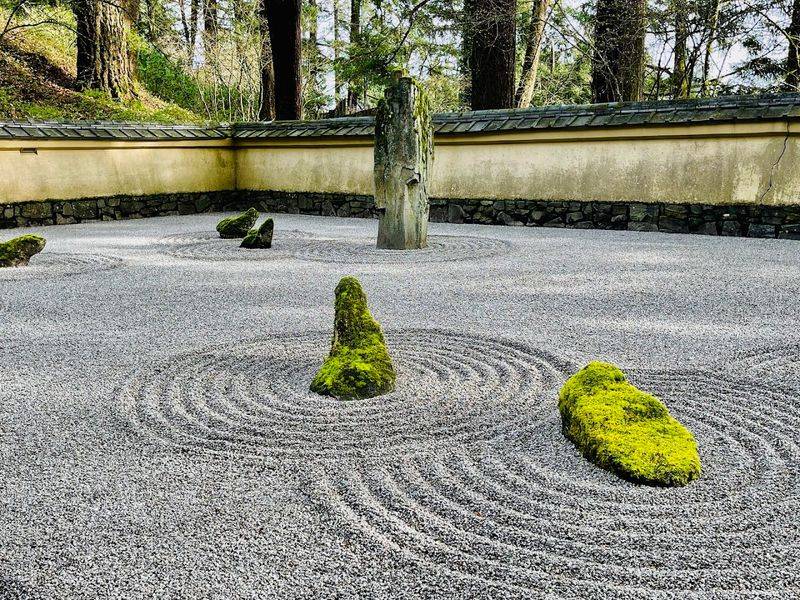
The Strolling Pond Garden is the largest and most iconic, with a koi-filled pond, arching bridges, and stone lanterns that photograph beautifully in any season. The Zen Garden features raked gravel patterns that invite quiet contemplation, while the Tea Garden surrounds the authentic teahouse with a sense of hushed ceremony.
The Natural Garden feels wilder and more forested, with mossy stones and winding paths that seem to disappear into the hillside. The Flat Garden, visible from the pavilion, uses sand, stone, and carefully pruned shrubs to create a minimalist composition that is deceptively simple.
Together, these five areas give the garden a depth that rewards slow exploration. Rushing through would mean missing the subtle transitions that make each section feel like its own world.
The Koi Pond and Water Features That Steal the Show
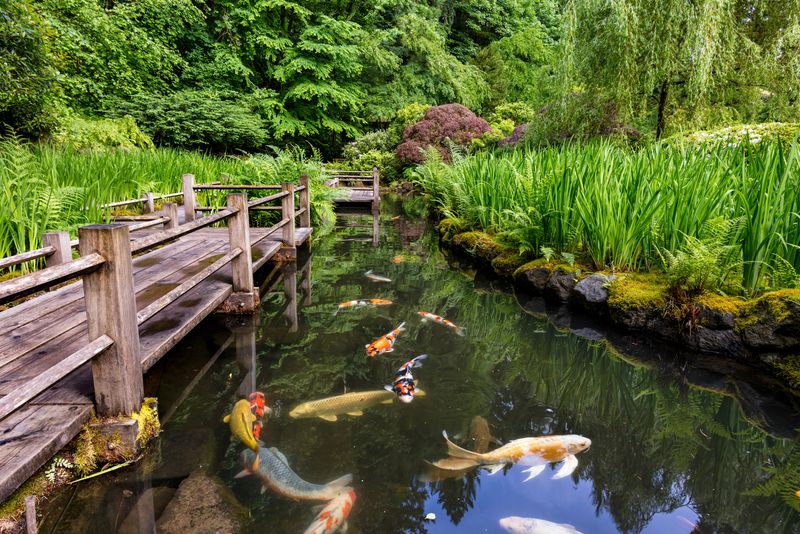
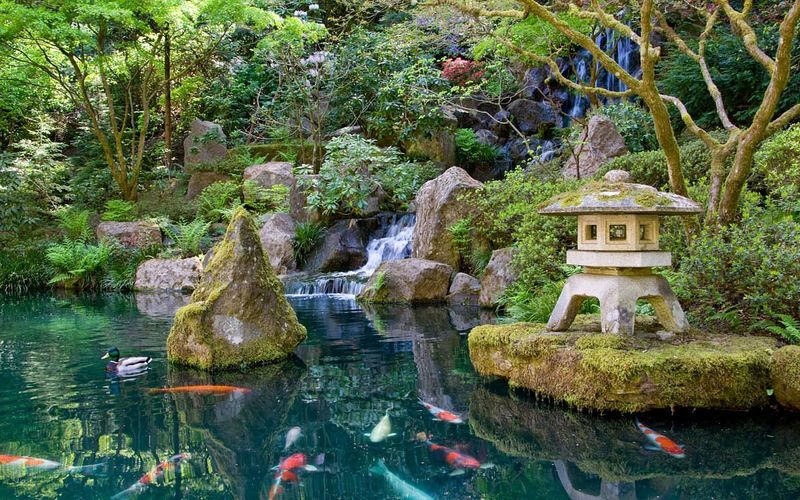
Ask almost any visitor what their favorite part of the garden was, and the koi pond comes up within the first few seconds. The fish are enormous, deeply colored, and completely unbothered by the humans leaning over the railing to stare at them.
Watching them glide through the water has a calming effect that is hard to explain but very easy to experience.
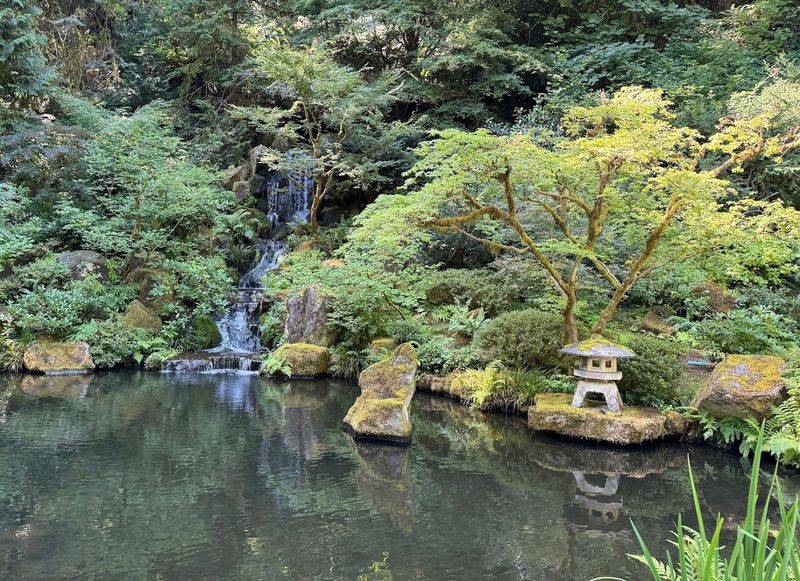
Beyond the main koi pond, the garden uses water throughout its design in a way that feels constant without ever feeling excessive. A cascading waterfall tumbles over natural stone in one section, and the sound of it carries through the surrounding trees in a way that softens everything else around you.
The reflections in the still water sections are especially striking on overcast days, which are common in Portland. The gray sky turns the pond surface into a mirror, and the maple trees overhead create a canopy of color in fall that doubles itself in the water below.
Water is not just a decorative element here but a structural one, used to create rhythm, depth, and mood throughout the entire garden. It is one of the details that sets this place apart from gardens that treat water as an afterthought.
The Teahouse and the Art of Slowing Down
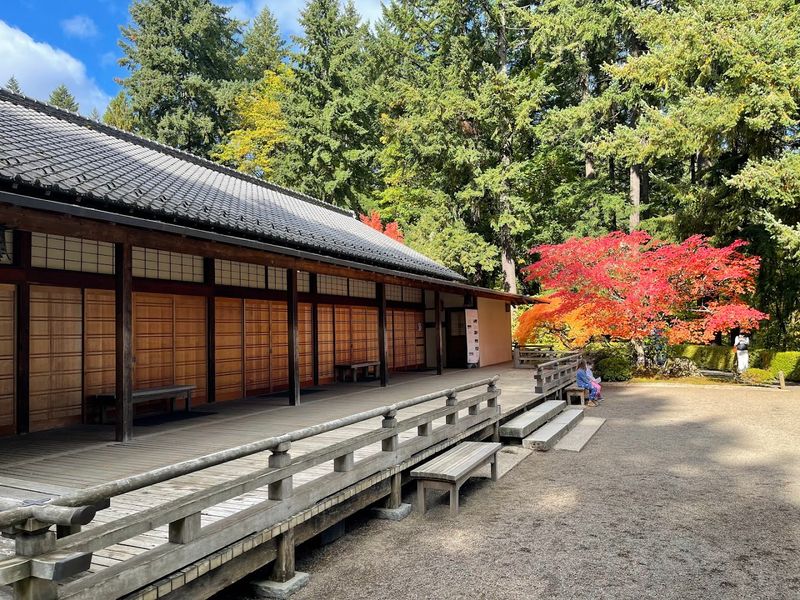
There is a teahouse inside the garden that feels like it was lifted directly from a hillside in Kyoto and carefully reassembled on an Oregon slope. The structure itself is a study in restraint, built from wood with careful joinery and a roofline that curves just enough to signal its heritage without shouting about it.
Tea demonstrations are held here on scheduled days, and attending one adds a completely different dimension to the visit. The ceremony is not just about the tea itself but about the pace, the gestures, and the deliberate attention given to each small action.
For visitors used to moving quickly through their days, it can feel almost startling to sit still and focus on something so unhurried.
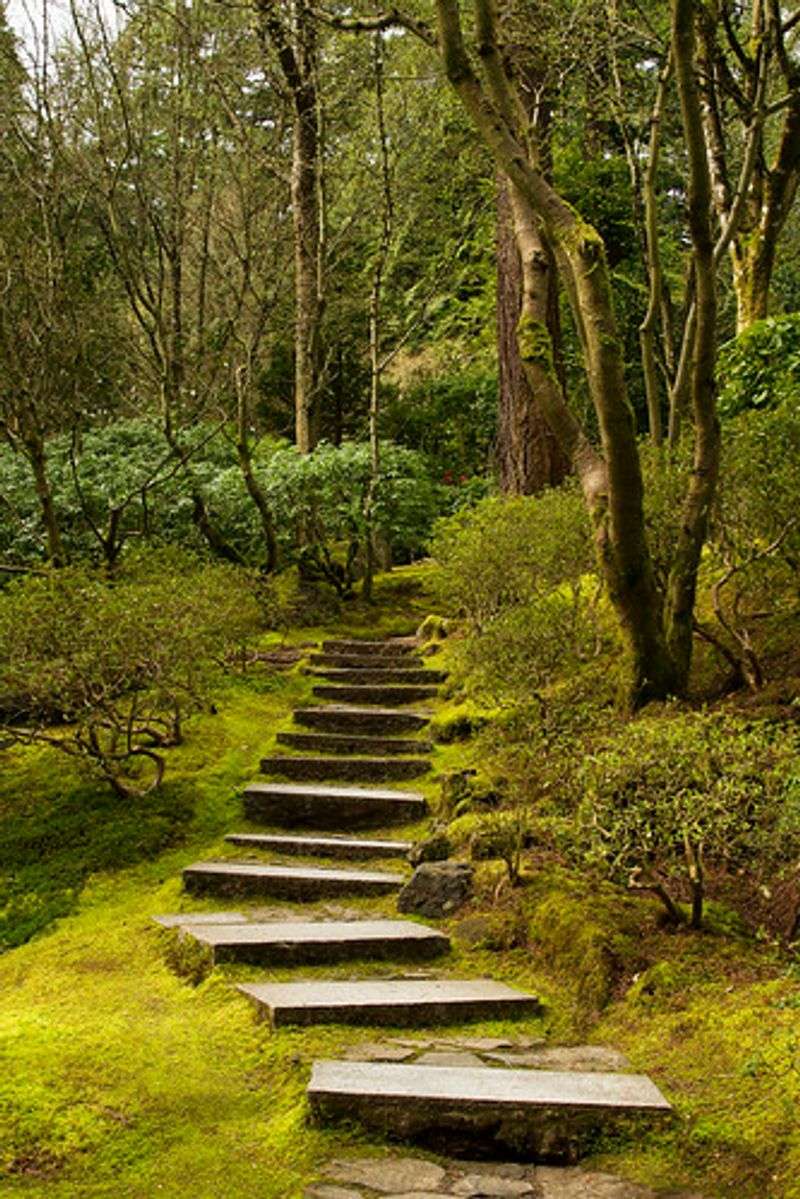
Even on days when no demonstration is scheduled, the teahouse and its surrounding Tea Garden are worth a long pause. The path leading to it is lined with mossy stones and low plantings that seem designed to slow your walking speed naturally.
The cafe inside the main pavilion also serves tea and light snacks, which is a good option for visitors who want a taste of the experience without the full ceremony. Either way, the message is the same: this is a place built for slowing down, and it rewards anyone willing to do so.
Bonsai Trees and the Patience They Represent
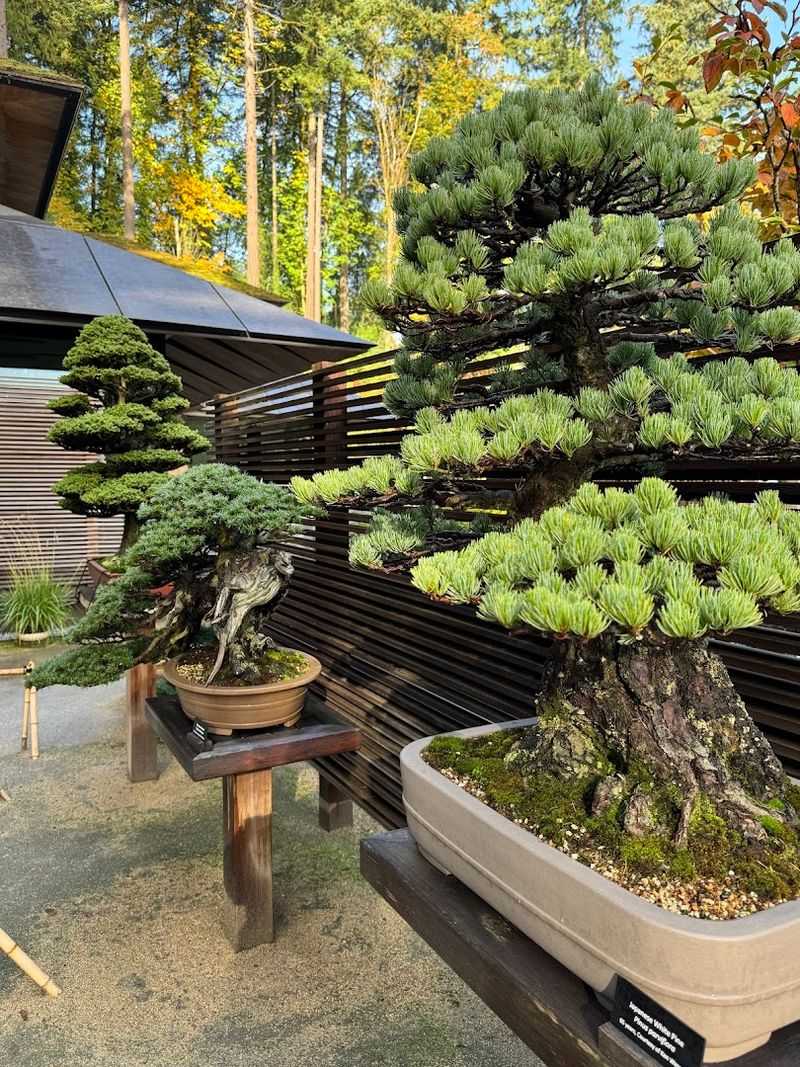
Bonsai trees have a way of making you feel the weight of time in a very physical way. The specimens at Portland Japanese Garden are not decorative props but living sculptures that have been shaped over many years, sometimes decades, through careful pruning and training techniques rooted in Japanese horticultural tradition.
The collection is modest in number, which some visitors find underwhelming, but the quality and care visible in each tree more than compensates for the quantity. Each one sits on a display stand with a quiet authority, the twisted trunk and miniaturized canopy telling a story about patience that no wall label can fully capture.
For visitors who have never spent time around bonsai before, this section of the garden tends to produce a genuine shift in perspective. These trees are not small versions of something bigger but complete artistic statements in their own right.
The craft involved in keeping them healthy while guiding their shape is genuinely demanding, and the garden staff clearly takes that responsibility seriously. Oregon is not the first place most people associate with this Japanese art form, but the collection here holds its own and deserves more attention than the average visitor gives it on a first walk-through.
Visiting in Every Season and What to Expect
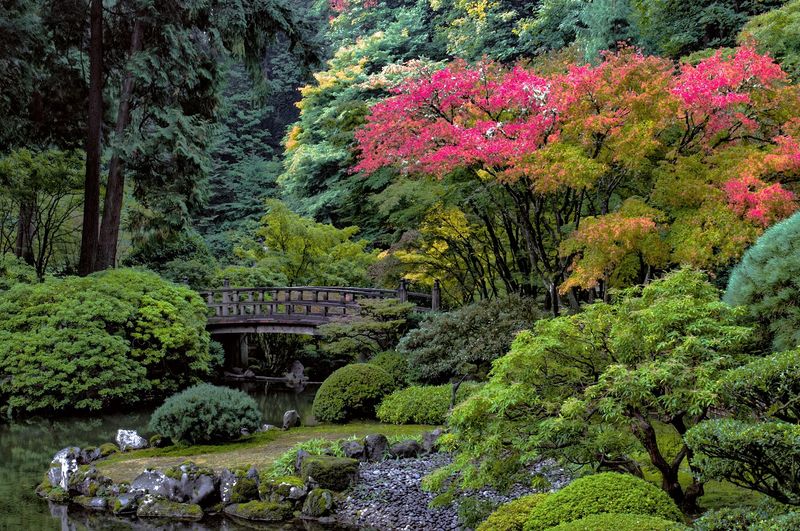
The garden earns its reputation across all four seasons, which is not something every outdoor attraction can honestly claim. Fall is the most celebrated time to visit, with Japanese maple trees turning shades of red, orange, and gold that seem almost too saturated to be real.
Late October tends to be the sweet spot before the leaves drop and after the summer crowds thin out.
Winter visits carry their own quiet reward. Fewer people make the trip in cold weather, which means more room to sit on a bench and simply be present without the background noise of a crowd.
The structure of the garden, its stone arrangements, evergreen plantings, and water features, remains compelling even when the deciduous trees are bare.
Spring brings cherry blossoms and fresh moss growth that gives the whole garden a vivid green quality, and summer is lush but busy, with timed entry managing the flow reasonably well. Rain, which Portland has in generous supply, actually enhances the experience rather than diminishing it.
The stones darken, the moss brightens, and the whole garden takes on a freshness that dry weather cannot replicate. Coming after a light rain is one of the best-kept timing secrets among regular visitors.
The Pavilion, Gallery, and Cultural Spaces
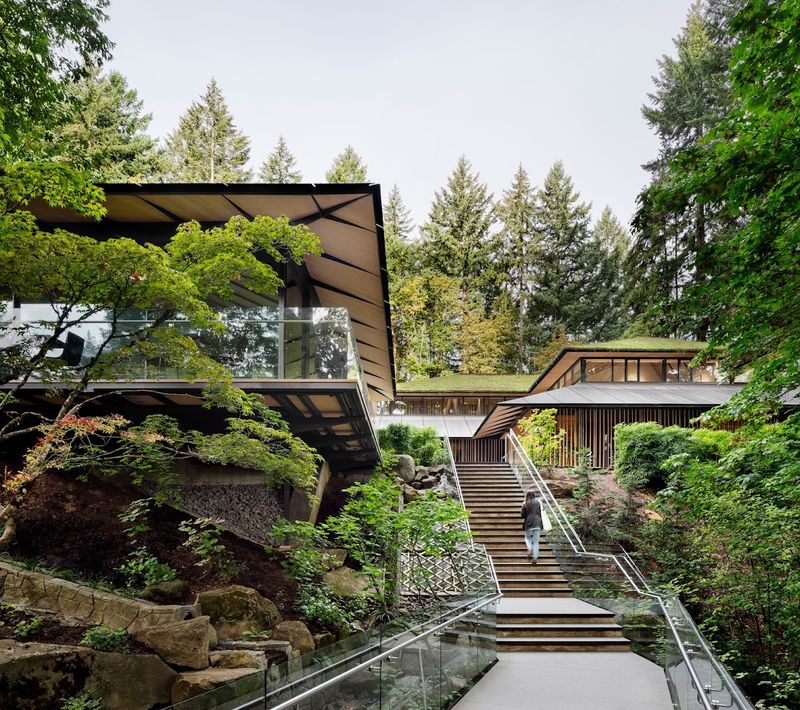
The cultural village at Portland Japanese Garden is a newer addition that expanded what the garden can offer beyond horticulture. Designed by the Japanese architect Kengo Kuma, the pavilion complex includes an art gallery, a family activity room, a small cafe, and a gift shop, all connected by covered walkways that frame views of the garden like living paintings.
The architecture itself is worth paying attention to. Kuma used natural materials and a design language that references traditional Japanese construction without mimicking it directly.
The result is a building that feels rooted in its setting rather than dropped onto it, which is a harder balance to achieve than it looks.
The art gallery rotates exhibitions that draw on Japanese and Japanese-American themes, and the quality varies by show, though the space itself is always pleasant. The family room offers hands-on activities for younger visitors, including scavenger hunts that turn the garden into an interactive experience for kids.
The cafe serves matcha treats and specialty teas that pair well with the overall atmosphere. For visitors who might find a straight garden walk too passive, these cultural spaces add texture and engagement that make the admission price feel more worthwhile.
The View of Portland and Mount Hood
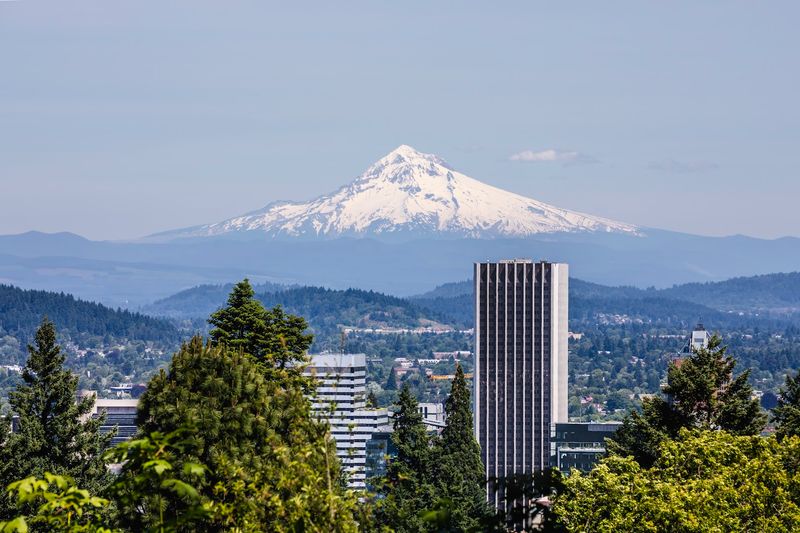
Not every garden comes with a skyline view, but Portland Japanese Garden manages to offer one without making it feel out of place. From a specific overlook point within the garden, the city of Portland spreads out below the hillside, and on clear days, the snow-capped peak of Mount Hood rises behind it in a way that genuinely stops people mid-sentence.
The contrast between the manicured garden in the foreground and the urban skyline in the background is striking in a way that feels uniquely Pacific Northwest. It is a reminder that this garden exists not in isolation but as part of a larger city that has chosen to preserve and invest in this kind of cultural space.
Photographers tend to linger at this viewpoint longer than anywhere else in the garden, and it is easy to understand why. The composition practically arranges itself.
Even visitors who are not particularly interested in photography find themselves reaching for their phones. The view also provides a useful orientation point, helping visitors understand where they are on the hillside relative to the rest of Washington Park below.
It is one of those moments that makes the visit feel larger than the 5.5 acres it actually covers.
Practical Tips for Getting the Most Out of Your Visit
A few pieces of practical knowledge can make a real difference in how much you enjoy this place. Buying timed entry tickets online before you arrive is close to essential on weekends and during peak fall season, when the line for walk-up tickets can stretch to a two-hour wait.
The garden website at japanesegarden.org makes the process straightforward, and it is worth the few minutes it takes.
Comfortable shoes matter more than most people expect. The main paths are relatively flat, but some sections involve uneven stone steps and slopes that can be challenging in anything less than supportive footwear.
The free shuttle from the lower parking area is available for those who prefer to skip the uphill walk from the street.
If you plan to bring a tripod for photography, there is an extra charge at the ticket booth, so factor that in. Memberships are available and make strong financial sense for anyone planning multiple visits, since they also allow early 8 AM entry and a discount in the gift shop.
The garden can be reached by public transit from downtown Portland, which sidesteps the parking issue entirely and is worth considering during busy periods. The phone number for direct inquiries is +1 503-223-1321.
What Makes It Feel Authentically Japanese
The word authentic gets used loosely when describing cultural spaces outside their country of origin, but Portland Japanese Garden has earned it through deliberate choices made over decades. The design draws on established Japanese garden traditions, including the use of borrowed scenery, asymmetrical balance, and the principle of ma, which roughly translates as the meaningful use of empty space.
The garden maintains an ongoing relationship with Japan through cultural exchanges, advisory input from Japanese garden experts, and programming that connects the space to living traditions rather than treating Japanese culture as a static exhibit. That ongoing connection is part of what keeps the garden from feeling like a themed attraction.
Visitors who have traveled to Japan often comment that the attention to detail here holds up to comparison, which is a significant endorsement. The carefully raked gravel, the placement of every stone, and the pruning of each tree reflect a coherent philosophy rather than a decorative impulse.
Oklahoma may be a long way from Portland in both miles and climate, but visitors from across the country, including those making the trip from Oklahoma, consistently describe this garden as one of the most transportive cultural experiences they have encountered anywhere in the United States.
A Closing Thought on Why This Garden Stays With You
Some places are enjoyable while you are there and forgettable by the time you reach your car. Portland Japanese Garden is not one of those places.
The combination of careful design, living plants, moving water, and genuine cultural depth creates an experience that tends to resurface in memory days or weeks after the visit, usually triggered by something small like the sound of rain or the sight of a well-placed stone.
Visitors from Oklahoma, California, the United Kingdom, and everywhere in between have described the garden as one of those rare spots that changes the pace of a trip in a meaningful way. That is not a small thing in a world that tends to reward speed over stillness.
The garden at 611 SW Kingston Ave is open most days of the week, maintained with obvious care, and staffed by people who clearly believe in what the place represents. Oklahoma travelers passing through the Pacific Northwest often add it to their itineraries on a recommendation and leave wishing they had scheduled more time.
Whether you are a Portland local or a first-time visitor to Oregon, this garden offers something that most attractions simply cannot: a genuine sense of quiet that you carry with you long after you leave.
Share this story