There is a small patch of Oregon coastline where the plants eat the bugs, not the other way around. Tucked just off Highway 101, a quiet state natural site protects one of the rarest botanical habitats in the entire country.
The star of the show is a twisting, hooded plant that lures insects inside and never lets them leave. I made a stop here on a coastal road trip, and honestly, it turned out to be one of the most memorable fifteen minutes of the whole journey.
The boardwalk, the bog, the eerie beauty of thousands of carnivorous plants stretching across the ground, it all felt like something out of a nature documentary. Keep reading, because this place deserves way more attention than it gets.
Where Exactly You Will Find This Botanical Wonder
Darlingtonia State Natural Site sits at 5400 Mercer Lake Road, Florence, Oregon 97439, right off the famous Highway 101 near the Oregon coast. The address is easy to find, and the turnoff from the highway takes less than a minute.
Florence is a charming coastal town in Lane County, and this natural site is about five miles north of town, near Heceta Beach.
The site is managed by Oregon State Parks and is open 24 hours a day, every day of the week. There is no entry fee, which makes it one of the most accessible and budget-friendly nature stops on the entire Oregon coast.
You can call ahead at 1-800-551-6949 if you have any questions before your visit.
The parking lot is small but functional, and most visitors do not stay long enough to create a serious crowding problem. The site tends to be sunnier than the immediate coastline, so even on a foggy day at the beach, you might get a pleasant break from the mist here.
That little weather bonus alone makes it worth the short detour from 101.
The Story Behind This One-of-a-Kind Protected Bog
Not many roadside stops come with a backstory as fascinating as this one. The site was established specifically to protect the Darlingtonia californica, a carnivorous plant so unusual that scientists named the entire genus after it.
The plant was first formally described in the mid-1800s, and its discovery caused a genuine stir in the botanical world.
Oregon is one of the very few places on Earth where this species grows wild. Its natural range is limited to specific boggy areas in southwestern Oregon and a narrow strip of northern California, making every surviving habitat critically important.
The fact that a dedicated state natural site exists here reflects how seriously Oregon takes its responsibility to protect this rare ecosystem.
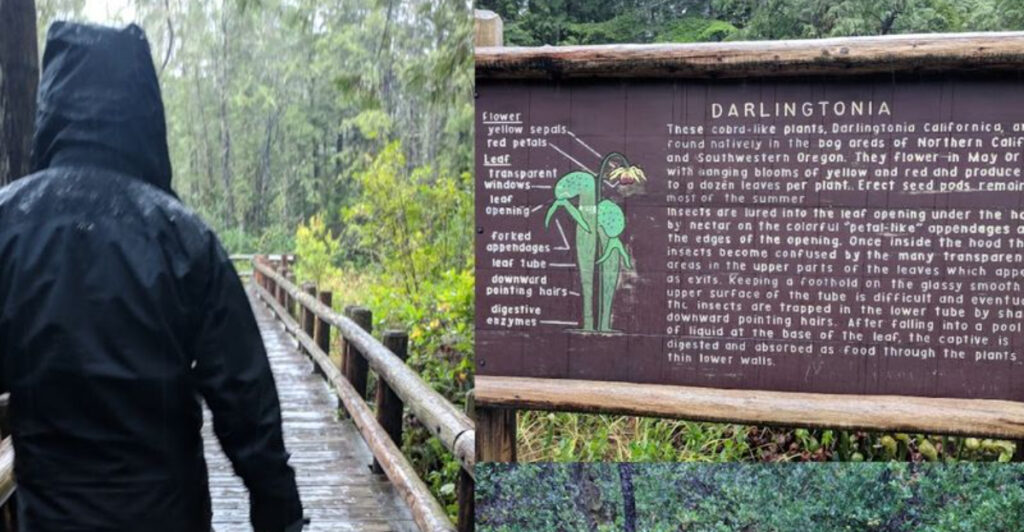
The bog itself has existed for thousands of years, shaped by the cool, wet coastal climate and the nutrient-poor soil conditions that carnivorous plants actually prefer. Signs throughout the site explain the plant’s history and ecology in clear, easy-to-read language.
Reading those panels genuinely deepened my appreciation for what I was looking at, turning a quick stretch-the-legs stop into something much more meaningful than I had expected.
Meet the Cobra Lily: Nature’s Most Dramatic Insect Trap
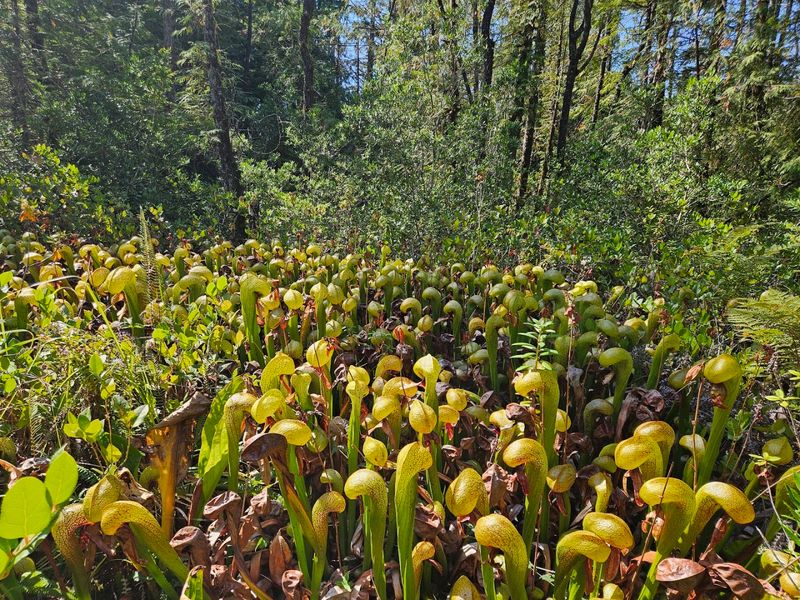
The cobra lily earns its name the moment you see it. The plant’s hooded, tube-shaped structure curves forward at the top, and a forked, tongue-like appendage hangs down from the opening, giving the whole thing an uncanny resemblance to a rearing cobra snake.
It is genuinely one of the most visually striking plants you will ever encounter in the wild.
Scientifically known as Darlingtonia californica, this species belongs to the pitcher plant family. Insects are attracted by the plant’s nectar and coloring, and once they enter the hooded chamber, translucent spots on the hood confuse them into flying toward false exits rather than the real one.
Eventually, exhausted, they fall into the water-filled tube below and are slowly digested.
What makes the cobra lily especially unusual among pitcher plants is that it does not rely on rainwater to fill its tubes. Instead, it pumps cool groundwater up through its roots, keeping the fluid fresh and effective year-round.
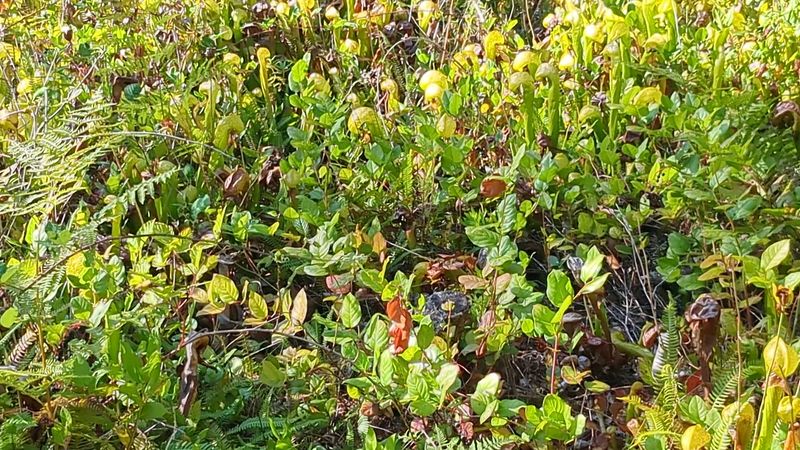
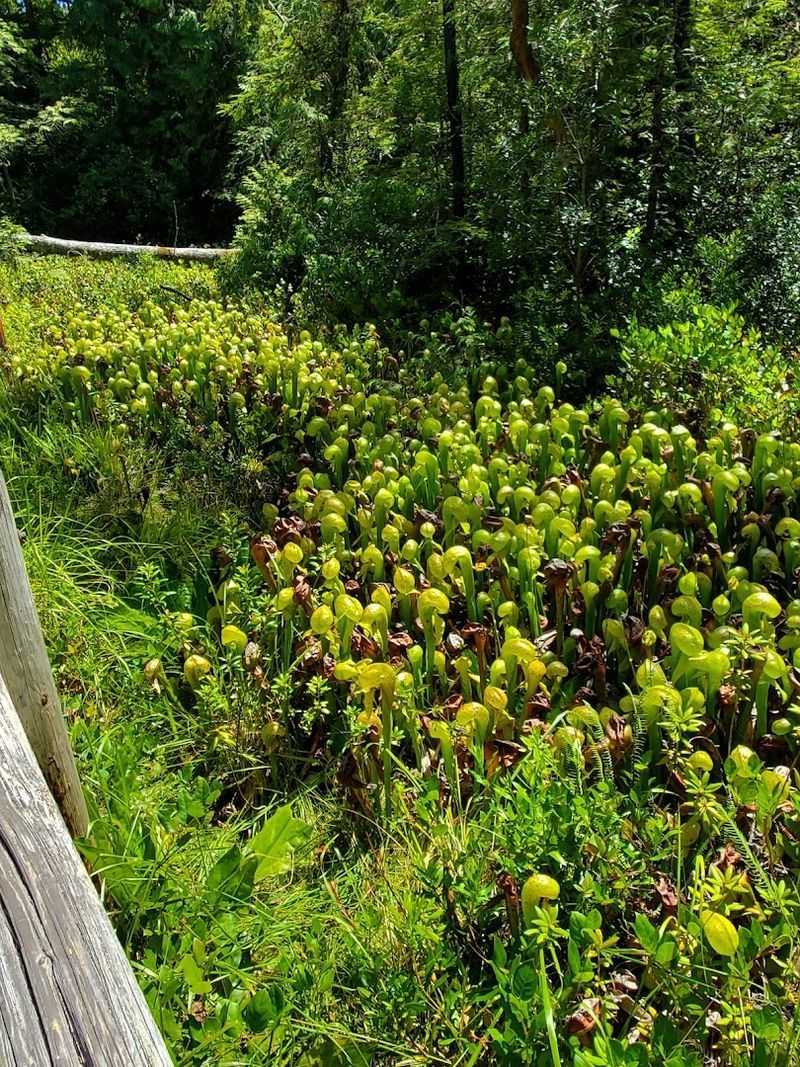
Seeing thousands of these plants clustered together in the bog, all swaying slightly in the coastal breeze, is the kind of sight that genuinely stops you mid-step on the boardwalk.
The Boardwalk Experience: Walking Above the Bog
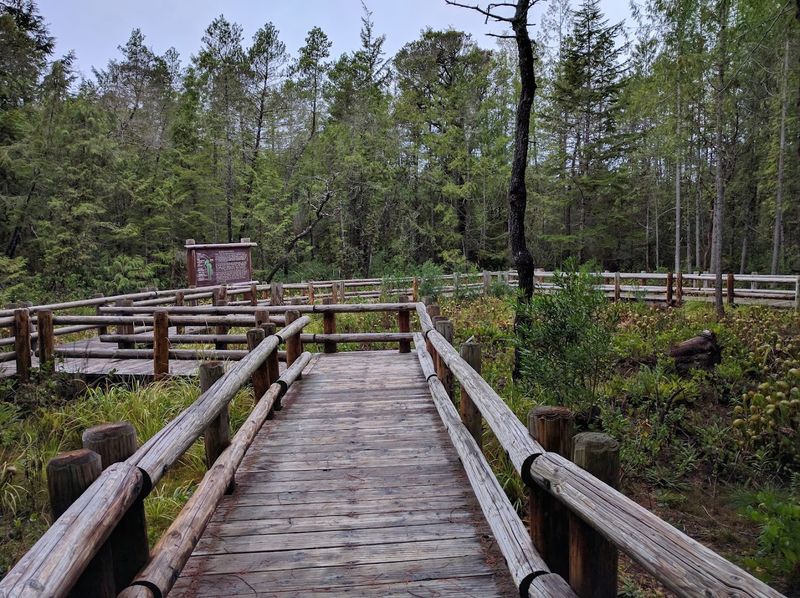
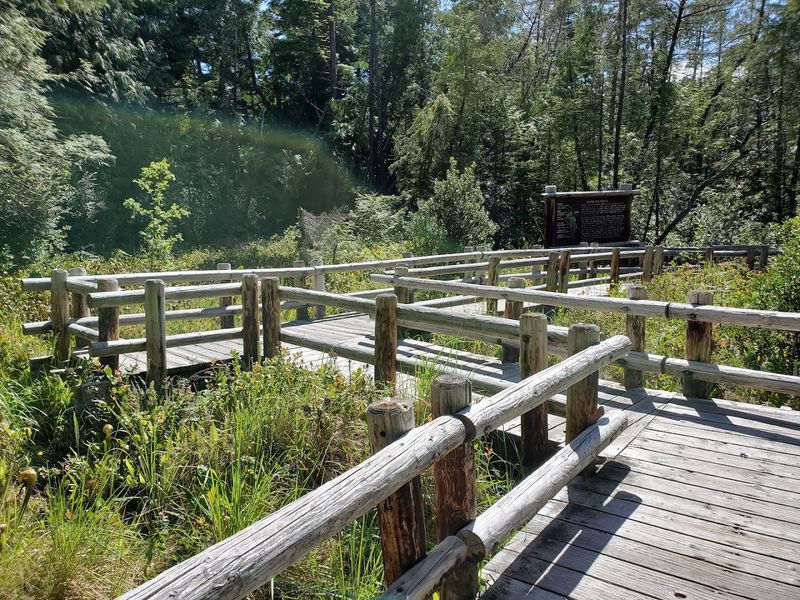
The main feature of the visit is a short, flat loop trail that takes you directly over the bog on a wooden boardwalk. The loop is roughly a quarter mile round trip, and even at a leisurely pace, most people complete it in ten to fifteen minutes.
Do not let the brevity fool you, though, because what you see from that boardwalk is genuinely extraordinary.
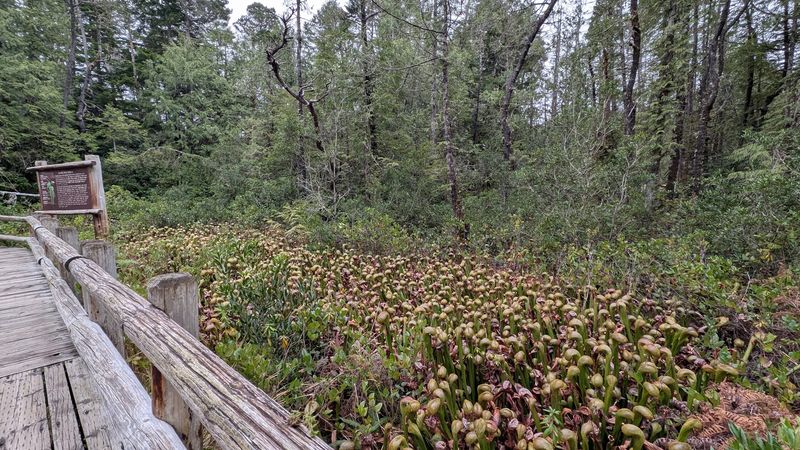
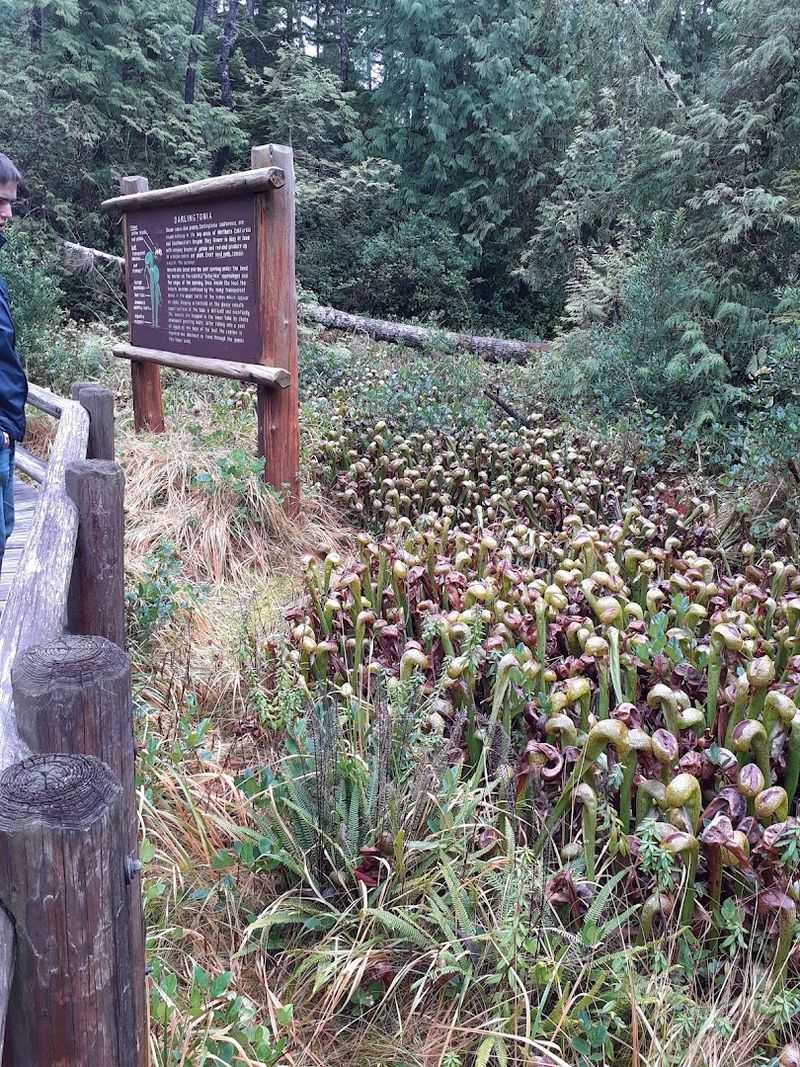
The boards sit elevated above the bog surface, giving you a clear, close view of the cobra lilies below without disturbing the delicate ecosystem. Signage along the route explains what you are looking at and why the boardwalk matters for plant protection.
A few sections of the boardwalk have boards that are slightly uneven, so watch your step, especially if you are pushing a stroller or wheelchair.
The trail to the right of the parking lot entrance is the correct path to the observation deck and the bog. The trail to the left, near the picnic tables, is not the official route to the plants and will not give you the full experience.
Knowing that small detail before you arrive saves you a few minutes of backtracking on what is already a very short visit.
What the Bog Looks Like Up Close and in Every Season
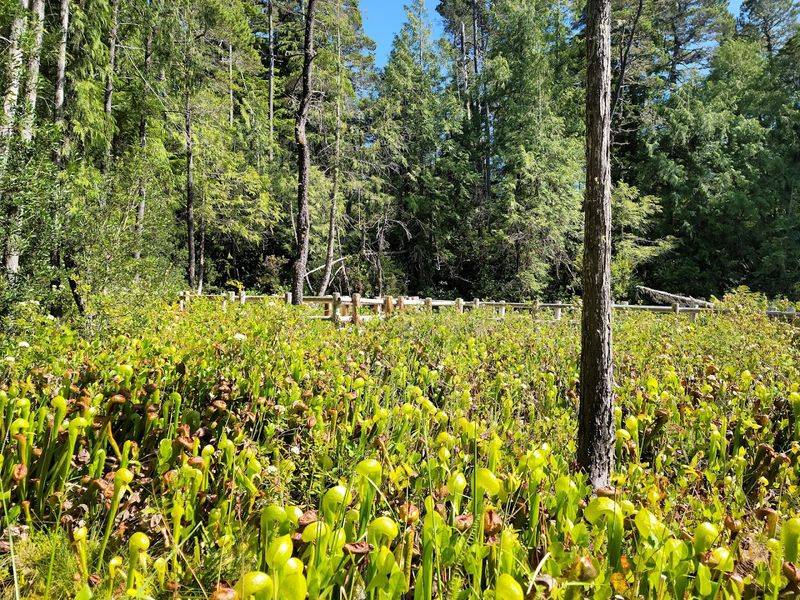
The bog itself covers only a few acres, but the density of the cobra lily plants inside it is staggering. From the boardwalk, you look out over a sea of green, hooded tubes, some reaching knee height, all packed closely together across the boggy ground.
The sheer number of them in one place is something photographs genuinely struggle to capture accurately.
Summer is the most dramatic time to visit, particularly July, when the plants send up tall, nodding flowers on long stalks above the pitchers. The blooms are subtle but elegant, and they add another visual layer to the already striking scene.
In winter, the plants go dormant, but the bog fills with more water, creating a different kind of quiet, atmospheric beauty.
Spring brings fresh growth as new pitchers emerge, while fall offers a transition period where some plants are still active and others are beginning to slow down. Every season offers something worth seeing.
The cool, shaded walk through cedar, spruce, and shore pines leading to the boardwalk also changes character with the seasons, making repeat visits feel genuinely fresh each time you return.
The Forest Path That Sets the Mood Before You Arrive
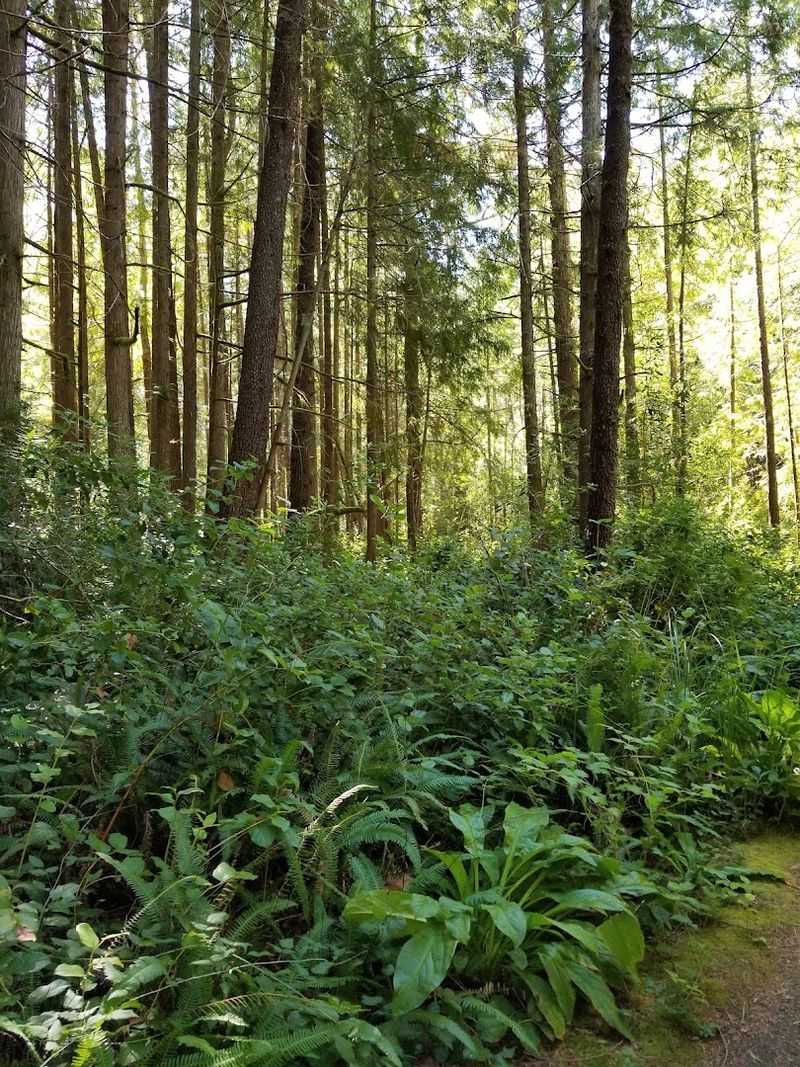
Before you even reach the bog, the walk through the surrounding forest sets a tone that feels almost cinematic. Dense cedar, Sitka spruce, and shore pine trees form a canopy overhead, filtering the coastal light into soft, shifting patterns on the path below.
The air smells of damp earth and evergreen, and the sound of the highway fades quickly behind you.
The paved path is flat and easy to navigate, making it accessible for most visitors regardless of fitness level. It is short enough that young children handle it without complaint, and slow enough in pace that adults can actually notice the smaller details around them, like the mossy ground cover, the ferns along the edges, and the occasional insect buzzing past.
That brief transition through the trees does something important: it shifts your mindset from road-trip mode to something quieter and more observant. By the time the boardwalk and the bog come into view, you are already primed to appreciate what you are about to see.
It is a small design detail that makes the overall experience feel much more intentional than a simple pull-off-the-highway stop.
Practical Amenities That Make the Stop Even Easier
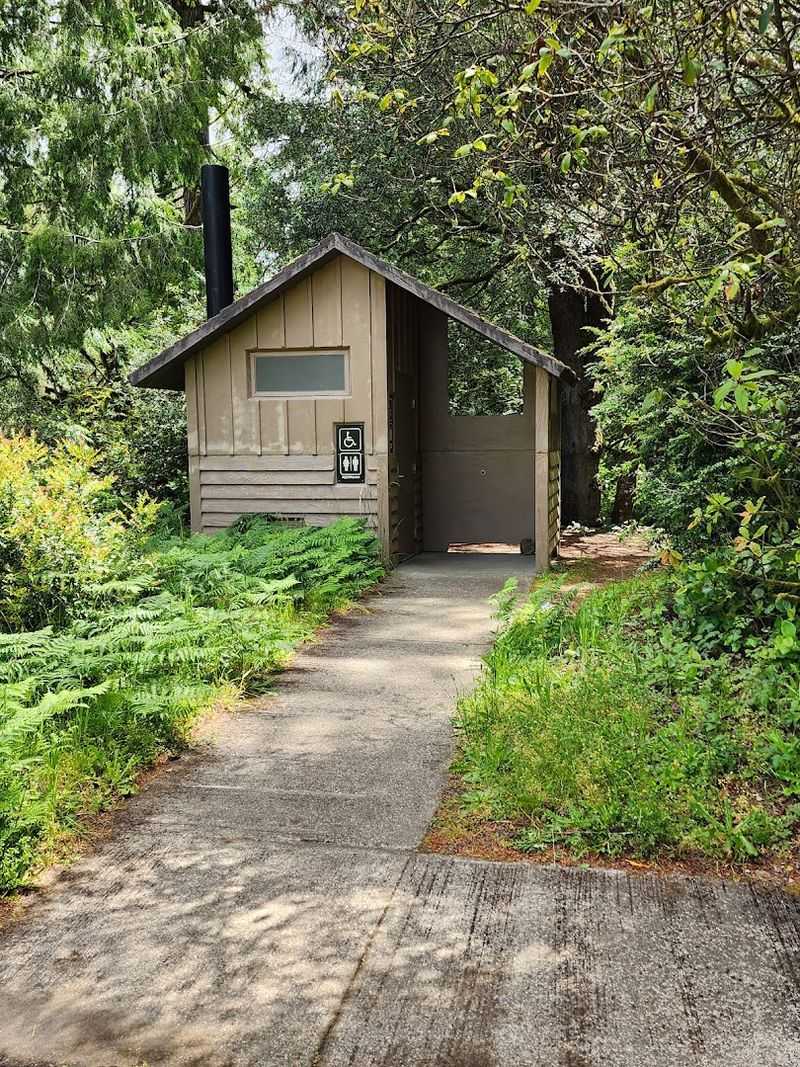
For a site this small, the practical amenities are genuinely thoughtful. There is a restroom building near the parking lot, which is a significant convenience if you have been driving the coast for a while.
Restroom availability on remote stretches of Highway 101 is not guaranteed, so finding a clean facility here is a real plus.
A few picnic tables are scattered near the parking area, making this a reasonable spot to stop for a snack or a quiet lunch break. The tables sit in a shaded, pleasant area that feels relaxed and unhurried.
The parking lot itself is small, so during peak summer weekends it can fill up briefly, but turnover is fast because visits are short.
The site is free to enter, open every day around the clock, and requires no reservation or permit. That combination of zero cost, easy access, and solid basic facilities makes Darlingtonia State Natural Site one of the smoothest roadside stops on the entire Oregon coast.
It rewards spontaneous visitors and planned ones equally, which is a rare quality for any natural attraction worth mentioning.
Why This Plant Grows Here and Almost Nowhere Else
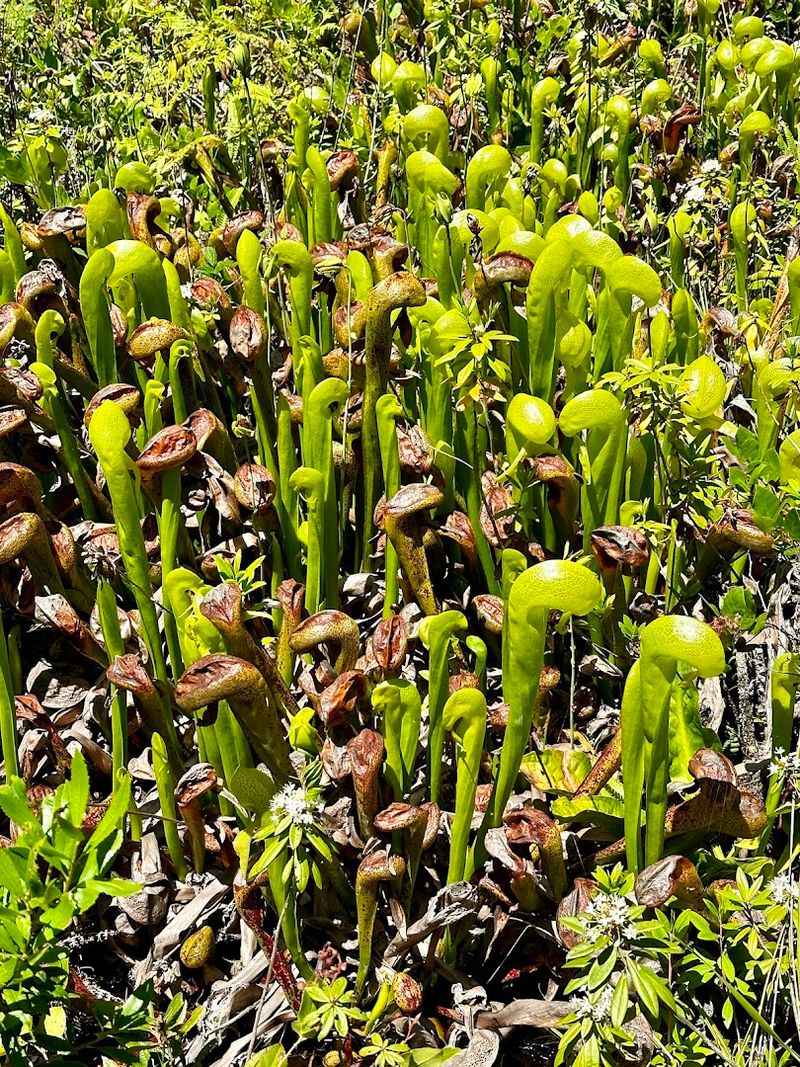
The cobra lily’s extreme rarity comes down to a very specific set of environmental requirements. It needs cool, oxygen-rich groundwater flowing through nutrient-poor, acidic soil, conditions that exist naturally in only a narrow band of habitat along the Oregon and northern California coasts.
Carnivory evolved in this plant precisely because the soil lacks the nitrogen and minerals that most plants absorb through their roots.
By trapping and digesting insects, the cobra lily supplements the nutrients it cannot get from the ground. It is a brilliant biological workaround, millions of years in the making.
The bog at Darlingtonia State Natural Site provides exactly the right combination of seeping groundwater, shade, and soil chemistry to support a thriving population of these plants.
Human development, drainage projects, and habitat loss have reduced suitable cobra lily habitat significantly over the past century. Protected sites like this one play a direct role in keeping the species stable.
Standing on that boardwalk and looking at thousands of healthy plants, you are witnessing conservation actually working, and that is a genuinely uplifting thing to take away from a fifteen-minute stop on a coastal drive.
Tips for Getting the Most Out of Your Visit
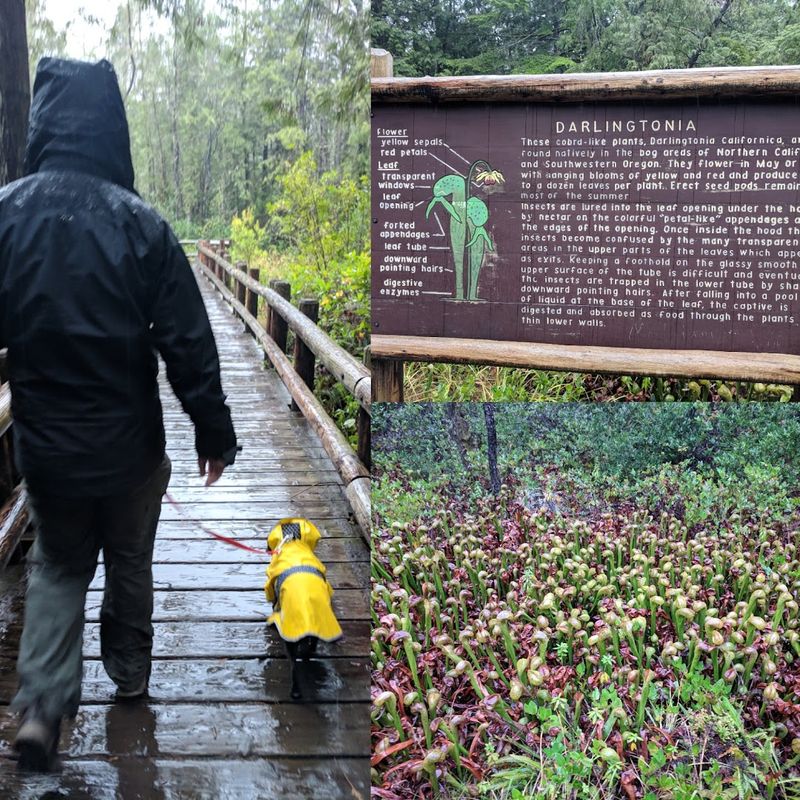
A few small preparations make this stop noticeably better. Wear comfortable, closed-toe shoes, because even though the trail is paved and flat, the boardwalk can be slightly damp and slippery in wet weather.
The Oregon coast is reliably moist, so a light waterproof layer is always a smart addition to your bag.
Read the interpretive signs along the boardwalk rather than skipping past them. They are well-written, genuinely informative, and short enough to read without slowing your pace significantly.
They explain the plant’s biology, the bog ecosystem, and the conservation efforts in place, context that makes the plants themselves far more interesting to observe.
Bring a camera with a macro or close-up setting if you have one, because the detail on the cobra lily’s hooded structure is stunning up close. Phone cameras work well in the shaded light of the bog area.
Plan to arrive either early in the morning or on a weekday if you prefer a quieter experience, since the small parking lot and narrow boardwalk feel more crowded during busy summer afternoons. The whole visit fits easily into a thirty-minute window, including the drive in and out.
How This Stop Fits Into a Broader Oregon Coast Road Trip
Highway 101 through Oregon is one of the great American road trips, and Darlingtonia State Natural Site slots into it effortlessly. The site is just seconds off the highway, meaning you lose almost no driving time by stopping.
Florence itself is a worthwhile destination, with the nearby Oregon Dunes National Recreation Area offering a completely different kind of natural spectacle just down the road.
Heceta Head Lighthouse is also close by, sitting a short drive north and offering dramatic coastal views and a beautifully preserved historic structure. Combining Darlingtonia with Heceta Head and a walk in the dunes gives you a genuinely varied half-day of Oregon coast highlights without covering much ground at all.
Travelers heading north from California often use Florence as a natural stopping point, and this site makes for a memorable early introduction to what Oregon’s natural world has to offer. Heading south from Portland or the Willamette Valley, it serves as a satisfying final flourish before the landscape shifts.
Either way, the cobra lily bog earns its place on the itinerary, not as filler, but as a genuine highlight that people talk about long after the trip ends.
What Other Visitors Consistently Notice and Appreciate
The feedback from people who visit Darlingtonia State Natural Site is remarkably consistent in the best possible way. Nearly everyone mentions being surprised by how much they enjoyed a stop they initially expected to be minor.
The combination of genuine scientific rarity and easy accessibility creates an experience that exceeds expectations almost every time.
The plants themselves draw the most attention, naturally. Visitors frequently comment on how visually dramatic the cobra lilies are in person, noting that photos do not fully convey the scale or the density of the bog.
Flies and other insects are sometimes visible near the plant openings, which adds a live-action element to the whole carnivorous plant concept that no exhibit in a botanical garden can quite replicate.
Families with children find the stop particularly rewarding because kids respond immediately to the idea of a plant that eats bugs. The short trail length means attention spans are not tested, and the wow factor is delivered quickly and memorably.
Repeat visitors, people who stop here every time they drive the coast, are common, which says something important about the lasting impression this small, remarkable place leaves on everyone who takes the time to turn off the highway.
A Final Thought on Why This Small Site Matters So Much
There is something quietly profound about a place this small carrying this much ecological significance. The Darlingtonia bog is not a grand canyon or a towering mountain range.
It is a few acres of wet, acidic ground supporting a plant that has figured out how to survive in conditions most living things would find inhospitable. That kind of stubborn, elegant adaptation deserves respect.
Oregon State Parks has done a thoughtful job of making this habitat accessible without compromising it. The boardwalk keeps human foot traffic above the sensitive bog surface, the signage educates without overwhelming, and the free admission ensures that economic barriers do not prevent anyone from experiencing something genuinely rare.
That balance between access and protection is harder to achieve than it looks.
My visit to Darlingtonia State Natural Site lasted about twenty minutes, but the image of those thousands of hooded, swaying cobra lilies has stayed with me far longer than many much grander destinations have. Some places earn their place in your memory not through size or spectacle but through sheer strangeness and wonder, and this quiet bog off a coastal highway does exactly that with remarkable efficiency.
Share this story