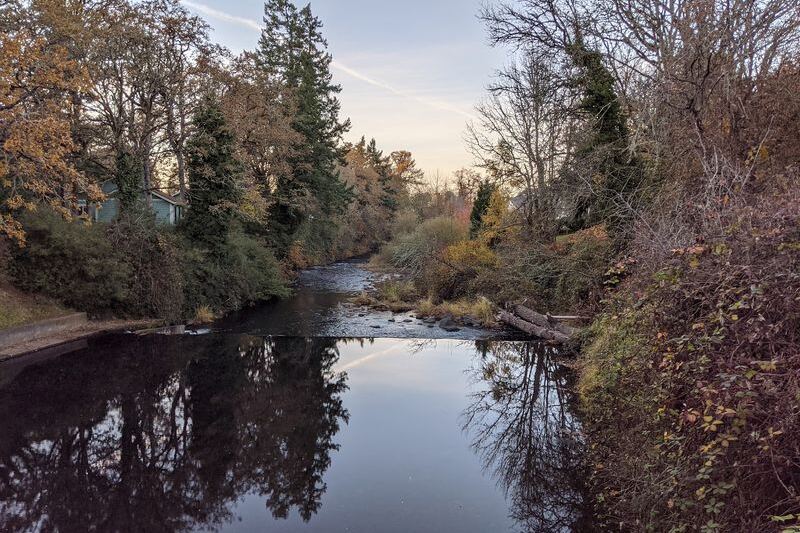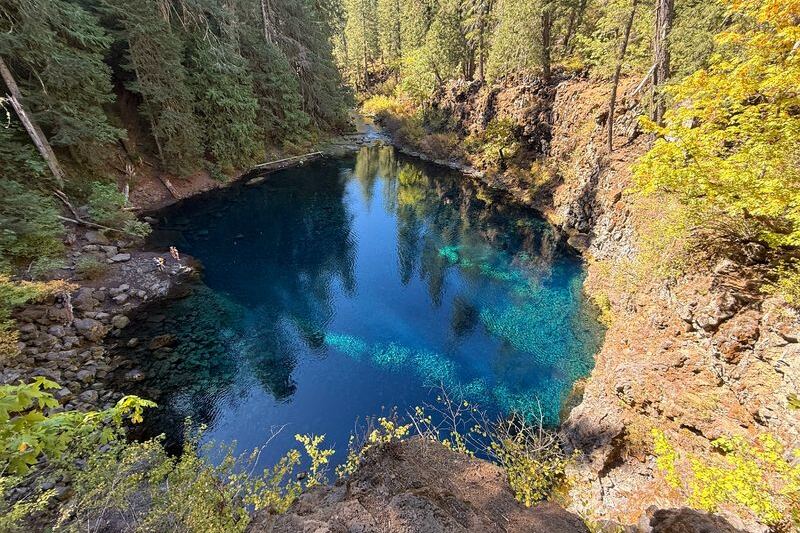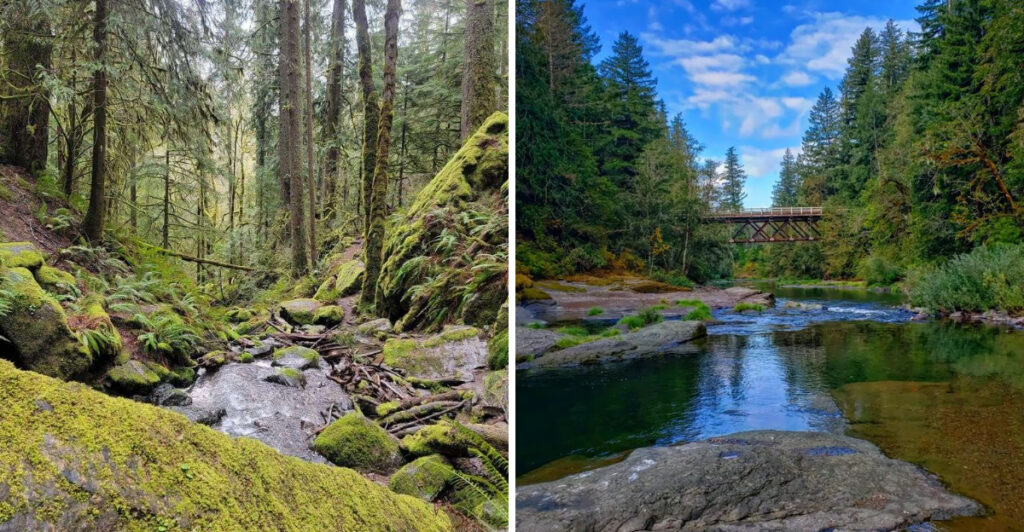
There is a stretch of the South Santiam River in Oregon where the water runs clear, the trees grow enormous, and a waterfall waits at the end of a short trail. It sits tucked into the foothills of the Cascade Mountains, close enough to the small town of Sweet Home to make a quick day trip but wild enough to feel like a real escape.
The park draws families, hikers, campers, and anyone who wants to swap screen time for river time. Once you see the old-growth forest canopy overhead and feel the cold water on your feet, you will understand why people keep coming back year after year.
Where Exactly You Will Find This Place
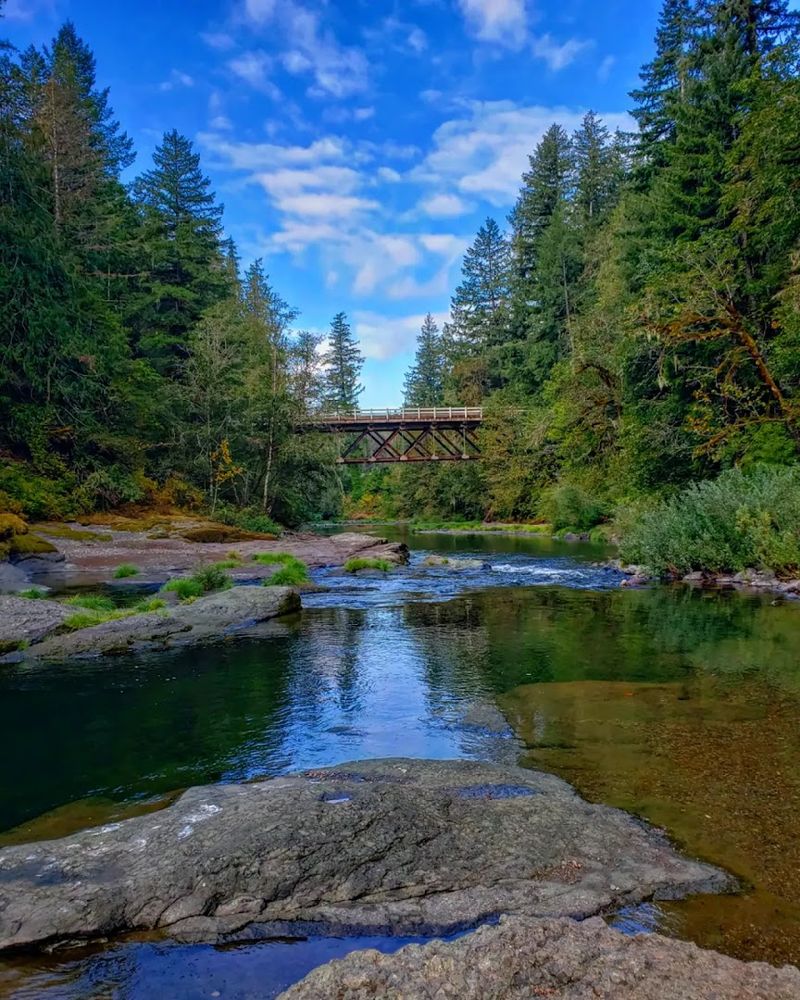
The address is 48241 Cascadia Dr, Cascadia, OR 97329, and the drive there is already half the fun. The park sits along the South Santiam River in Linn County, nestled into a narrow valley about 14 miles east of Sweet Home on Highway 20.
The Cascade Mountain foothills wrap around the park on all sides, so the moment you turn off the highway and follow the road toward the river, the landscape shifts noticeably. The trees get taller, the air gets cooler, and the sound of traffic disappears behind the sound of moving water.
The park is managed by Linn County Parks and is sometimes listed under its older name, Cascadia State Park. You can reach the parks department at 1-800-551-6949 or check linnparks.com for current conditions and seasonal hours.
Day-use visitors park in a small lot just across from the entry bridge, while overnight campers use a larger lot to the west near the group camping area. The setting makes even the parking lot feel like part of the adventure.
The South Santiam River Swimming Holes
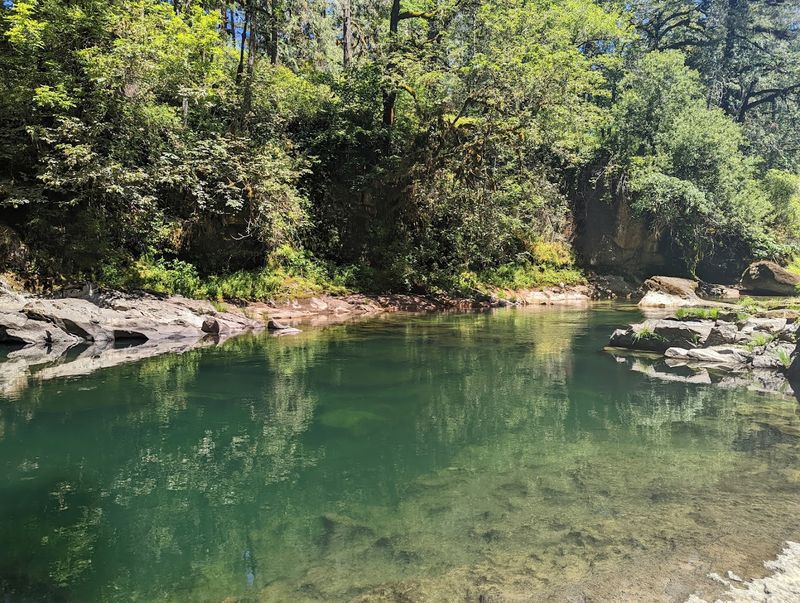
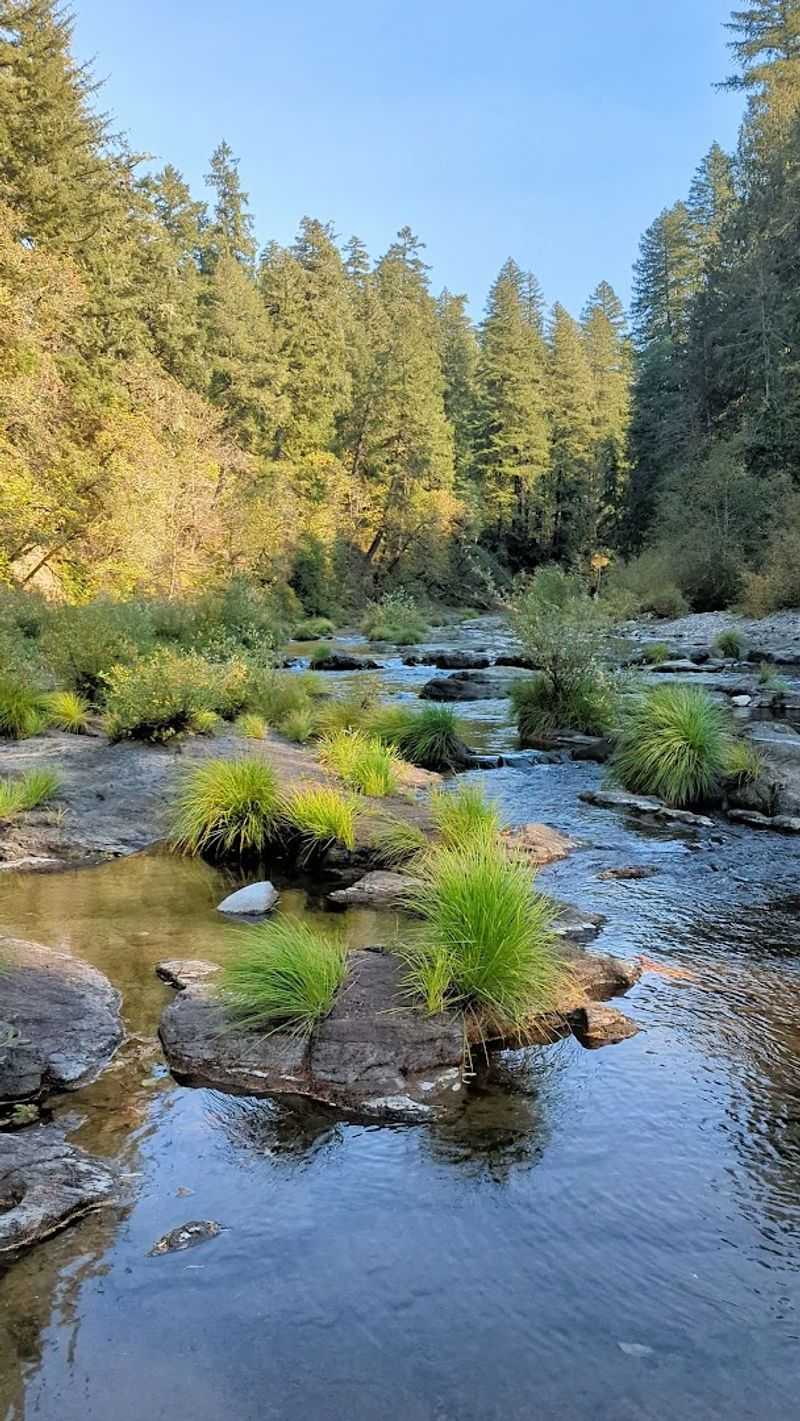
Cold, clear, and surprisingly inviting even on a warm summer afternoon, the swimming holes along the South Santiam River are the main reason most families make the drive out here. The water moves fast in spots and slows into wide, calm pools in others, giving swimmers of different comfort levels a place to wade or fully submerge.
One of the best spots sits directly under the entry bridge. Climb over the left side of the bridge when facing the main road and follow the easy path down to the water.
The pool there is deep enough for jumping and calm enough for floating.
Bringing a tube or float is a genuinely good idea. Visitors who show up with inflatables and lawn chairs tend to stay for hours rather than minutes.
The rocky riverbank gives you plenty of space to set up, dry off, and go back in again.
Dogs are welcome on leash, and the river seems to be their favorite part too. The water temperature stays refreshing all summer, which makes it an honest reward after any amount of hiking in the summer heat.
The Old-Growth Forest That Surrounds the Whole Park
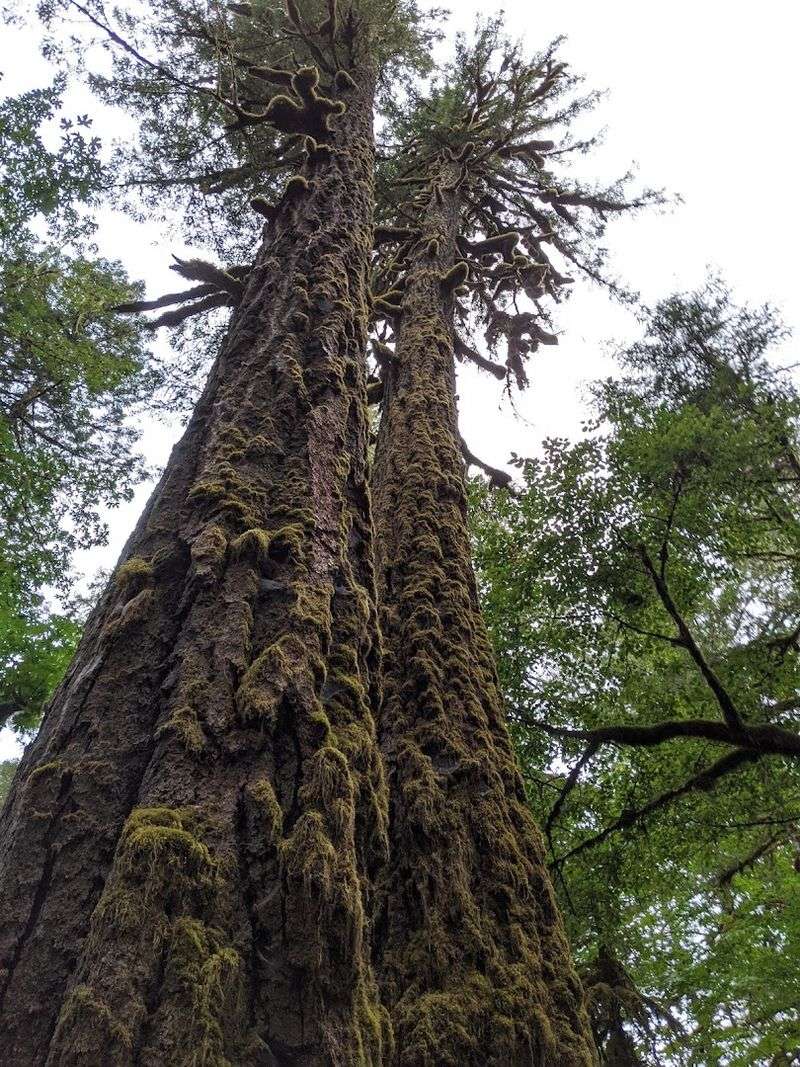
Some parks have a few big trees scattered around. This one feels like the trees are in charge and the trails are just politely borrowing the space.
The old-growth Douglas firs here are genuinely massive, with bark so thick and grooved it looks like it belongs on a different planet.
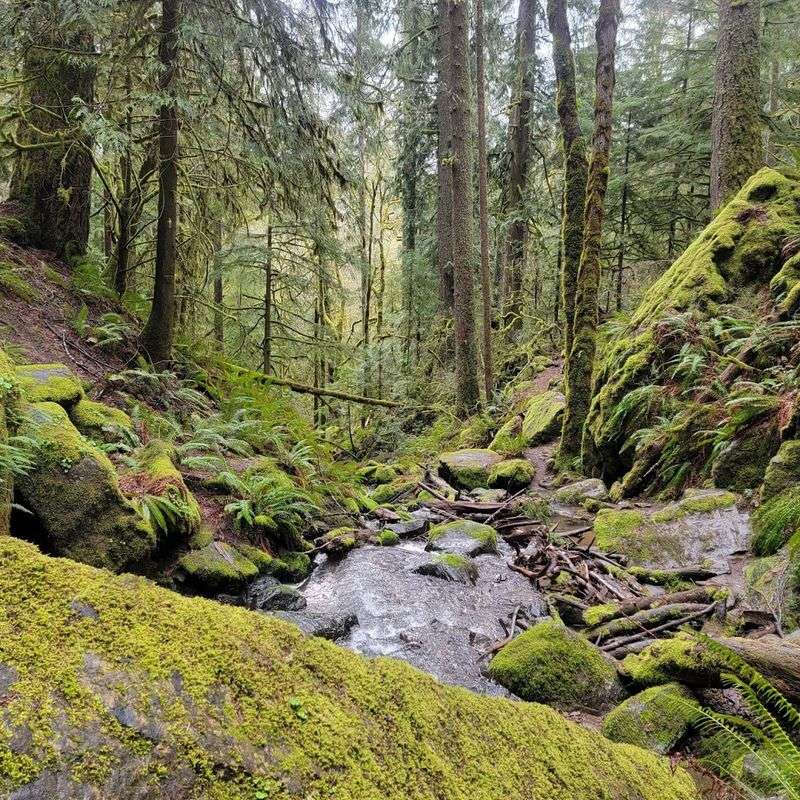
The canopy overhead is dense enough to keep the forest floor cool even on hot days, which makes hiking here feel less like exercise and more like walking into a natural air-conditioning system. Ferns carpet the ground between the tree trunks, and moss covers nearly every fallen log.
The forest also creates an almost complete sound barrier from the outside world. Once you are a few minutes down any trail, the only sounds are birds, wind through the upper branches, and the distant hum of the river.
For anyone who has spent time in younger, scrubby forests and wondered what the Pacific Northwest used to look like before so much logging changed the landscape, this park offers a real and tangible answer. The scale of these trees earns a quiet kind of respect that is hard to fake.
The Soda Creek Trail and Its 3/4-Mile Waterfall Hike
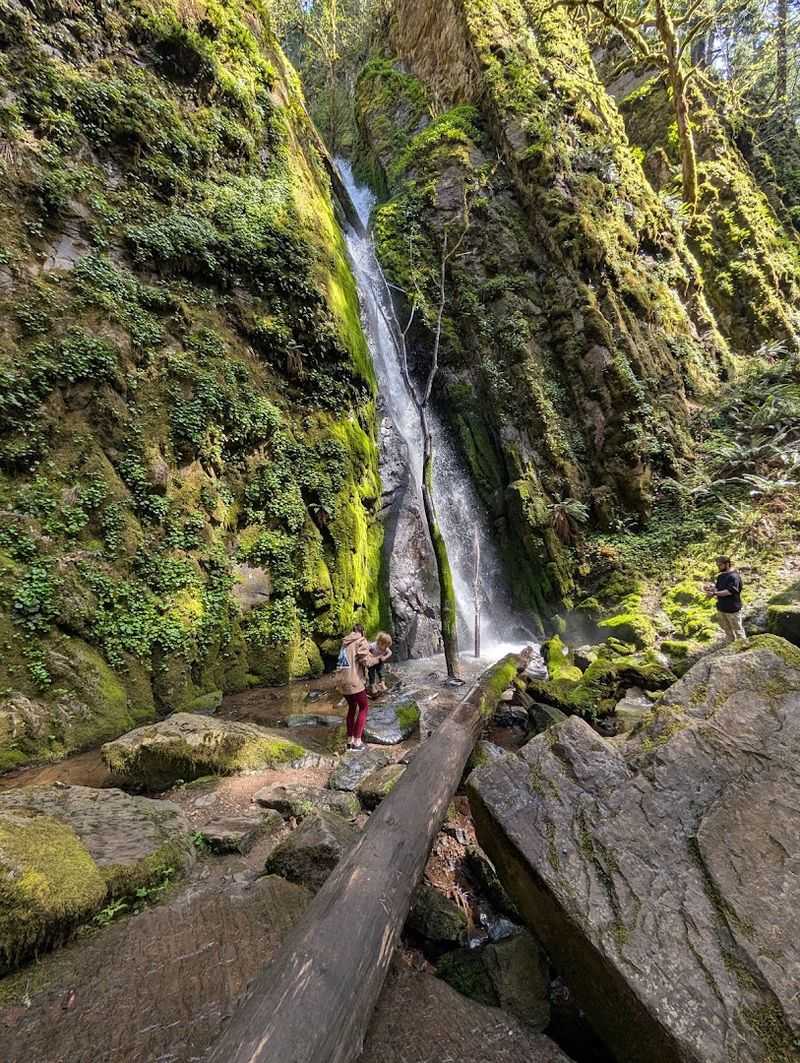
The Soda Creek Trail is the park’s signature hike, and it earns that status without requiring much from your legs. The waterfall at the end sits just three-quarters of a mile from the trailhead, which makes this one of the more accessible waterfall hikes in the entire region.
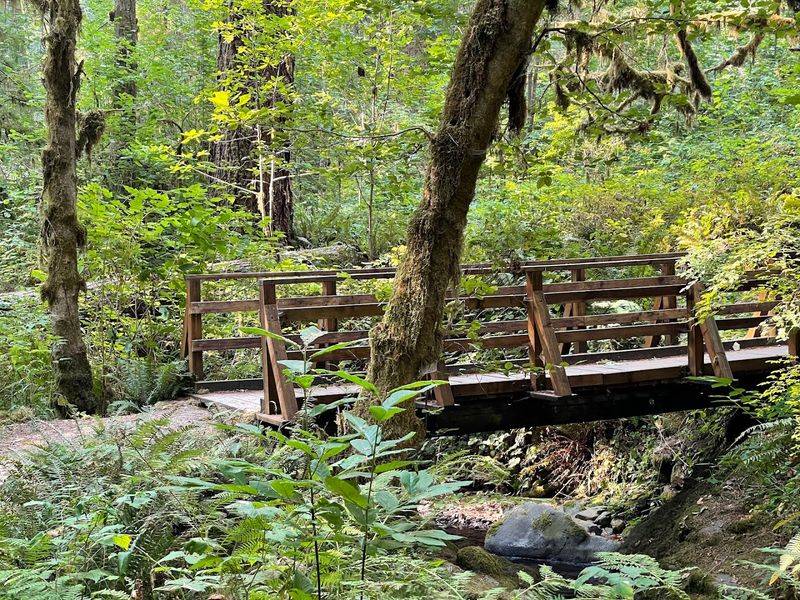
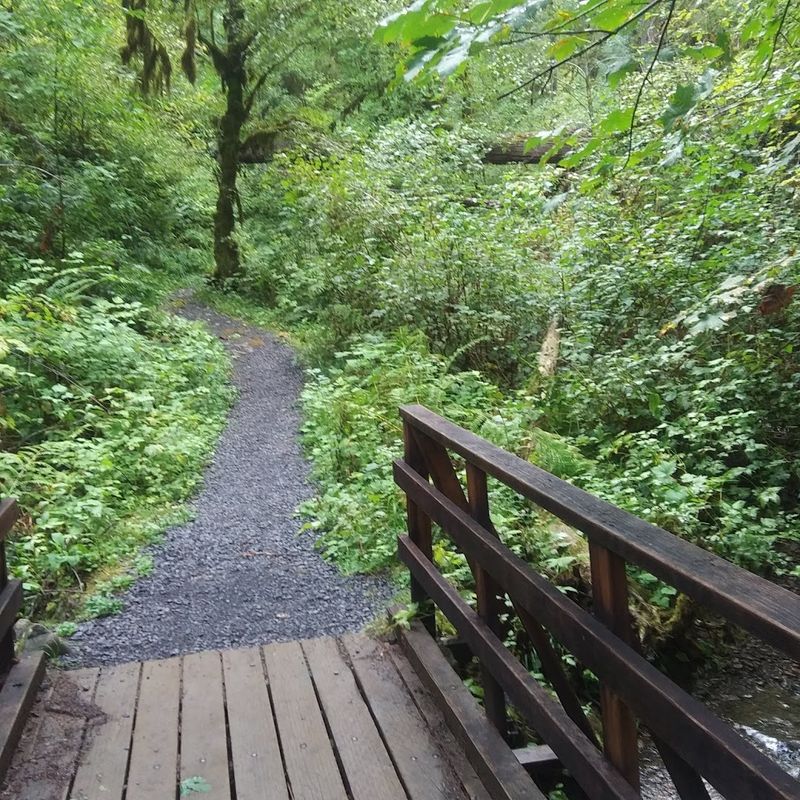
The trail winds through the old-growth forest, crosses small bridges, and follows the creek upstream until the forest opens just enough to reveal Lower Soda Falls. The waterfall drops into a rocky basin and the spray reaches you before you even get close.
After wind storms, the trail can have downed trees across the path, so checking current conditions before visiting is worth the extra minute. Some fallen trees require ducking or a short scramble, which most visitors treat as part of the experience rather than an obstacle.
The trail is not paved, and it narrows in a few spots, so it works better for older kids and adults than for toddlers in strollers. That said, plenty of families with energetic young children make it all the way to the falls and back without any real trouble on a dry day.
Lower Soda Falls Up Close
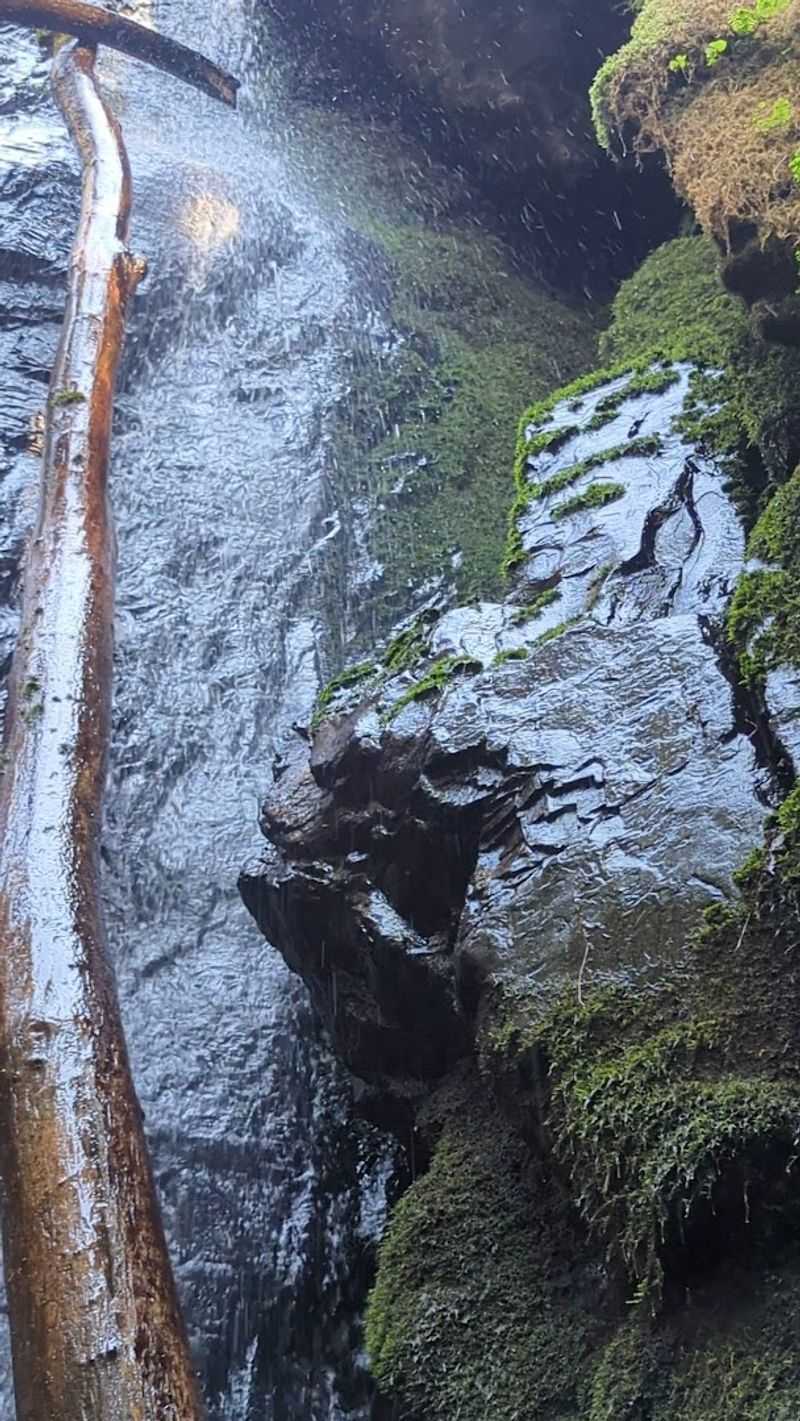
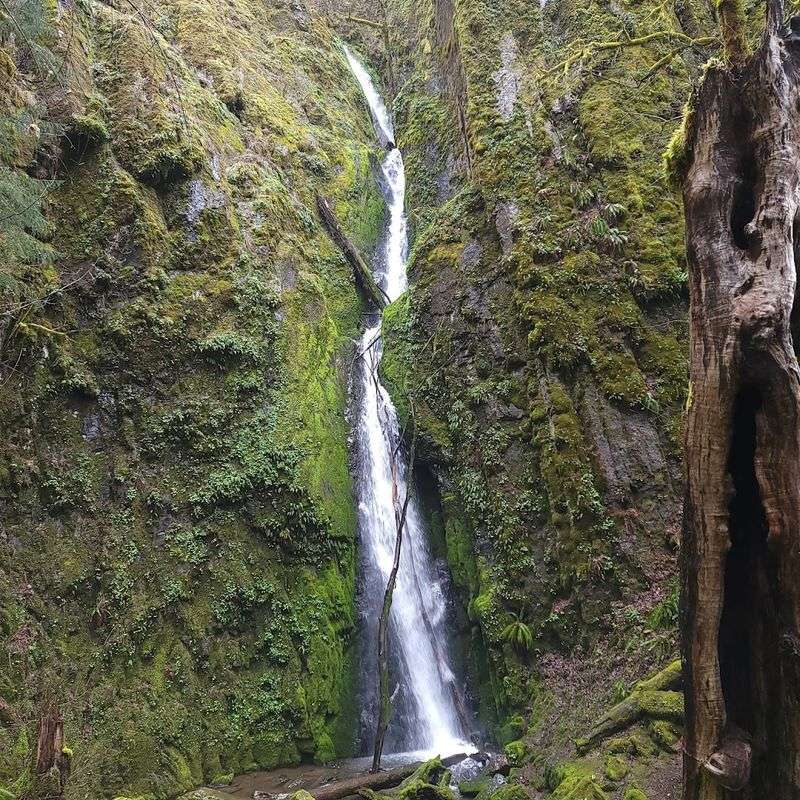
Lower Soda Falls is the kind of waterfall that makes you stop talking mid-sentence. The water drops over a curved basalt ledge and fans out before hitting the pool below, creating a wide curtain of white water that catches the light in a way that is genuinely hard to describe without sounding dramatic.
The mist around the base keeps the surrounding rocks and plants a vivid green year-round, and the roar of the falls is loud enough to fill the whole small canyon. Standing near the base, you feel the cool air coming off the water before you even see the falls clearly.
The best photos happen in the morning when the light comes through the forest at an angle. Afternoon visits are just as beautiful but the light is flatter, so if photography matters to you, plan accordingly.
The falls are fed by Soda Creek, which carries mineral-rich water down from higher elevations. The water has a faint fizz to it in some spots near the source, which is where the creek got its name.
That small geological detail adds an extra layer of interest to what is already a striking natural feature.
Camping at the Park: What to Expect
The campground at Cascadia County Park runs on a first-come, first-served basis, which means arriving early on summer weekends is not optional, it is essential. The park has 22 campsites total, with about half of them large enough to accommodate bigger trailers or RVs comfortably.
Camping fees run around $17 per night, and the camp hosts are attentive about checking in with new arrivals quickly. Rules are enforced consistently, including the no-collecting-firewood rule, so plan to bring your own or purchase it nearby.
The facilities are a genuine highlight. The showers are free, offer warm water on demand, and the bathrooms stay clean throughout the season.
For a rustic campground without hookups, the overall comfort level is higher than most people expect before their first visit.
Tent sites are soft and well-shaded, nestled into the trees on a gentle hillside above the river. The sites are relatively close together, but the dense vegetation between them provides enough privacy that you rarely feel like you are camping on top of your neighbors.
Group camping areas are also available for larger gatherings.
Picnic Areas and Day-Use Spots
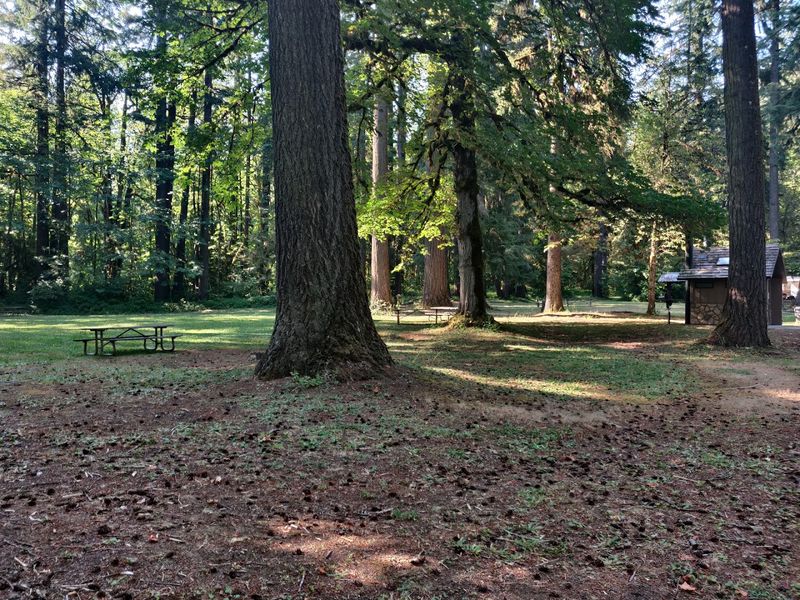
Not every visit needs to involve a tent and a sleeping bag. The day-use areas at Cascadia County Park are genuinely well-equipped for a simple afternoon outing, and the sheer number of picnic tables spread across the park is one of those details that surprises first-time visitors.
Tables are scattered throughout the grounds, some near the river, some tucked into the forest shade, and some in more open grassy spots that get full afternoon sun. The variety means you can pick your setting based on the weather or your group’s preference without much compromise.
The picnic areas work especially well in fall, when the foliage turns and the park quiets down significantly after the summer crowds thin out. Bringing a lunch and spending a few hours reading by the river, then taking a short walk to the falls, makes for a complete and satisfying outing without requiring any overnight gear.
Families with younger children tend to gravitate toward the flatter, more open areas closer to the parking lot, while couples and solo visitors often find the more tucked-away spots along the riverbank. There is enough space that both groups can coexist without crowding each other out.
Wildlife, Birds, and What You Might Spot on the Trail
The combination of old-growth forest, a clean river corridor, and minimal development makes this park a genuinely productive place for wildlife watching, even if you are not specifically looking. Deer are common enough that seeing one on or near the trail barely registers as remarkable after a day or two in the park.
Birdlife is particularly active in the early morning hours. Varied thrushes, Steller’s jays, and dippers along the river are all regular sightings, and the dense canopy supports species that need large, undisturbed forest patches to thrive.
The sound of the forest in the morning is layered and worth slowing down for.
The river itself supports native fish populations, and the park allows fishing with the appropriate Oregon license. Watching the water closely near the shallows sometimes reveals small fish holding in the current, which is endlessly entertaining for kids who have never seen a wild fish in its actual habitat.
Insects are part of the experience too, so bringing bug repellent for evening hours near the water is a practical move rather than an overcautious one. The trade-off for that minor inconvenience is a forest that feels genuinely alive in every direction.
The Native American Heritage and History of the Area
The land around Cascadia County Park carries a history that stretches back far longer than any county park designation. The area was inhabited by the Kalapuya people, and evidence of their presence in the broader Santiam corridor is documented at several nearby sites.
A historical Native American cave site sits close to the park, accessible via one of the trails in the area. The site is treated with the respect it deserves, and visiting it adds a layer of context to the landscape that transforms a pleasant hike into something more meaningful.
The South Santiam River itself was a travel and trade corridor for Indigenous peoples long before it became a recreational destination. Understanding that history while standing on the riverbank changes how the place feels, at least a little, and in a worthwhile way.
The park also sits near a historic covered bridge further down the road, which is a reminder that the valley has been a place people have passed through and settled for a very long time. These cultural landmarks are easy to add onto a visit without requiring a major detour, and they make the overall experience richer than a purely nature-focused trip would be on its own.
Best Times to Visit and Seasonal Tips
Summer is the peak season for obvious reasons. The swimming holes are at their best from late June through early September, the weather is reliably warm, and the campground fills up fast on weekends.
Arriving on a weekday or getting to the park early on a Saturday morning makes a real difference in how crowded the experience feels.
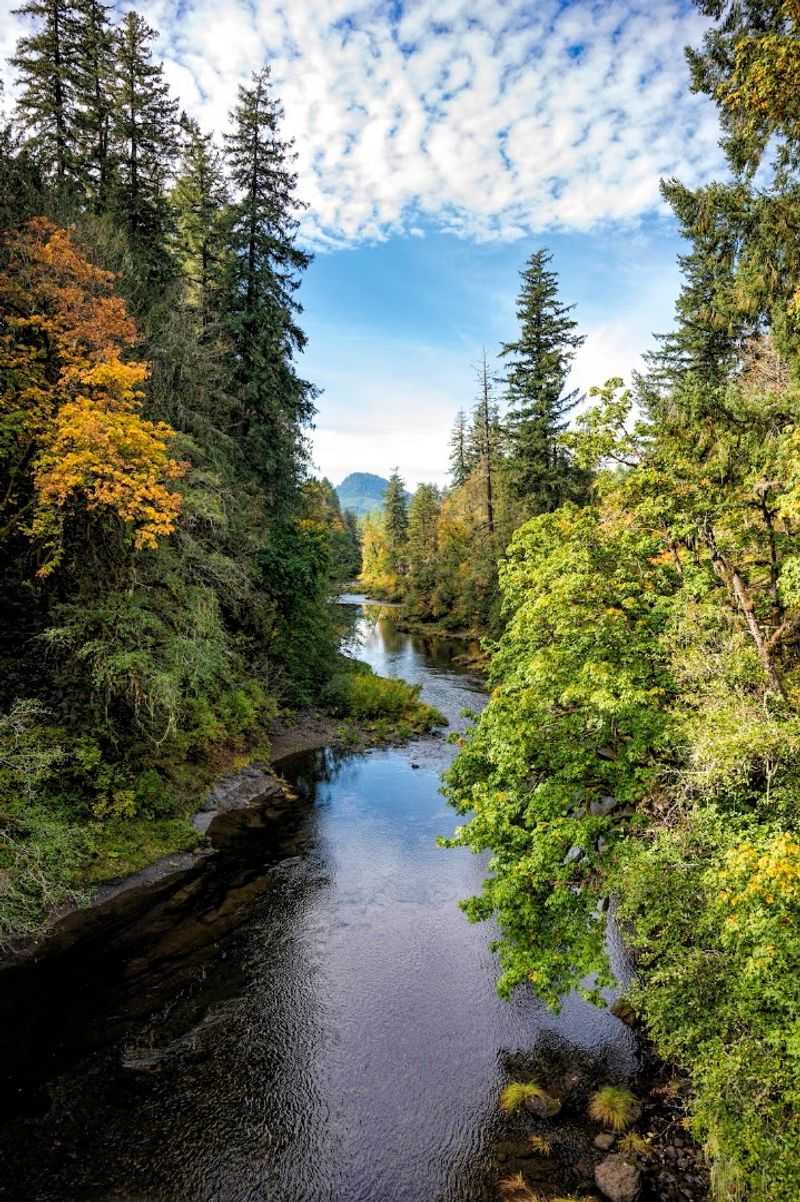
Fall is genuinely underrated here. The crowds thin out considerably after Labor Day, the foliage turns gold and orange against the evergreen backdrop, and the picnic areas take on a quiet, almost meditative quality.
Hiking in fall means cooler temperatures and softer light, which suits the forest well.
Winter and early spring bring mud to the trails, and some facilities close or reduce hours during the off-season. The day-use parking near the bridge stays accessible, but the larger lot and full restrooms near the group camping area are typically only open during the summer season.
Spring visits offer the waterfall at its most dramatic, since Soda Creek runs high with snowmelt and the falls roar louder than at any other time of year. Just wear waterproof boots and accept that your feet might get wet, because the trail can be genuinely soggy from March through May.
Practical Tips Before You Pack the Car
A few logistical details can make the difference between a smooth visit and a frustrating one. The campground operates on a first-come, first-served basis with no online reservations, so showing up with a backup plan for accommodation is wise if you are visiting on a summer weekend.
Cell service in the valley is unreliable at best, so downloading the trail map before leaving home is a practical step. The park map available on the Linn County Parks website is helpful, though some visitors have noted it could use an update, so cross-referencing with a recent satellite view is not a bad idea.
Bring cash for the camping fee if you plan to stay overnight. The camp hosts collect fees in person, and there is no card reader at the entrance.
Firewood is not available for collection in the park, so either bring your own or pick some up in Sweet Home before heading east on the highway.
Water shoes or sandals with straps work much better than flip-flops on the rocky riverbank. The rocks are slippery when wet, and having footwear that actually stays on your feet turns a potential stumble into a non-event.
A dry bag for your phone near the water is worth the small investment too.
Why This Park Keeps Drawing People Back
A 4.7-star rating across hundreds of reviews does not happen by accident. The park earns its reputation through a combination of natural beauty, well-maintained facilities, and a setting that delivers on every promise the drive in makes.
The mix of activities available in one compact location is a big part of the appeal. Swimming, hiking, waterfall chasing, fishing, camping, picnicking, and wildlife watching all happen within a short walk of each other.
You do not need to drive from spot to spot or plan elaborate logistics to have a full and satisfying day.
The cleanliness of the facilities consistently stands out in visitor feedback. Free warm showers, clean bathrooms, and attentive camp hosts create a level of comfort that feels out of proportion with the modest nightly fee.
For families especially, that combination of wild setting and functional infrastructure is hard to find.
The park also has a way of feeling personal. Whether it is a first visit or a return trip years later, the river sounds the same, the trees are still impossibly large, and the trail to the falls is still just three-quarters of a mile.
Some places earn a kind of loyalty simply by staying exactly what they are, and this park has clearly mastered that.
Share this story