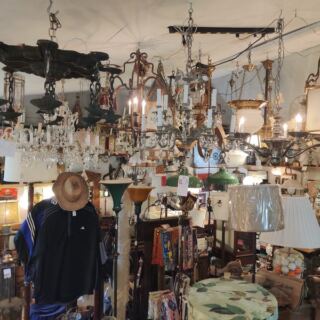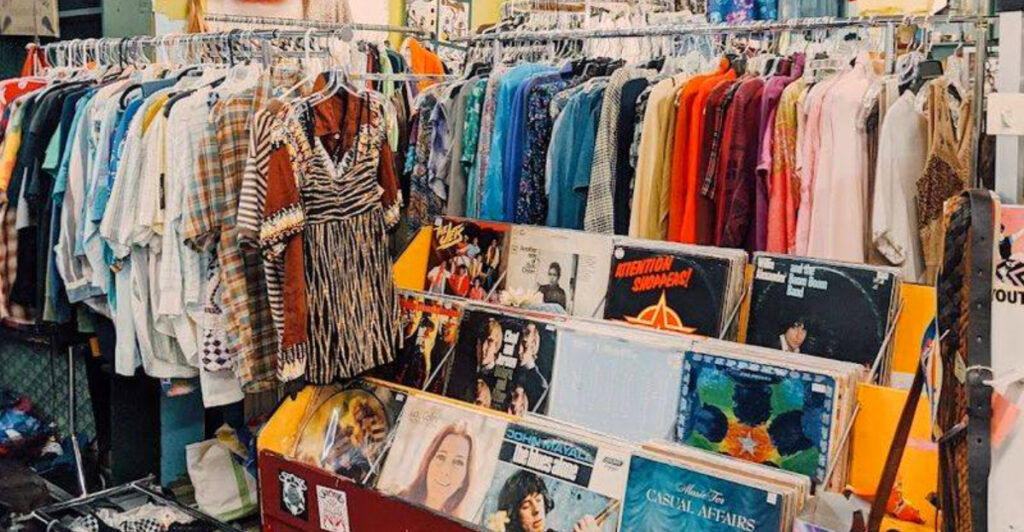
There is a secondhand store in Portland, Oregon where the racks seem to go on forever and the finds keep surprising you around every corner. On a quiet Tuesday afternoon, I wandered in expecting a quick browse and ended up spending nearly two hours weaving through booths packed with band tees, leather goods, jewelry, housewares, and decades worth of fashion history.
Twenty-seven dollars does not sound like much, but at this particular spot, it can stretch in ways that genuinely catch you off guard. Keep reading, because what I found inside is worth every word.
The Address and Layout of a True Vintage Superstore
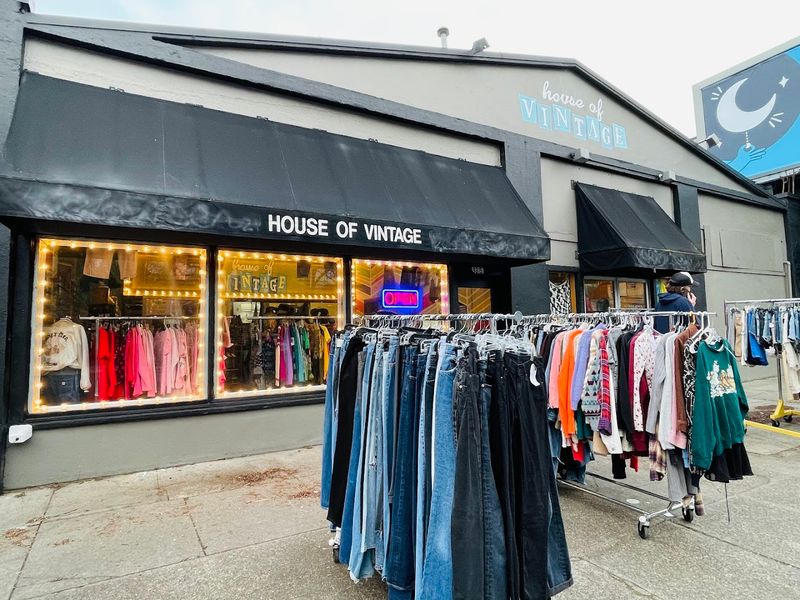
House of Vintage sits at 3315 SE Hawthorne Blvd, Portland, OR 97214, right in the heart of the Hawthorne District, one of the city’s most eclectic and beloved neighborhoods. The building itself is massive, and that word is not an overstatement.
From the outside, it looks like a large commercial space, but once you walk through the door, the scale of the place genuinely surprises you.
The store operates more like a marketplace than a single shop. Dozens of individual vendors rent out their own booths and racks, each with a distinct style and pricing approach.
Some sections feel curated and carefully styled, while others have more of a treasure-hunt energy where you really have to dig.
The store is open every day from 11 AM to 7 PM, which gives you a solid window to explore without feeling rushed. I will say, though, plan to arrive early if you want a relaxed experience.
The phone number is listed as 503-236-1991, and the website at houseofvintagepnw.com has helpful details before you visit. The layout is genuinely labyrinthine, with connected rooms that feel like separate worlds stitched together.
How the Multi-Vendor Model Changes Everything
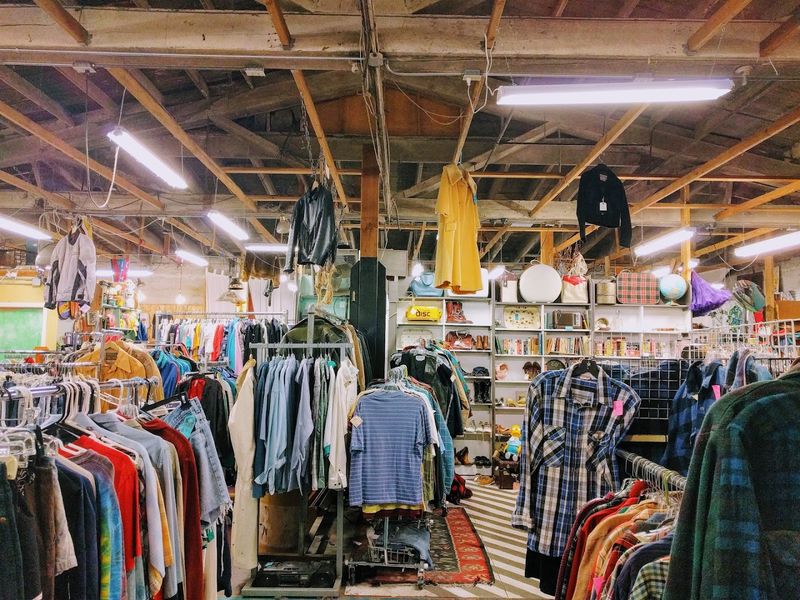
Most thrift stores operate under one roof with one pricing system, but House of Vintage works differently. Each vendor sets their own prices, curates their own section, and brings their own personality to their corner of the store.
That means the experience shifts dramatically from one booth to the next.
In one aisle, you might find a vendor who specializes in 1990s concert tees priced between fifteen and thirty dollars. Turn the corner, and another vendor has a rack of carefully pressed 1970s blazers with tags that reflect serious collector knowledge.
The variety is part of what makes the place so compelling, even if it also means prices can feel inconsistent.
This model rewards shoppers who take their time. A quick pass through the store will leave you with a surface-level impression, but a slow, methodical browse through each vendor’s section often turns up items that feel genuinely special.
The individual tags also help you track which vendors you like, so on a return visit you can head straight to the booths that matched your taste and budget. That kind of personalization is rare in a store this size.
What $27 Actually Gets You Here
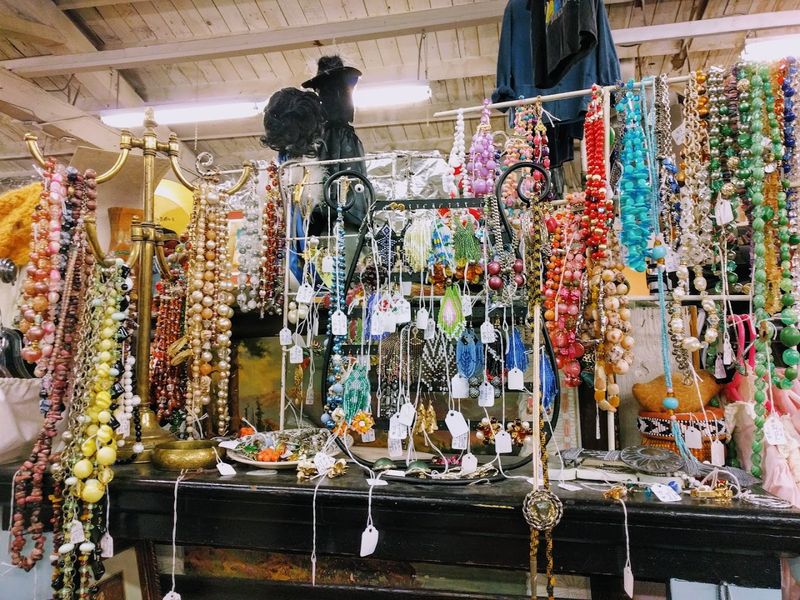
Twenty-seven dollars is not a lot of money in most retail environments, but at House of Vintage, it can cover a surprising amount of ground. On my visit, I spotted several band tees in the fifteen to twenty dollar range that were in genuinely good condition, not faded beyond recognition or stretched beyond repair.
Jewelry is where the budget really stretches. Small earrings often run between three and seven dollars, and simple bracelets hover around the same range.
A shopper willing to look carefully through the jewelry cases can easily walk out with two or three pieces for under fifteen dollars, leaving room in that twenty-seven dollar budget for a small clothing find.
Accessories like scarves, belts, and hats also tend to land in more affordable territory compared to the bigger statement pieces. The key is knowing where to look and being realistic about condition.
Not every item at every price point is a bargain, but the store is large enough that patient shoppers consistently find things worth buying. Twenty-seven dollars spent thoughtfully here goes noticeably further than the same amount at a boutique vintage shop with a tighter, more edited selection.
The Atmosphere Inside the Store
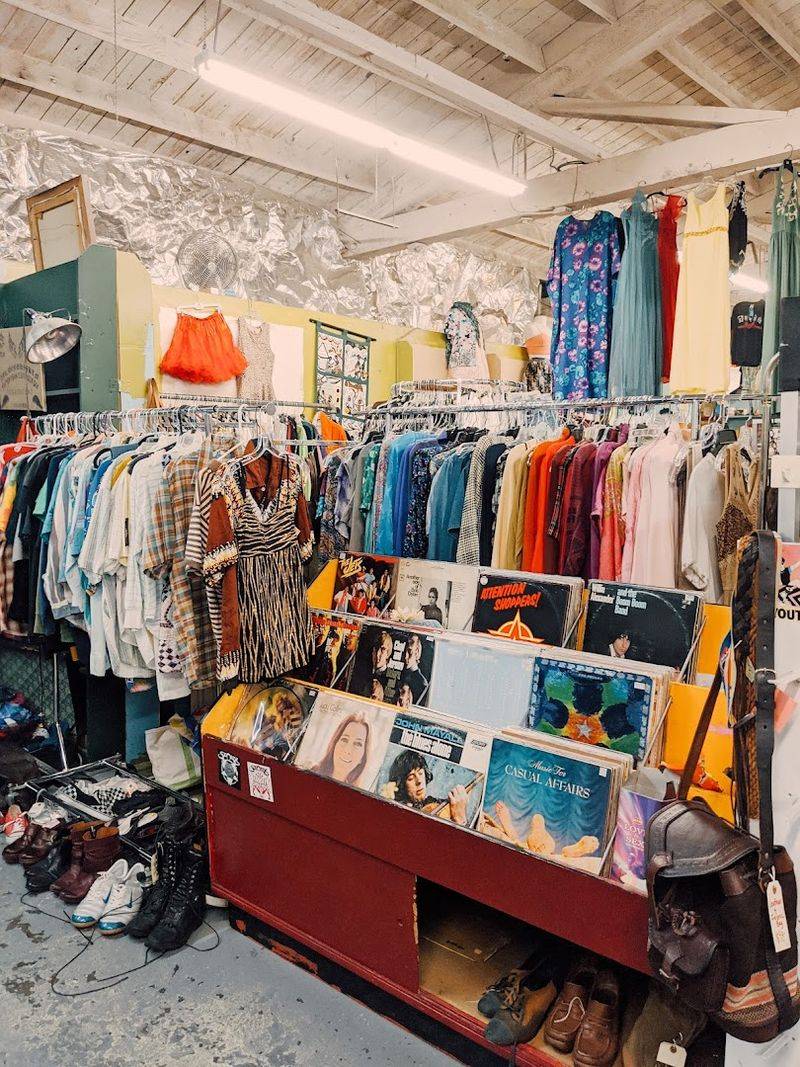
The atmosphere at House of Vintage is one of the more distinctive things about the place. Two different radio stations play in two different halves of the store, which sounds like a small detail but actually creates a noticeable shift in mood as you move from one section to the other.
One half might have something mellow and jazzy while the other carries a more upbeat energy.
The overall vibe is relaxed and unhurried, which suits the kind of browsing this store encourages. There is no pressure to move quickly, no aggressive sales approach, and no sense that you are being watched for spending too much time at a rack.
The booths are organized in a winding, serpentine pattern that naturally guides you through the space without making it feel like a maze.
Housewares, books, and accessories are scattered between the clothing sections, which keeps the visual experience varied and interesting. I came across a small collection of science fiction paperbacks tucked between a rack of denim jackets and a shelf of ceramic mugs.
That kind of unexpected layering is what gives the store its particular character, and it is something you genuinely cannot replicate online.
Tips for Smart Shopping at This Store
A few practical habits make a real difference when shopping at a vendor-based vintage store like this one. The most important thing is to check every item carefully before you commit to buying it.
Because vendors set their own standards and the store has a no-refund policy, what you see is absolutely what you get, and you need to look closely.
Run your fingers along seams, hold fabric up to the light to check for thin spots, and gently tug on buttons and zippers. Dry rot is a real concern with older garments, particularly cotton t-shirts from the 1980s and 1990s.
A shirt that looks perfect on the hanger can fall apart the first time someone tries it on, so a quick stress test before purchasing is always worth the extra thirty seconds.
Arrive with a clear sense of your size range, because the selection skews toward smaller fits and the sizing labels on older garments do not always match modern sizing. Bringing a soft tape measure sounds obsessive until the moment it saves you from a frustrating purchase.
Budget shoppers should also head straight to the jewelry and accessories sections first, where the price-to-quality ratio tends to be more consistently favorable than in the clothing aisles.
The Clothing Selection Across Decades
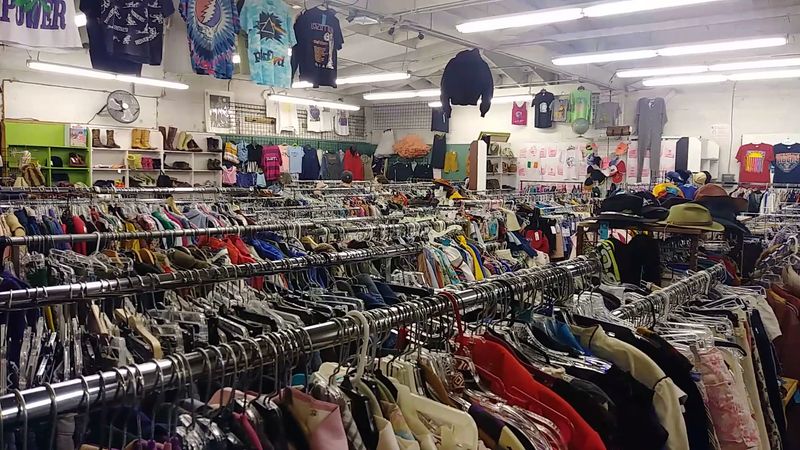
Few stores in Portland can match the sheer range of decades represented at House of Vintage. On a single rack, you might find a 1970s polyester blouse hanging next to a 1990s windbreaker and a 2000s graphic tee.
The breadth is part of the appeal, and it means the store attracts shoppers with very different style goals.
Band and concert tees are among the most sought-after items, and the store consistently has a solid selection. Prices for these range from around fifteen dollars for more common finds up to forty or fifty dollars for rarer or more iconic pieces.
Denim is well represented too, with jackets, vests, and jeans from multiple eras available at most times.
Outerwear is another strong category. Leather jackets, wool coats, and vintage blazers turn up regularly, though prices here tend to run higher and condition varies considerably between vendors.
The key thing to understand is that this is not a store with a uniform standard across all its sections. Quality and pricing depend entirely on which vendor stocked a particular item, so the experience of browsing outerwear in one corner can feel completely different from browsing it in another.
Jewelry and Accessories Worth Exploring
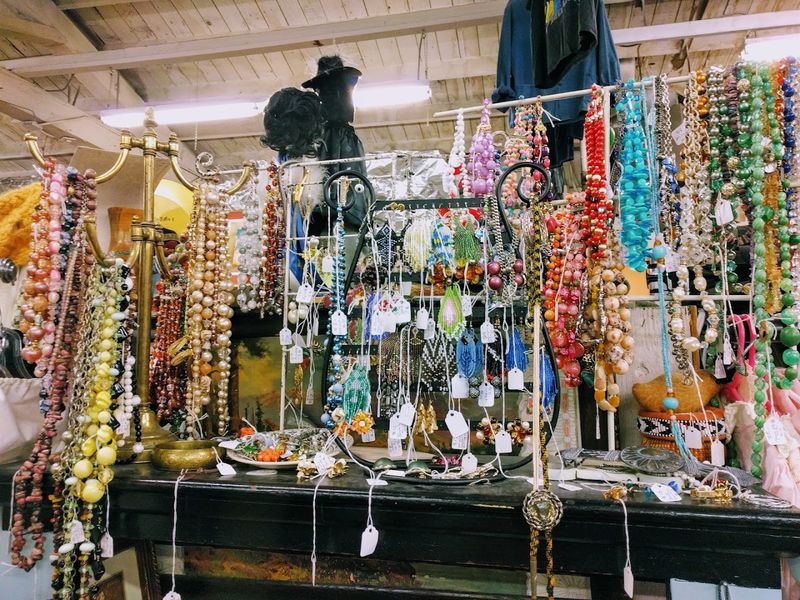
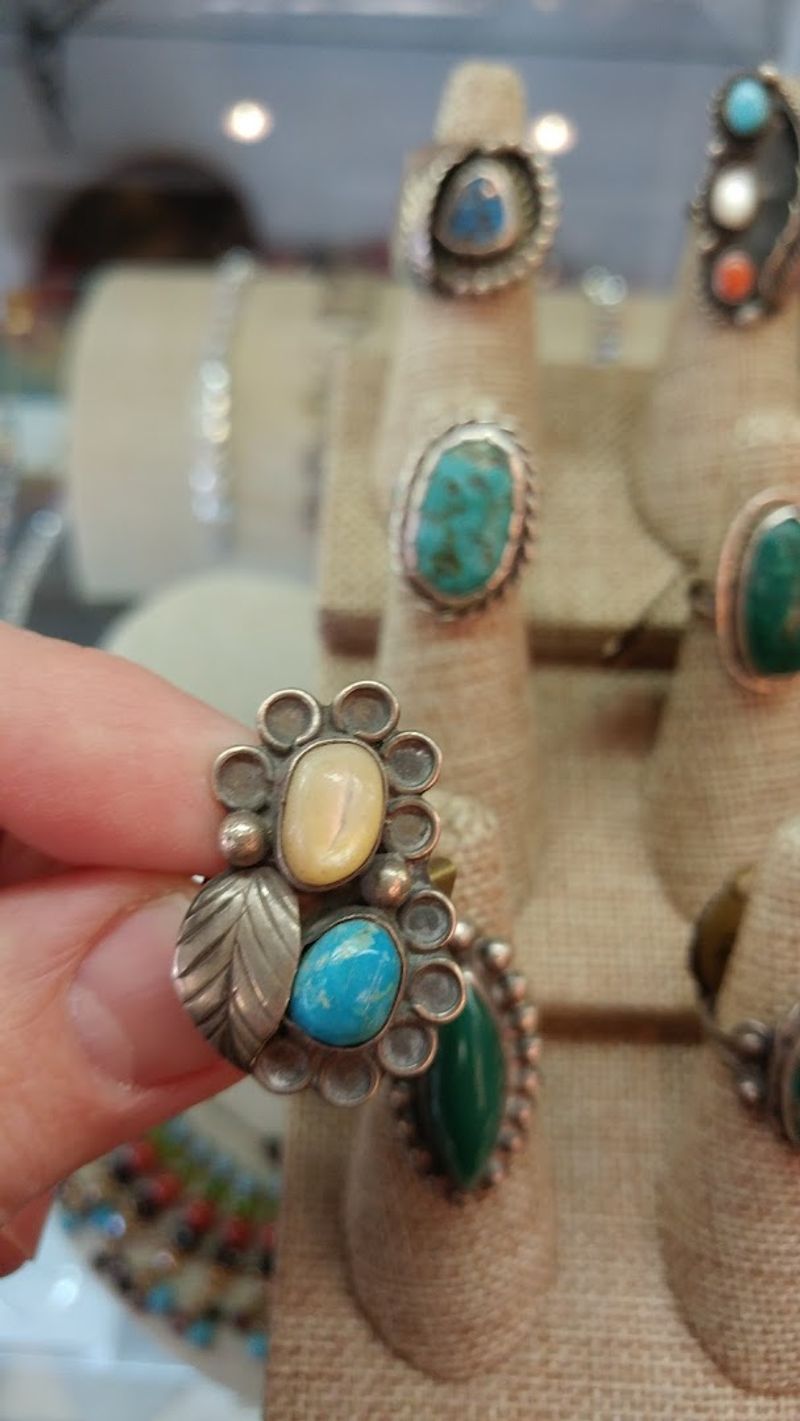
The jewelry section at House of Vintage is genuinely one of the most rewarding parts of the store for budget-conscious shoppers. Small display cases hold earrings, rings, bracelets, and necklaces at prices that generally run between three and fifteen dollars, making it one of the few areas where twenty-seven dollars can feel genuinely generous.
The variety is wide, covering everything from chunky 1980s statement pieces to delicate 1960s-era brooches. Not every piece is in perfect condition, so the same rule applies here as with clothing: look carefully before you buy.
Check clasps, inspect chains for weak links, and make sure stones are secure before handing over your money.
Beyond jewelry, the accessories scattered throughout the store include sunglasses, scarves, hats, and belts at a range of price points. A pair of vintage sunglasses in good condition might run anywhere from ten to twenty-five dollars depending on the vendor, while a simple leather belt could be found for under ten.
Accessories are often overlooked by shoppers focused on clothing, which means the cases and hooks tend to hold some of the better values in the building on any given day.
Housewares, Books, and Unexpected Finds
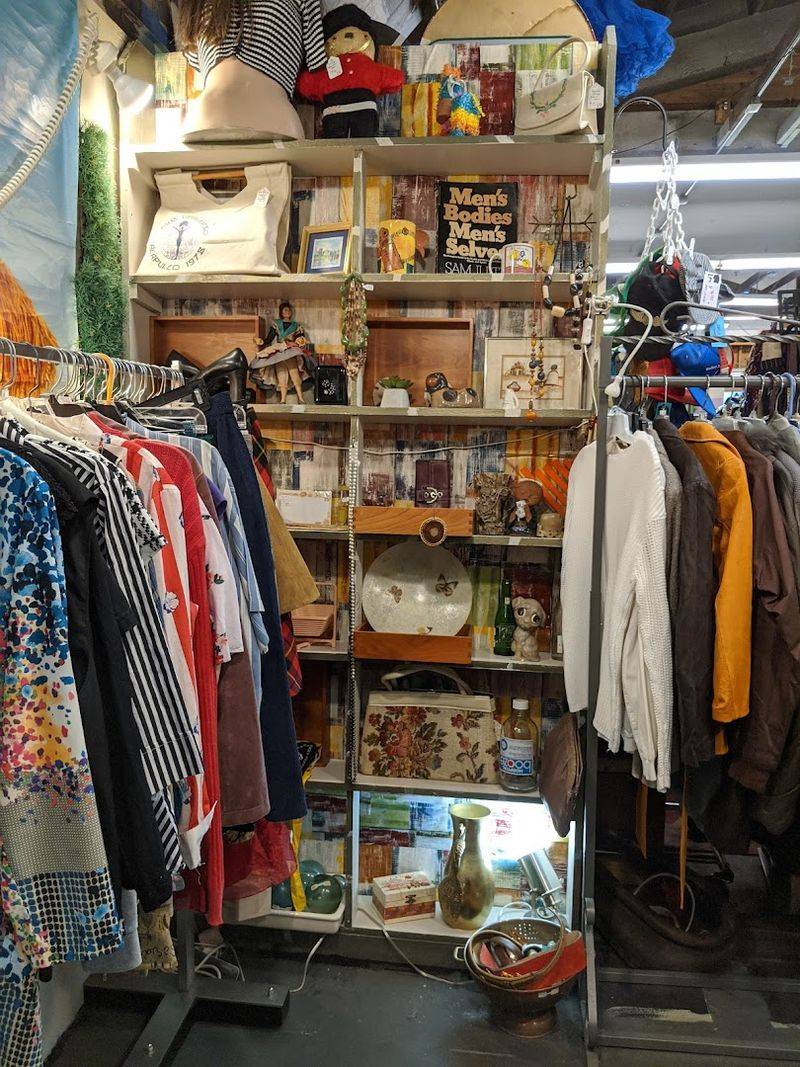
House of Vintage is not just a clothing store, and that distinction matters. Scattered throughout the space are shelves and tables stocked with housewares, decorative items, books, and small collectibles that add a layer of variety most vintage clothing stores do not bother with.
On my visit, I found a shelf of ceramic mugs priced between five and twelve dollars, a small collection of vintage paperback science fiction novels, and a handful of decorative lamps in various states of charm. These sections tend to be smaller and more tucked away than the clothing racks, but they reward the kind of shopper who enjoys the full experience of browsing rather than hunting for one specific item.
The housewares selection shifts frequently because vendors restock on their own schedules, which means the store genuinely looks different from one visit to the next. A quirky ceramic piece that caught your eye last month will likely be gone, replaced by something else entirely.
That unpredictability is part of what keeps regular visitors coming back. The non-clothing sections also tend to offer some of the more fairly priced items in the store, making them a smart stop for shoppers working with a tight budget.
Parking, Location, and Getting There
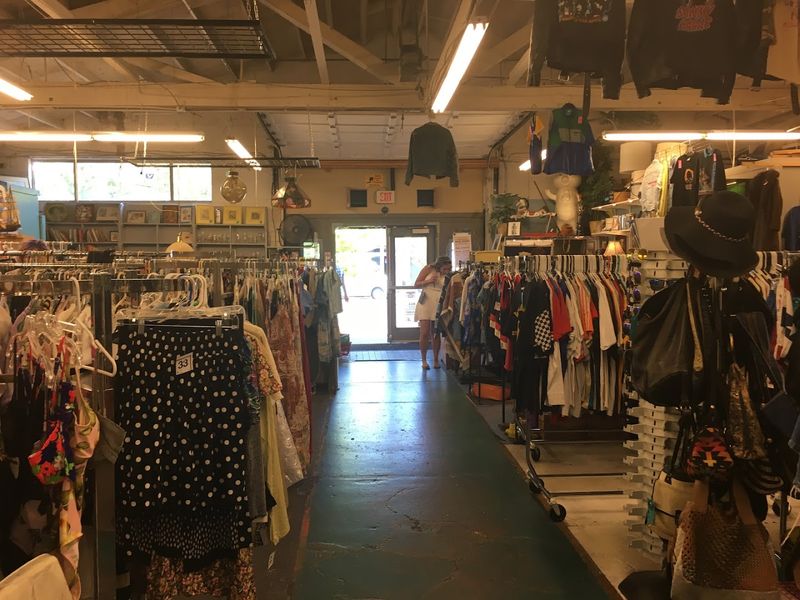
The Hawthorne District location is both a strength and a mild challenge for House of Vintage. SE Hawthorne Boulevard is one of Portland’s most active commercial streets, which means there is always plenty going on around the store, but street parking can be competitive, especially on weekends and afternoons.
On a quieter weekday visit, I found a spot on the street within a reasonable distance of the front entrance without much trouble. On a busier day, though, the expectation should be that you might need to park a block or two away and walk.
The neighborhood is very walkable, so that is rarely a serious inconvenience, but it is worth factoring in if you are carrying bags or planning a longer session.
Public transit is a genuinely good option here. Several TriMet bus lines serve the Hawthorne corridor, and the store is accessible without a car if you are coming from central Portland.
For visitors arriving from outside the city, the neighborhood itself is worth spending time in before or after the store visit, with plenty of independent shops, cafes, and restaurants within easy walking distance of the entrance at 3315 SE Hawthorne.
Understanding the Pricing Reality
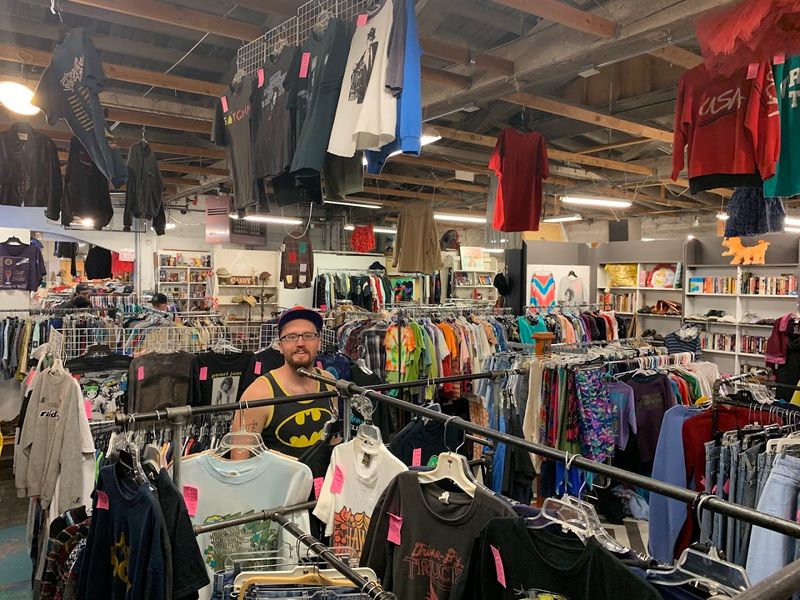
Pricing at House of Vintage is one of the most discussed aspects of the store, and it deserves an honest look. Because individual vendors set their own prices, the range is genuinely wide.
Some booths offer reasonable deals, while others price items at levels that reflect collector-market thinking rather than thrift-store expectations.
A leather jacket at one vendor might be tagged at one hundred fifty dollars, while a comparable piece at another booth could be eighty. Neither vendor is necessarily wrong in their pricing logic, but the gap can feel jarring if you came in expecting Goodwill-level tags.
The store is best understood as a curated vintage marketplace rather than a traditional secondhand shop, and that mental shift makes the pricing feel more reasonable.
The vendors who price thoughtfully and stock items in genuinely good condition tend to attract repeat customers, and those booths are worth identifying on a first visit. Budget shoppers are not locked out of the store entirely, but they do need to be selective and patient.
Twenty-seven dollars can absolutely yield something worthwhile here, but it requires more intentional browsing than it would at a bins-style thrift operation down the road.
What Makes It Worth the Visit Anyway
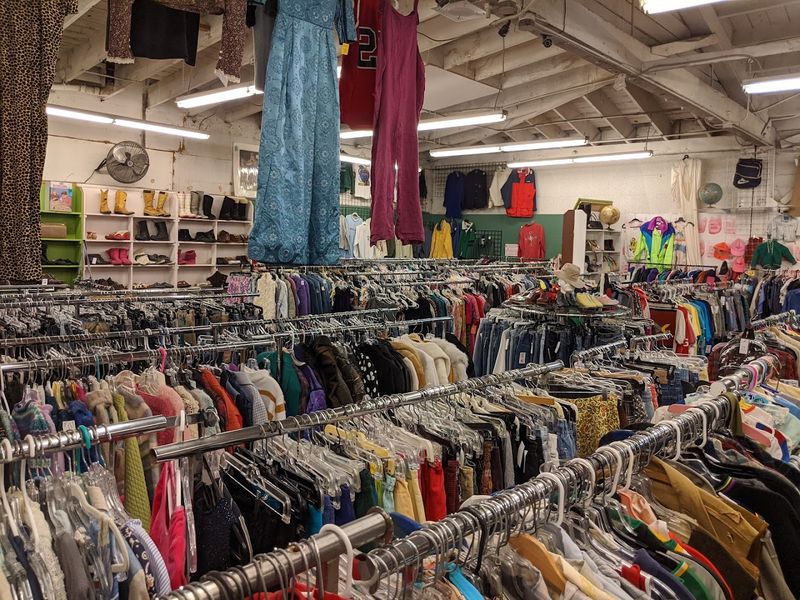
Despite the mixed reviews and the pricing debates, House of Vintage offers something that is genuinely hard to find elsewhere in Portland: sheer scale combined with real variety. The store is large enough that even on a busy day, there is room to browse without feeling crowded, and the vendor model means the inventory turns over in ways that keep things fresh.
The experience of spending an hour or two moving through the different booths and sections has its own particular satisfaction. There is a rhythm to it, a slow accumulation of small discoveries that adds up to something more enjoyable than a quick in-and-out shopping trip.
Even on visits where nothing ends up in the purchase pile, the browsing itself tends to be entertaining.
The store also sits in one of Portland’s most interesting neighborhoods, which means a visit can easily become part of a larger afternoon out. Grab coffee before, browse for an hour or two, and then continue down Hawthorne for food or more shopping.
That combination of location, scale, and variety is what keeps people returning even when they leave empty-handed, and it is a combination that genuinely few stores in the city can match.
A Final Word on the House of Vintage Experience
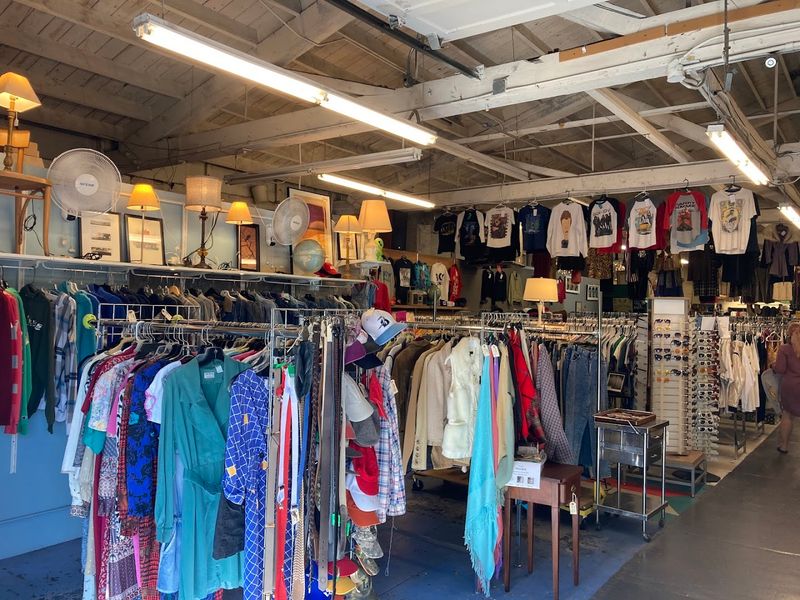
House of Vintage is the kind of place that rewards the right expectations. Come in thinking you will find designer pieces at thrift-store prices and you will probably leave frustrated.
Come in with genuine curiosity, a flexible budget, and a willingness to look carefully, and the store tends to deliver.
The multi-vendor format is what defines the experience most clearly. It means inconsistency is baked in, but it also means that the store has a personality and energy that single-operator shops often lack.
Some booths are exceptional, some are overpriced, and most fall somewhere in between. That range is part of what makes a long browse feel genuinely worthwhile.
For anyone visiting Portland and wanting to get a feel for the city’s vintage culture, this store on SE Hawthorne is one of the more complete expressions of it. The neighborhood, the scale, the mix of vendors, and the unpredictable inventory all add up to an experience that is distinctly Portland in the best sense of that word.
Twenty-seven dollars, spent with care and a bit of patience, can absolutely find a good home here.
Share this story