Somewhere in the heart of Oregon, a single hiking trail connects ten waterfalls in one continuous loop, and people travel from across the country just to walk it. Silver Falls State Park, located near the small town of Silverton, is home to the famous Trail of Ten Falls, a 7.2-mile journey through ancient forests and volcanic canyon walls.
What makes this trail truly special is that four of those waterfalls can actually be walked behind, putting you inside the waterfall rather than just looking at it from a distance. Whether you are an experienced hiker or just looking for a memorable outdoor adventure, this trail delivers something extraordinary at nearly every turn.
South Falls: Where the Adventure Officially Begins
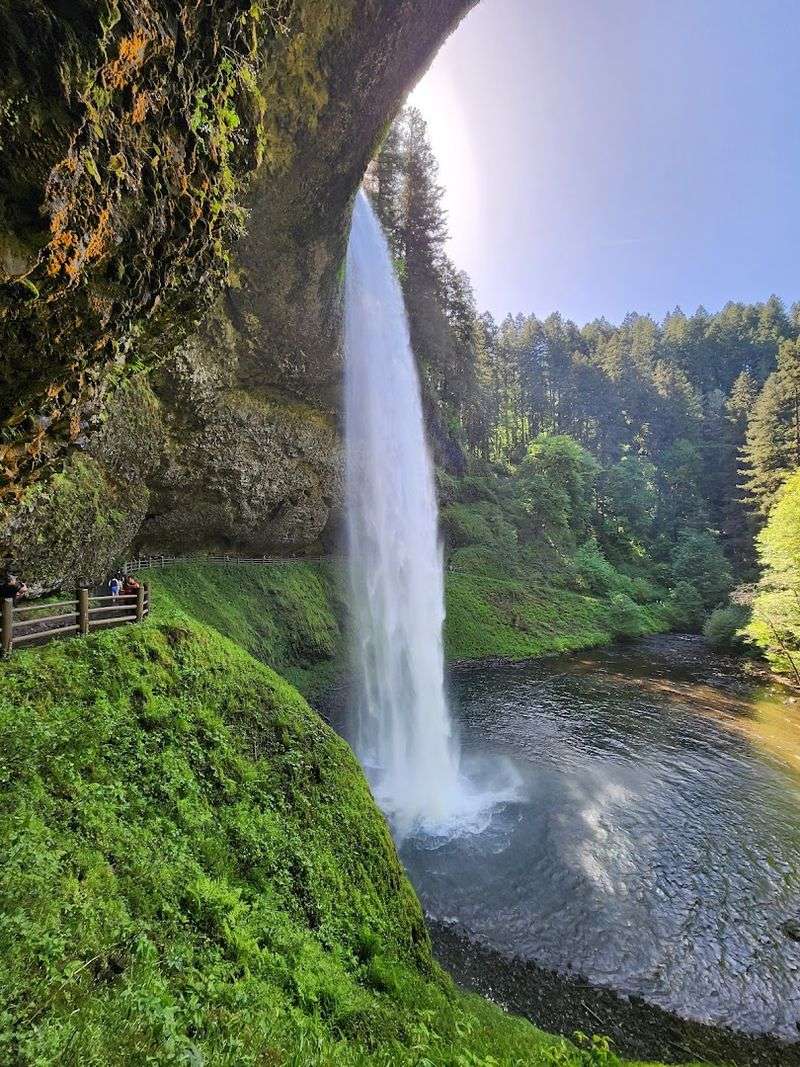
The moment you round the first bend on the trail and South Falls comes into view, your jaw drops before your feet even stop moving. Standing 177 feet tall, this is the crown jewel of Silver Falls State Park and arguably the most photographed waterfall in all of Oregon.
The sheer size of the cascade is hard to process until you are standing directly beneath it.
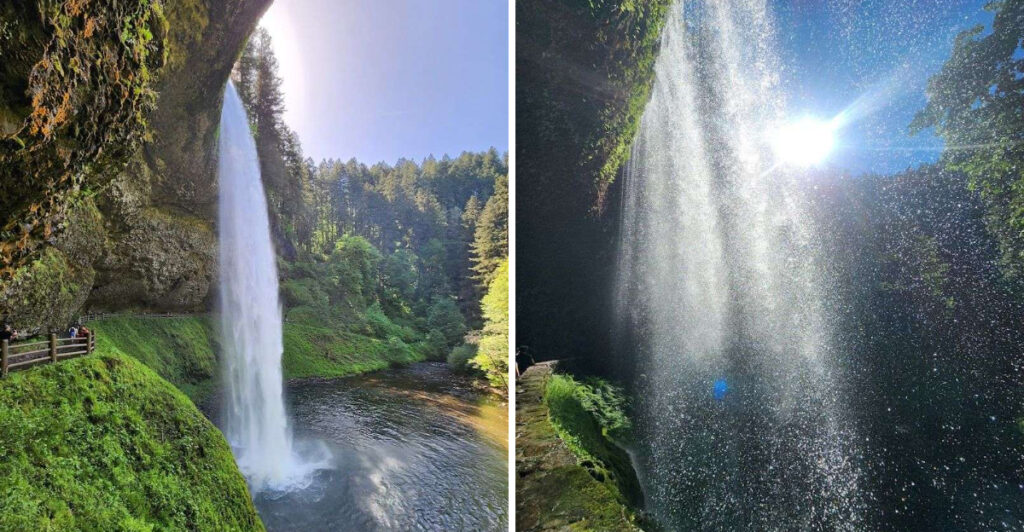
What makes South Falls legendary is the natural basalt alcove carved into the cliff behind it. The trail leads hikers directly through this rocky passage, where cool mist swirls around you and the roar of falling water becomes almost deafening in the best possible way.
Thick moss coats every surface, and the light filtering through the falls creates an almost dreamlike glow.
This waterfall sets the tone for everything that follows on the loop. Photographers love arriving early in the morning when the light is soft and the trail is quieter.
The walk down to the falls involves a series of switchbacks, so wearing sturdy shoes with good grip makes the descent much easier and safer for everyone in your group.
Lower South Falls: The Underrated Walk-Behind Gem
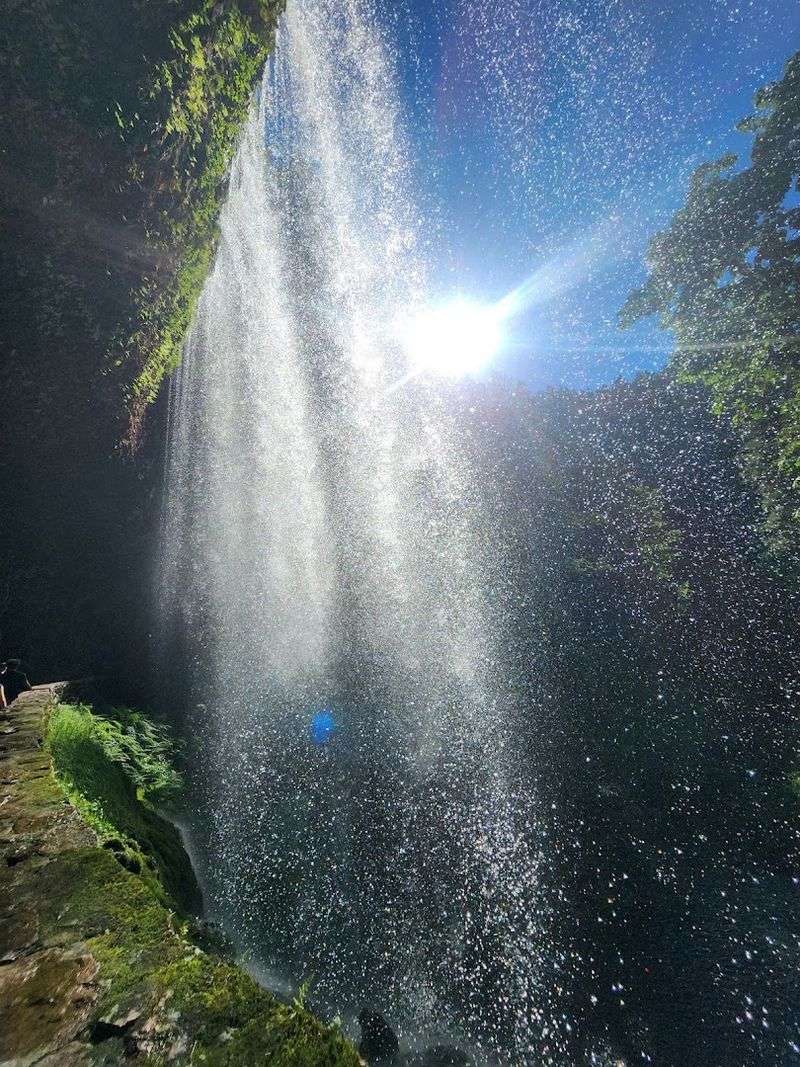
Not far past the main attraction, the canyon opens up to reveal Lower South Falls, a 93-foot cascade that quietly outshines expectations at every visit. Many hikers are so energized after South Falls that they rush past this one, which is honestly a mistake worth correcting.
Slow down here, because this waterfall rewards patience.
Like its famous neighbor upstream, Lower South Falls allows visitors to pass directly behind the curtain of water along a carved rock ledge. The experience feels surprisingly intimate compared to the grandeur of South Falls.
The mist is lighter, the sound is slightly softer, and the whole setting has a calming, almost meditative quality that is easy to appreciate.
Because fewer visitors linger here, it often makes for better photos without crowds photobombing your perfect shot. The surrounding canyon walls are draped in bright green ferns and moss, making the colors feel almost unnaturally vivid on a sunny day.
Pair this stop with a snack break on a nearby log or rock, and you have one of the most peaceful moments the entire trail has to offer.
Lower North Falls: The Quiet Reward at the Bottom of the Canyon
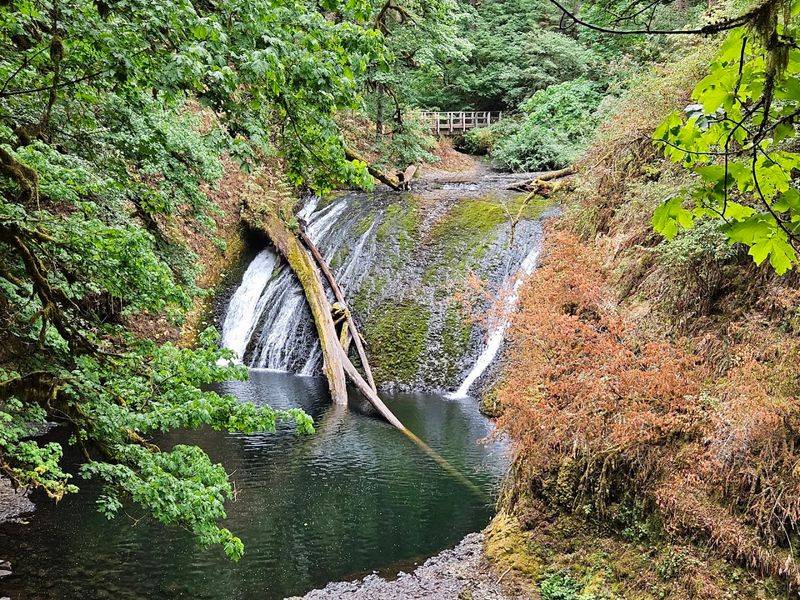
Tucked near the lowest point of the canyon loop, Lower North Falls is the kind of waterfall that makes you feel like you discovered something the rest of the world forgot about. At just 30 feet tall, it is one of the smaller cascades on the trail, but its setting more than compensates for what it lacks in height.
The pool at its base sits perfectly still on calm days, mirroring the greenery above it.
A short spur trail branches off the main loop and leads closer to the base, giving you a ground-level perspective that most hikers skip entirely. Standing at the edge of that pool with the falls in front of you and old-growth trees towering overhead feels genuinely secluded, even on busy weekends.
The forest here is particularly dense and lush.
Lower North Falls is also a solid spot to check in on the group’s energy levels before the trail climbs back uphill. Kids tend to love the accessible pool area, and the relatively flat ground nearby makes it easy to rest without committing to a full stop.
It is small, sure, but it earns its place on this legendary loop without question.
Double Falls: The Tallest Waterfall in the Entire Park
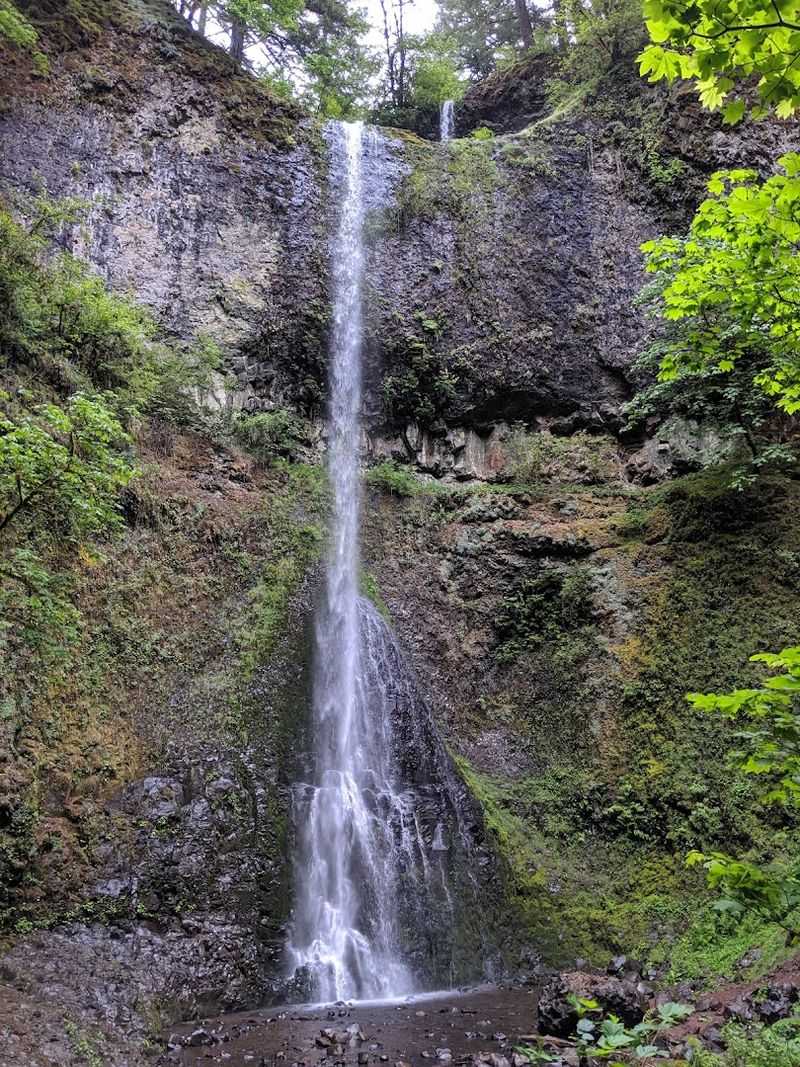
Bragging rights belong to Double Falls, the tallest waterfall in Silver Falls State Park at an impressive 178 feet. Fed by Hullt Creek, this two-stage plunge drops through a narrow basalt canyon with a raw power that feels almost confrontational.
When spring runoff is at its peak, the volume of water crashing down is genuinely awe-inspiring.
The two-stage design is what gives Double Falls its name and its personality. Water first drops over an upper ledge before gathering momentum and plunging again through the tighter lower section of the canyon.
The result is a layered, almost theatrical display that changes depending on where you stand along the viewing area.
Visiting after a heavy rain transforms Double Falls into something borderline ferocious, with spray reaching far out into the trail and soaking anyone who lingers too long near the base. A lightweight rain jacket packed in your bag will save you from a very wet second half of the hike.
Even in drier summer months, Double Falls maintains a commanding presence that makes it one of the most memorable stops on the entire ten-waterfall journey.
Drake Falls: A Peaceful Pause in the Forest
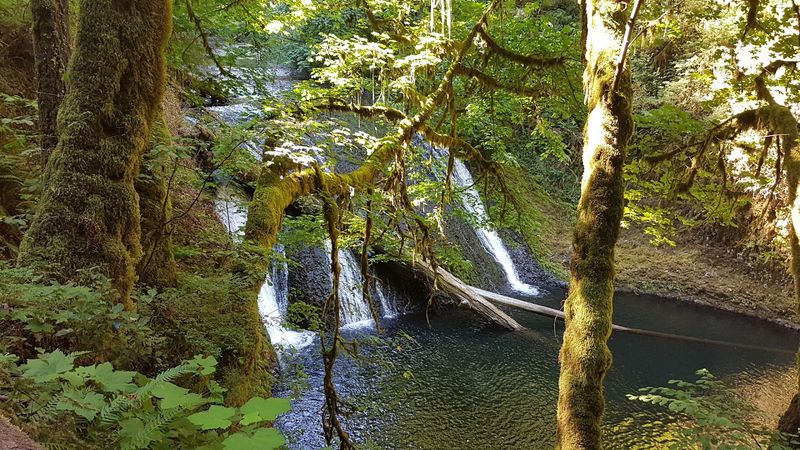
After the dramatic height of Double Falls, Drake Falls arrives like a deep breath in the middle of a long run. Standing only 27 feet tall, it is the most modest waterfall on the trail, but its woodland setting gives it a charm that feels genuinely restorative.
Old-growth trees stand like sentinels around it, and ferns cover every inch of the surrounding ground in rich, layered green.
Drake Falls does not try to compete with its neighbors, and that is exactly what makes it special. The sound here is softer, the pace feels slower, and the whole atmosphere invites you to actually stop rather than just glance and keep walking.
Many hikers report that this is where the hike starts to feel less like a checklist and more like an experience.
It is also a great spot to refuel with a snack or water before continuing along the loop. The trail near Drake Falls is relatively flat and shaded, making it comfortable even on warmer days.
If you have younger hikers in your group, this calm section of trail is a welcome relief before the path winds back toward the more dramatic northern waterfalls waiting ahead.
Middle North Falls: Step Behind the Waterfall Again
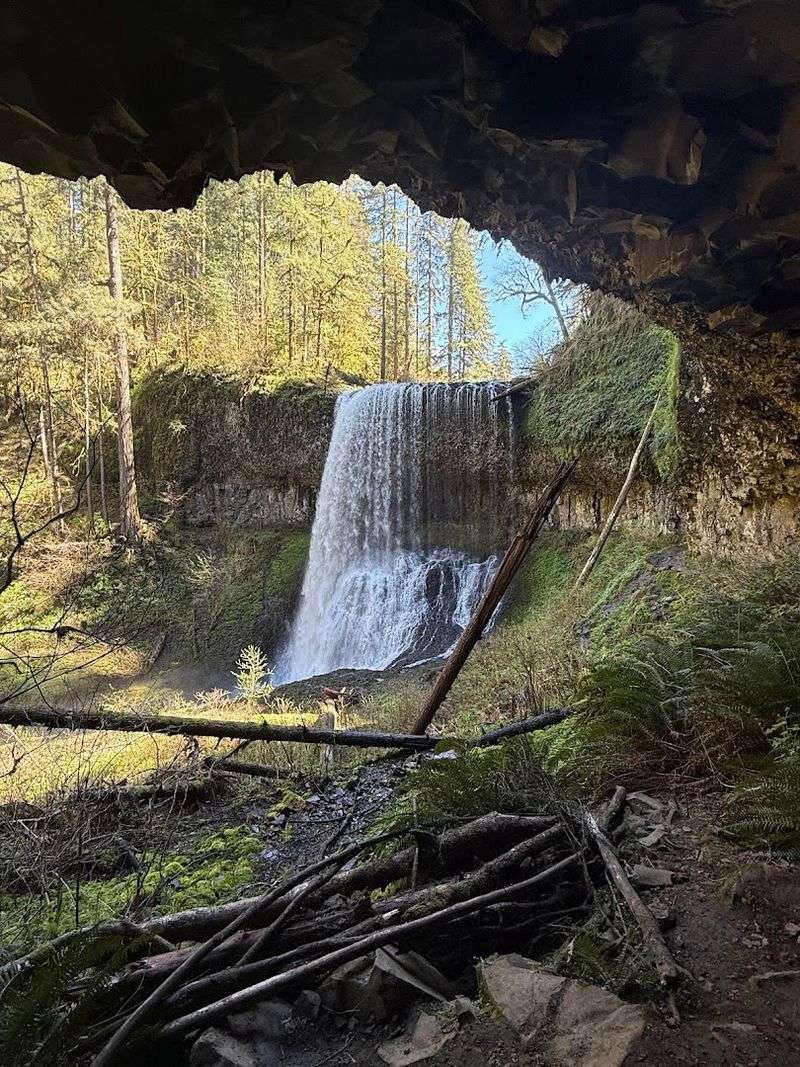
Few moments on any hiking trail compare to stepping behind a waterfall for the first time, and Middle North Falls gives you that experience all over again with full force. At 106 feet tall, this cascade is one of the most dramatic walk-behind falls on the entire loop.
The trail hugs the cliff face and passes directly through a carved volcanic rock alcove while water thunders just feet away from your shoulder.
The geology here is genuinely fascinating. The basalt overhang that allows hikers to pass behind Middle North Falls was formed by millions of years of volcanic activity and erosion, and you can see the layered rock clearly as you walk through.
Running your hand along those ancient walls while water crashes beside you is a surreal, memorable sensation.
Photography at this waterfall requires a bit of planning. A waterproof case or a dry bag for your camera is highly recommended because the mist is constant and surprisingly heavy.
Early afternoon light sometimes catches the spray in a way that creates small rainbow effects near the base of the falls. Whether you are chasing the perfect photo or just soaking in the moment, Middle North Falls consistently ranks among the top highlights of the Trail of Ten Falls.
North Falls: A Waterfall Inside a Volcanic Amphitheater
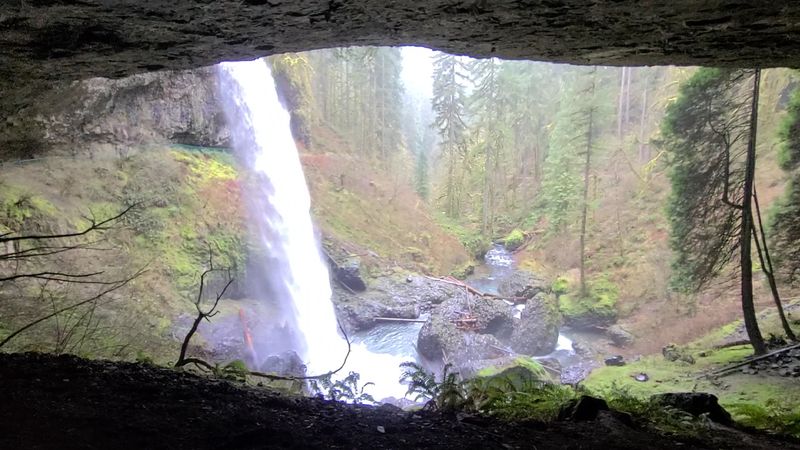
North Falls does not just fall over a cliff. It falls into a room.
The 136-foot cascade plunges into a cavernous basalt amphitheater that was carved over centuries by the relentless force of water and volcanic erosion. Standing inside that natural chamber while the waterfall crashes in front of you feels like being swallowed by the landscape itself.
The walk-behind trail here passes through one of the widest and most dramatic alcoves on the entire loop. Unlike some of the other walk-behind waterfalls where the passage is narrow and quick, the amphitheater at North Falls gives you space to stop, look around, and fully absorb the scale of what surrounds you.
The curved walls rise high above, and the sound reverberates in a way that is hard to describe and impossible to forget.
North Falls is also accessible via a shorter connector trail from the main park area, making it a popular destination for visitors who do not have time for the full loop. If you are completing the entire Trail of Ten Falls, arriving here feels like a reward after miles of canyon hiking.
The views from inside the amphitheater looking outward toward the forest are genuinely stunning from every angle.
Twin Falls: Two Streams, One Unforgettable View
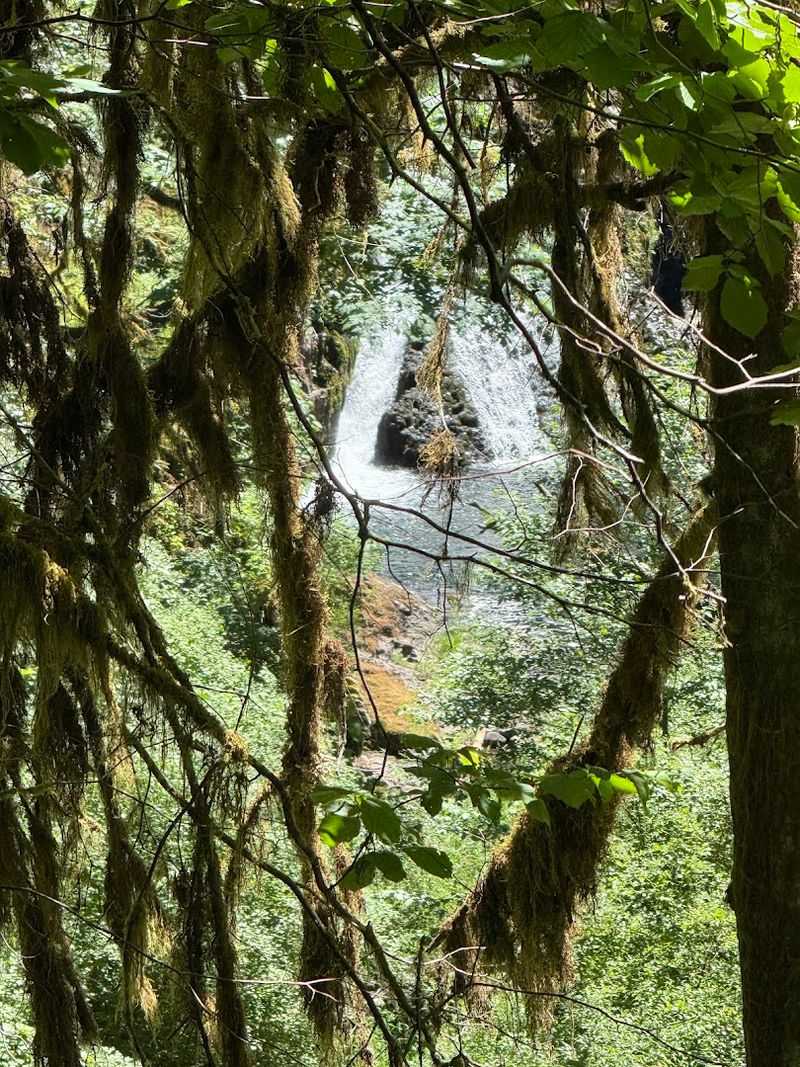
Twin Falls plays by its own rules. Instead of one dramatic plunge, two separate streams flow side by side over layered volcanic rock, creating a visual that looks almost deliberately designed for maximum photogenic effect.
It is one of the most visually distinctive waterfalls on the trail, and photographers absolutely love it.
The dual-stream effect becomes even more pronounced during high water seasons when both channels are running full and fast. The contrast between the two streams, the dark volcanic rock between them, and the surrounding forest creates a layered composition that works beautifully in photos.
Even visitors who are not particularly into photography tend to stop and stare longer than expected.
Twin Falls sits in a section of the canyon that feels particularly enclosed and lush, with canyon walls pressing in close and ferns spilling over every ledge. The sound of two separate cascades blending together creates a textured, almost musical quality that sets this spot apart from the rest of the loop.
If the trail has you feeling a little fatigued by this point, Twin Falls has a way of reinvigorating your energy and reminding you exactly why you chose this hike in the first place.
Winter Falls: A Seasonal Show Worth Timing Right
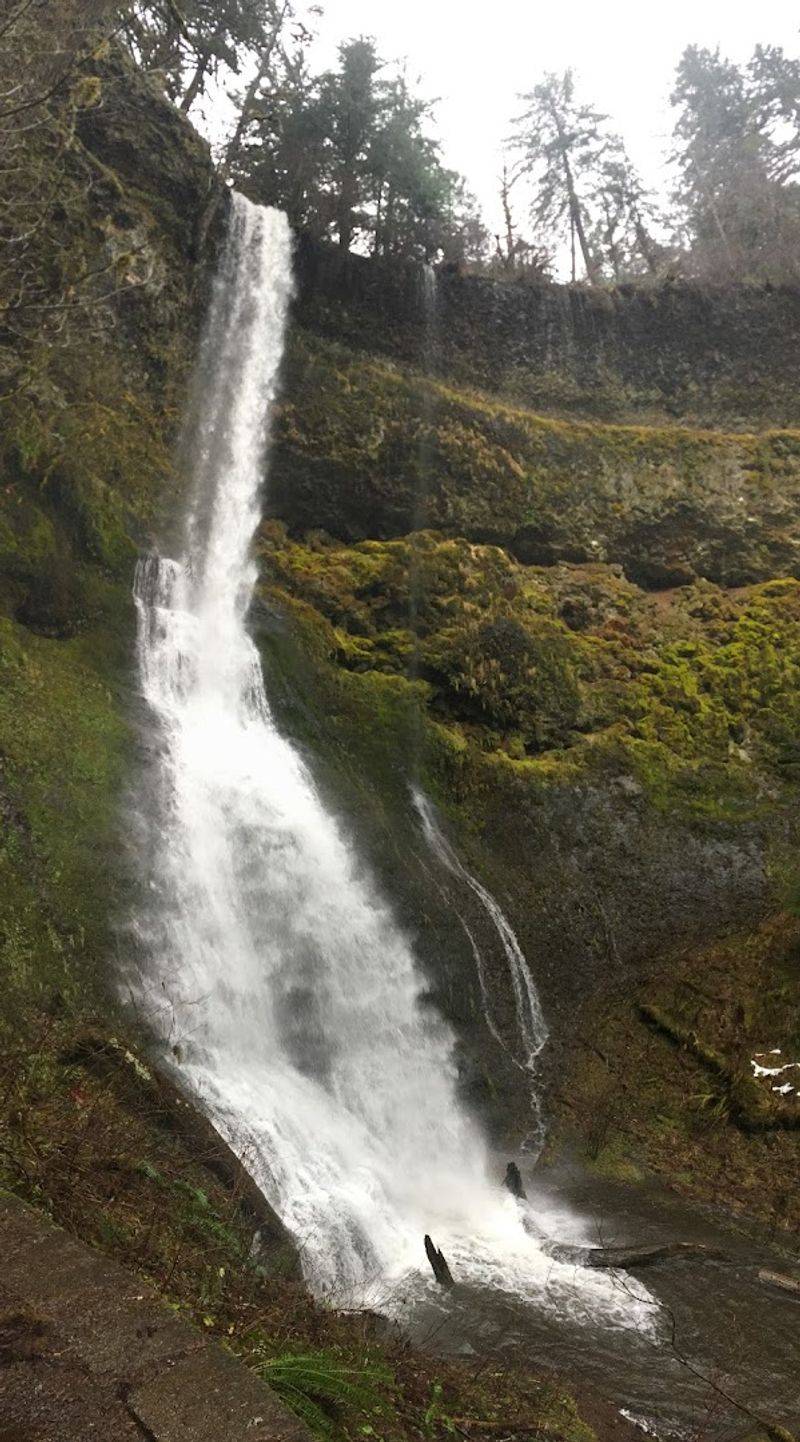
Timing is everything with Winter Falls, and hikers who visit at the right moment are treated to one of the most dramatic displays on the entire trail. During spring and after significant rainfall, water pours over the cliff in a wide, powerful sheet that commands your full attention.
Come back in late summer and the same cliff might offer only a gentle trickle, which is interesting in its own quiet way.
This seasonal personality makes Winter Falls one of the most talked-about stops among repeat visitors. People who have hiked the Trail of Ten Falls multiple times across different seasons often describe Winter Falls as the waterfall that changes the most dramatically from visit to visit.
Planning your trip between February and May gives you the best odds of seeing it at full strength.
The surrounding landscape frames Winter Falls beautifully regardless of the season. Mossy canyon walls, towering conifers, and the soft sound of Silver Creek nearby create a setting that feels cinematic even when the water flow is modest.
Checking recent trail reports or the Silver Falls State Park website before your visit can give you a realistic preview of current water levels so you know what to expect when you arrive.
The Full Loop: Where the Journey Becomes the Destination
Seven miles of trail, ten waterfalls, four walk-behind experiences, and countless moments that make you stop mid-stride just to look around. The Trail of Ten Falls is not a hike you finish and immediately forget.
It is the kind of loop that stays with you long after your boots are back on the shelf and the mud has dried off your jacket.
The trail itself is genuinely well-maintained, with clear signage, wooden footbridges crossing Silver Creek, and a mix of terrain that keeps things interesting without becoming punishing. Elevation gain is moderate, hovering around 1,000 feet total, which means most reasonably fit hikers can complete the full loop in four to six hours.
Families with older kids regularly tackle the entire route without issue.
Silver Falls State Park also offers shorter route options for visitors who want the highlights without committing to the full distance. The South Falls and North Falls areas are both accessible from separate trailheads, making the park flexible for different fitness levels and time constraints.
Parking fills up fast on weekends, so arriving before 9 a.m. is strongly recommended. Pack layers, bring more water than you think you need, and prepare to be genuinely amazed by what Oregon has tucked into this canyon.
Share this story