There is a spot tucked into the coastal mountains of western Oregon where the trees grow so thick and tall that the trail stays cool even on the warmest summer days. The sound of rushing water follows you every step of the way, and the moss-covered rocks make everything look like something out of a nature documentary.
This trail earns its stellar 4.8-star rating from nearly 600 visitors for good reason. Whether you are a casual walker or a seasoned hiker, this place has a way of slowing you down and making you want to stay a little longer than planned.
Where the Trail Begins: Address and Location
Sweet Creek Falls Trailhead sits on Sweet Creek Road in Mapleton, Oregon 97453, about eleven miles from the town of Mapleton and roughly fifteen miles from Florence via Highway 126. The Siuslaw National Forest manages this hiking area, and you can reach the ranger station at (541) 750-7000 for current trail conditions.
The trailhead is open 24 hours a day, seven days a week, which gives early risers and golden-hour chasers plenty of flexibility. Parking is free, though spots fill up fast on weekends, especially after 11 a.m.
There are actually two main parking areas along Sweet Creek Road. The lower Homestead Trailhead has a vault toilet on site, while the upper lot is about a quarter mile further up the road and offers closer access to the upper falls.
Arriving early on a weekday gives you the best chance of a quiet, uncrowded experience in this remarkably beautiful corner of coastal Oregon.
The Forest Setting That Makes Every Step Worth It
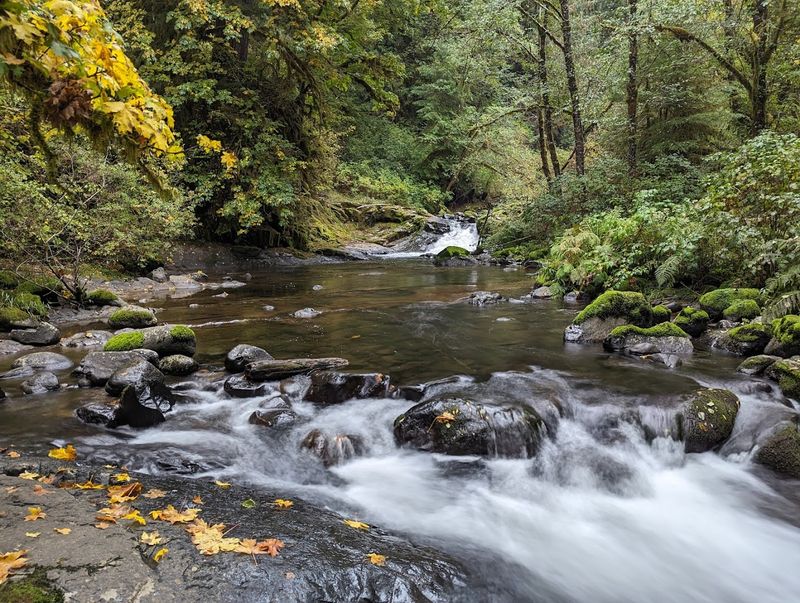
The first thing you notice after leaving the parking area is how immediately the forest wraps around you. Tall Douglas fir, red alder, and big-leaf maple trees form a dense canopy overhead, keeping the trail shaded and surprisingly cool even when temperatures climb into the eighties outside the tree line.
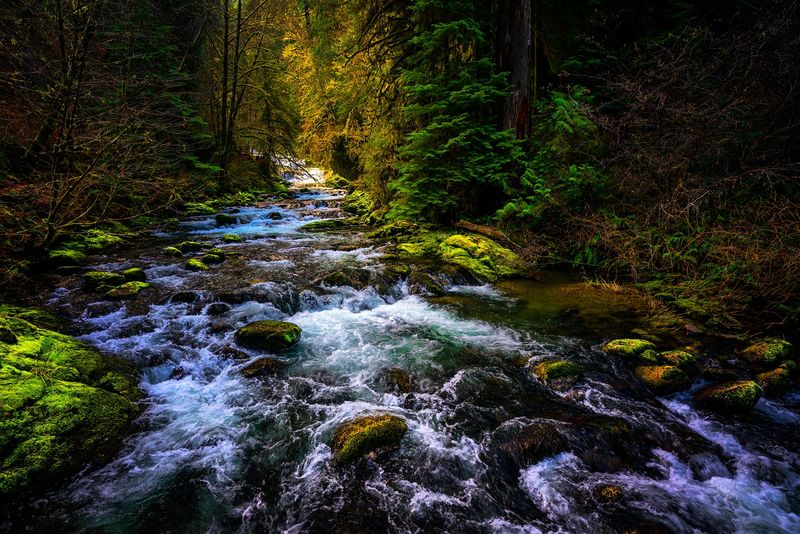
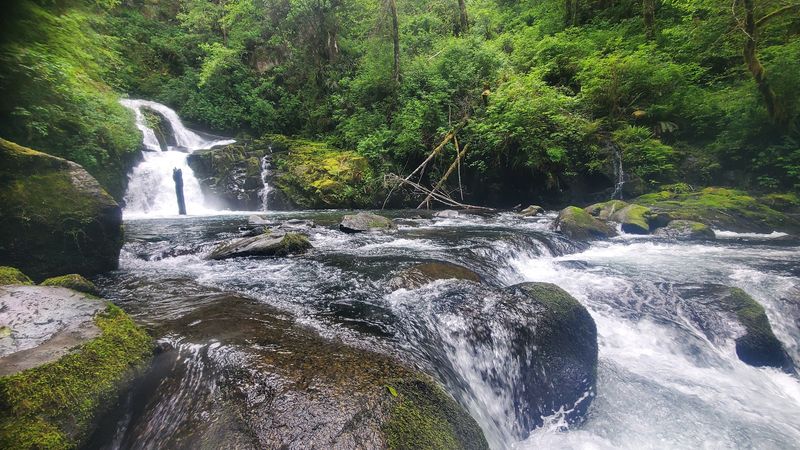
Thick carpets of moss cover nearly every rock, root, and fallen log along the path. The green is so vivid and layered that it feels almost surreal, like the forest has been carefully styled for a photo shoot that never ends.
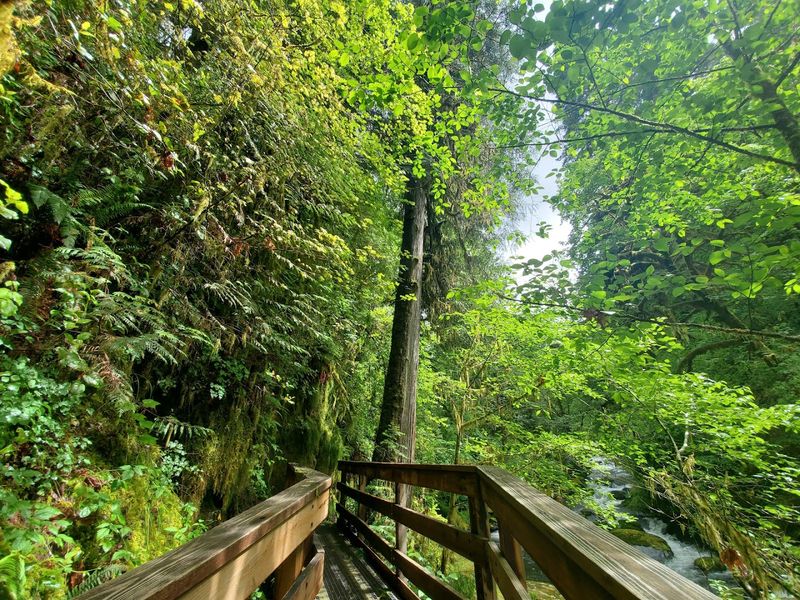
Sweet Creek runs alongside the trail the entire way, so the sound of moving water is your constant companion. The combination of deep shade, mossy textures, and the creek’s gentle rushing makes this one of the most sensory-rich short hikes in western Oregon.
It is the kind of place that genuinely quiets your mind without you even trying, and that alone makes the drive out here more than worthwhile.
A Series of Waterfalls That Keep Surprising You
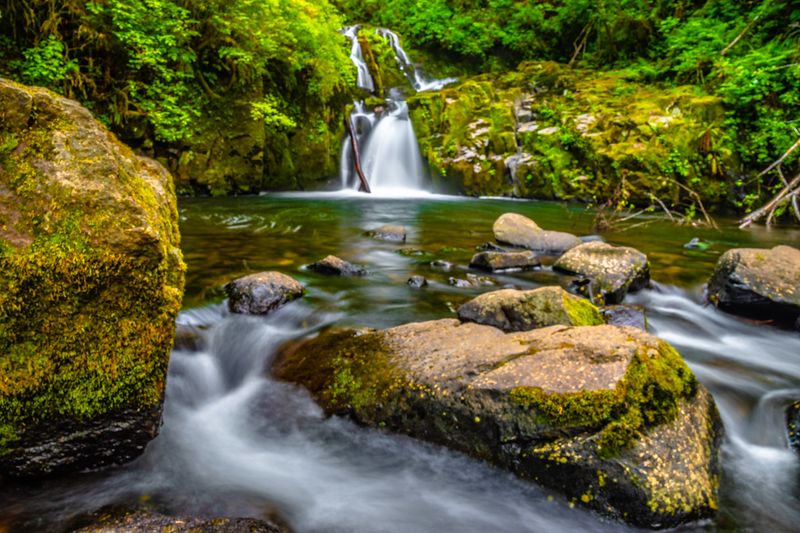
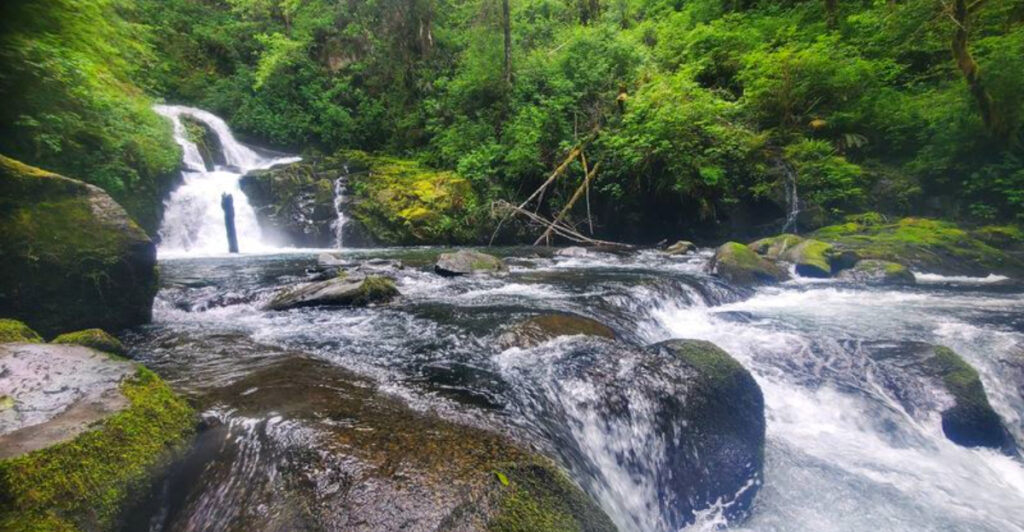
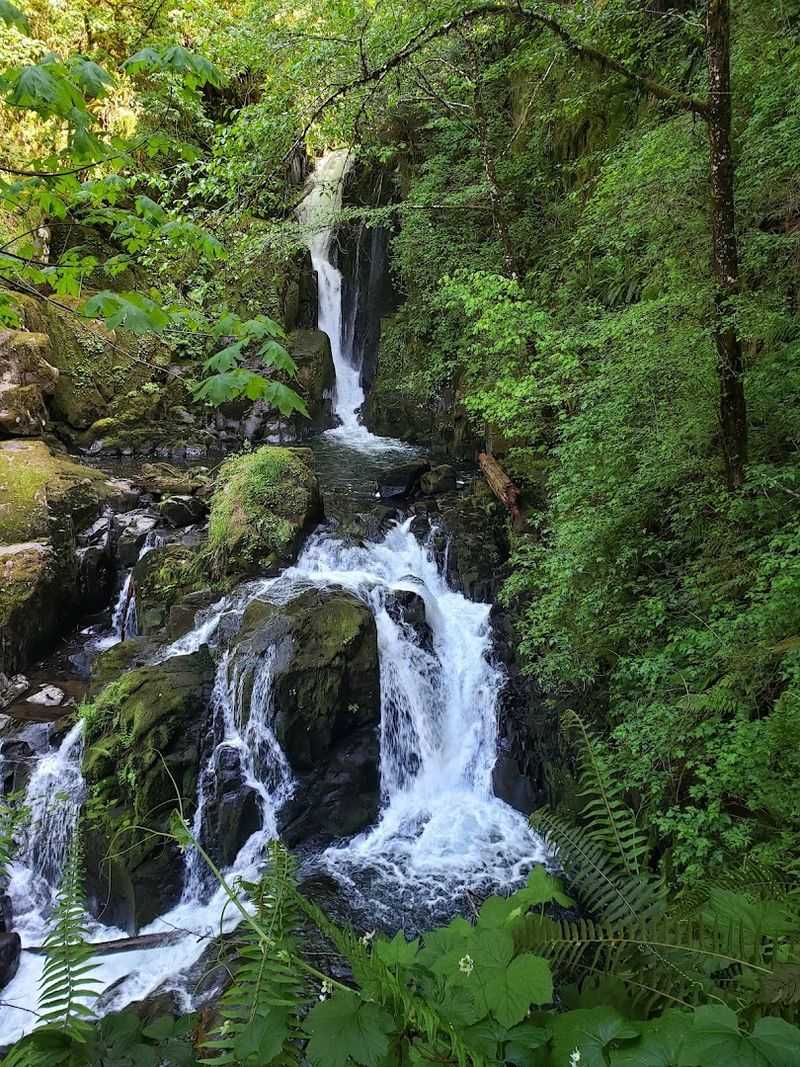
One waterfall would be enough to justify the trip. Sweet Creek delivers closer to eleven of them along its series of trails, each one with its own personality and pace.
Some pour in wide, lacy sheets over flat rock faces while others rush through narrow channels with serious force.
The lower falls are accessible and easy to reach, making them popular with families and casual hikers. The upper falls require a bit more effort but reward you with a more dramatic view and fewer people crowding the banks.
Spring visits bring the most powerful water flow, when snowmelt and rain combine to push the creek to its fullest. Late summer reveals clearer water and calmer pools that are perfect for wading.
The repaired bridge, which had been out of service for some time, now allows hikers to move more freely between sections of the trail. Each bend in the path seems to reveal another cascade, and that sense of discovery keeps the hike feeling fresh from start to finish.
Trail Difficulty and What to Expect Underfoot
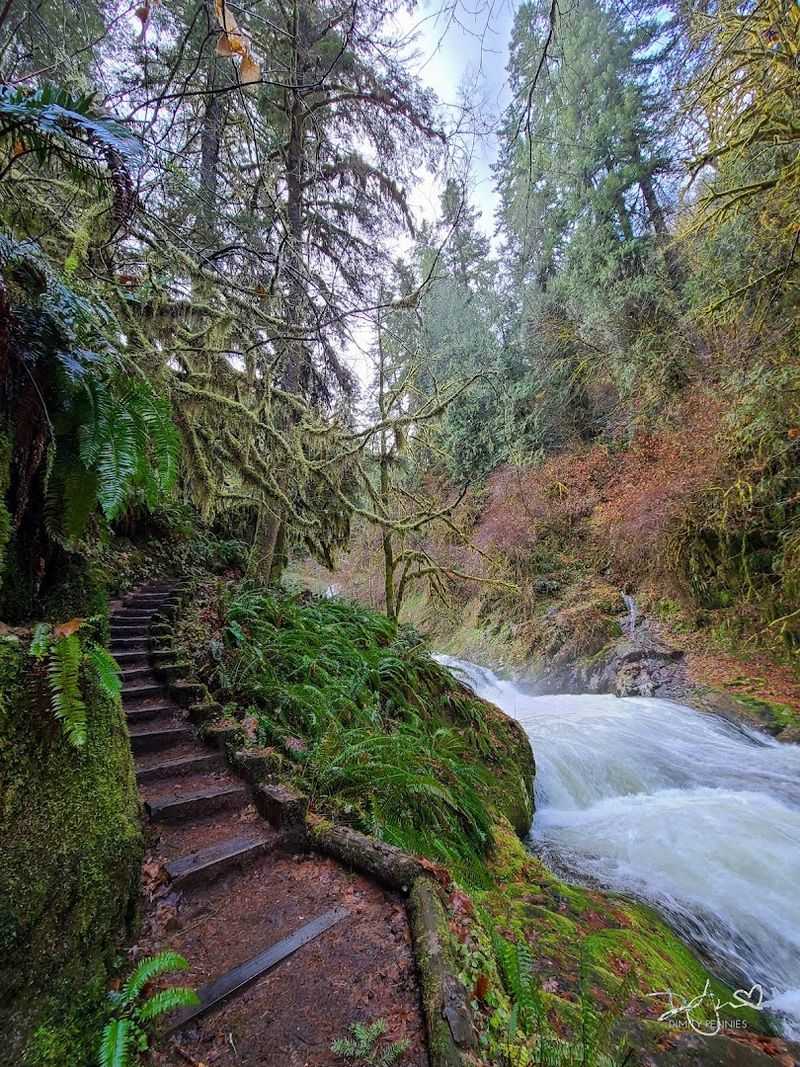
The Sweet Creek trail system is generally rated as easy to moderate, but that label comes with some important footnotes. The path is filled with exposed roots and rocks that demand your full attention, especially on the sections closest to the creek where moisture keeps the ground perpetually slick.
The lower Homestead Trail covers about 0.75 miles round trip to the first major waterfall, making it a quick and manageable outing. The upper trailhead starts closer to the top of the falls and covers roughly 1.3 miles round trip for the full out-and-back experience.
Good footwear is genuinely non-negotiable here. Trail runners or hiking boots with solid grip will serve you far better than casual sneakers, particularly after rainfall.
The trail has no railings along most of its length, and some sections narrow considerably where passing other hikers requires a bit of patience. Walking sticks are a smart addition, especially for anyone who prefers extra stability on uneven ground.
The payoff for careful footing is completely worth the attention it demands.
Swimming Holes and Creek Access Along the Way
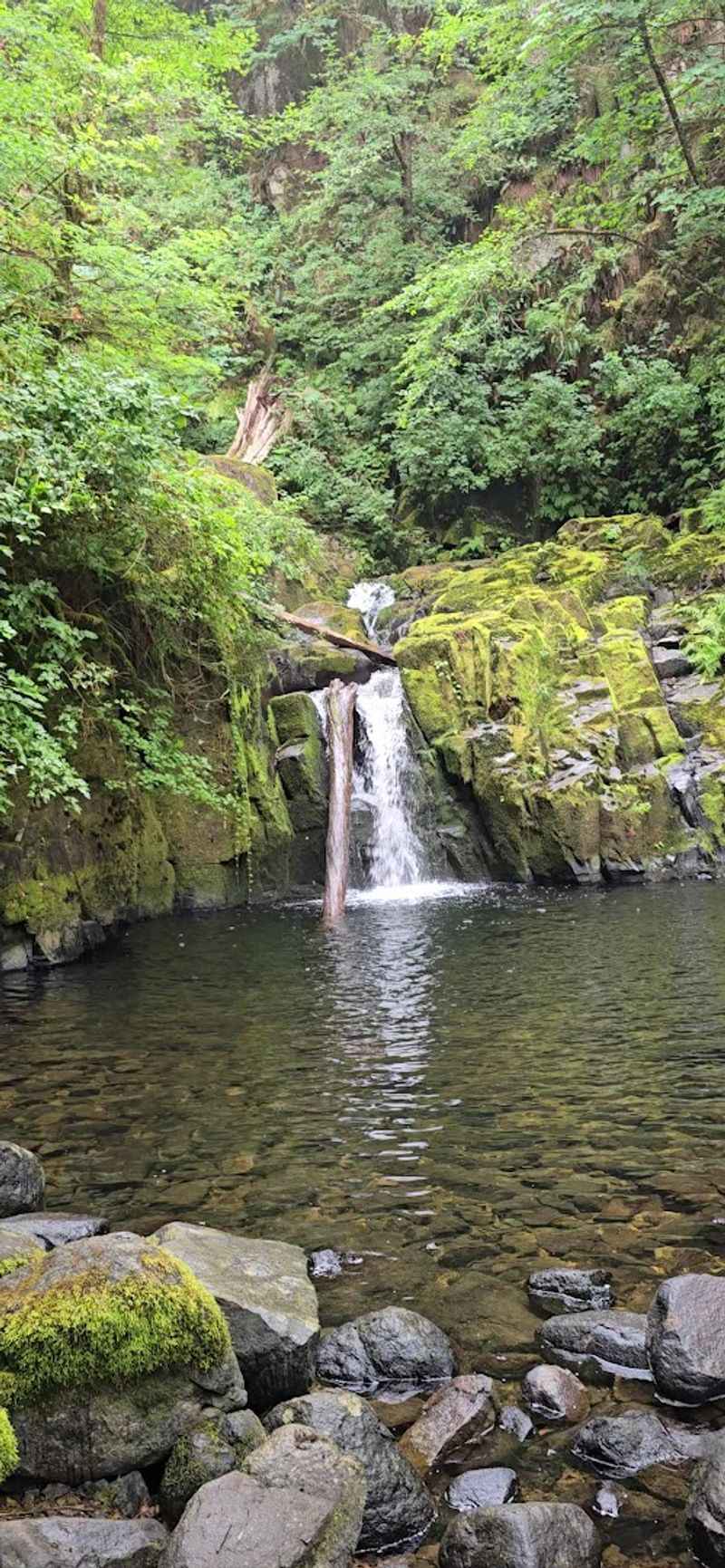
Here is a feature that turns a nice hike into a full afternoon adventure: Sweet Creek is loaded with natural swimming holes. The water is cold and crystal clear, and the pools form naturally between rock formations at various points along the trail.
Visitors who bring water shoes and a change of clothes can easily spend three to four hours here, alternating between hiking and cooling off in the creek. The water runs deep enough in some spots to swim comfortably, and the visibility underwater is remarkable.
Some hikers bring goggles just to get a better look at the rocky creek floor below the surface.
Families with older kids tend to make a full day of it, packing lunch and finding a favorite rock to claim as a base camp. The creek also has smaller shallow areas where younger children can splash around safely with supervision.
A picnic by the water with the sound of falling water nearby is genuinely one of the most relaxing ways to spend a weekend morning in this part of Oregon. Pack your sunscreen and a dry bag for your phone.
Wildlife, Flora, and the Living Forest Around You
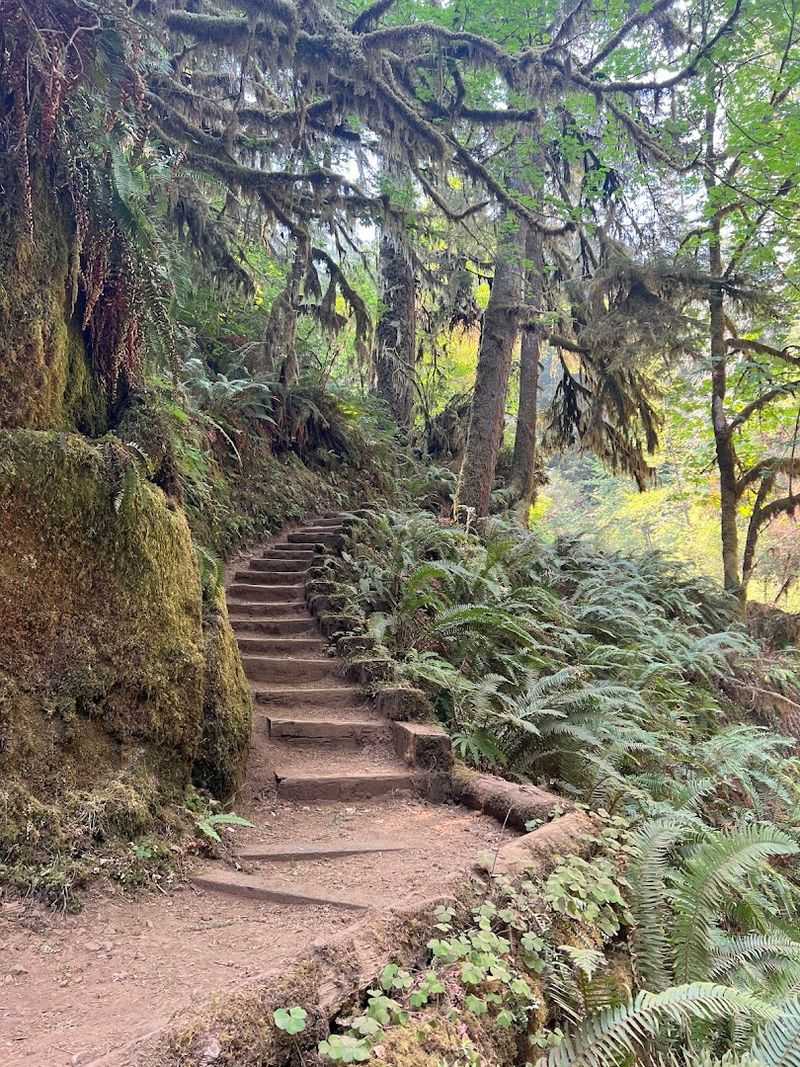
The Siuslaw National Forest around Sweet Creek is alive in ways that reward slow, observant hikers. Park rangers have been known to set up educational stations along the trail, sharing information about local flora and fauna, beaver activity, and water quality in the creek.
It is a surprisingly enriching touch for what might otherwise be a simple nature walk.
Poison oak grows along portions of the trail, so learning to identify its three-leaflet clusters before your visit is genuinely useful. Wearing long pants on cooler days adds a practical layer of protection without much sacrifice in comfort.
The creek itself supports a healthy aquatic ecosystem, and the moss species covering the rocks represent dozens of varieties native to the Pacific Northwest. Big-leaf maple leaves create enormous natural umbrellas overhead in summer, and their golden fall color transforms the trail into something spectacular between October and November.
Beaver signs appear along the banks if you know where to look. The forest here feels less like a backdrop and more like an active, breathing system that you get to move through briefly as a respectful guest.
Parking, Trail Access, and Current Conditions
The parking situation at Sweet Creek Falls is one of the more important logistics to sort out before you go. The first lot near the Homestead Trailhead holds about ten cars and includes the vault toilet.
The second lot up the road fits closer to fifteen to twenty vehicles but has no bathroom facilities on site.
Parking is free, which is a welcome detail, but spots disappear fast on sunny weekends. Arriving before 11 a.m. gives you the best odds of finding a space without having to park along the narrow road.
Sweet Creek Road is paved and two lanes wide for most of its length, narrowing to one lane past the first entrance.
Trail conditions change seasonally and sometimes due to storm damage. The bridge that had been out of service for an extended period has been repaired, restoring better trail continuity.
That said, checking the Siuslaw National Forest website or calling (541) 750-7000 before your visit is always a smart move. Conditions in winter and early spring can shift quickly, and muddy, narrow sections require extra caution regardless of the season.
Best Times to Visit and Seasonal Highlights
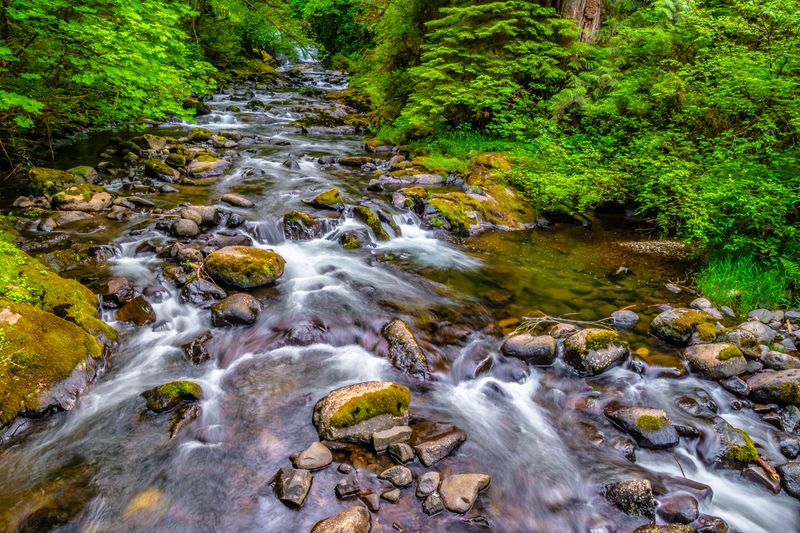
Every season brings something different to Sweet Creek, and honestly, none of them are bad. Spring delivers the most dramatic water flow, when the creek runs full and fast from winter rain and snowmelt.
The waterfalls are at their most powerful between March and May, and the forest floor is covered in fresh green growth that makes the whole trail feel newly painted.
Summer shifts the experience toward recreation. The swimming holes become the main attraction, and the trail sees its highest foot traffic.
Coming on a weekday in July or August gives you the falls and the pools with considerably less company.
Fall brings a quieter energy and spectacular color from the big-leaf maples lining the creek. Winter visits are possible since the trailhead stays open around the clock all year, but the road can develop frost and ice in early morning hours, so cautious driving is essential.
The creek runs beautifully full in January and February, and the forest takes on a moody, atmospheric quality that photographers tend to appreciate. Each season makes a reasonable case for being the best one to visit.
Tips for Families and Visitors With Dogs
Sweet Creek is genuinely family-friendly with a few practical caveats worth knowing in advance. The trail is not stroller-accessible due to the roots, rocks, and uneven terrain throughout.
Older children who are comfortable on uneven ground will have a fantastic time, and the swimming holes add a level of excitement that keeps younger hikers motivated to keep moving.
Dogs are welcome on the trail but must be kept on a leash at all times. The narrow sections of the path make off-leash dogs a real inconvenience for other hikers trying to pass, and the creek banks have enough drop-offs to make supervision important.
Most visitors with dogs report that their animals absolutely love the water access.
A few safety notes worth passing along: the trail has no railings along most of its length, and some creek-side sections have steep drop-offs to the water below. Children should stay close to adults near the edge areas.
Bringing a small first aid kit, plenty of water, and snacks makes any outing here more comfortable. High theft has been reported in the parking area, so leaving valuables locked out of sight in your vehicle is strongly recommended.
The Drive In and the Road Less Noticed
The journey to Sweet Creek Falls is part of the experience in a way that not every trailhead can claim. The drive from Florence along Highway 126 winds through some genuinely beautiful coastal Oregon scenery, with forested hillsides and river views keeping things interesting the whole way.
Once you turn onto Sweet Creek Road, the road narrows and the trees close in on both sides. The paved road handles the curves well enough in good weather, but winter mornings bring frost and occasional ice that demand slower speeds and full attention.
The twists and turns feel a bit dramatic at first, but most drivers find their rhythm quickly.
The approach itself sets the mood for the hike. By the time you park and lace up your boots, the forest has already started doing its work on your stress levels.
The drive takes about fifteen minutes from Florence, making it an easy half-day trip from the coast. Coming from Eugene adds about an hour and fifteen minutes to the journey, but the combination of the scenic drive and the trail makes it a satisfying full-day outing from the Willamette Valley.
Why This Trail Stays With You Long After You Leave
Some trails are impressive. Sweet Creek Falls is the kind of place that feels personal, like it was designed specifically for the person walking it on that particular day.
The scale is human-sized rather than overwhelming, and the beauty comes in layers rather than one big dramatic moment.
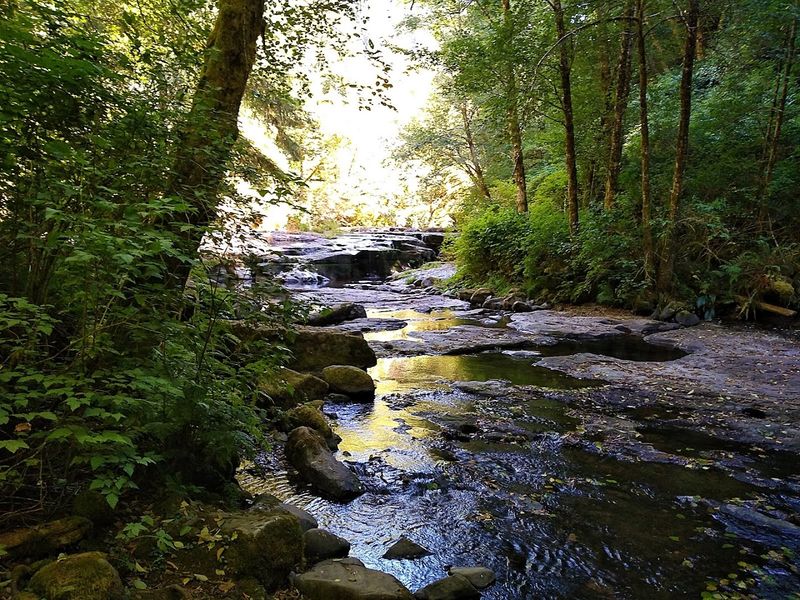
The moss, the sound, the cold water on your feet, the filtered light through the canopy overhead: none of it is loud or showy, but all of it sticks. Visitors who grew up in dry states like Arizona describe the experience as something close to a reset button for the senses.
That reaction makes complete sense once you are standing beside the creek listening to the water move over the rocks.
The trail system here, managed within the Siuslaw National Forest of Oregon, represents exactly the kind of accessible natural space that reminds people why public lands matter. It does not require peak fitness, expensive gear, or a long drive from civilization.
It just requires showing up, paying attention, and letting the forest do what forests do best. That simplicity is its greatest strength, and it is why so many visitors say they will be back.
Share this story