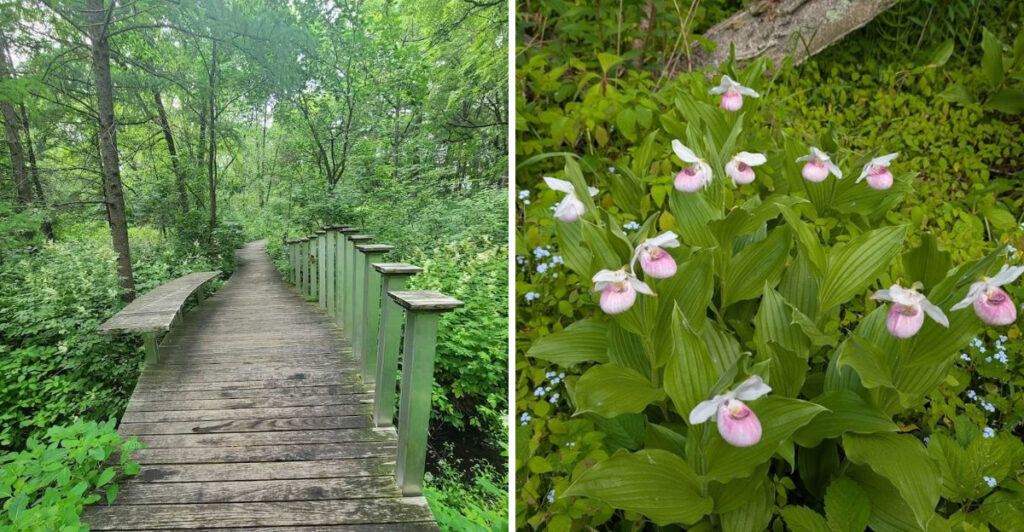
There is a place tucked inside Minneapolis where the city noise fades almost instantly, replaced by birdsong, rustling leaves, and the quiet hum of bees moving between wildflowers. It sits on 18 acres and holds over 500 plant species and more than 130 bird species, yet somehow it still feels like a well-kept secret.
The trails are soft underfoot, the scenery shifts with every season, and the whole experience costs nothing to enter. Whether you are a nature lover, a curious first-timer, or simply someone who needs a mental reset, this garden has a way of pulling you in and making you forget you are standing in the middle of a major American city.
Where the Garden Begins: Address and Location
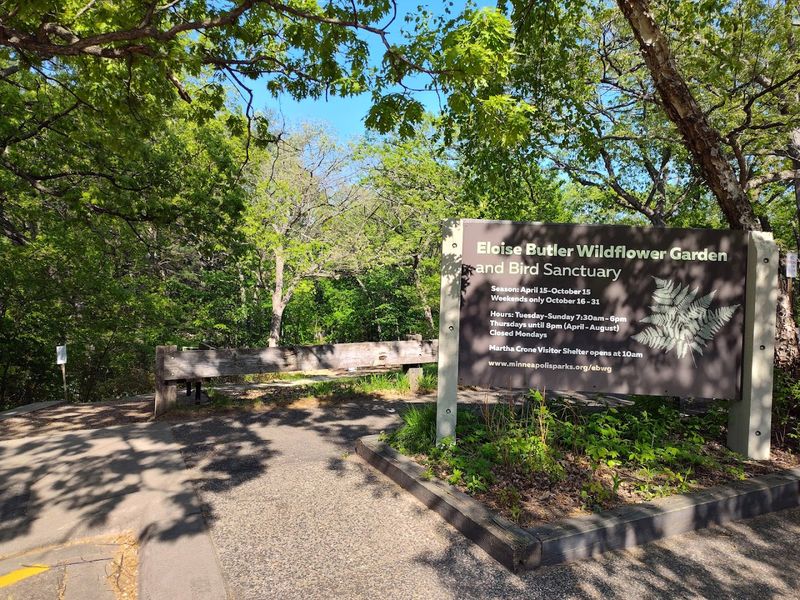
Before you even take your first step on the trail, the address alone tells you something interesting: 1 Theodore Wirth Pkwy, Minneapolis. The garden sits inside Theodore Wirth Regional Park, one of the largest parks in the Minneapolis park system, and the location feels surprisingly removed from the surrounding urban grid.
I arrived on a Saturday morning just after the 7:30 AM opening, and the parking lot was already filling up fast. Parking is paid, running about $1 per hour or $4 for the full day, so bring some cash or a card.
The garden is closed on Mondays, but open Tuesday through Sunday starting at 7:30 AM, with Thursday hours extending to 8 PM. That Thursday evening window is a quiet favorite for people who want the trails mostly to themselves as the light softens through the tree canopy.
The Story Behind the Name
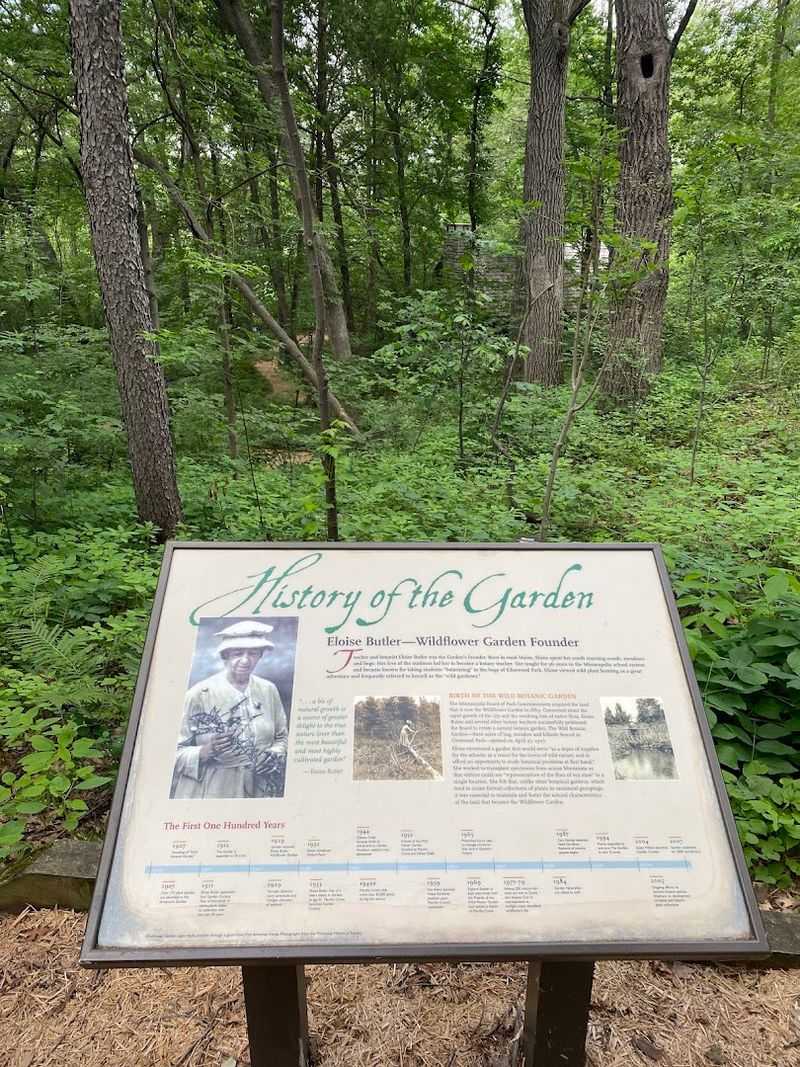
Not every garden gets named after the person who fought hardest to protect it, but this one did. Eloise Butler was a Minneapolis schoolteacher and botanist who, in 1907, convinced the Minneapolis park board to set aside this piece of land as a wild botanical garden, one of the very first of its kind in the entire United States.
Her vision was straightforward: preserve native Minnesota plants in their natural habitat rather than manicuring them into something artificial. She tended the garden herself for nearly three decades until her passing in 1933, and her dedication shaped every corner of what visitors experience today.
The garden was officially named in her honor in 1929, while she was still alive to see it. That kind of legacy does not happen by accident.
It takes someone who genuinely loves a place enough to spend a lifetime defending it, and Butler was exactly that person.
Three Distinct Landscapes in One Loop
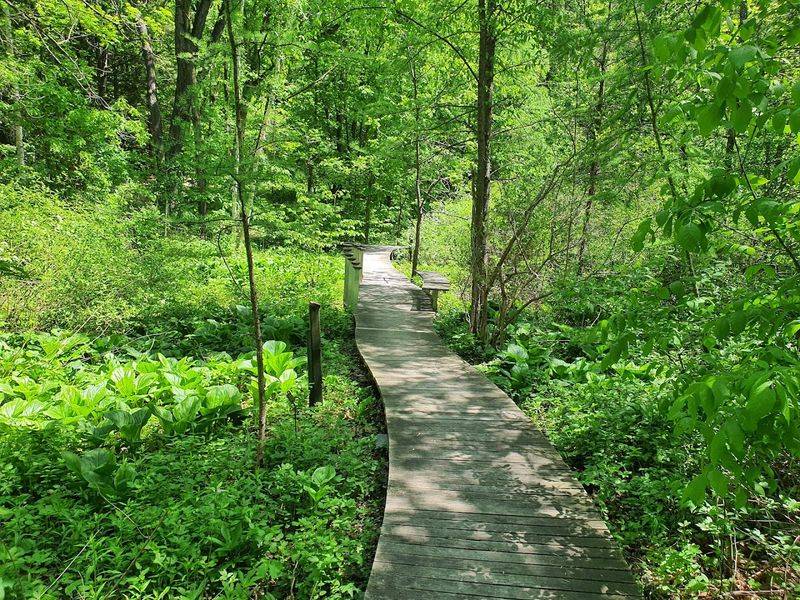
One of the most surprising things about this garden is how many different worlds it packs into a single three-quarter-mile loop. The trail moves through a shaded woodland section, an open prairie meadow, and a wetland bog area, and each one feels genuinely different from the last.
The woodland stretch is cool and dim, with tall oaks and maples filtering the light down to a soft green glow. The prairie section opens up completely, giving you wide sky and a sweep of grasses and wildflowers that buzz with pollinators on warm days.
Then the bog appears, and it is unlike anything else in the garden. The boardwalk carries you over dark water and sphagnum moss, with carnivorous plants and moisture-loving species growing just inches from your feet.
Each zone blooms on its own schedule, which means the garden looks noticeably different depending on when you visit throughout the season.
The Wildflowers That Make People Stop Mid-Step
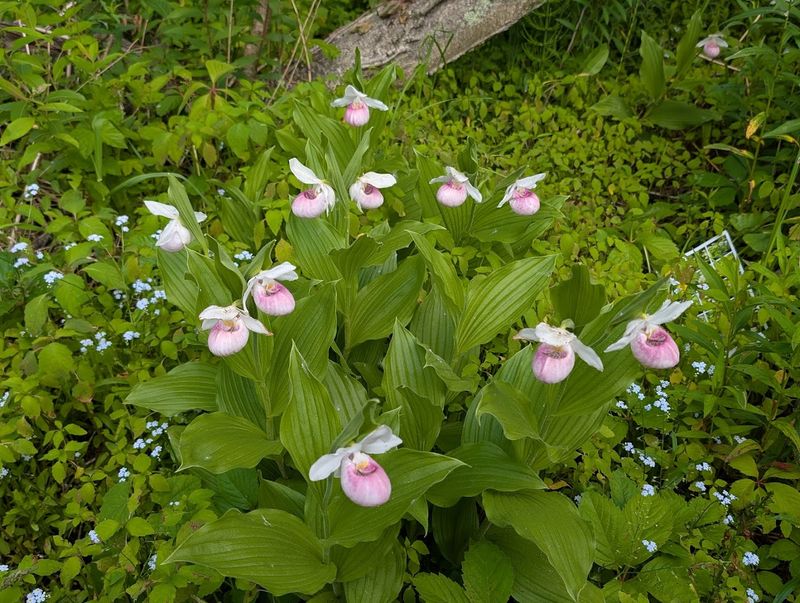
Some plants are beautiful. Others are the kind of beautiful that makes you stop walking and just stare.
The Showy Lady’s Slipper, Minnesota’s official state flower, falls firmly into the second category. Its pink and white blooms look almost too ornate to be real, and spotting one along the trail feels like finding something rare even though the garden cultivates them with care.
Beyond the Lady’s Slipper, the garden holds dwarf trout lilies, wild columbine, bloodroot, trillium, and dozens of other native species that rotate through their bloom cycles from early spring well into fall. Informative signs are placed throughout the paths, so you can learn what you are looking at without needing to bring a field guide.
Sunflowers pop up in late summer along certain sections, and the fall transition brings its own wave of color. Visiting just once feels like seeing only one chapter of a much longer story.
A Bird Sanctuary Worth Taking Seriously
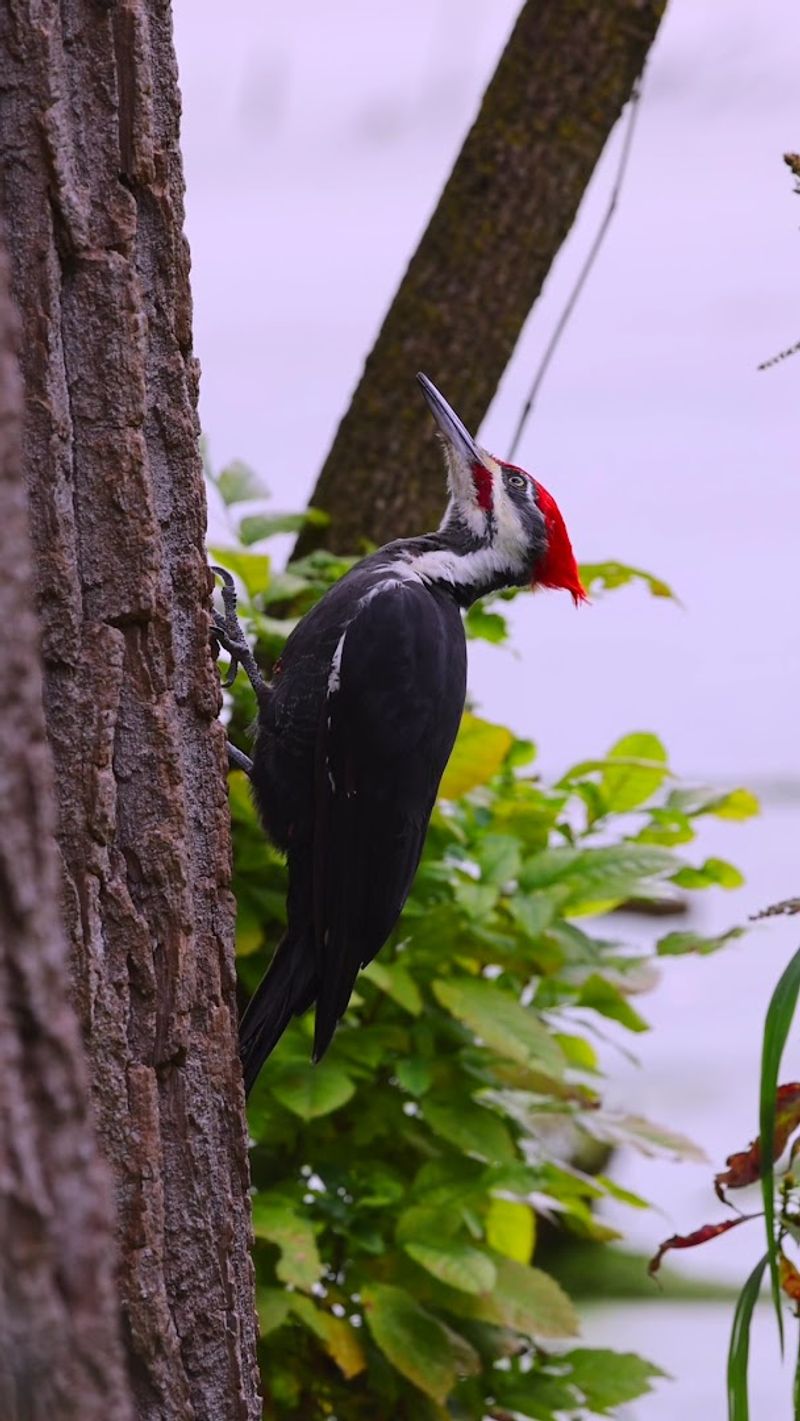
The bird sanctuary side of this place is not just a label on a sign. Over 130 bird species have been recorded here, and on a quiet morning the soundscape is genuinely layered, with calls overlapping and shifting as you move from the woodland into the meadow.
The Saturday morning early birding sessions that start at 7:30 AM are a local favorite. Regulars show up with binoculars and a relaxed readiness to stand still for a while, which is exactly the right approach for this kind of birding.
Owls have been spotted in the wooded sections, and the garden’s protected status means birds feel comfortable nesting and foraging without much human interference. The combination of diverse plant habitats creates a feeding and shelter environment that attracts both common and less frequently seen species throughout the year.
Patience is the only equipment you truly need.
The Trails Themselves: Soft, Quiet, and Thoughtfully Kept
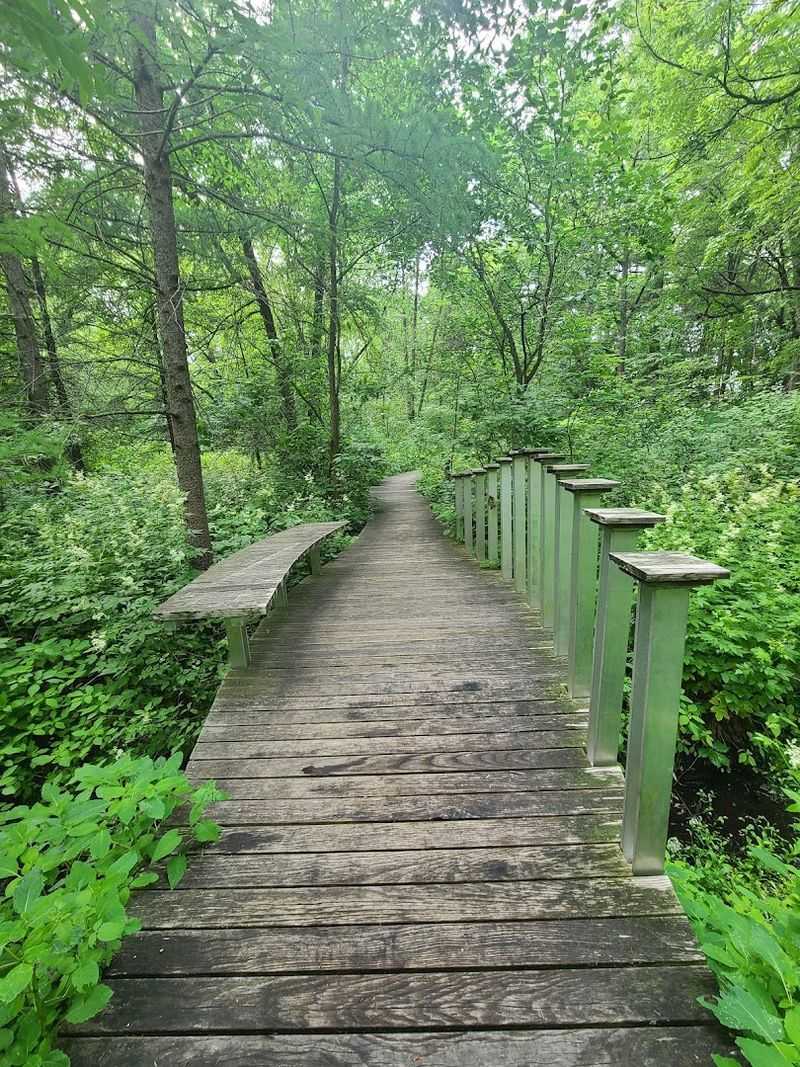
The trail surface here is wood chip mulch rather than pavement, and that choice makes a real difference. The soft underfoot feel reduces fatigue on longer visits and keeps the experience from feeling like a walk through a parking lot.
It also absorbs sound in a way that hard surfaces never do, adding to the overall quiet of the place.
The main loop runs about three-quarters of a mile, which is manageable for almost any fitness level. The boardwalk section over the wetland area is a highlight for people with mobility concerns, providing a stable and even surface through terrain that would otherwise be inaccessible.
Trail signage is clear enough to follow without getting too lost, though picking up a map at the visitor center is genuinely worth doing. The garden is more extensive than it looks from the entrance, and the map helps you find specific plant areas and points of interest that are easy to miss otherwise.
The Visitor Center and What It Offers
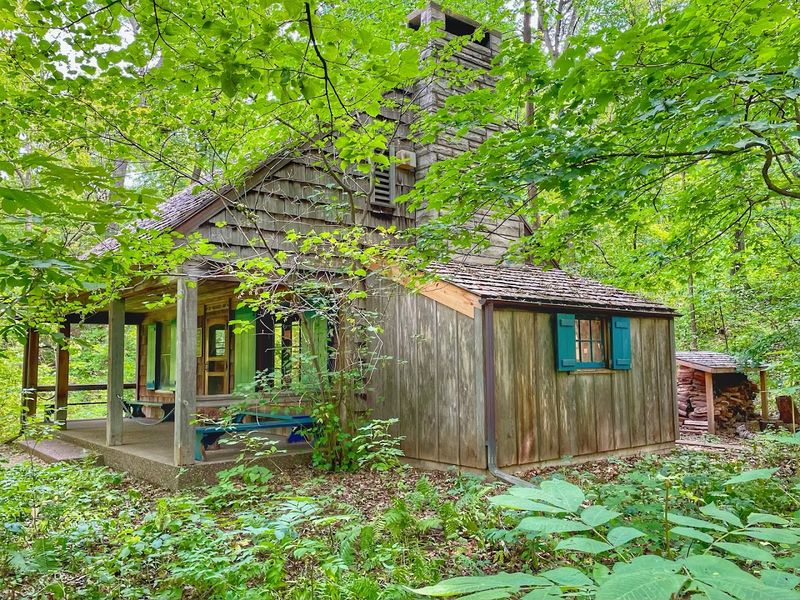
The visitor center is housed in a small, charming cabin near the entrance, and it punches well above its size in terms of what it offers. Inside, you will find hands-on activities designed with younger visitors in mind, plant identification resources, and knowledgeable naturalists who can answer questions about what is currently blooming or which birds have been active lately.
One seasonal highlight is the milkweed seed station, where visitors can collect seeds to take home and plant in their own gardens, supporting monarch butterfly populations in the process. It is a small action that connects the garden to something much larger.
The cabin also stocks trail maps, which are free to take. Information boards placed throughout the property expand on what the visitor center starts, so the learning does not stop when you step outside.
The whole setup feels educational without being heavy-handed about it.
Free Admission and What to Know About Parking
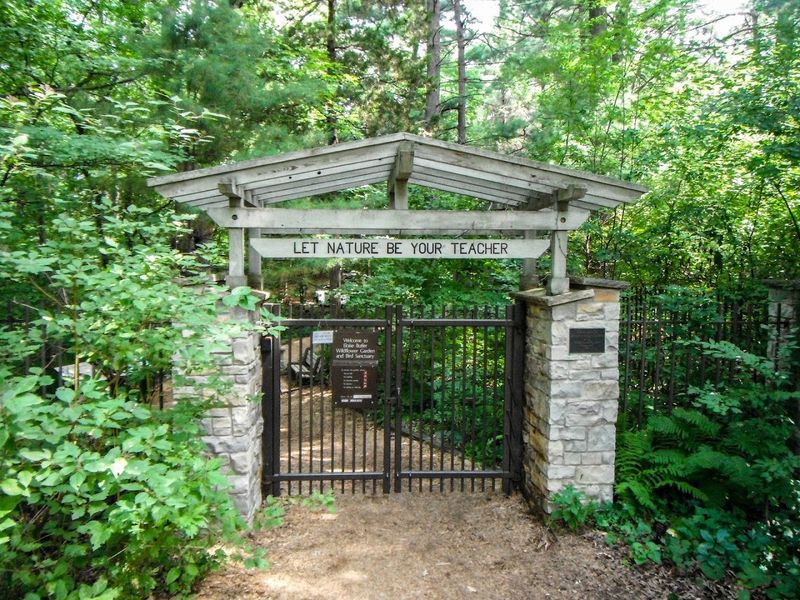
Walking through the gate here costs absolutely nothing, which feels almost too good given the quality of what is inside. Free admission makes the garden genuinely accessible to anyone, and that open-door philosophy matches the spirit of the place perfectly.
Parking is a different story. The lot is small and fills up quickly on weekend mornings, especially in peak bloom season.
The rate runs about $1 per hour or $4 for a full day, paid at the station near the entrance. Arriving close to the 7:30 AM opening time gives you the best shot at a spot and also means you get the trails largely to yourself before the mid-morning crowd arrives.
Overflow parking options exist nearby within the broader Theodore Wirth Park system, so a short walk from a secondary lot is sometimes necessary. Dogs are not permitted inside the garden, which is worth knowing before you plan a trip with your pet.
Seasonal Changes That Reward Repeat Visits
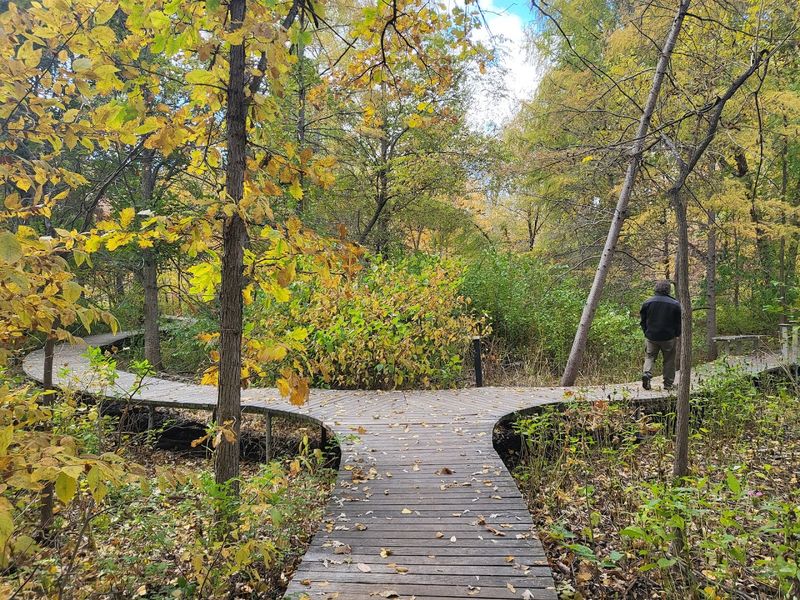
A single visit here is satisfying, but coming back across different seasons reveals how much the garden actually changes. Spring brings the earliest woodland ephemerals, including trout lilies and bloodroot, which bloom briefly and then disappear before summer fully arrives.
Catching them requires showing up at the right moment, which adds a pleasant kind of urgency to spring visits.
Summer fills the meadow sections with color and buzzing insect activity. Late summer sunflowers and coneflowers attract goldfinches and bees in numbers that are almost theatrical.
Fall shifts the palette entirely toward amber, rust, and gold, with seed heads and dried grasses adding texture to the landscape.
Even the labeled plant signs along the trails update the experience across visits, since you can track how the same plants progress from bud to bloom to seed over the weeks. The garden essentially offers twelve different versions of itself across a single calendar year.
Benches, Picnic Areas, and Places to Simply Sit
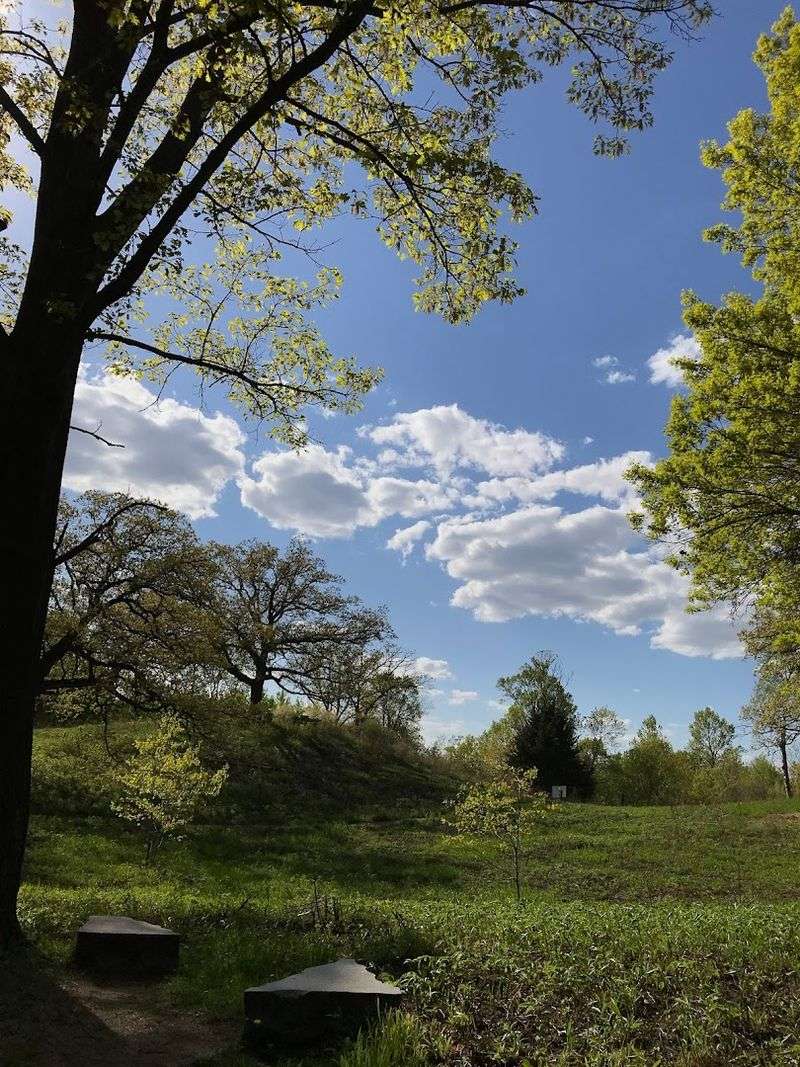
Not every visit to a garden needs to be a march through every trail at full pace. This one actively encourages slowing down, with benches positioned throughout the property at spots where the view or the soundscape makes sitting feel like the obvious choice.
A picnic area near the entrance drive gives families and groups a comfortable base. Water fountains are available on the property, along with restroom facilities including a vault toilet and a porta-potty near the entrance, which covers the basics without being particularly glamorous.
The benches along the trail are especially well placed in the woodland section, where the canopy provides shade and the bird activity is highest in the morning hours. Spending twenty minutes on one of those benches, watching the light shift through the trees and listening to what is happening overhead, is one of the most restorative things this garden quietly offers.
A Closing Walk Through a Place Worth Protecting
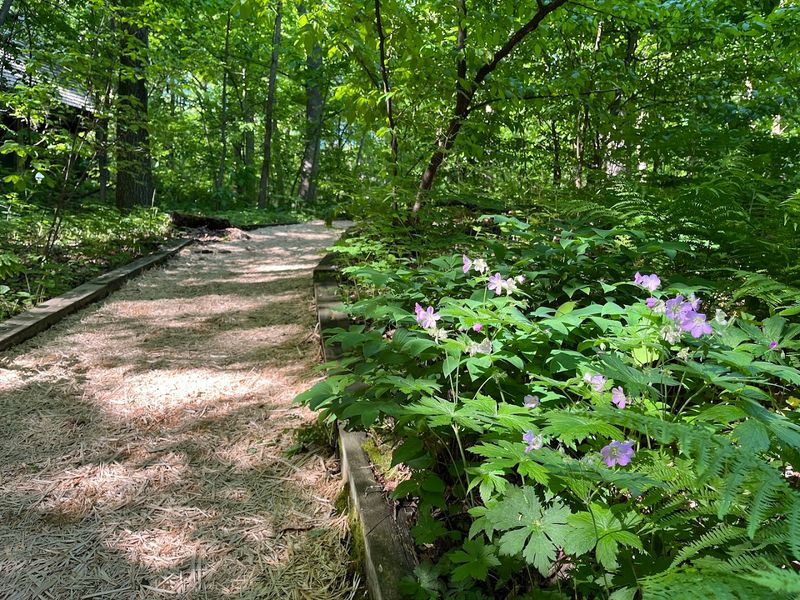
After spending time here, it becomes clear why Eloise Butler spent so many years fighting to keep this place intact. The garden does something that very few urban green spaces manage: it creates a genuine sense of being somewhere else entirely, without requiring you to travel far or spend much money to get there.
The combination of free admission, varied habitats, educational programming, seasonal blooms, and strong bird activity makes it one of the most rewarding places to spend a few hours in Minneapolis. Families, solo visitors, photographers, birders, and people who just need somewhere quiet to think all find something here that fits what they came looking for.
The garden opens Tuesday through Sunday at 7:30 AM, and the best advice for a first visit is simply to arrive early, pick up a map, and let the trails take you wherever they lead. Some of the best things you will see are the ones you were not expecting to find.
Share this story