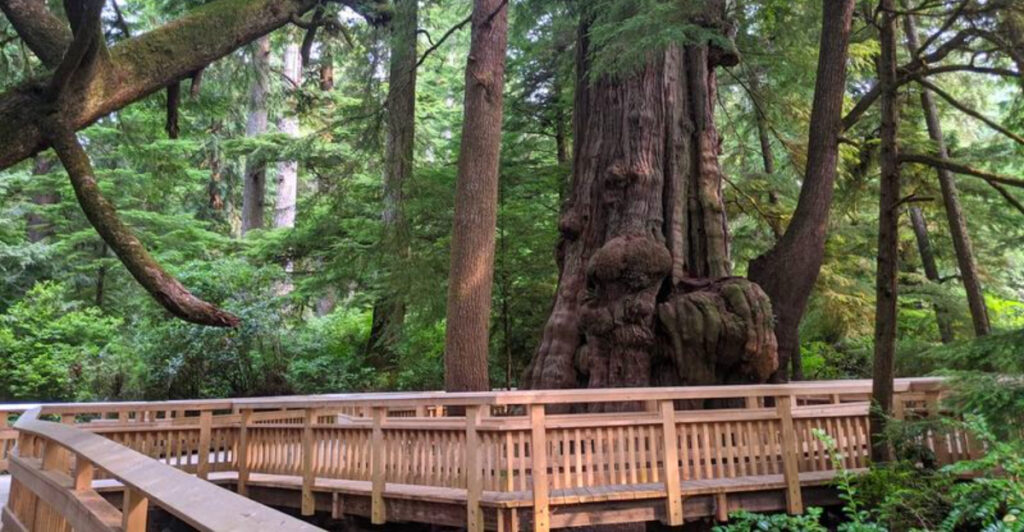
There is a quiet corner of the Oregon Coast where ancient trees stand so tall and wide that you genuinely have to crane your neck to see their tops. A wooden boardwalk winds through a cedar wetland preserve, and every step feels like traveling back in time by several centuries.
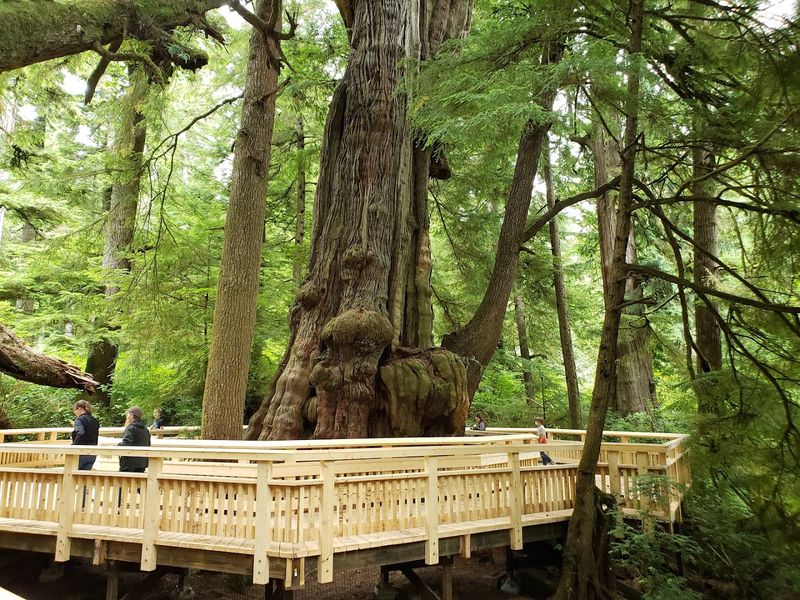
The star of the show is a western red cedar estimated to be between 800 and 1,200 years old, which means it was already a mature tree when medieval knights were roaming Europe. Whether you are a seasoned hiker or someone who just wants a peaceful stroll close to Highway 101, this trail delivers something rare: a genuine sense of wonder without requiring any serious effort.
Finding the Trailhead: Location and Access
The Rockaway Big Tree Trailhead sits right off Hwy 101 near East Washington Street in Rockaway Beach, OR 97136, making it one of the most conveniently placed nature spots on the entire Oregon Coast. You do not need to venture deep into the wilderness to find it; the trailhead is essentially roadside, yet the moment you step through the tree line, the highway noise fades away almost completely.
Parking is limited to roughly ten spots in a small gravel lot, so arriving early on weekends is genuinely smart advice. Overflow parking along the side of the road is available when the lot fills up, which happens more often than you might expect given how quietly this place tends to fly under the radar.
The trailhead amenities are modest but practical: a portable restroom, a drinking fountain, and a trash can greet you before you even set foot on the boards. Hours run from 7 AM to 10 PM every day of the week, giving both early risers and late-afternoon wanderers plenty of time to enjoy the trail without feeling rushed.
The Boardwalk Itself: A Path Built for Everyone
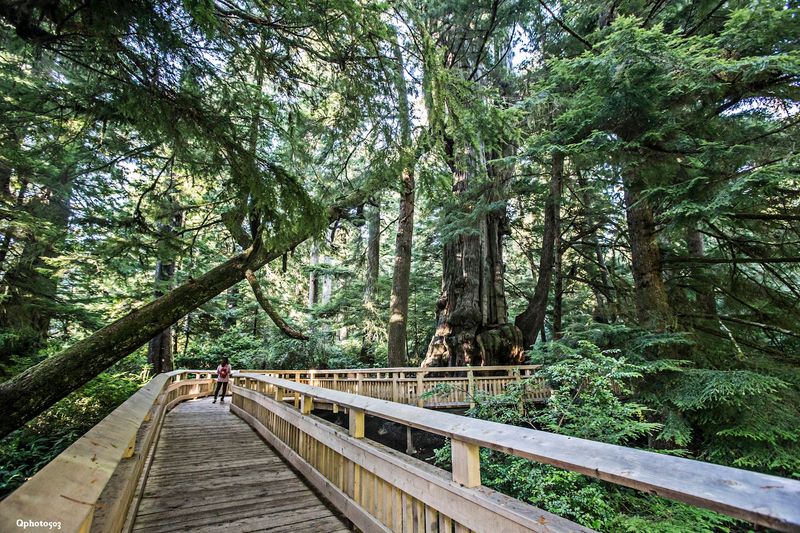
Few trails on the Oregon Coast can honestly claim to be accessible to nearly every type of visitor, but this boardwalk earns that distinction without any asterisks. The path is constructed entirely from wooden planks, wide enough for two people to walk side by side comfortably, and flat enough that strollers and wheelchairs can navigate most of it without trouble.
The total round trip distance clocks in at roughly 1.1 to 1.5 miles depending on your pace and how many times you stop to stare upward at the canopy. There is a mild incline in the final quarter mile before you reach the big cedar, which is the one section that requires a little extra footing awareness, especially after rain.
One practical note worth keeping in mind: the wooden boards can become genuinely slippery when wet, and the forest canopy keeps them damp long after a rainstorm passes. Wearing shoes with decent grip is not optional on rainy days; it is simply the right call.
The trail rewards those who come prepared with nothing but beauty and birdsong from start to finish.
The Ancient Cedar: Meeting the Star of the Show
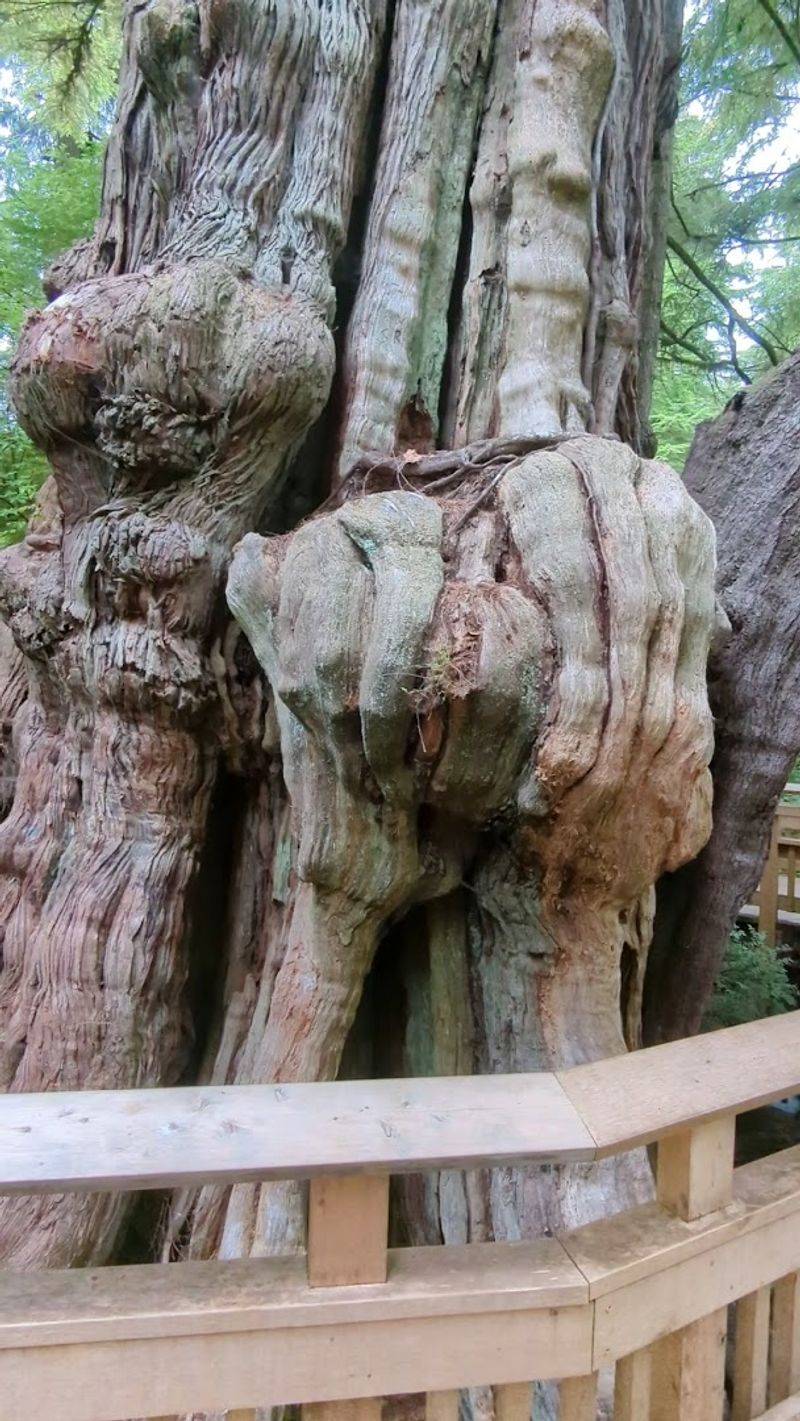
At the end of the boardwalk stands the reason most people make the trip in the first place: a western red cedar so large and old that its estimated age range of 800 to 1,200 years makes your own lifespan feel like a brief footnote. The trunk is wide enough that a group of adults holding hands could not fully encircle it, and its bark is deeply furrowed and draped in patches of soft green moss.
There are clearly marked viewing areas along the boardwalk near the tree where visitors are encouraged to pause and take photos without leaving the path. The rule about staying on the boardwalk exists to protect the shallow root systems of these ancient trees, and it is a rule that genuinely matters for the long-term health of the forest.
A picnic bench and three resting benches are placed near the big cedar, making it easy to sit quietly and absorb the atmosphere rather than rushing back to the parking lot. Spending time here feels less like completing a hike and more like attending a very slow, very peaceful event that the tree has been hosting for centuries.
Wildlife Along the Trail: More Than Just Trees
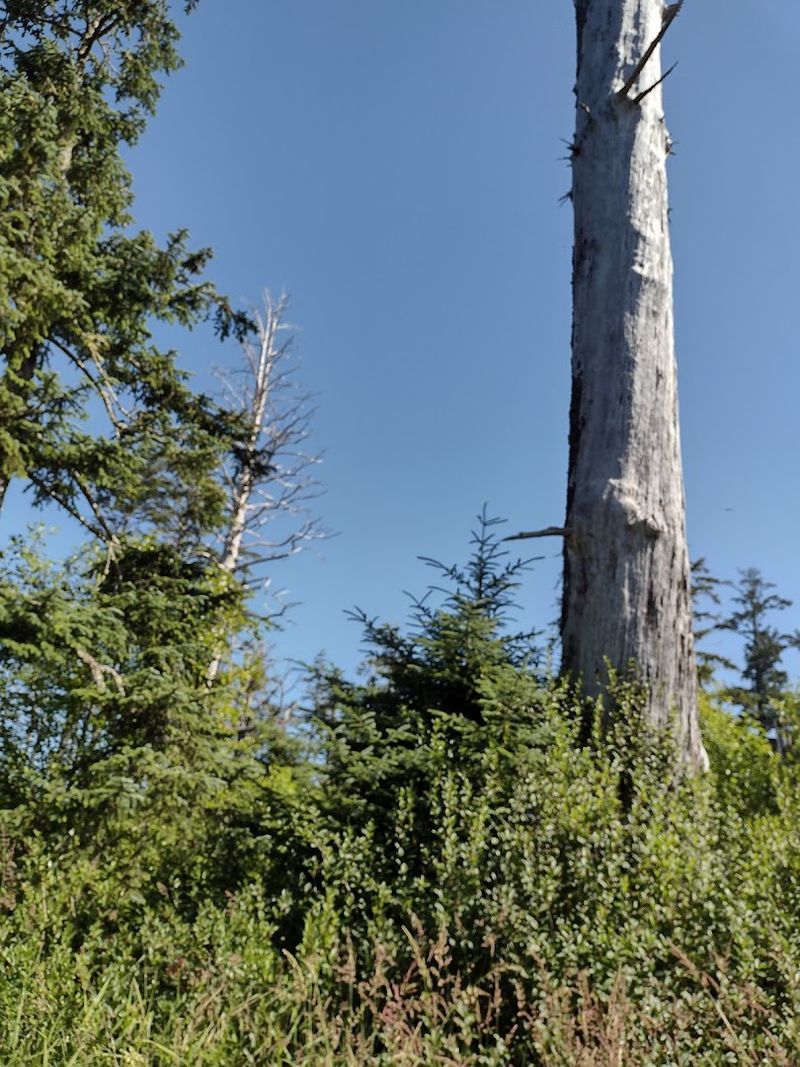
The big cedar gets all the headlines, but the wildlife along the trail deserves its own feature article. An osprey has built a nest at the top of a dead snag tree visible from the boardwalk, and if you visit during the right season, you can watch the adult birds circling overhead with a kind of effortless authority that makes you feel like a welcome guest in their territory.
Garter snakes are a surprisingly common sight, often found sunning themselves on logs near the viewing areas on warmer days. They are completely harmless and tend to hold their position long enough for a decent photo before sliding quietly back into the undergrowth.
Hawks, chipmunks, frogs, squirrels, and a rotating cast of songbirds round out the wildlife roster.
The wetland ecosystem that the boardwalk passes through supports an impressive amount of biodiversity for such a compact area. Berries, blooms, and lush ferns line both sides of the path depending on the season, and the layered sounds of the forest, birds calling from the canopy, frogs croaking from the wetland below, create a kind of natural soundtrack that no playlist could replicate.
The Cedar Wetland Preserve: Understanding the Ecosystem
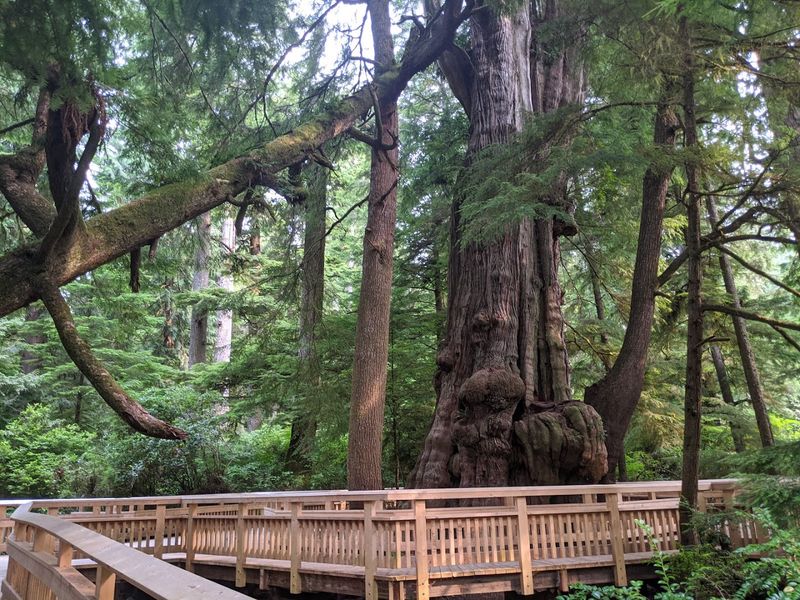
The trail runs through what is formally known as the Cedar Wetland Preserve, a protected natural area that sits just a short distance from the Pacific Ocean and US Highway 101. The proximity to the coast means the air carries a faint saltiness, and the moisture level in the forest stays consistently high, which is exactly the kind of environment that old-growth western red cedars thrive in.
Wetland ecosystems like this one are among the most productive natural habitats on the planet, supporting far more species per square foot than a standard forest. The standing water, decomposing logs, and dense understory vegetation all work together to create a web of life that is visible at every level, from the roots beneath the boardwalk to the osprey circling above the canopy.
Conservation efforts have kept this preserve intact despite its location right next to a busy coastal highway. A major winter storm in 2023 caused significant damage to parts of the trail, and the non-boardwalk section near the viewing area remains closed as a result, though the main boardwalk has been fully repaired and restored to its accessible condition.
The preserve continues to thrive, quietly doing its ecological work a few feet from passing traffic.
Best Times to Visit and Seasonal Changes
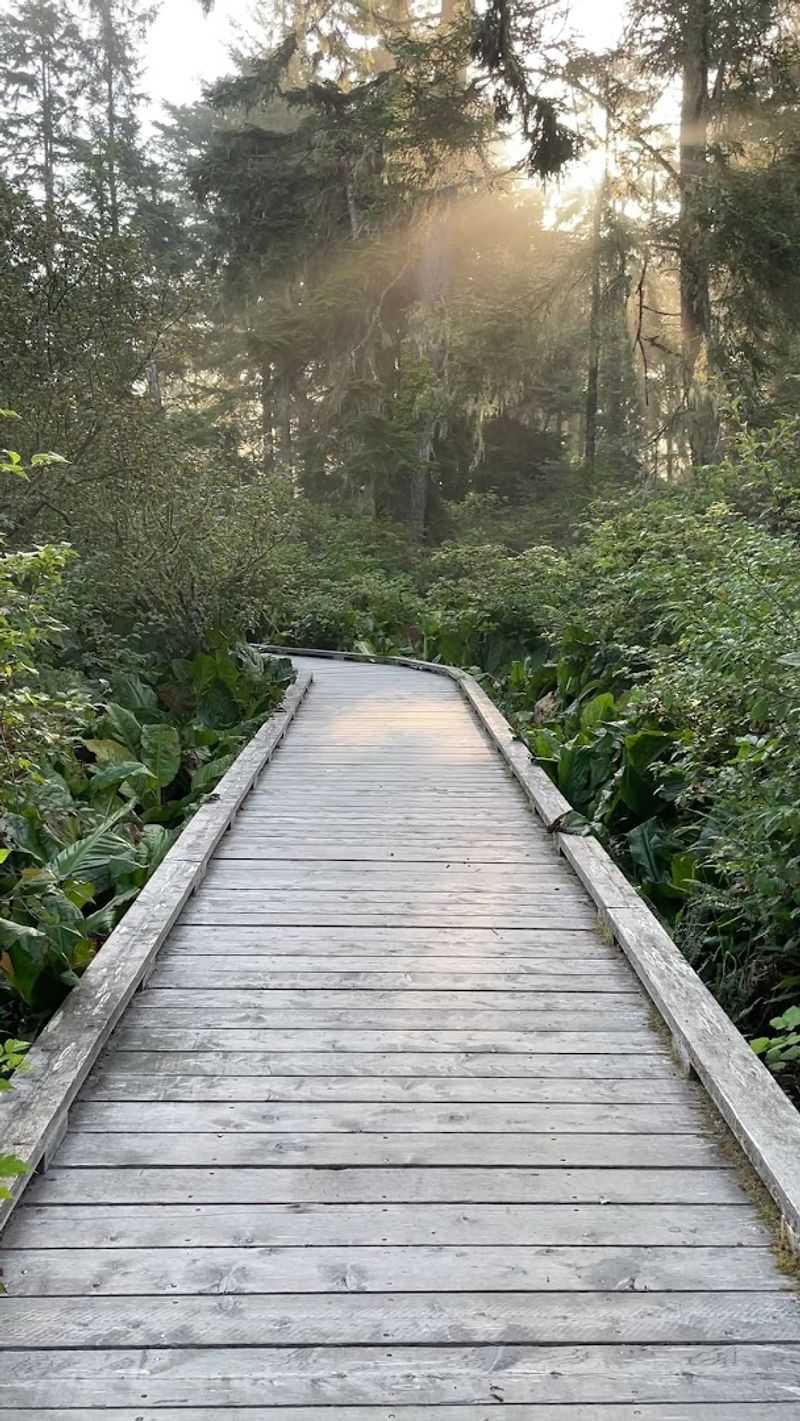
The trail is open year-round, but the experience shifts noticeably depending on when you show up. Spring and early summer bring an explosion of wildflowers, berries, and fresh green growth that lines both sides of the boardwalk in layers of color.
The birds are most active during these months, and the osprey nest near the trail is particularly worth watching in late spring when the young birds are learning to fly.
Summer weekends can get crowded enough that the trail feels narrow, since the boardwalk is wide but not infinitely so. Early morning visits during peak season are the move if you want the forest mostly to yourself, which is a genuinely different and more atmospheric experience than arriving mid-afternoon with a dozen other families.
Fall brings a quieter mood to the trail and a different palette of colors, with ferns turning golden and the light coming through the canopy at lower angles that make the forest feel almost theatrical. Winter visits are possible but require proper footwear, since the boards stay damp and slippery for days after rainfall.
The trail is never truly unpleasant in any season; it just asks you to show up dressed for the weather it is actually having.
Family and Dog Friendliness: Bringing Everyone Along
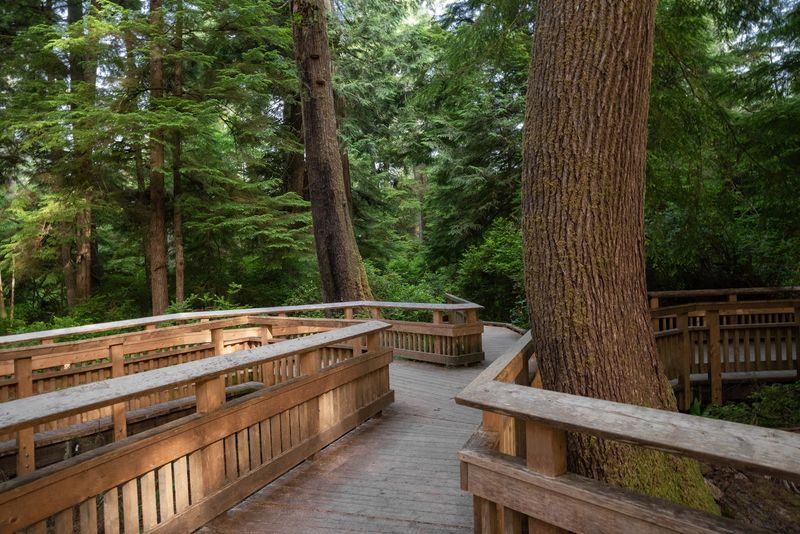
The trail has earned a genuine reputation as one of the most family-friendly walks on the Oregon Coast, and the reasons are straightforward. The flat, even surface of the boardwalk makes it manageable for young children, and the short overall distance means that even kids who run out of energy quickly can complete the loop without a major meltdown situation developing.
Dogs are welcome on leash, and the trail sees a steady stream of four-legged visitors on any given morning. The wide boards give enough room for a dog and its people to walk without crowding other hikers, and the smells coming from the wetland undergrowth apparently provide an entertainment experience that dogs find completely absorbing from start to finish.
Strollers work well on the main flat section of the boardwalk, though the incline near the end of the trail may require some extra effort depending on the stroller type. The resting benches near the big cedar are a thoughtful touch for families with small children or anyone who simply wants to sit and breathe for a few minutes before heading back.
The trail genuinely rewards a slower pace, and families tend to get the most out of it when they are not rushing.
What to Wear and Bring: Practical Trail Tips
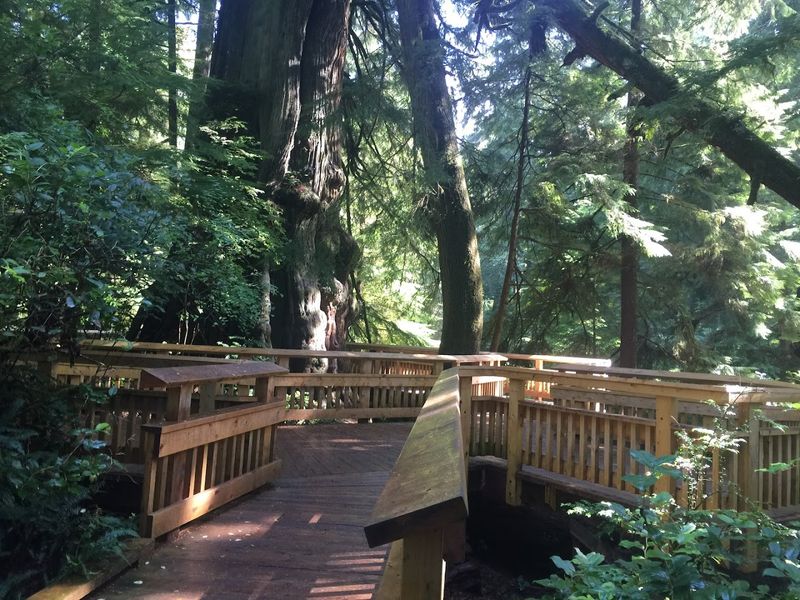
The most common piece of advice that experienced visitors pass along about this trail is about footwear, and it is worth repeating clearly: wear shoes with grip. The wooden boards hold moisture exceptionally well because the forest canopy keeps sunlight from reaching them for most of the day, and the resulting surface can be as slippery as polished tile after any amount of rain.
Beyond shoes, the trail itself requires very little in the way of gear. Water is available at the trailhead fountain, the distance is short enough that a full pack is unnecessary, and the flat terrain means you will not be working up a serious sweat.
A light waterproof layer is smart on the Oregon Coast regardless of the forecast, since the weather shifts quickly and the forest always feels a few degrees cooler than the open road.
Bringing a camera or keeping your phone charged is genuinely worthwhile here. The light inside the forest is soft and diffused in a way that makes photos look naturally atmospheric without much effort, and the big cedar is the kind of subject that rewards multiple angles and a little patience.
Trash bags are not provided on the trail itself, so the pack-in, pack-out policy is worth taking seriously to keep this place as clean as it currently is.
The Atmosphere and Mood: What Makes This Place Feel Different
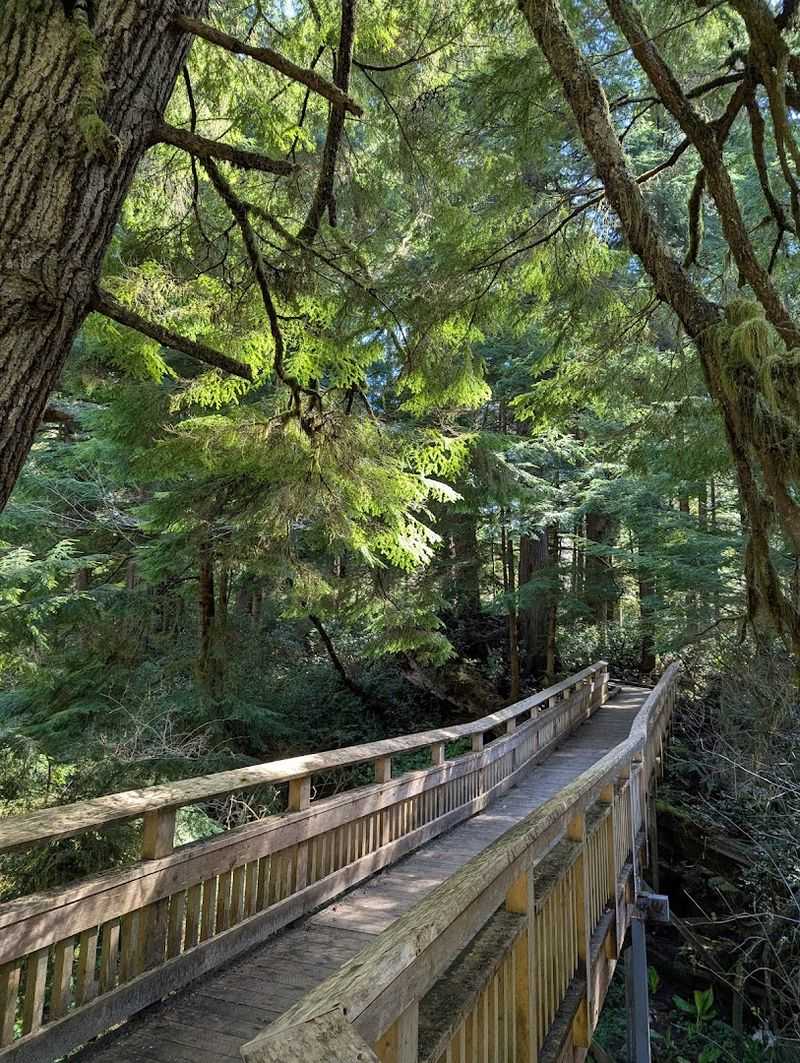
There is something genuinely hard to explain about the way this trail feels once you are twenty steps past the trailhead. The highway disappears acoustically almost immediately, replaced by the layered sounds of the forest, and the visual shift from roadside scrub to towering old-growth cedar happens fast enough to feel almost theatrical.
The boardwalk keeps you slightly elevated above the wetland floor, which adds to the sense of being suspended inside the forest rather than just walking through it.
The scale of the trees is the main event, but the details along the way are what make the walk feel rich rather than simply functional. Moss covers nearly every surface, ferns grow in thick clusters along the boardwalk edges, and the light filters through the canopy in shifting patterns depending on the time of day and the thickness of the cloud cover.
This is not a trail that asks anything dramatic of you. No technical skill, no fitness threshold, no special equipment.
It simply asks you to slow down and pay attention, and in return it offers a quality of quiet that is increasingly hard to find this close to a major coastal highway. The atmosphere here is the kind that tends to follow you home in the best possible way.
A Closing Thought: Why This Trail Stays With You
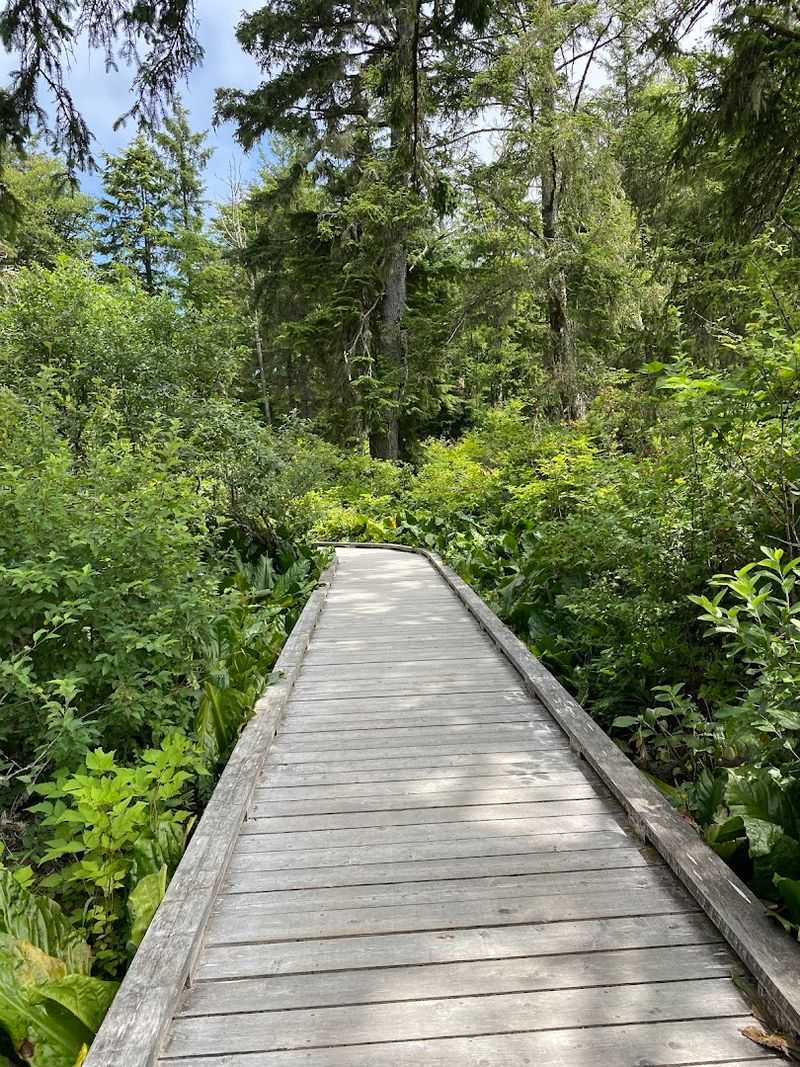
Not every memorable travel experience requires a long drive, a complicated itinerary, or a significant physical challenge. Sometimes the most lasting impressions come from a short wooden boardwalk tucked between a coastal highway and a wetland preserve, where an 800-year-old tree has been quietly growing since before European explorers ever mapped this coastline.
The Rockaway Big Tree Trailhead is the kind of place that tends to surprise people who stumble onto it without much expectation. Visitors who have driven Highway 101 dozens of times without stopping here often describe the experience as overdue, a feeling of mild disbelief that something this good was right there all along.
It holds a 4.8-star rating from over 500 reviews, which is the kind of consensus that is hard to argue with.
For anyone traveling the Oregon Coast, this stop fits naturally into a morning or afternoon without consuming the whole day. And much like other beloved natural spots across the American West, it reminds you that the country still holds pockets of genuine wildness close to everyday roads.
It would not look out of place on a list of top natural stops anywhere from Oklahoma to the Pacific, but this particular giant belongs entirely to Oregon.
Share this story