There is a trail in Virginia where the creek never really lets you go. From the moment you leave the parking lot, water is always nearby, always moving, always pulling your attention forward.
The reward at the end is a 69-foot waterfall that stops most hikers in their tracks the second it comes into view. Follow along as I walk you through everything you need to know about one of the most satisfying hikes in the state.
Where the Trail Actually Begins
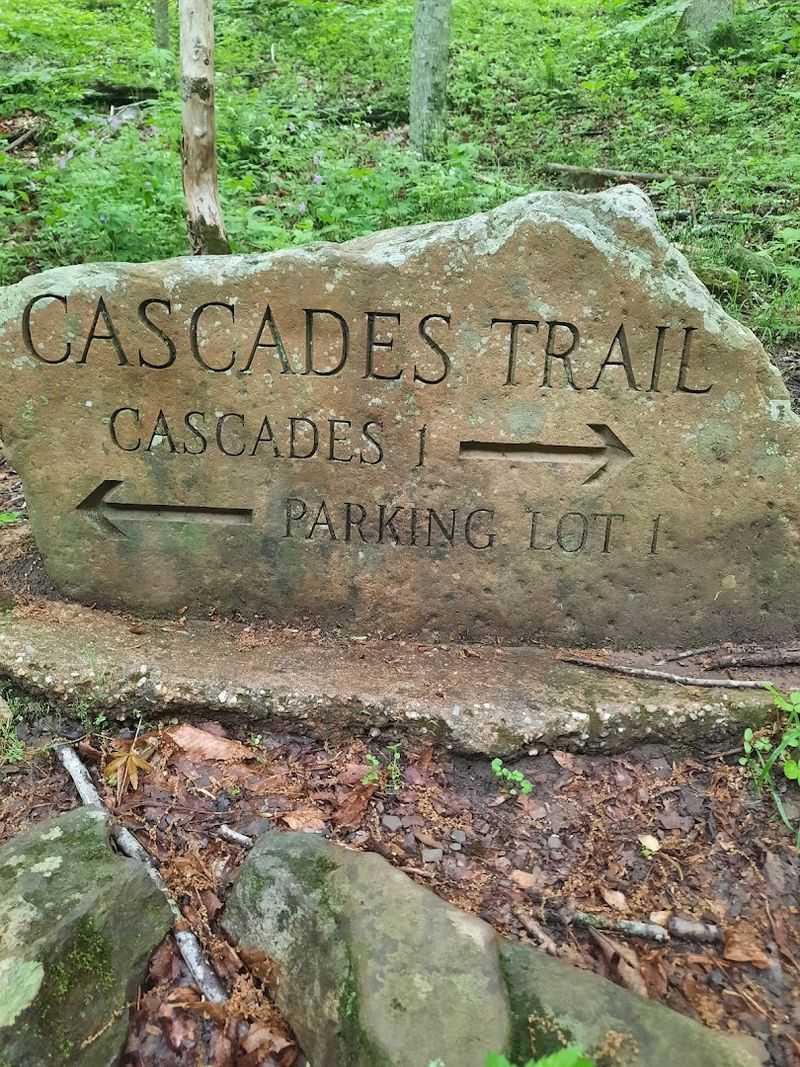
The trailhead for Cascade Falls sits at 2068 Cascade Dr in Pembroke, Virginia, tucked inside the Jefferson National Forest. Parking costs three dollars, payable at a self-serve kiosk that accepts credit and debit cards.
Cash is not accepted at the kiosk, though some visitors have mentioned that envelopes are occasionally available for cash payment.
The lot fills up fast, especially on weekends and holidays. Arriving before 10 a.m. on a Saturday gives you a real advantage.
After midday, cars can back up a quarter mile down the road as latecomers search for any open space.
One restroom is available right at the trailhead before you set off. There is no hand soap or sanitizer provided, so bringing your own is a smart move.
The trailhead also serves as the split point between the lower and upper trail options.
Little Stony Creek Sets the Mood Early
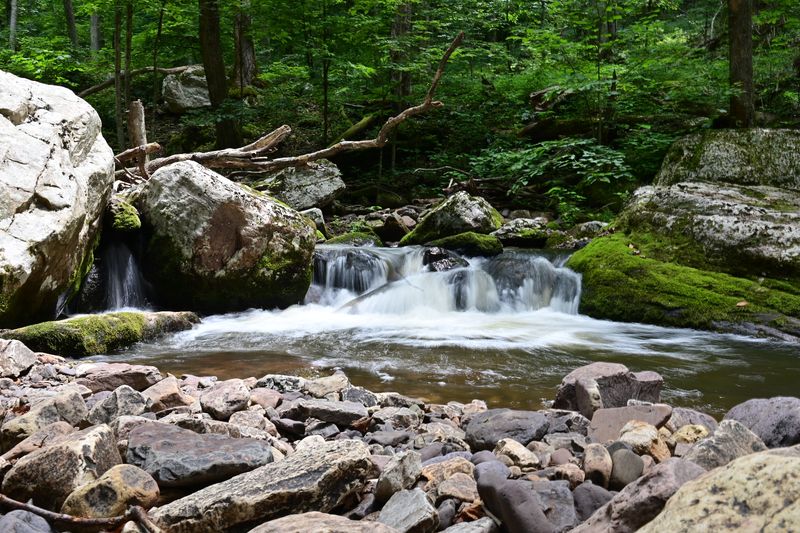
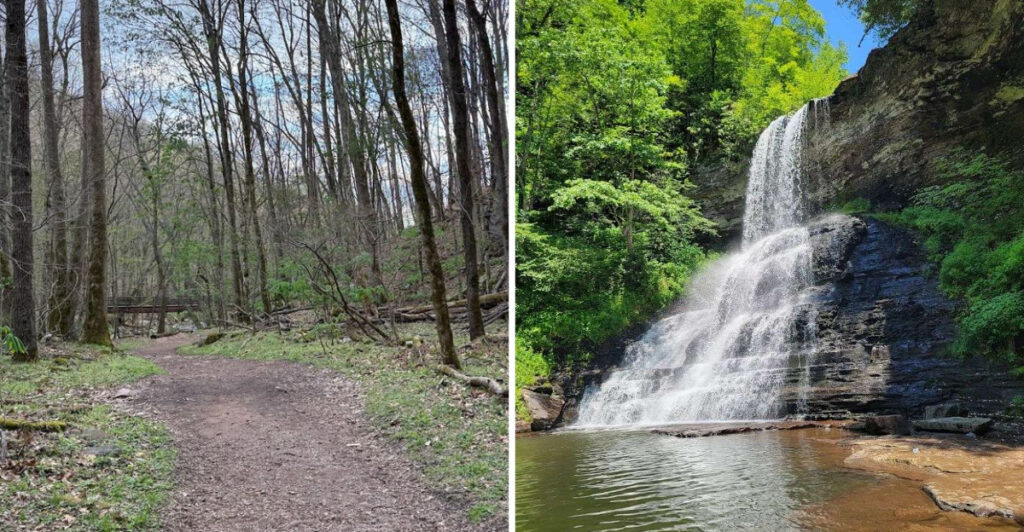
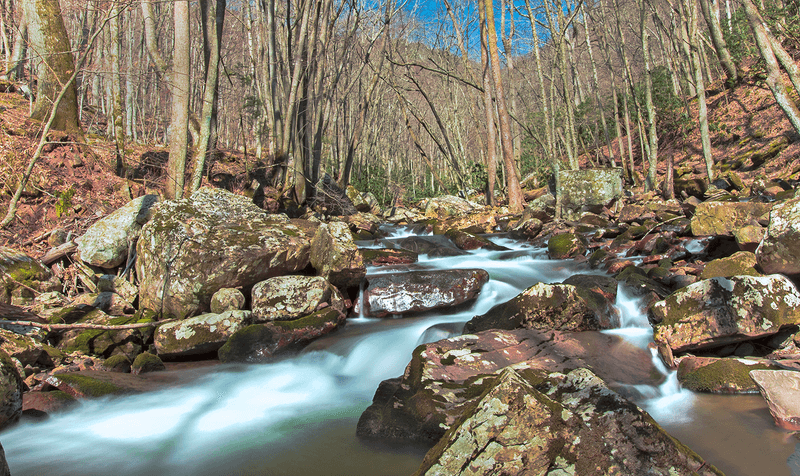
The lower trail earns its reputation almost immediately. Within the first few minutes of walking, Little Stony Creek appears beside you, and it does not quietly sit there.
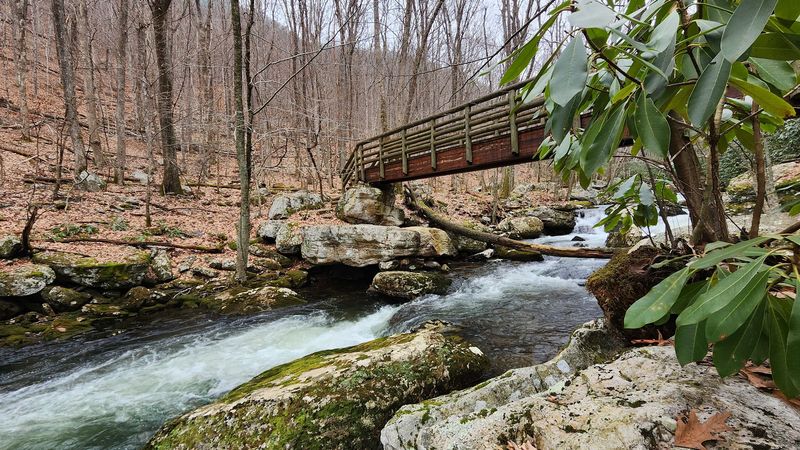
The water rushes over rocks, drops through narrow channels, and spills across moss-covered boulders in ways that make it hard to keep your eyes on the path ahead.
This creek is the heart of the lower trail experience. Wooden walkways and bridges cross over it at certain points, and stone steps guide hikers through the rockier sections near the water.
The sound alone is worth the trip, a constant, rolling rush that blocks out everything else.
The creek also keeps the air noticeably cooler in the gorge, which is a welcome surprise during warmer months. Every bend in the trail reveals a slightly different view of the water working its way downstream.
Two Trails, Two Very Different Experiences
At the start, hikers face a choice that shapes the entire outing. The lower trail hugs the creek closely, featuring stone steps, uneven rock surfaces, and a moderate-to-strenuous rating depending on your fitness level.
The upper trail runs above the creek through the forest, offering a wider, smoother path with a gentler, more consistent climb.
Most experienced hikers recommend taking the lower trail toward the falls and returning on the upper trail. That combination gives you the dramatic creek scenery on the way up and an easier descent on the way back.
Families with young children or anyone with balance concerns may prefer staying on the upper trail for the entire loop.
Both trails are roughly two miles each, making the full loop about four miles round trip. The lower trail demands more attention and energy, but it rewards that effort with constantly changing views along the creek corridor.
The Lower Trail’s Rocky Personality
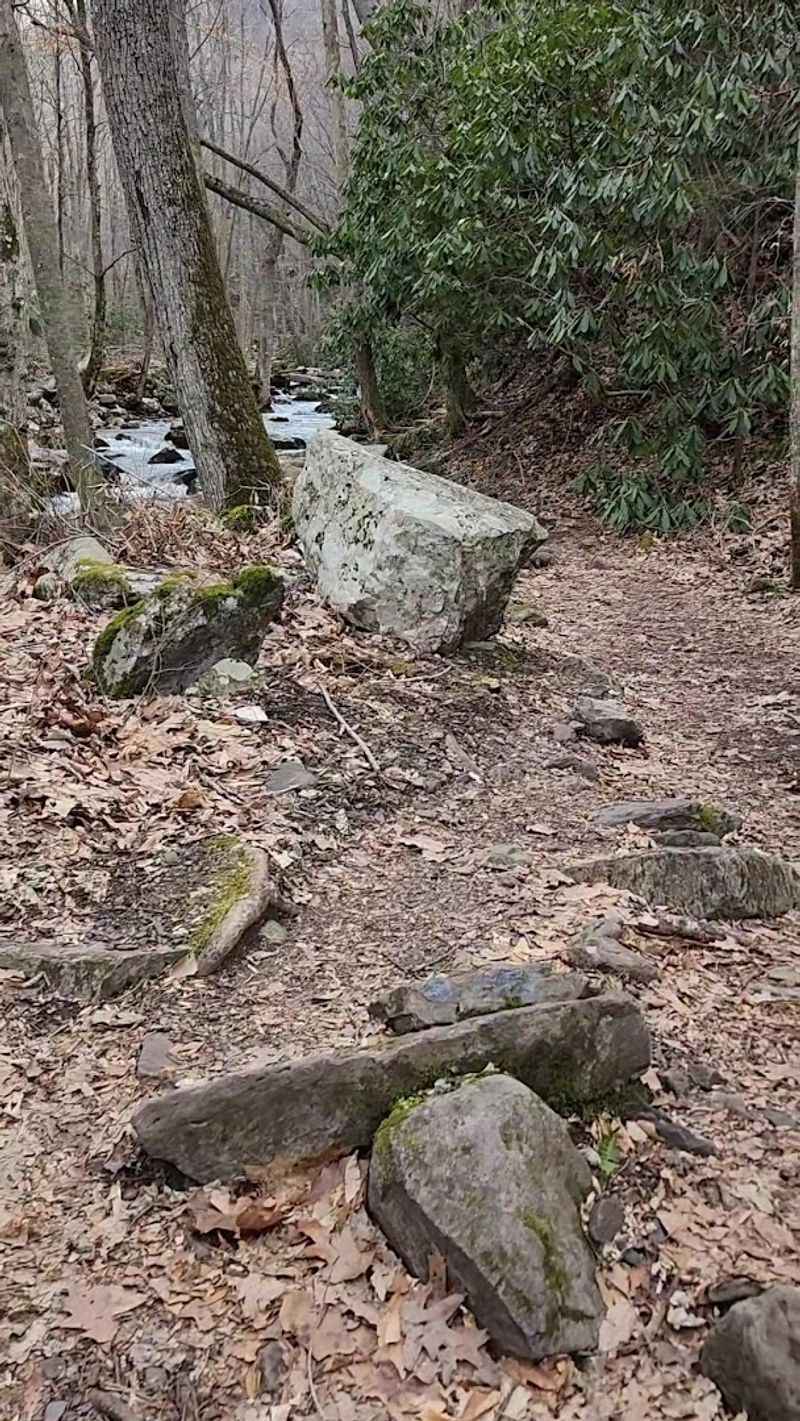
Calling the lower trail challenging is not an exaggeration. Rock steps appear frequently, some of them large and irregular, requiring hikers to pay close attention to foot placement.
The surface alternates between packed dirt, loose gravel, and exposed stone, often within just a few yards of each other.
Near the waterfall, the trail transitions almost entirely to boulder scrambling. You are no longer following a defined path so much as picking your way across large rocks with the falls growing louder ahead of you.
It is physically demanding but also genuinely exciting.
Good footwear is not optional on this section. Sneakers with flat soles or poor grip can turn a manageable stretch into a frustrating and unsafe one.
Solid hiking boots with ankle support and reliable traction make the rocky sections much more manageable and let you focus on the scenery instead of your footing.
What the Upper Trail Offers Instead
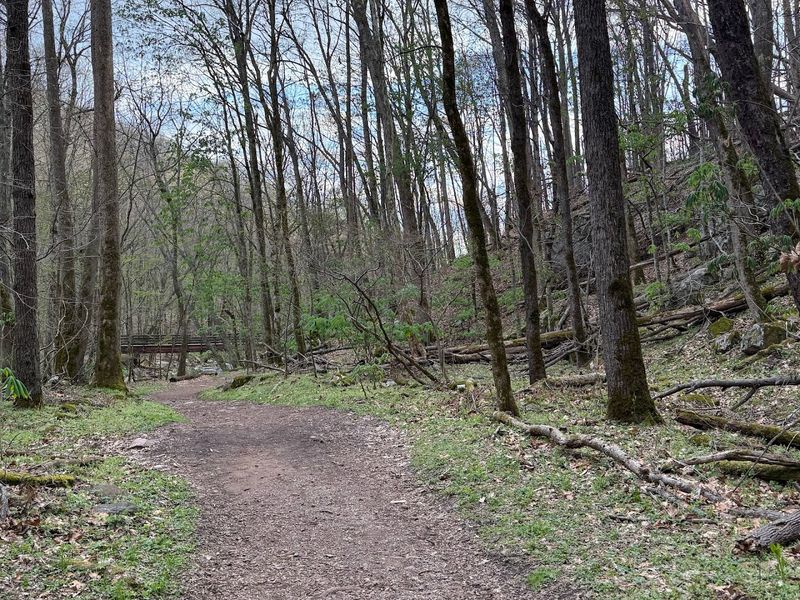
The upper trail moves through the forest above the creek rather than alongside it. The surface is mostly dirt and gravel, with far fewer large rocks to navigate compared to the lower path.
The climb is steady but manageable, and the trail is wide enough that two hikers can walk comfortably side by side for most of the route.
Occasional breaks in the tree cover offer elevated views down toward the creek below. These glimpses are brief but satisfying, giving a sense of the gorge depth that the lower trail does not quite reveal.
The forest itself is dense and green, with large trees forming a canopy that keeps the trail shaded during most of the hike.
Dogs and younger children tend to handle the upper trail more easily. The reduced technical difficulty means less stumbling and more energy left over for enjoying the surroundings, which matters a lot after a four-mile outing.
Smaller Cascades Along the Way
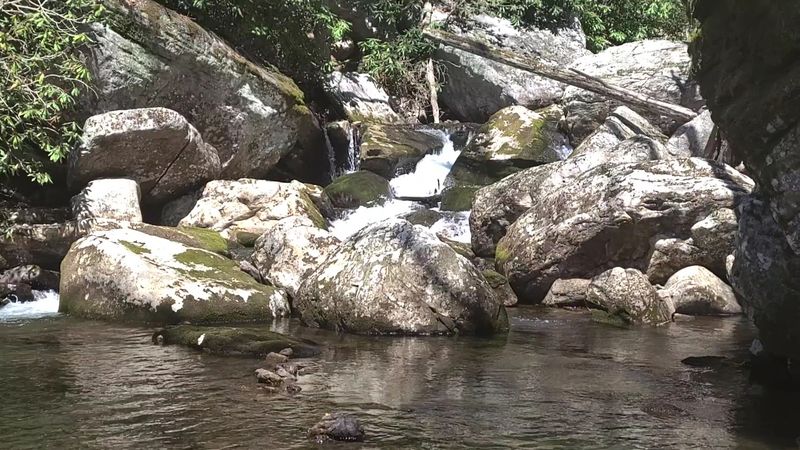
One detail that surprises many first-time visitors is how much is happening before you even reach the main waterfall. The lower trail passes a series of smaller cascades and rapids that would be the highlight of most other hikes.
Water drops over ledges, swirls through narrow rock channels, and fans out across wide, flat stone surfaces in constantly shifting patterns.
These intermediate falls are not marked or named, but they show up regularly enough that there is almost always something worth pausing to watch. Benches and flat rocks along the trail provide natural resting spots where you can sit and take it all in without blocking the path for other hikers.
The combination of these smaller water features with the mossy boulders and overhanging trees creates an environment that feels genuinely immersive. The gorge pulls you in gradually, building toward the main event waiting at the top of the trail.
The Moment the Main Falls Appear
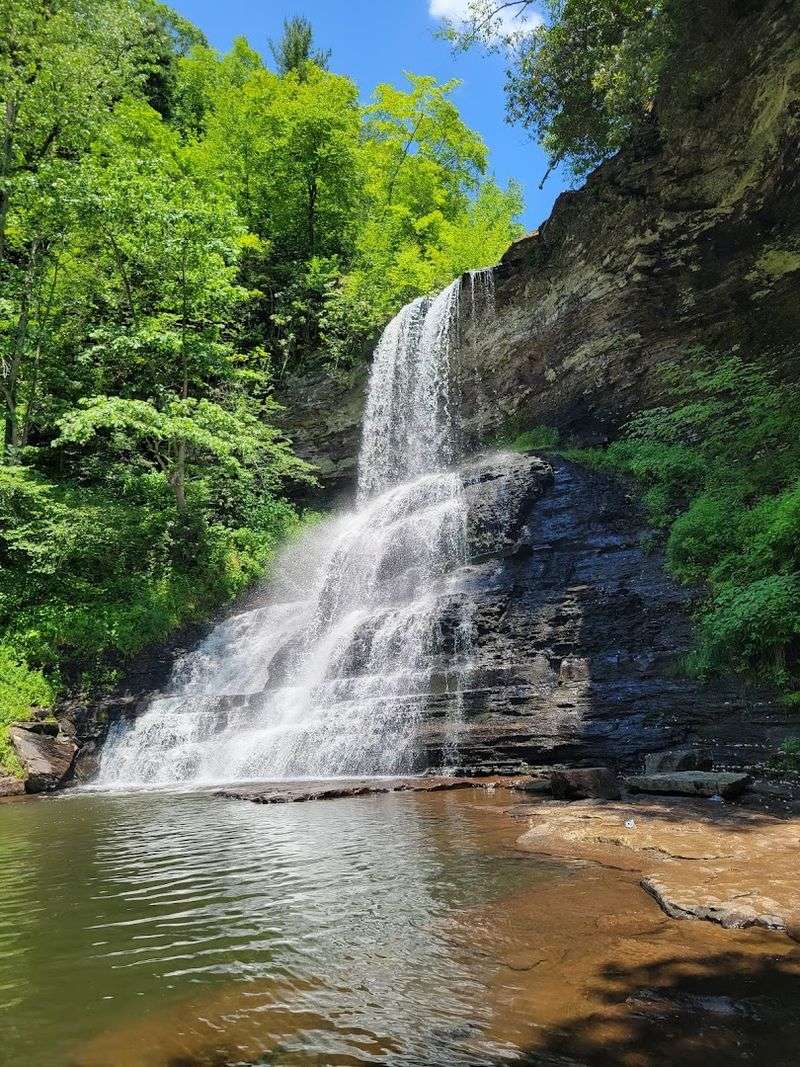
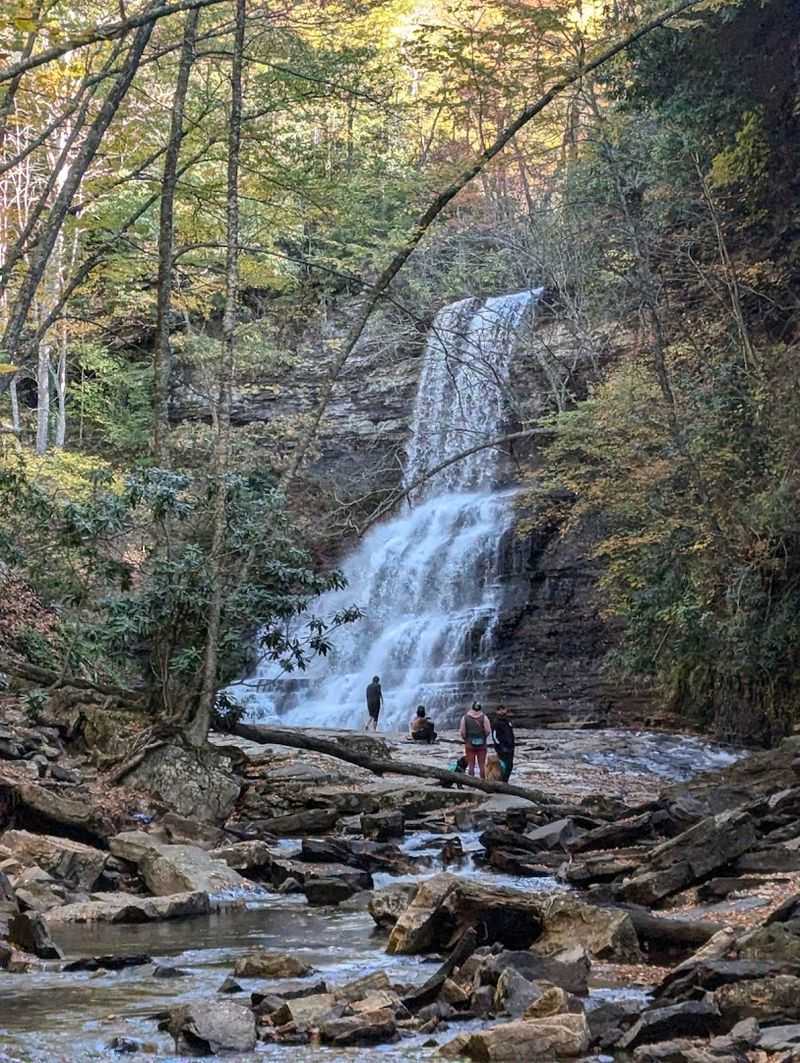
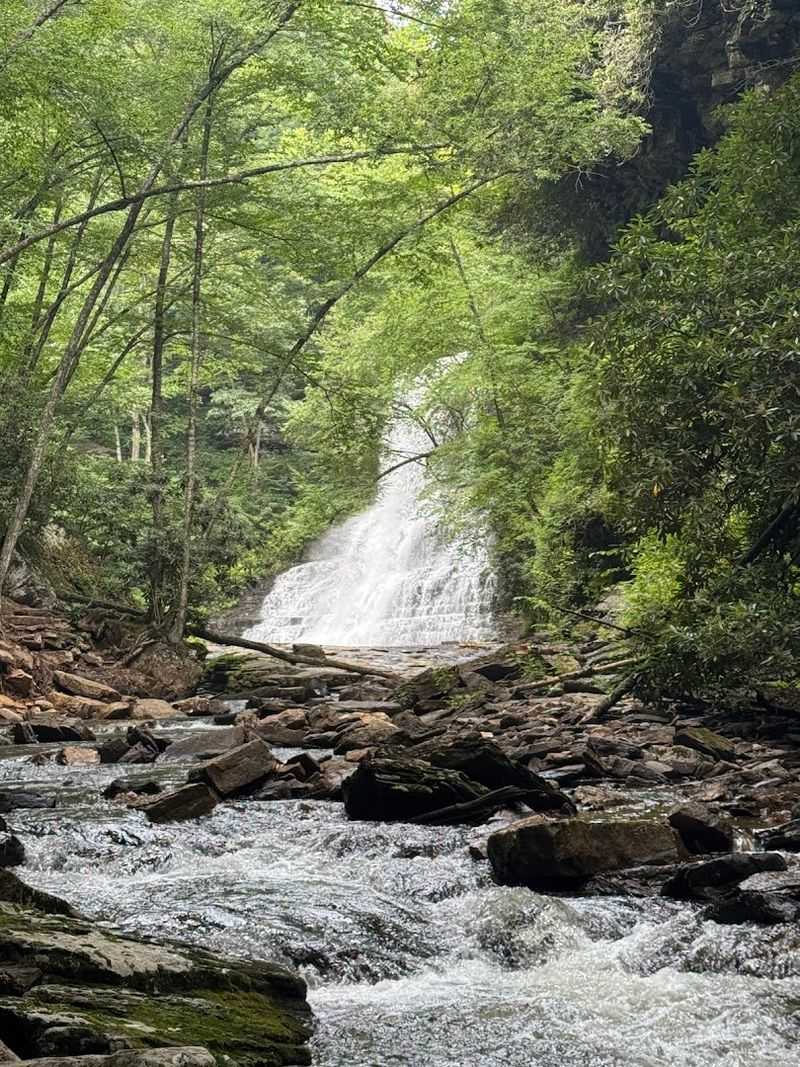
Coming around a large boulder near the end of the lower trail and suddenly seeing the full waterfall is one of those moments that genuinely stops you mid-step. The falls drop 69 feet down a rock face into a pool below, and the mist and wind created by the falling water reach you well before you get close.
The scale of it takes a second to fully register.
The sound is enormous up close. The roar of the water hitting the pool below fills the entire space around the falls, making conversation difficult without raising your voice.
Most hikers simply go quiet for a few minutes and absorb what is in front of them.
The pool at the base draws attention, though swimming is not advisable due to the strong currents and cold water temperatures. Sitting on the surrounding rocks and watching the falls from a safe distance is the preferred way to spend time at this spot.
How Long the Hike Actually Takes
The full loop covers approximately four miles, though some GPS devices record it slightly longer depending on the route taken. Most hikers complete the loop in two to three hours, including a rest stop at the waterfall.
The pace depends heavily on fitness level, the number of people in your group, and how often you stop to look at the creek along the way.
Families with children aged five and up have completed the lower trail without major difficulty, though the pace is naturally slower and rest breaks become more frequent. Groups that move steadily without many stops can finish the loop in closer to two hours.
Arriving early not only improves your chances of finding parking but also gives you more flexibility with time. Weather can shift quickly in the area, so having extra time built into your visit is always a reasonable idea when planning your day around this hike.
Gear That Makes a Real Difference
Footwear is the single most important gear decision for this trail. Hiking boots with solid ankle support and strong grip are the right call, particularly for the lower trail where rock surfaces can be wet and slippery near the creek.
Flat-soled sneakers struggle on the uneven terrain and make the boulder sections near the falls much harder than they need to be.
Water is essential and easy to underestimate. The hike is moderate in length but physically demanding in sections, and the exertion adds up over four miles.
Bringing more water than you think you need is a habit worth developing before any trail visit.
Snacks, a small first aid kit, and a flashlight if you plan to stay past sunset round out a sensible kit. There are no services or supply points along the trail once you leave the parking area, so everything you need has to come with you from the start.
Seasonal Changes Along the Trail
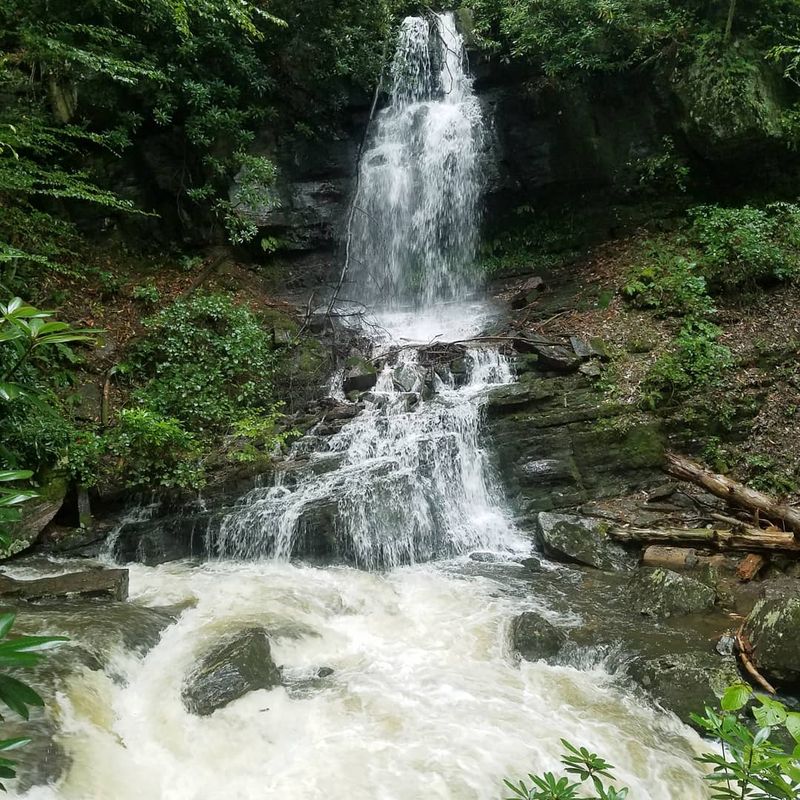
The trail shifts character noticeably depending on the time of year. Spring brings higher water levels after winter snowmelt, making the creek louder and the smaller cascades more dramatic.
The surrounding forest fills in quickly with new growth, and the gorge takes on a deep green color that persists through summer.
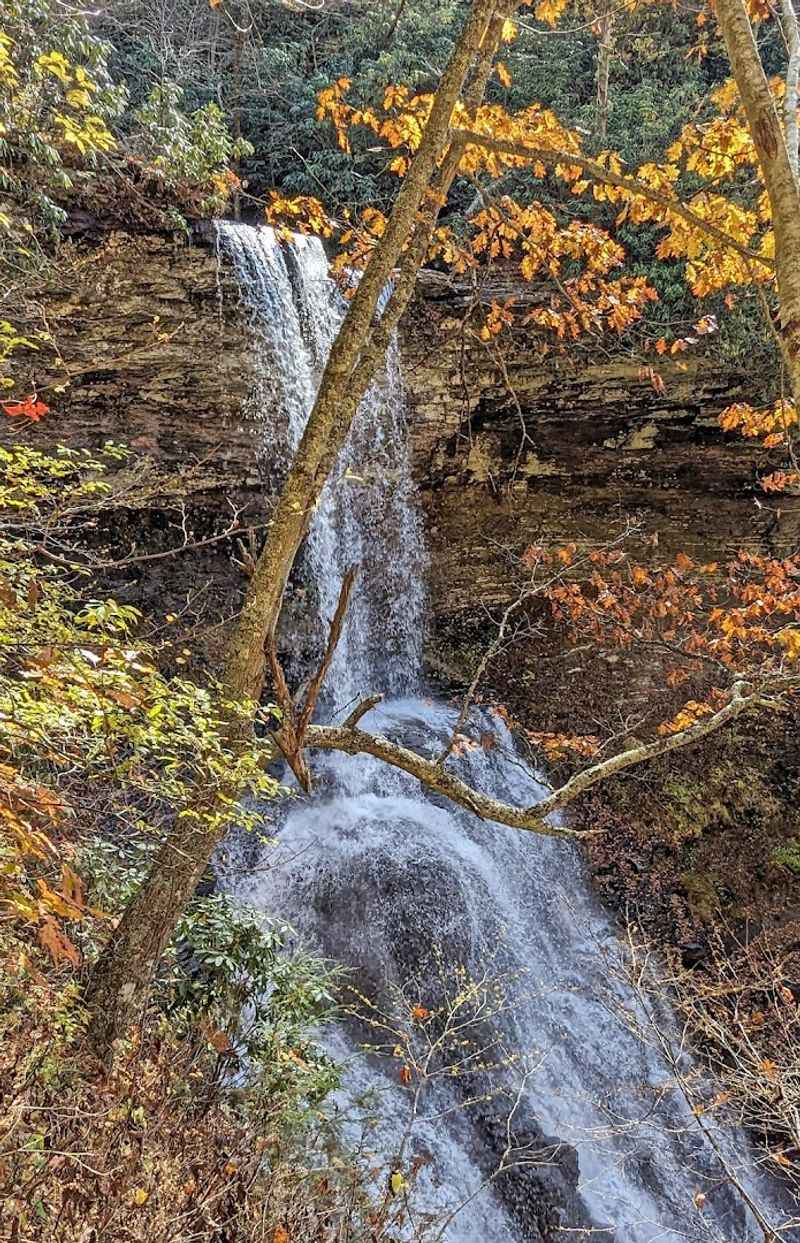
Fall is widely considered one of the best times to visit. The deciduous trees along the trail turn orange, red, and yellow, and those colors reflect off the surface of Little Stony Creek in ways that make every photo look like it was edited.
Temperatures are also more comfortable for hiking compared to the humidity of midsummer.
Winter visits are less common but not unheard of. The trail stays accessible in mild conditions, and the bare trees open up views into the gorge that are hidden during the leafy months.
Ice formation near the falls can add a different kind of visual interest during cold snaps.
Crowd Patterns and When to Visit
Weekend visits during summer and holiday periods draw the largest crowds. The parking lot reaches capacity quickly, and by mid-morning on a busy Saturday, cars are parked along the road well outside the designated area.
The trail itself becomes noticeably congested near the waterfall, where groups tend to gather and linger.
Weekday visits offer a noticeably different experience. The trail is quieter, the parking situation is manageable, and the time spent at the falls feels more relaxed.
Early morning on any day of the week is another reliable strategy for avoiding the peak traffic.
The trail stays open year-round, which means the off-peak seasons of late fall and early spring offer some of the most comfortable conditions for hiking. Fewer visitors, cooler temperatures, and the full force of the creek after seasonal rainfall combine to make those quieter months surprisingly rewarding for anyone willing to plan around the calendar.
Leaving the Trail Better Than You Found It
The trail sees a high volume of visitors, and that volume creates pressure on the surrounding environment. Trash left behind near the falls and along the creek is an ongoing concern that other hikers and trail stewards work to address.
Carrying out everything you bring in is the baseline expectation, not an optional courtesy.
The graffiti that occasionally appears on rocks near the falls is another issue that takes away from the experience for everyone who comes after. Respecting the natural surfaces means leaving them exactly as you found them, which keeps the trail worth visiting for future hikers.
Dogs are welcome on the trail, but keeping them on a leash and cleaning up after them is part of responsible trail use. The trail has a 4.9-star rating from over 1,500 visitors, and maintaining that reputation depends entirely on how each person treats the space while they are there.
Share this story