 Unearth The Voyage
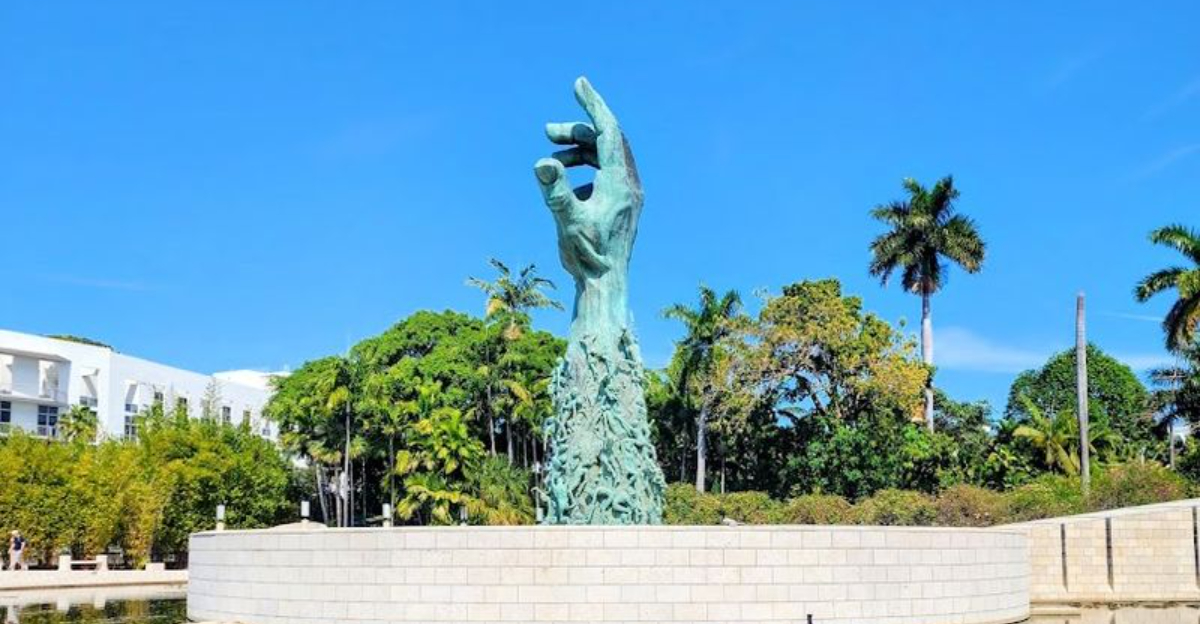
There are places that stop you in your tracks, not because of their size or flashiness, but because of the sheer weight of what they represent. I visited one such place on a quiet weekday morning in Miami Beach, and I have not stopped thinking about it since.
The sun was bright, the palm trees swayed, and yet the atmosphere inside felt completely separate from the vacation energy just blocks away. What I found was a carefully crafted outdoor space that tells one of history’s most difficult stories through sculpture, photography, and thousands of names etched into stone.
By the time I walked back out, I felt a deep sense of responsibility to share what I had experienced. Keep reading, because this is one Miami Beach stop that deserves far more attention than it typically gets.
Where the Memorial Stands and Why It Matters
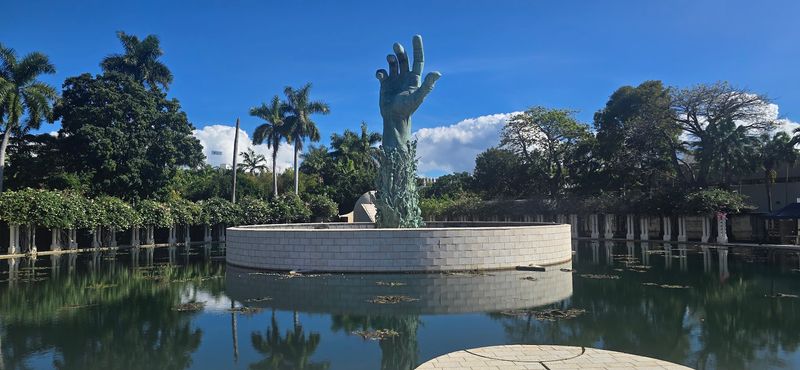
Right in the heart of Miami Beach, at 1933-1945 Meridian Ave, Miami Beach, this outdoor museum carries its address as a quiet but deliberate nod to one of history’s darkest chapters. The numbers 1933 and 1945 mark the years the Holocaust began and ended, and that detail alone sets the tone before you even step inside.
The memorial sits near the Miami Beach Convention Center, making it surprisingly accessible for both locals and tourists. There is no ticket booth, no admission fee, and no reservation required.
You simply walk in.
For a city known for its beaches and nightlife, having this kind of reflective, historically significant space feels both unexpected and necessary. The location is well-maintained, quietly landscaped, and designed to feel separate from the surrounding urban energy.
It is a place that earns your full attention the moment you arrive.
The Iconic Hand Sculpture That Defines the Space
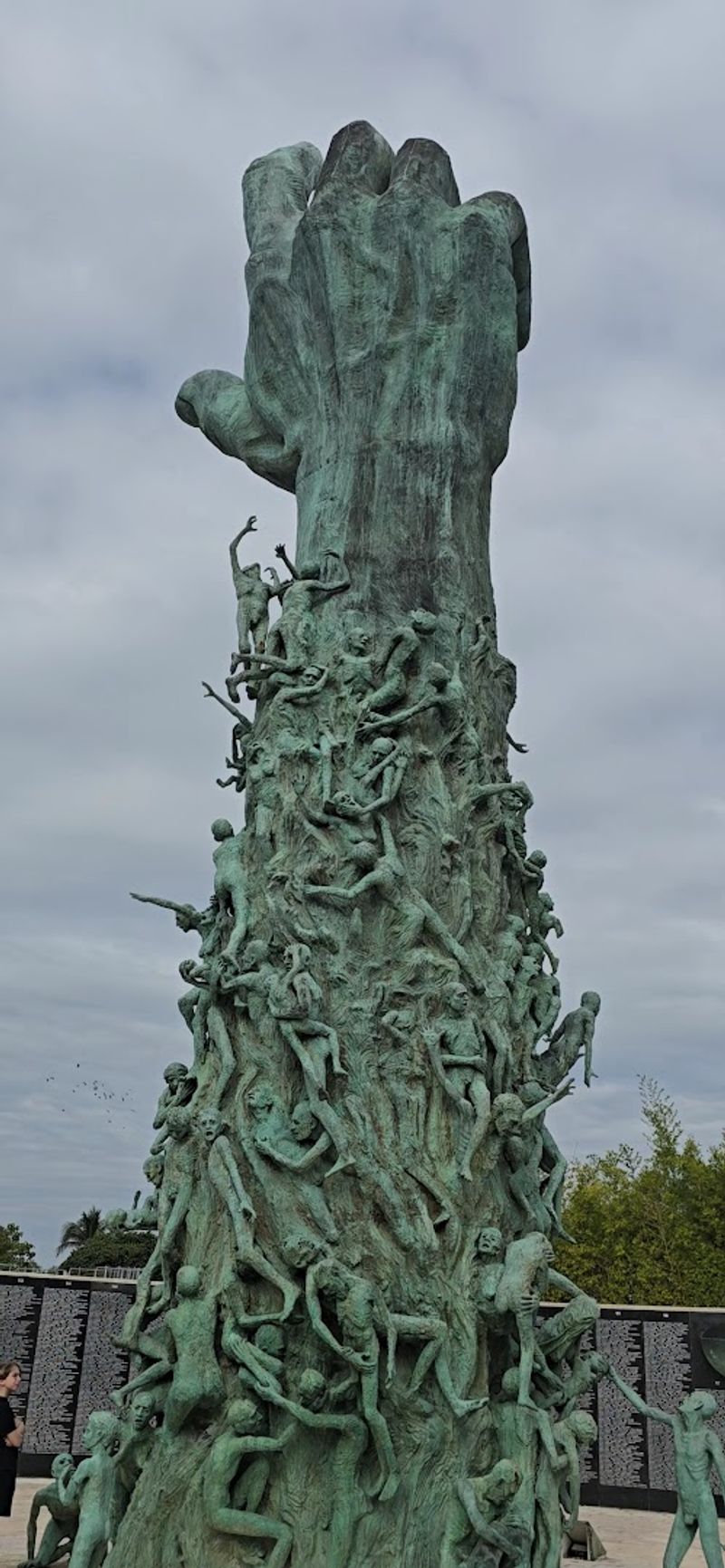
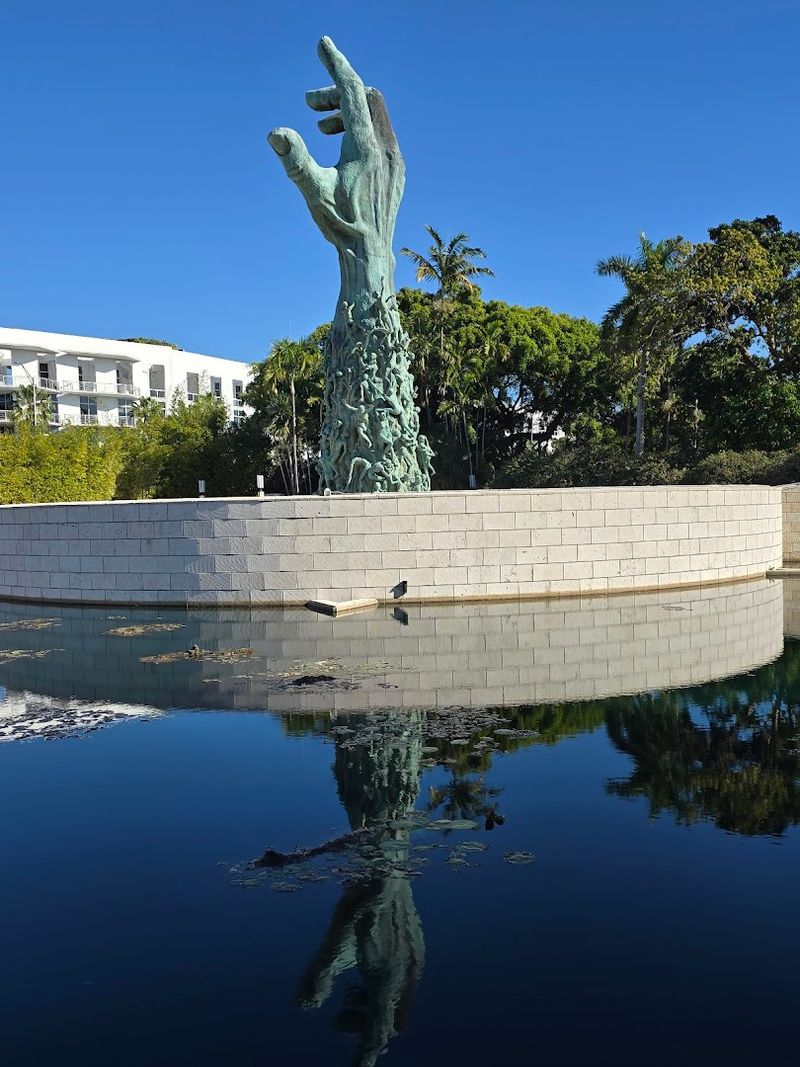
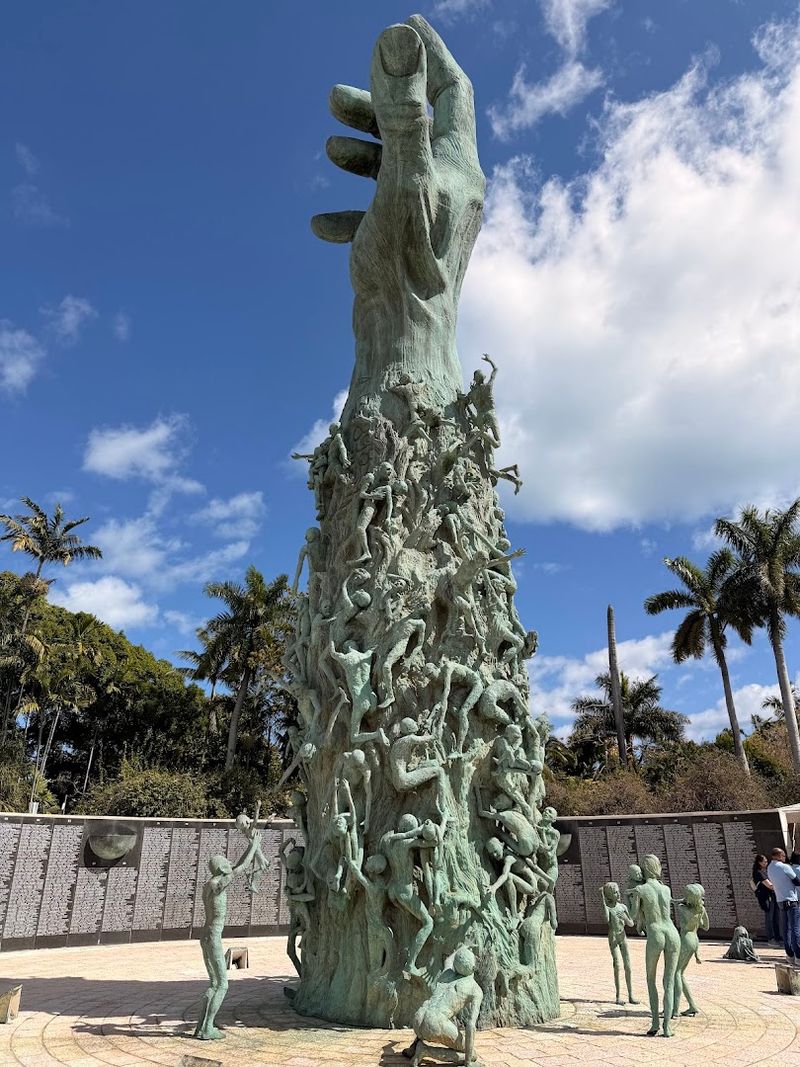
Nothing quite prepares you for the moment the central sculpture comes into view. A massive bronze arm rises from a dark, still reflecting pool, its hand stretched upward as if reaching for something just out of grasp.
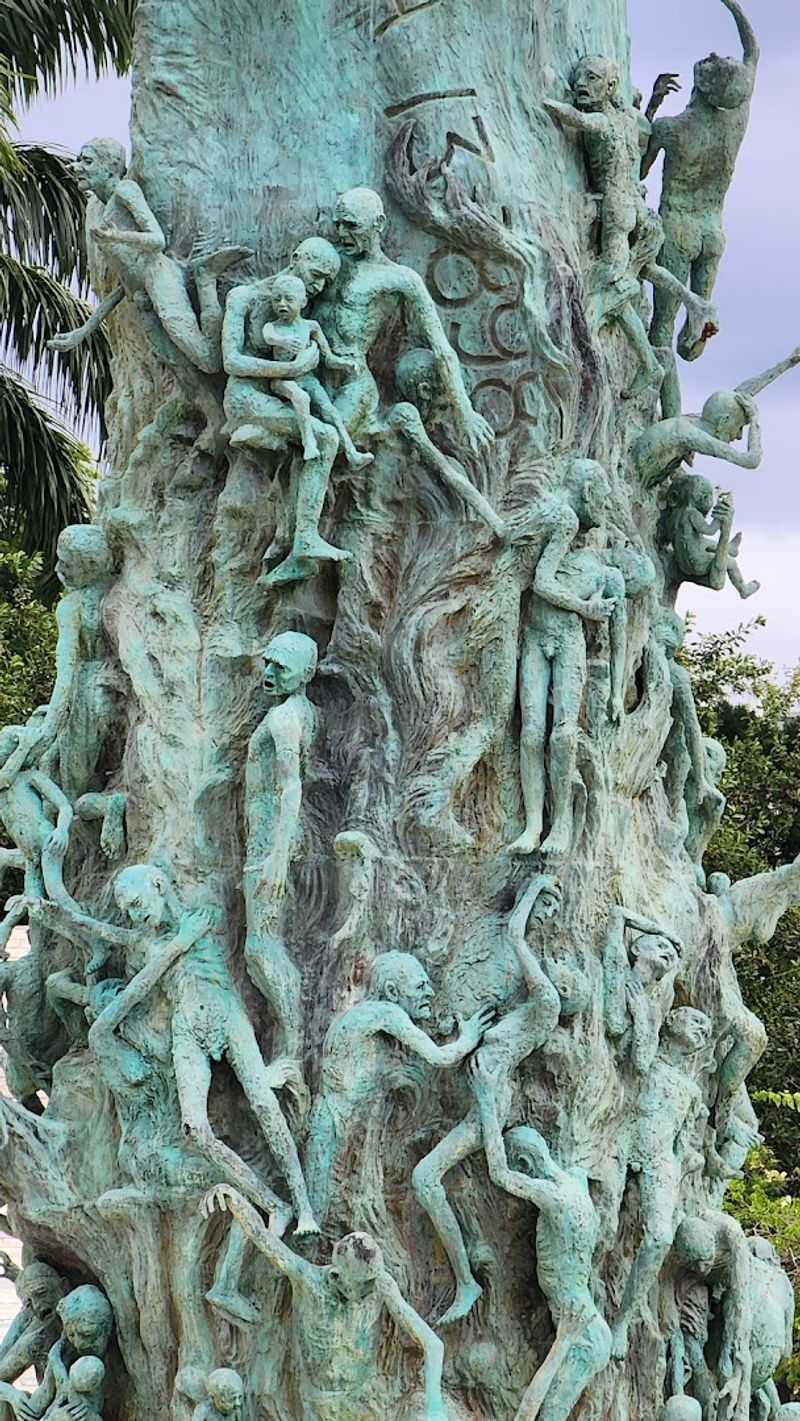
The arm is covered with dozens of small human figures, each one clinging, climbing, or collapsing in expressions of fear and desperation.
Created by sculptor Kenneth Treister, the piece stands over 42 feet tall and is formally titled “Love and Anguish.” Every figure on the arm was crafted with remarkable attention to detail, and the emotional range captured in bronze is extraordinary.
The dark water surrounding the base adds to the weight of the moment. There is no narration needed here.
The sculpture communicates something that words genuinely struggle to match, and standing beside it quietly is one of the most powerful experiences I have had at any memorial anywhere.
A Memorial Wall Covered in Names
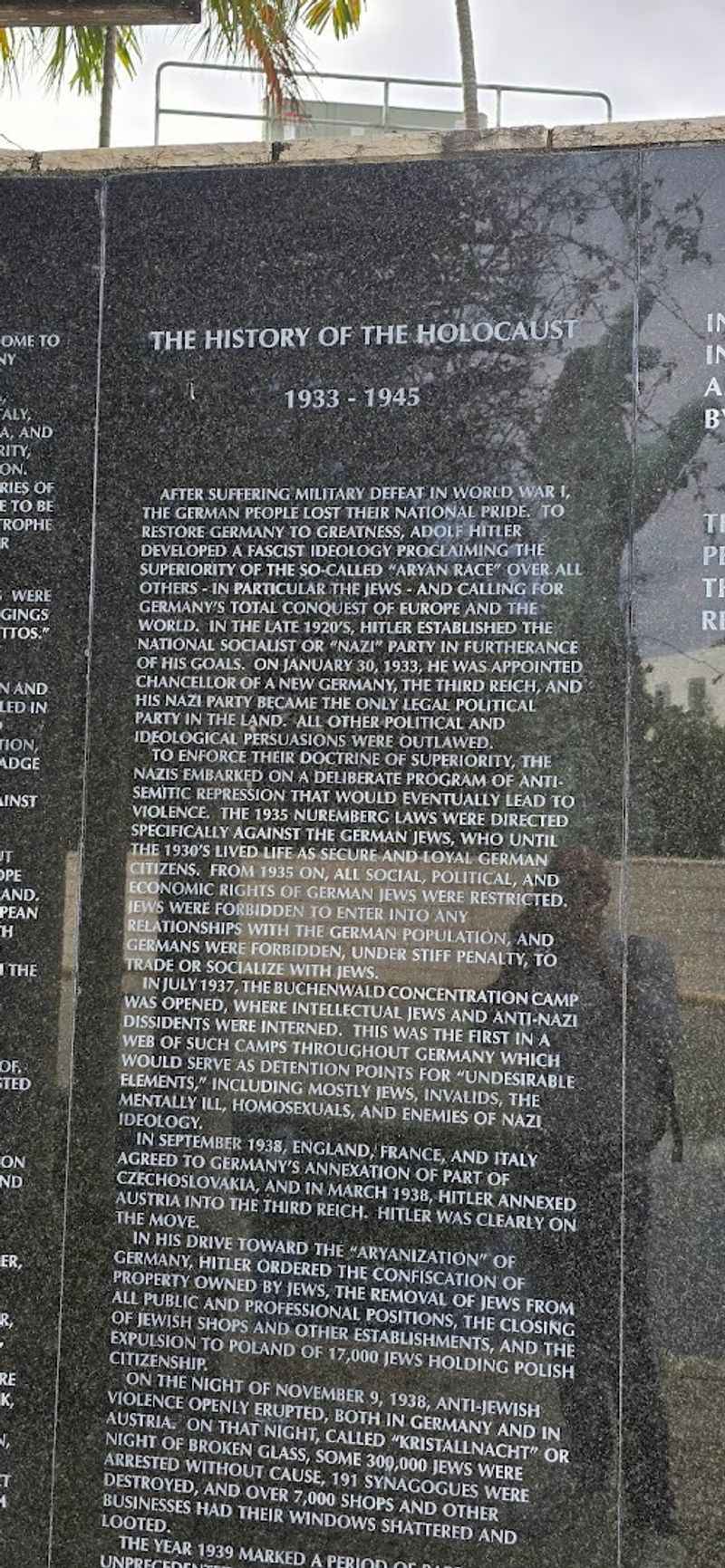
One of the most quietly devastating elements of this memorial is the wall. Stretching along a curved granite surface, thousands of names are etched into the stone, each one representing a person who did not survive the Holocaust.
Walking alongside it feels like a slow, somber roll call through history.
The sheer volume of names is what hits hardest. You can read a few, pause, and still realize you have only covered a fraction of the total.
The wall makes the scale of the tragedy tangible in a way that statistics alone cannot.
More recently, names of those affected by the October 7, 2023 attack have been added to the memorial, connecting historical memory to present-day grief. That addition transforms the wall from a historical artifact into a living, ongoing tribute.
It is not just a record of the past; it is a statement about the importance of remembrance right now.
The Tunnel Experience Inside the Memorial
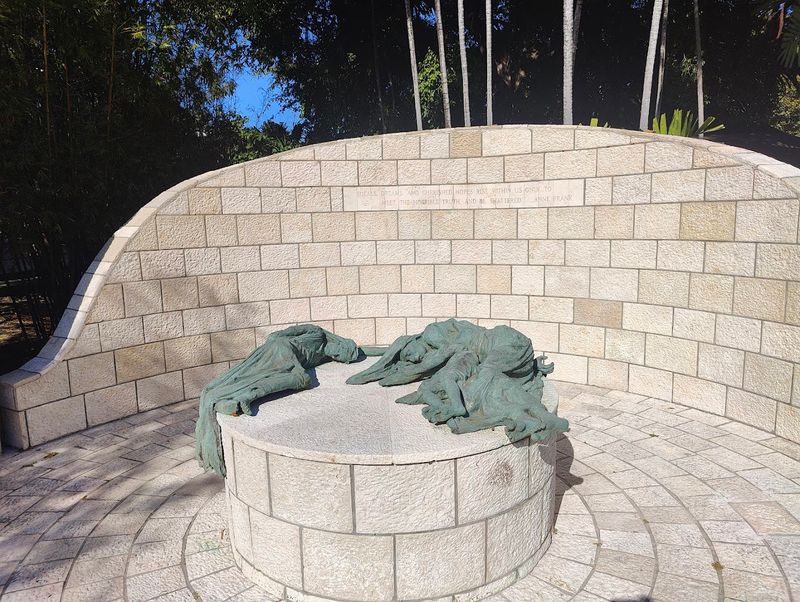
Most visitors approach the central sculpture from the front, but the back pathway reveals something entirely different. A tunnel runs behind the main structure, and walking through it is an experience that shifts the emotional register of the visit completely.
Inside the tunnel, music plays softly, adding an audio dimension that deepens the visual impact of the surrounding imagery. The combination of sound and imagery creates a layered, immersive atmosphere that is hard to shake off once you have passed through it.
The tunnel design encourages you to slow down and take in each element rather than moving quickly past. Many visitors find this section the most affecting part of the entire memorial.
It feels less like viewing an exhibit and more like being present inside a story. The architects clearly understood that physical space can carry emotional weight just as much as any sculpture or photograph.
Photography Panels That Document History
Throughout the memorial, a series of photographic panels lines the walkway, offering historical context for what visitors are seeing in sculpture and stone. These are real photographs from the Holocaust era, and they are presented without sensationalism but with unflinching honesty.
Some images are difficult to look at, and that is by design. The memorial does not soften the reality of what happened.
Parents visiting with young children should be aware that some panels contain graphic historical imagery, as the intent is to document rather than sanitize.
What strikes me about these panels is how effectively they bridge the gap between abstract history and human reality. A sculpture can move you emotionally, but a photograph of a real person in a real moment connects you to the humanity behind the numbers.
Together, the photos and sculptures work as a unified language, one that speaks across generations and backgrounds with equal clarity.
Free Admission and Open Access for Everyone
One of the things that genuinely surprised me about this memorial is that it costs absolutely nothing to visit. There are no tickets, no timed entry windows, and no need to book anything in advance.
You walk up, you walk in, and you take as much time as you need.
That open-access model feels deeply intentional. A memorial that honors people who were denied basic human freedoms should itself be freely available to everyone, regardless of economic background.
The policy sends a quiet but meaningful message.
The memorial is open to the public daily, and the website at www.holocaustmemorialmiamibeach.org has updated hours and information. Going on a weekday tends to mean fewer crowds, giving you more space and quiet for personal reflection.
Whether you have 20 minutes or two hours, the memorial rewards whatever time you are able to give it. There is no rush, and no one will hurry you along.
The Design Philosophy Behind the Memorial
Kenneth Treister, the architect and sculptor behind the memorial, spent years developing a design that would honor the gravity of the Holocaust without becoming purely a monument to despair. His goal was to create something that communicated both the horror of what happened and the resilience of those who survived.
The layout of the memorial is circular and intentional, guiding visitors through a progression of emotions rather than presenting everything at once. You move from a garden-like entry space toward increasingly intense imagery and sculpture, building toward the central arm before finding quieter spaces for reflection on the far side.
Every element, from the type of stone used to the placement of water features, was chosen to serve a specific emotional or symbolic purpose. Treister wanted visitors to feel, not just observe.
Spending time in the space, it becomes clear that the design succeeds on every level it set out to achieve.
Visiting with Children and School Groups
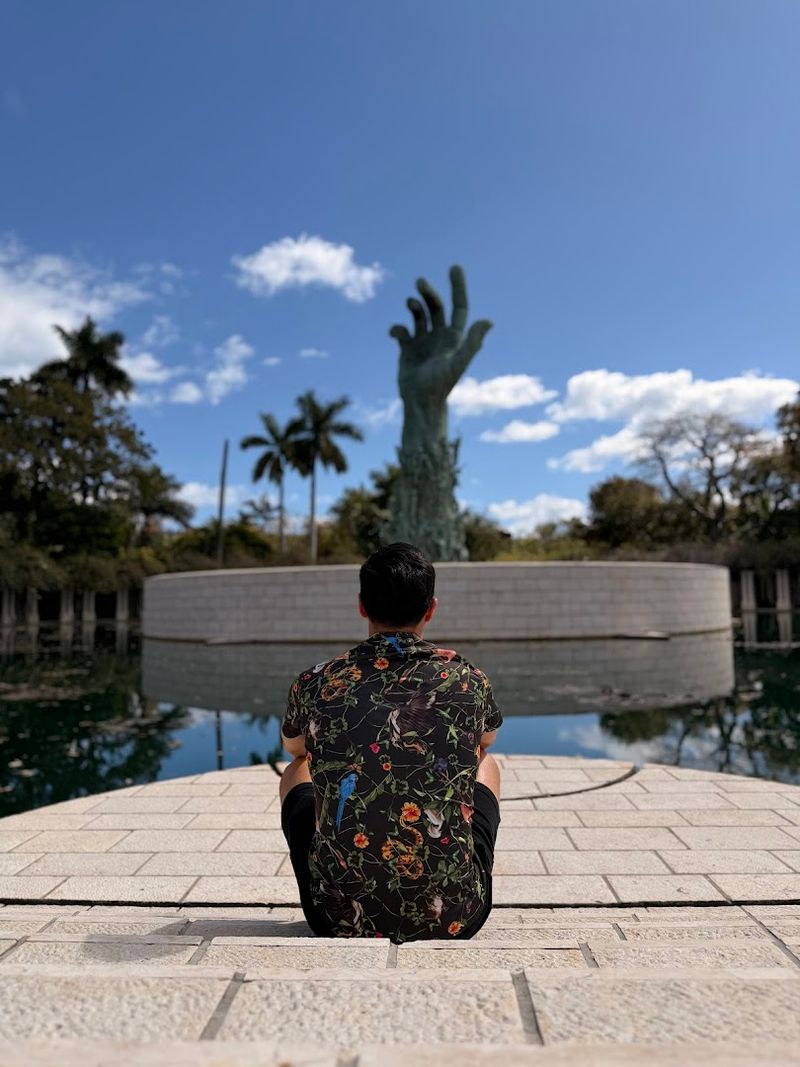
This memorial has hosted many school field trips over the years, and the experience of bringing young people here is genuinely valuable. Children often respond to the visual and sculptural elements in ways that are deeply moving, asking questions and making connections that show how effectively the space communicates across age groups.
That said, it is worth preparing younger visitors in advance. Some of the photographic panels contain imagery that may be unsettling for small children, so a brief conversation before entering helps set expectations.
The memorial team has historically offered guided experiences with educators who share stories through the perspectives of survivors and their families.
For older kids and teenagers, this is exactly the kind of place that makes history feel real rather than abstract. A textbook can describe events, but standing beside thousands of etched names or looking up at that towering sculpture creates a kind of understanding that stays with a person for life.
The Reflecting Pool and Its Quiet Power
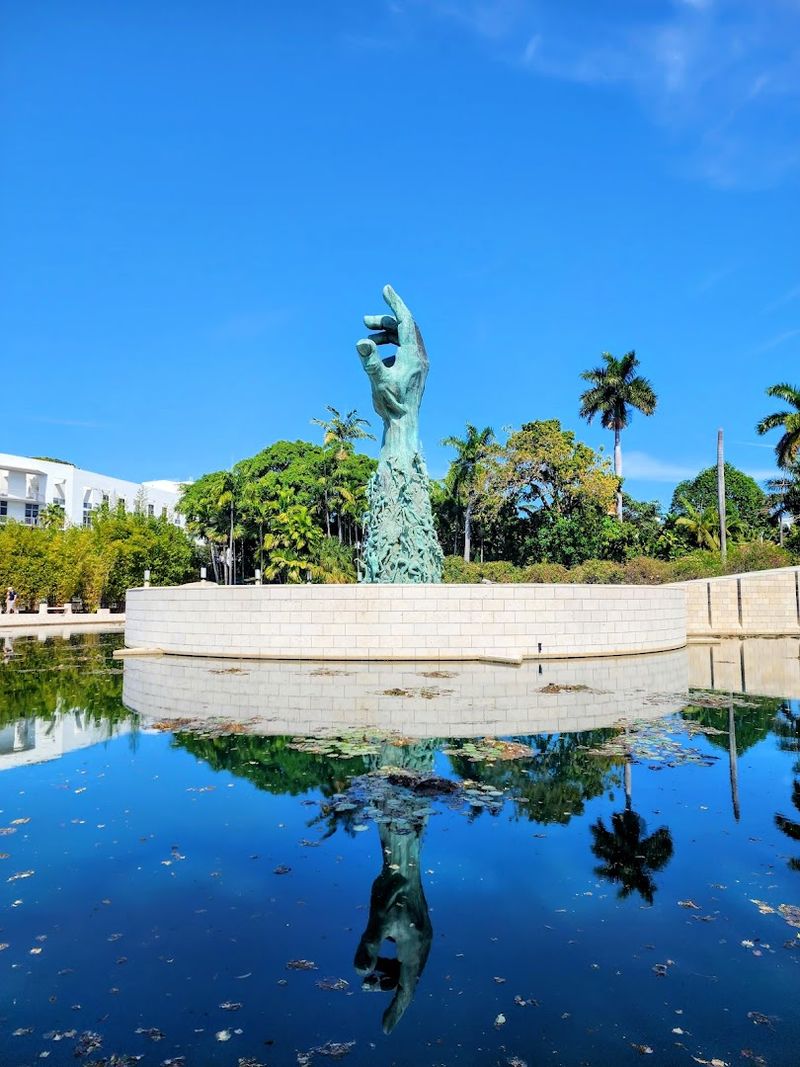
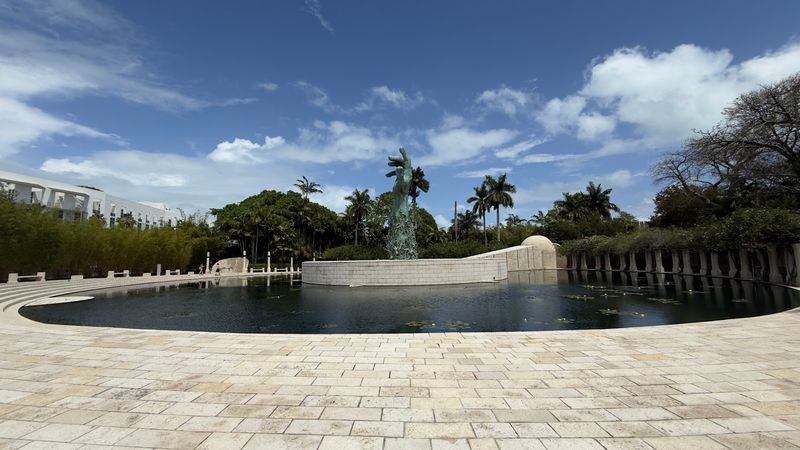
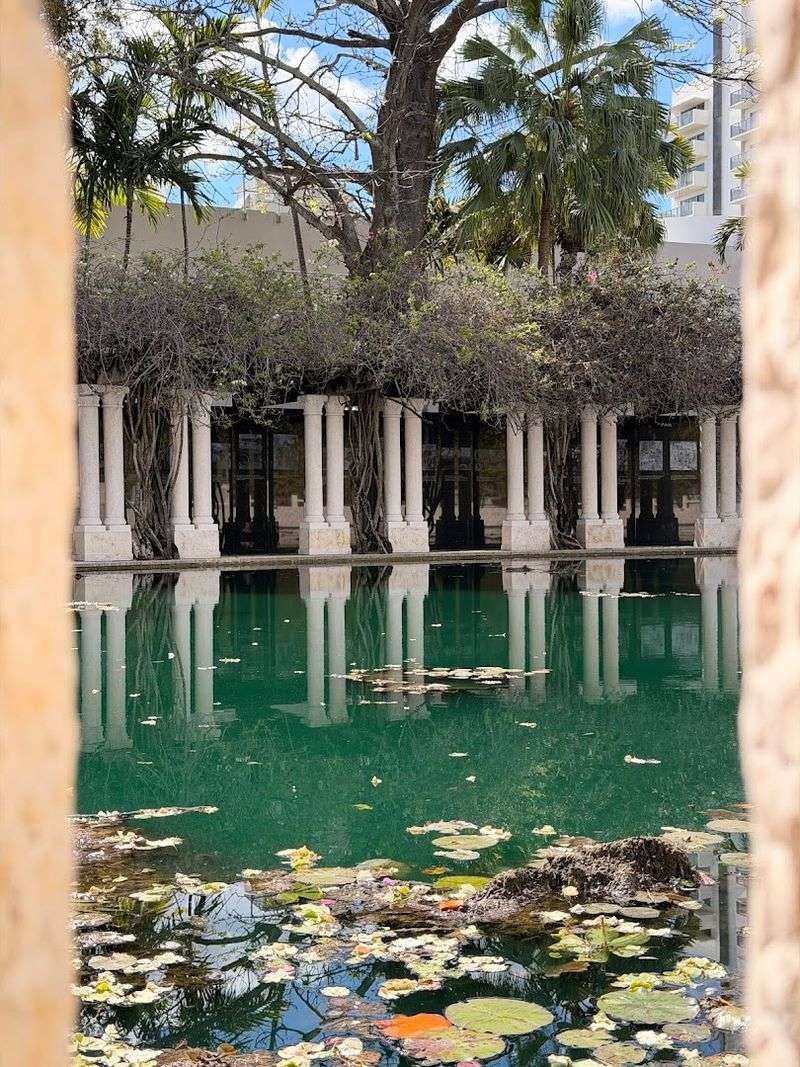
Water features prominently throughout the memorial, most notably in the large reflecting pool that surrounds the base of the central arm sculpture. The water is kept dark and still, and it creates a mirror effect that doubles the visual impact of the figures above.
There is something about still, dark water that naturally slows a person down. You find yourself pausing at the edge of the pool and simply looking, which is exactly what the design intends.
The reflection makes the sculpture appear even larger, and the stillness of the water contrasts sharply with the anguished movement frozen in bronze above it.
Smaller water elements appear in other parts of the memorial as well, adding a sense of calm that balances the emotional intensity of the surrounding imagery. The interplay between stillness and anguish is one of the most effective design choices in the entire space, and it works beautifully on both a visual and emotional level.
Parking Tips and Getting There
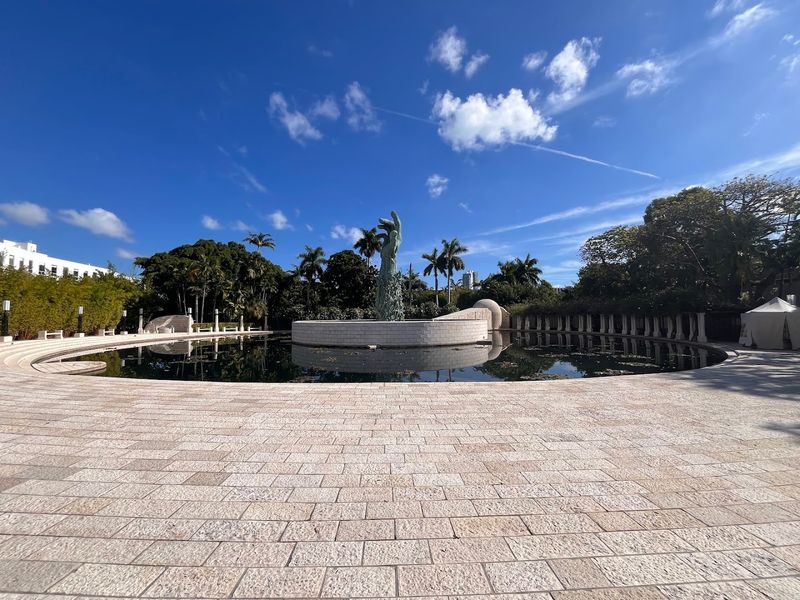
Getting to the memorial is straightforward, but parking can take a bit of planning. The memorial sits near the Miami Beach Convention Center, and street parking in the surrounding area tends to fill up quickly, especially on weekends and during major events at the convention center.
The convention center parking garage is a reliable option, though it typically comes with a fee. Several visitors report paying around $20 for a few hours there.
Arriving early in the morning on a weekday is the best strategy for both parking and crowd management.
If you are staying nearby, the memorial is walkable from many Miami Beach hotels, which eliminates the parking challenge entirely. Rideshare services also drop off conveniently close to the entrance.
The address, 1933-1945 Meridian Ave, is easy to plug into any navigation app, and the memorial is clearly marked once you are in the neighborhood.
The Memorial Garden and Surrounding Grounds
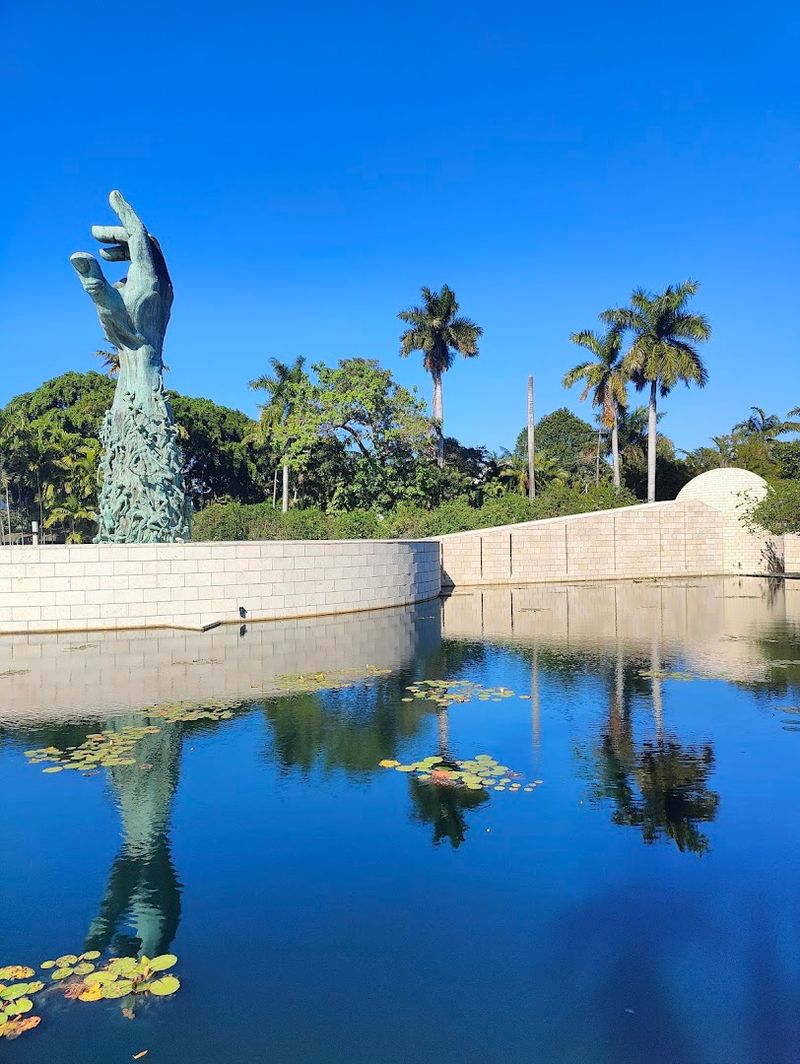
The grounds surrounding the memorial are thoughtfully landscaped, offering a sense of calm that complements the emotional weight of the exhibits inside. Tropical plants, stone pathways, and quiet open areas give visitors space to pause and process what they have seen.
The Miami Botanical Garden is located directly behind the memorial, and many visitors combine both stops into a single outing. The contrast between the two spaces is striking in an interesting way.
Moving from the memorial into the botanical garden feels like a kind of emotional exhale, a space to breathe after an intense experience.
The grounds of the memorial itself are well-maintained and clean, with enough open space that even on busier days it does not feel crowded. There are benches and quiet corners where you can sit and reflect without feeling rushed.
The overall environment strikes a careful balance between solemnity and accessibility that I found genuinely impressive.
The Educational Wing Under Development
At the time of my visit, the educational wing of the memorial was under construction, and the anticipation around its opening was genuinely exciting. Plans for the wing include expanded historical exhibits, learning resources, and programming designed to serve students, educators, and the general public.
The addition of a dedicated educational space signals a commitment to keeping the memorial relevant and active rather than static. A place like this should be a living institution, one that grows its capacity to teach and connect with new generations as time goes on.
Once complete, the educational wing is expected to significantly enhance the overall visit experience, offering more context and structured programming for those who want to go deeper than a self-guided walk allows. For anyone planning a future visit, checking the official website at www.holocaustmemorialmiamibeach.org for updates on the wing’s opening would be well worth the effort.
Why This Memorial Deserves a Place on Every Miami Beach Itinerary
Miami Beach has no shortage of things to do, and most visitors come here for the sun, the sand, and the energy of Ocean Drive. But tucked just a few blocks from all of that is a place that offers something completely different and equally valuable.
This memorial asks you to slow down, pay attention, and sit with something difficult. That is not a common request in a city built around leisure, and yet the memorial pulls it off without feeling out of place.
Its free admission, open layout, and powerful design make it one of the most accessible and impactful cultural experiences in all of South Florida.
Whether you are a history enthusiast, a curious traveler, or someone simply looking for a moment of meaning amid a busy trip, the Holocaust Memorial Miami Beach delivers something rare: a genuine encounter with history that stays with you long after you have left.



