 Unearth The Voyage
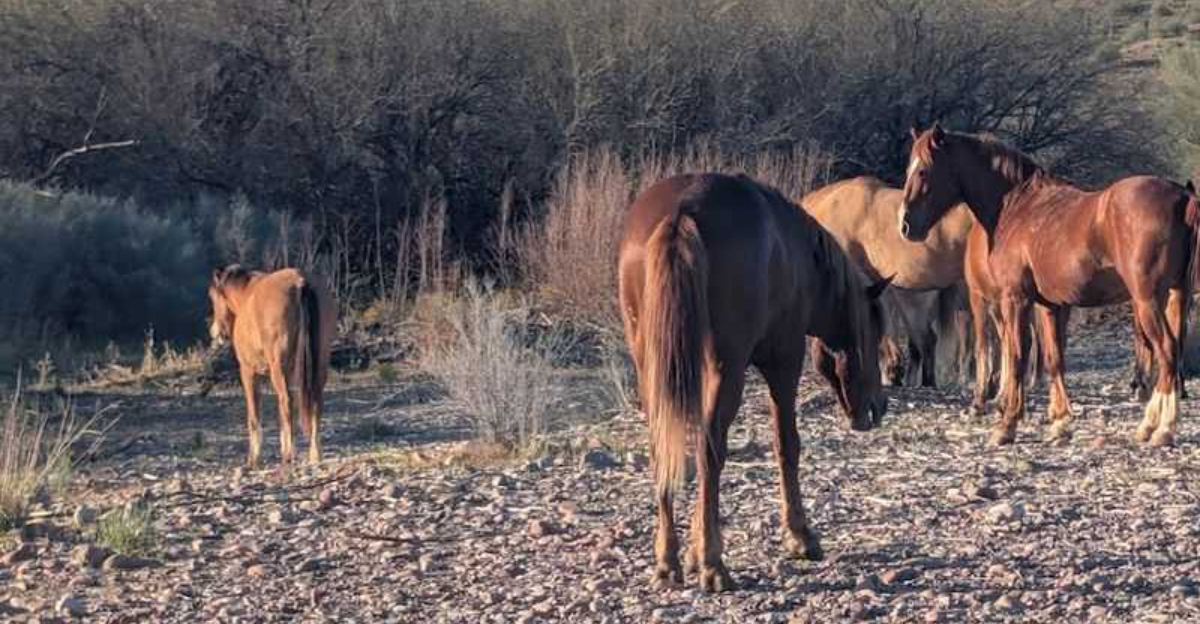
There is a stretch of Arizona desert where wild horses still roam free along a river, and you do not have to pay a single dollar to see them. These are not ranch horses or trained performers.
They are genuine wild horses, splashing through shallow water, grazing on riverbanks, and living exactly as their ancestors did. The Salt River Wild Horse Management Group works hard to protect these animals and keep them on the land where they belong.
Whether you are a lifelong horse lover or just someone who wants to experience something genuinely remarkable on a quiet Arizona afternoon, this place delivers in ways that are hard to put into words.
Where the Wild Horses Actually Live
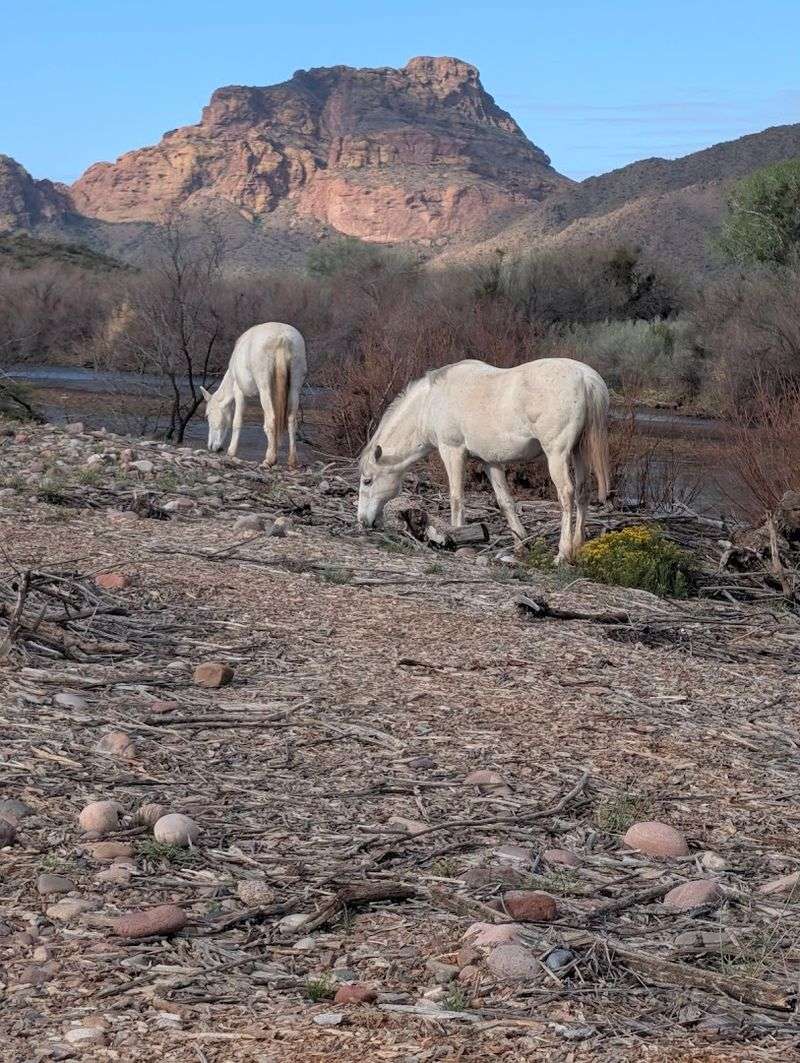
The Salt River Wild Horse Management Group is based at 13127 N Beeline Hwy, Fort McDowell, AZ 85264, right along the Lower Salt River in the Tonto National Forest. This stretch of central Arizona sits about 30 miles northeast of Phoenix, making it surprisingly accessible for a place that feels so far removed from city life.
The horses roam a corridor of land along the river, and visitors often spot them near water crossings, shaded banks, and open grassy flats. The terrain is classic Sonoran Desert, with saguaro cacti, palo verde trees, and rocky hillsides framing every view.
The area sits within the Fort McDowell Yavapai Nation, and the surrounding landscape has deep historical roots going back centuries. Unlike Oklahoma or other plains states where wild horse sightings are common, Arizona offers a uniquely dramatic desert backdrop that makes every encounter feel almost cinematic.
You can drive along Usery Pass Road or Bush Highway and simply pull over when you spot a herd.
The Story Behind the Organization
The Salt River Wild Horse Management Group was founded with one clear mission: protect the wild horses of the Salt River from removal and ensure they can continue living freely in the Arizona desert. The group formed in 2015 after federal authorities threatened to round up and remove the horses from the Tonto National Forest.
A passionate community effort, backed by thousands of supporters across the country, pushed back against that plan. The result was a historic agreement that allowed the horses to stay, provided that a responsible management plan was put in place.
The organization stepped up to fill that role.
Today, the group monitors the herd, coordinates with state and federal agencies, and advocates for humane, science-based management practices. Their work is funded entirely through donations and volunteer efforts.
Much like advocacy groups in Oklahoma and other states that have fought for wild horse protections, this Arizona organization proved that community voices can genuinely change the outcome for animals that cannot speak for themselves. The phone number for the group is +1 480-868-9301, and their website at srwhmg.org keeps the public updated on herd news.
What the Herd Actually Looks Like
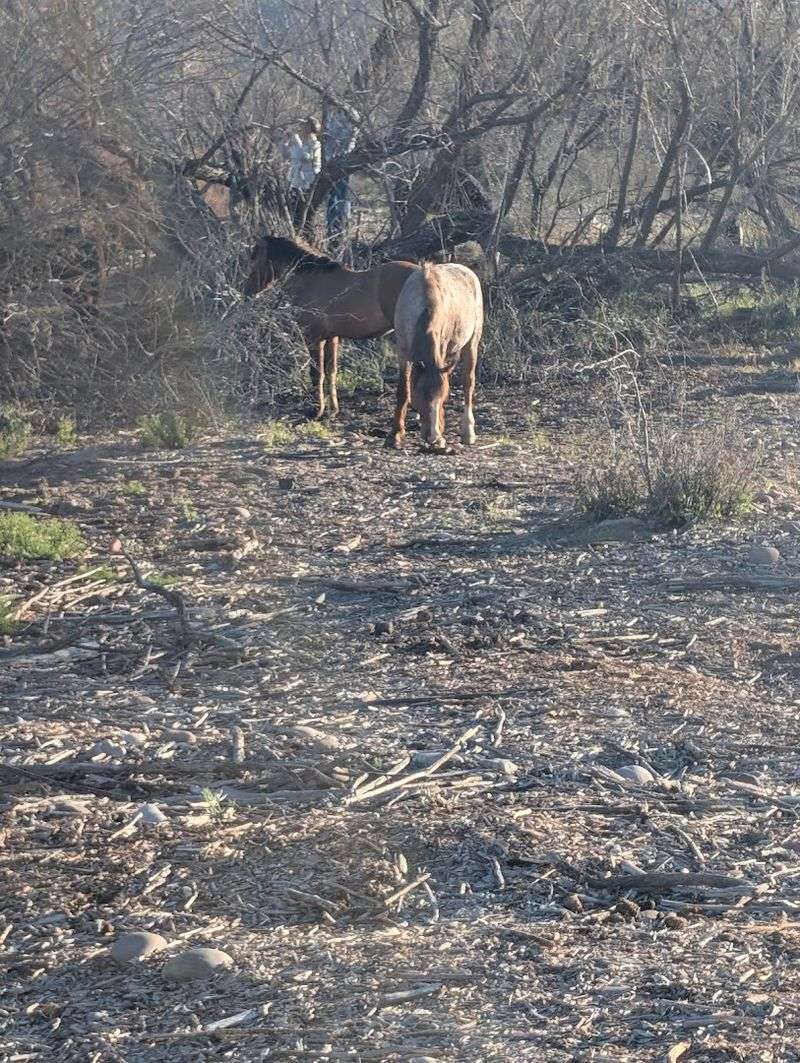
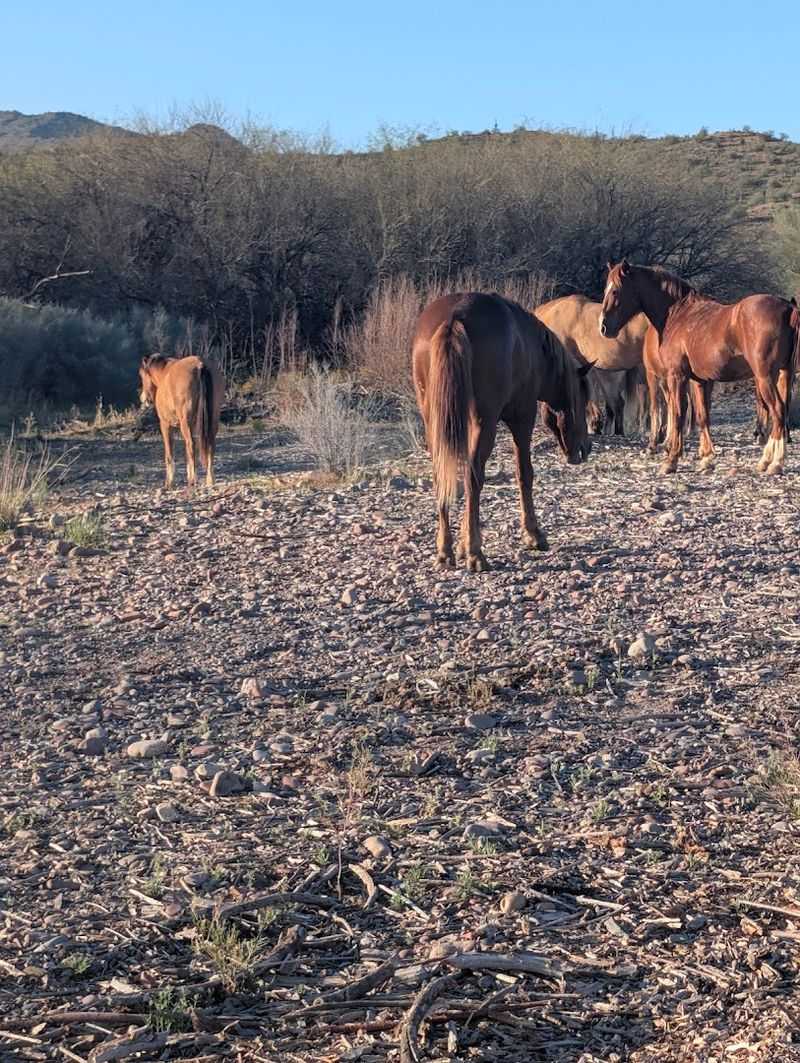
Seeing the Salt River herd for the first time is one of those experiences that genuinely stops you in your tracks. The horses come in a wide range of colors, from deep bay and chestnut to dappled gray and pale buckskin, and they move through the landscape with an ease that no domesticated horse quite matches.
The herd is made up of family bands, each led by a dominant stallion who keeps his mares and foals close. Foals are especially common in spring and early summer, and watching a days-old foal wobble along the riverbank next to its mother is something most visitors never forget.
The horses are stocky and well-adapted to the desert environment, with strong hooves built for rocky terrain. Unlike the lean, refined look of many domestic breeds, these animals carry a rugged, self-sufficient quality that reflects generations of life in the wild.
Visitors who have previously seen wild mustangs in Oklahoma or Nevada often remark that the Salt River horses have a particularly striking presence, shaped by the unique combination of desert heat, river access, and open space.
How to Find the Horses Without Getting Lost
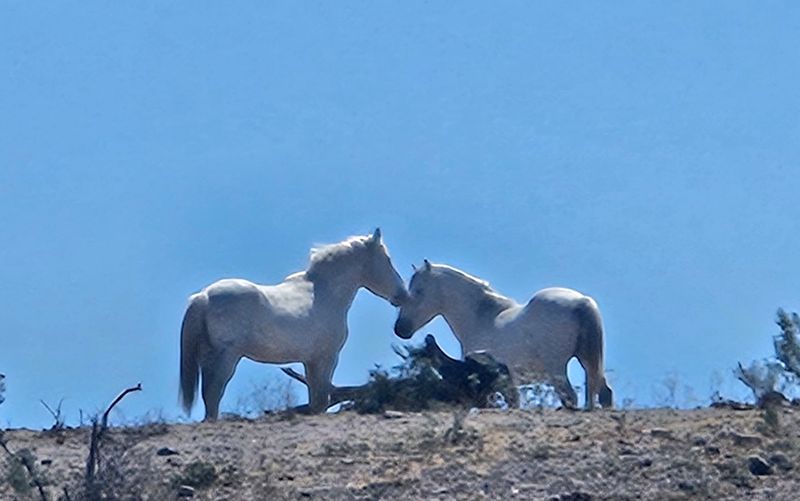
Finding the horses is part of the adventure, and thankfully it is not as tricky as it might sound. The most reliable route is to take Bush Highway, which runs along the Salt River and offers multiple pullouts where you can park safely and scan the riverbanks.
The horses tend to stay near the water, especially in the heat of the day, so early morning and late afternoon are the best times to spot them. Usery Pass Road is another good option, as it connects to the river corridor and passes through prime horse territory.
The Salt River Wild Horse Management Group posts regular herd sighting updates on their social media pages, which is genuinely useful when you are trying to plan a visit. There is no entrance fee and no ticket required.
You simply drive out, keep your eyes open, and let the landscape do the rest. Unlike guided tours in Oklahoma or other states, this is a completely self-directed experience, which gives it a wonderfully spontaneous quality that organized wildlife tours rarely match.
Rules That Keep the Horses Safe
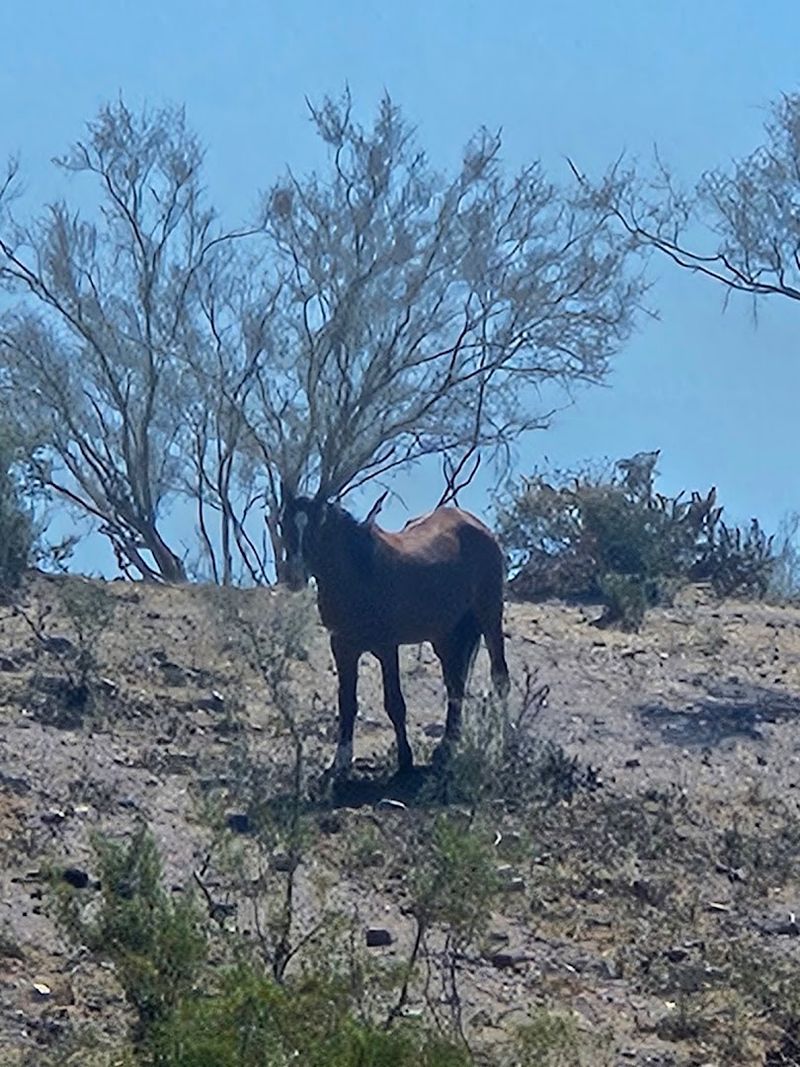
The Salt River Wild Horse Management Group has a firm set of guidelines for visitors, and following them is not optional. The most important rule is to keep a safe distance from the horses at all times.
A minimum of 50 feet is recommended, and if a horse turns to look at you directly, that is a clear signal to back up further.
Feeding the horses is strictly prohibited. Human food, hay, and even well-meaning offerings like apples or carrots can disrupt their natural diet and create dangerous dependency behaviors.
Horses that associate people with food become bold and unpredictable, which puts both animals and visitors at risk.
Honking, revving engines, or making sudden loud noises near the herd is also strongly discouraged. The horses are wild animals, not a roadside attraction, and treating them with genuine respect is the foundation of the whole experience.
The management group enforces these rules actively and relies on visitors to self-regulate as well. Think of it the same way you would approach wildlife in any national park, because that respectful mindset is exactly what has allowed this herd to thrive in a busy region of Arizona.
The River Habitat That Makes It All Possible
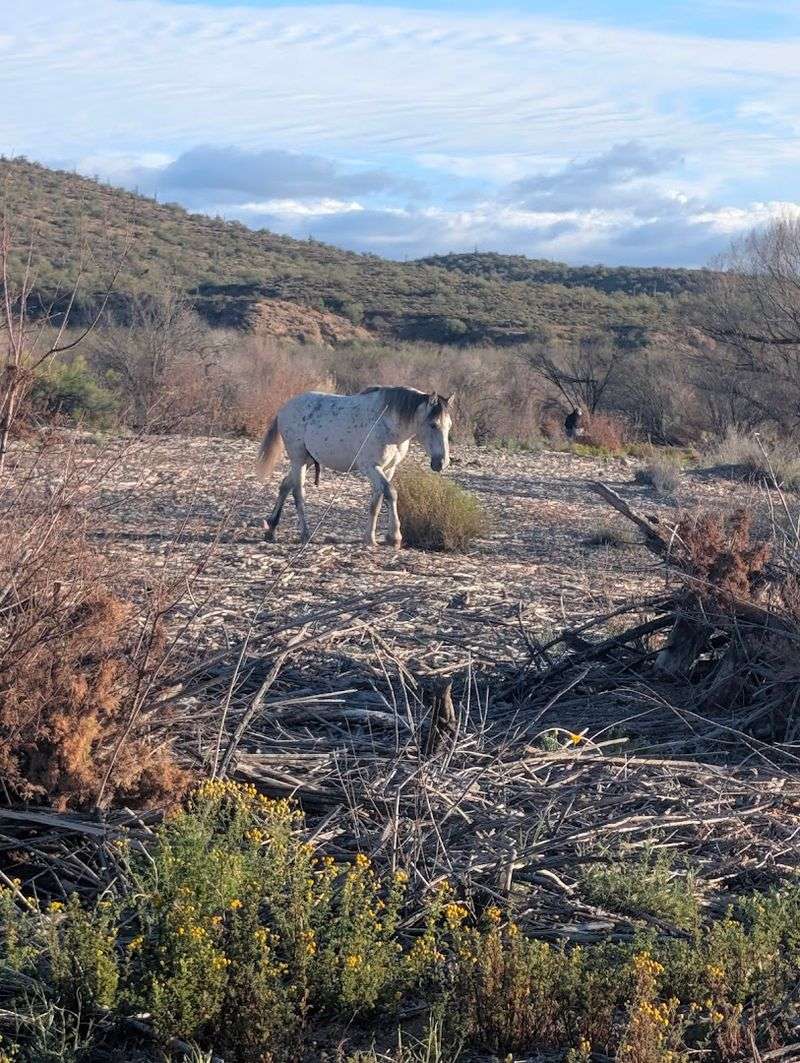
The Lower Salt River is the lifeblood of everything the Salt River Wild Horse Management Group works to protect. The river runs through a stretch of the Tonto National Forest that is remarkably lush compared to the surrounding desert, creating a riparian corridor packed with cottonwood trees, willows, and tall grasses.
This habitat supports not just the horses but also a rich variety of wildlife, including great blue herons, mule deer, coyotes, and a wide range of migratory birds. The contrast between the dry rocky hillsides and the green, water-fed riverbanks is visually stunning and ecologically important.
The horses drink from the river daily, cool off in its shallows during summer, and rely on the vegetation along its banks for much of their diet. Maintaining the health of this ecosystem is a core part of the management group’s work, since a degraded river means a degraded habitat for every creature that depends on it.
The Salt River corridor is genuinely one of the most biodiverse stretches of land in central Arizona, and seeing horses in that context adds a whole new layer to the experience.
The Best Times of Year to Visit
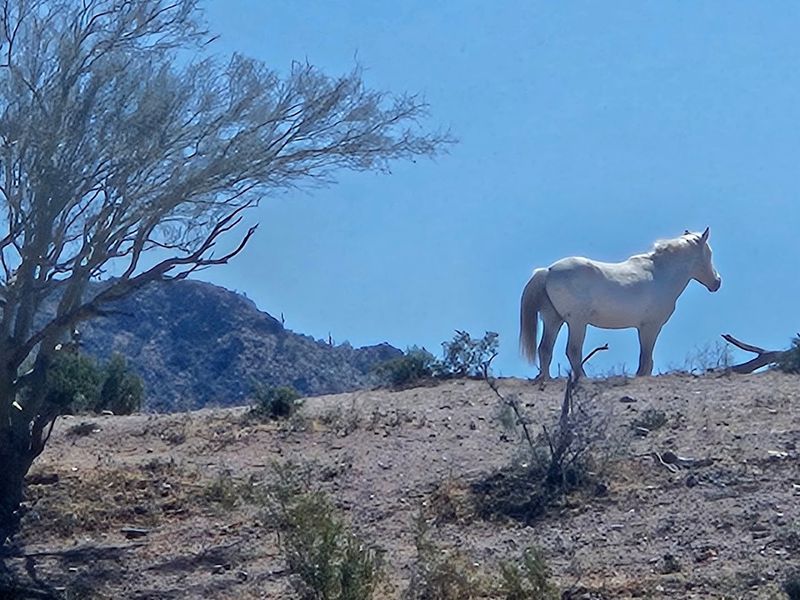
Arizona’s seasons play a big role in shaping your visit to the Salt River horse territory. Spring, from March through May, is widely considered the best time to come.
The temperatures are comfortable, the vegetation is green, and foaling season means there is a good chance of spotting newborns alongside their mothers.
Fall, from October through November, is another excellent window. The heat has broken, the light is softer in the mornings and evenings, and the horses are often more active and easier to observe.
Summer visits are possible but require early starts, since temperatures regularly climb above 110 degrees Fahrenheit by midday.
Winter visits have their own quiet appeal. The herd is still active, the crowds are thinner, and the crisp desert air makes for a very different atmosphere than the blazing summer months.
No matter when you go, early morning is almost always the most rewarding time of day. The horses are moving, the light is flattering for photography, and the river has a calm, almost meditative quality before the day heats up and the weekend crowds begin to arrive.
Photography Tips for Getting Great Shots
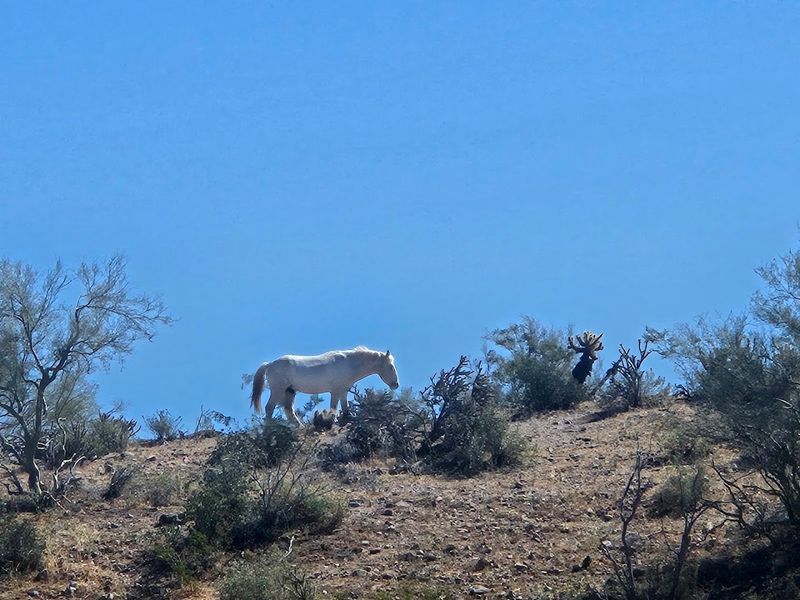
The Salt River horses are genuinely photogenic, and the landscape they live in makes for compelling backgrounds in almost any direction you point your camera. A telephoto lens is your best friend here, since maintaining a safe distance from the horses is non-negotiable, and a long lens lets you fill the frame without getting too close.
Morning light is dramatically better than midday light for photography. The golden hour just after sunrise bathes the desert in warm tones that make the horses’ coats glow, and the river picks up beautiful reflections at that time of day.
Arrive before 7 a.m. in summer and around 7:30 a.m. in cooler months to catch the best conditions.
Patience is probably the single most valuable tool you can bring. Horses move unpredictably, and the best shots often come after 20 or 30 minutes of quiet observation.
Turn off your car engine, lower your window slowly, and just wait. The horses will eventually position themselves in ways that no portrait studio could replicate, and the authenticity of a wild animal in its natural setting is something no staged photo can ever quite capture.
How the Management Group Handles Population Control
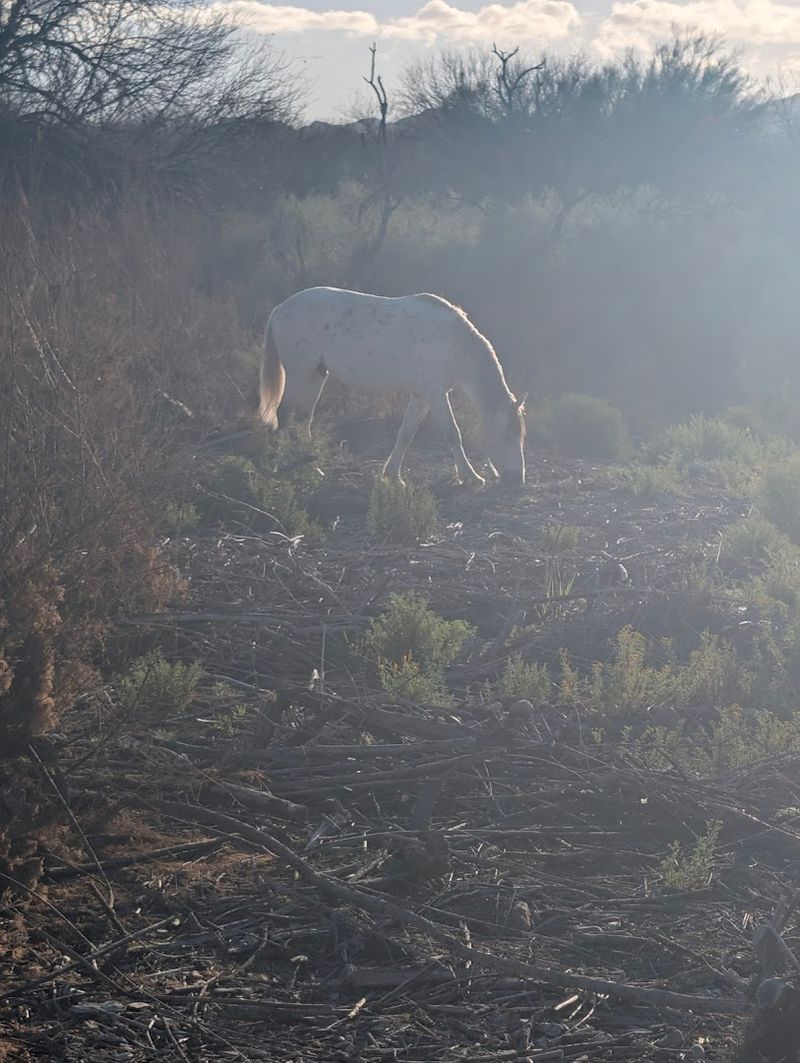
One of the more complex aspects of the Salt River Wild Horse Management Group’s work involves managing the size of the herd. Wild horse populations can grow quickly, and without some form of intervention, overcrowding can strain the river habitat and reduce the quality of life for the horses themselves.
The organization uses a fertility control method called PZP, which stands for porcine zona pellucida. This is a vaccine delivered by dart that prevents mares from becoming pregnant for a season.
It is considered one of the most humane and ecologically sound approaches to wild horse population management available today.
The darting process requires trained volunteers who know the herd well enough to identify individual mares and track their reproductive status over time. It is painstaking, careful work that reflects the group’s commitment to science-based stewardship rather than reactive removal.
Similar fertility control programs have been used for wild horse herds in states like Oklahoma and Nevada, with broadly positive results for herd health and habitat balance. The Salt River group’s approach is seen as a model for how urban-adjacent wild horse populations can be managed responsibly.
How You Can Support the Herd
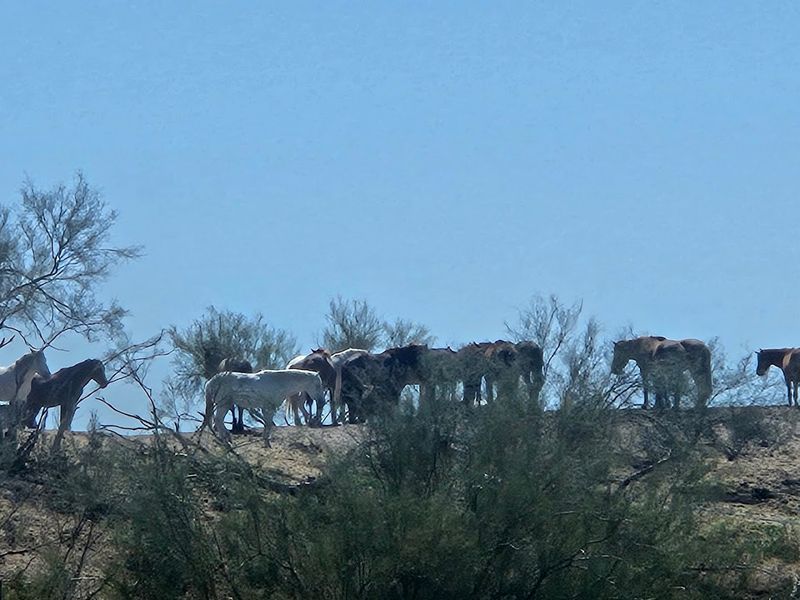
The Salt River Wild Horse Management Group runs entirely on community support, and there are several straightforward ways to get involved. The most direct option is a financial donation through their website at srwhmg.org, where contributions go toward fertility control programs, herd monitoring, and public education efforts.
Volunteering is another meaningful option. The group regularly needs people to help with herd surveys, community outreach events, and educational programs.
No prior horse experience is required for many volunteer roles, just a willingness to show up and contribute time to something that genuinely matters.
Spreading accurate information about the herd is also valuable. Misconceptions about wild horses circulate widely online, and the management group works hard to counter misinformation with facts.
Sharing their social media updates, supporting their advocacy campaigns, and simply telling friends about the herd all help build the community awareness that keeps these horses protected. Groups protecting wild horses in states like Oklahoma have shown that sustained public interest is one of the most powerful tools available for long-term conservation.
Every visit you make, and every photo you share responsibly, adds to that collective voice.



