There is a trail in Jacksonville that most locals drive right past without a second glance, and that is honestly their loss. Tucked into the northeastern corner of the city, this spot rewards anyone willing to lace up their shoes with shaded forest paths, salt marsh views, and a surprisingly serene hidden pond.
The kind of quiet you find here is rare for a city this size. Keep reading, because this trail has more going on than its modest trailhead sign lets on.
Finding the Trailhead: Location and Access
Spanish Pond Trailhead sits within the Timucuan Ecological and Historic Preserve in Jacksonville, just across the street from Fort Caroline National Memorial. The address puts you in the Fort Caroline area of northeast Jacksonville, an easy drive from the city center.
The small parking lot fills up faster than you might expect on weekends, so arriving early is a smart move. There are no restrooms at the Spanish Pond Trailhead itself, but the visitor center across the road at Theodore Roosevelt Area has facilities available.
The trailhead is free to enter, which makes it one of the best no-cost outdoor escapes in the entire region.
Operating Hours and Best Days to Visit
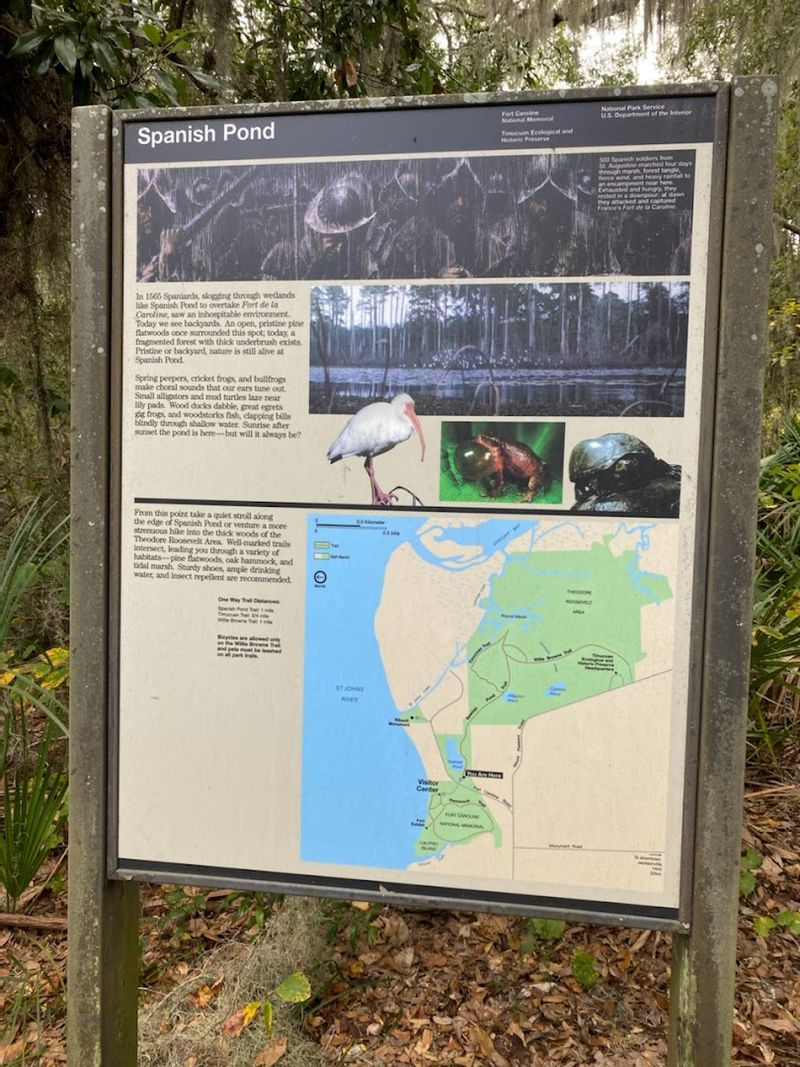
The trail follows a specific schedule that is worth knowing before you pack your bag. Spanish Pond Trailhead is open Wednesday through Sunday from 9 AM to 5 PM, and it stays closed on Mondays and Tuesdays.
Those mid-week days, especially Wednesday and Thursday mornings, tend to be the quietest. You will likely have long stretches of trail almost entirely to yourself, which makes the experience feel genuinely peaceful rather than crowded.
December through February offers some of the most comfortable hiking weather, with temperatures often sitting in the low to mid 70s Fahrenheit. Bug pressure is noticeably lower during cooler months too, though bringing insect repellent is a smart habit regardless of the season.
Summer visits are absolutely possible, but expect humidity and more active insects along the shaded sections near the marsh.
The Trail System: Color-Coded Routes Explained
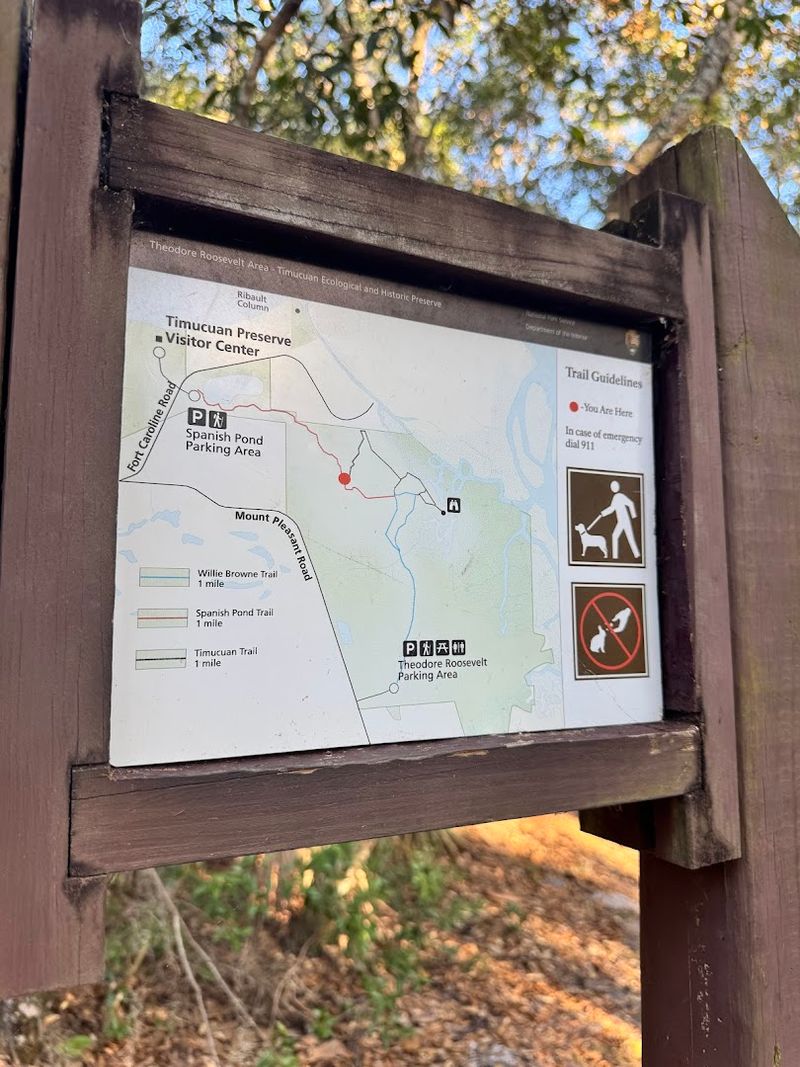
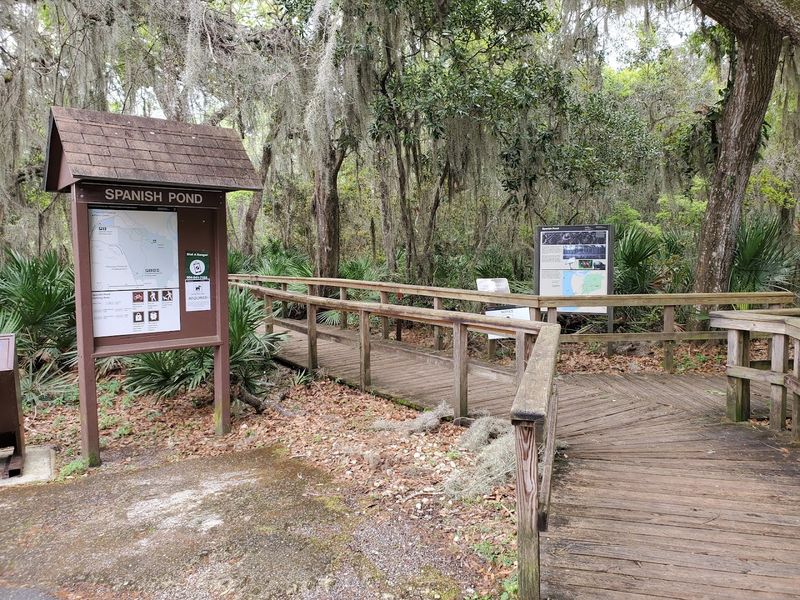
One of the first things you notice at the trailhead is a clear map board showing the different color-coded routes. The Red Trail is the Spanish Pond Trail itself, the Blue Trail connects to the Theodore Roosevelt Area, and the Black Trail is a scenic connector loop that leads out to a peninsula with a waterfront lookout platform.
The Green Trail is permanently closed, so do not count on that one. Red and Blue are the primary routes most hikers use, while Black adds an extra layer of scenery for those who want to push a little further.
Taking the shortest route from the Spanish Pond entrance to the Theodore Roosevelt entrance covers about 1.7 miles. A full outing that includes the Black Trail loop and some backtracking can total around 4 to 4.5 miles, giving you a solid half-day adventure without leaving the park.
The Hidden Pond: What Makes It Worth the Walk
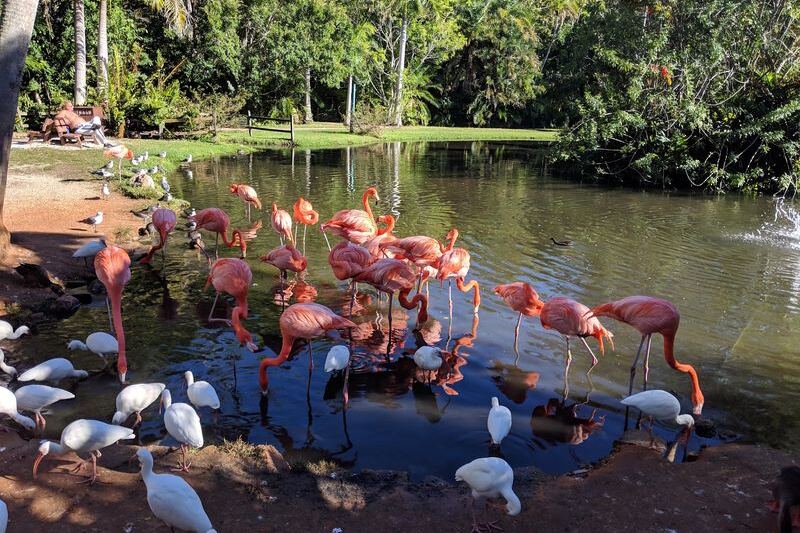
The pond that gives this trail its name sits quietly off the main path, and reaching it feels like uncovering something the rest of the city forgot about. The water is still and dark, framed by native grasses and the kind of old Florida vegetation that looks like it has been there for centuries.
Early morning visits offer the best light for appreciating the pond. Mist sometimes hovers just above the surface in cooler months, and the surrounding trees create a natural canopy that keeps the area shaded and cool even on warmer days.
There are benches placed at thoughtful spots along the trail near the pond, giving you a proper place to sit and take it all in without feeling rushed. It is the kind of place where time slows down just enough to remind you why getting outside matters in the first place.
Terrain and Elevation: Not Your Average Florida Flat
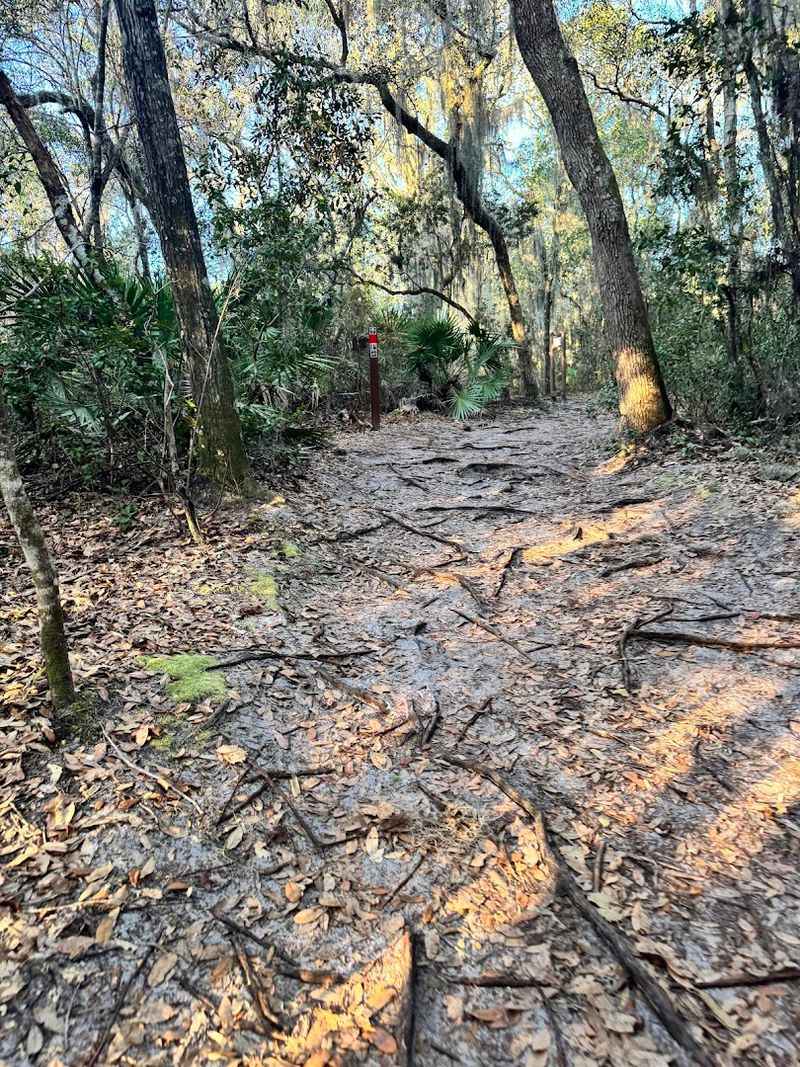
Florida is not exactly famous for its hills, which is why Spanish Pond Trail catches first-time visitors off guard. The route has a noticeable amount of elevation change for this region, with rolling terrain and enough incline to get your heart rate up without making you feel like you need a mountain guide.
Tree roots are the main thing to watch underfoot. They crisscross the trail surface in several sections, particularly near the wooded stretches, and they can catch a toe if you are not paying attention.
Wearing sturdy shoes with decent grip is genuinely helpful here, not just a general hiking suggestion.
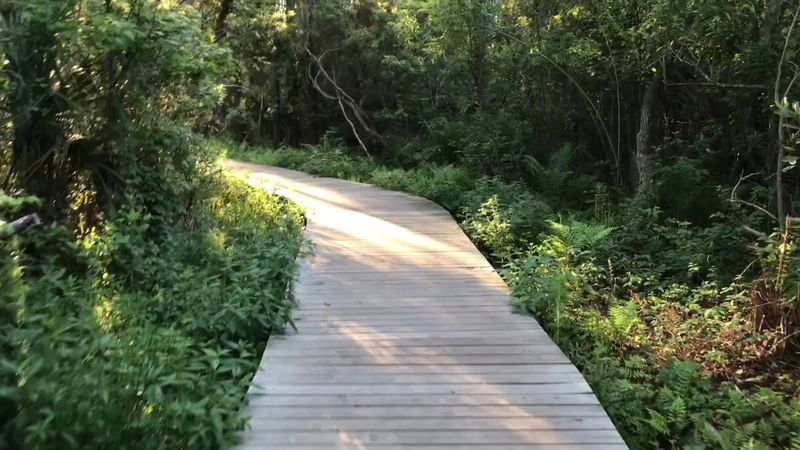
Sandy stretches appear in a few spots as well, adding a softer surface between the rootier sections. The combination of sand, roots, wooden boardwalks, and natural packed earth keeps the trail feeling varied and interesting from start to finish rather than monotonous.
Flora Along the Path: A Living Florida Ecosystem
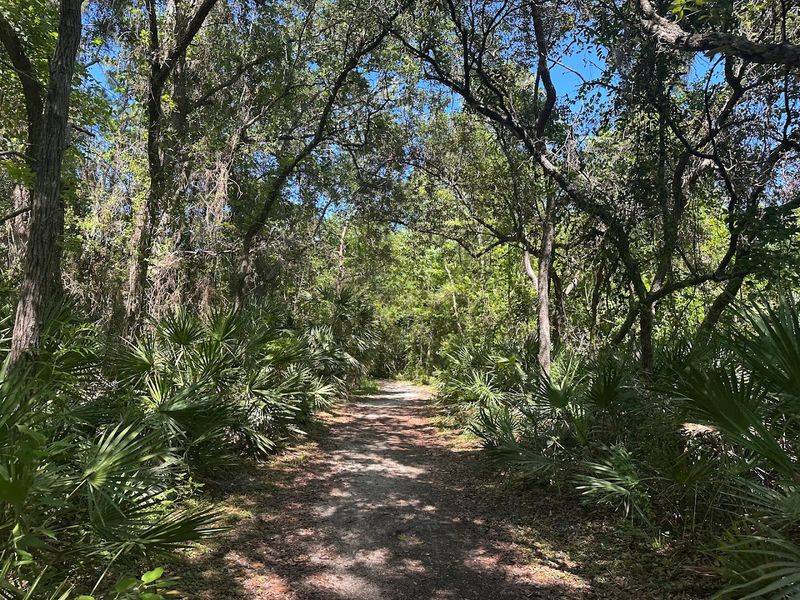
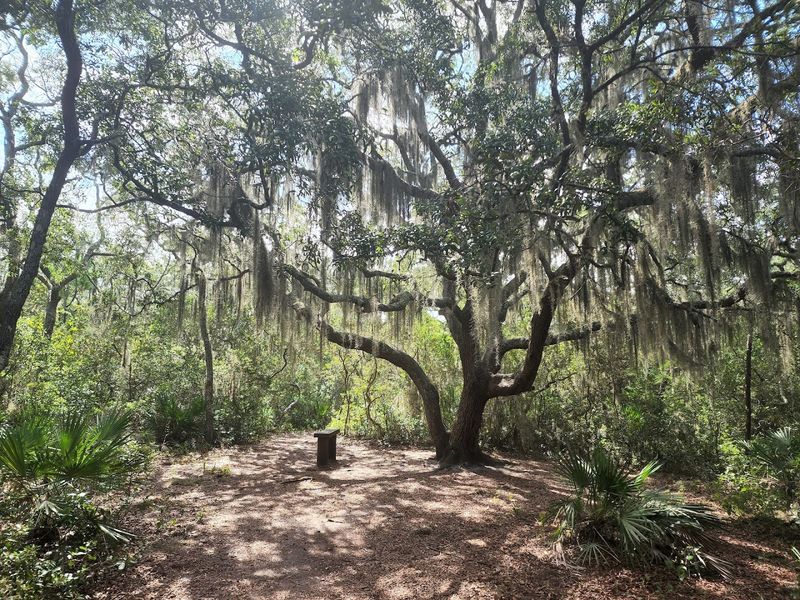
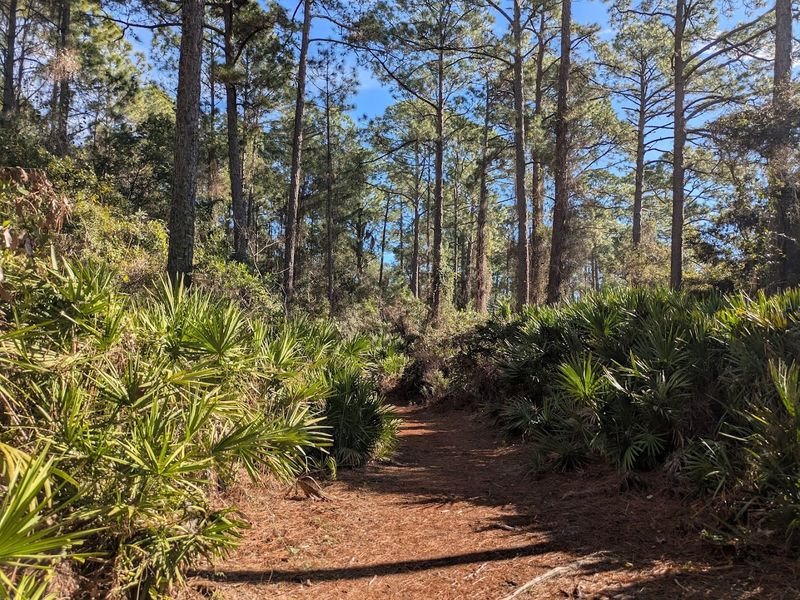
Walking through Spanish Pond Trail feels, in stretches, like stepping into a smaller and wilder version of Florida. Palms, pines, and a dense mix of native Florida plants crowd the sides of the path, creating a lush, almost jungle-like atmosphere in the shadier sections.
The variety of habitats packed into a relatively short trail is genuinely impressive. You move from dense woodland to open sandy areas, then into tidal marsh zones, and back into shaded forest within the span of a single loop.
Each transition brings a different set of plants and a noticeably different feel.
Ferns, saw palmettos, and various native ground covers fill in the spaces between the larger trees, giving the trail a layered, textured look. Plant enthusiasts will find plenty to photograph, and even casual hikers tend to notice how much the scenery shifts as they move through each habitat zone.
Wildlife Watching: What You Might Spot Out There
The wildlife at Spanish Pond Trail has a way of showing up when you least expect it, which is part of what makes every visit feel a little different. Near the St. Johns River section of the trail, bald eagles are a genuine possibility.
Several visitors have spotted two at once soaring above the water, which is a hard sight to forget.
Rabbits, owls, hawks, frogs, and a wide variety of butterflies have all been seen along the trail. Cool snakes sometimes appear near the boardwalk sections, which sounds alarming but is actually a sign of a healthy, functioning ecosystem.
Dangerous encounters are extremely rare.
Birders will find the trail particularly rewarding during early morning hours when bird activity peaks. Bringing a pair of lightweight binoculars adds a lot to the experience, especially near the open marsh areas where visibility extends out over the water and you can scan the treeline properly.
The Boardwalk and Observation Deck: A View Worth Earning
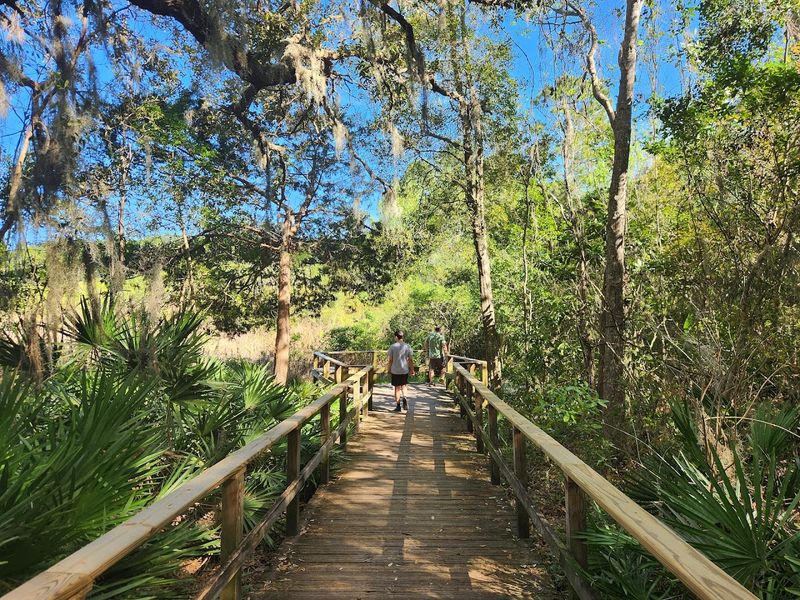
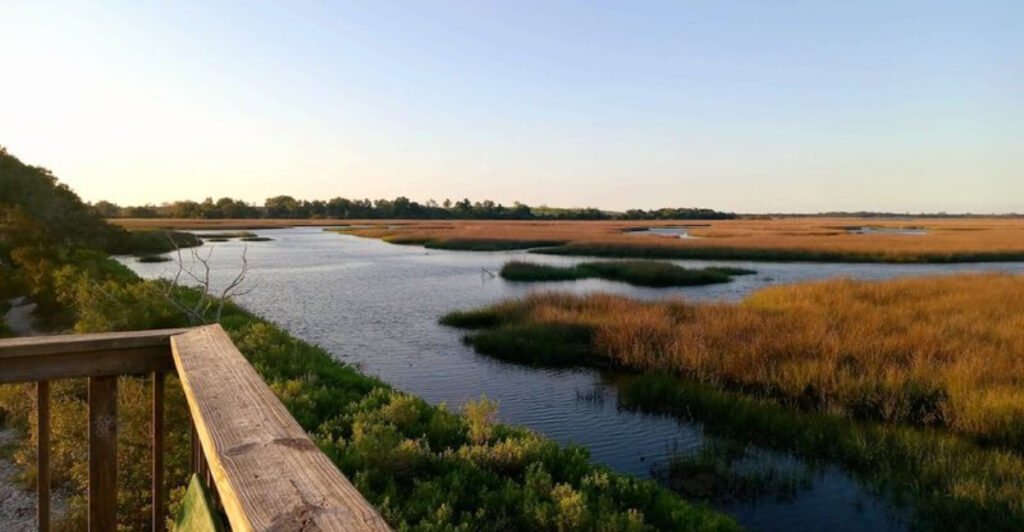
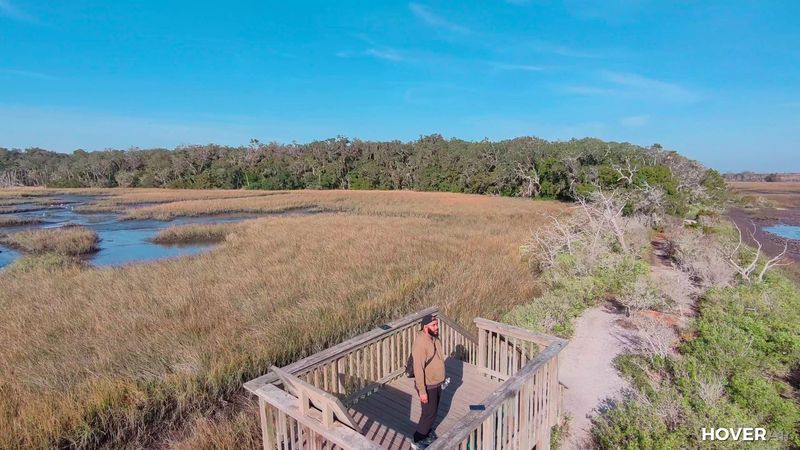
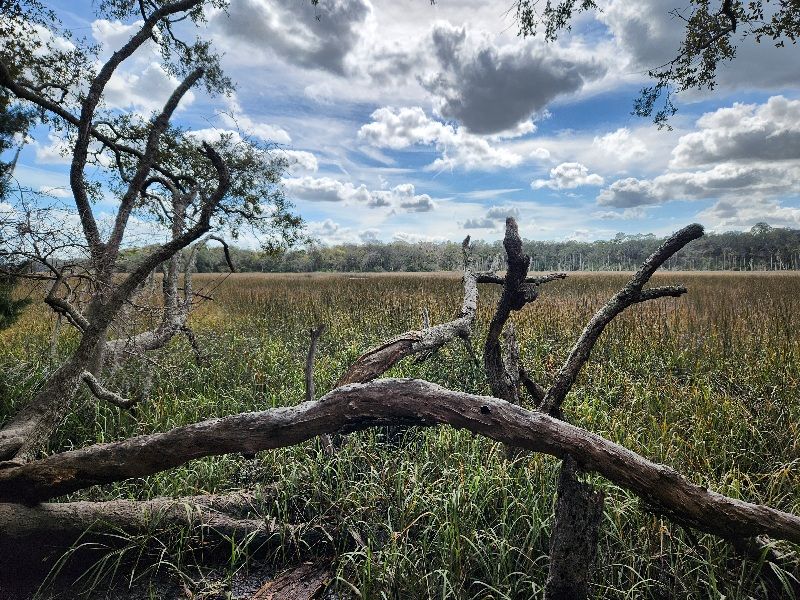
One of the most satisfying moments on this trail comes when the trees part and the wooden boardwalk leads you out toward the observation deck. The structure sits at the edge of the tidal marsh, offering a wide, unobstructed view of the surrounding wetlands and the St. Johns River beyond.
The Black Trail takes you out onto a small peninsula where the lookout platform stands, and the walk back is a loop rather than a straight return, so you get fresh scenery on the way out. Some areas near the marsh can flood during high tide, so checking conditions ahead of time is useful if you plan to visit after heavy rain.
Most hikers reach the observation deck in about 50 minutes from the parking lot at a comfortable pace. The platform itself is a natural stopping point for a snack break, a few photographs, and a long look at a view that does not feel like it belongs in a city at all.
Ranger-Led Tours: Learning the Trail from Someone Who Knows It
Every Saturday at 1:00 PM, a park ranger offers guided tours of the Spanish Pond Trail, and this is genuinely one of the best ways to experience the area for the first time. The rangers share information about the different ecosystems, the trees, the animals, and the human history woven into this landscape in a way that a solo hike simply cannot replicate.
Groups tend to be small, which means the experience feels personal rather than like a crowded lecture. The ranger covers topics ranging from local ecology to historical figures connected to the land, making the walk as educational as it is scenic.
Families with curious kids will get particular value from the guided format since the rangers are skilled at making complex natural history feel accessible and fun. Arriving a few minutes before 1:00 PM at the trailhead is the best way to make sure you do not miss the start of the tour.
Historical Layers: What This Land Has Witnessed
The ground beneath Spanish Pond Trail holds more history than the quiet forest setting might suggest. The trail sits within the Timucuan Ecological and Historic Preserve, a federally protected area that recognizes both the natural and cultural significance of this part of northeast Florida.
Fort Caroline National Memorial sits directly across the road, connecting the trail to the story of 16th-century French colonists and the Timucua people who lived in this region long before European contact. The preserve takes its name from the Timucua, and learning even a little of their history adds real depth to a walk through these woods.
There is reportedly a historic gravesite somewhere in the back section of the trail, though vegetation has made it difficult to locate in recent years. A lone gravestone has been spotted by sharp-eyed hikers, adding a quiet historical footnote to what is otherwise a nature-focused outing.
Trail Etiquette and Practical Tips for a Good Visit
A few practical habits make the Spanish Pond experience better for everyone. The trail is free to enter, but that also means the small parking lot fills up on busy weekend mornings, so arriving close to the 9 AM opening time gives you the best chance at a spot without circling.
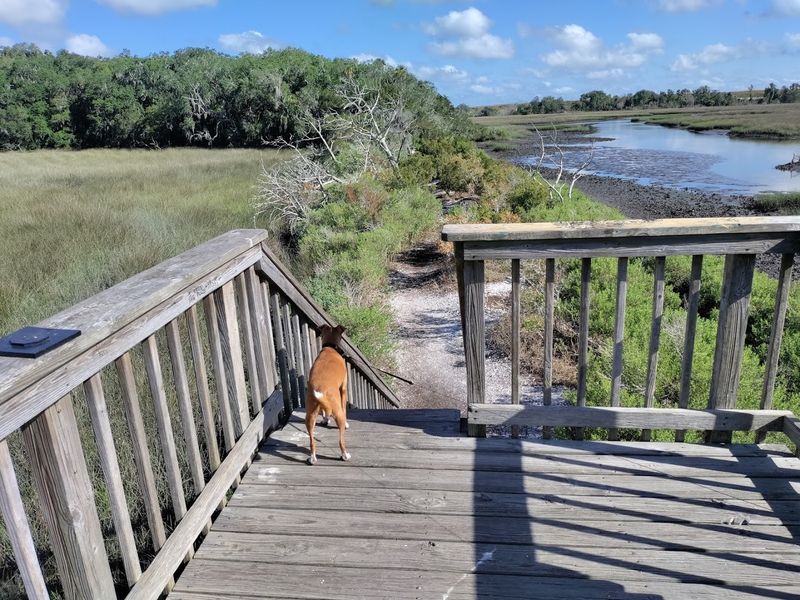
Dogs are welcome on leashes, and the shaded trail makes it a comfortable outing for pets during cooler months. Carrying out dog waste rather than leaving bagged bags on the trail is strongly encouraged by the community.
Tick checks after the hike are worth doing, especially if you bring dogs or children.
Water, sunscreen, and insect repellent round out the essential packing list. There are trash receptacles at several points along the trail, which helps keep the path clean.
The AllTrails app is a useful navigation tool here since the color-coded signage, while generally clear, can feel slightly confusing at junctions.
Accessibility and Who the Trail Works Best For
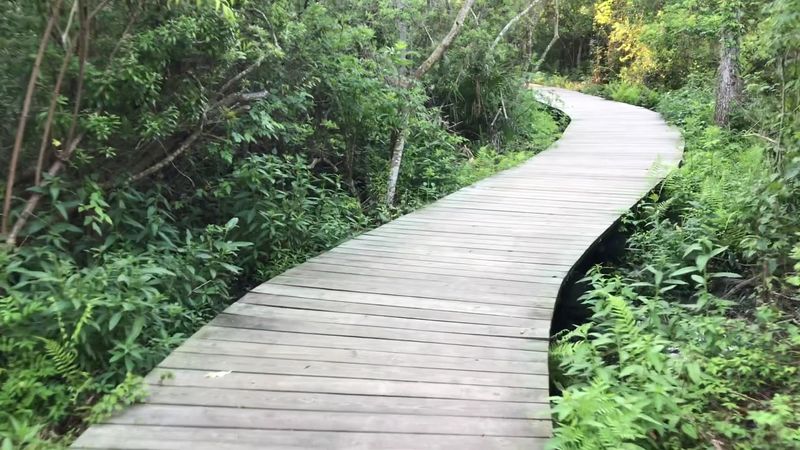
Spanish Pond Trail has a wider-than-average path for a natural surface trail, which makes it accessible to a broader range of visitors than many Florida hiking spots. A baby or toddler stroller can be pushed along most surfaces, including the natural ground sections and the wooden walkways, though the rootier stretches do require some maneuvering.
The trail works well for beginners and casual walkers, though the elevation changes and root-covered sections push it into moderate territory rather than easy. Experienced hikers will find it a pleasant outing without being particularly challenging, but the scenery and variety make it worth the trip regardless of fitness level.
Runners use the trail regularly, and the mix of surfaces keeps the footing interesting for those who prefer trail running to pavement. The shaded canopy makes midday runs far more bearable than open road routes, which is a meaningful advantage during Florida’s warmer months.
The St. Johns River Connection: Water Views on the Back Half
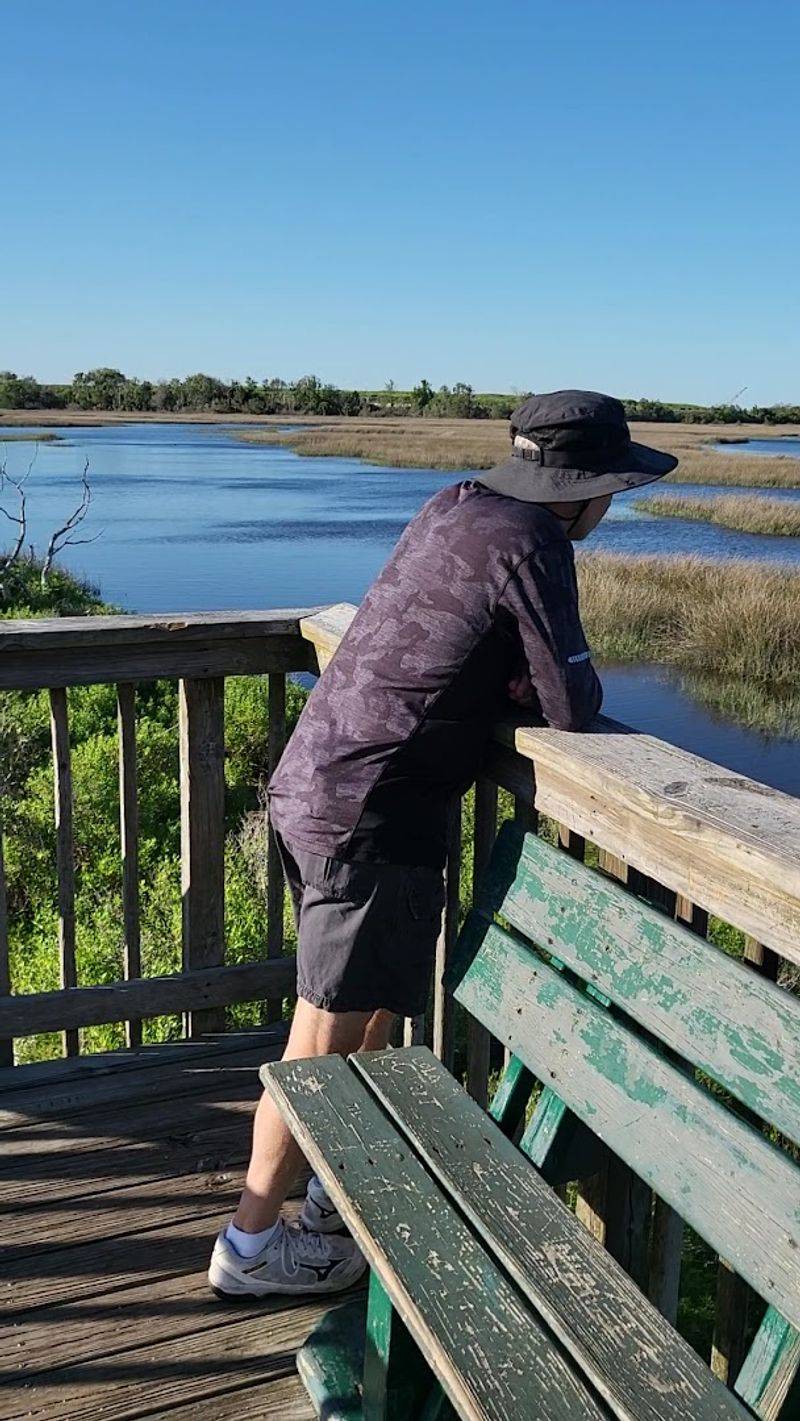
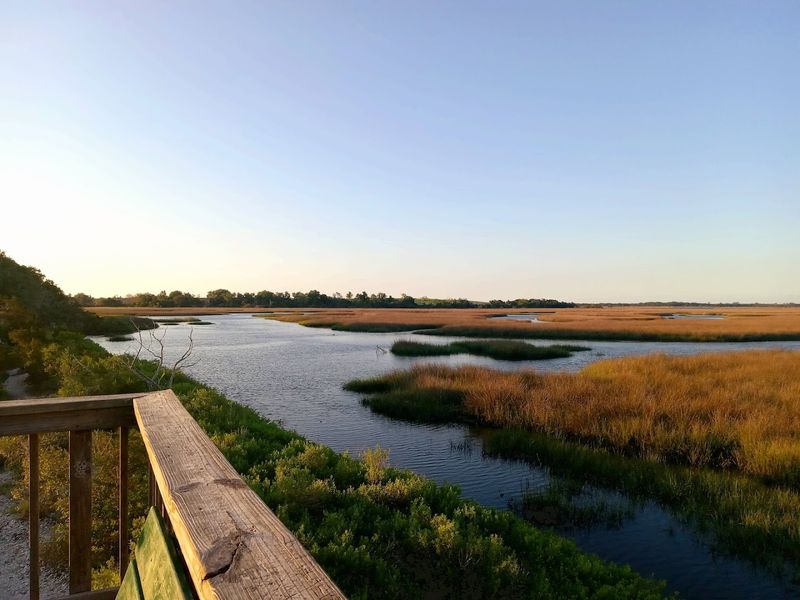
The back portion of the trail opens up toward the St. Johns River, and the shift in scenery is dramatic compared to the dense woodland of the earlier sections. Salt marsh stretches out on either side of the path, and the river becomes visible through the vegetation before the boardwalk delivers you to an unobstructed viewpoint.
The purple trail, which connects to the river frontage area, includes a dock where you can stand directly over the water and look out across the St. Johns. This section also leads toward the historic fort area, where cannons and interpretive signs add context to the waterfront setting.
Tidal influence is real here, and some low-lying sections of the trail can hold water after high tide or heavy rain. Checking recent trail reports before visiting helps you plan footwear accordingly, since wet trail sections near the marsh are a different experience than the dry woodland paths.
Connecting to Theodore Roosevelt Area: Extending Your Adventure
The Blue Trail links Spanish Pond Trailhead directly to the Theodore Roosevelt Area, expanding your hiking options considerably without requiring a separate drive. The connection point sits about 1.7 miles from the Spanish Pond entrance, making it a natural midpoint for anyone planning a longer outing.
Theodore Roosevelt Area has restrooms in its parking lot, which makes it a practical halfway stop on a longer loop. The visitor center there is clean, welcoming, and worth a few minutes of browsing if you want to learn more about the preserve before or after your hike.
Combining both areas into a single visit can yield around 4 to 6 miles of hiking depending on which trails you choose and how much backtracking you do. The connected trail system makes Spanish Pond feel like part of something larger, and the variety between the two areas keeps the experience fresh from the first step to the last.
Why This Trail Keeps Drawing People Back
There is something about Spanish Pond Trail that makes people return rather than check it off a list and move on. The combination of free entry, varied terrain, genuine wildlife, and a hidden pond gives it a depth that many city-adjacent trails simply do not have.
The trail feels different depending on the time of day and the season. Morning visits offer birdsong and cooler air, midday brings out butterflies and more reptile activity, and late afternoon light turns the marsh into something almost painterly.
Each visit rewards a slightly different kind of attention.
The community of regular users, from runners and dog walkers to birders and history enthusiasts, gives the trail a lively but respectful atmosphere. No single type of visitor dominates the experience, and that mix of people with different reasons for being there is part of what makes Spanish Pond Trail feel like one of Jacksonville’s most quietly rewarding outdoor spaces.
Share this story