 Unearth The Voyage

On May 6, 1937, the skies above a small New Jersey naval base became the backdrop for one of the most dramatic moments in aviation history. A massive German airship, nearly the length of three football fields, burst into flames during its landing approach, and the whole world watched in horror.
That moment changed aviation forever, ending the era of passenger airships almost overnight. Today, a quiet memorial on that same piece of ground marks exactly where it happened, and it is open to those willing to plan ahead and make the trip.
The site sits inside an active military installation in Ocean County, New Jersey, which means getting there takes more effort than a typical roadside stop. But for history lovers, aviation enthusiasts, and curious travelers, the journey is absolutely worth every step of the process.
Where History Literally Meets the Ground
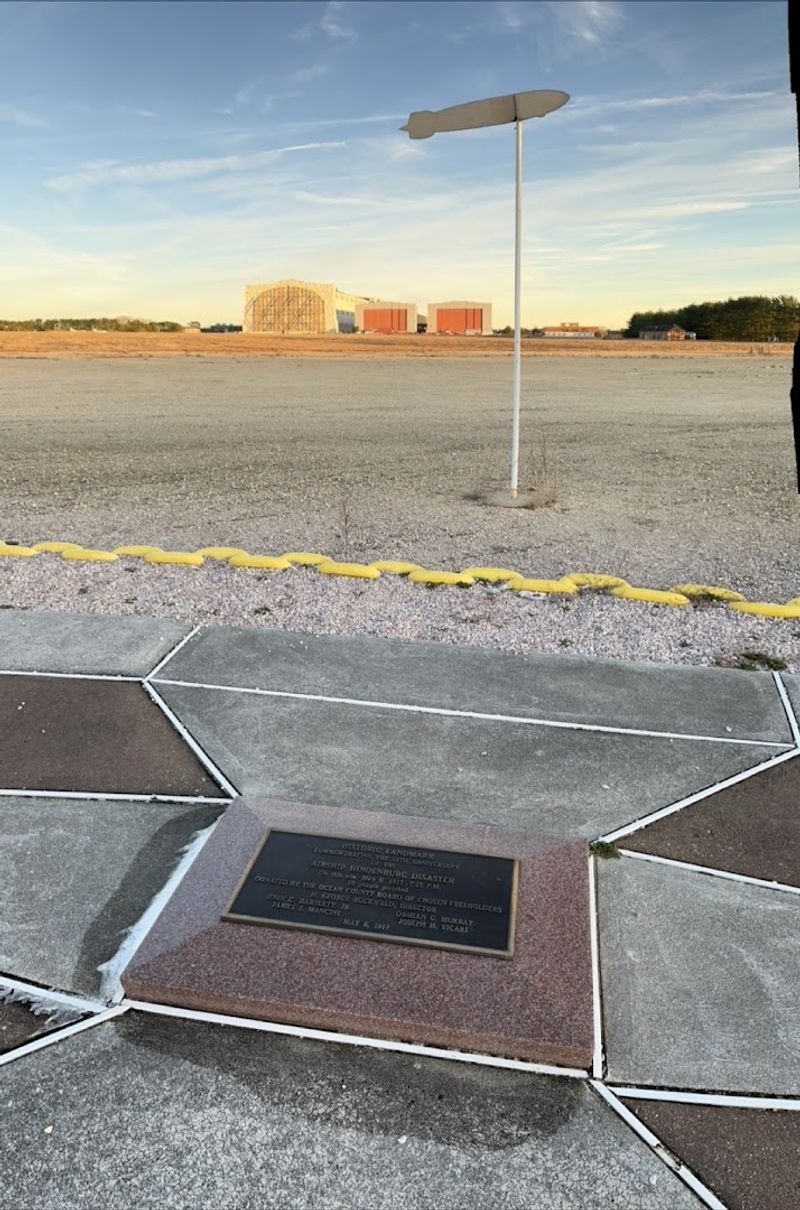
The Hindenburg Disaster Memorial is located at 563 Saniuk Road, Lakehurst, NJ 08733, inside Joint Base McGuire-Dix-Lakehurst in Ocean County, New Jersey. This is not a roadside attraction you can pull up to on a whim.
The memorial sits on an active military installation, which means every person who wants to visit must go through a formal security clearance process before setting foot on the grounds. That process alone sets this place apart from nearly every other historic site in the United States.
The base itself has deep roots in American military and aviation history, and the Hindenburg crash site is just one layer of a much richer story waiting to be uncovered here. The field where the airship came down has never been repurposed or built over, which makes standing on that exact ground a genuinely rare historical experience that few places in the country can offer.
The Airship That Captured the World’s Attention

The LZ 129 Hindenburg was not just a large aircraft. At 803 feet long, it was the biggest flying machine ever built, and it was designed to represent German engineering at its most ambitious.
Transatlantic passenger flights on the Hindenburg were considered the height of luxury travel in the mid-1930s.
The airship had already completed ten successful round trips between Europe and the United States before its final voyage in May 1937. Passengers paid what would be thousands of dollars in today’s money for a cabin on board.
When the ship approached the mooring mast at Lakehurst Naval Air Station on the evening of May 6, 1937, everything seemed routine at first. Within 34 seconds, the entire vessel was destroyed, and the age of commercial airship travel was effectively over.
The speed and totality of the event shocked a world that had come to see these giant ships as symbols of progress.
Planning Your Visit Takes Real Commitment

Getting to this memorial is not like visiting a national park. Because the site sits inside an active military base, all guests must complete a thorough background check before their visit is approved, and that process can take at least a month.
The tours are organized by a dedicated group of volunteers, many of them retired military personnel, who coordinate directly with base officials. Prospective guests need to submit personal information for every member of their group well in advance.
Once clearance is granted, visitors receive confirmation of their tour date. The process requires patience, but the reward is access to a site that most people never get to see in person.
Tours run roughly three hours and cover far more ground than just the crash site itself.
For anyone serious about American history or aviation, the extra planning is a small price to pay for an experience that genuinely cannot be replicated anywhere else.
The Memorial Itself: Small but Deeply Meaningful
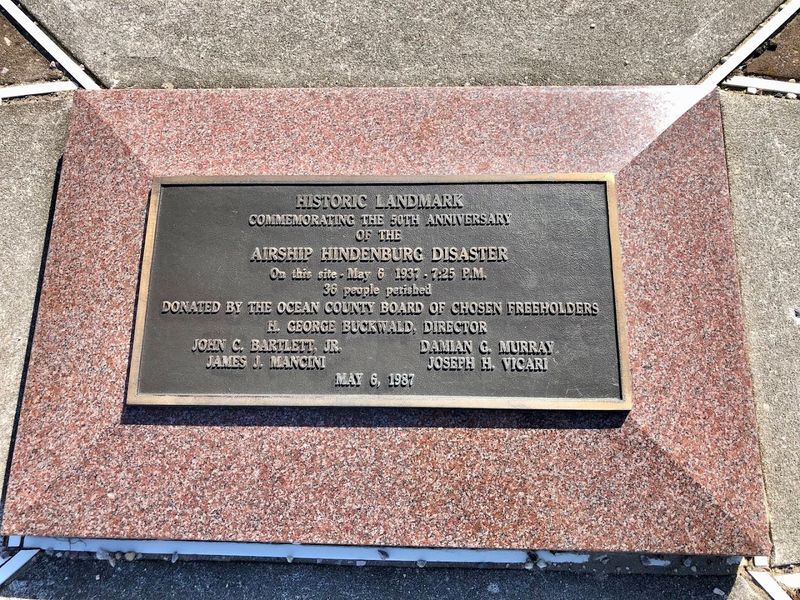
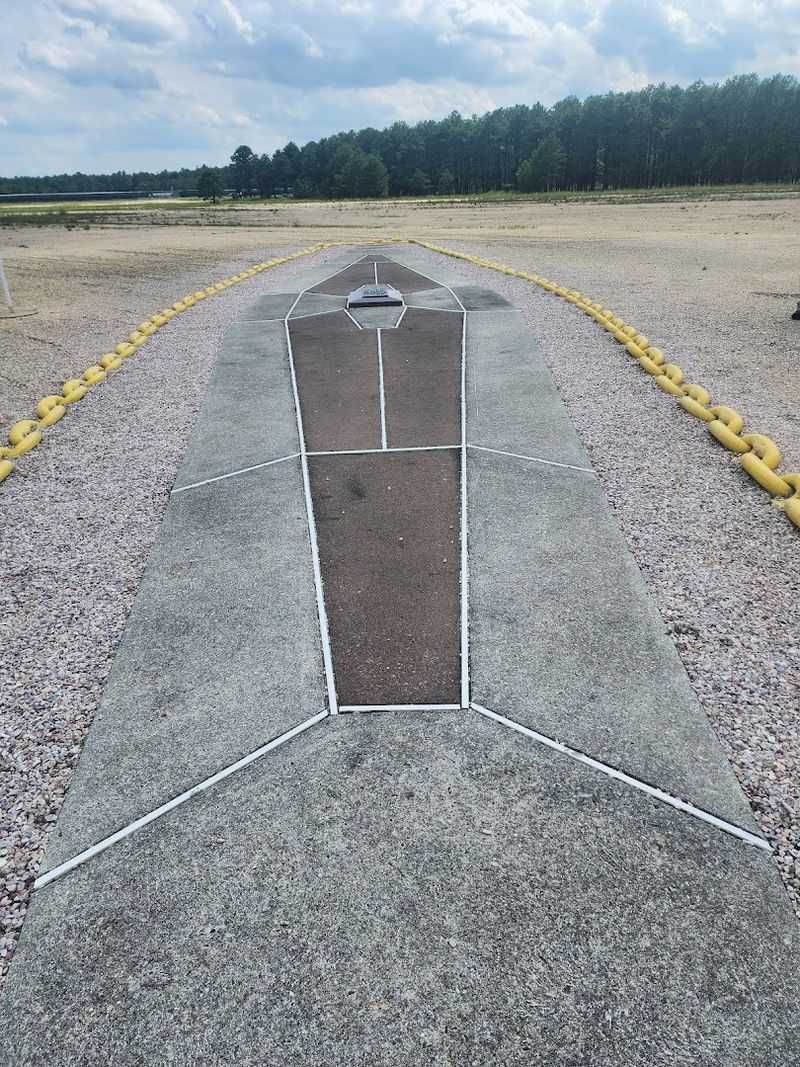
At the center of the crash site stands a modest but carefully designed memorial. A bronze plaque is set into the ground, surrounded by a structure shaped like the gondola that once hung beneath the Hindenburg airship.
The design is intentional and historically specific.
A dirigible wind gauge sits above the marker, adding a functional and symbolic touch to the site. The overall footprint of the memorial is small relative to the scale of the disaster it commemorates, and some who visit note that contrast immediately.
But that simplicity carries its own kind of weight. There are no crowds, no ticket booths, and no gift shop at the crash site itself.
Just open ground, a plaque, and the knowledge of what happened there.
Hearing the original radio broadcast from that evening while standing at the exact location described in that recording is one of the more quietly powerful moments the tour provides.
The Tour Starts Before You Even Reach the Base

One detail that surprises many first-time visitors is that the tour does not begin at the crash site. It actually starts at the Cathedral of the Air, a historic chapel located just off the military base.
This off-base starting point serves a practical purpose since it allows the group to assemble before driving onto the installation together.
The Cathedral of the Air is itself a historic structure with ties to the naval air station’s long history. Starting there gives the tour a grounding context before the group moves to the more emotionally charged locations on base.
From the chapel, everyone drives together to the crash site, which is marked with a yellow chain boundary. Tour guides explain the layout of the land and the sequence of events from that evening in 1937.
That combination of setting and storytelling gives the whole experience a narrative arc that makes the history feel immediate rather than distant.
Inside the Hangar: A Different Kind of History Lesson
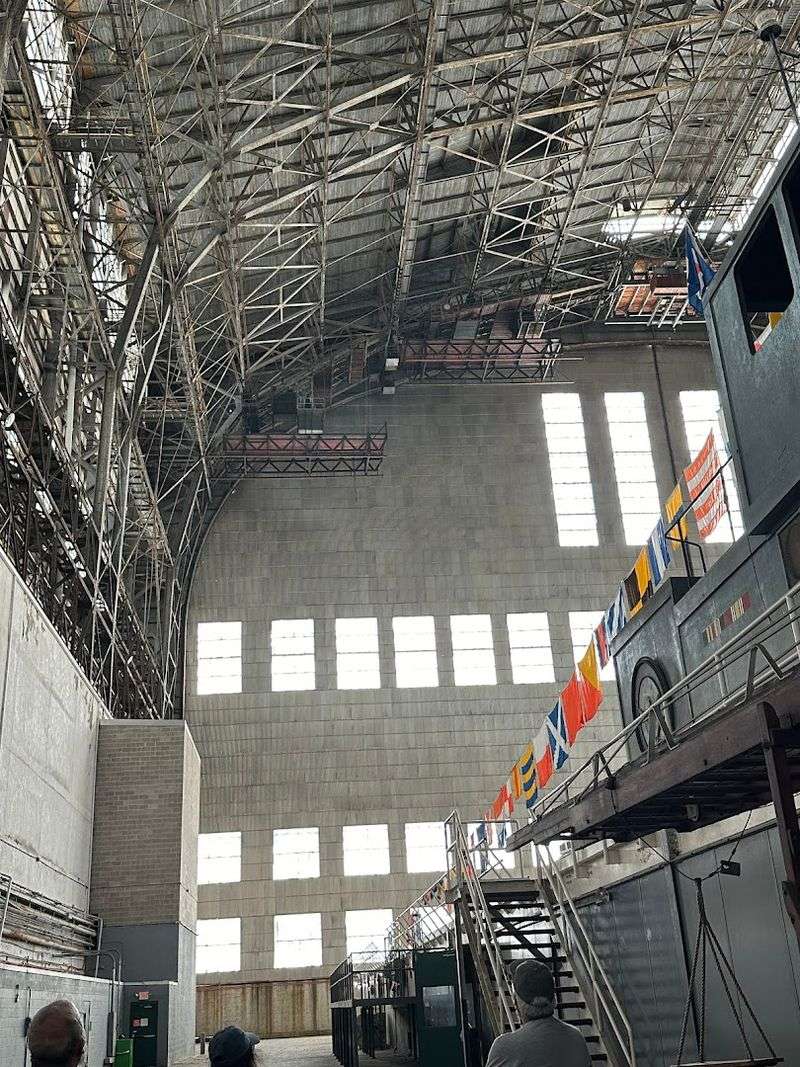
After the crash site visit, the tour moves inside Hangar No. 1, one of the most impressive structures on the base. Built in 1921, this hangar is large enough to have housed multiple airships at once, and its sheer scale is difficult to fully process until you are standing inside it.
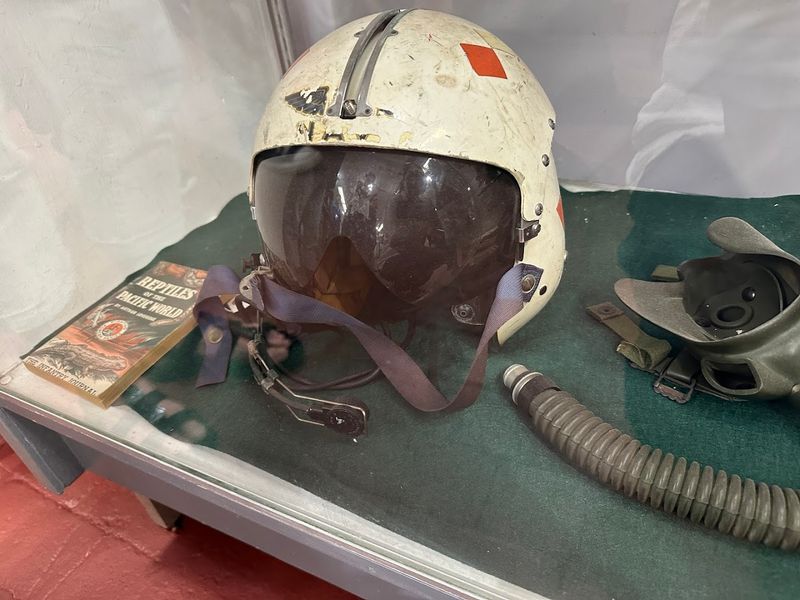
The hangar has since been converted for military training purposes, but it still contains a dedicated display area with photographs, memorabilia, and recovered pieces from airships around the world. This section also functions as a gift shop and bookstore, with all proceeds going directly toward funding the tours.
Beneath the main hangar floor, there is a military museum featuring dioramas, personal effects, and artifacts from all branches of the armed forces and multiple conflicts. The POW-MIA collection in particular draws strong reactions from those who walk through it.
The museum is compact but densely packed with genuine historical material.
A Site That Has Never Been Disturbed
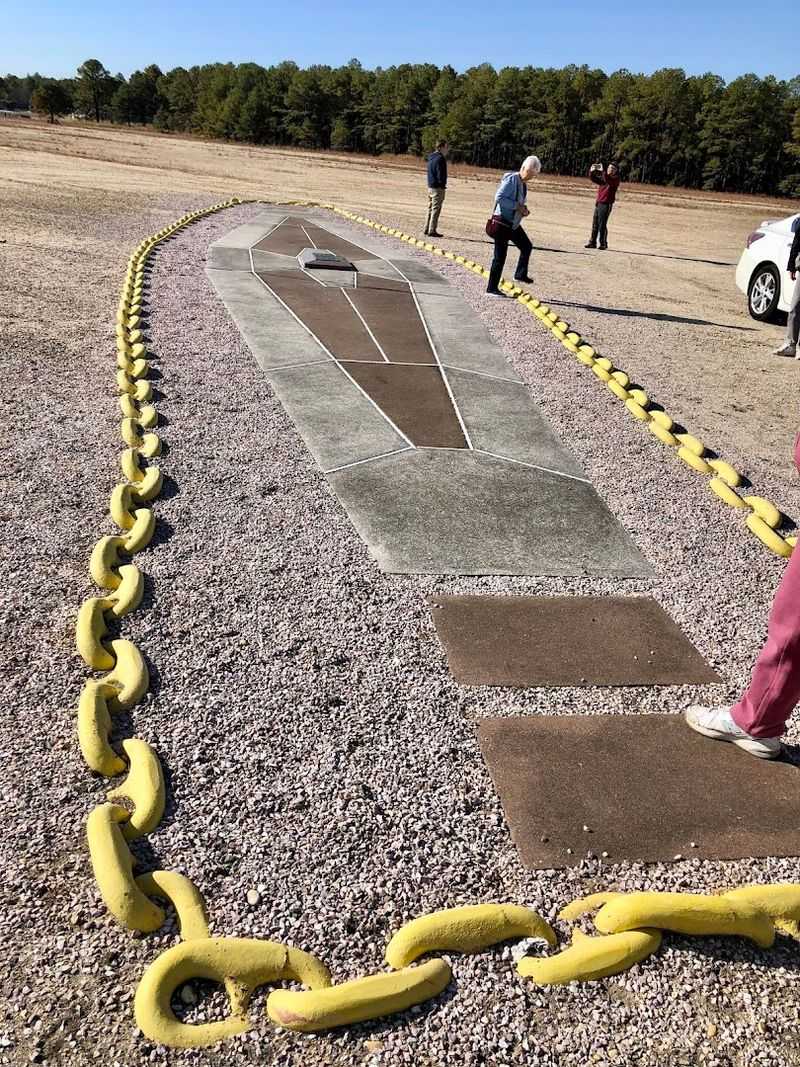
One of the most remarkable facts about the Hindenburg crash site is that the land itself has never been altered, built upon, or repurposed since the event in 1937. The field remains exactly as it was, which is an extraordinary preservation outcome for a site of this age and significance.
Most historic sites of this nature have been developed, paved over, or substantially changed in the decades since the event they commemorate. The fact that this one has been left intact is partly a result of its location inside a military base, where commercial development was never a concern.
That untouched quality gives the site a different character than most memorials. There is no constructed environment framing the experience.
The ground, the open sky, and the marker are all that is there, and that combination creates a connection to the original event that is both direct and unmediated.
History feels genuinely close here.
What the Hindenburg Disaster Changed About Aviation
The Hindenburg disaster did not just end one airship’s story. It effectively closed the chapter on commercial airship travel worldwide.
Public confidence in hydrogen-filled dirigibles collapsed almost overnight after the footage and photographs from Lakehurst circulated around the globe.
Germany grounded its remaining airships, and no major airline or government seriously pursued passenger airship programs after 1937. The future of transatlantic travel shifted entirely to fixed-wing aircraft, which were already advancing rapidly in the late 1930s.
Historians and aviation experts have debated the cause of the fire for decades. Theories have ranged from static electricity igniting leaked hydrogen to deliberate sabotage, but no single explanation has been universally accepted.
What is not debated is the outcome: an entire mode of transportation was abandoned in the wake of one disaster.
The memorial at Lakehurst stands as a marker for that turning point, a place where the future of aviation was permanently redirected.
The Base’s Broader Role in American History

Lakehurst Naval Air Station, now part of Joint Base McGuire-Dix-Lakehurst, has a history that stretches well beyond the Hindenburg disaster. The base was established in the early 1920s as the primary American facility for lighter-than-air craft operations, and it played a central role in the development of airship technology in the United States.
Several American military airships were based here, and the site was also the location of the first international airport in the country, an initiative connected to Franklin D. Roosevelt’s tenure as Secretary of the Navy.
That layer of history adds considerable depth to what the base represents in American aviation and military heritage.
The museum inside Hangar No. 1 reflects this broader legacy, with collections that span multiple branches of the military and multiple eras of conflict. The Hindenburg memorial is the most well-known reason people visit, but the full scope of the base’s history is just as compelling.
Practical Tips for Making Your Visit Count
Planning a visit to the Hindenburg Disaster Memorial requires more preparation than most travel experiences. The first step is contacting the Lakehurst Historical Society at least one month before the intended visit date.
They handle all tour coordination and will request personal identification information for every member of the group.
Tours are not available every day. The memorial is open only on Wednesdays from 10 AM to 1 PM, so scheduling needs to account for that limited window.
Arriving without prior clearance will result in being turned away at the gate, as base security does not have the authority to grant same-day access for tour purposes.
Bringing a valid government-issued photo ID on the day of the visit is essential. Comfortable walking shoes are a practical choice since the tour covers multiple locations across the base.
The three-hour format means there is plenty of time to ask questions and absorb the full scope of what the site and museum have to offer.
Why Ocean County Holds a Piece of World History

Ocean County, New Jersey is better known for its beaches and shoreline communities than for aviation history, which makes the presence of this significant site even more striking. The Lakehurst area sits in the middle of the Pine Barrens, a vast stretch of forested land that feels worlds away from the coastal tourism strip.
For residents of Ocean County, the Hindenburg disaster is a piece of local history that carries national and international significance. The crash happened in their backyard, and the base has been a fixture of the regional landscape for over a century.
That local connection gives the memorial a grounded, community-supported character. The volunteers who run the tours are often people with personal ties to the area or to the military, and their investment in preserving and sharing this history is evident.
A world-changing event happened in this quiet corner of New Jersey, and the people who maintain this memorial make sure it is not forgotten.
A Place Worth Every Bit of Effort to Reach

Not every historic site demands effort from its visitors, but the ones that do often leave the deepest impression. The Hindenburg Disaster Memorial at Lakehurst is that kind of place.
The background check, the scheduling, the drive to a military base in the middle of New Jersey all of it filters out the casual passerby and leaves behind people who genuinely want to be there.
That shared sense of purpose among tour participants makes the experience feel more like a collective act of remembrance than a standard tourist outing. The guides respond to it, the atmosphere reflects it, and the site itself seems to reward it.
For anyone with an interest in aviation, military history, or simply the kind of moments that reshape the world, this memorial delivers something that is hard to put into words after the fact. The field is quiet, the marker is modest, and the history is enormous.
That contrast is exactly what makes it worth every mile of the drive.



