 Unearth The Voyage

Some lake views ask for a quick photo and a polite nod, but this one made me slow down, stay longer, and let the wind rearrange my entire attitude. Out on Michigan’s western shore, I found a lighthouse visit that delivers the full Great Lakes drama – bright red steel, rolling water, long horizons, and that clean, open feeling people chase all summer – without turning the experience into a shoulder-to-shoulder shuffle.
What surprised me most was how calm it could feel even at such a famous spot, especially when I timed my walk outside the busiest stretches of the day. Keep reading, and I will take you along the pier, into the story behind the lights, through the best seasons to visit, and into the small practical details that can turn a simple stop into one of the most memorable walks on Lake Michigan.
Where the walk begins
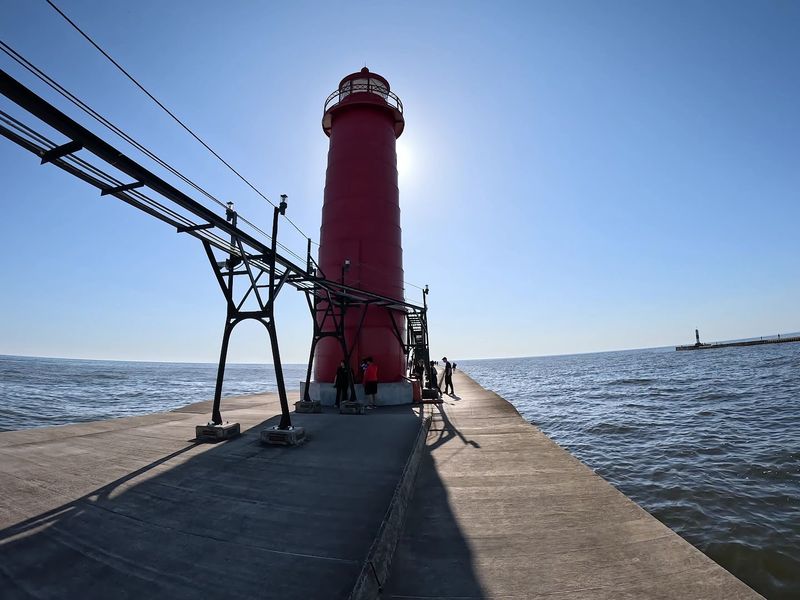
Nothing about this place needs a dramatic introduction because the setting does the work for you. I visited the Grand Haven South Pierhead Outer Lighthouse at Grand Haven, MI 49417, United States, and the first thing that struck me was how the long pier pulls your attention straight toward the bright red tower and the broad sweep of Lake Michigan.
The walk itself feels simple, but the scenery keeps changing with every few steps. On one side, I could watch boats, beachgoers, and the shoreline; on the other, the lake stretched out in a huge sheet of blue that made the whole coast feel bigger than any map suggests.
Even though this lighthouse is well known, it still rewards an early start or a quieter weekday visit. I liked that it felt accessible, free to admire, and rooted in everyday life instead of wrapped in fuss, which is exactly why the place stayed with me long after my shoes left the pier.
The red landmark at the edge of the lake
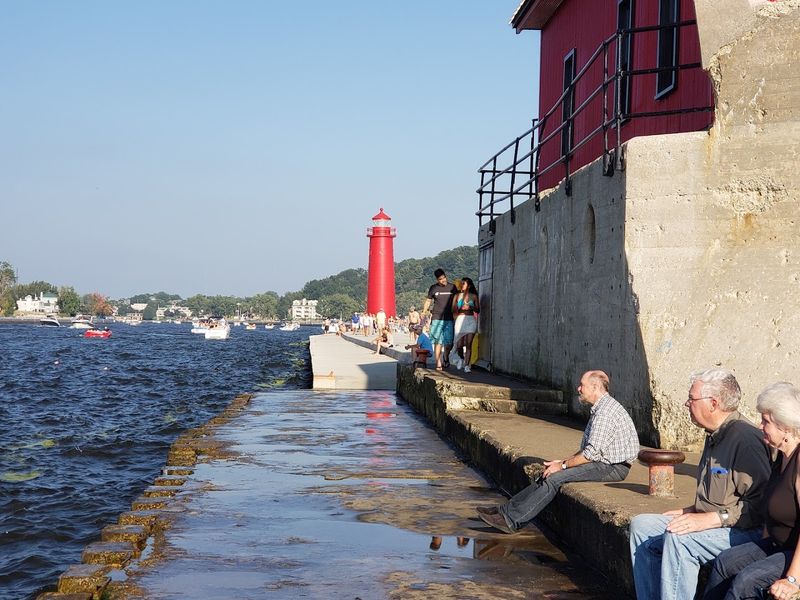
That bold red color is not subtle, and honestly, it should not be. I loved how the lighthouse stands at the end of the pier with a practical confidence, giving the whole waterfront a clear focal point while the lake and sky keep changing around it.
Built as part of a working navigation system, the structure still looks purposeful instead of ornamental. The steel catwalk, the matching forms along the pier, and the open sweep of water give the site an industrial character that fits the Great Lakes perfectly, with just enough elegance to make every photo look intentional.
What makes it special for me is the balance between function and beauty. You are not looking at a lighthouse tucked away on a distant bluff or hidden behind admission gates, but one integrated into the town’s daily rhythm, where joggers, photographers, families, and quiet walkers all share the same view and leave with windblown hair.
Views that feel bigger than the map
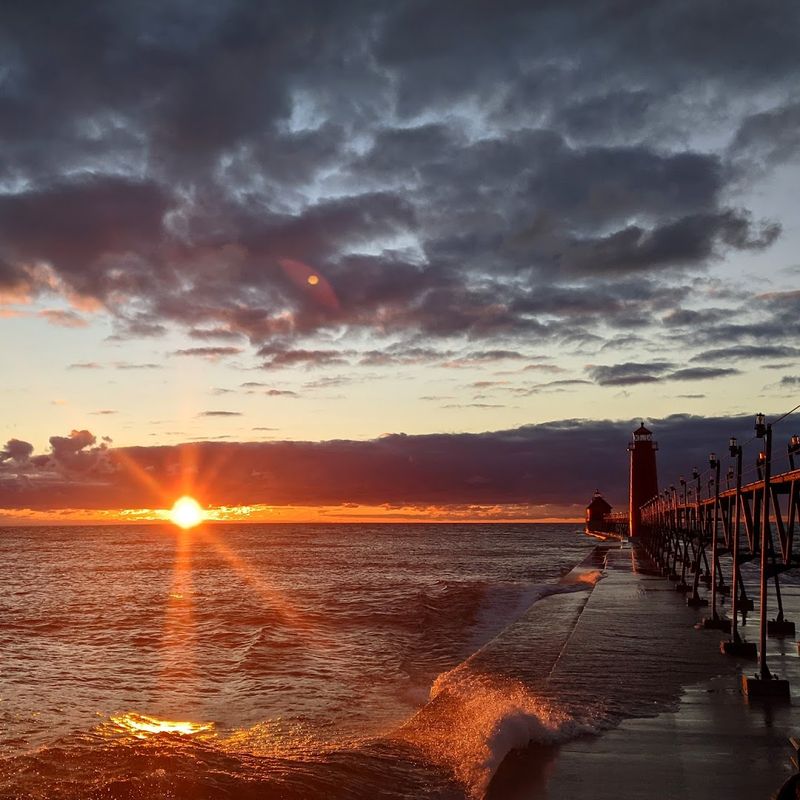
A map can tell you where the lighthouse sits, but it cannot prepare you for how spacious everything feels once you are out on the pier. I kept stopping for no practical reason except that Lake Michigan looked enormous, bright, and slightly different every time the clouds shifted overhead.
That is the real charm here. The view is not cluttered by too many distractions, so your eye moves easily from the lighthouse to the beach, from the shoreline to the water, and from the water to a horizon that feels clean and almost oceanlike without losing its unmistakably Michigan character.
I found the experience especially satisfying because the scene gives you variety without requiring much effort. You can stand still and still notice movement everywhere – gulls turning in the air, waves hitting the pier, boats easing through the channel, and light bouncing off the lake like it has its own favorite angle.
Why quieter hours matter

Popularity and peace do not always get along, but this lighthouse gives you a fair shot at both if you pick your timing well. I had the best experience by arriving earlier in the day, when the air felt cooler, the pier was less crowded, and the walk carried more of that calm lakeside rhythm.
Later hours, especially on warm summer evenings, can draw plenty of people, and it is easy to understand why. Sunset here is a major event, but mornings and quieter weekdays let the details shine – the sound of shoes on concrete, the steady pull of the breeze, and the neat geometry of the catwalk against the sky.
That quieter window changes the whole mood of the visit. Instead of moving in a stream of people, I could pause whenever I wanted, take in the lake properly, and enjoy the lighthouse as a real place rather than a fast backdrop, which is when the entire pier started to feel like a destination instead of a checklist stop.
Wind, waves, and a little caution

Lake Michigan likes to remind visitors that pretty scenery and practical caution can share the same address. During my walk, the breeze shifted from refreshing to forceful in a hurry, and that made me appreciate how exposed the pier can feel when waves pick up and the surface turns slick.
This is not a place for careless strolling or flimsy footwear. The path is straightforward, but the lack of barriers along the water means you need to pay attention, especially on windy days, during colder weather, or anytime the waves are showing off a bit more personality than usual.
I do not mention that to sound stern. I mention it because the visit is far more enjoyable when you treat the conditions seriously, keep your steps steady, and let common sense ride shotgun, leaving you free to enjoy the drama of the lake, the clean lines of the pier, and that satisfying moment when caution and beauty get along just fine.
A strong sense of history without a museum feel
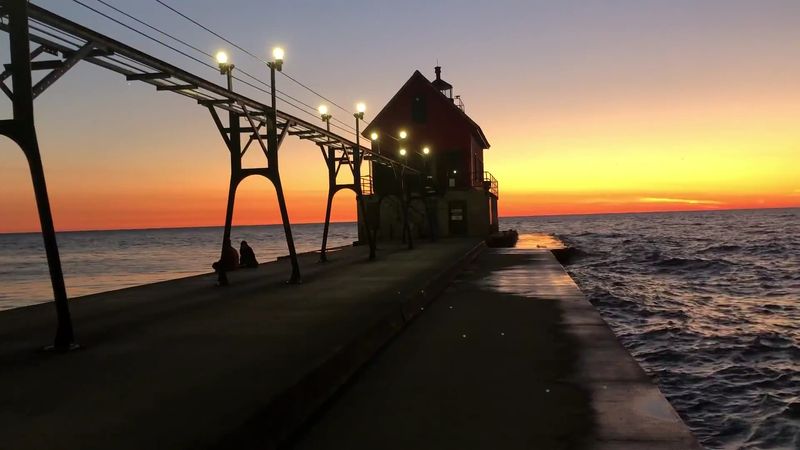
Some historic sites feel like they want you to admire them from a respectful distance, but this one keeps history in motion. I liked that the Grand Haven South Pierhead Outer Lighthouse and its connected structures still read as working parts of a lakeshore built for navigation, weather, and movement.
The roots of the site go back to the nineteenth century, and the present lighthouse became part of that evolving system in the early twentieth century. You can sense that layered story in the steel catwalk, the pier itself, and the straightforward design that prioritizes usefulness while somehow ending up deeply photogenic at the same time.
That combination gave the place real personality for me. It is historical without feeling dusty, recognizable without becoming overpolished, and important without needing a giant lecture to prove it, which means you can absorb the story simply by being there, with the lake wind in your face and the red tower holding its line ahead.
The sunset reputation is earned
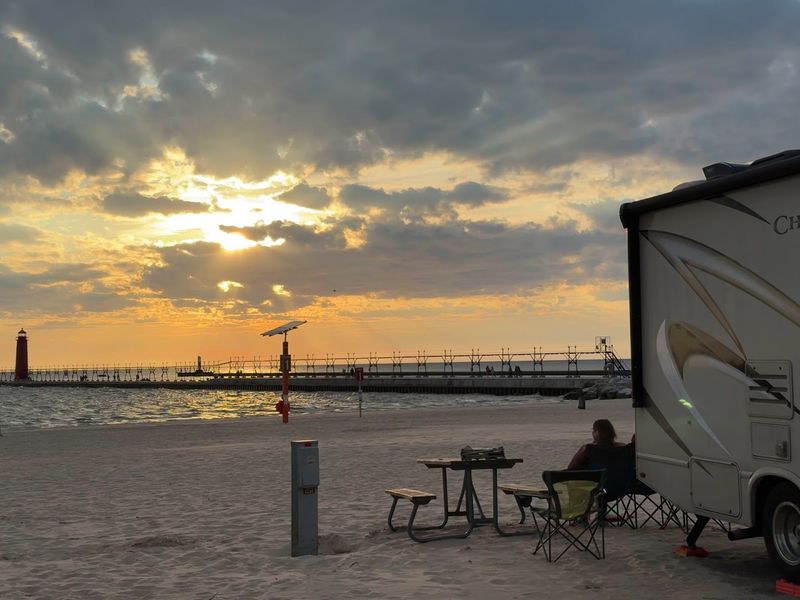
Sunset gets tossed around as a selling point at almost every waterfront stop, but here it really deserves the reputation. I watched the light soften over Lake Michigan, and the whole scene sharpened at the same time – warmer sky, richer color on the lighthouse, and a horizon line that seemed to glow quietly.
The pier becomes a front row seat without feeling overly staged. People spread out, cameras come up, conversations get shorter, and the view starts doing what no souvenir shop can manage, which is giving everyone something memorable while asking for nothing more than patience and a decent jacket.
Even then, I would not call it only a sunset place. The reason the evening works so well is that the setting already has strong bones: the red lighthouse, the lake, the beach, the channel, and the long approach that lets anticipation build slowly, so when the color peaks, the whole shoreline takes a well earned bow.
More than a photo stop
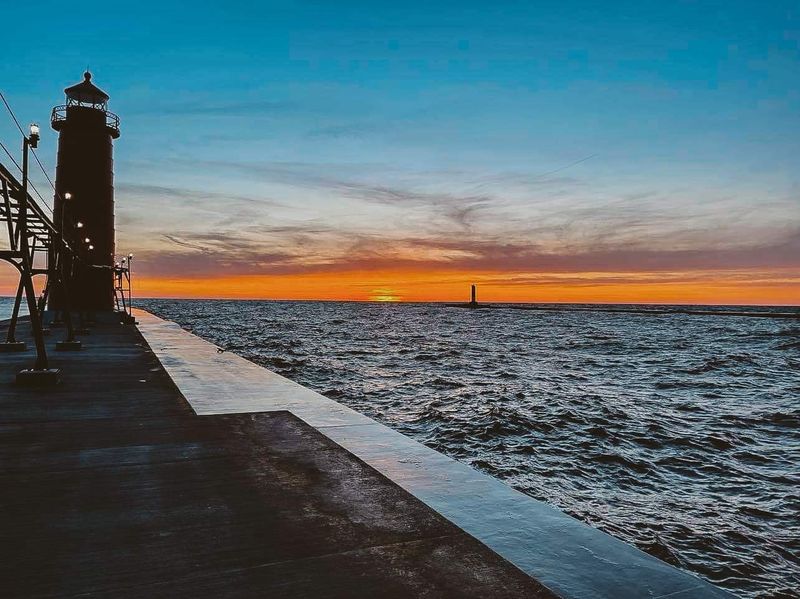
A lot of lighthouse visits are quick by design, but this one invites you to stay in motion. I saw people treating the pier as a walking route, a running stretch, a fishing spot, and a place to pause for ten quiet minutes, which gave the whole area a lived in feeling instead of a strictly tourist one.
That flexibility makes the visit better. You can pair the lighthouse with time on the nearby beach, a longer waterfront walk, or a simple sit down to watch boats pass through the channel, and none of it feels forced because the lighthouse is woven into the shoreline rather than isolated from it.
I appreciated that the experience could be as active or as relaxed as I wanted. On one visit, I moved slowly and took too many photos of the same angle like a person who had forgotten self control; on another, I treated the pier as part of a longer lakeside wander, and both versions felt entirely right.
How the seasons change the mood

One of my favorite things about this lighthouse is that it does not belong to just one season. Summer brings the classic Lake Michigan look – blue water, bright beach days, and plenty of activity – but cooler months reveal a tougher, quieter personality that makes the red structure stand out even more.
Spring can feel fresh and brisk, with shifting skies and a sense that the shoreline is stretching awake again. Autumn has its own appeal too, especially when the crowds thin a bit and the air turns crisp enough to make a simple pier walk feel sharper, cleaner, and somehow more focused.
I would not promise the same experience every time, and that is exactly the point. The lighthouse keeps its character, but the lake keeps rewriting the atmosphere around it, which gives repeat visits real value and makes the place feel less like a single postcard and more like a familiar landmark with several good moods.
Tips for an easy visit

A little planning goes a long way here, and that is good news because the visit itself is pleasantly uncomplicated. I would wear solid shoes, bring a layer even on a bright day, and check the conditions before heading out, since wind and waves can change the feel of the pier faster than most people expect.
The listed visiting hours generally run from 8 AM to 10 PM, which gives you room to choose morning calm or evening color. Parking and beach access around the waterfront can shape your approach, so I found it useful to think of the lighthouse as part of a broader Grand Haven shoreline walk rather than an isolated stop.
Most of all, I would give yourself more time than seems necessary. The place looks straightforward on paper, but the combination of open water, changing light, and that bright red landmark has a sneaky habit of stretching a short visit into a longer, happier one, and that is a scheduling problem I can fully support.



