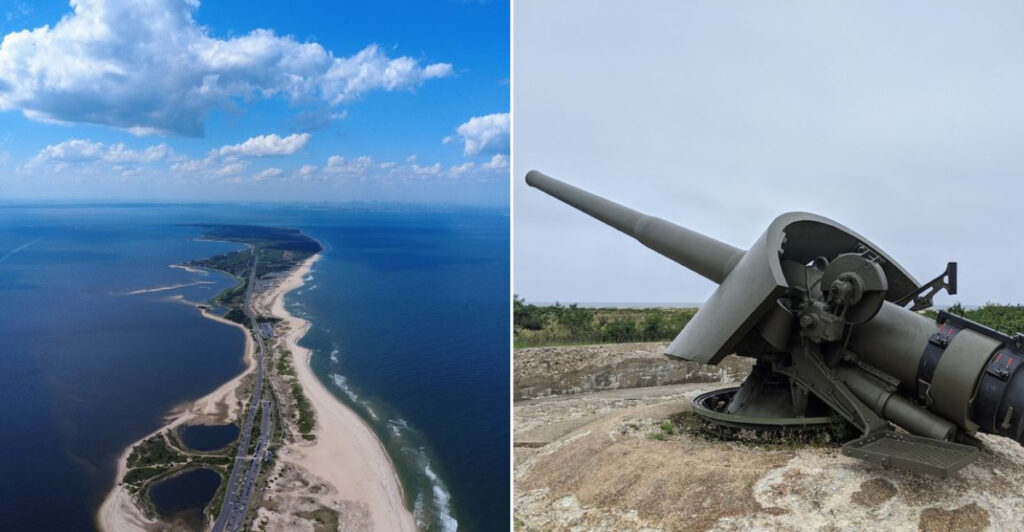
There is a narrow strip of land jutting into the Atlantic along the northern edge of the Jersey Shore that most people drive past without a second thought. That is a mistake.
Sandy Hook holds more than seven miles of coastline, a lighthouse that has been standing since 1764, abandoned military bunkers from World War II, and a beach so talked-about it barely needs an introduction. Part of the Gateway National Recreation Area and managed by the National Park Service, this peninsula offers something genuinely rare along the East Coast: wild, federally protected land sitting just a short drive from New York City.
There are shipwreck tales buried in its history, ghost-town vibes at Fort Hancock, and views of the Manhattan skyline from the beach. This is one of those places that rewards the curious and keeps them coming back.
Where the Peninsula Begins: Location and Access
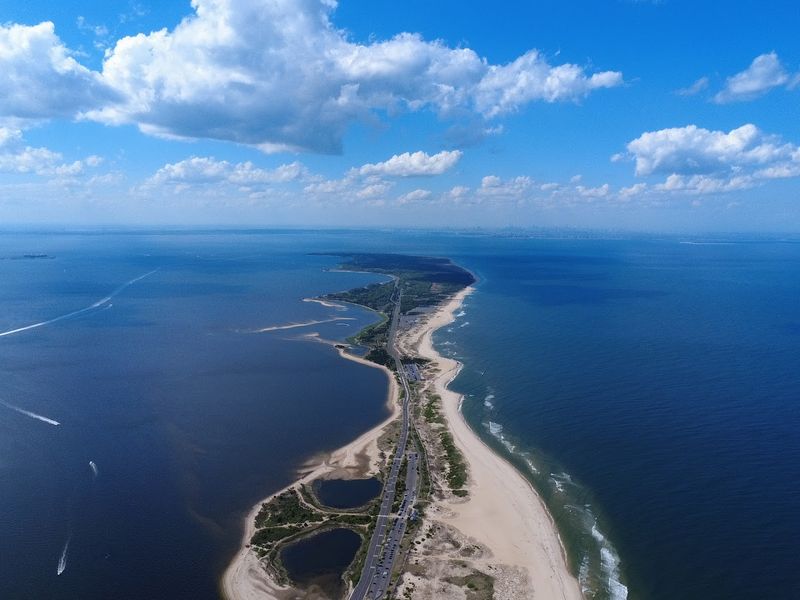
The official address for Sandy Hook, part of Gateway National Recreation Area, is 128 S Hartshorne Dr, Highlands, NJ 07732. The park sits at the northern tip of the Jersey Shore, separated from the mainland by the Shrewsbury River and connected by a single road that runs the length of the peninsula.
Getting there is straightforward from most of New Jersey and New York. Drivers can reach the entrance via Route 36 through Highlands, and the park is open 24 hours a day, every day of the year.
There is no gate that locks you out at midnight.
During the summer season, from Memorial Day through Labor Day, a parking fee applies until 6 p.m. After that, and throughout the entire off-season, parking is free.
The National Park Service website at nps.gov/gate has updated fee information and maps that make planning a visit much easier.
The Lighthouse That Outlasted Everything
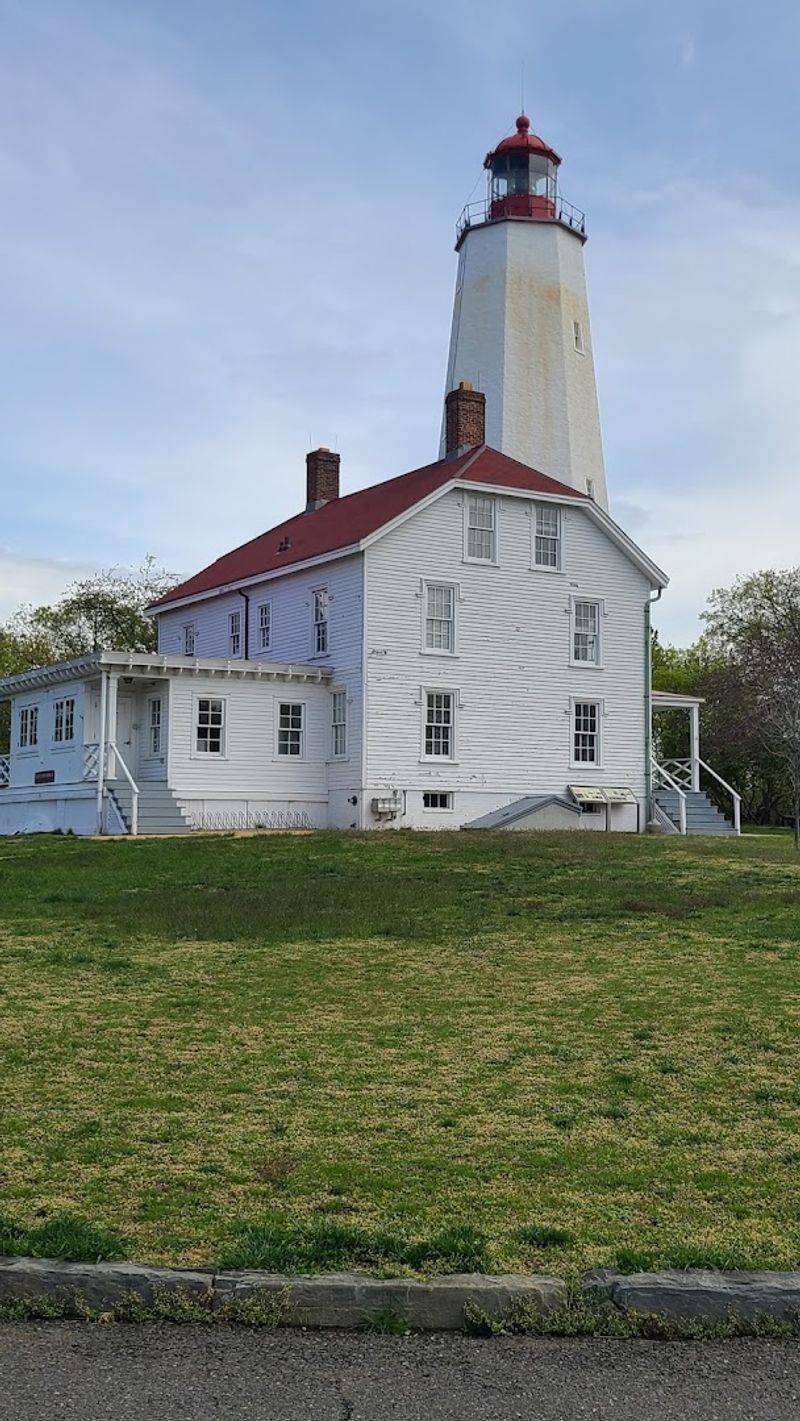
Built in 1764, the Sandy Hook Lighthouse is the oldest working lighthouse in the United States, and it still guides ships through the waters of Lower New York Bay. That is not a small claim.
While other colonial-era structures crumbled or burned, this octagonal white tower kept standing through wars, storms, and centuries of change.
The lighthouse stands 103 feet tall and was constructed using rubblestone masonry. During the American Revolution, British forces actually used it as a navigational aid, which made it a target for Continental Army troops who tried unsuccessfully to destroy it.
Today, the lighthouse is a National Historic Landmark and open for guided tours on weekends during the warmer months. The view from the top gives a sweeping look at the bay, the ocean, and the rooftops of Fort Hancock below.
For history enthusiasts, this tower alone justifies the trip across the bridge.
Fort Hancock: The Ghost Town With a Military Past
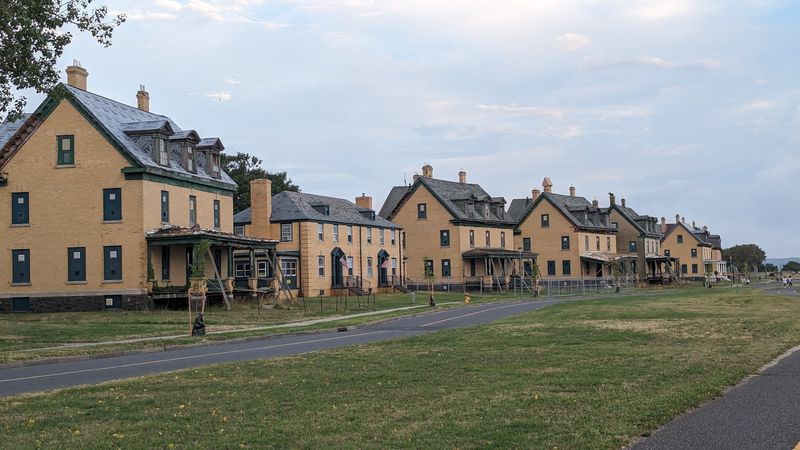
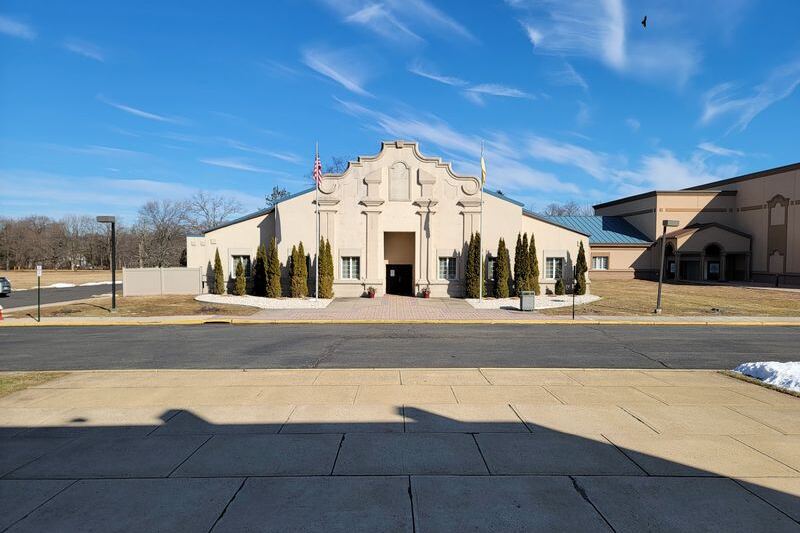
Fort Hancock operated as an active U.S. Army installation from 1895 until 1974.
At its peak, it housed thousands of soldiers, operated anti-aircraft guns, and served as a critical defensive position protecting New York Harbor from potential attacks during both World Wars.
Walking through the grounds today feels like stepping into a time capsule that nobody fully packed up. Rows of historic brick buildings still line the parade ground.
Some are being restored, while others sit quietly with their paint peeling and windows clouded with age. The National Park Service has been working with preservation groups to bring several structures back to life.
The fort includes a museum, a chapel, and a collection of officer houses that once sheltered military families. History runs deep here.
The grounds are open to explore on foot, and the combination of wide-open lawns and crumbling architecture creates an atmosphere unlike anything else on the Jersey Shore.
The Secret Batteries Hidden in the Dunes
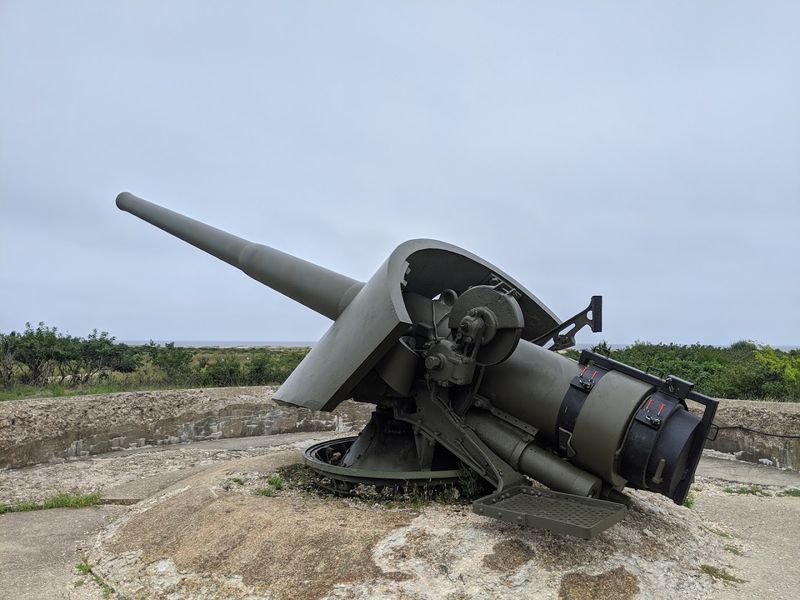
Most people driving through Sandy Hook have no idea they are passing concrete military batteries buried beneath the dunes. Battery Gunnison and Battery Potter are two of the most visible remnants of the coastal defense network that once protected the northeastern United States from naval attack during World War II.
Battery Potter, completed in 1894, was one of the first gun batteries in the country to use a disappearing gun system, where the weapon would rise to fire and then drop back below the parapet to reload out of sight. It is an engineering concept that sounds almost fictional but was very real and very effective for its time.
The batteries are not just concrete slabs in the ground. They include tunnels, ammunition storage rooms, and observation posts that visitors can explore on ranger-led tours.
The National Park Service offers periodic tours that bring these underground spaces to life with historical context that makes the whole visit click into place.
Beach A and the Whispered Reputation
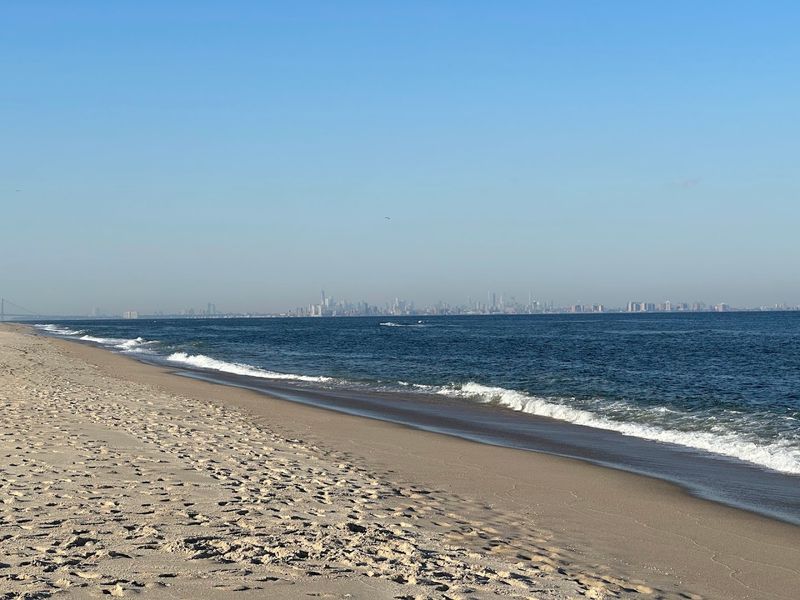
Gunnison Beach, located near the northern tip of Sandy Hook, is the beach people keep whispering about. It is one of the few federally designated clothing-optional beaches on the East Coast, which earns it a reputation that travels fast through word of mouth.
The beach has been operating in this capacity for decades and draws a crowd that values privacy, open space, and a stretch of coastline that feels genuinely removed from the typical Jersey Shore scene.
Beyond its designation, Gunnison Beach is simply a beautiful stretch of Atlantic shoreline. The water is clear, the sand is wide, and the dunes behind it are protected federal land.
There are no boardwalks, no carnival rides, and no food stands cluttering the view.
The walk from the parking area to the beach is longer than at other access points, which naturally keeps the crowd manageable. People who make the trek tend to be the kind who appreciate what they find when they get there.
Shipwreck Stories Written by the Sea
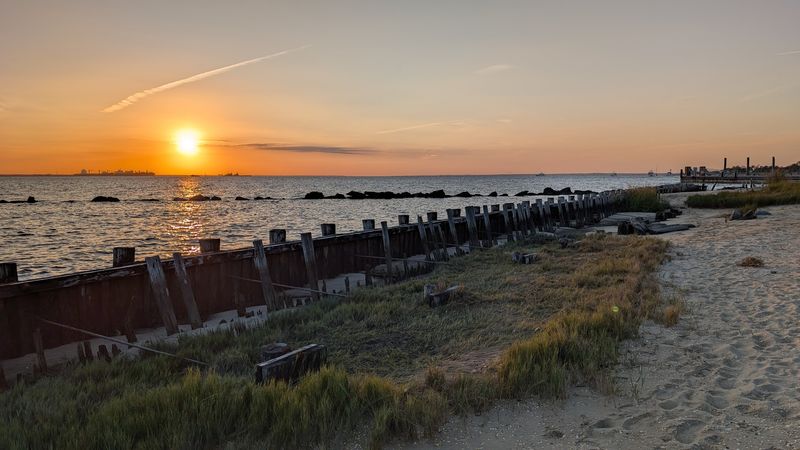
The waters around Sandy Hook have claimed more ships than most people realize. The combination of shifting sandbars, strong currents, and the heavy maritime traffic that historically funneled through the entrance to New York Harbor made this stretch of coastline particularly unforgiving for vessels that misjudged conditions.
After major storms, the tip of the peninsula becomes a landing zone for whatever the ocean decides to push ashore. Stranded sailboats, channel buoys ripped from their moorings, and debris from distant shores all wash up along the northernmost beaches.
Beachcombers who visit after a storm often find the shoreline completely rearranged, with new objects half-buried in sand that was not there the week before.
The history of local maritime navigation is tied directly to the lighthouse, which was built specifically because so many ships were running aground in the dark. The lighthouse did not end the wrecks entirely, but it changed the odds considerably for anyone sailing toward New York after 1764.
Wildlife That Lives Between the Dunes

Sandy Hook is not just a beach destination. The peninsula functions as an important wildlife corridor, and the variety of species that pass through or take up residence here is genuinely impressive.
Migratory birds use the hook as a rest stop during their seasonal journeys, making it a reliable destination for birdwatchers from spring through fall.
Piping plovers, a federally threatened shorebird, nest on the beaches here each summer. The National Park Service cordons off nesting areas to protect the birds, which means some sections of beach may be restricted during the breeding season.
Harbor seals are sometimes spotted hauled out on the rocks near the tip of the hook during winter months.
The maritime forest in the center of the peninsula provides habitat for a wide range of songbirds, raptors, and small mammals. Holly trees, bayberry shrubs, and beach plum create a dense canopy that feels completely separate from the open shoreline just a short walk away.
The NYC Skyline View You Did Not Expect
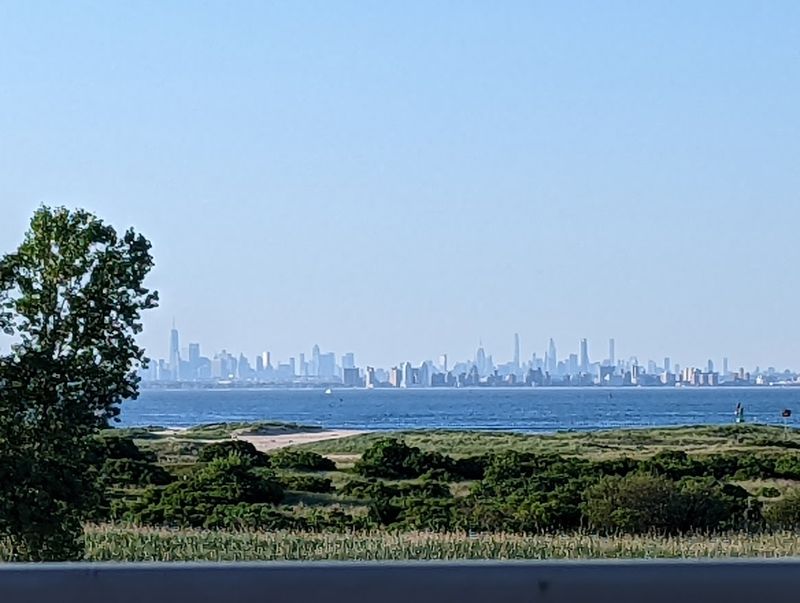
Standing on the bay side of Sandy Hook and looking north, the Manhattan skyline fills the horizon in a way that stops people mid-sentence. The distance across the water is roughly 18 miles, which is close enough to make out the distinctive shapes of the skyscrapers but far enough to frame the entire skyline in a single glance.
This view is one of the most photographed in New Jersey, and it earns that status without much effort. Sunrise and sunset both produce dramatically different versions of the same scene.
At sunrise, the light hits the eastern faces of the buildings while the water in the bay catches the color. At sunset, the skyline goes dark against an orange western sky.
The view is available from several points along the bay side of the peninsula, including areas near the officer houses at Fort Hancock and the northern parking areas. No special equipment or timed entry is required to enjoy it.
Hiking, Biking, and Getting Around the Peninsula
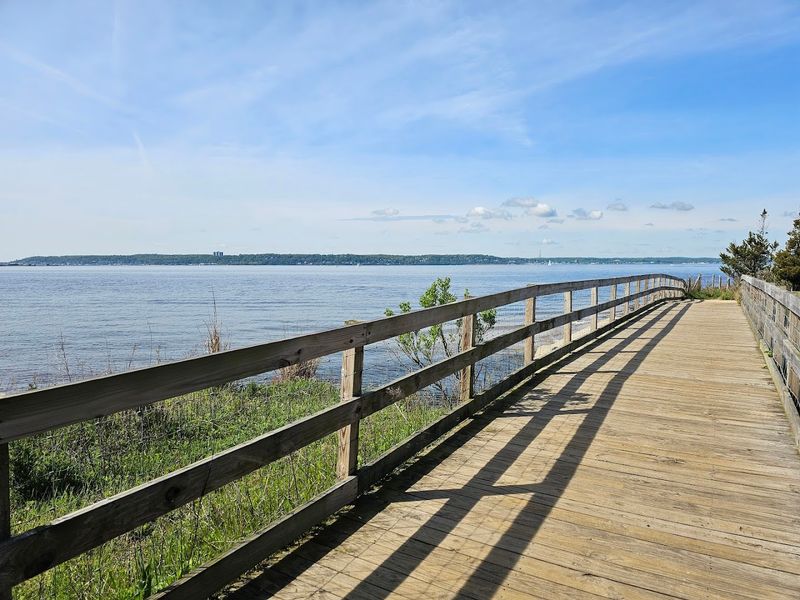
The main road running through Sandy Hook doubles as one of the best cycling routes in northern New Jersey. The road is flat, paved, and stretches nearly the full length of the peninsula, making it accessible for riders of all fitness levels.
Bicycle rentals are available within the park, so showing up without gear is not a dealbreaker.
Hiking trails cut through the maritime forest and along the bay shoreline, offering a quieter alternative to the ocean beaches. The trails are not technically demanding, but they do pass through areas that feel genuinely wild, with dense holly forest closing in on either side of the path.
The park is open 24 hours, which means early morning and evening walks are entirely possible. Fishing is popular along the bay side, particularly near the tip of the hook where currents bring fish close to shore.
The combination of flat terrain and varied environments makes Sandy Hook one of the more versatile outdoor destinations in the region.
Off-Season Sandy Hook Is a Different Place
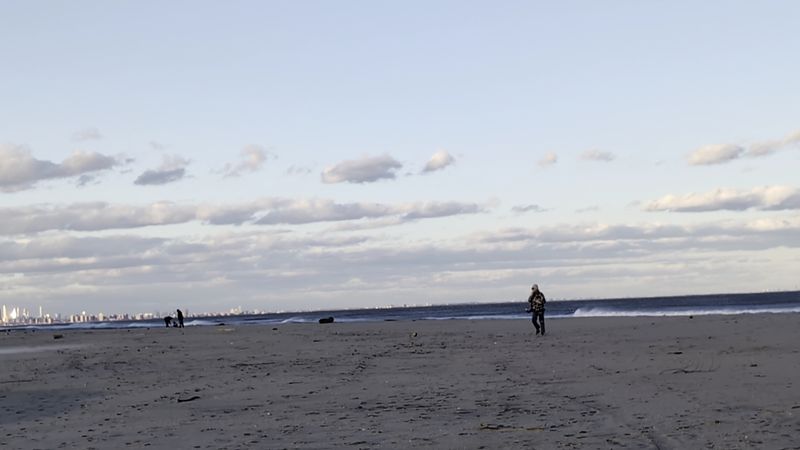
Summer at Sandy Hook brings crowds, parking fees, and the full energy of a popular federal beach. The off-season brings something else entirely.
From September through May, the peninsula empties out in a way that feels almost startling given how busy it gets in July and August.
Parking is free outside the summer season, and the beaches are largely deserted. The combination of wide-open shoreline and quiet military grounds creates a different kind of experience, one that long-time regulars tend to guard somewhat jealously.
People who have been coming here for decades often say the off-season is when Sandy Hook shows its real character.
Winter visits come with the possibility of spotting harbor seals, watching migratory birds funnel south along the coast, or simply walking a beach that feels like it belongs entirely to whoever shows up. The park remains open 24 hours year-round, and the lighthouse and fort grounds are accessible regardless of season.
Practical Tips for Planning Your Visit
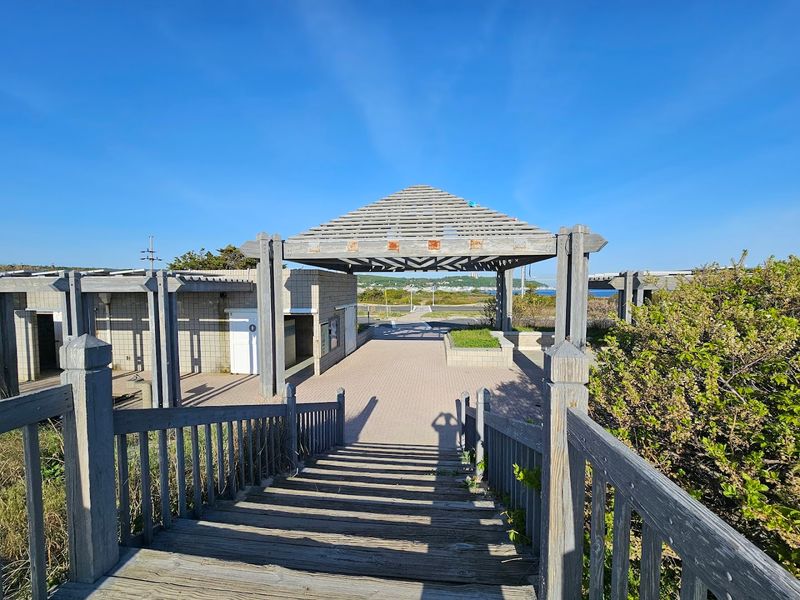
A few practical details make a Sandy Hook visit go much more smoothly. Parking fees apply from Memorial Day through Labor Day, running until 6 p.m. each day.
The standard rate is $20 per vehicle, with a reduced rate for seniors. After 6 p.m. and throughout the rest of the year, parking is free across the park.
The park accepts credit and debit cards for payment, so arriving with only cash could cause an issue at the pay stations during the fee season. Bathrooms and freshwater showers are available at several beach areas, and lifeguards are posted at the main ocean beaches during the summer months.
The National Park Service website at nps.gov/gate is the most reliable source for current hours, closures, and ranger program schedules. Battery tours and lighthouse tours are typically offered on weekends and require no advance reservation.
Bringing a bike, a good pair of walking shoes, and a willingness to explore beyond the nearest parking lot will make the whole trip worth the drive.
Why People Keep Coming Back
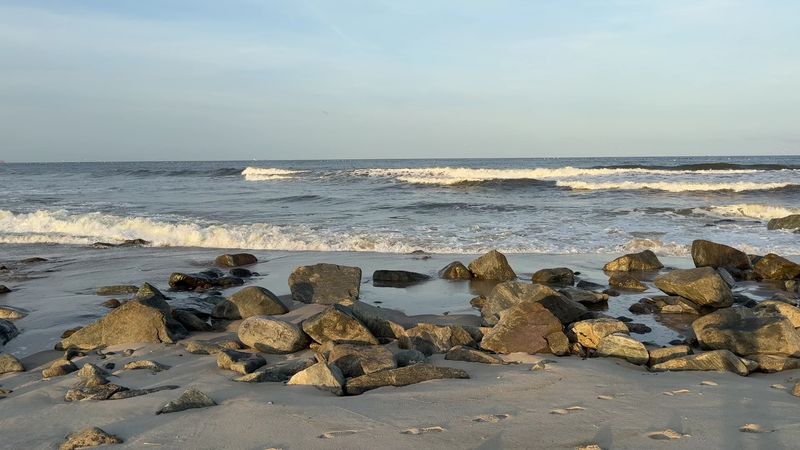
Sandy Hook has a quality that is difficult to pin down but easy to recognize once you have been there. It does not have the boardwalk energy of Point Pleasant or the resort atmosphere of Cape May.
What it has instead is space, history, and a coastline that the federal government has kept largely intact since the National Park Service took over management in 1972.
The combination of ocean beaches, bay beaches, a working lighthouse, abandoned military infrastructure, protected wildlife habitat, and a clear view of New York City does not exist anywhere else in the state. Each of those elements would be worth a visit on its own.
Together, they make Sandy Hook one of the most layered outdoor destinations on the entire East Coast.
People who discover it tend to return, often bringing someone new each time. The peninsula has a way of holding onto the people who take the time to actually explore it rather than just claim a spot on the sand and stop there.
Share this story