Few museums are as committed to a single subject as this one. Located in a restored 1912 railroad depot in southeastern Idaho, the Idaho Potato Museum turns one of the state’s most famous crops into an unexpectedly entertaining and educational attraction.
What makes the museum stand out is its mix of history, quirky exhibits, and genuine surprises. Visitors can learn about the potato industry’s impact on Idaho, see record-setting displays, browse unusual potato-themed memorabilia, and discover stories that range from agricultural innovation to pop culture.
It may sound like a novelty at first, but this museum quickly proves there is far more to the humble potato than most people realize.
A Historic Depot With a Starchy New Purpose

The building that houses this museum has its own story worth telling. The Idaho Potato Museum is set inside the original 1912 Oregon Short Line Railroad Depot at 130 NW Main St, Blackfoot, Idaho 83221, and the structure itself is a registered piece of local history.
Blackfoot proudly carries the title of Potato Capital of the World, and this museum is the town’s most spirited attempt to prove it deserves that crown. The depot’s brick exterior and classic railroad architecture give the whole place a grounded, authentic feel before you even walk through the door.
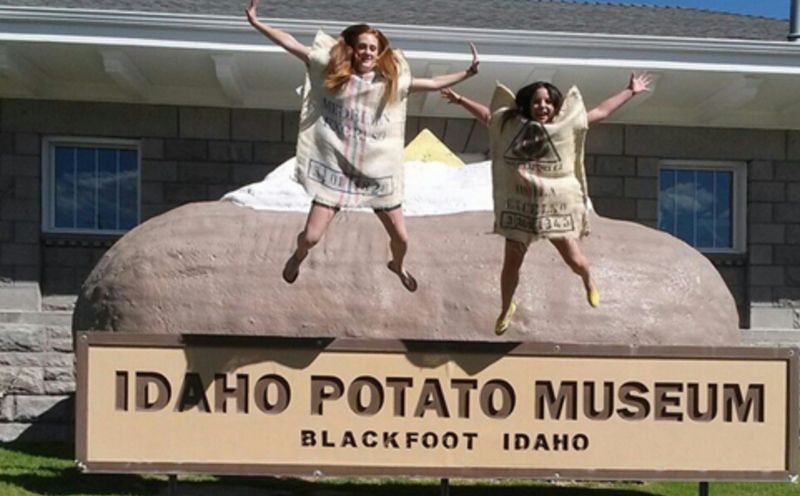
Out front, a giant baked potato sculpture greets every visitor with the kind of absurd confidence that only Idaho could pull off. An Eagle Scout reportedly created the photo opportunity spot beside it, and nearly everyone who visits ends up posing there.
The museum is open daily from 10 AM to 6 PM and can be reached at 208-785-2517.
How the Humble Spud Conquered Idaho’s Volcanic Soil
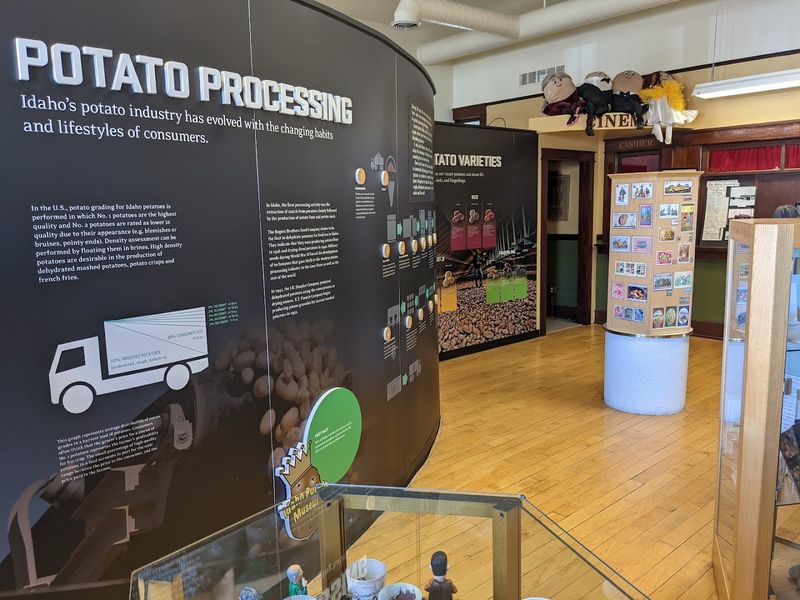
Long before Idaho became synonymous with potatoes, the crop had to earn its place in the soil. The museum walks visitors through the full origin story, tracing the potato’s journey from its roots in South America all the way to the volcanic plains of eastern Idaho.
What makes Idaho’s growing conditions so exceptional is a combination of factors that most people never think about: the climate, the rich volcanic ash soil, and an irrigation system fed by mountain snowmelt. Together, these elements create nearly perfect conditions for growing high-quality potatoes year after year.
The displays explaining this agricultural science are clear, well-organized, and genuinely fascinating, even for someone who has never thought twice about where their fries come from. Charts, photographs, and informational panels make the science approachable without dumbing it down.
By the time you move on to the next exhibit, you will have a new respect for the geography that makes Idaho’s potato industry possible.
Antique Farm Tools That Tell a Hundred-Year Story
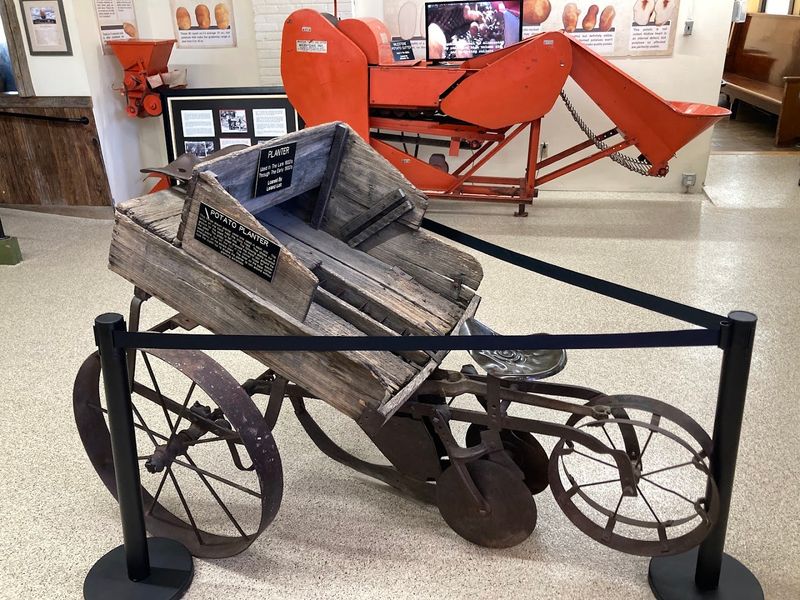
There is something genuinely moving about standing in front of a piece of equipment that someone used to feed their family a century ago. The museum’s collection of antique farming tools spans decades of potato agriculture, from hand-powered cultivators to early mechanical harvesters.
Each piece of equipment is displayed with enough context to understand how it was used and why it mattered. You can see how dramatically the technology evolved over time, from hand tools that required backbreaking labor to machines that could harvest entire rows in minutes.
The collection appeals to history buffs, farm kids, and curious travelers alike, which is part of what makes this section of the museum so well-rounded. Nothing here feels like filler.
Every implement tells a specific story about a specific era of Idaho’s agricultural development. If you have ever wondered how the potato industry scaled from small family farms to the massive commercial operations that supply fast food chains today, this exhibit gives you a clear, grounded answer.
The World Record That Lives in a Glass Case
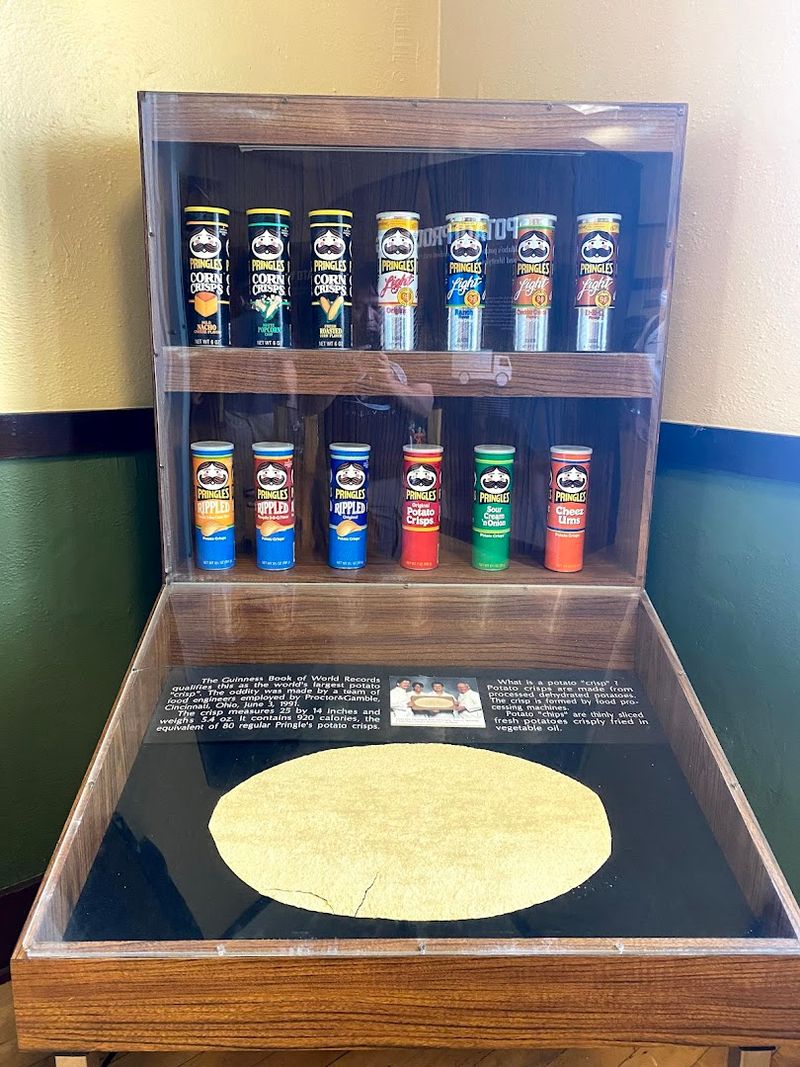
Not every museum can claim a world record, but this one does, and it is exactly as delightfully ridiculous as you would hope. Housed carefully inside a glass display case is the World’s Largest Potato Crisp, a Pringle that measures roughly 25 by 14 inches, or about 23 inches long and 14.5 inches high depending on how you measure it.
The crisp is fragile, enormous, and completely surreal to see in person. It looks like something from a cartoon, a snack food scaled up by a special effects team, yet it is entirely real and entirely potato-based.
Visitors tend to stop here longer than they expect to, partly because the sheer size of the thing defies logic, and partly because the display invites you to think about how something so delicate survived long enough to become a museum piece. It is one of those exhibits that photographs well but hits differently when you are actually standing in front of it.
And yes, the gift shop sells Pringles, just regular-sized ones.
Mr. Potato Head Races and the Potato Lab
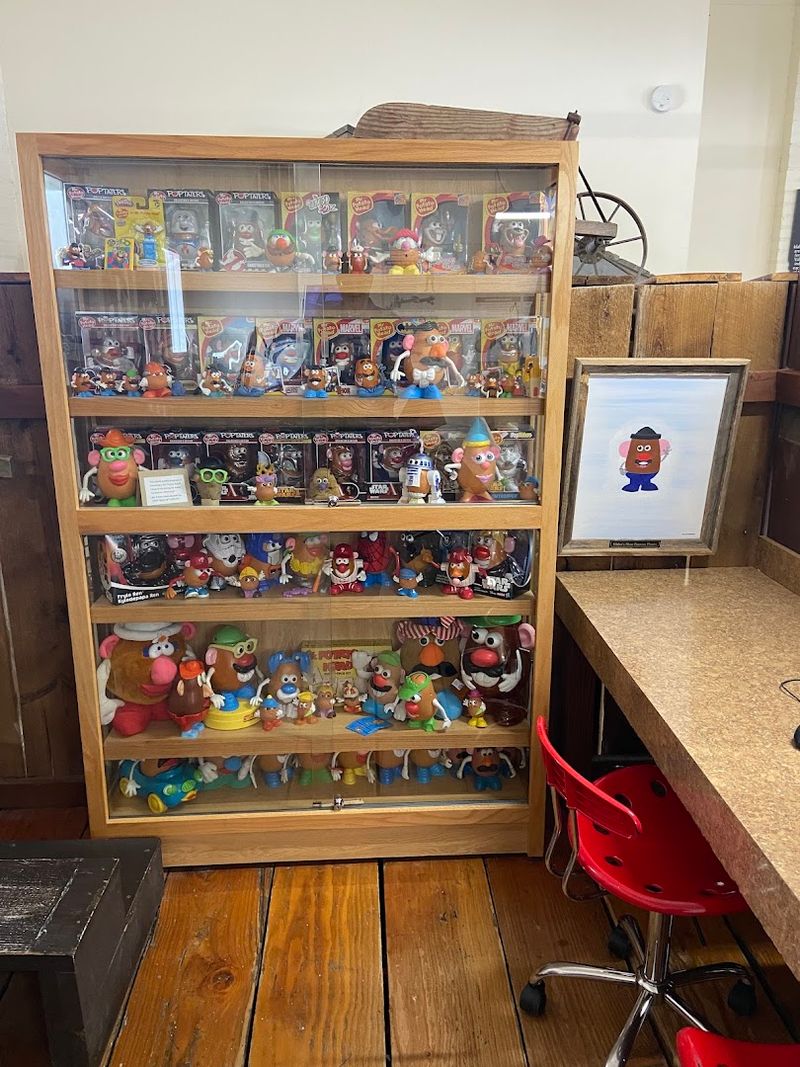
The museum does not just cater to adults with a casual interest in agricultural history. There is a dedicated interactive zone that turns potato science into genuine fun for younger visitors, and honestly, for adults too.
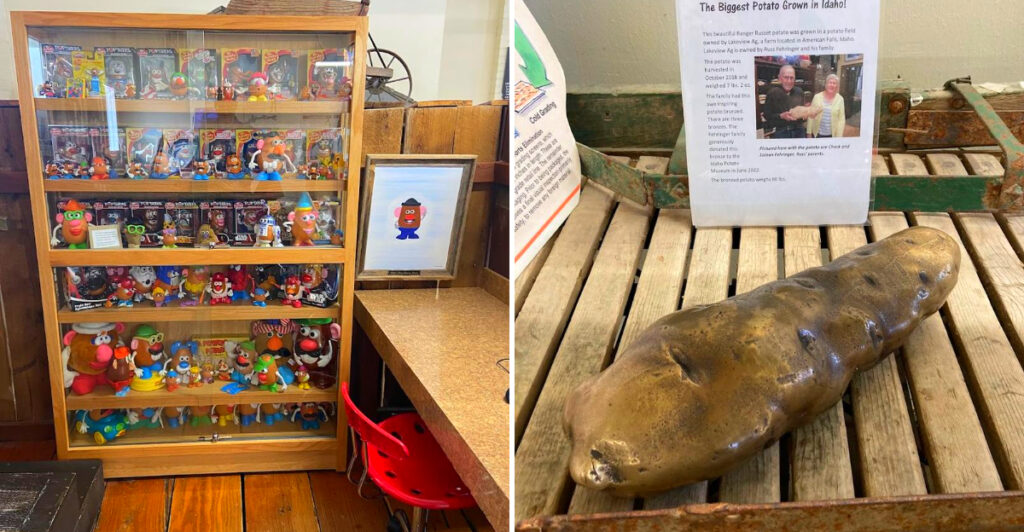
The Potato Lab features hands-on experiments, Mr. Potato Head races, and computer games that make learning feel more like play. Kids can assemble their own Mr. Potato Head figures, compete in timed challenges, and explore potato nutrition through interactive displays that avoid the usual dry lecture format.
The energy in this part of the museum is noticeably different from the quieter exhibit halls. You can hear kids laughing and debating strategy over which potato accessory goes where.
Families with teenagers have noted that even older kids get drawn into the activities without needing much encouragement. The Potato Lab is a smart design choice that keeps the museum accessible to all ages, and it makes the visit feel complete rather than one-dimensional.
More surprises are waiting just around the corner.
Virtual Reality Inside a Potato Field
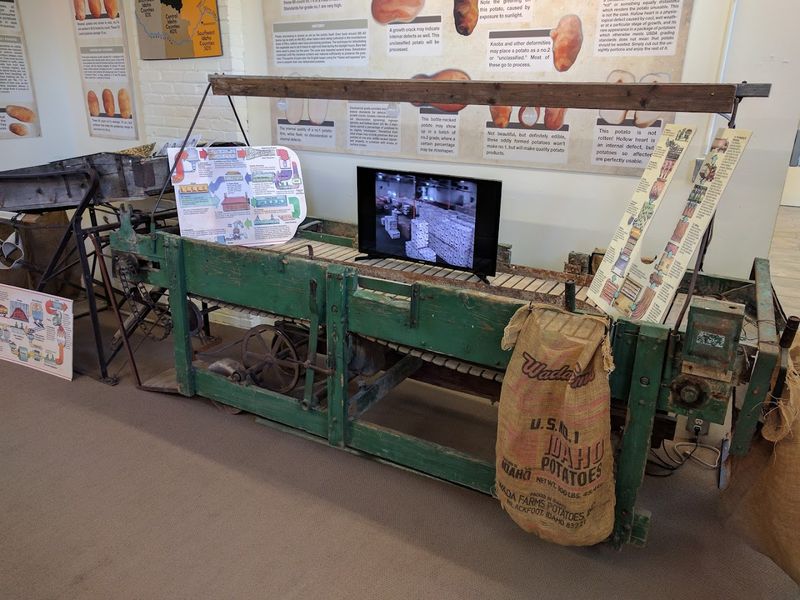
Few things catch you off guard in a small-town museum quite like a virtual reality station. The Idaho Potato Museum has a VR setup that lets visitors experience what it feels like to be inside a massive potato harvester rolling through a real Idaho field.
The 360-degree footage puts you right in the middle of the action, with the machinery rumbling and the rows of plants stretching out to the horizon. It is a surprisingly immersive experience that bridges the gap between reading about potato farming and actually feeling the scale of it.
The VR goggles also offer views of potato fields that most visitors would never see otherwise, since the farms themselves are not exactly tourist destinations. The technology feels appropriately modern against the backdrop of the 1912 depot, and it is one of the most talked-about features among recent visitors.
If you have been to a lot of small museums and felt like the interactive elements were half-hearted, this one will change your expectations.
The Political Potato That Sparked a Thousand Smirks
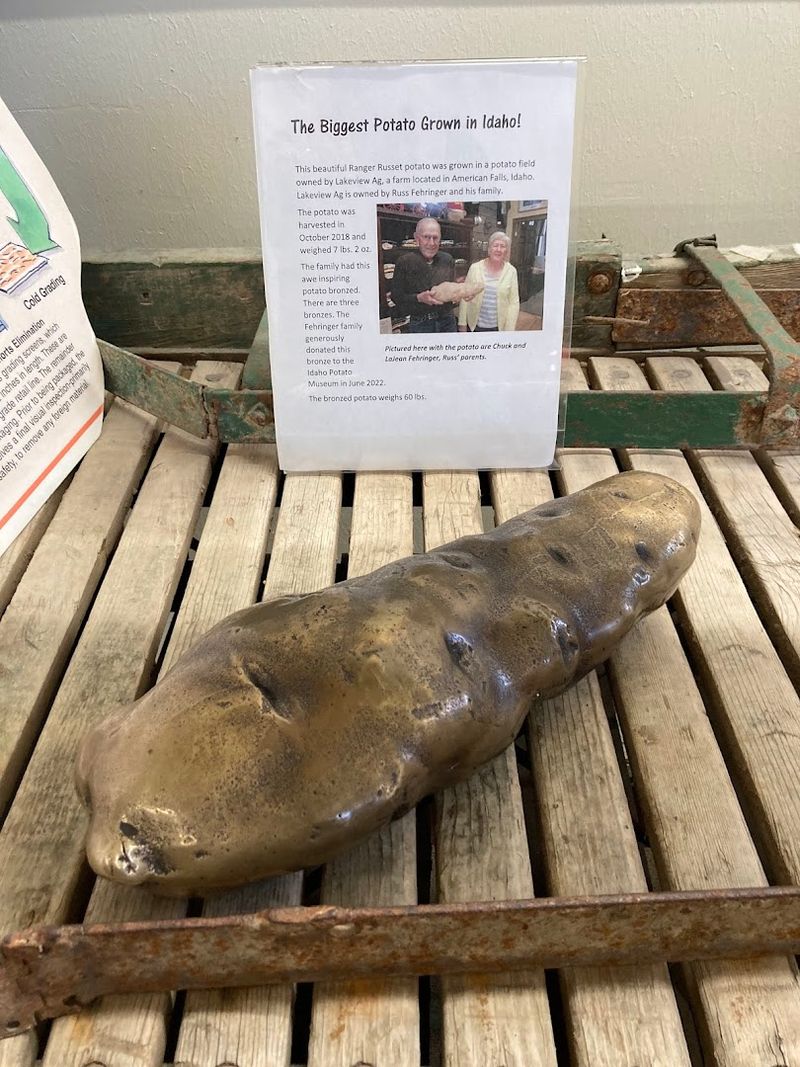
Among the quirkier items in the collection is a potato signed by former Vice President Dan Quayle, and the story behind it is just as entertaining as the artifact itself. The signed spud is displayed alongside what the museum describes as a snarky letter from Idaho’s governor, making the whole exhibit a small masterpiece of political humor.
Dan Quayle became famously associated with a potato-related gaffe when he misspelled the word during a school visit in 1992, adding an unnecessary ‘e’ to the end. Idaho, understandably, had opinions about this, and the museum preserves that cultural moment with cheerful irreverence.
The display is not mean-spirited, just playfully pointed, and it works perfectly in the context of a museum that never takes itself too seriously. It is also a reminder that potatoes have a way of showing up in unexpected places throughout American history and culture.
This little corner of the museum tends to generate more laughter per square foot than almost anywhere else in the building.
The Masher Collection That Will Surprise Every Kitchen Enthusiast
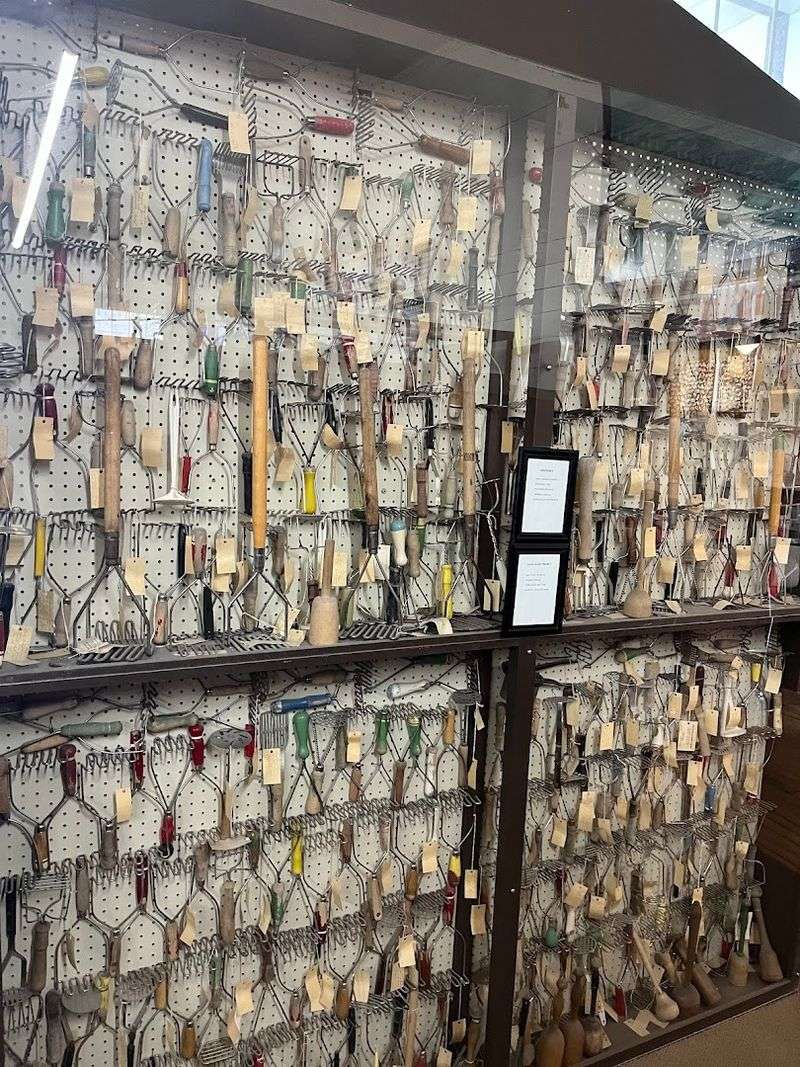
Somewhere between the farming equipment and the novelty displays, the museum quietly presents what may be the world’s largest collection of potato mashers, and it is more captivating than that sentence has any right to be.
The variety is genuinely staggering. Mashers of every shape, size, material, and era line the display, from simple wire models to ornate cast iron pieces that look like they belong in a Victorian kitchen.
Each one represents a slightly different approach to solving the same problem, which turns the collection into an accidental design history lesson.
Potato peelers and spud spikes round out this section of the museum, adding even more texture to what could have been a one-note display. Kitchen enthusiasts and vintage collectors tend to linger here longer than expected, studying the craftsmanship and debating which designs actually worked best.
The collection has a low-key obsessive quality that makes it oddly compelling, and it perfectly captures the museum’s broader spirit of taking the ordinary seriously.
Potato Nutrition Facts That Actually Change How You Think About Fries
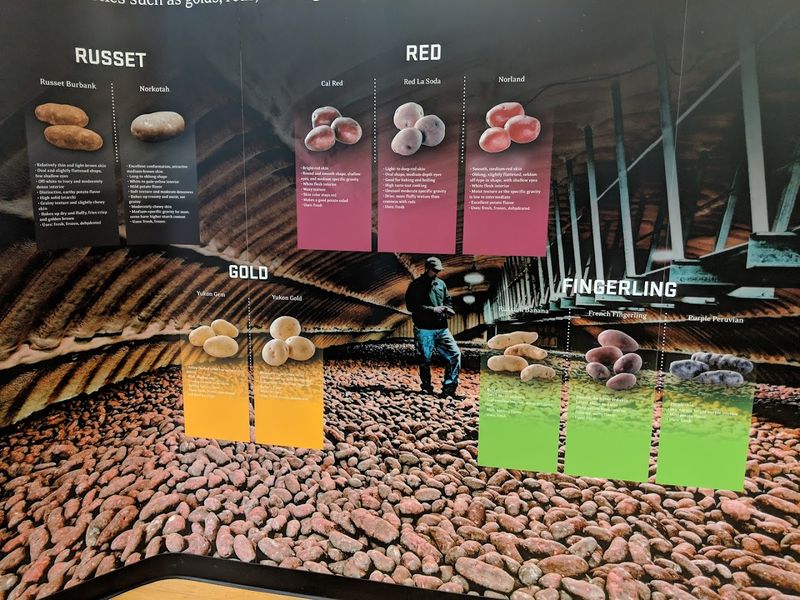
Potatoes have spent decades unfairly blamed for a lot of dietary problems, and this museum takes the opportunity to set the record straight with a section dedicated entirely to potato nutrition. The displays are clear, factual, and presented in a way that makes the information stick.
A single potato contains significant amounts of potassium, vitamin C, vitamin B6, and fiber, particularly when eaten with the skin on. The museum’s nutrition exhibits frame these facts in accessible language, making it easy for both kids and adults to walk away with a more balanced understanding of what they are actually eating.
There is also a collection of potato trivia scattered throughout this area that keeps the tone light without sacrificing accuracy. Some of the facts are genuinely surprising, like how the potato was once considered a luxury item in parts of Europe before becoming a dietary staple.
The combination of hard nutrition data and fun trivia makes this section feel less like a health class and more like a conversation with someone who really knows their stuff.
The Potato Station Cafe and What to Order
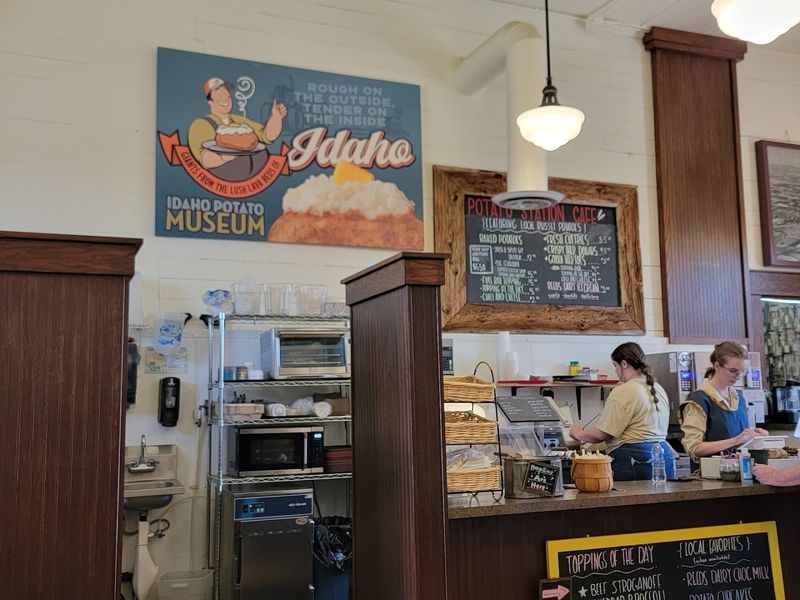
The Potato Station Cafe sits at the end of the museum experience like a well-earned reward. After absorbing all that potato knowledge, sitting down with an actual plate of food feels like the natural conclusion to the visit.
The menu leans hard into its theme. Baked potatoes, french fries, tater tots, and cheesy variations fill most of the options, and the quality is notably better than you might expect from a museum cafe.
The tater tots in particular have earned a devoted following among visitors who detour off the freeway specifically to order them.
The potato cupcake deserves its own mention. Made with actual potato in the batter, it comes out exceptionally moist with a texture that surprises almost everyone who tries it skeptically.
Potato ice cream occasionally makes an appearance depending on the season, made by a local family-owned dairy called Reed’s. Baked potatoes are available without advance notice for most visits, though large groups are encouraged to call ahead to ensure enough are on hand.
The Spud Sellar Gift Shop and Free Taters for Out-of-Staters

The Spud Sellar Gift Shop is small but remarkably well-stocked for its size. Potato-themed t-shirts, magnets, cookbooks, novelty items, and locally made products fill the shelves in a way that feels curated rather than cluttered.
One of the most talked-about perks of visiting is the policy of giving out-of-state visitors a package of free dehydrated hashbrowns, a gesture that perfectly captures the museum’s generous, good-humored spirit. The unofficial motto ‘serving taters to out-of-staters’ has apparently become something of a beloved inside joke among regular visitors.
The shop also carries locally produced potato chips made by a small family business in Aberdeen, Idaho, that grows, processes, and bags their own product entirely in-house. That farm-to-bag story makes the chips feel like more than just a snack.
Admission to the museum runs around seven dollars, which is a reasonable price for everything included. Military discounts are available, and well-behaved dogs on leashes are reportedly welcome inside as well.
Why This Unassuming Stop Stays With You Long After You Leave
The Idaho Potato Museum is not trying to be the Smithsonian, and that honesty is a big part of its appeal. It knows exactly what it is: a lovingly assembled celebration of a crop that shaped an entire state’s identity, housed in a beautiful old building, run by friendly staff who genuinely enjoy sharing it with strangers.
Most visits take between 30 minutes and an hour, which makes it an ideal stop on a road trip through southeastern Idaho rather than a day-long commitment. The museum earns its 4.5-star rating across nearly 2,800 reviews not through spectacle but through consistency, warmth, and the kind of quirky charm that is nearly impossible to manufacture.
Adults without children laugh just as much as families with kids. First-time visitors often describe leaving with a genuine new appreciation for something they had taken for granted their entire lives.
A museum that can do that with a potato deserves far more credit than it gets, and Blackfoot, Idaho is a better destination for having it.
Share this story