 Unearth The Voyage
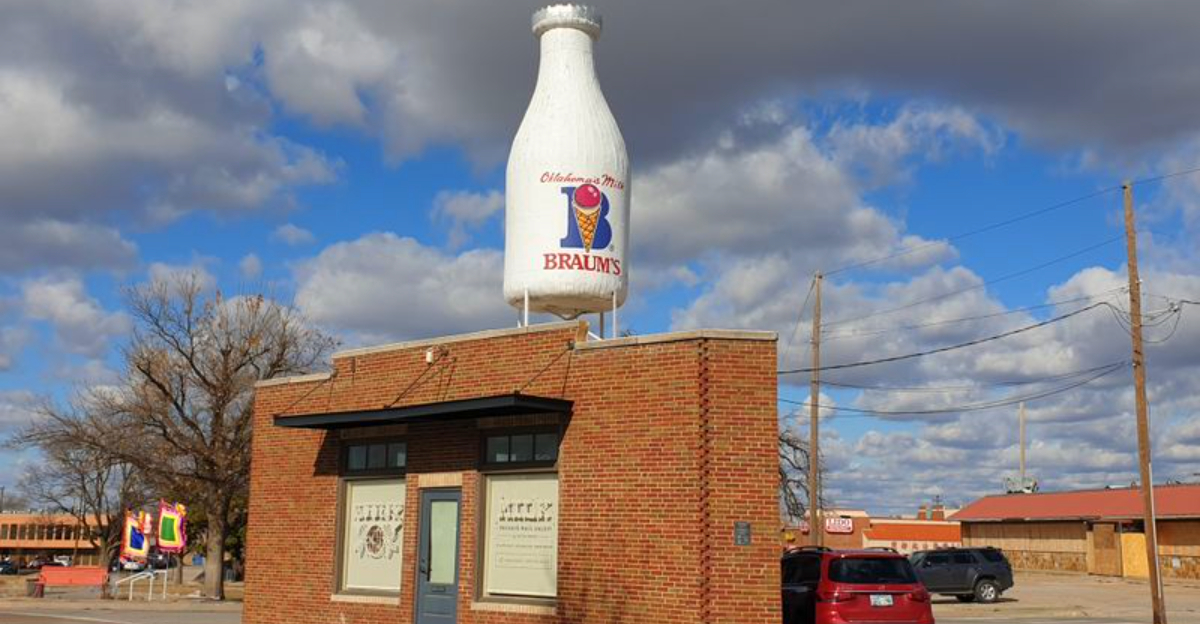
Route 66 holds countless surprises for travelers who know where to look, and one of the most charming stops sits right in the heart of Oklahoma City. I first spotted this quirky landmark while cruising down North Classen Boulevard, and it stopped me in my tracks.
A giant milk bottle perched atop a small brick building might sound unusual, but that’s exactly what makes it so memorable. This vintage roadside attraction has been delighting passersby for decades, serving as a reminder of simpler times when family-owned businesses dotted America’s highways.
The structure stands as a testament to the creative spirit of mid-century entrepreneurs who knew how to catch the eye of travelers. Whether you’re a Route 66 enthusiast, a photography lover, or just someone who appreciates a good piece of Americana, this spot delivers pure nostalgic magic that’ll transport you back to the golden age of road trips.
A Route 66 Icon With History
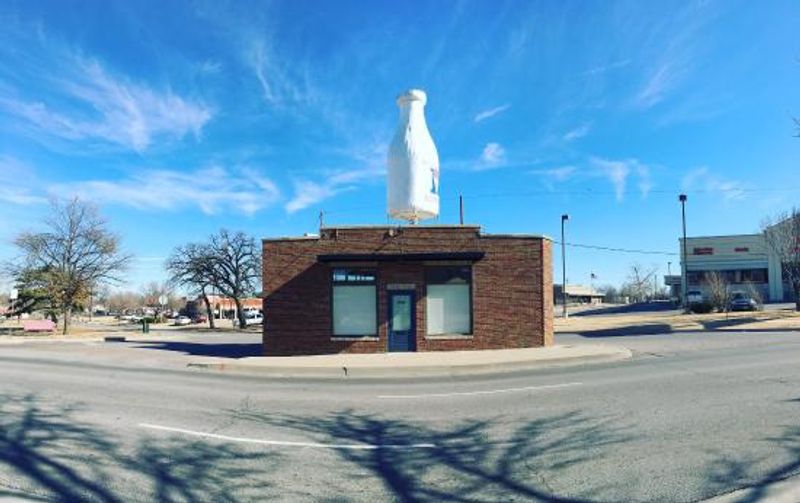
The address is 2426 N Classen Blvd, Oklahoma City, OK 73106, and finding it feels like discovering a time capsule. Milk Bottle Grocery represents everything that made Route 66 special during its heyday.
Built in the 1930s, the structure originally served as a working grocery store that capitalized on the novelty factor to attract customers. The oversized milk bottle wasn’t just decoration; it was brilliant marketing that helped a small business compete with larger chains.
Back then, roadside attractions like this one helped define the American travel experience.
The building has survived decades of change in Oklahoma City, outlasting countless modern developments. While the neighborhood around it has transformed, this little landmark remains stubbornly authentic.
It’s managed to hold onto its vintage charm without becoming overly commercialized or touristy.
Route 66 enthusiasts consider it a must-see stop on their journeys through Oklahoma. The structure earned its place in roadside attraction history by simply being itself.
I found myself appreciating how something so straightforward could carry so much cultural weight and meaning for travelers from around the world.
The Giant Milk Bottle That Steals The Show
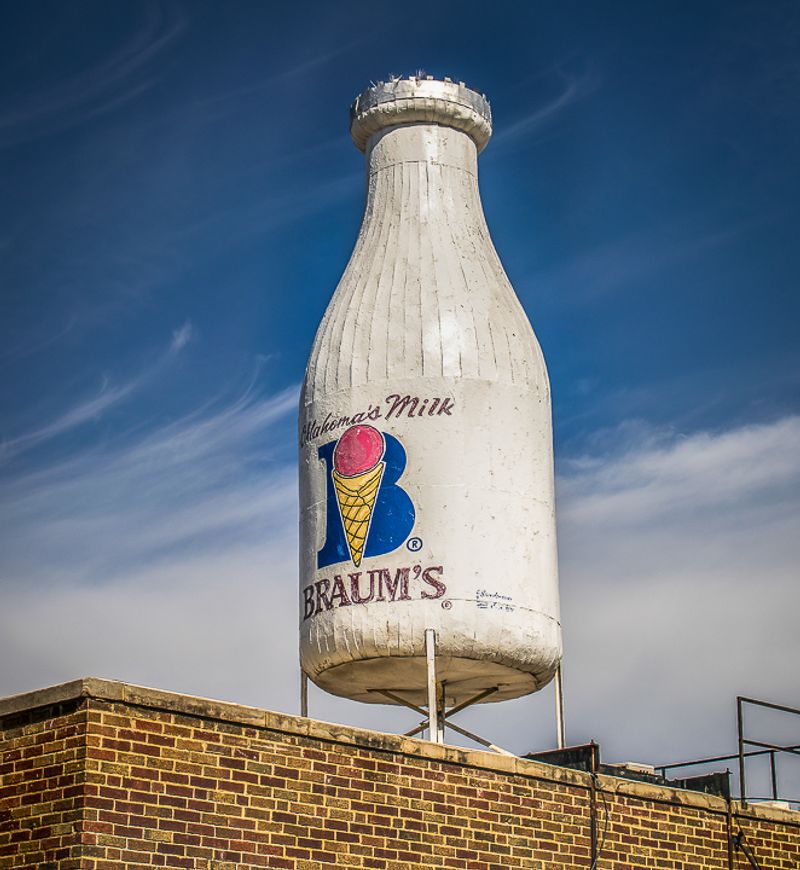
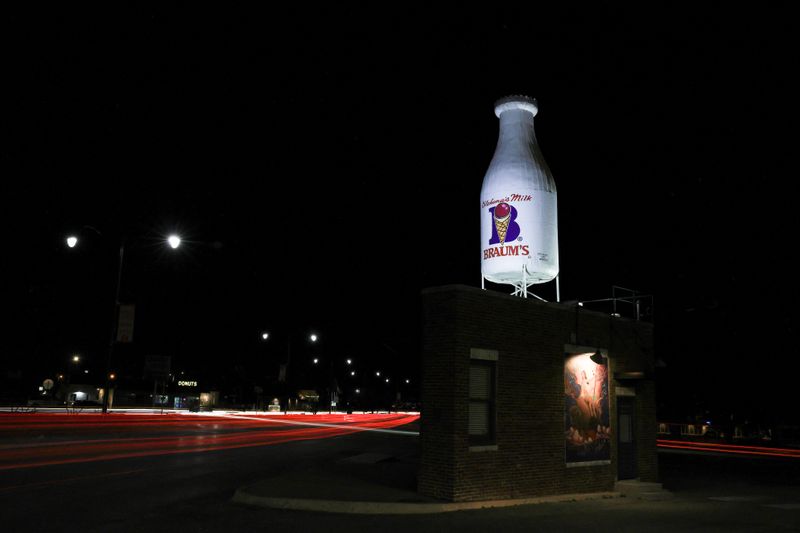
That bottle sitting on top measures an impressive size that you simply can’t miss from the street. It’s painted white with a red cap, maintaining the classic milk bottle appearance that defined dairy delivery in the early twentieth century.
The bottle itself has become more famous than the building it sits on, which is exactly what the original owners intended. This kind of oversized advertising was common during the golden age of American highways.
Businesses competed for attention with giant objects that ranged from donuts to dinosaurs.
What makes this particular bottle special is its authenticity and preservation. Many similar attractions have been torn down or fallen into disrepair, but this one remains in good condition.
The paint job stays fresh, and the structure appears solid despite its age.
I circled the building several times to photograph it from different angles, and each perspective offered something new. The bottle looks different depending on the time of day and lighting conditions.
Morning light gives it a soft glow, while evening shadows make it appear more dramatic and mysterious.
Visitors often comment that it’s smaller than expected but more charming than they imagined. The modest size actually adds to its appeal rather than diminishing it.
The Brick Building Below
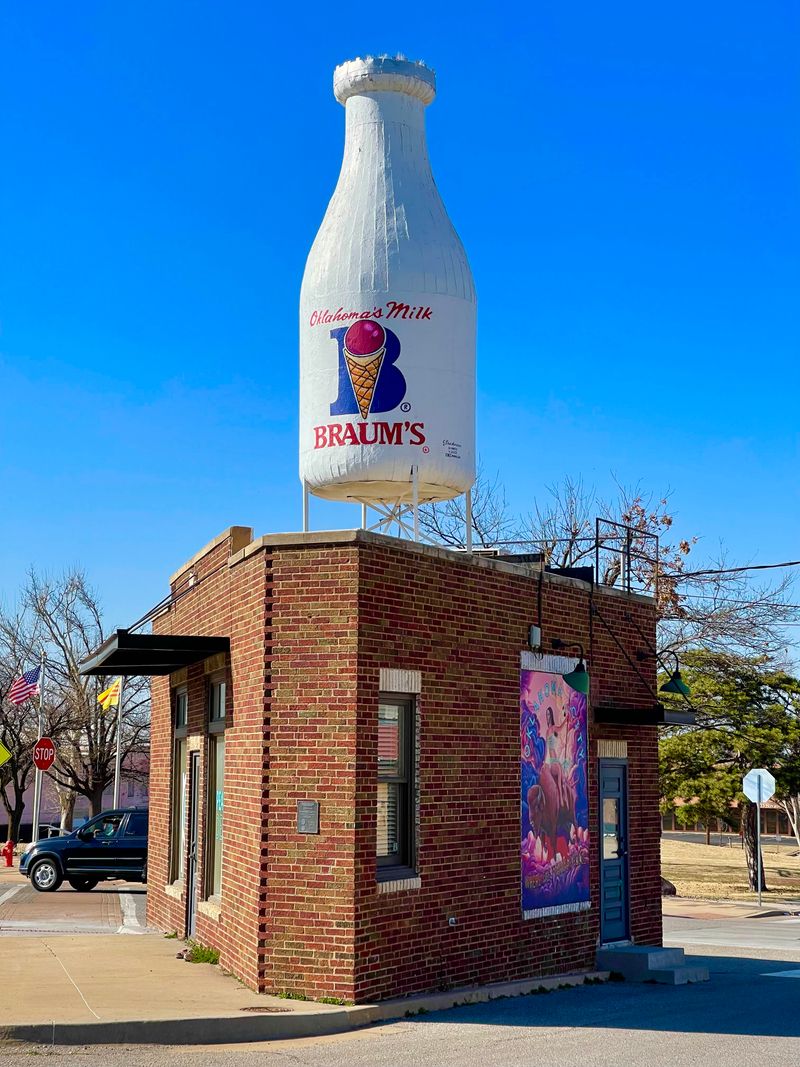
The brick structure supporting that famous bottle deserves attention too. It’s compact, measuring just enough space for a small retail operation.
The red brick exterior has weathered beautifully over the decades, developing that patina that only authentic age can provide.
Original architectural details remain visible if you look closely. The windows, doorways, and trim all reflect the practical design sensibilities of Depression-era construction.
Nothing fancy, nothing wasted, just solid craftsmanship meant to last.
Some visitors focus solely on the bottle and miss the building’s charm entirely. I made sure to examine the brickwork, which shows the quality of masonry from that period.
The mortar joints remain tight, and the walls stand perfectly plumb after all these years.
The small scale of the building actually enhances the bottle’s visual impact. A larger structure would diminish the novelty effect, but this modest footprint makes the bottle seem even more prominent.
The proportions work together in a way that feels perfectly balanced.
Oklahoma City has grown up around this little landmark, with modern developments towering nearby. Yet the building holds its ground, refusing to be overshadowed.
Its persistence speaks to the community’s appreciation for preserving quirky pieces of local history.
The Oklahoma City Mural Surprise
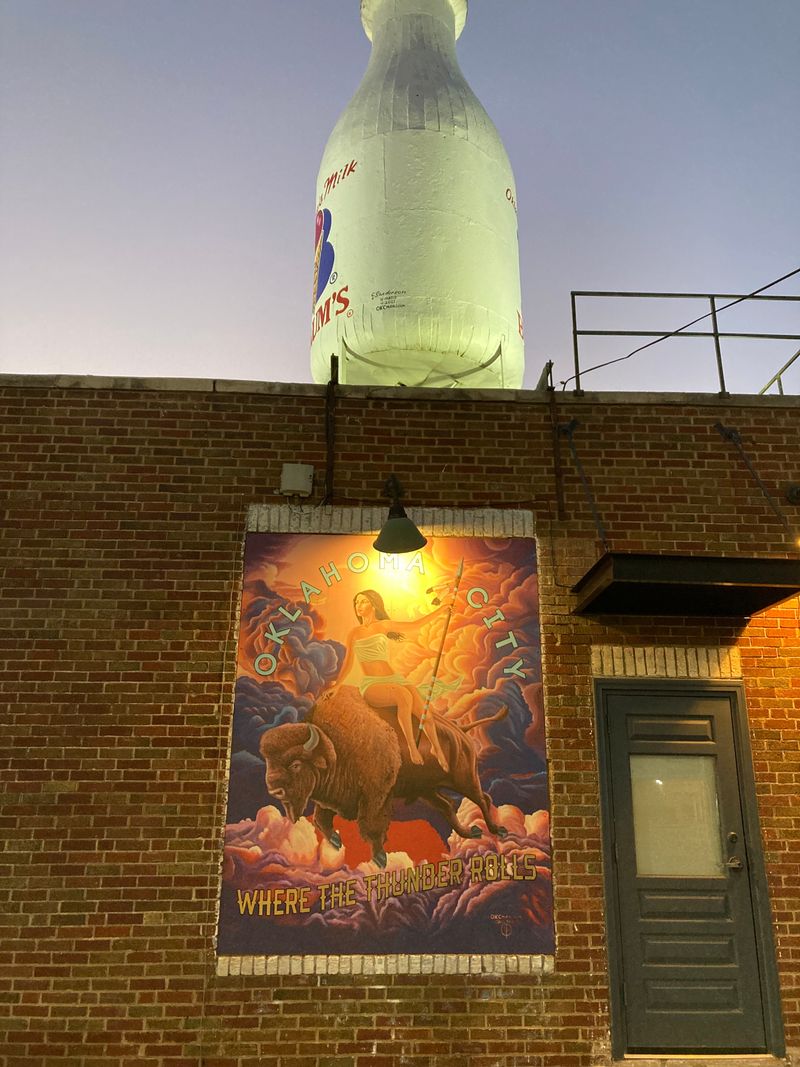
One bonus I wasn’t expecting came painted on the side of the structure. A vibrant Oklahoma City mural adds contemporary artistic flair to this vintage landmark.
The combination of old and new creates an interesting visual dialogue between different eras.
The mural features local imagery that celebrates the city’s identity and culture. Artists have used the brick canvas to tell stories about Oklahoma’s heritage while respecting the building’s historical significance.
The colors pop against the aged brick, creating contrast that photographers absolutely love.
This artistic addition demonstrates how communities can honor history while embracing modern expression. Rather than treating the building as untouchable, the mural shows it’s still relevant and connected to contemporary life.
The landmark isn’t just a relic; it’s a living part of the neighborhood.
I spent considerable time examining the mural’s details and appreciating the skill involved. The artwork doesn’t compete with the milk bottle but complements it instead.
Together, they create a layered experience that gives visitors more to discover and enjoy.
Many roadside attractions struggle to remain relevant as decades pass, but this combination of vintage architecture and modern art keeps people interested. The mural gives younger visitors something to connect with while older travelers appreciate the nostalgic main attraction.
Perfect Photo Opportunity
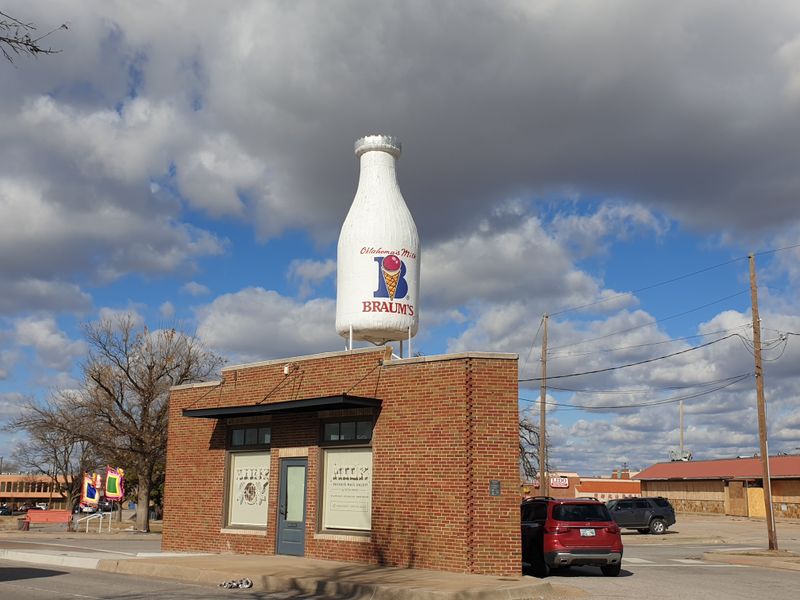
Cameras come out the moment people spot this landmark, and for good reason. The structure provides one of the most Instagram-worthy backdrops along this stretch of Oklahoma highway.
I watched multiple visitors arrive during my time there, and every single one pulled out their phone.
The compact size actually works in your favor for photography. You can easily frame the entire building and bottle in a single shot without needing special equipment or stepping into traffic.
The brick provides nice texture, and the bottle’s shape creates a distinctive silhouette against the sky.
Different times of day offer different photographic possibilities. Morning light comes from the east, creating long shadows that add dimension.
Afternoon sun illuminates the bottle directly, making the white paint practically glow. Sunset provides dramatic backlighting that turns the whole scene into a silhouette.
The mural on the side gives you a second photo opportunity with completely different visual character. You can capture vintage Americana or urban street art depending on which angle you choose.
Both options tell valid stories about Oklahoma City’s layered identity.
Social media has given this landmark new life among younger travelers. Hashtags help spread awareness, and each posted photo introduces more people to this charming piece of roadside history that might otherwise be forgotten.
Open Around The Clock
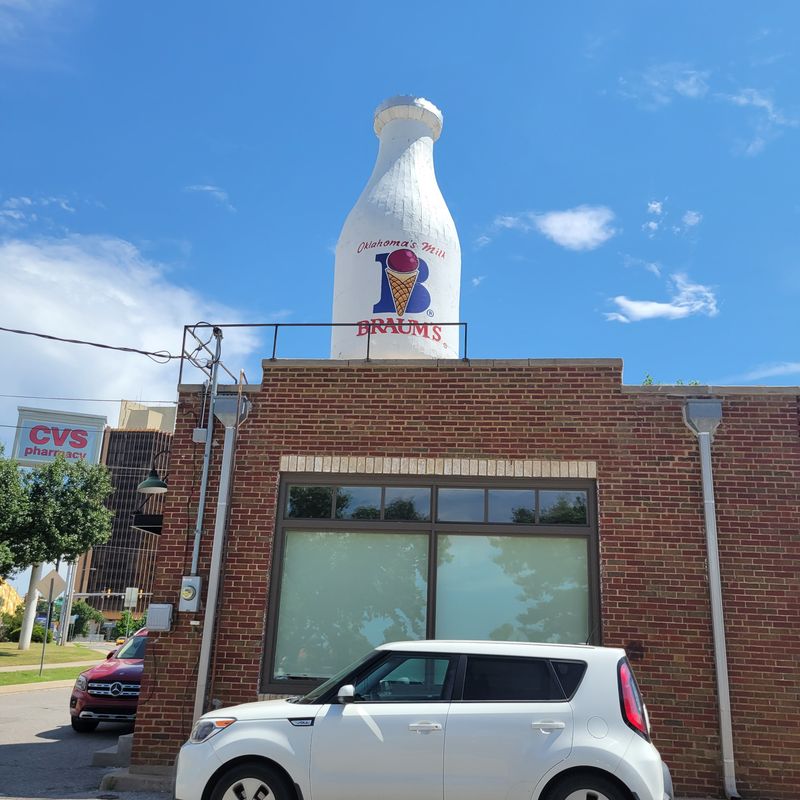
The site remains accessible twenty-four hours a day, seven days a week. This constant availability makes it incredibly convenient for road trippers who travel at odd hours or follow unpredictable schedules.
I’ve driven past late at night and seen other travelers stopped to take photos under streetlights.
Unlike museums or formal attractions with restricted hours, you don’t need to plan your visit around opening times. Early morning travelers can stop before dawn, and night owls can visit after midnight without any issues.
This flexibility suits the spontaneous spirit of Route 66 exploration perfectly.
The building doesn’t operate as a functioning business anymore, so there’s no staff to worry about or admission fees to pay. You simply pull up, take your photos, admire the architecture, and move on whenever you’re ready.
The experience is entirely self-directed and pressure-free.
This accessibility has helped the landmark maintain its popularity over the years. Modern travelers appreciate attractions that fit their schedules rather than forcing them to adjust plans.
The lack of commercial pressure also keeps the experience feeling authentic and unpretentious.
I recommend visiting during daylight hours for the best photos, but knowing you have flexibility removes stress from your travel planning. Road trips should feel free and easy, and this landmark delivers that relaxed vibe perfectly.
Small But Mighty Presence
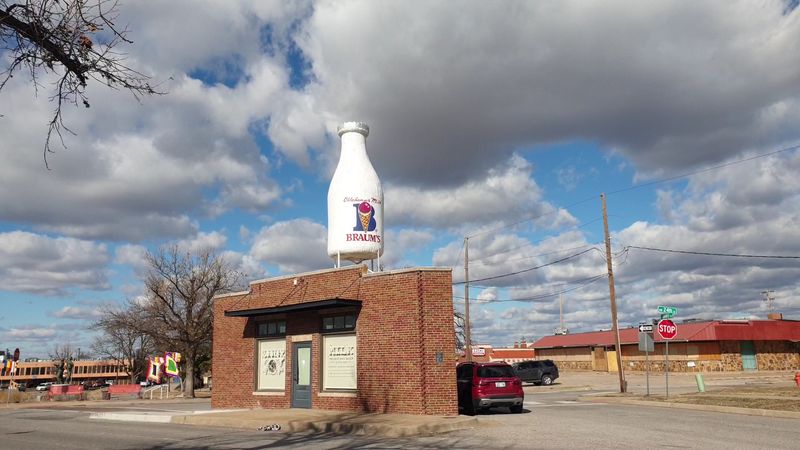
Several reviews mention the building’s modest size, and they’re absolutely right. This isn’t a massive tourist complex with gift shops and guided tours.
The structure occupies a small footprint, and the bottle, while certainly oversized, isn’t enormous by modern advertising standards.
That intimate scale is actually part of its charm and authenticity. Giant roadside attractions from the 1930s and 1940s were impressive for their time but seem quaint by today’s standards.
The milk bottle represents what was possible for a small business owner with limited resources and big dreams.
I found the modest proportions refreshing after visiting some overly commercial tourist traps. There’s no pressure to buy anything, no crowds to navigate, and no manufactured experience.
What you see is what you get, and that honesty feels increasingly rare in modern tourism.
The building’s size also means your visit will be brief, which works perfectly as a quick stop during a longer road trip. You can see everything, take your photos, and be back on the highway within ten or fifteen minutes.
It respects your time while still delivering a memorable experience.
Don’t expect grandeur, but do expect genuine charm. This landmark succeeds precisely because it doesn’t try to be more than it is or ever was.
Americana At Its Finest
This landmark captures something essential about mid-century American culture and entrepreneurial spirit. Small business owners competed for attention in creative ways, and novelty architecture became their weapon of choice.
The milk bottle represents that era’s optimism and ingenuity.
Roadside attractions like this one helped define the American road trip experience for generations. Families traveling cross-country would seek out these quirky landmarks, turning them into shared memories and stories.
The Milk Bottle Grocery became part of countless vacation albums and family histories.
Preservation efforts by the community demonstrate Oklahoma’s commitment to honoring its Route 66 heritage. Rather than tearing down these old structures for modern development, the city recognizes their cultural and historical value.
That decision benefits residents and visitors alike.
I left feeling grateful that places like this still exist. They remind us that commerce doesn’t have to be boring or purely functional.
Creativity and personality can transform even a simple grocery store into something memorable that outlasts its original purpose.
The nostalgia this landmark evokes isn’t just about the past; it’s about values we still cherish today. Independence, creativity, and the courage to stand out from the crowd never go out of style, and this little building embodies all three beautifully.



