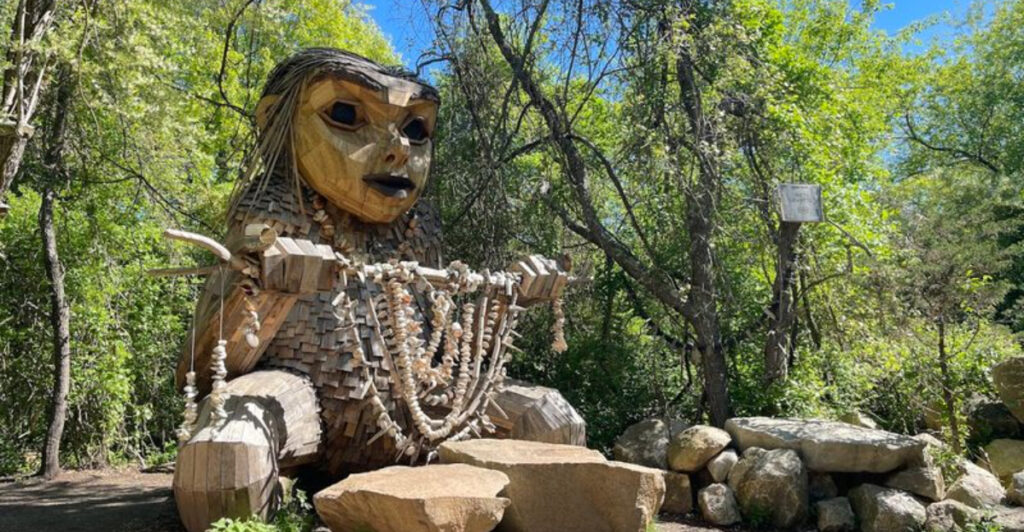
There is a park in southern Rhode Island where giant wooden trolls peek out from the trees, a historic airfield has been transformed into open green space, and families can spend an entire afternoon without running out of things to do. Charlestown, Rhode Island is not always the first town that comes to mind when people think of standout destinations in the state, but that is exactly what makes it worth the trip.
The park at the center of it all sits on land that once served as a U.S. Navy airfield, and today it looks nothing like its military past.
From disc golf and tennis to a real astronomical observatory and troll sculptures built from recycled wood, this coastal playground has quietly become one of the most interesting free outdoor spots in New England.
Greta Granite: The Troll With a Trail
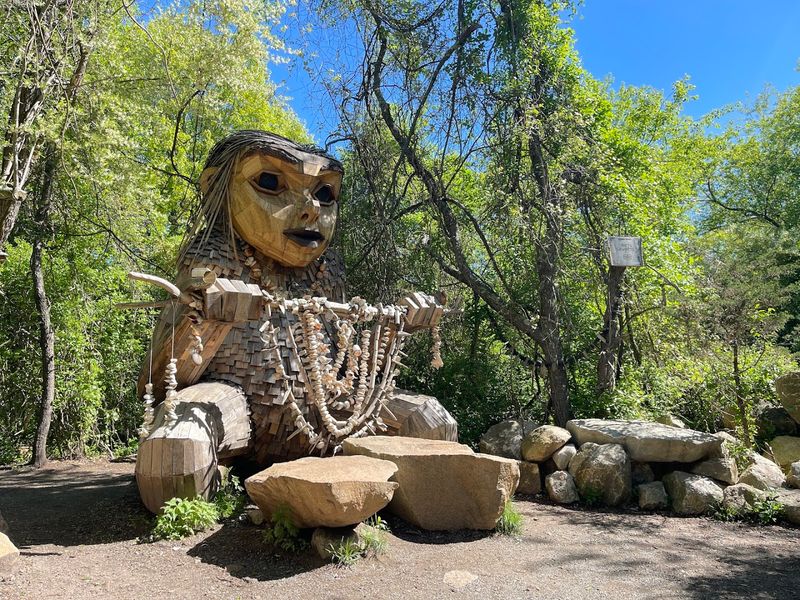
Of the two trolls at Ninigret Park, Greta Granite tends to get the more dramatic entrance. The path leading to her winds through a wooded section of the park that feels distinctly different from the open fields nearby, giving the walk a quiet, trail-like character.
Greta is a female troll figure, and the detail work in her construction is notable. Thomas Dambo and his team used reclaimed wood pieces of varying shapes and sizes to build her form, and the result is a sculpture that looks both rugged and carefully composed at the same time.
The walk from the main parking area near the playground to Greta is short and manageable for most ages. Clear signage near the road marks the starting point, and the yellow troll footprints on the pavement keep visitors on the right track.
For families with younger children, this is often the first stop on the troll-hunting route through the park.
Erik Rock by the Water: The Second Troll Worth Finding
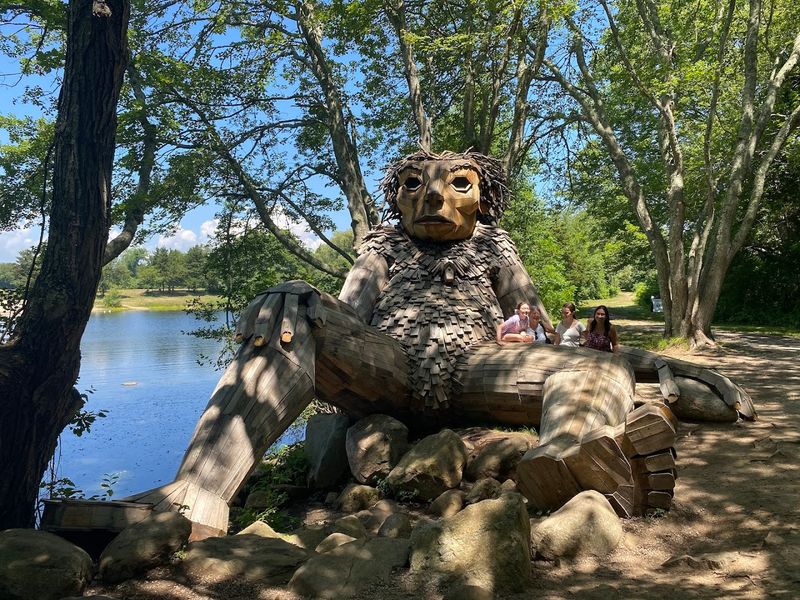
Erik Rock is the second of the two Thomas Dambo trolls at Ninigret Park, and his location near the park’s pond gives him a completely different backdrop from Greta Granite. The open water setting makes for a striking visual, especially when the light hits the recycled wood at different angles throughout the day.
To reach Erik Rock, the easiest approach is to park near the Frosty Drew Observatory and follow the path from there. The walk is short, and wooden sawhorses near the observatory building serve as an informal landmark that signals you are heading in the right direction.
Erik is a male troll figure, and like Greta, he is constructed from reclaimed materials that give him a layered, textured look. The pond setting around him adds a natural frame that makes the sculpture feel like it belongs in the landscape rather than sitting on top of it.
Many people find this location the more photogenic of the two stops.
The Frosty Drew Observatory: Stargazing at the Park
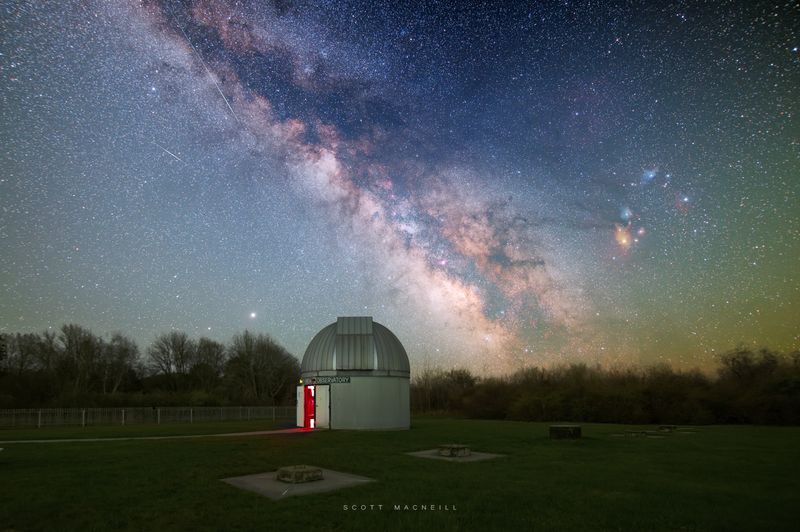
A park with giant trolls and a working astronomical observatory might sound like an unusual combination, but Ninigret Park pulls it off without any awkwardness. The Frosty Drew Observatory is located within the park grounds and serves as a genuine public stargazing facility.
The observatory is generally open on Friday evenings and on select special occasions throughout the year. It operates as a non-profit and welcomes the public, making it one of the few places in Rhode Island where casual visitors can look through a real telescope without needing any scientific background or prior reservation.
Beyond its Friday sessions, the observatory building itself is a useful landmark within the park. Visitors hunting for Erik Rock are often directed to park near the observatory and use it as a starting point for the short walk to the troll sculpture.
The building sits in a quieter corner of the park, away from the ball fields and playground, which gives that section of the grounds a noticeably calmer atmosphere.
Disc Golf, Tennis, and Basketball: The Active Side of the Park
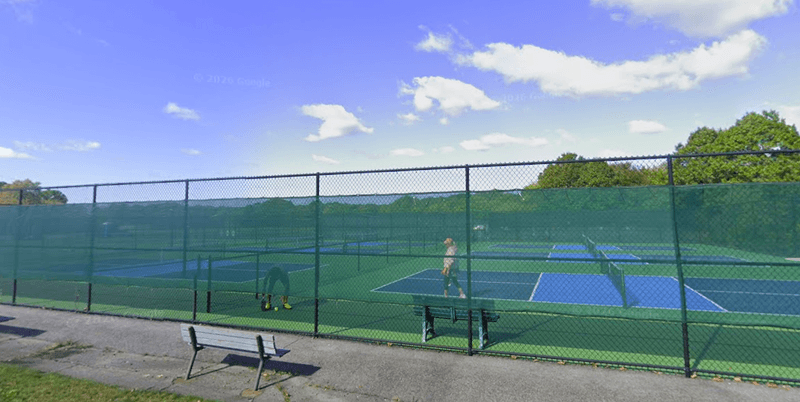
Ninigret Park is not a passive, sit-and-watch kind of place. The activity options here are genuinely varied, and most of them are free.
The 18-hole disc golf course is one of the more popular draws for regular visitors, and it winds through enough of the park’s terrain to make each hole feel distinct.
Eight tennis courts sit within the park, which is a notable number for a town the size of Charlestown. Basketball courts are located close to the children’s playground, making it easy for families to move between both areas without a long walk.
The paved loop trail through the park is wide enough for cyclists, inline skaters, joggers, and walkers to share without much conflict. The flat terrain left over from the old airfield makes the trail accessible for most fitness levels.
For people who want a longer route, a connecting trail links the park directly to the adjacent Ninigret National Wildlife Refuge, though bikes and dogs are not permitted on the refuge side.
The Playground and the Pond: A Spot Built for Families
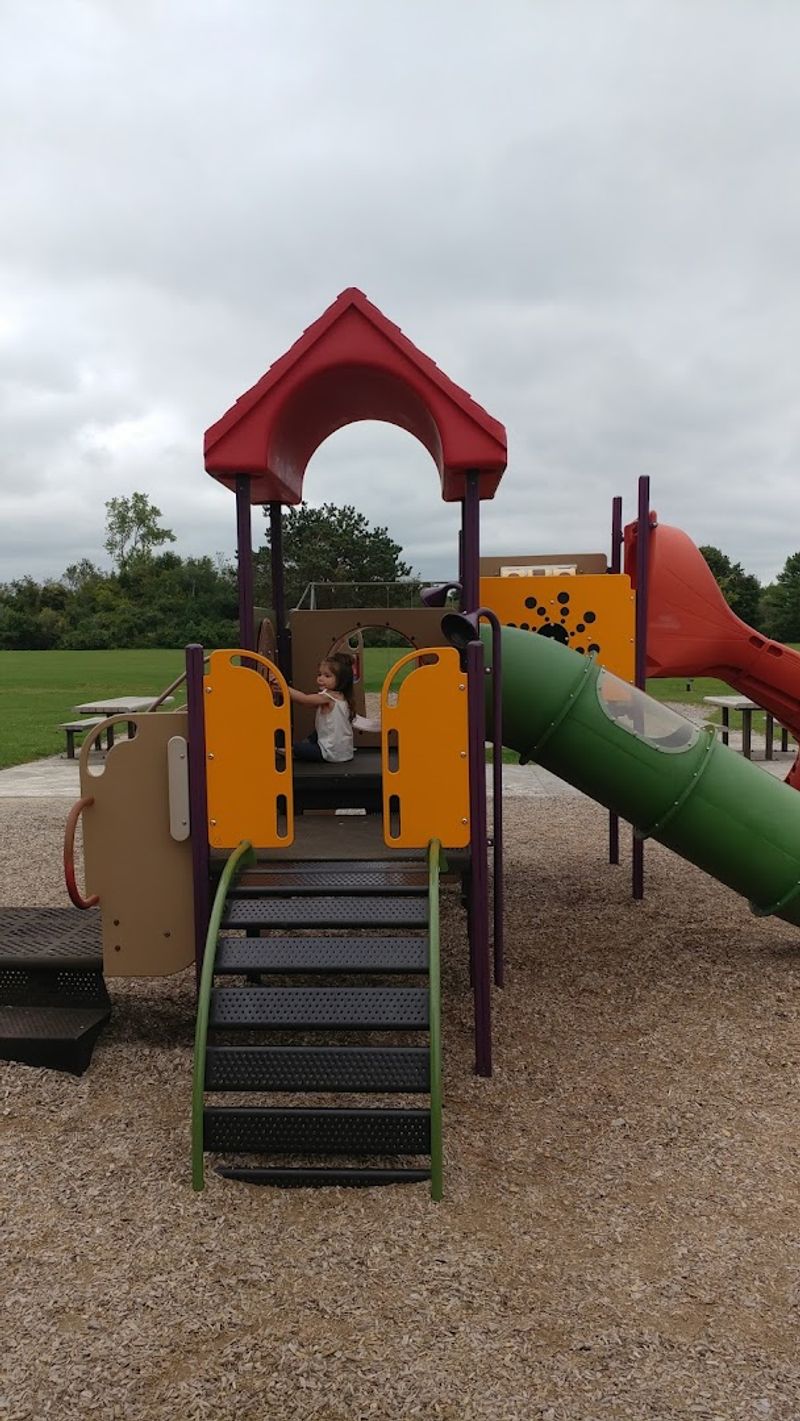
The children’s playground at Ninigret Park sits right next to a small pond, and that combination alone makes this corner of the park one of its most visited spots. The pond is calm and shallow enough to feel approachable for young children, and benches along the edge give adults a comfortable place to sit while kids explore nearby.
The playground equipment is well-maintained, and the open grass around it provides extra room for running, kicking a ball, or spreading out a blanket for a picnic. Several pavilions are scattered throughout the park, offering covered space for group gatherings or a shady break on warmer days.
The beach area along the pond is a small but genuinely useful feature, especially for families who want a low-key water experience without heading to the ocean. Dogs are welcome throughout the park on a leash, and a dedicated dog park with separate sections for small and large dogs gives pet owners a place to let their animals run freely.
The Dog Park: A Dedicated Space for Four-Legged Visitors
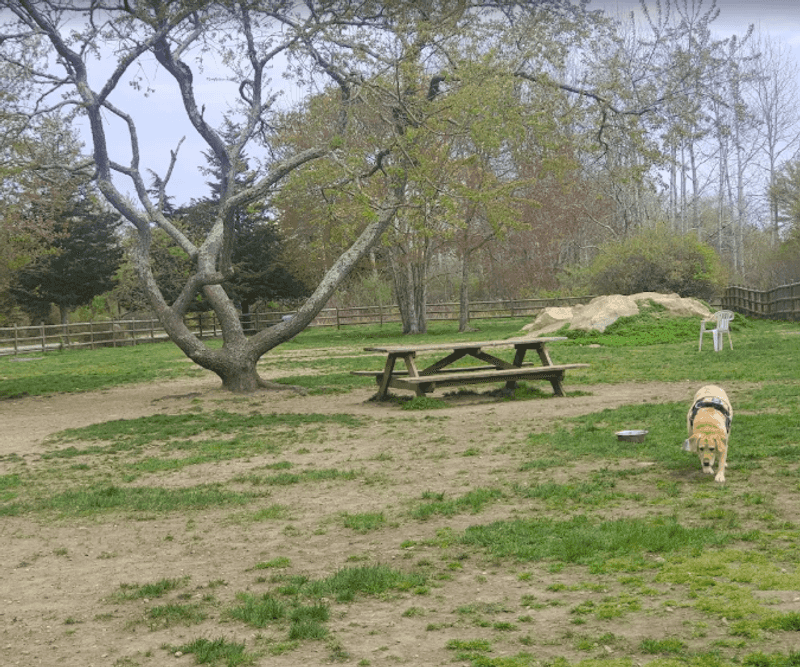
Rhode Island parks that include a dedicated dog park are not as common as dog owners might hope, which makes the one at Ninigret Park a genuinely appreciated feature. The dog park is divided into two separate fenced sections, one for smaller dogs and one for larger breeds, which helps keep interactions comfortable for animals of different sizes.
Outside the dog park, leashed dogs are welcome throughout most of the park, including on the paved loop trail and along the paths near the troll sculptures. The wide-open layout of the grounds gives dogs plenty of room to move around without feeling crowded.
The park’s overall cleanliness is something that comes up repeatedly among regular visitors, and the dog park area is no exception. Waste stations with bags are typically available, and the grounds are maintained well enough that the space stays usable and pleasant.
For anyone traveling through southern Rhode Island with a dog in tow, this park is a logical and worthwhile stop.
Water Activities at the Back of the Park
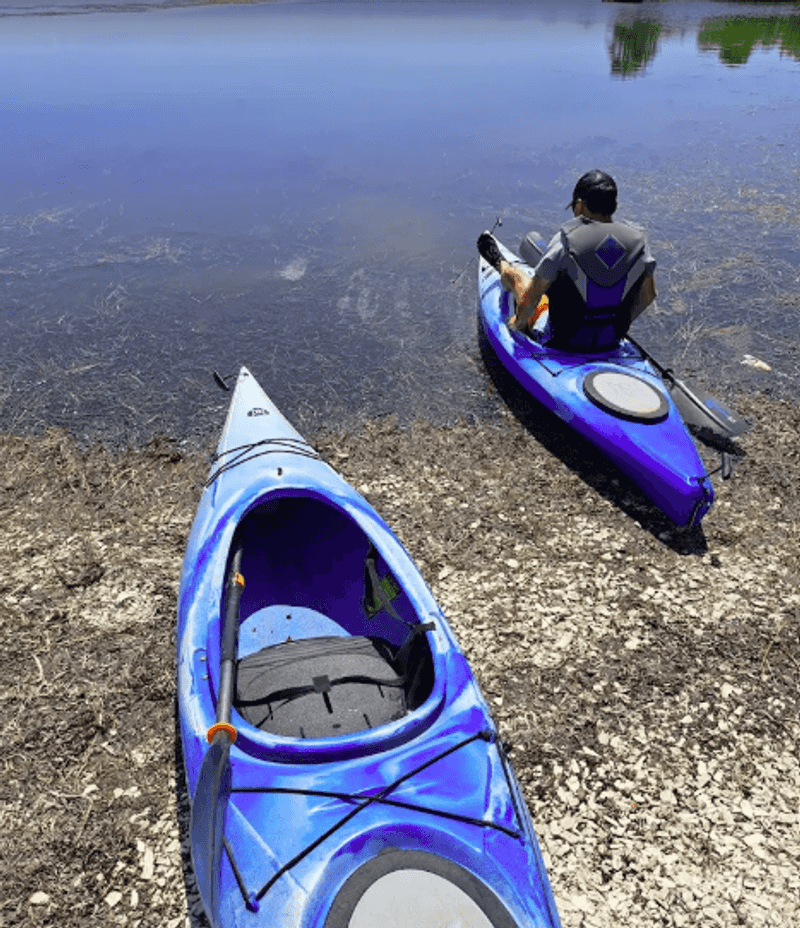
The front section of Ninigret Park gets most of the foot traffic, but the rear of the park opens up to a larger body of water that supports a different set of activities entirely. Kayaking, fishing, and quahogging are all possible from the water access area at the back of the grounds.
Quahogging, for those unfamiliar with Rhode Island traditions, refers to clamming for quahogs, the hard-shell clams that are a staple of the local coastal culture. Having this activity available within a public park setting is a distinctly Rhode Island touch that sets Ninigret apart from more generic recreational spaces.
The area near the water is less developed than the rest of the park, which gives it a quieter, more natural character. Visitors who make it back there often find the space less crowded than the playground and sports court areas closer to the entrance.
For anyone who wants to pair outdoor recreation with a taste of coastal New England life, this part of the park delivers that without any extra effort.
Community Gardens and the Senior Center: More Than Just a Park

Ninigret Park functions as more than a recreational space for weekend visitors. The grounds include a community garden area where local residents tend individual plots, and a senior center that serves the Charlestown community on an ongoing basis.
These features point to something important about how the park operates. It is not designed purely for tourists or day-trippers.
It serves the people who live in Charlestown year-round, and that community investment shows in how well the grounds are maintained and how varied the amenities are.
The community garden adds a layer of local color to the park that purely recreational spaces often lack. Walking past rows of tended plots on the way to the troll sculptures or the disc golf course gives the park a lived-in quality that is hard to manufacture.
Special events held throughout the year, including an Easter egg hunt, a Seafood Festival, and a New Year’s Eve bonfire, reinforce the park’s role as a genuine community gathering place rather than just an outdoor amenity.
Ninigret National Wildlife Refuge: The Wild Neighbor Next Door
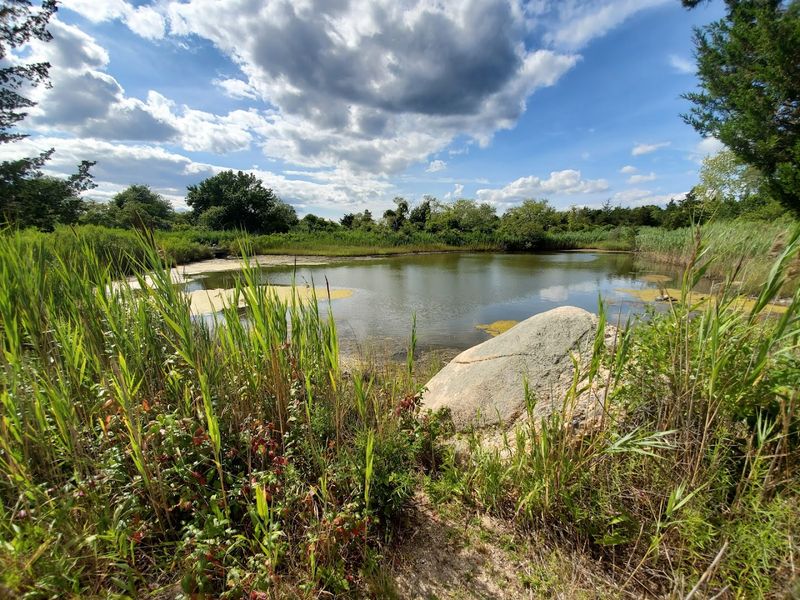
Right next to Ninigret Park sits the Ninigret National Wildlife Refuge, a federally protected natural area that shares a border with the park and connects to it via a trail. The two spaces feel very different from each other once you cross from one to the other.
The wildlife refuge is quieter and more restricted than the park. Bikes and dogs are not permitted on the refuge trails, and the unpaved paths through the marsh and coastal areas attract a different kind of visitor than the sports courts and troll sculptures next door.
The grassy point marsh trail leads down toward the water and offers a genuinely peaceful walk through coastal habitat.
One practical note for anyone planning to explore the refuge trails: mosquitoes can be heavy on the unpaved paths, particularly in warmer months, so insect repellent is worth bringing along. The refuge and the park together create a two-for-one outdoor experience that covers both active recreation and quiet nature observation without requiring a second drive.
Practical Tips for Your Visit to Ninigret Park
Getting the most out of a visit to Ninigret Park is easier with a little advance knowledge. Parking is free and plentiful throughout the grounds, with multiple designated lots spread across the park.
The lot near the playground is the most convenient starting point for troll hunting, and the lot near the observatory works best for reaching Erik Rock directly.
Restrooms are available at several locations within the park, including portable facilities near the main activity areas. The park is open from 8 AM to 8 PM on most days, with later closing times of 9:30 PM on Fridays and Saturdays.
Arriving during weekday mornings tends to mean fewer crowds, though the troll sculptures rarely get overwhelmingly busy even on weekends.
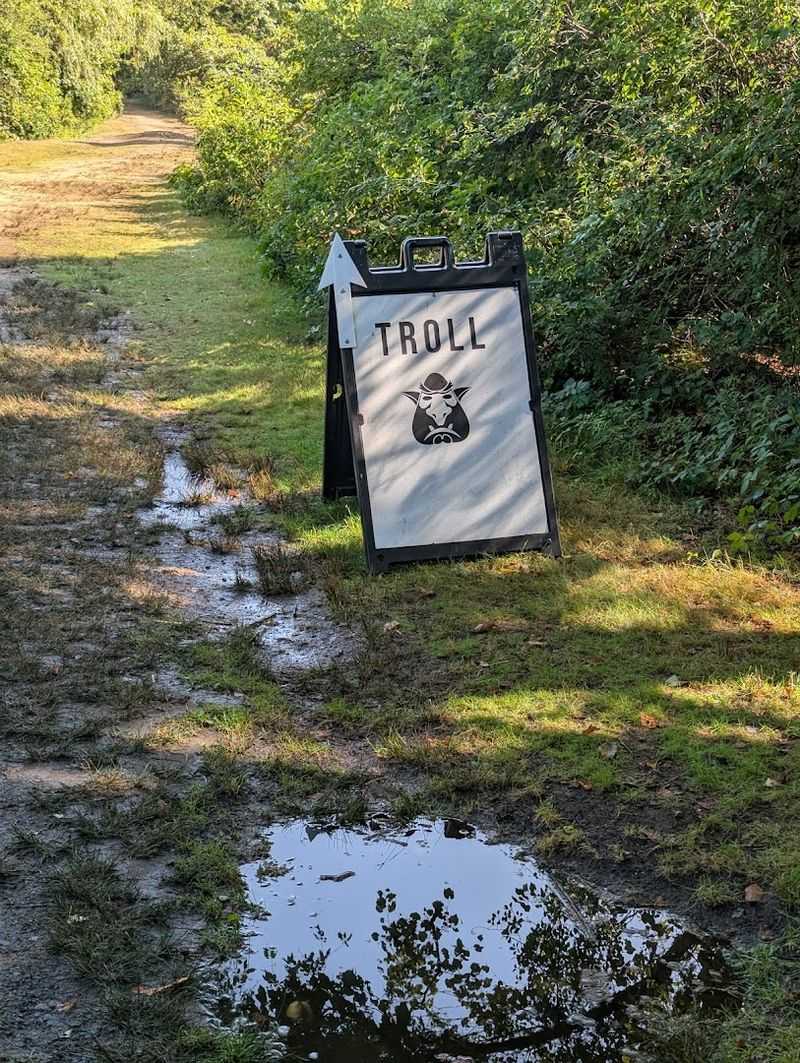
The yellow troll footprints painted on the pavement are the most reliable navigation tool for finding both sculptures. If the footprints become unclear, parking near the observatory and walking toward the wooden sawhorses will put visitors within easy reach of Erik Rock, while the sign near the handicap parking section points toward Greta Granite.
Where It All Began: The Airfield That Became a Park
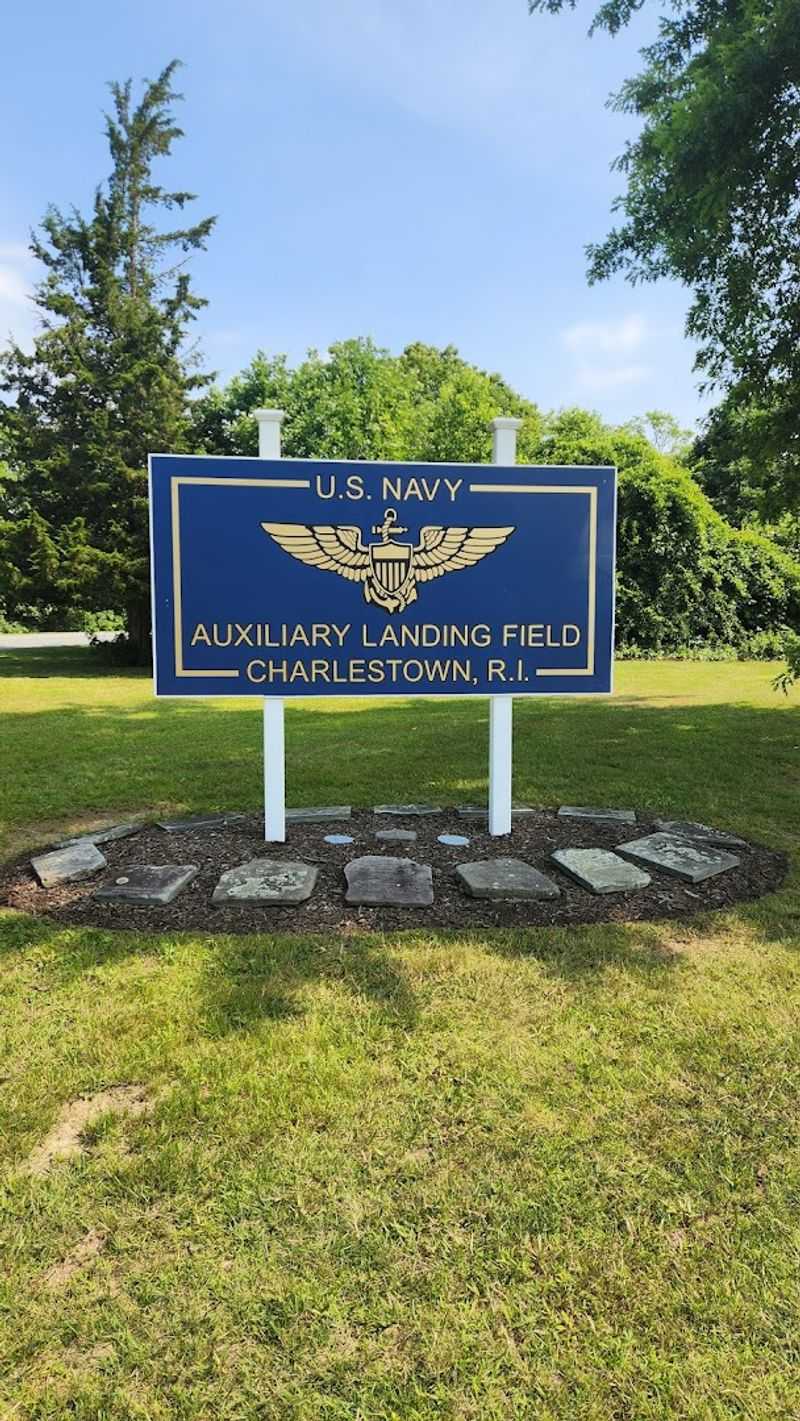
Not every park has a backstory that involves the U.S. Navy, but Ninigret Park does.
The land at 5 Park Ln, Charlestown, RI 02813 was once home to the Charlestown Naval Auxiliary Air Station, a military airfield that operated during World War II and into the Cold War era.
After the Navy decommissioned the base, the land was eventually transferred and converted into the sprawling public park it is today. The wide, flat terrain that once supported runways now provides the open layout that makes the park so easy to explore.
The park is managed by the town of Charlestown and is open most days from 8 AM to 8 PM, with extended hours until 9:30 PM on Fridays and Saturdays. There are no admission fees, which makes it one of the most accessible outdoor spaces on the Rhode Island coast.
That combination of history, open space, and free access is a hard deal to beat.
Share this story