 Unearth The Voyage
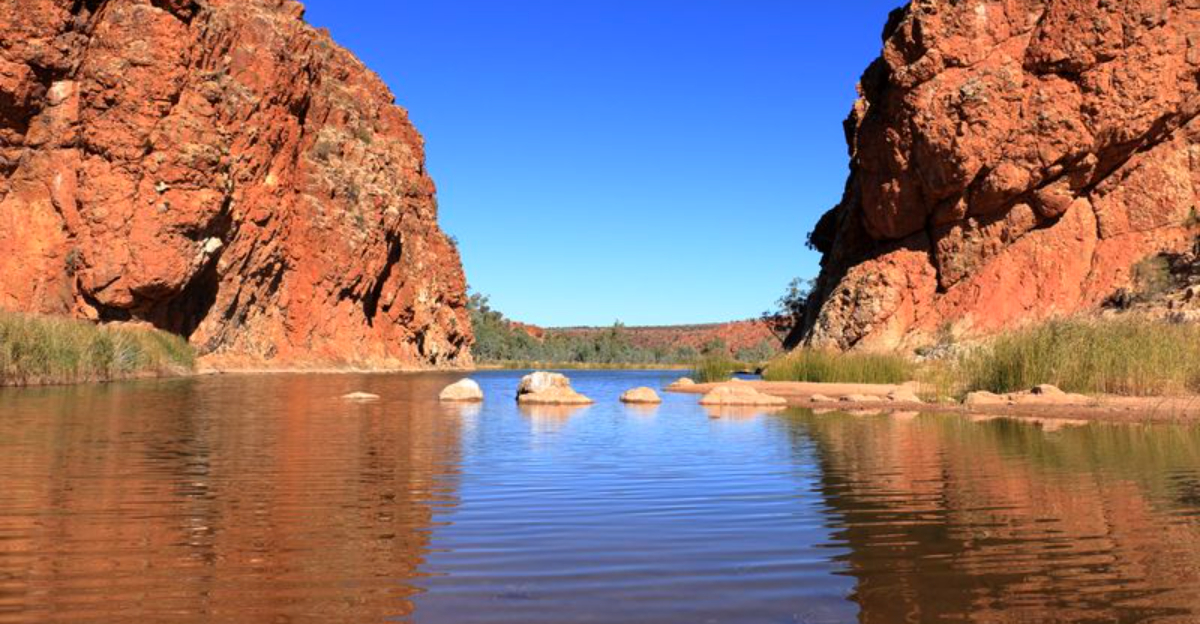
Deep in the heart of Australia lies a river system so ancient that it witnessed Earth long before the first dinosaur ever walked the planet. The Finke River, also known by its Indigenous name Larapinta, has carved its path through the Australian outback for hundreds of millions of years.
What makes this geological wonder even more remarkable is that it rarely flows, spending most of the year as a dry channel punctuated by isolated waterholes, only springing to life after heavy rains.
1. It’s often described as older than dinosaurs
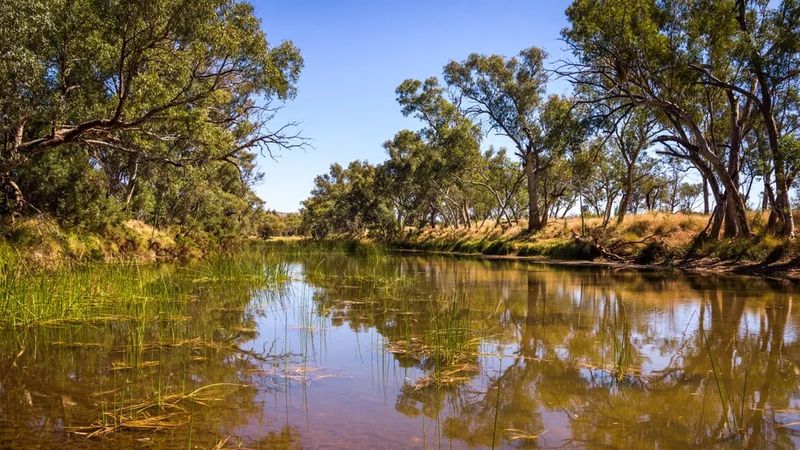
When you think about dinosaurs roaming the Earth, you’re picturing a world from roughly 230 million years ago. The Finke River predates that entire era by a staggering margin.
Popular science sources consistently point out that this river system existed long before T-Rex or Triceratops ever appeared.
Imagine water flowing through channels while the continents were still arranging themselves into configurations we wouldn’t recognize today. That’s the kind of deep time we’re talking about here.
No terrible lizards, no flowering plants, just an ancient river carving its way through a very different world.
2. Most estimates put it around 300–400 million years old
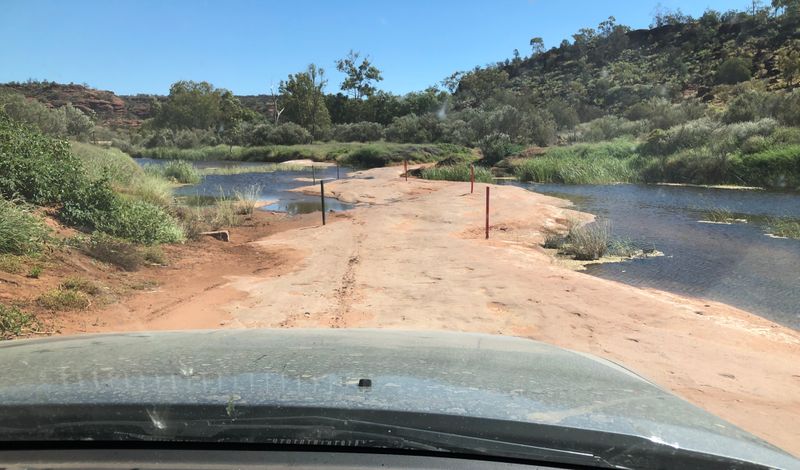
Scientists studying the Finke River system generally agree on an age range between 300 and 400 million years old. Live Science has documented estimates in this ballpark, with some sources narrowing it down to around 350 to 400 million years.
These numbers come from careful analysis of geological evidence.
To put that in perspective, we’re talking about a time period called the Carboniferous, when the first reptiles were just evolving and giant insects ruled the skies. The river has witnessed continental drift, mass extinctions, and the rise and fall of countless species while maintaining its basic course.
3. It’s not one neat river – it’s a network
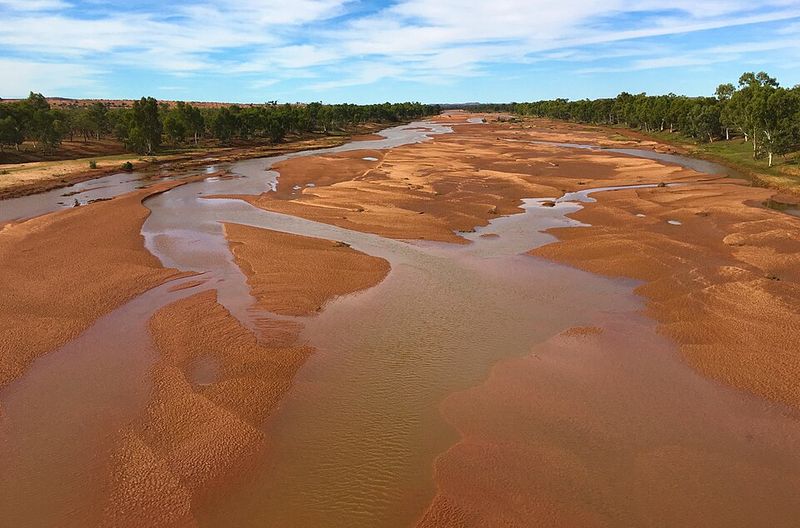
Here’s where things get interesting and a bit complicated. The Finke isn’t just a single ribbon of water flowing from point A to point B.
Instead, it’s better understood as an intricate system of channels, streams, and interconnected waterways spreading across the landscape.
This network structure is actually part of what makes dating the river so challenging. Which channel do you measure?
When did each tributary form? The complexity means scientists are really talking about a drainage system that has evolved and shifted over geological time, rather than one unchanging river course that’s remained identical for eons.
4. It runs across Australia’s Northern Territory and into South Australia
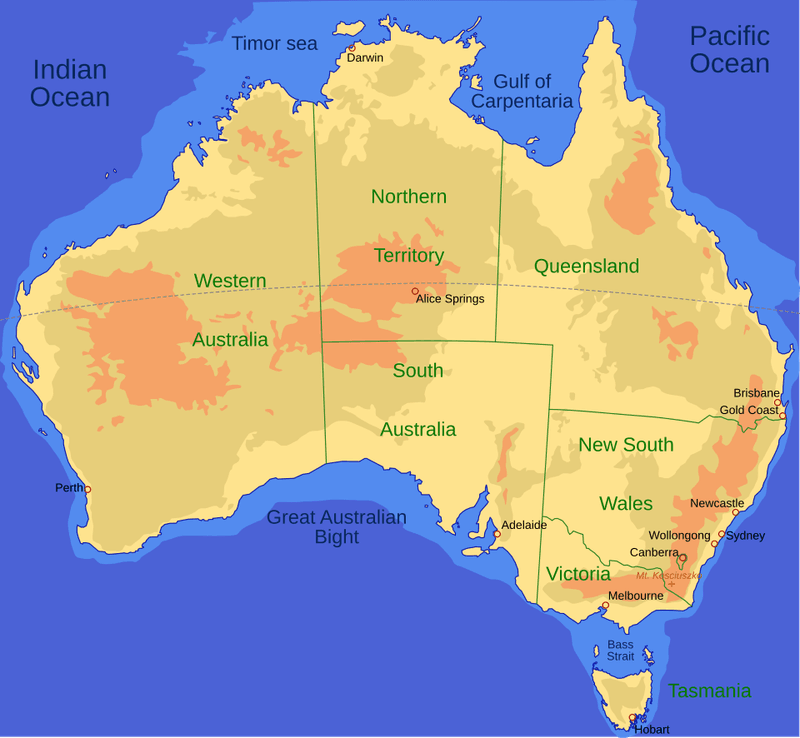
The Finke River system stretches across some of Australia’s most remote and rugged territory. Starting in the Northern Territory, it winds its way through the red center of the continent before eventually reaching toward South Australia.
This journey covers hundreds of kilometers of outback landscape.
The river traverses terrain that most people will never see in person. Vast stretches of desert, ancient mountain ranges, and isolated communities dot its course.
Central Australia’s extreme environment shapes how and when the river flows, making it a defining feature of one of Earth’s most distinctive landscapes.
5. It barely flows most of the year
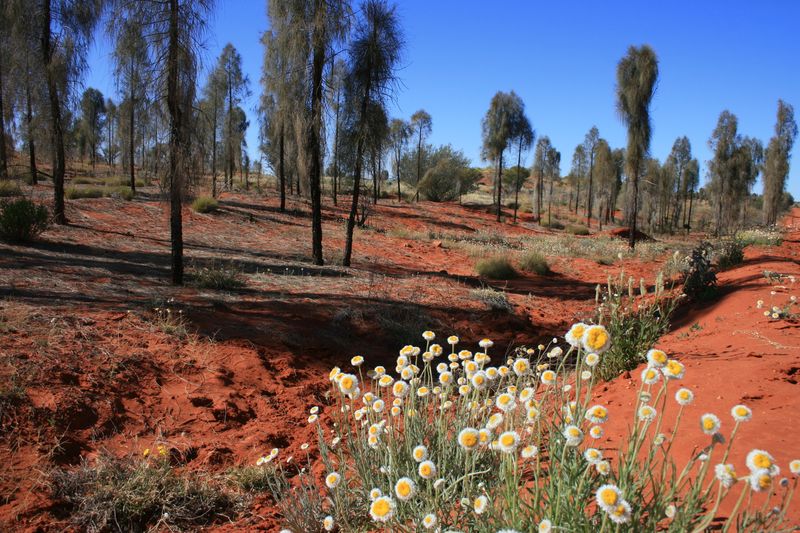
Despite its ancient pedigree and impressive length, the Finke River spends most of its time looking nothing like a river at all. For the majority of the year, visitors would find sandy channels, exposed riverbeds, and scattered waterholes rather than flowing water.
Only after significant rainfall does water actually move through the system.
This dry appearance can be deceiving, though. The river is still very much alive, even when dry.
Underground water continues to flow beneath the sand, and those isolated waterholes become crucial lifelines for wildlife during the harsh dry season that dominates the Australian interior.
6. Its intermittent nature is part of the story
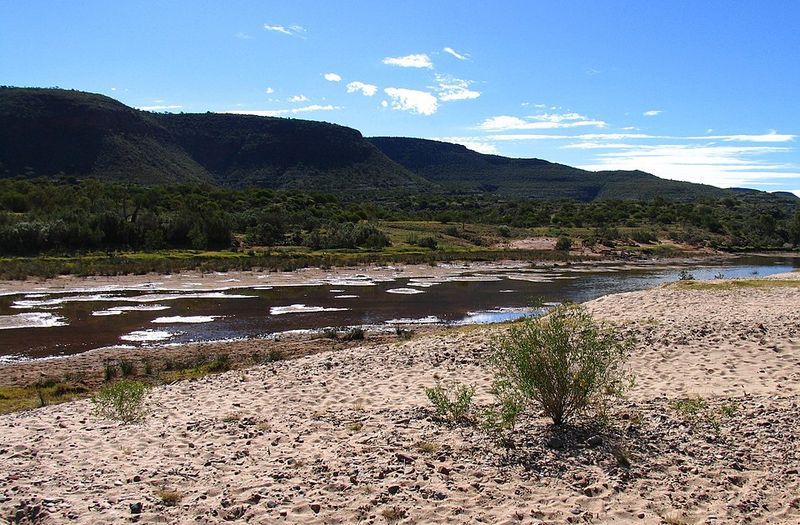
Britannica classifies the Finke as a major intermittent river, which might sound like a contradiction but actually captures its unique character perfectly. Just because it doesn’t flow year-round doesn’t diminish its geological significance or its importance to the landscape.
The on-again, off-again flow is fundamental to understanding how it works.
Intermittent rivers are actually common in arid regions worldwide, but few can claim the age and geological importance of the Finke. When it does flow, it can be powerful and impressive, transforming the landscape temporarily before retreating back into its dormant state once the floodwaters recede.
7. It begins in the MacDonnell Ranges
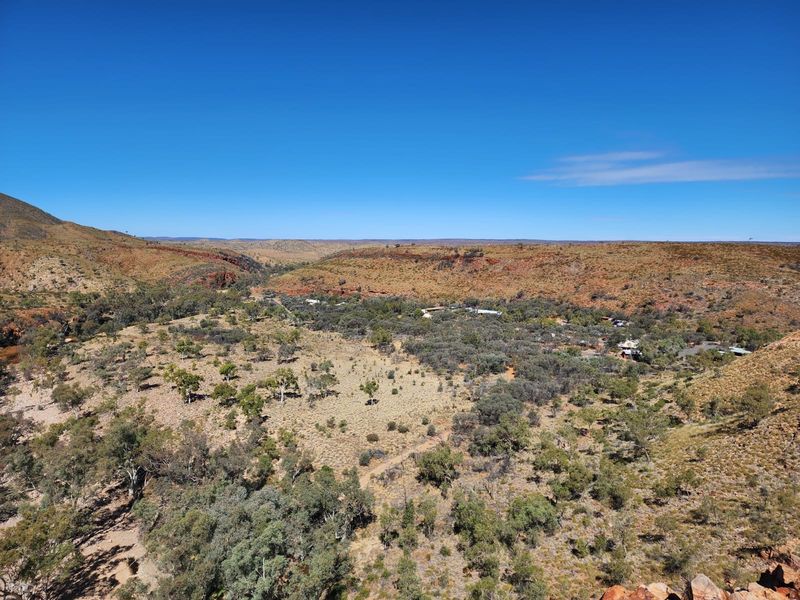
The headwaters of the Finke River originate in the MacDonnell Ranges, a series of ancient mountain ridges in central Australia. Britannica identifies this area as the river’s source, and Live Science connects the river’s deep history directly to the geological uplift that created these ranges millions of years ago.
The MacDonnell Ranges themselves are incredibly old, worn down by erosion over vast time periods. The relationship between the river and these mountains tells a story of landscape evolution that spans geological eras.
Understanding where the Finke begins helps scientists piece together how it has maintained its course for so incredibly long.
8. One key clue: it cuts across tough rock instead of going around
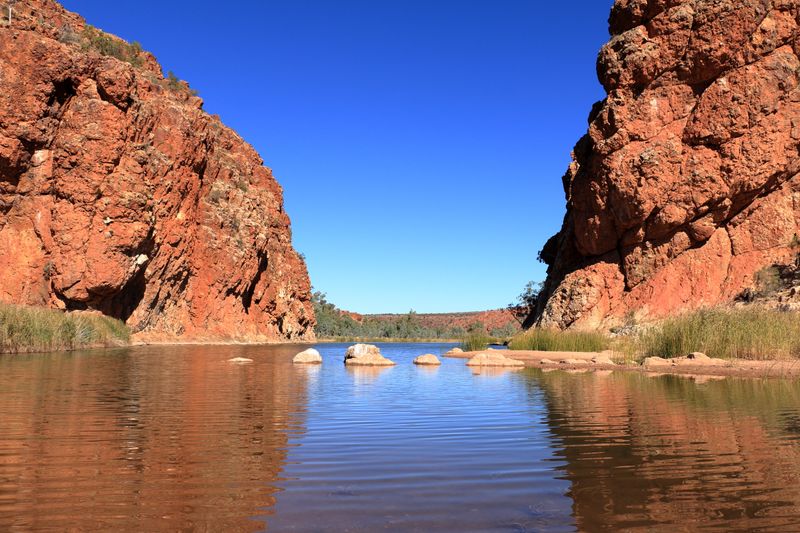
Live Science points to fascinating evidence called cross-axial drainage as a major clue to the Finke’s extreme age. Rather than flowing around resistant rock structures like younger rivers typically do, the Finke cuts straight through them.
This unusual behavior suggests something remarkable about its history.
When a river cuts through hard rock instead of finding an easier path around it, geologists suspect the drainage pattern existed before those rock structures were exposed or uplifted. The river essentially maintained its course while the landscape changed around it, carving down through obstacles as they appeared rather than being deflected by them.
9. The antecedence idea: river first, mountains later
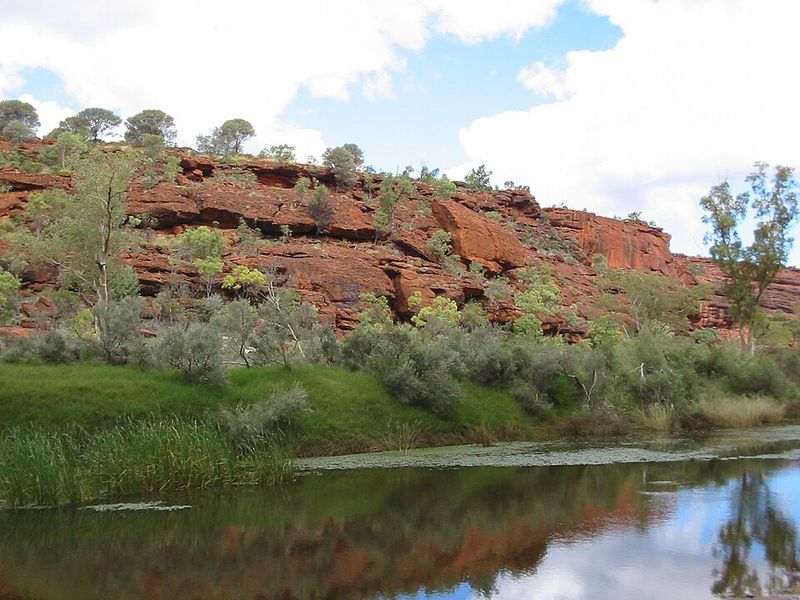
One of the most mind-bending concepts in geology is antecedence, and it’s central to understanding how the Finke could be so ancient. The idea is simple but profound: a river establishes its course on relatively flat terrain, then maintains that exact path even as mountains slowly rise up across it over millions of years.
As the land uplifts, the river carves downward at the same rate, cutting gorges and canyons through the rising rock. Live Science discusses this process as a key explanation for the Finke’s age.
The river literally predates the mountains it flows through, having been there first.
10. Dating ancient rivers relies on multiple lines of evidence
Figuring out exactly how old a river is presents unique challenges that don’t exist when dating rocks or fossils. Rivers constantly reshape their channels, migrate across floodplains, and change course over time.
Scientists can’t just take a sample and run a radiometric dating test on the water itself.
Instead, researchers examine the surrounding geology, study long-term erosion patterns, analyze weathering signatures in rocks, and piece together evidence from multiple sources. It’s detective work on a geological scale, building a case from clues scattered across the landscape.
The age estimates for the Finke come from this kind of careful, multi-faceted investigation.
11. Australia’s long tectonic stability may have helped it persist
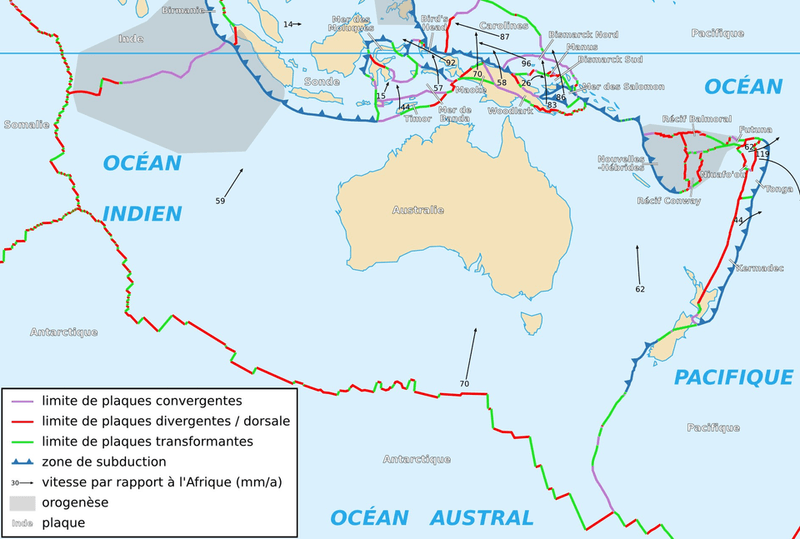
Australia sits in the middle of its own tectonic plate, far from the violent boundaries where earthquakes and volcanoes constantly reshape the landscape. Live Science notes that this remarkable tectonic stability over hundreds of millions of years is probably one reason the Finke River system could remain recognizable for so long.
In more geologically active regions, ancient river systems get destroyed, buried, or completely rearranged by mountain building, volcanic eruptions, and continental collisions. Australia’s relatively quiet geological history allowed the Finke to persist while rivers elsewhere were being erased from existence.
The continent’s stability is the river’s secret to longevity.
12. It can reach Lake Eyre but typically only in flood conditions
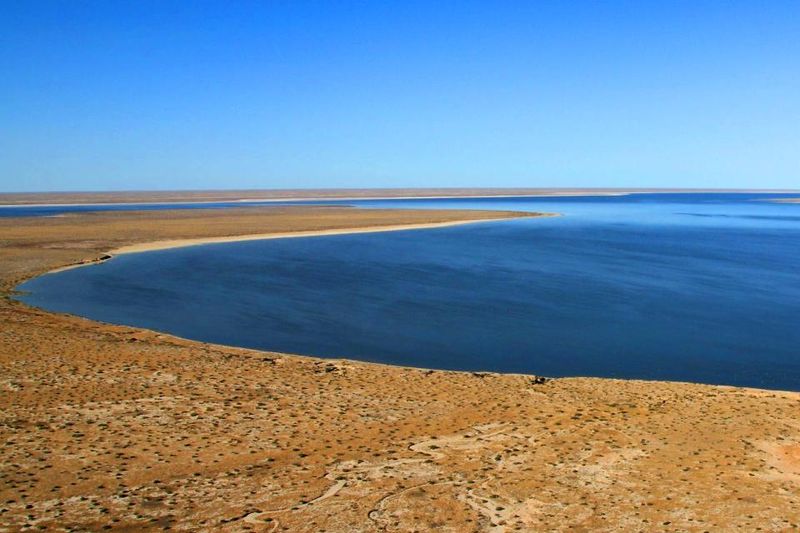
According to Britannica, the Finke River does have a destination: Lake Eyre, one of Australia’s largest salt lakes. However, the river only manages to reach it during significant flood events.
Most of the time, the water never makes it that far, soaking into the sand or evaporating long before completing the journey.
When floods do occur, the river can spread widely across flat areas beyond its normal banks, creating temporary wetlands. These rare inundation events transform the landscape briefly, supporting explosions of life before the water recedes and the desert returns.
Lake Eyre itself is usually dry, only filling during exceptional rainfall years.
13. It’s also a cultural river: Larapinta and the Rainbow Serpent story
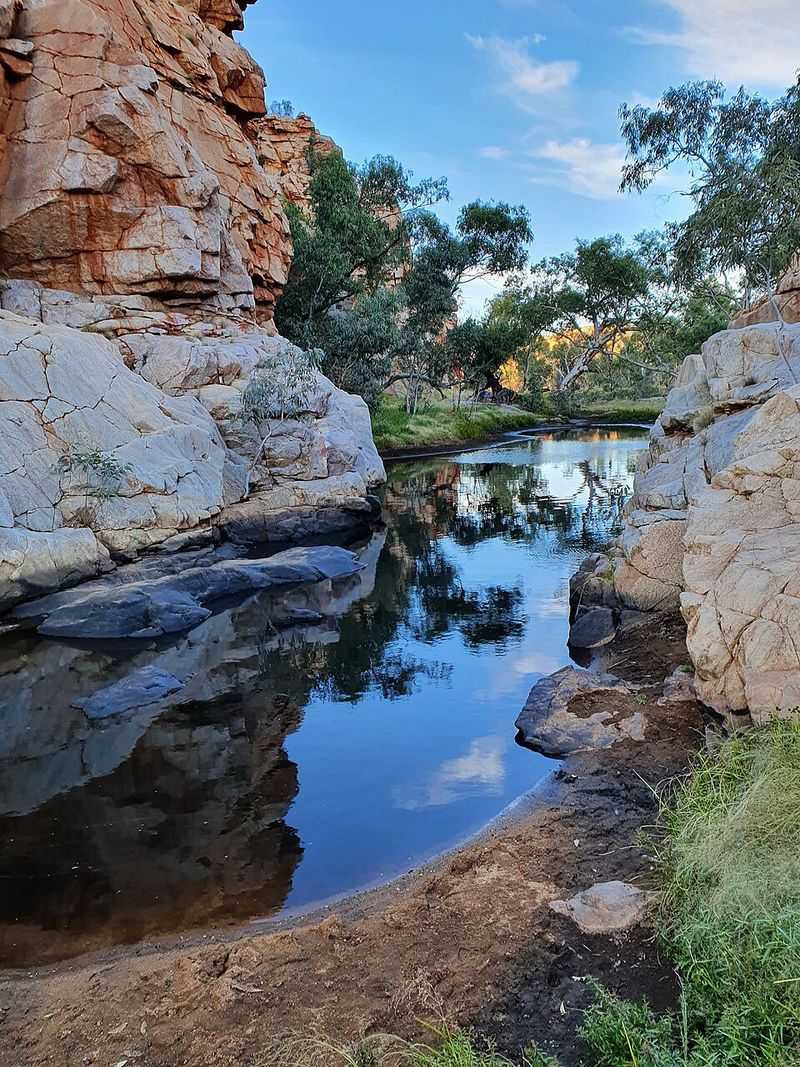
The Indigenous name for the Finke is Larapinta, and it carries deep cultural significance that extends back thousands of years. IFLScience references an Indigenous tradition linking the river’s formation to the Rainbow Serpent, a powerful creator being in Aboriginal mythology.
This adds another dimension of antiquity beyond just geological time.
The Rainbow Serpent stories describe how the landscape was shaped during the Dreamtime, the creation period in Aboriginal belief systems. These cultural narratives remind us that ancient can mean multiple things: geological deep time measured in millions of years, and cultural deep time representing tens of thousands of years of continuous human connection to place.
14. Oldest river titles are debated and definitions matter
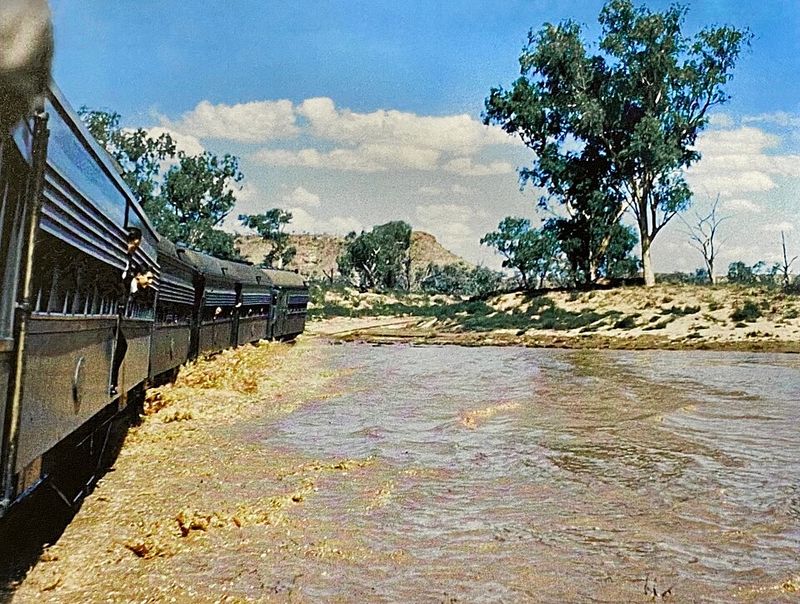
Even sources that promote the Finke as the world’s oldest river acknowledge there’s genuine scientific debate about the claim. Rivers are dynamic systems that constantly change course, dry up, get buried, and rework themselves over time.
So what does oldest really mean in this context?
Most scientists interpret the title to mean something like oldest recognizable river system or oldest riverbed, rather than claiming the water has flowed continuously and unchanging for 300 million years. The distinction matters.
It’s more accurate to say the drainage pattern and basic river system have persisted in recognizable form for an extraordinary length of time, surviving when countless other rivers disappeared.
15. A good cautionary tale: the New River second-oldest claim became marketing folklore
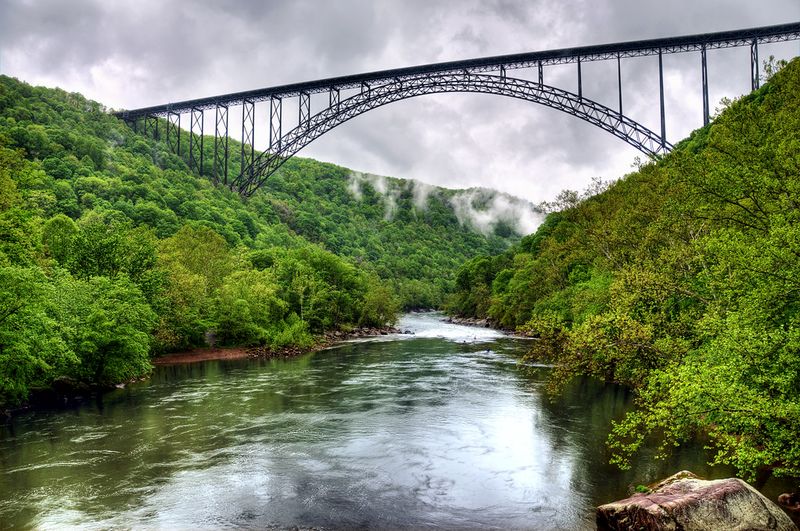
IFLScience mentions the New River in the United States, which has been called the second-oldest river with wildly varying age estimates. A scientific study revealed something fascinating: the second oldest river label was actually promoted during a 1970s environmental campaign to prevent dam construction.
The catchy claim helped save the river but wasn’t based on solid geomorphic evidence.
This story serves as a perfect reminder that superlative claims about natural features can sometimes be more about successful messaging than rigorous science. It doesn’t mean the Finke isn’t genuinely ancient, but it does suggest we should approach oldest river claims with healthy scientific skepticism and understand the complexity behind such labels.



