 Unearth The Voyage
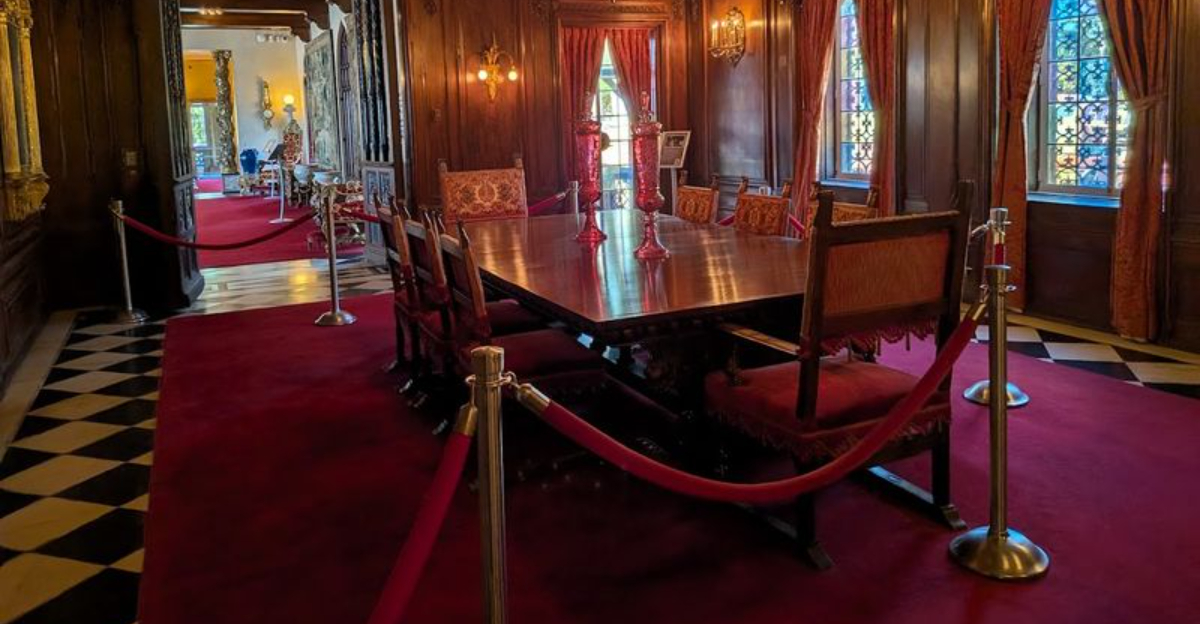
There is a mansion sitting right on the edge of Sarasota Bay that most people drive past without realizing what they are missing. It was built by one of the most famous showmen in American history, and it looks less like a Florida home and more like a palace pulled straight from the canals of Venice.
The ceilings were painted by European masters, the floors are covered in rare marble, and somewhere near the top, a tower hides in plain sight. I had heard about this place for years before finally making the trip, and nothing quite prepared me for what I found at the end of that long bayfront drive.
The Address and Setting That Sets the Stage
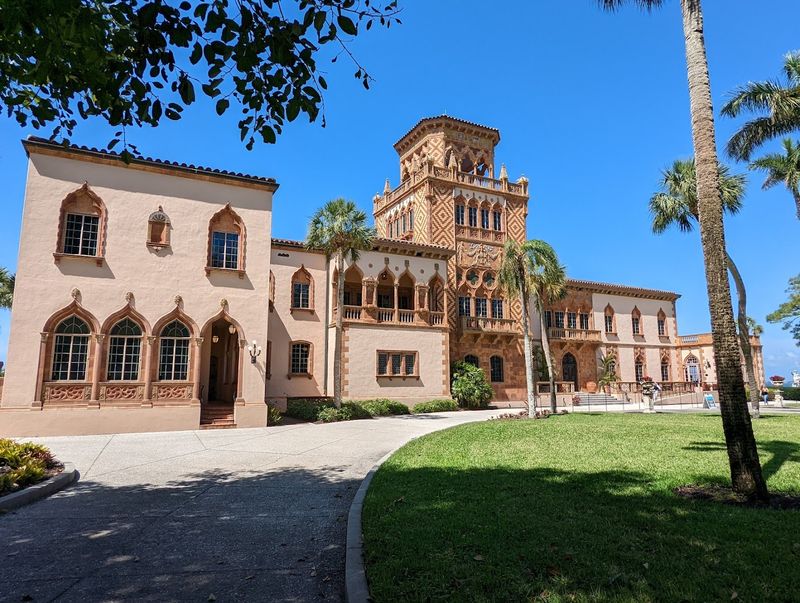
Right at 5401 Bay Shore Rd, Sarasota, FL 34243, Ca’ d’Zan sits on a stretch of bayfront property that feels almost unfairly beautiful. The grounds roll gently down toward the water, flanked by ancient banyan trees with roots that twist and sprawl like something out of a storybook.
The mansion itself rises against a backdrop of open sky and shimmering bay water, making the first view of it genuinely hard to process. You keep expecting it to be a movie set or a theme park attraction, but it is completely real.
The Ringling complex as a whole spans many acres, but Ca’ d’Zan anchors the entire estate with a quiet authority. Getting there early in the morning, before the crowds fill the grounds, gives you a few rare minutes where the whole scene feels like it belongs only to you.
The Man Behind the Mansion
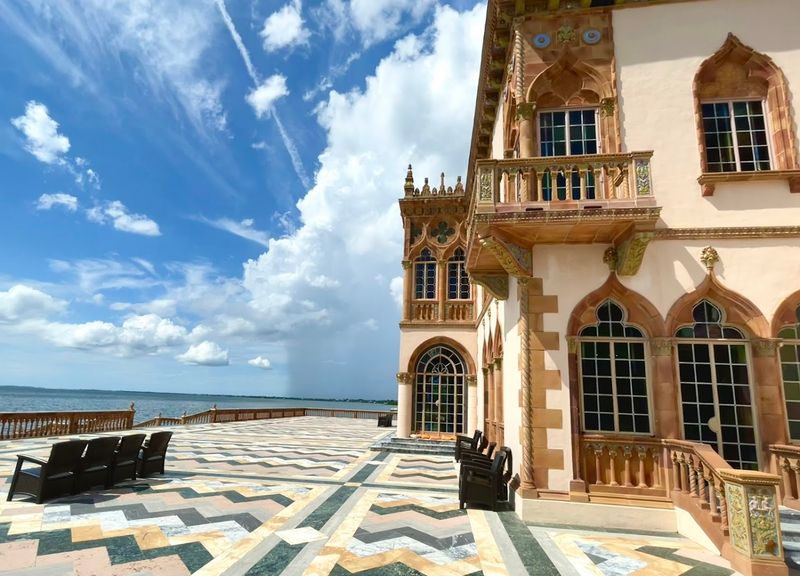
John Ringling was not a quiet man, and his home reflects that with every ornate detail. Co-owner of Ringling Bros. and Barnum and Bailey Circus, he turned circus ticket money into one of the most extravagant private residences ever built in Florida.
He and his wife Mabel commissioned the mansion in the early 1920s, working with architect Dwight James Baum to create something that honored their love of European art and Venetian architecture. The name itself, Ca’ d’Zan, translates roughly to House of John in Venetian dialect, which tells you everything about how John Ringling saw himself.
What makes the story even more fascinating is that Ringling later donated the entire estate, including his world-class art collection, to the state of Florida. A circus king turned unlikely cultural patron is not a story you come across every day.
Venetian Gothic Architecture in the Sunshine State
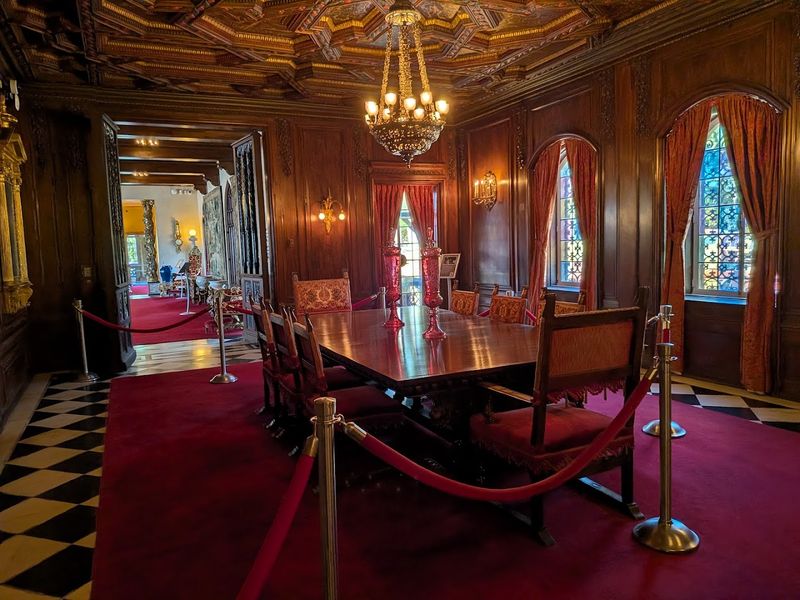
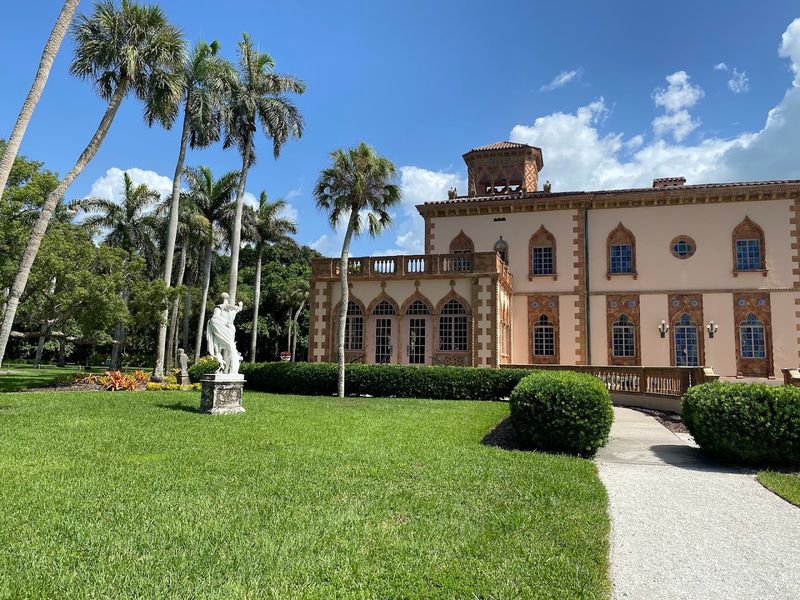
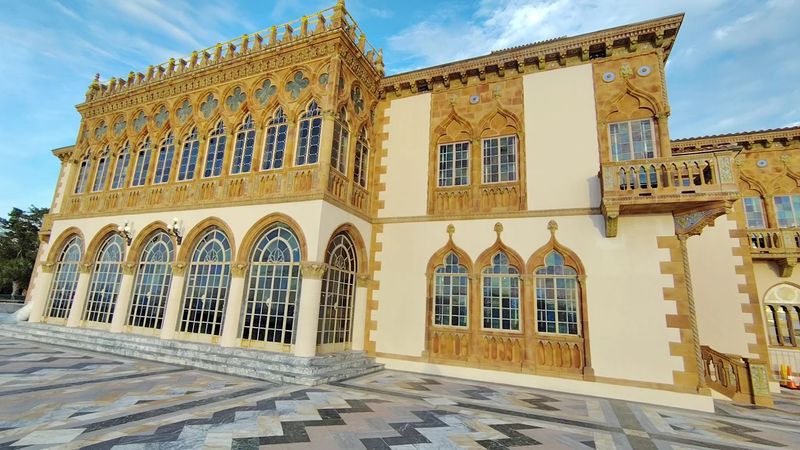
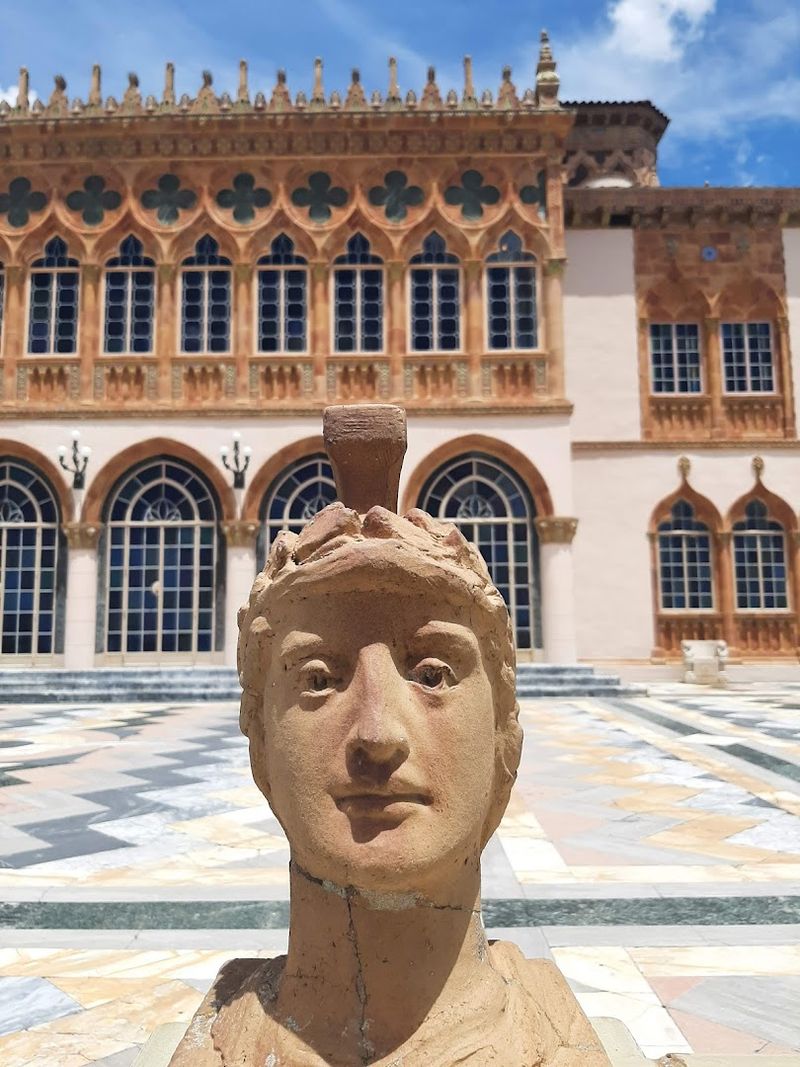
The architectural style of Ca’ d’Zan borrows heavily from the grand palazzos that line the Grand Canal in Venice, but it also pulls from Venetian Gothic and Mediterranean Revival influences. The result is a building that feels layered and alive, with arched windows, terracotta ornaments, and glazed tiles that catch the Florida sun in a way that makes the walls seem to glow.
The facade features a loggia with sweeping arched openings that frame views of the bay, and the roofline is decorated with decorative finials and colorful tilework that no passing glance can fully absorb. Every corner rewards a longer look.
Architect Dwight James Baum worked closely with the Ringlings to translate their vision into something structurally sound and visually overwhelming. The fact that a building this theatrical has survived a full century in Florida’s coastal climate is a testament to the craftsmanship behind every wall.
Mabel Ringling’s Fingerprints Are Everywhere
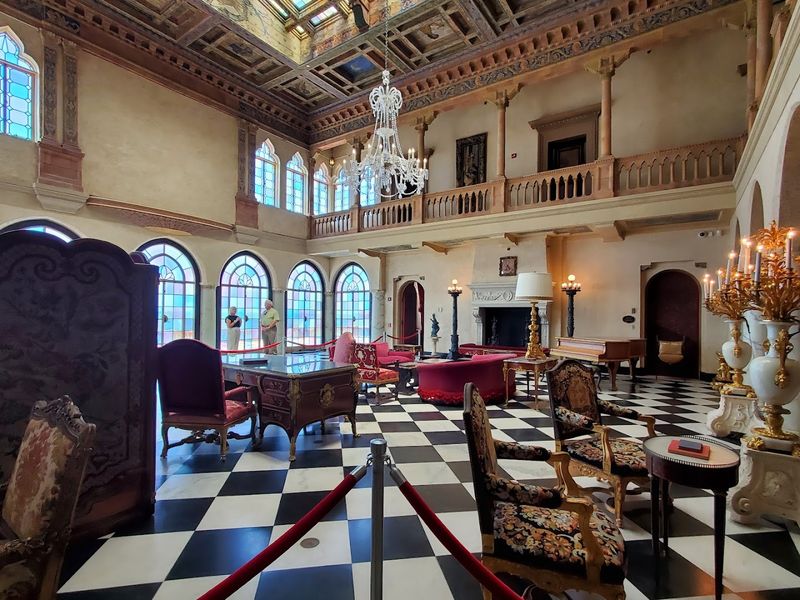
Mabel Ringling had an eye for beauty that bordered on obsessive, and Ca’ d’Zan is essentially her vision made permanent. She traveled extensively through Europe with John, collecting art, furniture, and design inspiration that would eventually fill every room of their Sarasota home.
Her personal taste leaned toward rich textiles, hand-painted ceilings, and antique European furnishings that she sourced with the same intensity her husband brought to running the circus. The result is an interior that feels more like a curated museum than a lived-in house, which is fitting given what it eventually became.
Mabel passed away in 1929, just a few years after the mansion was completed, and the house seemed to lose some of its spirit with her. John never quite replicated her careful touch in the rooms after she was gone, which makes the spaces she shaped feel all the more precious today.
The Painted Ceilings That Demand Your Full Attention

Few things in Ca’ d’Zan stop visitors mid-step quite like the painted ceilings. Several rooms feature ceiling panels that were painted by prominent European artists and then shipped to Sarasota for installation, a detail that feels almost absurdly extravagant until you actually look up and understand why the Ringlings considered it non-negotiable.
The ballroom ceiling is particularly striking, with allegorical figures and swirling compositions that would not look out of place in a European cathedral. The craftsmanship is precise and the colors have held up remarkably well considering the age of the work.
Standing in the middle of a room and slowly rotating to take in the full ceiling is one of those small, private moments that makes the admission fee feel like a bargain. Most people rushing through the tour miss the ceiling entirely, which is their loss and your gain if you remember to look up.
The Observation Tower That Hides in Plain Sight
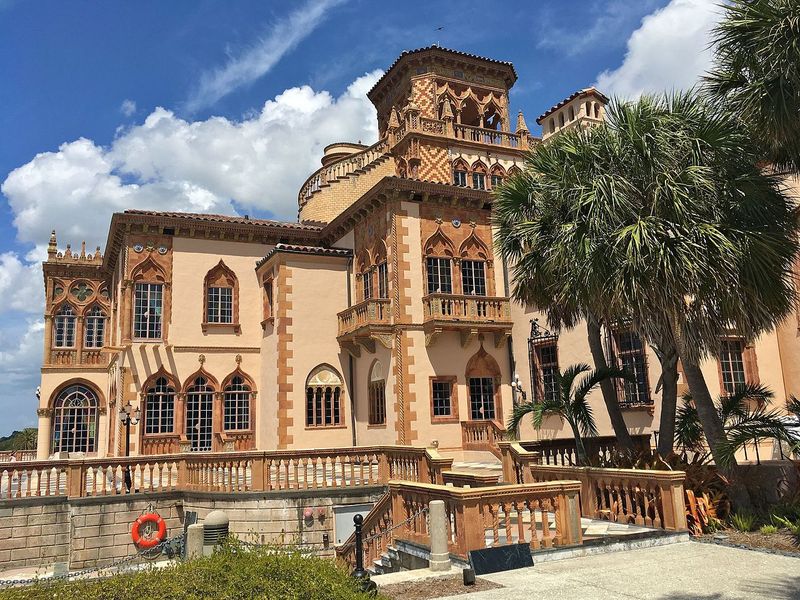
One of the most talked-about features of Ca’ d’Zan is the observation tower that sits near the top of the mansion, almost easy to overlook from ground level if you do not know to search for it. The tower is ringed with zodiac symbols carved into the exterior, a quirky personal touch that hints at the Ringlings’ sense of drama and mysticism.
Access to the upper level, including the tower area, requires a specific guided tour that runs only a few times each day, with limited group sizes. That exclusivity makes the experience feel genuinely special rather than just another stop on a crowded walkthrough.
The views from the upper level over Sarasota Bay are exactly as good as you would hope, and the architectural details visible from that height reveal patterns and decorative choices that are completely invisible from the ground. It is worth planning your visit around the tour schedule.
The Terrace and Its Bayfront Views
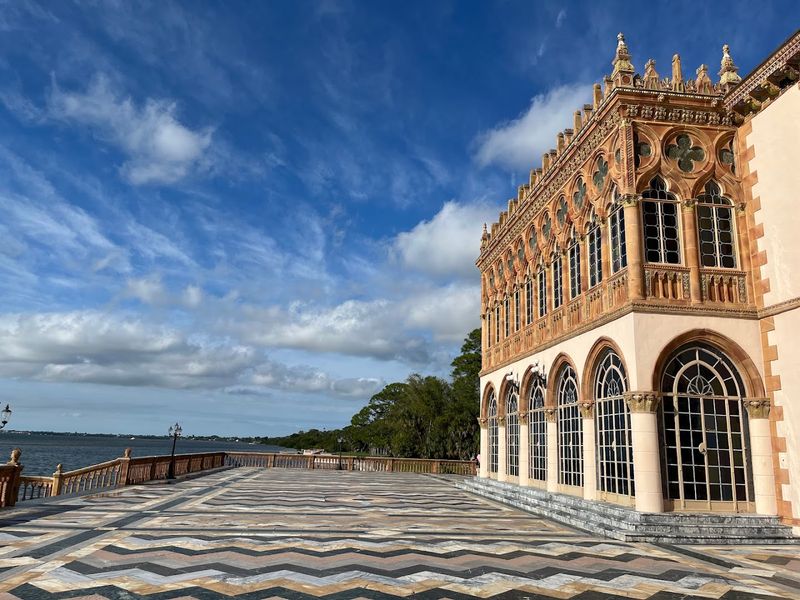
The terrace at Ca’ d’Zan is one of those outdoor spaces that makes you want to stay far longer than your schedule allows. It stretches along the bayfront side of the mansion with a decorative balustrade, colorful tile flooring, and unobstructed views of Sarasota Bay that shift in color and mood depending on the time of day.
At sunset, the terrace becomes something close to magical, with the water catching orange and pink light while the mansion’s facade glows behind you. A few visitors mentioned that this is the single best moment to experience the property, and after seeing it myself, I would not argue the point.
The terrace also gives you the best angle for photographing the mansion’s exterior, with the bay as a natural backdrop. Even during the ongoing restoration work, this area remains accessible and fully worth the visit on its own terms.
The Floors and the Rare Viola Marble
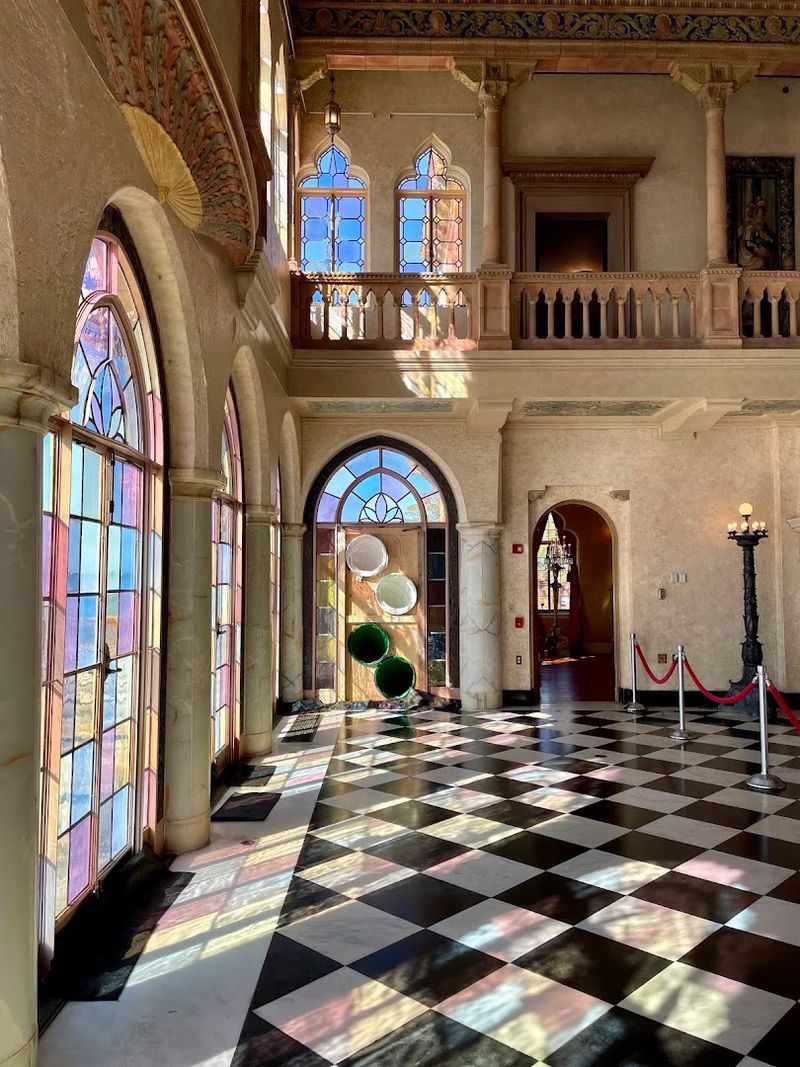
Among the many luxurious materials used throughout Ca’ d’Zan, the rare Viola marble on the second floor suite stands out as something genuinely hard to find anywhere else. Viola marble has a distinctive purple and white veining that was sourced from European quarries and installed with a precision that reflects the obsessive quality standards the Ringlings demanded throughout the construction process.
The flooring throughout the mansion varies by room, with different stone types and patterns chosen to complement the specific purpose and decor of each space. Even the transitions between rooms feel considered rather than accidental.
Visitors who have accessed the second floor on the guided tour consistently mention the marble as a highlight that justifies the extra effort of booking the limited tour. The restoration work currently underway is focused in part on preserving these original floors, which makes supporting the admission fees feel like a genuinely worthwhile contribution.
The Dock and the Waterfront Approach
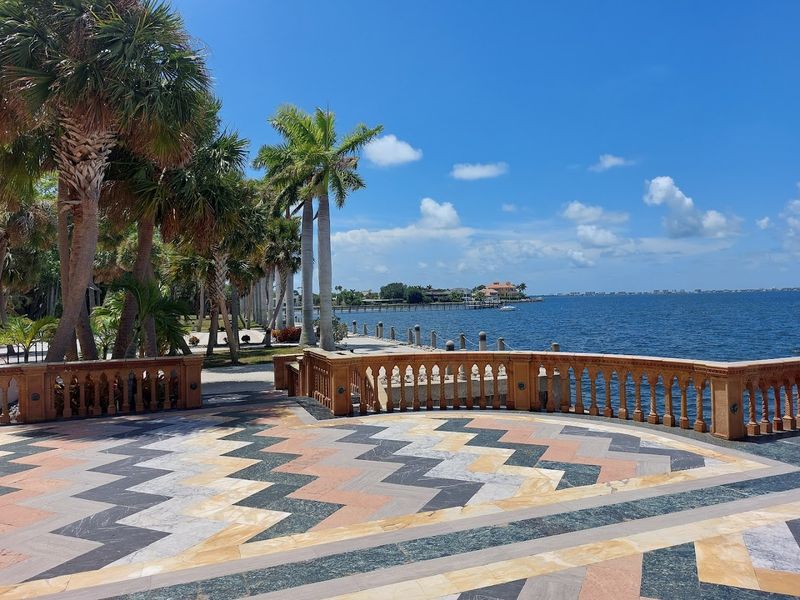
John Ringling originally designed Ca’ d’Zan with the expectation that guests would often arrive by boat, and the dock at the water’s edge reflects that ambition. The structure extends out into Sarasota Bay with a quiet confidence, and viewing the mansion from the dock gives you the closest thing to the original intended first impression of the property.
The waterfront approach makes the building look even more like a Venetian palazzo than it does from the road, with the reflection of the facade shimmering on the bay surface on calm days. That visual connection between architecture and water was entirely intentional and speaks to how carefully the entire property was planned.
Even if you never step inside the mansion, a walk down to the dock and back gives you a perspective on Ca’ d’Zan that most visitors never bother to seek out. That alone makes it worth the extra few minutes.
The Stained Glass Windows and Their Stories
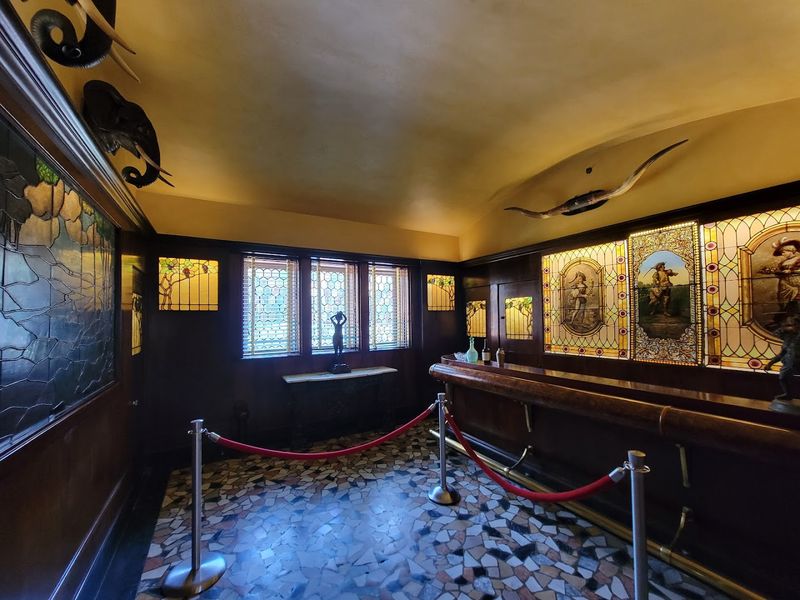
The stained glass windows at Ca’ d’Zan are not decorative afterthoughts. They were carefully chosen and installed as part of a cohesive visual language that runs through the entire interior, with colors and motifs that complement the painted ceilings, antique furniture, and European tapestries surrounding them.
Light filters through the colored glass at different angles depending on the time of day, shifting the mood of individual rooms in ways that feel almost theatrical. Morning light through the east-facing windows creates a warm, amber atmosphere that the afternoon sun through the bay-side openings cannot replicate.
Several of the windows feature figural and geometric designs that reward close inspection, with layers of detail visible only when you stop moving and actually study the glass. The audio tour available during the self-guided walkthrough provides helpful context for what you are seeing, though some of the best moments come from simply standing still and letting the light do the talking.
The Pan Carving at the Entrance Door
There is a small carving of Pan positioned above the main entrance door that most visitors walk directly under without noticing. Pan, the Greek god of wild things and festivity, is a fitting guardian for a home built by a circus king, and whoever chose to place him there had a sense of humor that deserves appreciation.
The carving is easy to miss precisely because it is so small relative to the grandeur surrounding it, but once you know it is there, it becomes one of those details you look for immediately on every subsequent visit. Small touches like this are what separate Ca’ d’Zan from a simple display of wealth and give the building genuine personality.
Knowing the mythological reference also adds a layer to the experience of entering the house, turning a simple threshold crossing into something that feels slightly ceremonial. That kind of layered storytelling is baked into every corner of this mansion.
Hurricane Helene and the Ongoing Restoration
Hurricane Helene hit Ca’ d’Zan hard, and the restoration effort currently underway is both visible and ongoing. Parts of the exterior have been wrapped in protective coverings, scaffolding appears in sections that were damaged by the storm, and some interior areas remain closed while repair teams work to preserve original materials.
The Ringling Museum has been transparent about the situation, though some visitors have arrived expecting the full pre-storm experience and found more construction activity than they anticipated. Checking the official website at ringling.org before your visit is genuinely good advice right now, not just a formality.
The silver lining of visiting during the restoration period is that the guided Uncovering the Ca’ d’Zan tour offers behind-the-scenes access to the work being done, with staff explaining conservation techniques and the history of specific materials being restored. Your admission dollars are directly supporting that preservation work, which gives the visit an added sense of purpose.
Planning Your Visit to Get the Most Out of It
Ca’ d’Zan is open Monday through Sunday from 10 AM to 5 PM, and arriving right at opening gives you the best chance of beating the midday crowds. The mansion tour carries an additional fee beyond general Ringling complex admission, currently around $15 for the self-guided walkthrough, with the limited guided upper-floor tour priced separately.
The guided Uncovering the Ca’ d’Zan tour runs only three or four times per day with capped group sizes, so booking ahead or arriving early to secure a spot is strongly recommended. That tour is the only way to access the upper level and the observation tower area.
The broader Ringling complex also includes a world-class art museum, a circus museum, and a historic theater, so building a full day around the visit makes practical sense. Mable’s Kitchen on-site handles food service, though patience is advised during busy periods.



