 Unearth The Voyage

Imagine a place where you can escape the noise of the city without driving hours away from home. Trails wind through dense woodlands, cross babbling creeks, and open onto peaceful meadows where wildlife roam freely.
Birds call from the treetops, turtles sun themselves on logs, and deer occasionally peek through the underbrush as you pass by.
This isn’t some faraway wilderness destination that requires a weekend trip and a packed cooler. It’s a hidden retreat tucked right inside the city limits, offering a quick reset for anyone who needs fresh air and a moment of calm.
The trails are gentle enough for families but wild enough to feel like a real adventure.
Whether you’re looking to stretch your legs after work, teach your kids about nature, or simply trade concrete for canopy, this spot delivers. Read on to discover why so many people are talking about this urban oasis and what makes it worth lacing up your hiking boots for.
Where the Trail Begins
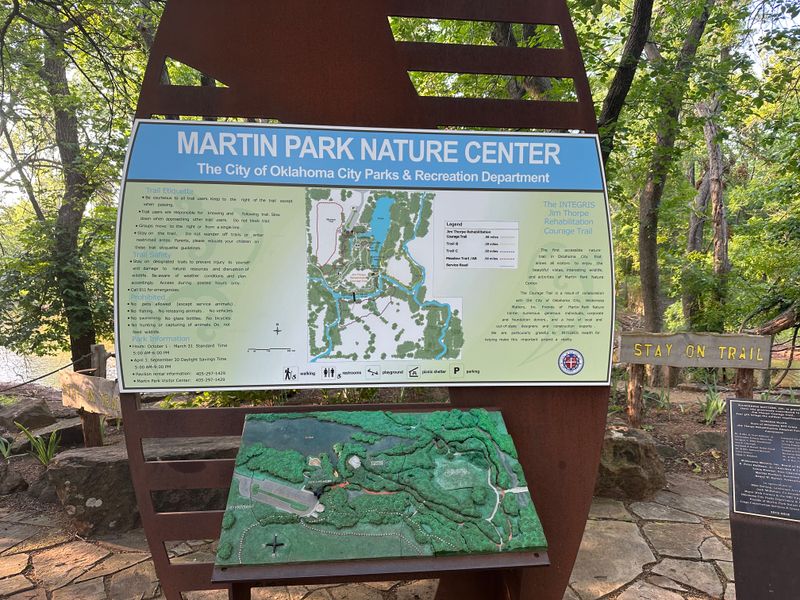
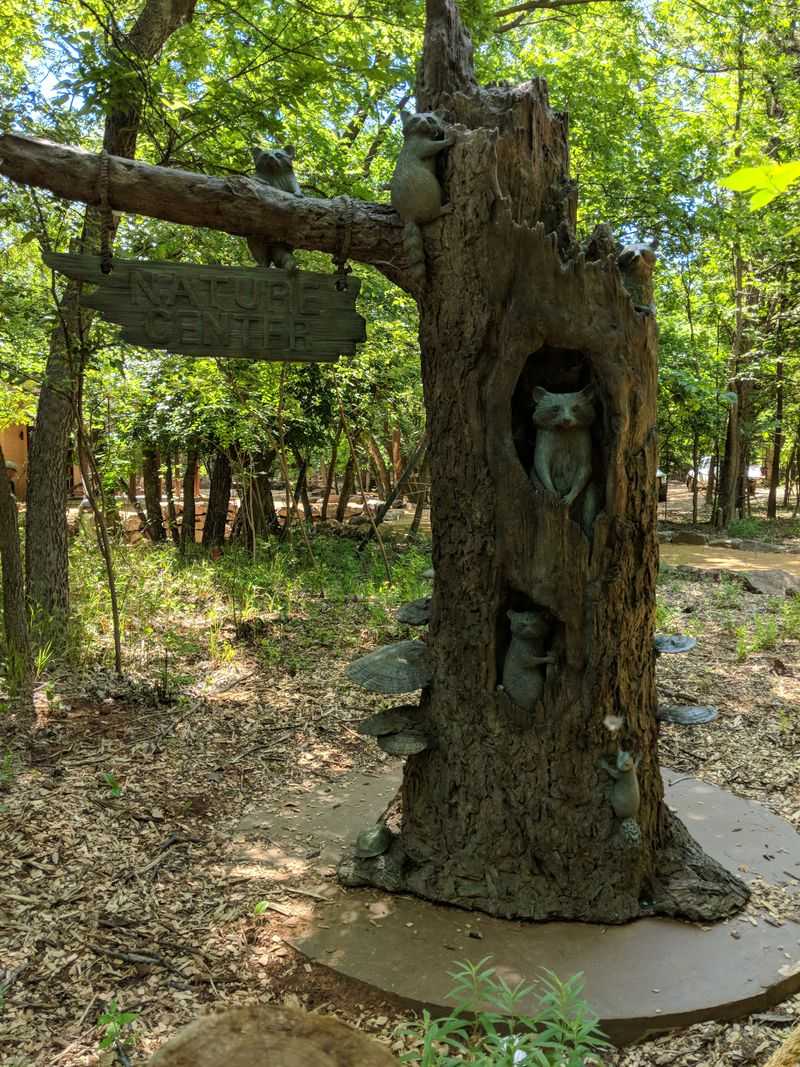
My first visit started at 5000 W Memorial Rd, Oklahoma City, OK 73142, where the nature center building sits surrounded by towering trees and well-marked trailheads. The parking lot was surprisingly full for a Thursday morning, which told me right away that locals knew something special about this place.
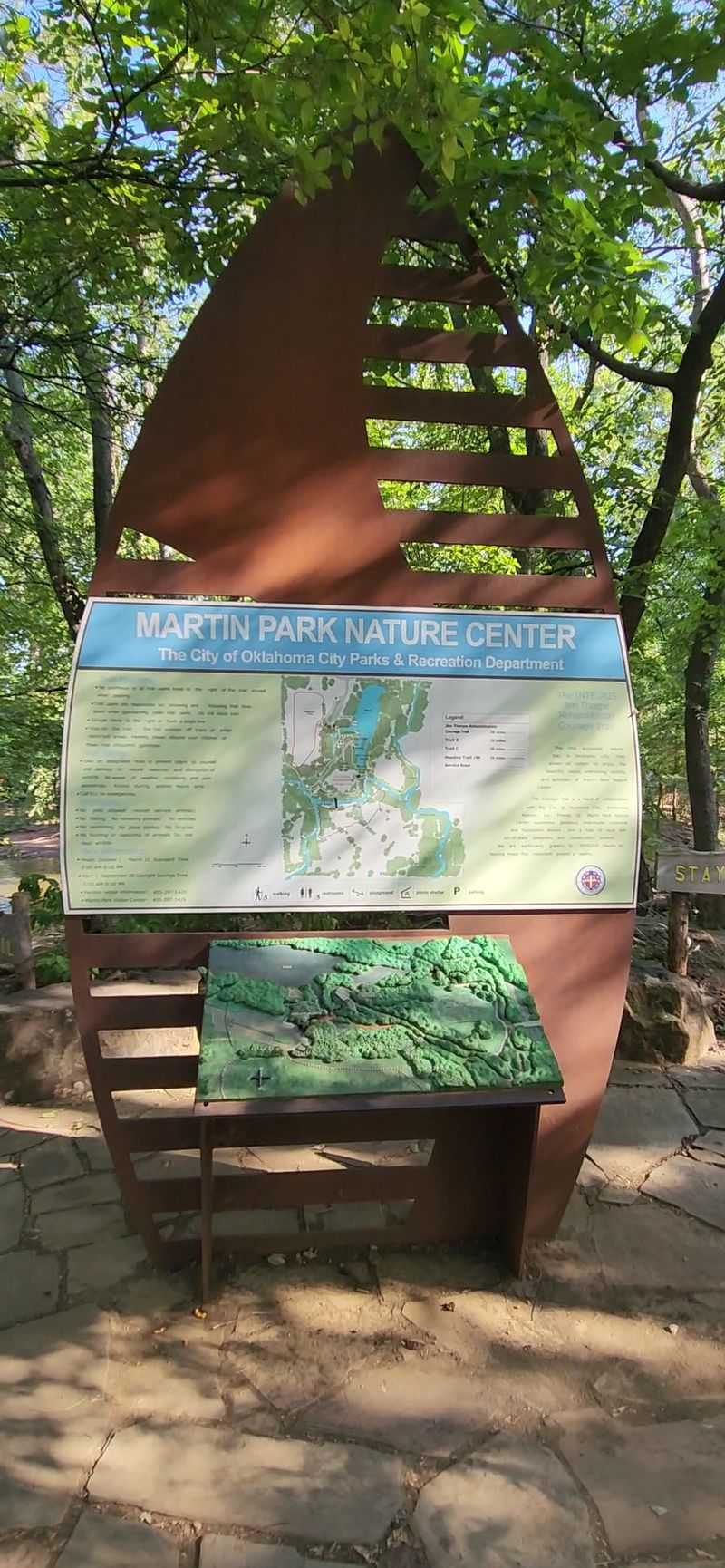
The center itself serves as the perfect launching point, offering maps, restrooms, and a chance to learn about the ecosystem before heading out. Staff members were friendly and quick to answer questions about trail conditions and recent wildlife sightings.
I grabbed a trail map and studied the layout, noticing how the paths looped and connected in ways that let you customize your hike.
What struck me immediately was how accessible everything felt. The trailheads were clearly marked, and the paths were wide enough for comfortable walking without feeling overly manicured.
Families with strollers, solo hikers, and even a few joggers were all preparing to explore.
This wasn’t some intimidating wilderness experience requiring special gear or advanced skills. It was inviting, welcoming, and ready for anyone who wanted to step into nature.
Before I even started walking, I could tell this was going to be a memorable morning.
Woodland Wonders Along the Path
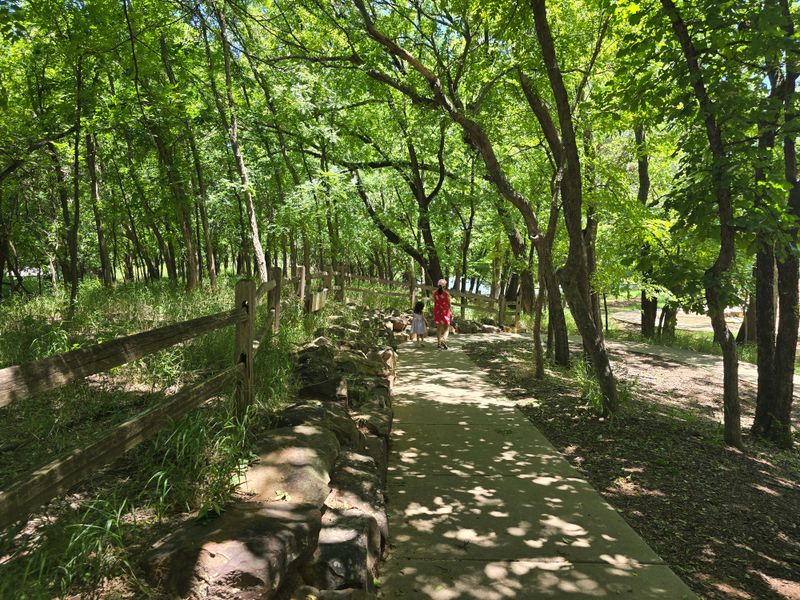
The trail quickly pulled me into a world of towering oaks, pecans, and elms that formed a living canopy overhead. Sunlight filtered through the leaves in scattered patches, creating a dappled effect on the forest floor that changed with every step.
The temperature dropped noticeably once I entered the shade, offering instant relief from the Oklahoma heat.
Birdsong filled the air from every direction. I’m no expert birder, but even I could pick out the distinct calls of cardinals, blue jays, and woodpeckers echoing through the trees.
The forest felt alive in a way that urban parks rarely do.
Wildflowers dotted the understory in spring and summer, adding splashes of color to the green landscape. Small interpretive signs along the way identified native plants and explained their role in the local ecosystem.
I appreciated these little educational touches without feeling like I was back in a classroom.
The trail surface was packed earth with occasional roots and rocks, giving it a natural feel without being difficult to navigate. Even after recent rain, the path drained well and remained walkable.
This woodland stretch reminded me why forests matter, not just as scenery but as living, breathing communities of plants and animals working together.
Creek Crossings and Water Features
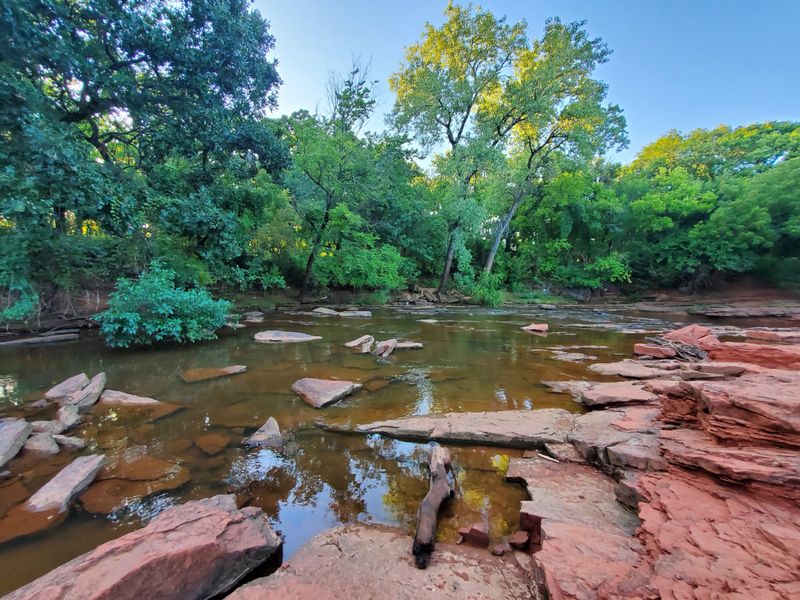
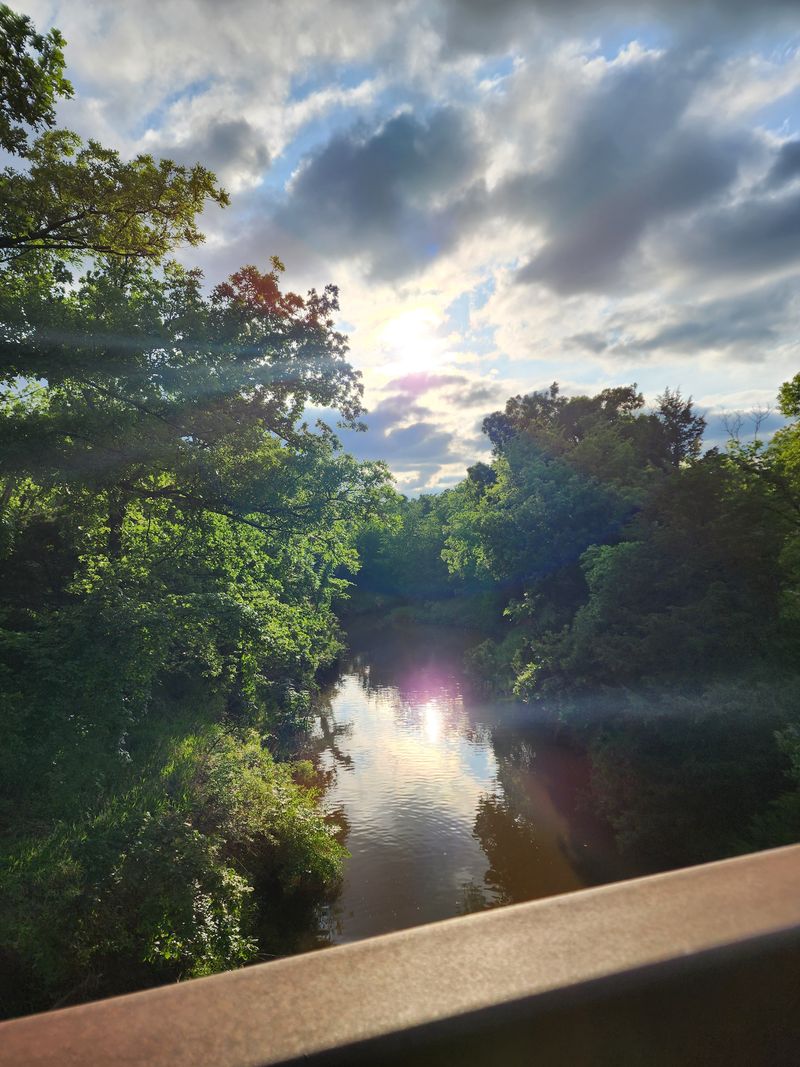
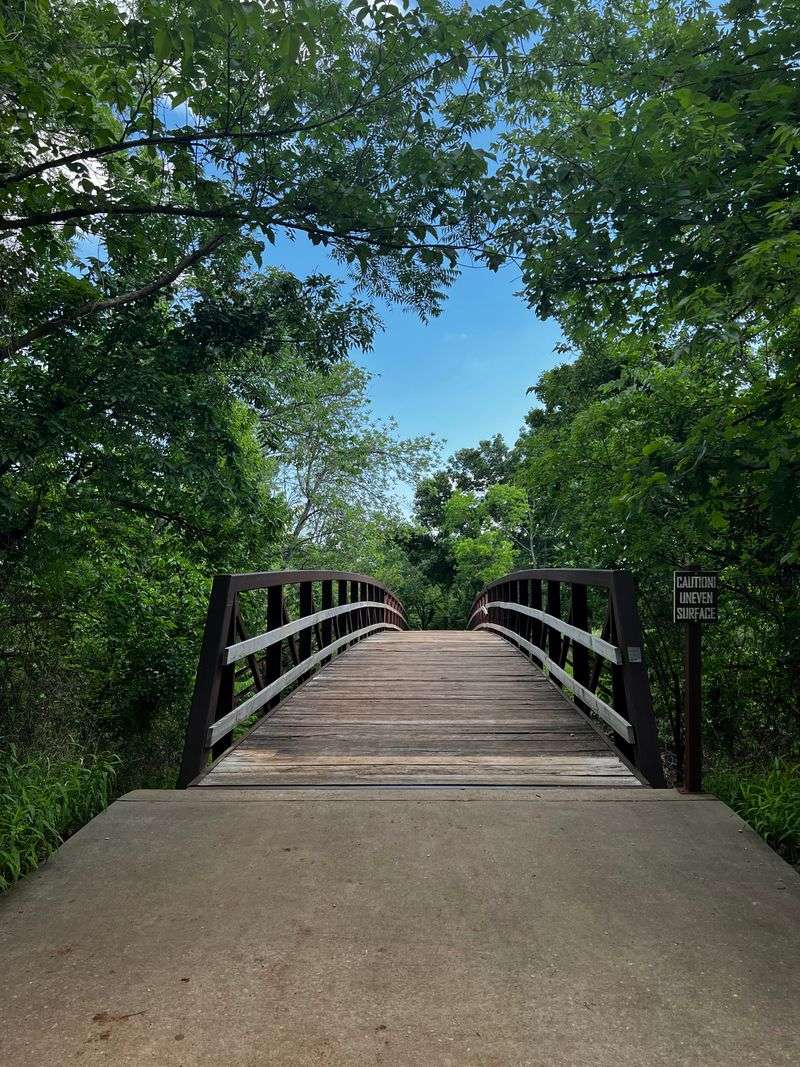
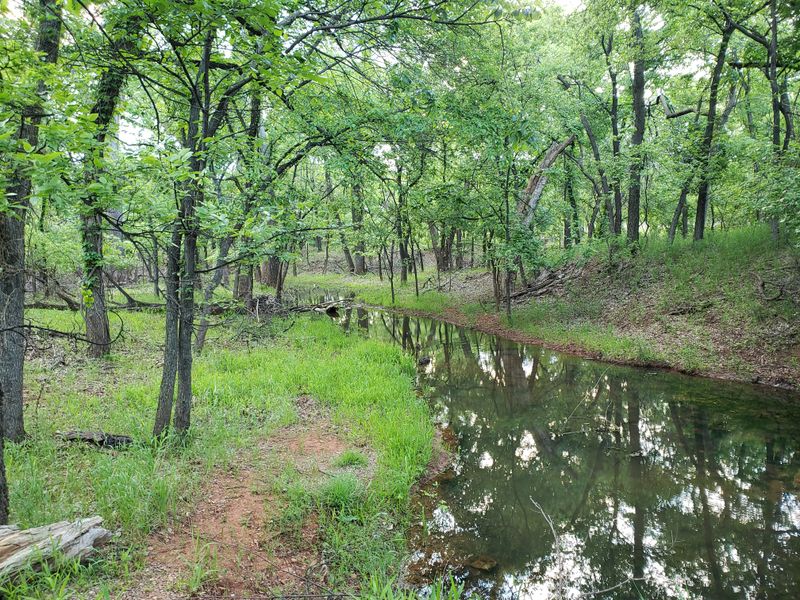
About halfway through my hike, the trail descended gently toward a creek that babbled and splashed over smooth stones. A sturdy wooden footbridge provided a perfect vantage point to pause and watch the water flow beneath my feet.
I stood there longer than I planned, mesmerized by the simple rhythm of moving water.
The creek wasn’t just a scenic feature. It served as a vital lifeline for the entire ecosystem, attracting wildlife from all around.
Turtles sunned themselves on partially submerged logs, and small fish darted through the shallows. Dragonflies hovered above the water, their iridescent wings catching the light.
Kids absolutely love this section of the trail. I watched a family stop to explore the creek bank, pointing out minnows and examining interesting rocks.
The water was shallow enough to feel safe but lively enough to capture attention and spark curiosity.
During different seasons, the creek changes character. Spring runoff makes it more vigorous, while summer heat sometimes reduces it to a trickle.
Regardless of the season, this water feature adds dimension and interest to the hike, breaking up the woodland scenery with something dynamic and refreshing. It’s one of those spots where you naturally want to linger a little longer.
Prairie Meadows and Open Spaces
Emerging from the dense forest into an open prairie meadow felt like stepping into a completely different world. The canopy disappeared, replaced by wide open sky and knee-high native grasses that swayed in the breeze.
The contrast was striking and immediately shifted my perspective.
Wildflowers bloomed throughout the meadow depending on the season. Purple coneflowers, black-eyed Susans, and Indian blanket created a patchwork of color that attracted butterflies and bees.
I counted at least a dozen monarch butterflies during my visit, flitting from flower to flower in their distinctive orange-and-black patterns.
The prairie section offered a different kind of beauty than the shaded forest. Here, everything felt expansive and bright.
The sun warmed my shoulders, and I could see far into the distance, watching the landscape roll gently toward the horizon.
This habitat is crucial for ground-nesting birds and small mammals that prefer open spaces to dense woods. Interpretive signs explained how prairies once covered much of Oklahoma before development changed the landscape.
Seeing this preserved slice of original prairie felt like glimpsing the past.
The meadow section also provided a psychological break from the enclosed forest trails. It opened up the view, let in more light, and reminded me that diverse habitats make for richer experiences.
Wildlife Encounters You Won’t Forget

One of the biggest surprises during my visit was the sheer variety of wildlife I encountered without even trying. A white-tailed deer stepped onto the trail about thirty yards ahead of me, paused to assess whether I was a threat, then casually continued across and disappeared into the brush.
My heart rate jumped with excitement.
Bird activity was constant throughout the hike. Red-tailed hawks circled overhead, scanning the meadows for prey.
Smaller songbirds flitted through the branches, and I spotted a pileated woodpecker hammering away at a dead tree trunk. The distinctive drumming sound echoed through the forest.
Reptiles and amphibians also made appearances. I spotted several box turtles crossing the trail, moving with determined slowness toward some unknown destination.
Near the creek, a green frog sat motionless on a rock, blending so perfectly with its surroundings that I almost missed it.
The nature center staff mentioned that foxes, raccoons, and even the occasional coyote call this place home, though they’re more active at dawn and dusk. I didn’t see any on this visit, but knowing they were there added an extra layer of wildness to the experience.
Wildlife watching here doesn’t require special equipment or expert knowledge. Just patience, quiet footsteps, and open eyes will reward you with memorable encounters.
Perfect for All Skill Levels
What makes this trail special is how it welcomes everyone, regardless of fitness level or hiking experience. The 2.5-mile main loop is gentle enough for young children and older adults but interesting enough to keep experienced hikers engaged.
I saw people of all ages enjoying the trails during my visit.
The terrain is mostly flat with only gentle elevation changes. There are no steep climbs, treacherous descents, or technical sections that require special skills.
The trail surface is well-maintained packed earth that provides good footing without feeling artificial or paved.
Benches are strategically placed at intervals along the route, offering rest spots with pleasant views. I appreciated these thoughtful touches, especially in the warmer months when even a short break in the shade makes a difference.
Some benches overlook the creek, while others sit at the edge of meadows.
Families with small children can easily complete the full loop, though there are shorter options if little legs get tired. The nature center provides maps showing different route variations, so you can customize your hike based on time and energy levels.
I watched grandparents hiking with grandchildren, couples walking hand-in-hand, and solo adventurers moving at their own pace. Everyone seemed comfortable and happy, which speaks volumes about the trail’s accessibility and appeal across different abilities and ages.
Seasonal Changes Worth Seeing
Each season transforms this place into something new and worth experiencing. Spring brings an explosion of wildflowers and the return of migratory birds.
The forest floor carpets itself with bluebells and other early bloomers, and the air fills with the sound of birds establishing territories and attracting mates.
Summer turns the landscape lush and green, though Oklahoma heat can make midday hikes challenging. Early morning or late afternoon visits work best during these months.
The canopy provides welcome shade, and the creek offers cooling sights and sounds even if you don’t wade in.
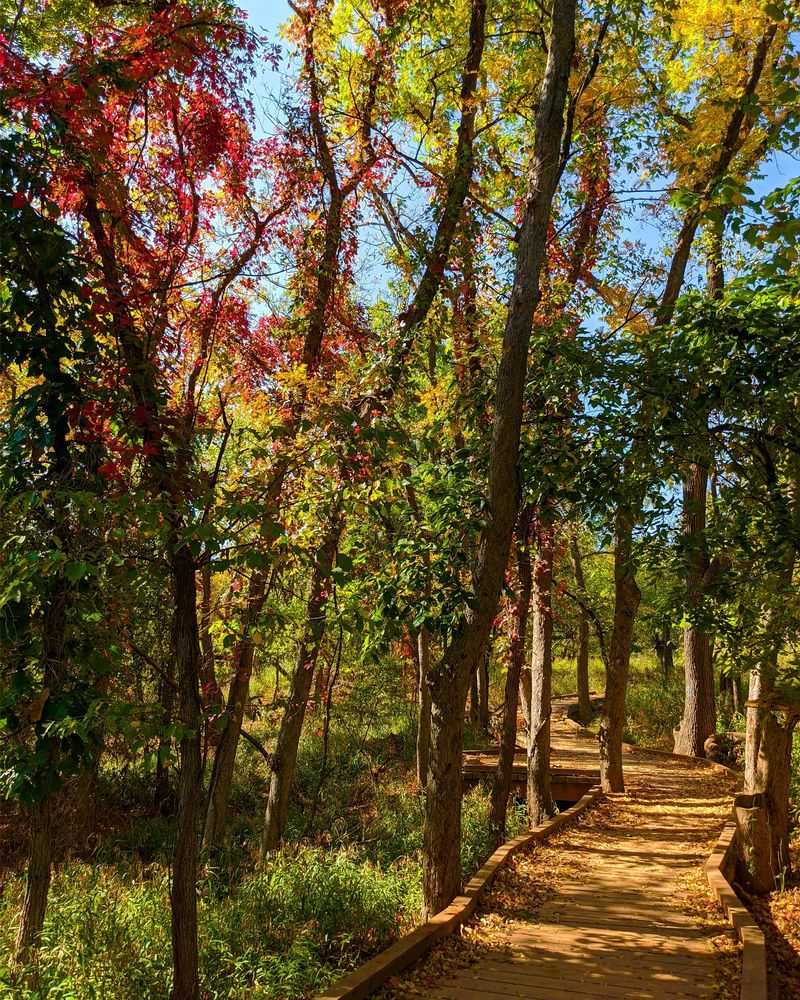
Fall might be my favorite season here. The hardwood trees put on a spectacular show of color, with reds, oranges, and yellows painting the forest.
Cooler temperatures make hiking comfortable again, and the changing leaves create a crunchy carpet underfoot. Monarch butterflies pass through on their migration, stopping to refuel in the prairie meadows.
Winter strips away the leaves and reveals the forest’s underlying structure. The bare branches create interesting patterns against the sky, and you can see deeper into the woods than any other season allows.
Wildlife tracking becomes easier in mud or occasional snow, and the quiet feels deeper somehow.
No matter when you visit, something special is happening. The landscape never stays the same for long.
Educational Opportunities for Curious Minds
The nature center building offers much more than just a starting point for trails. Inside, you’ll find educational exhibits about local ecosystems, native wildlife, and conservation efforts.
Interactive displays engage kids while teaching them about the natural world right outside the door.
Live animal exhibits showcase creatures you might encounter on the trails, including snakes, turtles, and various insects. Knowledgeable staff and volunteers answer questions and share fascinating facts about Oklahoma wildlife.
I learned things about local species I never knew despite living in the area for years.
The center regularly hosts guided nature walks, bird-watching programs, and educational workshops for all ages. These programs are often free or very affordable, making nature education accessible to everyone.
School groups frequently visit for field trips, and homeschool families use the center as an outdoor classroom.
Interpretive signs along the trails extend the learning experience beyond the building. These signs identify plants, explain ecological relationships, and highlight interesting natural phenomena.
They’re informative without being overwhelming, adding context without disrupting the peaceful hiking experience.
For families looking to combine outdoor recreation with learning, this place hits the perfect balance. Kids absorb information naturally when they’re actively exploring and discovering, and the center provides countless opportunities for those teachable moments that stick with young minds.
Planning Your Visit Wisely
Timing your visit makes a significant difference in your experience. The center opens at 7 AM on Wednesdays through Sundays but stays closed on Mondays and Tuesdays.
It closes at 5 PM, so plan accordingly to complete your hike before the gates close.
Weekday mornings offer the quietest trail conditions. I visited on a Thursday morning and had long stretches of trail completely to myself, which enhanced the feeling of being in true wilderness.
Weekends are busier but still rarely feel crowded since the trail system spreads visitors out naturally.
Dress appropriately for Oklahoma weather, which can change quickly and dramatically. Layers work best, along with sturdy walking shoes or light hiking boots.
The trails drain well, but after heavy rain, some sections can be muddy. Bringing water is essential, especially during warmer months, though the hike is short enough that you won’t need extensive supplies.
Insect repellent proves useful during spring and summer, particularly near the creek and in shaded forest areas. Ticks can be present, so checking yourself after hiking is a smart precaution.
The nature center provides additional tips and current trail conditions if you call ahead at 405-297-1429.
Parking is free and usually plentiful, though popular times like Saturday mornings might require arriving a bit earlier to snag a convenient spot.
Why This Trail Keeps People Coming Back
After completing the loop and returning to the nature center, I understood why this place generates so much buzz among Oklahoma outdoor enthusiasts. It delivers a genuine nature experience without requiring hours of driving or advanced planning.
You can decide on a whim to go hiking and be on the trail within minutes of leaving home.
The variety packed into 2.5 miles is remarkable. You experience dense forest, open prairie, creek crossings, and wildlife encounters all in a single hike.
This diversity keeps the trail interesting from start to finish, with each section offering something different to see and experience.
Locals treat this place as their personal nature sanctuary. I met several people who hike these trails multiple times per week, and they spoke about the mental health benefits of regular nature exposure.
One woman told me that her morning walks here replaced her need for a gym membership and did more for her stress levels than any medication.
The trails are well-maintained without feeling over-developed. They strike that perfect balance between accessibility and wildness, offering a taste of authentic nature while remaining safe and welcoming.
Whether you’re a serious hiker looking for a quick workout or a family seeking an outdoor adventure, this place adapts to your needs and consistently delivers memorable experiences worth repeating.



