There is a trail in the Arizona desert that quietly rewards everyone who laces up and commits to the climb. Ancient rock art, sweeping mountain views, and a surprise waterfall tucked into a canyon all wait at the end of a single out-and-back path.
Most people scroll past it online without a second thought, but those who show up leave with photos they cannot stop sharing. I made the drive out to Gold Canyon on a crisp winter morning, and what I found on that rocky hillside genuinely caught me off guard.
The Superstition Mountains loomed above, the trail twisted through towering saguaros, and the payoff at the top made every shuffled step over loose rock completely worth it. Keep reading, because this hike deserves a spot on your Arizona bucket list.
The Trailhead Location and Getting There
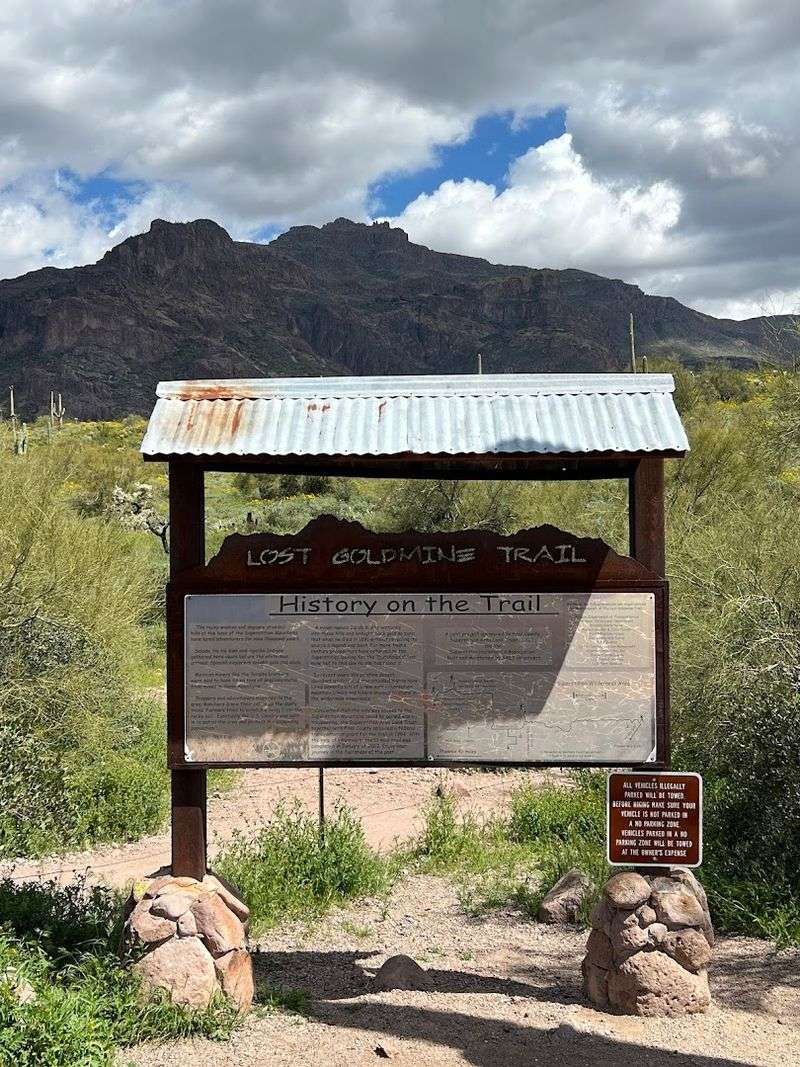
The full address for this hike is Hieroglyphic Trail, Gold Canyon, AZ 85118, and it sits at the base of the Superstition Mountains in the Tonto National Forest east of the Phoenix metro area. Gold Canyon is a quiet, sun-soaked community that most out-of-state visitors overlook on their way to bigger Arizona attractions, but locals know it well.
The drive from central Phoenix takes roughly 45 minutes, heading east on US-60 before turning north toward the trailhead. The road narrows as you get closer, and the scenery shifts quickly from suburban sprawl to rugged desert terrain that feels genuinely remote.
The trailhead is managed by the U.S. Forest Service and is open every day from 5 AM to 10 PM, which gives early risers and late-afternoon hikers plenty of flexibility.
Arriving early on weekends is strongly recommended, because parking fills up fast during the busy season and a sheriff deputy sometimes manages the lot. The GPS coordinates are 33.3901778, -111.4233998, which makes navigation straightforward even on unfamiliar roads.
Parking Realities and What to Expect on Arrival
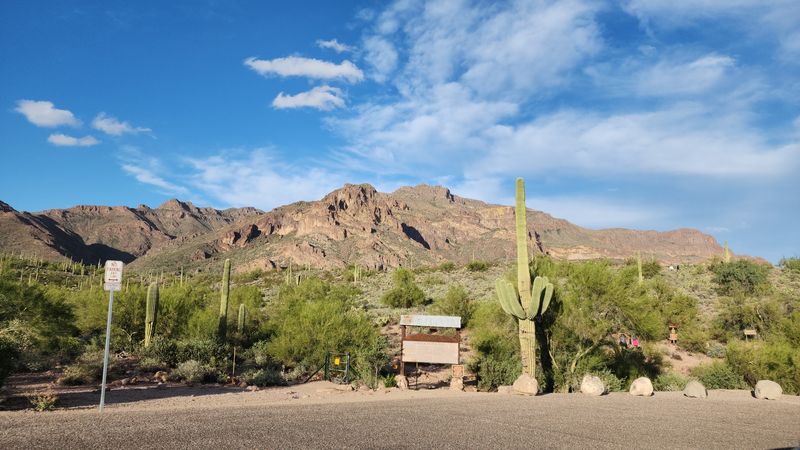
Parking at this trailhead is famously limited, and that is not an exaggeration. The small lot fills up well before mid-morning on weekends and holidays, and the Forest Service does not permit roadside parking along the access road.
Law enforcement is often present during peak hours, and on one busy morning I visited, a deputy told me the wait for a spot was about 30 to 45 minutes. There is a private property lot nearby that charges around ten dollars, which some hikers use when patience runs thin.
On the bright side, the tight parking situation actually keeps the trail from getting completely overwhelmed with foot traffic. The crowd thins out noticeably once you move past the first quarter mile.
My honest advice is to arrive before 8 AM on any weekend between November and March, when Arizona snowbirds and winter visitors flood the area. Weekday mornings are dramatically calmer, and you will likely walk straight into a spot without circling the lot twice.
Portable toilets are available at the trailhead, so basic facilities are covered before you head out.
Trail Length, Difficulty, and What the Path Feels Like
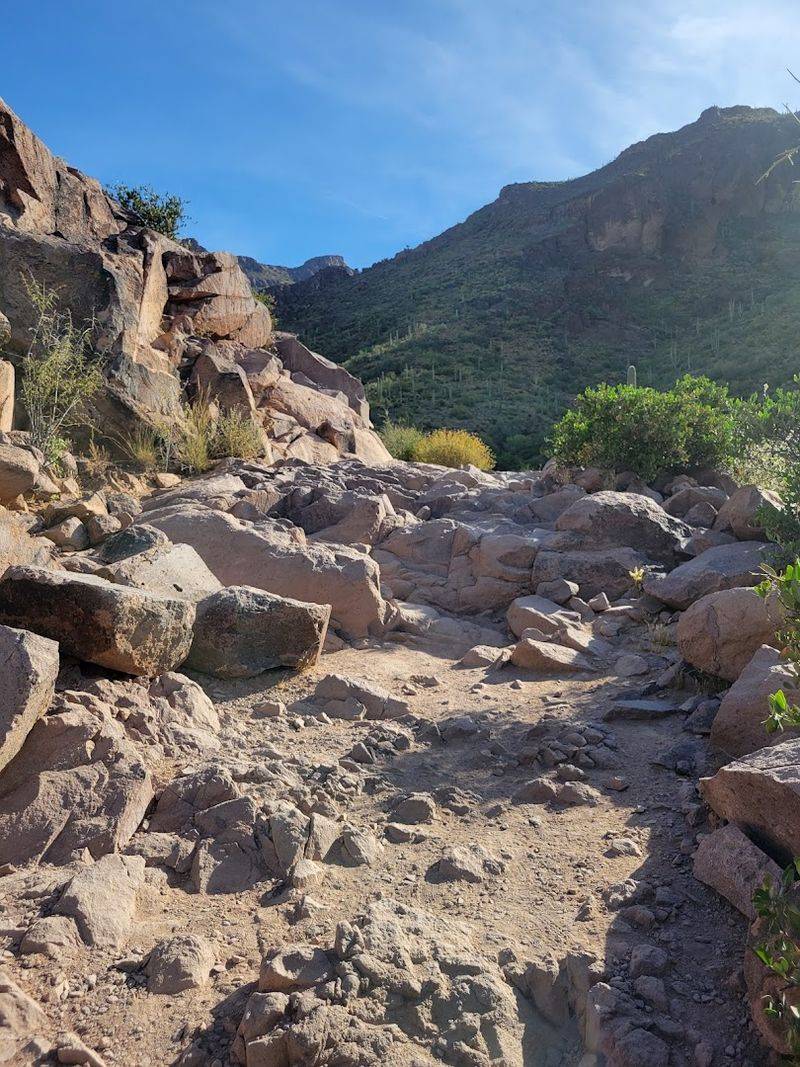
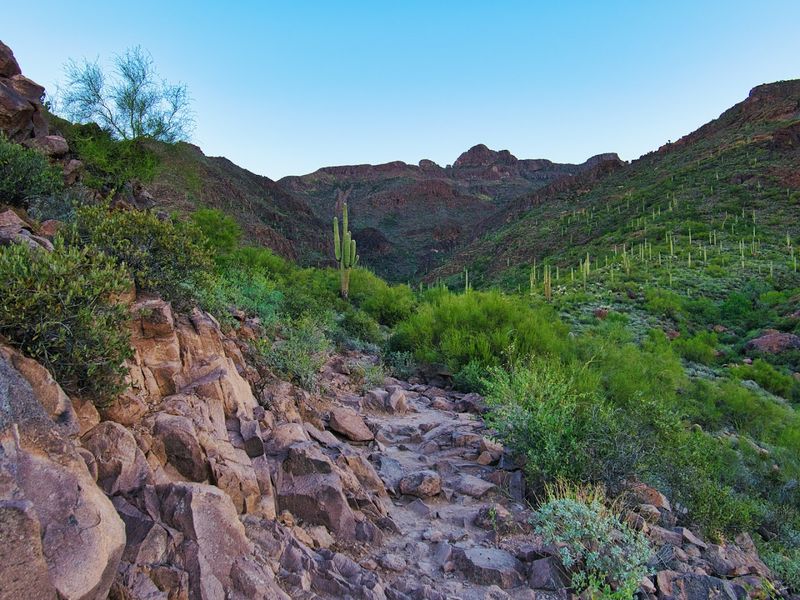
The Hieroglyphic Trail runs approximately 3.25 miles out and back, with a steady uphill climb on the way in and a much easier descent on the return. The elevation gain is moderate, and the trail rises gradually rather than hitting you with steep switchbacks right away.
Most of the path is rocky underfoot, so sturdy hiking boots are a better choice than casual sneakers. The terrain stays manageable for the majority of the hike, but the final stretch near the petroglyphs involves some boulder scrambling that requires a bit of extra effort and sure footing.
A wide range of hikers complete this trail regularly, including families with young children, older adults, and first-time hikers building confidence on desert terrain. One morning I watched a parent carry an infant in a backpack carrier while two older kids ran ahead without any trouble.
The total round trip takes most people between one and two hours depending on pace, how long they linger at the top, and how many photos they stop to take along the way. Solid footwear and at least one water bottle per person are non-negotiable basics.
The Ancient Petroglyphs That Give the Trail Its Name
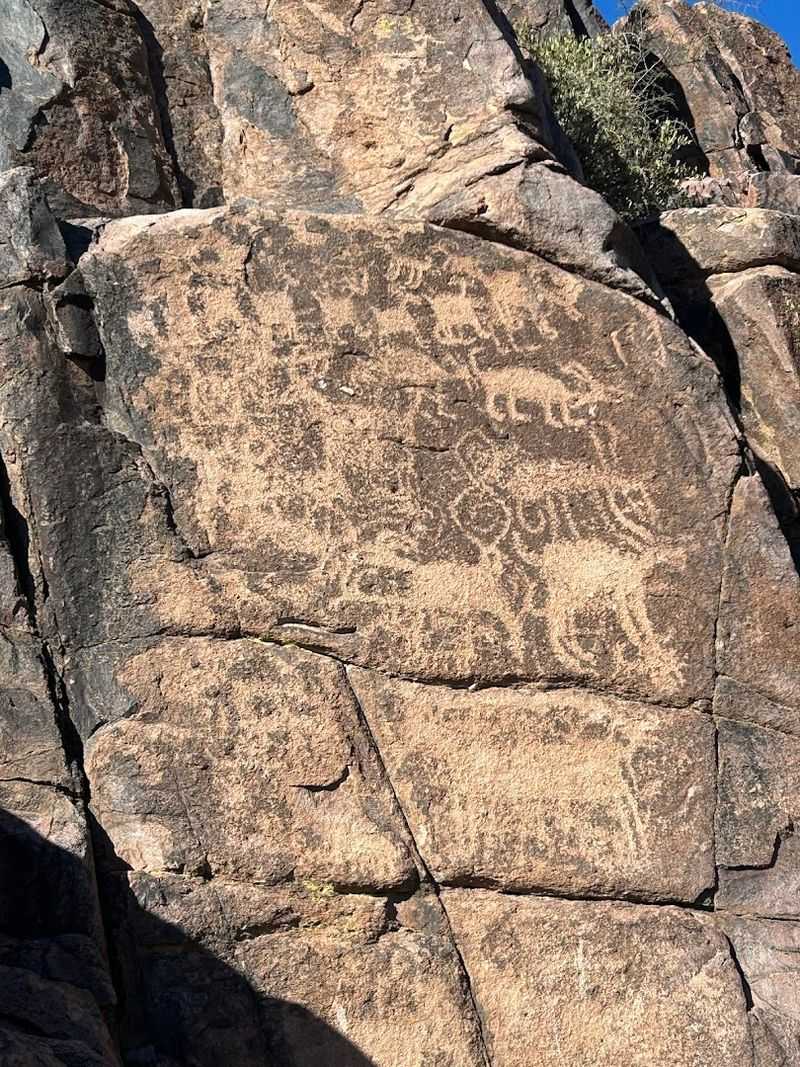
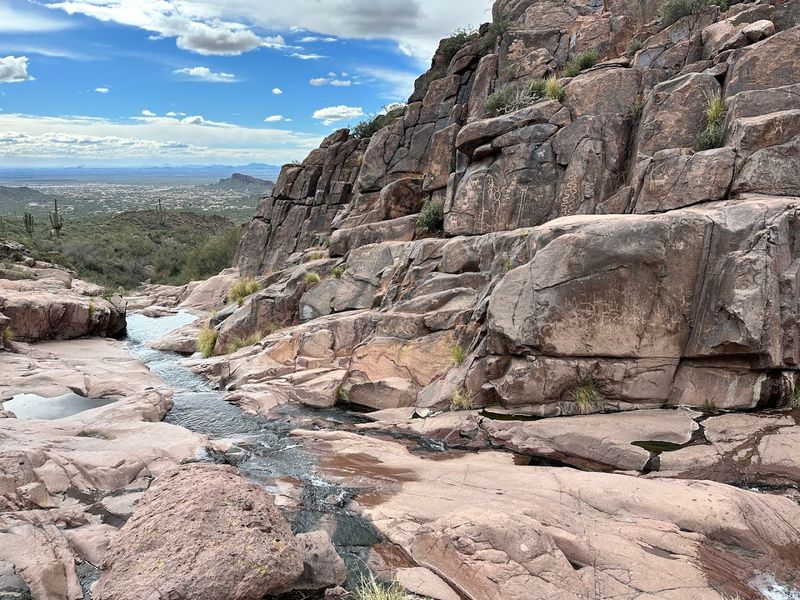
The star attraction at the top of this trail is a collection of ancient petroglyphs etched into dark basalt boulders by the Hohokam people, who lived in this region roughly a thousand years ago. The carvings depict spirals, human figures, animals, and geometric shapes that researchers believe held spiritual or calendrical significance.
Worth clarifying here: they are technically petroglyphs, not hieroglyphs, but the trail earned its popular name long before accuracy stepped in. Regardless of what you call them, standing in front of these carvings and realizing their age produces a quiet, almost humbling feeling that is hard to describe.
The petroglyphs are easy to spot once you reach the canyon area near the top of the trail. Getting closer for a better look requires scrambling up a few large boulders, which is manageable for most hikers with reasonable balance and confidence.
The site is protected, so touching or disturbing the carvings is strictly off-limits. The history preserved on those rock faces connects visitors to a civilization that thrived in the Sonoran Desert long before Arizona became a state or Oklahoma became a landmark of American westward history.
The Waterfall and Canyon Pool Reward at the Summit
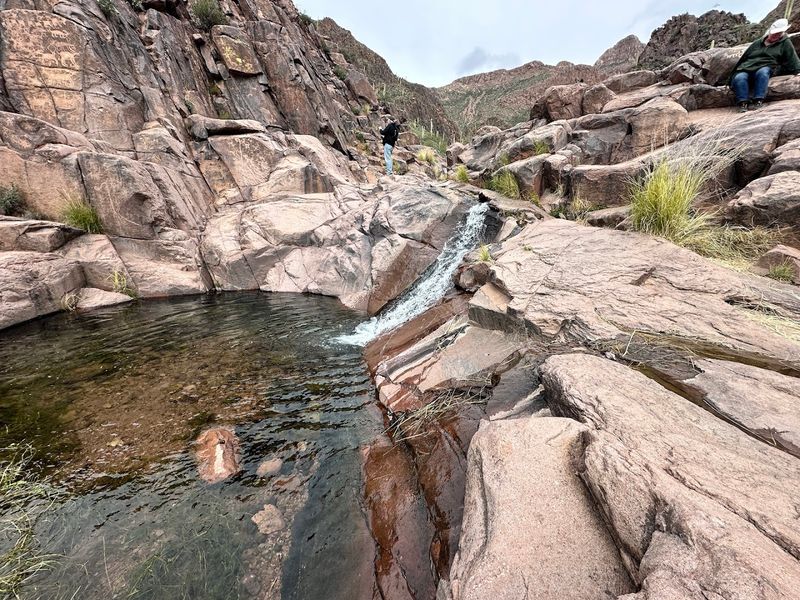
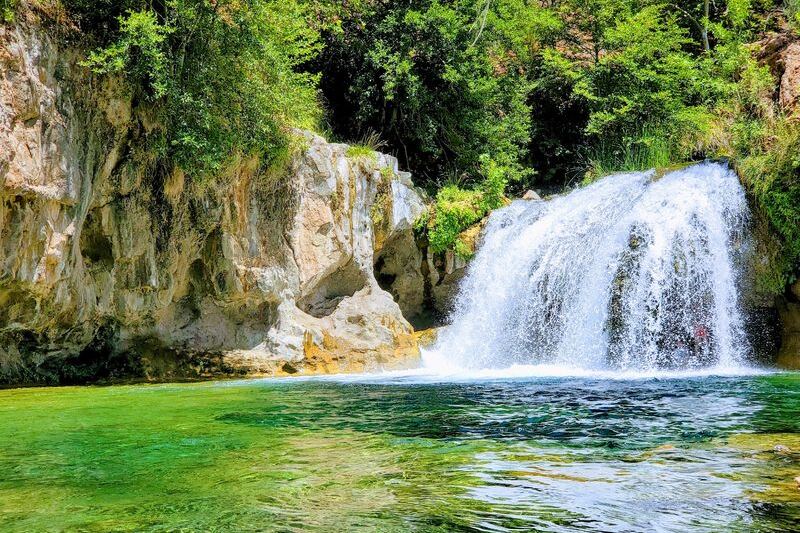
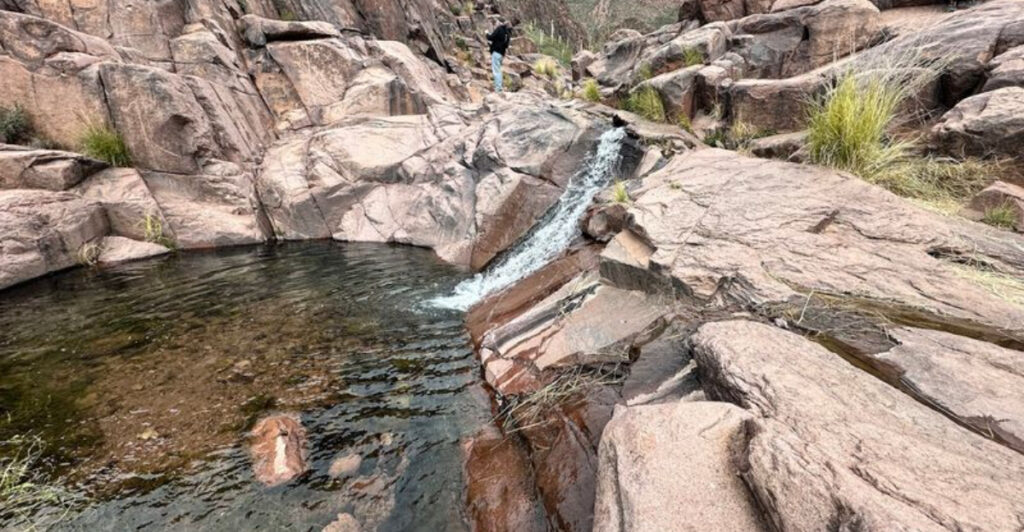
After enough rainfall, a seasonal waterfall appears at the top of the canyon, spilling over smooth slickrock into a small, clear pool below. The water is not always running since this is a desert environment after all, but when it flows, it transforms the end of the hike into something genuinely memorable.
The pool is shallow and peaceful, and on my visit after a stretch of winter rain, I spotted small fish and tadpoles moving through the water. The sound of trickling water bouncing off canyon walls creates an atmosphere that feels completely out of place in the middle of the Arizona desert, and that contrast is exactly what makes it special.
Even without active water flow, the canyon itself is a rewarding destination. Shaded rock walls, interesting geology, and the proximity to the petroglyphs make the upper section of the trail worth every rocky step.
Hikers who arrive after dry spells still leave satisfied, because the views from the canyon rim and the ancient carvings provide more than enough reason to make the climb. The waterfall is the bonus that turns a great hike into an unforgettable one.
Desert Wildlife and Vegetation Along the Way
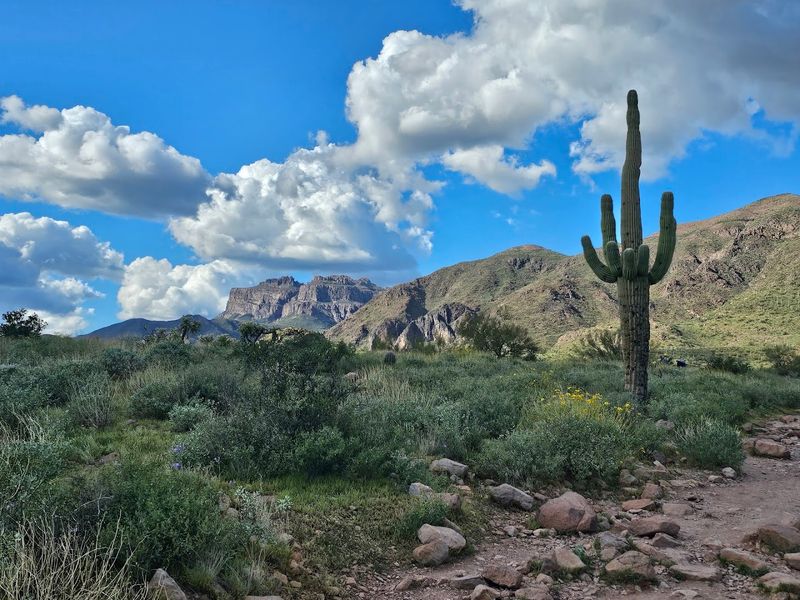
The trail passes through classic Sonoran Desert scenery, and the plant life along the route is genuinely impressive. Towering saguaro cacti line much of the path, and many of them are several hundred years old, which puts their silent presence in a whole new light when you stop to think about it.
Palo verde trees, cholla, prickly pear, and brittlebush fill in the spaces between the saguaros, creating a layered desert landscape that looks almost theatrical in the early morning light. The vegetation provides meaningful shade during the first half of the trail, though the upper section loses that cover as the path opens up toward the canyon.
Wildlife sightings are common and add a lively energy to the hike. Birds dart between cactus arms, lizards dart across warm rocks, and bees work through the flowering plants with impressive efficiency.
The biodiversity packed into this relatively short trail surprised me on my first visit, and it continues to reward repeat hikers who slow down and pay attention to the smaller details tucked alongside the main path. Every visit reveals something new if you keep your eyes open.
Views of the Superstition Mountains and the Valley Below
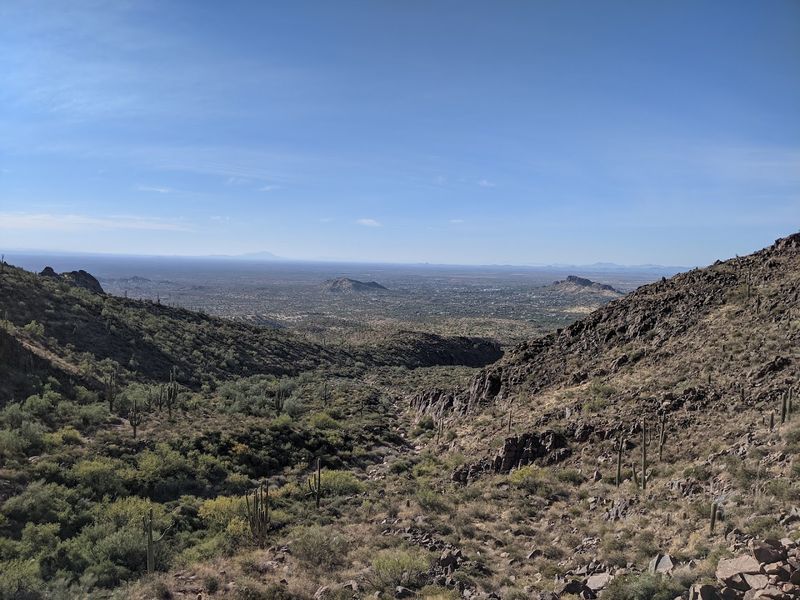
The Superstition Mountains form one of Arizona’s most dramatic skylines, and the Hieroglyphic Trail delivers some of the best accessible views of that range available to hikers of any experience level. As the trail climbs, the perspective opens up in a way that makes the effort feel immediately worthwhile.
Looking back toward the valley below, the sprawl of the Phoenix metro area stretches out to the west, and on clear days the visibility extends close to 50 miles. The contrast between the soft suburban grid in the distance and the raw volcanic rock directly underfoot is a reminder of just how quickly the Arizona landscape shifts between worlds.
Photographers make regular pilgrimages to this trail specifically for the golden hour light that floods the canyon walls at sunrise and sunset. The warm orange tones that hit the Superstitions during those windows produce the kind of shots that end up framed on living room walls.
I arrived just before sunset on one visit and stayed until the light faded, completely forgetting about the rocky descent waiting below. The views from this trail are genuinely among the best the eastern Valley has to offer without requiring a full-day commitment.
Best Time of Year to Visit and Seasonal Conditions
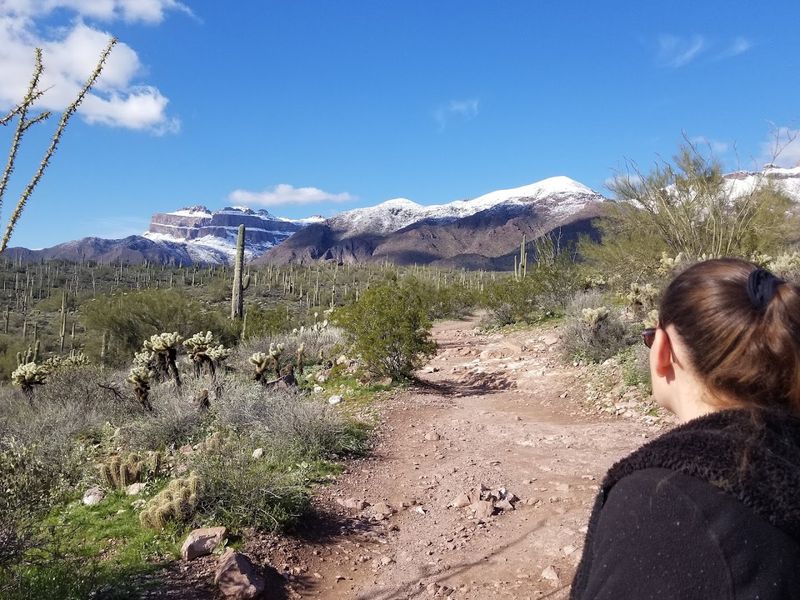
The most comfortable window for hiking the Hieroglyphic Trail runs from November through March, when temperatures in the Gold Canyon area stay mild and the desert air carries a pleasant crispness in the mornings. This period also coincides with Arizona’s snowbird season, which means the trail sees its highest foot traffic and the parking situation becomes most competitive.
Summer visits are possible but require serious preparation. By midday in July and August, temperatures regularly climb above 105 degrees Fahrenheit, and the trail offers minimal shade in the upper section.
Carrying extra water is essential, and starting before 7 AM becomes less of a suggestion and more of a necessity.
Spring brings blooming desert wildflowers and the best chance of finding water running in the canyon after winter rains. Fall offers warm days and lighter crowds before the snowbird wave arrives from states like Oklahoma and across the Midwest.
Visitors from Oklahoma and other cold-weather states tend to discover this trail during extended winter stays in Arizona and return year after year. Each season brings a different version of the trail, but the classic Arizona winter morning remains the gold standard experience for first-time visitors.
Family-Friendly Features and Accessibility for All Ages
One of the most appealing qualities of the Hieroglyphic Trail is how genuinely accessible it feels for a wide range of hikers. On any given weekend morning, the trail hosts a full cross-section of Arizona outdoor enthusiasts, from toddlers in backpack carriers to couples well into their eighties moving at a comfortable pace.
The lower two-thirds of the trail stay relatively smooth and predictable, making it manageable for children who are old enough to handle uneven terrain. The final stretch near the petroglyphs requires more care, with larger boulders and some light scrambling that younger kids may need a hand navigating.
Parents consistently bring children of all ages on this hike, and the short overall distance means energy levels rarely become an issue before the turnaround point. The natural history woven into the trail, including ancient rock art, desert plants, and wildlife, gives kids plenty to engage with beyond simply walking.
Bringing snacks, sunscreen, and an extra layer for the shaded canyon section makes the experience smoother for families. The trail rewards patience and curiosity, qualities that tend to make the whole outing feel more like an adventure than a workout for younger hikers.
Practical Tips, Gear, and Trail Etiquette
A few practical details can make the difference between a smooth outing and a frustrating one on this trail. Water is the most critical item to pack, especially between April and October when the sun hits the open sections of the trail with full intensity and shade disappears quickly after the first mile.
Sturdy hiking boots with ankle support handle the rocky terrain far better than running shoes or sandals. Trekking poles are optional but genuinely helpful on the descent, when loose rocks and fatigue can combine into a slippery situation for tired legs.
Trail etiquette here follows the standard desert hiking norms: yield to uphill hikers, keep dogs leashed, and give the petroglyphs the respectful distance they deserve. Touching or chalking the carvings damages them permanently, and the site has been preserved for generations of visitors to enjoy.
Visitors from Oklahoma and other states often mention being surprised by how well-maintained the trail feels despite its popularity. Leaving no trace, packing out all waste, and staying on the marked path help protect the trail for future hikers.
The Forest Service website at fs.usda.gov has current conditions and any seasonal closures worth checking before you head out.
Share this story