There is a stretch of western Iowa where the land suddenly rises into something that feels almost out of place, in the best possible way. Ancient windblown ridges roll across the horizon, wildflowers dot the hillsides, and quiet gravel roads wind through landscapes that most people never know exist.
This is the Loess Hills region, and it holds one of the most rewarding scenic drives in the entire Midwest. The overlook near Moorhead is the crown jewel of the journey, offering sweeping views across the Missouri River’s historic floodplain that will make you question why you ever drove straight through Iowa on the interstate.
Pack a good pair of shoes, bring your curiosity, and get ready to discover a side of this state that genuinely surprises.
Where the Hills Begin: Finding the Overlook
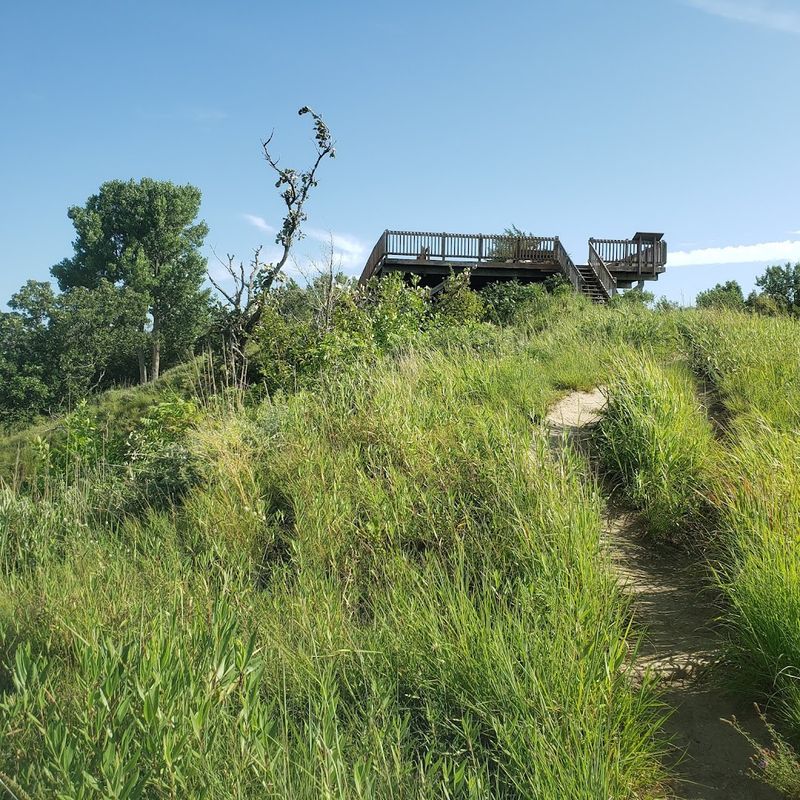
The address is straightforward enough: Loess Hills Scenic Overlook, Oak Ave, Moorhead. Getting there, though, feels like unlocking a secret door in a very familiar wall.
Moorhead sits in Monona County in western Iowa, tucked between the Missouri River bottomlands and a series of ridges that rise sharply and unexpectedly from the surrounding flatlands. The overlook itself is reached by a well-maintained gravel road, so you do not need a truck or an off-road vehicle to make the trip.
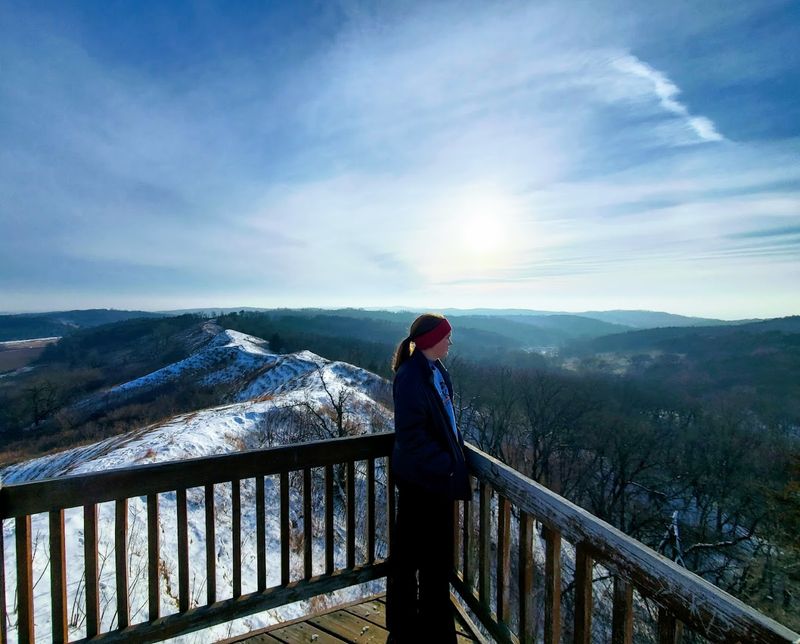
A small parking lot sits across the road from the main platform, and from there a ramp leads up to a large wooden observation deck. The setup is clean, accessible, and thoughtfully laid out.
The Iowa DNR manages the site as part of the Loess Hills State Forest, and their website at iowadnr.gov has maps and additional details to help you plan the visit.
The Science Behind the Scenery
These hills did not form the way most people expect. The Loess Hills are made almost entirely of loess, which is a fine-grained silt deposited by wind thousands of years ago during the last Ice Age.
As glaciers melted to the west, powerful winds picked up silt from exposed riverbeds and dropped it along the eastern banks of the Missouri River. Over centuries, those deposits built up into ridges that can rise more than two hundred feet above the surrounding plains.
The result is a landscape that looks more like parts of China’s Shaanxi Province than anything else in the American Midwest.
In fact, the Loess Hills of Iowa represent one of only two places in the world where loess deposits of this thickness and character exist. That geological oddity is exactly what makes standing on the overlook deck feel so unexpectedly dramatic and worth every mile of the drive.
The View From the Top
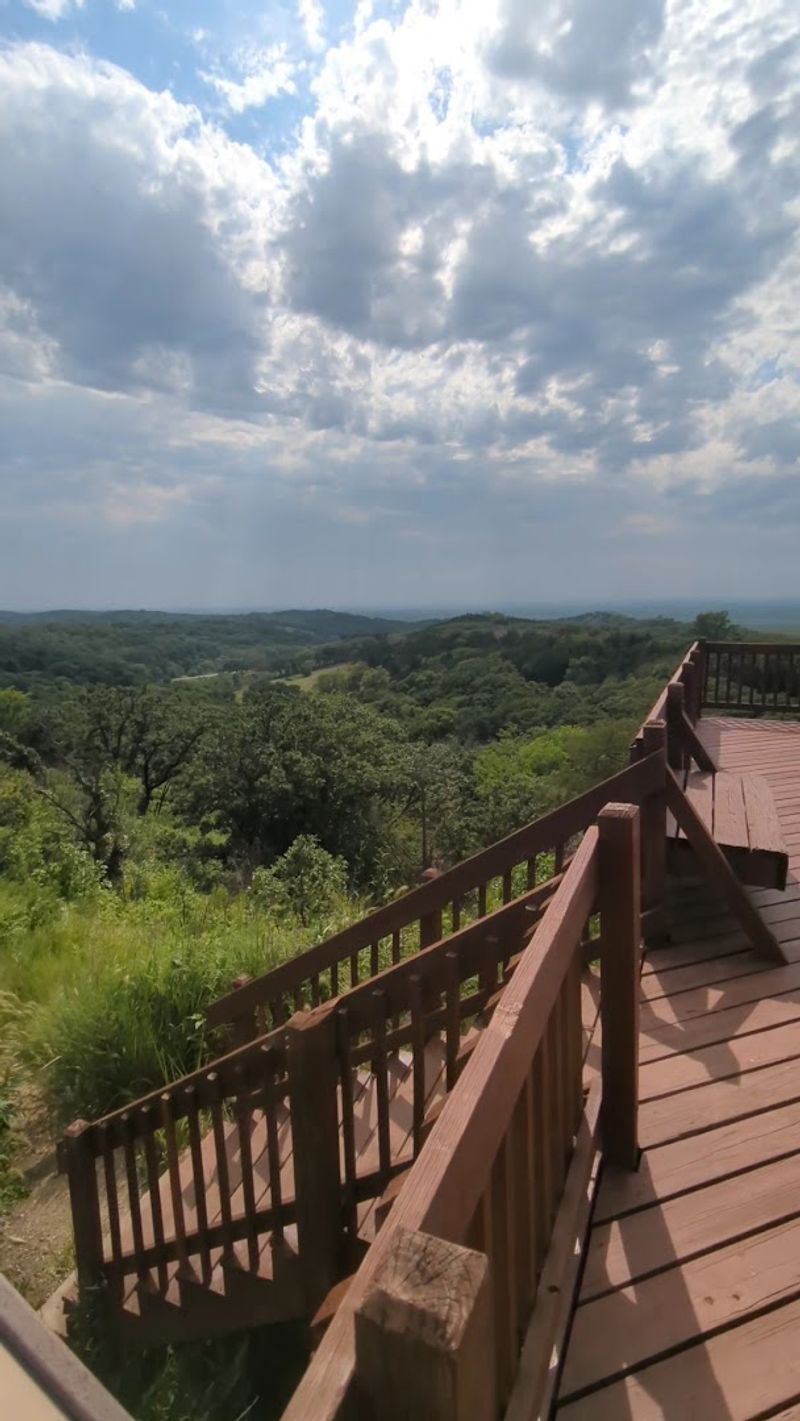
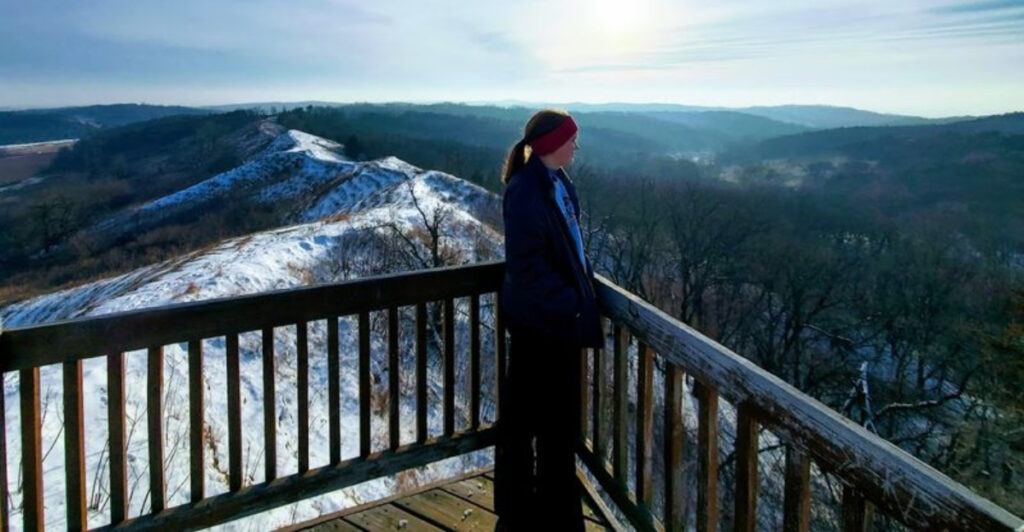
Nothing quite prepares you for the first moment you step onto that wooden observation deck and look out over the landscape below. The contrast is the thing that gets you.
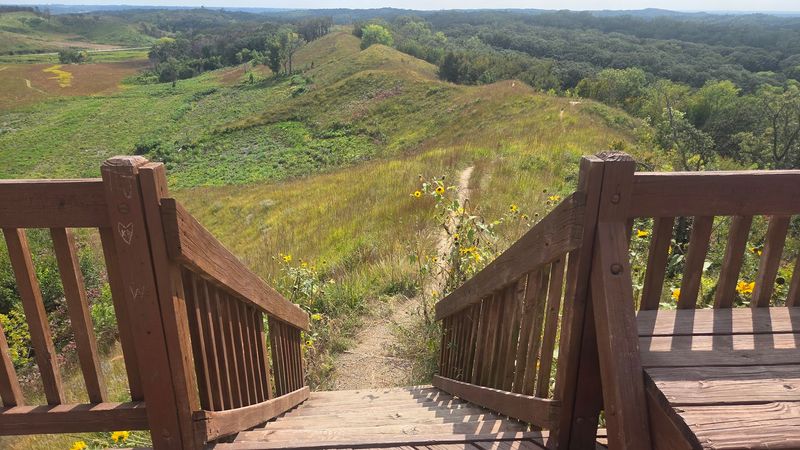
On one side, the hills roll away in ridges covered with prairie grasses, wildflowers, and patches of timber. On the other, the land drops off into the broad, flat expanse of the Missouri River’s historic floodplain, stretching westward toward Nebraska in a patchwork of farm fields and river channels.
On a clear day the visibility stretches for miles, and the sense of scale is genuinely humbling. Early morning visits reward you with soft light across the ridges and occasional mist rising from the bottomlands.
Fall visits bring a rich palette of amber, orange, and deep red as the hillside trees turn. There is seating on the deck, though it is limited, so arriving early on busy weekends is a smart move.
Prairie Grasses and Wildflowers Worth Stopping For
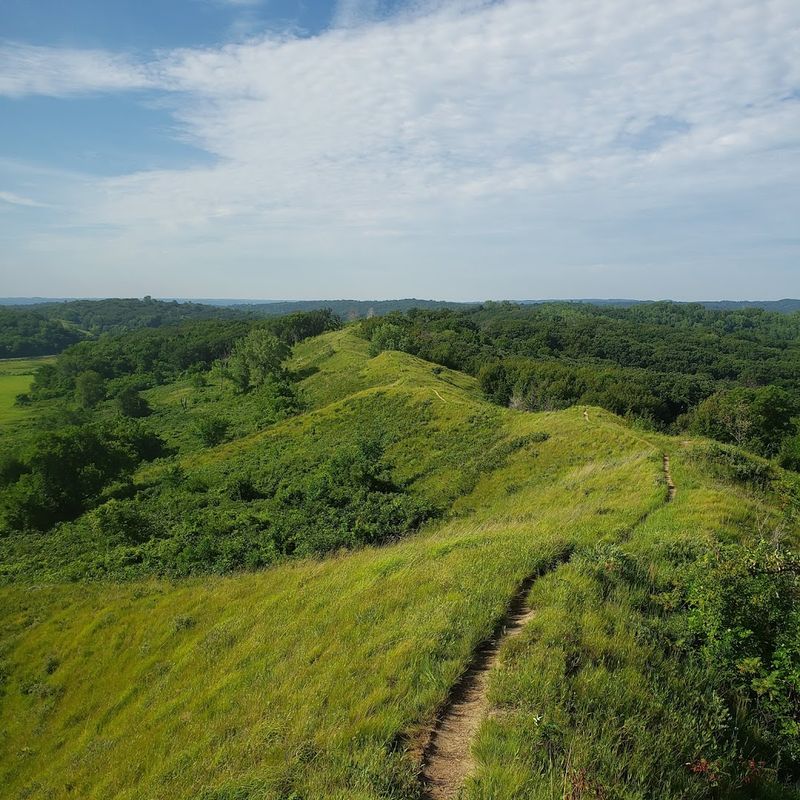
The biological diversity at this overlook is something that sneaks up on you. Most visitors come for the view, then end up spending an extra hour just looking at what is growing along the walking path.
The Loess Hills contain the largest tract of native prairie remaining in Iowa, and the plant life here reflects thousands of years of ecological history. Side-oats grama, little bluestem, and leadplant grow alongside wildflowers like prairie blazing star and pale purple coneflower.
In early spring, small delicate blooms push through the dry hillside soil before the grasses have fully woken up.
Walking among these ancient prairie grasses feels genuinely different from a typical nature walk because the plants themselves carry so much history. The Iowa DNR has made efforts to restore and maintain these prairie ecosystems, including controlled burns that help keep invasive species at bay and encourage native growth to thrive each season.
Hiking the Ridge Trails
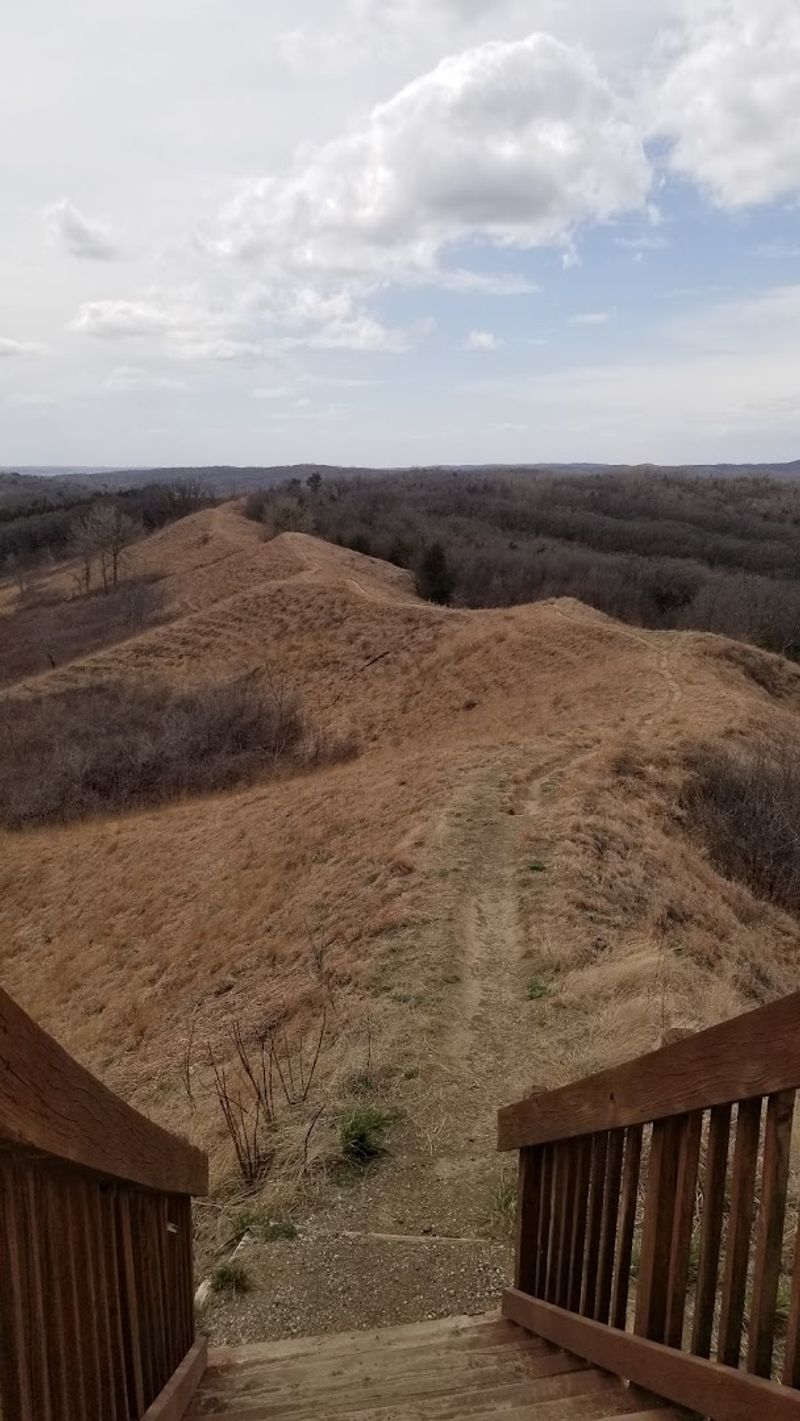
Beyond the observation deck, a walking path follows the top of the ridge and opens up the landscape in a completely different way. The trail is not a grand expedition, but it rewards the effort with perspectives that the deck alone cannot offer.
The path is narrow in places, and during summer months tick awareness is genuinely important. Wearing long pants, using insect repellent, and checking yourself afterward are all practical steps worth taking.
The terrain is uneven in spots, so a solid pair of trail shoes makes the experience much more comfortable than sandals or casual sneakers.
The ridge trail lets you look down both sides of the hills at once, which drives home just how narrow and dramatic these formations really are. Deer are commonly spotted along the access roads and on the hillsides, especially in the early morning and at dusk, making the hike feel a little like walking through a living nature documentary.
The Loess Hills Scenic Byway Connection
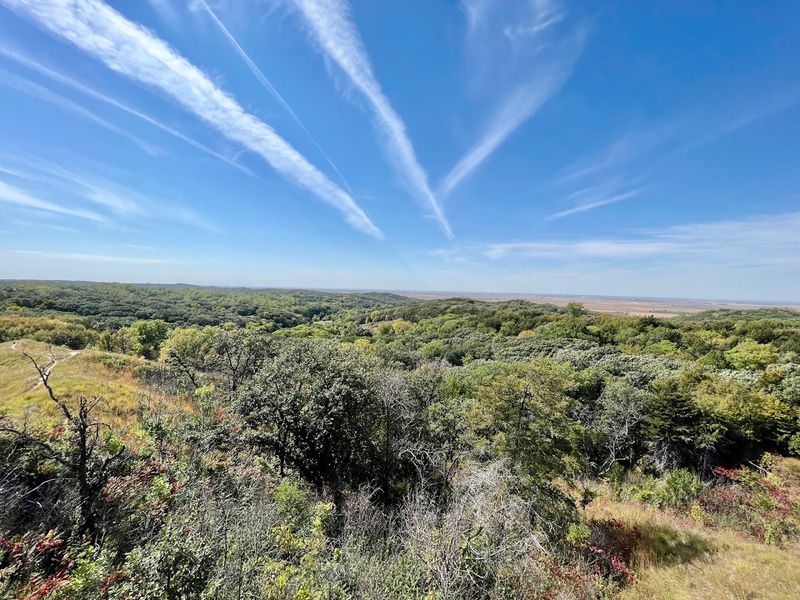
The overlook near Moorhead does not exist in isolation. It sits along the Loess Hills Scenic Byway, a designated route that stretches roughly 220 miles through western Iowa from north to south.
The byway is clearly marked with signs, and the Iowa DNR offers a detailed, color-coded PDF map that you can download before your trip. Travelers coming from Interstate 29 can pick up the route and follow it northward or southward depending on their plans.
The roads are well maintained and the drive itself is genuinely enjoyable, passing through small towns, forested ridges, and open prairie without ever feeling rushed.
Small-town restaurants along the route tend to keep limited hours, so packing snacks for the drive is a practical tip worth heeding. The byway turns what could be a forgettable highway stretch into a proper road trip, and the Moorhead overlook works beautifully as a highlight stop or a midpoint destination on the full route.
Wildlife Encounters Along the Route
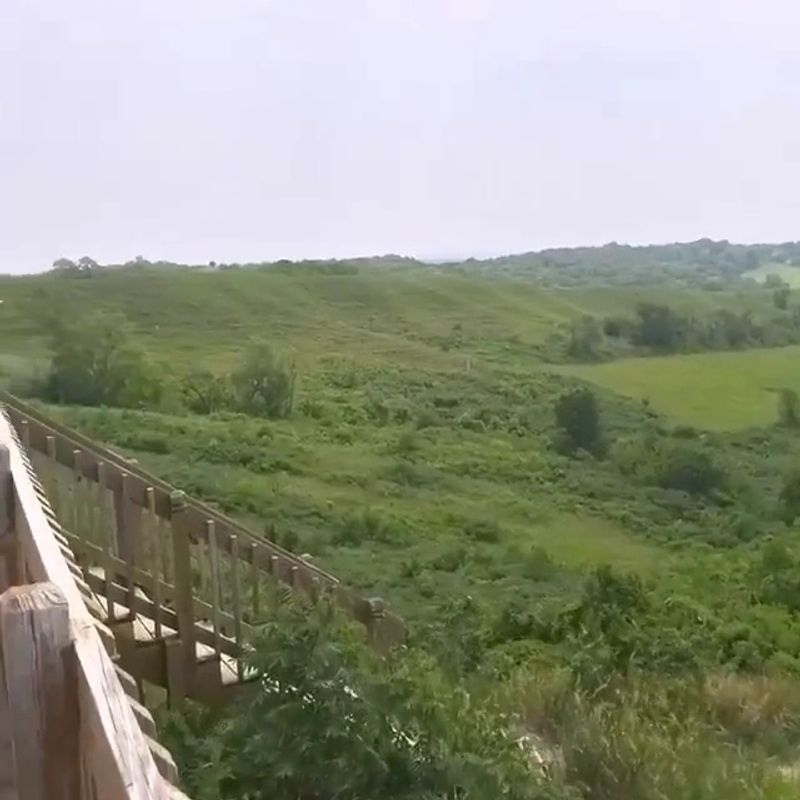
The access roads leading to the overlook have a reputation for wildlife sightings that goes well beyond the usual roadside squirrel. Deer are practically a given, especially in the early morning or as the light fades in the evening.
The Loess Hills ecosystem supports a surprisingly wide range of species because of the diversity of habitats packed into a relatively compact area. Prairie, forest, wetland edges, and rocky hillside microhabitats all exist within close proximity, which attracts birds, mammals, and insects in numbers that regularly impress even experienced naturalists.
Migratory birds use the ridge corridor during spring and fall, and birders have recorded species here that are difficult to find elsewhere in Iowa. Bringing a pair of binoculars is never a wasted decision at this overlook.
The open deck provides clear sightlines across the canopy and out over the floodplain, making it a genuinely useful spot for scanning the skies during migration season.
What to Know Before You Go
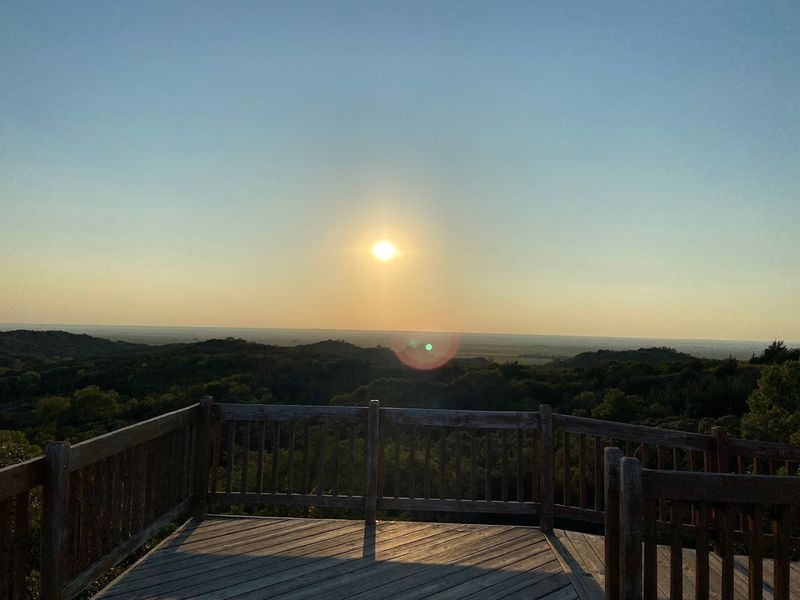
A few practical details can make the difference between a smooth visit and a frustrating one. The overlook is open 24 hours a day, every day of the week, which means sunrise and sunset visits are entirely possible and genuinely rewarding.
The parking area is small, so arriving early on summer weekends is a smart approach. The gravel access road is well maintained and suitable for standard passenger vehicles, but the roads leading to some other overlooks in the broader region can be rough, so sticking to the marked route for this specific location is wise.
There is no shade on the observation deck itself, which matters a great deal during summer visits. Sunscreen, a hat, and plenty of water are not optional accessories in July and August.
The site has no restroom facilities on-site, so planning accordingly before you leave the nearest town is a genuinely useful piece of trip-planning advice.
The History Embedded in the Landscape
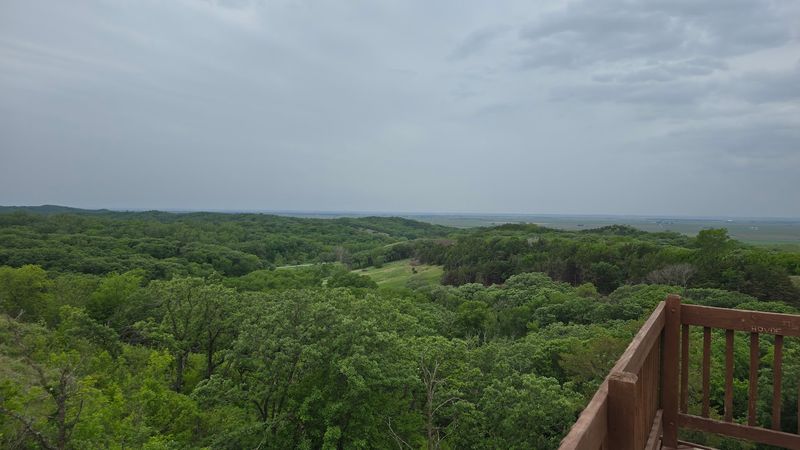
The overlook does more than frame a pretty view. Informational panels at the site explain the geological and cultural history of the Loess Hills, giving context that transforms the scenery from beautiful to genuinely fascinating.
Indigenous peoples lived in and traveled through this region for thousands of years, drawn by the rich resources of the hills and the river valley below. European settlers who arrived in the nineteenth century found the terrain challenging to farm, which ironically helped preserve more of the native prairie here than in surrounding areas that were more easily plowed.
The Missouri River itself shaped this entire region, and its historic floodplain visible from the deck tells a story of constant change over geological time. The controlled burns that the Iowa DNR conducts periodically are part of an ongoing effort to maintain the ecological character of the land as it existed before large-scale settlement, keeping the history alive in a very literal and living way.
Nearby Cabins and Weekend Getaway Options
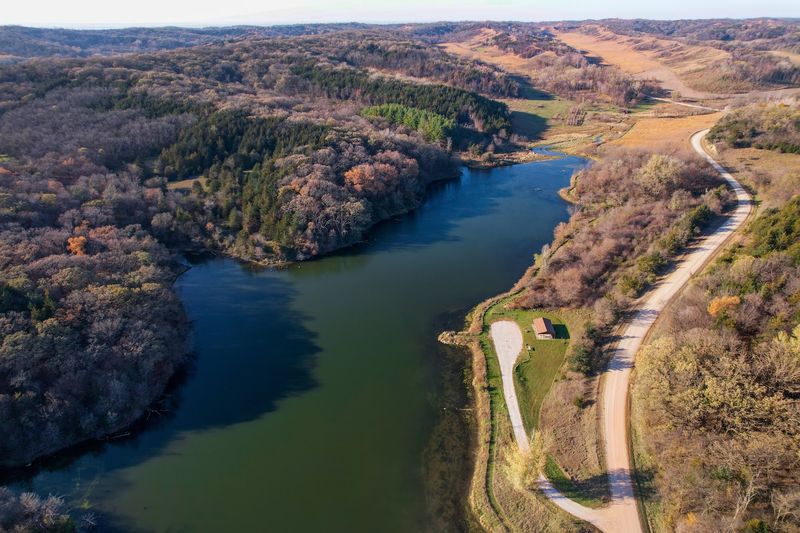
The overlook works well as a day trip destination, but the area around Moorhead rewards visitors who choose to stay longer. Cabins are available near the Loess Hills State Forest, turning a single scenic stop into a full weekend in the hills.
Staying overnight means you can catch the landscape at multiple times of day, including the golden hour light that photographers and casual visitors alike consistently describe as the most memorable part of the experience. Morning mist, midday clarity, and the long shadows of late afternoon each reveal something different about the terrain.
The broader Loess Hills region has a small but genuine tourism infrastructure built around the scenic byway, with local communities offering lodging, trail access, and a few dining options for travelers. Checking the Iowa DNR website before your visit gives you the most current information on cabin availability and any seasonal conditions that might affect trail or road access during your planned dates.
Why This Overlook Deserves a Place on Your Iowa Itinerary
Western Iowa does not always get the attention it deserves from travelers passing through the state, and that is genuinely their loss. The Loess Hills are a landscape unlike anything else in the Midwest, and the overlook near Moorhead is the single best place to take it all in at once.
The combination of geological rarity, ecological richness, accessible infrastructure, and pure visual drama makes this spot stand out on any list of natural attractions in Iowa. The fact that it is free to visit, open around the clock, and reachable on a well-maintained road only adds to the case for making the detour.
Whether you are a dedicated hiker, a casual road tripper, a birder, or someone who simply wants a view that earns a long pause, this overlook delivers without pretense or fanfare. Sometimes the best nature experiences are the ones that ask nothing of you except your attention, and this place has that quality in full measure.
Share this story